
Tasbeeh is one of the simplest yet most rewarding forms of worship in Islam, and it takes just a few words to begin. At its core, tasbeeh means glorifying Allah by saying “Subhanallah,” meaning Allah is free from any imperfection. Many people ask what is tasbeeh beyond this basic definition, wondering how it fits into daily worship and prayer life. This article breaks it down clearly, from meaning to method to reward.
📿 If you prefer tracking your dhikr with a physical tool, many readers keep a tasbeeh counter set on Amazon within reach during their daily remembrance.
Confusion Around Tasbeeh
Many Muslims recite tasbeeh daily but rarely stop to think about its deeper purpose. Some treat it as a casual habit, repeated quickly without reflection. Others confuse it with Salatul Tasbeeh, the specific four-rakah prayer named after this practice.
The confusion is understandable. Tasbeeh can mean the phrase itself, the act of repeating it, or the physical string of beads used to count it. Understanding these distinctions makes the practice far more meaningful.
Also Read: How to Perform Salatul Tasbeeh: Step-by-Step Guide
What the Qur’an and Hadith Say
The Qur’an repeatedly encourages believers to glorify Allah throughout the day and night, making tasbeeh a recommended act at every stage of life.
Surah Al-Isra (17:44) describes how everything in the heavens and earth glorifies Allah, though we may not perceive it. Read on Alim.org — the verse reminds believers that glorification is woven into the fabric of creation itself.
Surah Al-Ahzab (33:41-42) instructs believers to remember Allah often, morning and evening. Read on Alim.org — it frames dhikr as a consistent daily habit rather than an occasional act.
On the hadith side, the Prophet ﷺ described two simple phrases that are light on the tongue but heavy on the scale of good deeds. This is recorded in Sunan Abu Dawood, Hadith 1503. View on Sunnah.com — it lists “Subhanallahi wa bihamdihi, Subhanallahil Adheem” as especially beloved to Allah.
A related narration on the reward of glorification appears in Jami` at-Tirmidhi, Hadith 3597. View on Sunnah.com — it explains that consistent tasbeeh brings forgiveness even when the sins are as numerous as the foam of the sea.
Also Read: Tasbeeh (Prayer of Forgiveness): Importance, Method & Reward
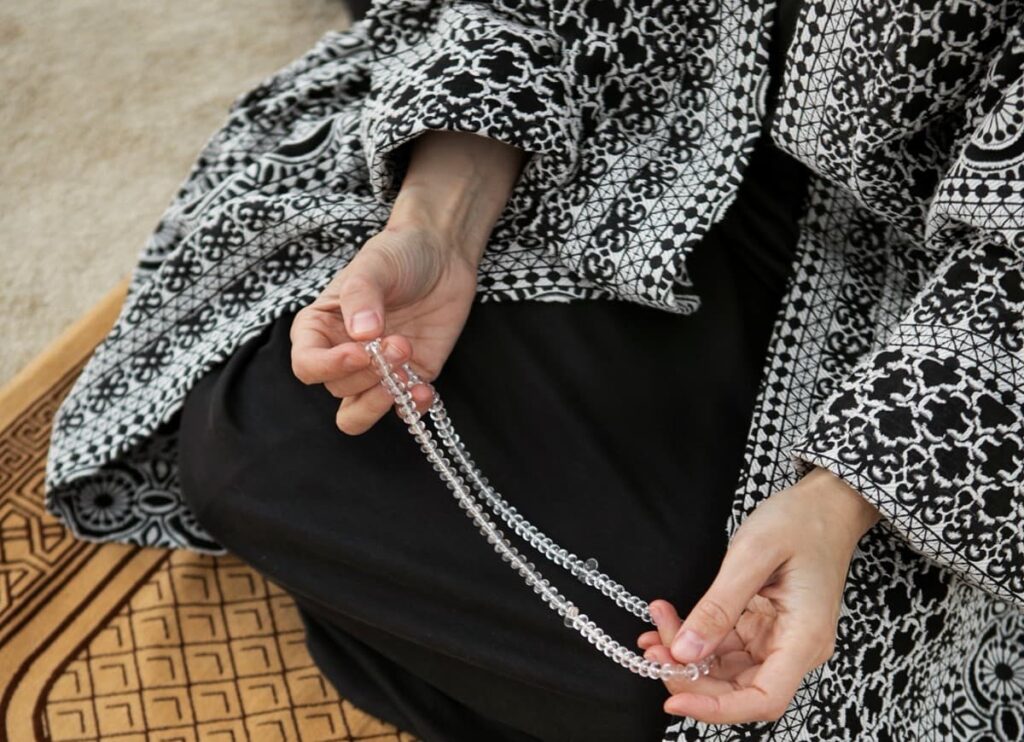
Importance of Tasbeeh in Daily Life
Salatul tasbeeh importance is often overlooked, yet it plays a real role in spiritual discipline. Regular tasbeeh keeps the heart connected to Allah between the five daily prayers, not just during them.
- It builds mindfulness throughout ordinary daily tasks.
- It requires no special conditions, location, or preparation.
- It strengthens patience during difficult or stressful moments.
- It serves as a gentle reminder of Allah’s presence at all times.
Method: How Tasbeeh Is Practiced
The salatul tasbeeh method, when practiced as the specific prayer, involves reciting a fixed phrase 300 times across four rakahs. But everyday tasbeeh outside of that prayer is far simpler.
- Choose a short phrase, such as Subhanallah, Alhamdulillah, or Astaghfirullah.
- Repeat it in sets of 33, 100, or any comfortable number.
- Use your fingers, a string of beads, or a digital counter tasbeeh device.
- Practice after each prayer, or during quiet moments in your day.
Also Read: Allahumma Ajirni Minan Naar
| Tool | Best For |
| Traditional beads (masbaha) | Tactile counting, travel-friendly |
| Digital counter tasbeeh | Quick clicking, built-in reminders |
| Finger counting | No tools needed, always available |
| Mobile tasbeeh apps | Tracking daily totals over time |
Reward: What Tasbeeh Brings
The salatul tasbeeh reward, according to hadith, includes the forgiveness of sins both old and new, minor and major. Beyond the specific prayer, general tasbeeh also carries weighty spiritual reward described throughout Islamic teaching.
Scholars note that these short phrases, though easy to say, outweigh heavier deeds on the Day of Judgment when done consistently. A broad overview of dhikr practices across Islamic tradition is available on Wikipedia’s article on Dhikr, while Britannica’s entry on Islamic prayer beads traces the historical use of counting tools across faith traditions.
Suitable Times and Trusted Resources
Tasbeeh can be practiced almost anytime, though some moments carry extra virtue. The table below outlines common windows for practice.
Also Read: Dua After Praying – Do This For Rizq, Mercy & Blessings!
| Time | Recommended Practice |
| After each obligatory prayer | 33x Subhanallah, 33x Alhamdulillah, 34x Allahu Akbar |
| Morning and evening | Short adhkar routines |
| During travel or waiting | Casual finger or bead counting |
| Before sleeping | 33x each phrase for a calm close to the day |
For deeper scholarly discussion on dhikr etiquette, the IslamicTeachings.org forum and IslamQA both offer detailed answers from qualified scholars. Readers of quranmualim.com often ask whether digital tools count the same as manual beads, and the answer is yes, as long as the intention remains sincere.
Hanafi Fiqh Books for Further Reading
Those wanting a deeper scholarly grounding in dhikr and voluntary worship can explore these Hanafi fiqh titles, commonly found in Islamic libraries and archives:
- Maraqi al-Falah by Hasan ibn Ammar al-Shurunbulali
- Kanz al-Daqa’iq by Abu al-Barakat al-Nasafi
- Al-Ikhtiyar li Ta’lil al-Mukhtar by Abdullah ibn Mahmud al-Mawsili
- Durr al-Mukhtar by Ala al-Din al-Haskafi
Categories: PRAYER ,ALMS , SAWN & The Holy Quran, Quran Jaz 1- 114
Frequently Asked Questions
What is tasbeeh in simple words?
Tasbeeh means glorifying Allah, usually by repeating phrases like Subhanallah. It can refer to the phrase, the practice, or the beads used for counting.
Is a digital counter tasbeeh allowed in Islam?
Yes, a digital counter tasbeeh is permitted. What matters most is sincerity and consistency, not the specific tool used for counting.
How many times should tasbeeh be recited daily?
There is no fixed limit. Many recite 33 times after each prayer, though more frequent practice throughout the day is always welcomed.
Is Salat ul Tasbeeh the same as regular tasbeeh?
No, Salat ul Tasbeeh is a specific four-rakah prayer with a fixed count. Regular tasbeeh can be done anytime without needing a full prayer.
Can tasbeeh be recited without wudu?
Yes, tasbeeh does not require wudu. It can be recited while walking, sitting, or doing daily chores, unlike formal prayer.
Final Thoughts
Tasbeeh is a small habit with lasting spiritual weight. Whether counted on beads, fingers, or a digital counter tasbeeh, the goal remains the same: staying connected to Allah through simple, consistent remembrance. Start today, even with just one phrase, and let the habit grow from there.
Alasad Online Quran Tutor 📞 WhatsApp: [Contact us for Quran classes] 🎥 YouTube: @quranmualim 📘 Facebook: [Alasad Online Quran Tutor] 🌐 Visit: quranmualim.com
Recommended For You
- Best Dua For Safe Pregnancy And Delivery
- So Kar Uthne Ki Dua | Dua After Waking Up
- Dua For Rizq (How To Increase Your Money)
- la ilaha illa anta subhanaka inni kuntu arabic
- Allahumma Rahmataka Arju: A Dua For Hope
- What To Say When Someone Dies Islam Dua?
- Dua For Istikhara in Arabic & Urdu Translation
- Powerful Dua For Repentance and Forgiveness
- Praying For Death Anniversary And Forgiveness
- Arabic Prayer With Transliteration and Meaning
- Powerful Dua To Prayer For Forgiveness of Lust
- Prayer For Forgiveness of Others – Islamic Guide
- Dua For Safety of Family (Protection & Happiness)
- Powerful Dua For Repent and Seeking Forgiveness
- Safe Travel Prayer For A Friend With Transliteration
- Arabic Safe Trip Prayer Messages For Your Loved Ones