
The topic of gay people in Islam raises genuine questions for Muslims living in modern societies — questions about belief, boundaries, human dignity, and how to navigate relationships. Many Muslims feel caught between Islamic teachings they hold sincerely and the real people in their lives. This article presents what traditional Islamic scholarship actually says, clearly and without distortion.
This is not a topic Islam avoids. The Quran and Sunnah address it directly, and classical scholars have written about it at length. The goal here is not to condemn individuals but to explain the framework — so Muslims can understand the position, act with integrity, and treat every person with the dignity that Islam itself demands.
Understanding this topic well also requires separating two things that often get conflated: same-sex attraction as an experience, and same-sex conduct as an action. Islamic ethics has always distinguished between what a person feels and what a person does.
📚 For a nuanced scholarly treatment of sexuality in Islamic ethics, ‘Sexual Ethics and Islam’ by Kecia Ali offers careful academic engagement — available on Amazon.
What Islam Says About Same-Sex Attraction vs. Same-Sex Conduct
Classical Islamic scholarship makes an important distinction. Experiencing attraction — without acting on it — falls under the category of involuntary human experience. A person is not sinful for feelings they did not choose and actively resist.
Scholars across all four major legal schools agree, however, that same-sex sexual conduct is prohibited in Islam. This ruling is grounded in the Quran, the Sunnah, and centuries of scholarly consensus (ijma’). The prohibition applies equally to men and women.
Islam’s moral framework places this alongside other prohibitions on sexual conduct outside of marriage between a man and woman. The framework is consistent: the act matters, not merely the inclination.
Islamic Framework — Attraction vs. Conduct
| Aspect | Islamic Position | Basis |
| Same-sex attraction (feeling) | Not sinful in itself if not acted upon | Distinction between nafs (self) and action |
| Same-sex conduct (action) | Prohibited across all four schools | Quran, Sunnah, scholarly consensus (ijma’) |
| Identity/self-labeling | Scholars advise against adopting identity built on prohibited desire | Preservation of fitrah (natural disposition) |
| Treatment of individuals | Kindness, justice, and human dignity required | Core Islamic ethics — no harassment or cruelty |
| Repentance and return | Always open — no sin places a person beyond mercy | Quranic principle: Allah forgives all sins (39:53) |
Table: Islamic ethical framework distinguishing attraction from conduct
Qur’an References on Sexual Morality and Human Dignity
1. Surah Al-A’raf (7:80–81)
Surah Al-A’raf, Ayahs 80–81 — Read on Quran.com — “And [We sent] Lot, when he said to his people: Do you commit such immorality as no one has preceded you with from among the worlds? Indeed, you approach men with desire, instead of women. Rather, you are a transgressing people.”
The story of Lot (Lut, peace be upon him) is the primary Quranic reference scholars cite. The condemnation in the verse is specific to the conduct — the approach of men with desire — not to persons as such. Scholars note the gravity of the act while the story also condemns the people’s broader moral collapse.
2. Surah Al-Isra (17:70)
Surah Al-Isra, Ayah 70 — Read on Quran.com — “And We have certainly honored the children of Adam and carried them on the land and sea and provided for them of the good things and preferred them over much of what We have created, with definite preference.”
This verse is essential context. Every human being — regardless of what they struggle with — is honored by Allah. Islamic ethics never licenses cruelty, humiliation, or dehumanization of any person. The prohibition on conduct coexists with an obligation to uphold human dignity.
The Prophet ﷺ said: “Whoever you find committing the act of the people of Lot, kill the one who does it and the one to whom it is done.” — Sunan Abu Dawood, Hadith 4462 — Scholarly note: this refers to a historical hadd ruling; full context on Sunnah.com
This Hadith is often cited in classical fiqh discussions. Scholars note that the hadd (prescribed legal punishment) it describes applied in a specific judicial framework — it required an Islamic court, due process, and multiple witnesses. It has never been a license for mob violence or private vigilantism, which Islam explicitly forbids.
Hadith 2 — Jami’ at-Tirmidhi
The Prophet ﷺ said: “Cursed is the one who does the action of the people of Lot.” — Jami’ at-Tirmidhi, Hadith 1456 — Full narration on Sunnah.com
Classical scholars read this Hadith as a serious moral warning — one that emphasizes the gravity of the act while the broader body of Islamic ethics simultaneously prohibits oppression of individuals. The warning is about conduct, not a permission to harm people.
Also Read: The Concept of Basic Human Rights From The Qur’an

Can You Be Friends With Gay People in Islam?
This is one of the most searched questions Muslims have on this topic — and it deserves a direct answer. Can you be friends with gay people in Islam? The short answer, according to most contemporary scholars: yes, with appropriate limits and clear personal boundaries.
Islam does not instruct Muslims to sever all contact with non-Muslims or with people who engage in sins different from their own. Allah says in the Quran: “Allah does not forbid you from those who do not fight you because of religion and do not expel you from your homes — from being righteous toward them and acting justly.” (Surah Al-Mumtahanah, 60:8)
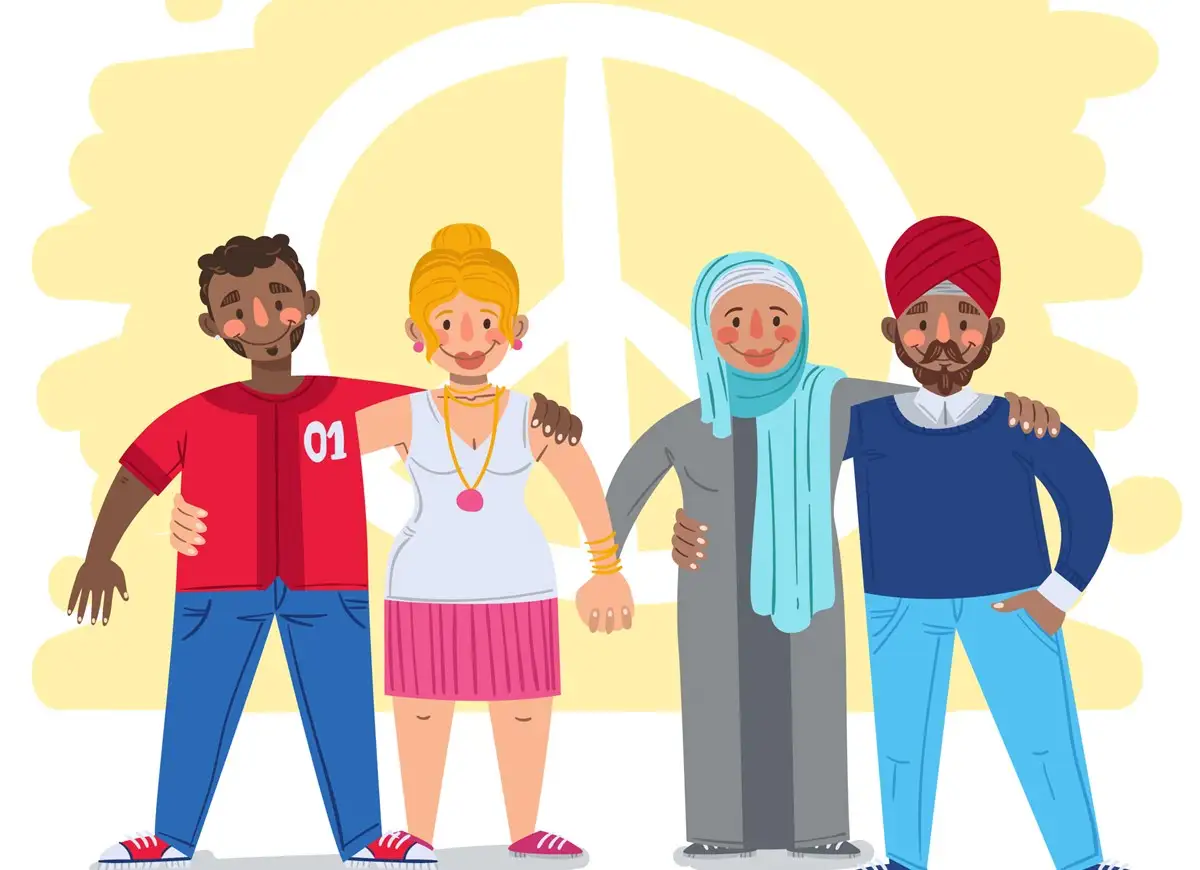
Scholars generally advise that Muslim friendship should not involve endorsing or celebrating what Islam prohibits. But ordinary, respectful social interaction — with colleagues, neighbors, family members — is not forbidden. The distinction is between association and approval.
- Normal social interaction and professional relationships: generally permissible
- Attending events that explicitly celebrate what Islam prohibits: scholars advise avoidance
- Being kind, just, and non-harassing: obligatory — no exceptions
- Expressing Islamic views when asked: permissible, with wisdom and gentleness
- Mocking, bullying, or ostracizing: forbidden in Islam
What Happens to Gay People in Islam — Accountability and Mercy
When Muslims ask what happens to gay people in Islam, they are often asking about divine judgment. The Islamic answer is consistent with everything else in Islamic theology: every soul is accountable for its choices, and every soul has access to mercy through sincere repentance.
Islam teaches that Allah’s mercy encompasses all things (Quran 7:156). No person is consigned to punishment simply for existing. What a person does — and what they choose — is where accountability applies. Islam always opens the door of tawbah (repentance).
The role of a Muslim is not to pronounce judgment on individuals. That belongs to Allah alone. A Muslim’s role is to hold firmly to their own values, to convey truth with kindness when appropriate, and to treat every human being with justice.
For thorough scholarly discussions on these questions, IslamQA.info covers this topic with multiple fatwa perspectives from recognized Islamic scholars, including nuanced questions about Muslim conduct in pluralistic societies.
Classical Hanafi References on Prohibited Conduct and Human Dignity
The following Hanafi texts address the fiqh dimensions of this topic:
- Al-Hidayah — by Al-Marghinani: the foundational Hanafi legal text covering hudood (prescribed penalties) and their judicial conditions
- Durr al-Mukhtar — by Al-Haskafi: a comprehensive Hanafi fatwa reference including chapters on moral and legal boundaries
- Hashiyah Ibn Abidin (Radd al-Muhtar) — the definitive modern Hanafi commentary, treating hudood and personal ethics in depth
- Al-Fatawa al-Bazzaziyyah — a classical Hanafi fatwa collection addressing social ethics and moral conduct
Covered Topics: Faith, Islamic History, Biography, Sirat ul Nabi PBUH, Islamic Studies

Frequently Asked Questions
1. Does Islam view same-sex attraction as sinful?
Attraction alone, without acting on it, is not counted as a sin in Islamic ethics. The sin, according to all four legal schools, applies to the conduct, not the feeling.
2. Can you be friends with gay people in Islam?
General social interaction is permissible. Islam requires kindness and justice toward all people. Scholars draw the line at endorsing or celebrating what Islam prohibits — not at ordinary human contact.
3. What does the story of Lot (Lut) in the Quran mean?
It records the moral collapse of a society and Allah’s response. Classical scholars cite it as the primary Quranic evidence that same-sex conduct is prohibited, while noting its broader context of widespread wrongdoing.
4. Can a Muslim who struggles with same-sex attraction be forgiven?
Yes — completely. Islamic theology teaches that sincere repentance wipes out any sin. Struggling with an attraction while choosing not to act on it is itself regarded as an act of worship by many scholars.
5. Is it allowed for Muslims to harm or harass gay people?
No — under any circumstances. Islam strictly prohibits oppression, harassment, and cruelty. Every human being holds the dignity Allah assigned in Surah Al-Isra (17:70), regardless of their choices.
Conclusion
The Islamic position on gay people in Islam is clear in its core teaching — same-sex conduct is prohibited — and equally clear in its insistence that every human being must be treated with justice and dignity. These two principles do not conflict. They belong together in Islamic ethics.
A Muslim navigating this topic in real life needs both: clarity about their own values, and a heart free of cruelty toward others. Islam does not ask Muslims to abandon either one.
For community-based learning and grounded scholarly discussion, the IslamicTeachings.org forum offers a space for Muslims to ask real questions and receive careful, evidence-based answers. For broader academic context on Islam and ethics, Britannica’s overview of Islamic law and ethics provides a useful reference point.
Hold your values with conviction. Treat every person with fairness. That is the Islamic path — and it has never required choosing between the two.
Related Blogs:
- Is Being Gay Haram – Learn Islam
- Is It Haram To Be Gay? – Learn Islam
- Can You Be Gay in Islam? learn Islam
- Do Gay People Go To Heaven? Learn Islam
- Can Gay People Go To Heaven? Learn Islam
- What Does The Quran Say About Gay People?
- Can I Kiss My Wife Private Parts in Christianity?
- What Does The Quran Say About Homosexuality?
- The Crucial Role of The Qur’an in Enlightened Living
- Religion and Sexuality – A Journey of A Gay Muslim
- Is Sodomy A Sin? Perspectives on Its Moral Standing
- Is It Haram To Play With Your Private Parts – Quran Mualim 2026
- What Does The Quran Say About Gay People? – Quran Mualim 2026