
The meaning of makrooh is simple: an action that Islam dislikes but does not forbid. Many Muslims mix it up with haram, and others brush it aside as unimportant. Both habits cause trouble. This guide explains the term in plain words, with proofs and easy examples.
Want a gentle start with Islamic legal terms? A beginner usul al-fiqh book is a good companion.
Why People Get Confused about Makrooh
Someone says, “Don’t do that, it’s makruh.” Another replies, “But it isn’t haram, so who cares?” A third panics and treats it like a major sin. All three miss the point.
The key is knowing where makruh sits in Islamic law. Once you see the full picture, the confusion disappears.
Meaning of Makrooh
Makruh (مکروہ) means “disliked” or “discouraged.” It is one of the five rulings of Islamic law, which Wikipedia describes as the middle ground between permitted and forbidden. Scholars use it for things that are better left undone, even though doing them is not a clear sin.
The core idea is easy to remember. Leaving a makruh act earns reward when you do it out of obedience. Doing it casually may not bring punishment, but it weakens your care for the religion.
The Five Rulings at a Glance
- Fard or Wajib: required.
- Mustahabb: recommended.
- Mubah: permitted.
- Makruh: disliked.
- Haram: forbidden.
Types of Makruh in the Hanafi School
Hanafi scholars divide makruh into two kinds.
- Makruh tahrimi: strongly disliked and close to haram. Leaving it is treated as necessary, and doing it deliberately counts as a sin.
- Makruh tanzihi: mildly disliked. Avoiding it earns reward, and doing it carries no sin.
So when you hear “makruh,” ask which kind is meant. This single question clears up most arguments.
Everyday Examples of Makruh
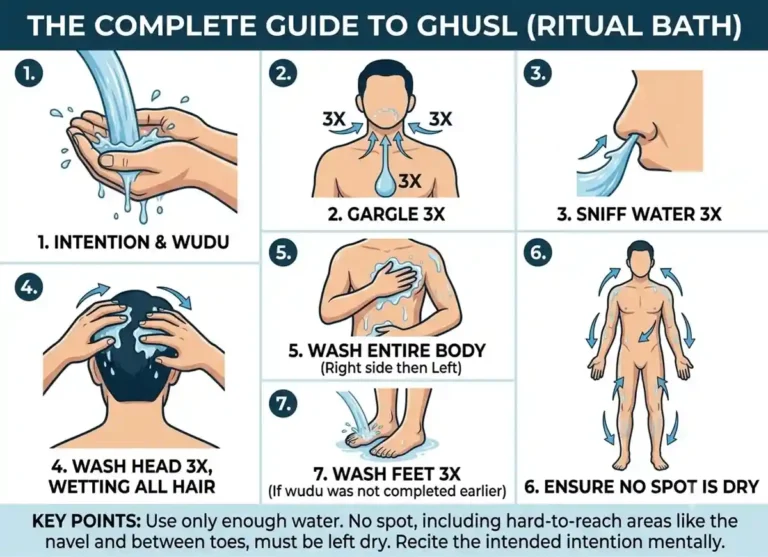
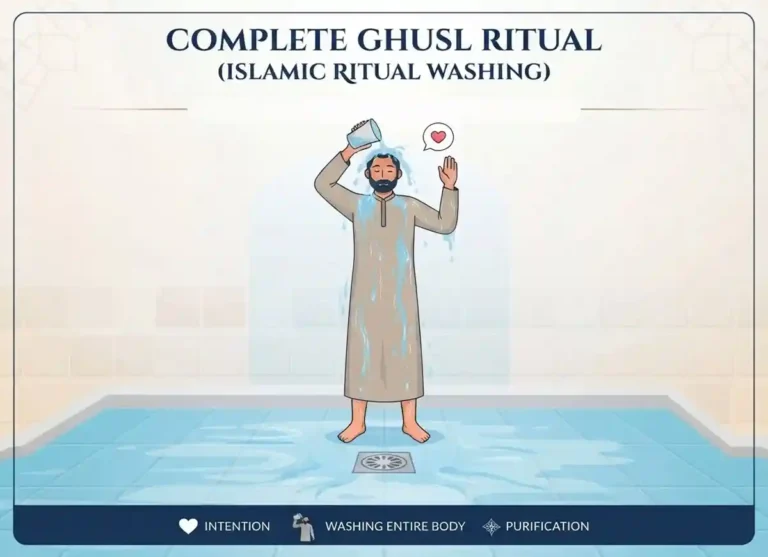
- Wasting water in wudu or ghusl.
- Fidgeting or playing with your clothes in prayer.
- Eating raw garlic or onion before going to the mosque, since the smell disturbs others.
- Folding up your clothes during prayer, which Hanafi texts treat as strongly disliked.
Difference Between Makruh and Haram
Think of it as a line with clear borders.
- Haram is clearly forbidden. Doing it is a sin, and leaving it is rewarded.
- Makruh tanzihi is not a sin. Leaving it is rewarded.
- Makruh tahrimi sits right next to haram, so treat it with the same seriousness.
Never call something haram without proof. The Quran warns against this very mistake.
Qur’an References
- Surah An-Nahl 16:116 (wa la taqulu lima tasifu alsinatukumul-kadhiba hadha halalun wa hadha haramun): “Do not falsely say, ‘This is lawful and this is forbidden.’” Read the verse on labelling halal and haram on Alim.org.
- Surah Al-Ma’idah 5:87 (ya ayyuhalladhina amanu la tuharrimu tayyibati ma ahallallahu lakum): “Believers, do not forbid the good things Allah has made lawful for you.” Read the verse on not over-restricting on Alim.org.
Hadith References
- Sunan Abu Dawood 3329: The Prophet ﷺ said that the lawful is clear, the unlawful is clear, and between them are doubtful matters. Whoever avoids them protects his religion. See Abu Dawood 3329 on doubtful matters.
- Jami` at-Tirmidhi 2518: He ﷺ said to leave what makes you doubt for what does not. See Tirmidhi 2518 on leaving doubt.
English Translation and Urdu Translation
| Ruling | English | Urdu |
| Fard / Wajib | Required; reward for doing, sin for leaving | فرض / واجب: لازم، کرنے پر ثواب، چھوڑنے پر گناہ |
| Mustahabb | Recommended; reward for doing, no sin for leaving | مستحب: پسندیدہ، کرنے پر ثواب، چھوڑنے پر گناہ نہیں |
| Mubah | Permitted; neither reward nor sin | مباح: جائز، نہ ثواب نہ گناہ |
| Makruh | Disliked; reward for avoiding | مکروہ: ناپسندیدہ، بچنے پر ثواب |
| Haram | Forbidden; sin for doing | حرام: ممنوع، کرنے پر گناہ |
A Simple Checklist
- Ask: is it required, recommended, permitted, disliked, or forbidden?
- If it is makruh, ask whether it is tahrimi or tanzihi.
- Avoid makruh acts when you can, especially in worship.
- Never call something haram without clear evidence.
- Ask a trusted scholar when you are unsure.
Habit tips
- Learn one new ruling each week.
- Keep a short notebook of everyday makruh acts.
- Teach children the five rulings in simple words.
Topics: Ushr and Zakat, Hijab, Arabic Corner, Faith, Islamic History, Biography, Sirat ul Nabi PBUH, Islamic Studies, Halal & Haram,
Hanafi Fiqh Note
The Hanafi school draws a clear line between tahrimi and tanzihi, which is why many fatwas look stricter than others. For deeper reading, look for Usul al-Sarakhsi in libraries or archives.
Trusted Sites to Learn More
| Site | Best For |
| IslamQA | Fatwas on daily rulings |
| Islamic Teachings Forum | Community questions and discussion |
| Alim.org | Reading verses with translation |
| www.quranmualim.com | An Islamic site for learning Quran online |
Learn Quran for Free
Want to understand Islamic terms with a teacher’s help? Message us for free guidance.
- WhatsApp: +923017363500
- Email: [email protected]
FAQs
What is the meaning of makrooh in Islam?
It means disliked. A makruh act is not clearly forbidden, but it is better to avoid it, and avoiding it earns reward.
Is makruh a sin?
Makruh tanzihi is not a sin. In the Hanafi school, makruh tahrimi is close to haram, and doing it deliberately counts as sinful.
Can I do a makruh act if I have a need?
Sometimes, yes. Need and necessity can change rulings. Ask a qualified scholar rather than guessing.
Conclusion
Makruh is not a small word. It teaches us that faith is shaped by manners, not only by big rules. Avoid what is disliked, respect what is forbidden, and never forbid what Allah has allowed. Learn one ruling today, and you will be surprised how quickly clarity grows.
Related Blogs:
- Does It Hurt To Donate Marrow? Learn Islam
- Does Bone Marrow Donation Hurt? Learn Islam
- How Many Times Can You Donate Bone Marrow?
- How To Avoid Masturbation: An Islamic Guide To Self-Discipline
- Is Masturbating a Sin? Catholic, Christian & Islamic Perspectives
- Is It Haram To Play With Your Private Parts – Quran Mualim 2026