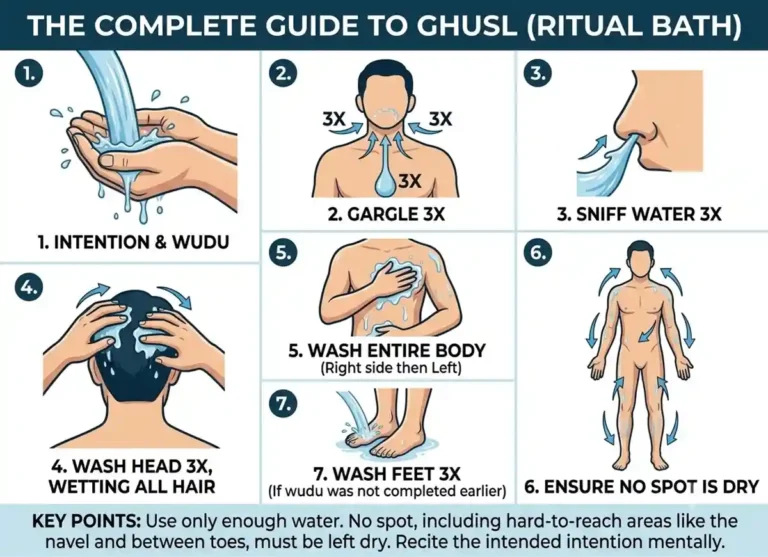

Knowing how to clean private parts after urination properly is one of the first things every Muslim should learn. This complete guide breaks it down step by step, for both general practice and specific guidance for women.
If you’d like to learn Namaz, Quran, Quran with Tajweed, Qaida, or Arabic properly, structured guidance builds real confidence. The author brings 15 Years Teaching Experience in Islamic studies and fiqh education.
For deeper reading on purification rulings, Fiqh us-Sunnah by Sayyid Sabiq offers detailed guidance on taharah. Find it on Amazon.
Also Read: Can You Read Quran on Your Period? Learn Islam
What Is Istinja and Why It Matters
Istinja is the Islamic practice of cleaning the private parts after urination or defecation. It’s obligatory before prayer, and without it, wudu alone isn’t enough to make prayer valid, since physical impurity must be removed first.
Neglecting this isn’t a small matter either. The Prophet ﷺ warned that much of the punishment in the grave stems from carelessness about urine, making proper cleaning a serious spiritual habit, not just hygiene.
Step-by-Step: How to Clean Private Parts After Urination
- Wait until urination fully stops before beginning to clean, without unnecessary squeezing or checking.
- Use your left hand to pour or apply water directly to the area, as the sunnah reserves the right hand for other tasks.
- Wash gently but thoroughly until no trace of urine, odor, or wetness remains.
- Use tissue or dry material first if preferred, then follow with water for extra assurance.
- Wash your left hand with soap afterward before proceeding to wudu.
How to Clean Private Parts After Urination Female Guidance
For women, the same core principles apply, with attention to washing front to back to avoid spreading impurity. Water remains the preferred method, and gentle washing until the area feels clean is sufficient — no extra steps are required.
Some scholars note women may need slightly more attentiveness due to anatomy, but there’s no additional obligation beyond thorough washing until no impurity remains.
Two Accepted Methods
| Method | How It Works | Scholarly View |
| Water (preferred) | Direct washing with left hand | Sunnah, most complete |
| Dry material (istijmar) | Tissue, clean paper, stones | Valid, especially where water isn’t available |
| Combined method | Tissue first, then water | Common and fully acceptable |
Also Read: Clear Sticky Discharge Male After Urination?

Common Mistakes to Avoid
Many people fall into unnecessary habits that scholars have clarified aren’t required. Excessive squeezing, walking a fixed number of steps, or repeatedly checking for wetness are not prescribed by the Prophet ﷺ and can lead to harmful obsessive doubt (waswas).
The correct standard is simple: wait until urination naturally stops, then clean until no impurity remains. Nothing more is required.
A Quick Checklist Before Prayer
- Confirm urination has stopped naturally, without forcing it.
- Clean thoroughly with water, dry material, or both.
- Check clothing for any visible impurity before wudu.
- Avoid obsessive doubt — one thorough cleaning is sufficient.
- Proceed to wudu once the area is clean.
What the Quran Teaches
Surah Al-Ma’idah (5:6)
This verse outlines the steps of purification before prayer, forming the broader foundation for taharah practices like istinja.
Read on Alim.org
Surah Al-Baqarah (2:222)
Allah states that He loves those who purify themselves, reflecting the deep spiritual value placed on cleanliness in Islam.
Read on Alim.org
What the Hadith Teaches
Sunan Abu Dawood, Hadith 18
The Prophet ﷺ instructed that the private parts should not be touched with the right hand while cleaning, establishing the left hand for this task.
Read on Sunnah.com
Jami` at-Tirmidhi, Hadith 606
This hadith describes entering and leaving the toilet area with proper etiquette, reinforcing the broader mindfulness Islam brings to purification.
Read on Sunnah.com
Recommended Hanafi Fiqh References
- Nur al-Idah by Hasan ibn Ammar al-Shurunbulali
- Maraqi al-Falah by Hasan ibn Ammar al-Shurunbulali
- Al-Hidayah by Burhan al-Din al-Marghinani
- Bahar-e-Shariat by Amjad Ali Azami
According to Wikipedia’s overview of Islamic hygienical jurisprudence, taharah covers a comprehensive system of physical and ritual cleanliness central to daily practice. Britannica also notes that purification rituals hold deep significance across Islamic worship traditions.
For further scholarly guidance on purification, visit IslamQA or the Islamic Teachings Forum.
If you’re interested in strengthening your foundation further, exploring how to perform wudu correctly or how to pray namaz step by step for beginners can help build consistent practice.
To learn the Holy Quran, Tajweed, or Islamic studies with an experienced tutor, reach out to Alasad Online Quran Tutor. WhatsApp +923017363500, email [email protected], visit quranmualim.com, or follow on YouTube @quranmualim.
Categories: PRAYER ,ALMS , SAWN & The Holy Quran, Quran Jaz 1- 114
FAQs
How do I clean private parts after urination correctly?
Wait until urination stops, then wash with the left hand using water, or use tissue followed by water for extra assurance.
How to clean private parts after urination for females specifically?
The same principles apply, washing front to back with water until no impurity or odor remains. No extra steps are required.
Is it necessary to use both water and tissue?
No. Either method alone is valid, though combining both is common and fully acceptable for extra confidence.
Why is istinja important before prayer?
Prayer requires physical purity first. Without removing impurity through istinja, wudu alone doesn’t make the prayer valid.
Is checking or squeezing after urination required?
No. Scholars confirm this isn’t prescribed and can lead to unnecessary doubt. Clean once thoroughly and move on.
Final Thoughts
Proper istinja is a small daily habit with real spiritual weight. Following the sunnah method — simple, thorough, and free from unnecessary doubt — keeps both body and prayer in a state of true purity.
Recommended For You
- What Does The Quran Say About Killing?
- Do Cats Bring Angels in The House in Islam?
- Al-Aqsa Mosque: Why It’s Islam’s First Qibla
- Clear Sticky Discharge Male After Urination?
- Can You Read Quran on Your Period? Learn Islam
Related Blogs:
- Is Being Gay Haram – Learn Islam
- Is It Haram To Be Gay? – Learn Islam
- Can You Be Gay in Islam? learn Islam
- Is It Haram to Masturbate? Learn Islam
- Do Gay People Go To Heaven? Learn Islam
- Can Gay People Go To Heaven? Learn Islam
- What Islam Says About Gay People in Islam?
- What Does The Quran Say About Gay People?
- How Many Calories Does Masturbating Burn?
- Is Homosexuality in Islam Allowed? Learn Islam
- Can I Kiss My Wife Private Parts in Christianity?
- What Does The Quran Say About Homosexuality?
- What Does Islam Say About Homosexual Marriage?
- The Crucial Role of The Qur’an in Enlightened Living
- Religion and Sexuality – A Journey of A Gay Muslim
- Is Sodomy A Sin? Perspectives on Its Moral Standing