
Surah Mulk transliteration is usually the first thing new reciters search for, right after they realize the Arabic script alone feels intimidating. Sounding out unfamiliar letters without any guide often leads to mistakes that stick around for months. This guide exists to make that first step easier.
Before going further, here is a resource worth keeping for deeper study: The Noble Quran: English Translation and Commentary.
What Surah Mulk Is About
Surah Al Mulk is the 67th chapter of the Quran, containing 30 verses revealed in Makkah. Its name means “The Sovereignty,” and the surah repeatedly returns to one idea: all authority over life, death, and creation belongs to Allah alone.
Learn Quran for Free
Transliteration helps with reading along, but it cannot replace proper Tajweed instruction. A free trial class with a qualified tutor lets you move from transliteration to confident Arabic reading, with real-time correction along the way.
Surah Mulk English Transliteration
Here is a short sample showing how the transliteration pairs with the Arabic and its meaning:
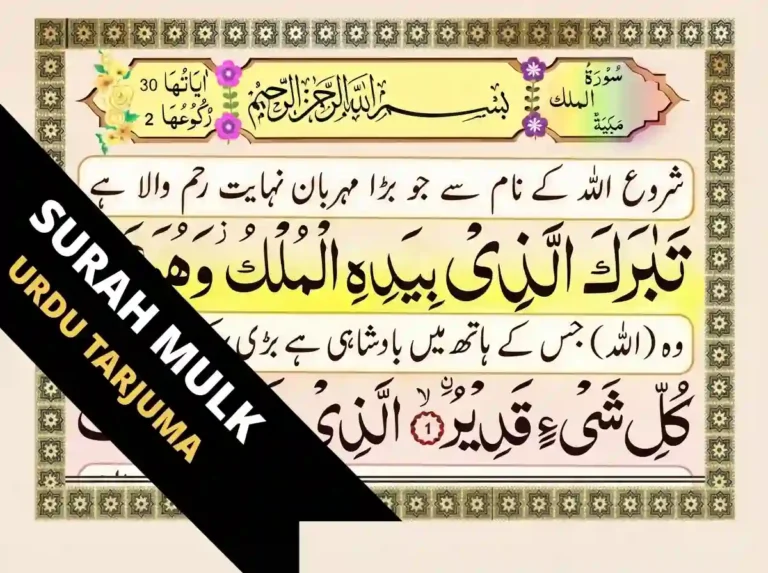
- Tabarakalladhi biyadihil mulku wa huwa ‘ala kulli shay’in Qadeer — “Blessed is He in whose hand is all sovereignty, and He is over all things competent.”
- Alladhi khalaqal mawta wal hayata liyabluwakum ayyukum ahsanu ‘amala — “He who created death and life to test which of you is best in deed.”
Reading the transliteration slowly, alongside the meaning, helps beginners build both pronunciation and understanding at the same pace.
Also Read: The Clear Quran PDF Free Download – Quran Mualim 2025
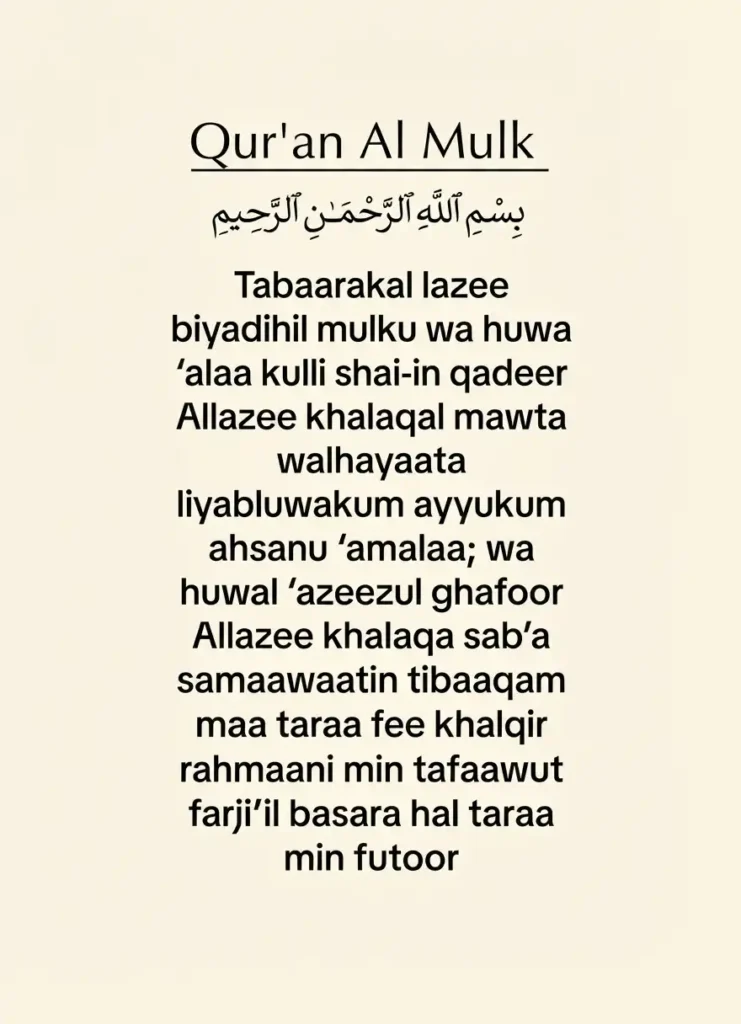

Surah Al Mulk — Arabic and Transliteration
Surah Al-Mulk (The Sovereignty) — 30 verses, meccan
| # | Arabic | Transliteration |
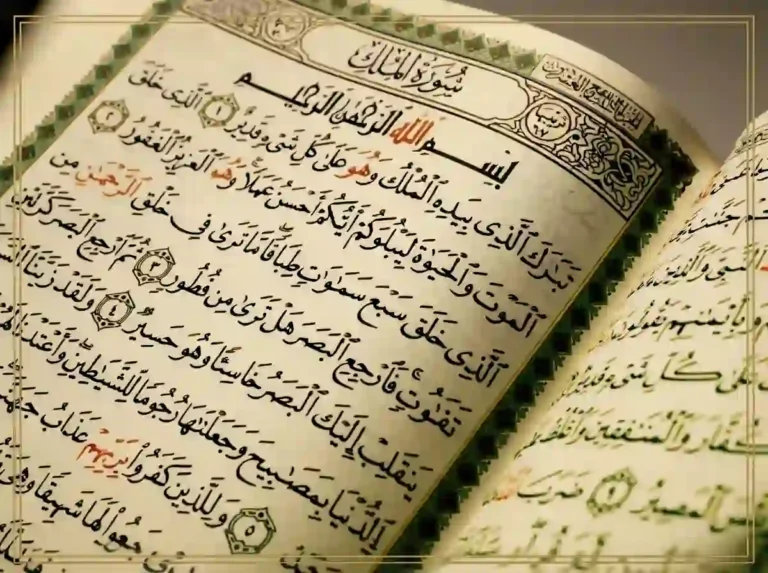
| 1 | تَبَٰرَكَ ٱلَّذِي بِيَدِهِ ٱلۡمُلۡكُ وَهُوَ عَلَىٰ كُلِّ شَيۡءٖ قَدِيرٌ | Tabaraka allathee biyadihi almulku wahuwa ‘ala kulli shayin qadeerun |
| 2 | ٱلَّذِي خَلَقَ ٱلۡمَوۡتَ وَٱلۡحَيَوٰةَ لِيَبۡلُوَكُمۡ أَيُّكُمۡ أَحۡسَنُ عَمَلٗاۚ وَهُوَ ٱلۡعَزِيزُ ٱلۡغَفُورُ | Allathee khalaqa almawta waalhayata liyabluwakum ayyukum ahsanu ‘amalan wahuwa al’azeezu alghafooru |
| 3 | ٱلَّذِي خَلَقَ سَبۡعَ سَمَٰوَٰتٖ طِبَاقٗاۖ مَّا تَرَىٰ فِي خَلۡقِ ٱلرَّحۡمَٰنِ مِن تَفَٰوُتٖۖ فَٱرۡجِعِ ٱلۡبَصَرَ هَلۡ تَرَىٰ مِن فُطُورٖ | Allathee khalaqa sab’a samawatin tibaqan ma tara fee khalqi alrrahmani min tafawutin fairji’i albasara hal tara min futoorin |
| 4 | ثُمَّ ٱرۡجِعِ ٱلۡبَصَرَ كَرَّتَيۡنِ يَنقَلِبۡ إِلَيۡكَ ٱلۡبَصَرُ خَاسِئٗا وَهُوَ حَسِيرٞ | Thumma irji’i albasara karratayni yanqalib ilayka albasaru khasian wahuwa haseerun |
| 5 | وَلَقَدۡ زَيَّنَّا ٱلسَّمَآءَ ٱلدُّنۡيَا بِمَصَٰبِيحَ وَجَعَلۡنَٰهَا رُجُومٗا لِّلشَّيَٰطِينِۖ وَأَعۡتَدۡنَا لَهُمۡ عَذَابَ ٱلسَّعِيرِ | Walaqad zayyanna alssamaa alddunya bimasabeeha waja’alnaha rujooman lilshshayateeni waa’tadna lahum ‘athaba alssa’eeri |
| 6 | وَلِلَّذِينَ كَفَرُواْ بِرَبِّهِمۡ عَذَابُ جَهَنَّمَۖ وَبِئۡسَ ٱلۡمَصِيرُ | Walillatheena kafaroo birabbihim ‘athabu jahannama wabisa almaseeru |
| 7 | إِذَآ أُلۡقُواْ فِيهَا سَمِعُواْ لَهَا شَهِيقٗا وَهِيَ تَفُورُ | Itha olqoo feeha sami’oo laha shaheeqan wahiya tafooru |
| 8 | تَكَادُ تَمَيَّزُ مِنَ ٱلۡغَيۡظِۖ كُلَّمَآ أُلۡقِيَ فِيهَا فَوۡجٞ سَأَلَهُمۡ خَزَنَتُهَآ أَلَمۡ يَأۡتِكُمۡ نَذِيرٞ | Takadu tamayyazu mina alghaythi kullama olqiya feeha fawjun saalahum khazanatuha alam yatikum natheerun |
| 9 | قَالُواْ بَلَىٰ قَدۡ جَآءَنَا نَذِيرٞ فَكَذَّبۡنَا وَقُلۡنَا مَا نَزَّلَ ٱللَّهُ مِن شَيۡءٍ إِنۡ أَنتُمۡ إِلَّا فِي ضَلَٰلٖ كَبِيرٖ | Qaloo bala qad jaana natheerun fakaththabna waqulna ma nazzala Allahu min shayin in antum illa fee dalalin kabeerin |
| 10 | وَقَالُواْ لَوۡ كُنَّا نَسۡمَعُ أَوۡ نَعۡقِلُ مَا كُنَّا فِيٓ أَصۡحَٰبِ ٱلسَّعِيرِ | Waqaloo law kunna nasma’u aw na’qilu ma kunna fee ashabi alssa’eeri |
| 11 | فَٱعۡتَرَفُواْ بِذَنۢبِهِمۡ فَسُحۡقٗا لِّأَصۡحَٰبِ ٱلسَّعِيرِ | Fai’tarafoo bithanbihim fasuhqan liashabi alssa’eeri |
| 12 | إِنَّ ٱلَّذِينَ يَخۡشَوۡنَ رَبَّهُم بِٱلۡغَيۡبِ لَهُم مَّغۡفِرَةٞ وَأَجۡرٞ كَبِيرٞ | Inna allatheena yakhshawna rabbahum bialghaybi lahum maghfiratun waajrun kabeerun |
| 13 | وَأَسِرُّواْ قَوۡلَكُمۡ أَوِ ٱجۡهَرُواْ بِهِۦٓۖ إِنَّهُۥ عَلِيمُۢ بِذَاتِ ٱلصُّدُورِ | Waasirroo qawlakum awi ijharoo bihi innahu ‘aleemun bithati alssudoori |
| 14 | أَلَا يَعۡلَمُ مَنۡ خَلَقَ وَهُوَ ٱللَّطِيفُ ٱلۡخَبِيرُ | Ala ya’lamu man khalaqa wahuwa allateefu alkhabeeru |
| 15 | هُوَ ٱلَّذِي جَعَلَ لَكُمُ ٱلۡأَرۡضَ ذَلُولٗا فَٱمۡشُواْ فِي مَنَاكِبِهَا وَكُلُواْ مِن رِّزۡقِهِۦۖ وَإِلَيۡهِ ٱلنُّشُورُ | Huwa allathee ja’ala lakumu alarda thaloolan faimshoo fee manakibiha wakuloo min rizqihi wailayhi alnnushooru |
| 16 | ءَأَمِنتُم مَّن فِي ٱلسَّمَآءِ أَن يَخۡسِفَ بِكُمُ ٱلۡأَرۡضَ فَإِذَا هِيَ تَمُورُ | Aamintum man fee alssamai an yakhsifa bikumu alarda faitha hiya tamooru |
| 17 | أَمۡ أَمِنتُم مَّن فِي ٱلسَّمَآءِ أَن يُرۡسِلَ عَلَيۡكُمۡ حَاصِبٗاۖ فَسَتَعۡلَمُونَ كَيۡفَ نَذِيرِ | Am amintum man fee alssamai an yursila ‘alaykum hasiban fasata’lamoona kayfa natheeri |
| 18 | وَلَقَدۡ كَذَّبَ ٱلَّذِينَ مِن قَبۡلِهِمۡ فَكَيۡفَ كَانَ نَكِيرِ | Walaqad kaththaba allatheena min qablihim fakayfa kana nakeeri |
| 19 | أَوَلَمۡ يَرَوۡاْ إِلَى ٱلطَّيۡرِ فَوۡقَهُمۡ صَـٰٓفَّـٰتٖ وَيَقۡبِضۡنَۚ مَا يُمۡسِكُهُنَّ إِلَّا ٱلرَّحۡمَٰنُۚ إِنَّهُۥ بِكُلِّ شَيۡءِۭ بَصِيرٌ | Awalam yaraw ila alttayri fawqahum saffatin wayaqbidna ma yumsikuhunna illa alrrahmanu innahu bikulli shayin baseerun |
| 20 | أَمَّنۡ هَٰذَا ٱلَّذِي هُوَ جُندٞ لَّكُمۡ يَنصُرُكُم مِّن دُونِ ٱلرَّحۡمَٰنِۚ إِنِ ٱلۡكَٰفِرُونَ إِلَّا فِي غُرُورٍ | Amman hatha allathee huwa jundun lakum yansurukum min dooni alrrahmani ini alkafiroona illa fee ghuroorin |
| 21 | أَمَّنۡ هَٰذَا ٱلَّذِي يَرۡزُقُكُمۡ إِنۡ أَمۡسَكَ رِزۡقَهُۥۚ بَل لَّجُّواْ فِي عُتُوّٖ وَنُفُورٍ | Amman hatha allathee yarzuqukum in amsaka rizqahu bal lajjoo fee ‘utuwwin wanufoorin |
| 22 | أَفَمَن يَمۡشِي مُكِبًّا عَلَىٰ وَجۡهِهِۦٓ أَهۡدَىٰٓ أَمَّن يَمۡشِي سَوِيًّا عَلَىٰ صِرَٰطٖ مُّسۡتَقِيمٖ | Afaman yamshee mukibban ‘ala wajhihi ahda amman yamshee sawiyyan ‘ala siratin mustaqeemin |
| 23 | قُلۡ هُوَ ٱلَّذِيٓ أَنشَأَكُمۡ وَجَعَلَ لَكُمُ ٱلسَّمۡعَ وَٱلۡأَبۡصَٰرَ وَٱلۡأَفۡـِٔدَةَۚ قَلِيلٗا مَّا تَشۡكُرُونَ | Qul huwa allathee anshaakum waja’ala lakumu alssam’a waalabsara waalafidata qaleelan ma tashkuroona |
| 24 | قُلۡ هُوَ ٱلَّذِي ذَرَأَكُمۡ فِي ٱلۡأَرۡضِ وَإِلَيۡهِ تُحۡشَرُونَ | Qul huwa allathee tharaakum fee alardi wailayhi tuhsharoona |
| 25 | وَيَقُولُونَ مَتَىٰ هَٰذَا ٱلۡوَعۡدُ إِن كُنتُمۡ صَٰدِقِينَ | Wayaqooloona mata hatha alwa’du in kuntum sadiqeena |
| 26 | قُلۡ إِنَّمَا ٱلۡعِلۡمُ عِندَ ٱللَّهِ وَإِنَّمَآ أَنَا۠ نَذِيرٞ مُّبِينٞ | Qul innama al’ilmu ‘inda Allahi wainnama ana natheerun mubeenun |
| 27 | فَلَمَّا رَأَوۡهُ زُلۡفَةٗ سِيٓـَٔتۡ وُجُوهُ ٱلَّذِينَ كَفَرُواْ وَقِيلَ هَٰذَا ٱلَّذِي كُنتُم بِهِۦ تَدَّعُونَ | Falamma raawhu zulfatan seeat wujoohu allatheena kafaroo waqeela hatha allathee kuntum bihi tadda’oona |
| 28 | قُلۡ أَرَءَيۡتُمۡ إِنۡ أَهۡلَكَنِيَ ٱللَّهُ وَمَن مَّعِيَ أَوۡ رَحِمَنَا فَمَن يُجِيرُ ٱلۡكَٰفِرِينَ مِنۡ عَذَابٍ أَلِيمٖ | Qul araaytum in ahlakaniya Allahu waman ma’iya aw rahimana faman yujeeru alkafireena min ‘athabin aleemin |
| 29 | قُلۡ هُوَ ٱلرَّحۡمَٰنُ ءَامَنَّا بِهِۦ وَعَلَيۡهِ تَوَكَّلۡنَاۖ فَسَتَعۡلَمُونَ مَنۡ هُوَ فِي ضَلَٰلٖ مُّبِينٖ | Qul huwa alrrahmanu amanna bihi wa’alayhi tawakkalna fasata’lamoona man huwa fee dalalin mubeenin |
| 30 | قُلۡ أَرَءَيۡتُمۡ إِنۡ أَصۡبَحَ مَآؤُكُمۡ غَوۡرٗا فَمَن يَأۡتِيكُم بِمَآءٖ مَّعِينِۭ | Qul araaytum in asbaha maokum ghawran faman yateekum bimain ma’eenin |
Also Read: The Holy Quran PDF Free Downloads
Why Transliteration And Meaning Go Together
Surah al-Mulk transliteration and meaning work best as a pair, not as separate steps. Reading the sounds without knowing what they mean turns recitation into repetition without reflection.
- Transliteration helps beginners sound out unfamiliar Arabic letters
- Meaning connects the heart to what is actually being recited
- Together, they build a foundation before moving to full Arabic fluency
- This combination works well for both children and adult learners
- It also helps second-generation Muslims reconnect with the Quran comfortably
Many learners eventually drop the transliteration entirely, once Arabic reading feels natural. That transition is the real goal.
Why This Surah Deserves Consistent Practice
The weight behind Surah Al Mulk mostly comes from its connection to protection in the grave, a point scholars have discussed consistently for generations.
- Protection from the punishment of the grave when recited nightly
- Intercession on the Day of Judgment for consistent reciters
- A steady reminder of Allah’s authority over life, death, and creation
- Manageable length, even for someone still relying on transliteration
- Encourages reflection rather than rushed, mechanical recitation
Quran Verses
Surah Al-Mulk, Ayah 1 — This verse opens the chapter by affirming that all sovereignty and control belong entirely to Allah, over every single thing. Read on Alim.org
Surah Al-Mulk, Ayah 2 — Allah explains that death and life were deliberately created as a test, to see who performs the best deeds. Read on Alim.org
Hadith References
Sunan Abu Dawood — Narrations describe the Prophet ﷺ reciting certain protective surahs, including Al-Mulk, as a fixed part of his nightly routine before sleeping. Read on Sunnah.com
Jami` at-Tirmidhi — It is reported that Surah Al Mulk will intercede on behalf of its reciter on the Day of Judgment, pleading for forgiveness. Read on Sunnah.com
A Quick Reference Table
| Aspect | Detail |
| Surah number | 67 |
| Total verses | 30 |
| Revealed in | Makkah |
| Best learning tool | Transliteration paired with meaning |
| Best time to recite | Before sleeping |
| Core theme | Allah’s sovereignty over creation |
For classical fiqh background on recitation practices, students of Hanafi fiqh often reference Al-Ikhtiyar li Ta’lil al-Mukhtar, a well-known text available in many Islamic library archives as a PDF.
Moving From Transliteration To Arabic Fluency
Transliteration works best as a stepping stone, not a permanent method. Try this simple progression:
- Start by reading the transliteration alongside the meaning
- Listen to a qualified reciter while following the transliteration
- Slowly begin matching the transliteration to the actual Arabic script
- Practice daily until the Arabic letters feel familiar on their own
This gradual approach removes the pressure of jumping straight into Arabic without any support.
For continued learning, the Islamic Teachings forum is a helpful place to ask questions about transliteration accuracy, and IslamQA offers scholar-reviewed answers on recitation etiquette. Quranmualim.com also publishes transliteration guides like this one for learners at every stage.
Historical Background
For readers interested in the Quran’s broader structure, Wikipedia offers general background on this chapter, and Britannica covers how Quranic text has been preserved and made accessible to learners worldwide.
Categories: PRAYER ,ALMS , SAWN HAJJ & DUA , Hadith and Tafseer, The Holy Quran, Quran Jaz 1- 114
Frequently Asked Questions
What is Surah Mulk transliteration used for?
It helps beginners read the surah using English letters while they are still learning to recognize Arabic script confidently.
Is transliteration accurate for pronunciation?
It approximates the sounds well but cannot fully replace proper Tajweed rules taught by a qualified teacher.
Should I memorize Surah Mulk using transliteration only?
It is better to pair transliteration with Arabic reading practice, so memorization eventually transfers to the actual script.
Can transliteration help with understanding the meaning too?
Yes, when paired with a translation, transliteration helps connect pronunciation and meaning at the same time.
How long does it take to move from transliteration to Arabic reading?
It varies by learner, but consistent daily practice often shows noticeable progress within a few months.
Final Thoughts
Surah Mulk transliteration gives beginners a practical starting point, without forcing them to master Arabic script overnight. Used alongside the meaning, it builds both pronunciation and reflection at the same time. Start with a few verses tonight, and let the transliteration guide you toward full Arabic fluency.
Similar Posts:
- Virtues and Benefits Surah Mulk?
- Read Surah Al Mulk in English Translation
- Read Surah Mulk in Urdu Tarjuma Online
- Surah e Mulk Complete: Read, Listen & Study
- Surah Mulk Read Online: Listen & PDF Download
Recommended For You:
- Quran Filetype PDF Free PDF Download
- A Quick Guide To Quran Tajweed Rules
- What is A Juz in Quran? Basic Information
- Quran PDF Arabic Only – Clear Arabic Script
- Quran Word By Word English Translation PDF
- Download Quran PDF With Urdu, Arabic & English
- Qur’an Juz by Juz PDF: A Journey Through The Holy Book
- Complete Quran Juz : Juz 1 To Juz 30 Free PDF Downloads