


Surah Al-Mujadilah is the 58th chapter of the Qur’an, and it opens with a moment most people never expect from scripture: Allah listening closely to one ordinary woman’s complaint. That single detail is why this surah still resonates with readers today.
Suggested reading for background: The Sealed Nectar: Biography of the Noble Prophet — a well-loved book that helps readers understand the Madinan period when this chapter was revealed.
About Surah Al-Mujadilah
Revealed in Madinah, Al-Mujadilah has 22 verses and sits in the 28th juz of the Qur’an. Its name comes from the very first verse, where a woman pleads her case before the Prophet ﷺ.
Scholars often shorten the name to just Al-Mujadilah, meaning “she who disputes” or “the pleading woman.” The surah is also called Qad Sami’a, taken from its opening words, “Allah has certainly heard.”
Also Read: Quran Read Pen With Multi Language Translation
Surah Al-Mujadilah Benefits: Why This Chapter Matters
People often ask what practical value a chapter about an old legal dispute could hold today. The answer is simple. This surah is packed with lessons on justice, patience, family rights, and honest speech.
Here are some of the most cited benefits of reading and reflecting on this chapter:
- It shows that no complaint, however small it seems, goes unheard by Allah.
- It abolishes an unjust pre-Islamic practice and replaces it with a fair, practical solution.
- It teaches believers to avoid secret whispering that excludes or upsets others.
- It links knowledge with honour, promising raised status for the sincere and the learned.
- It reminds readers that true loyalty belongs to Allah and His Messenger, not to opposing camps.
Surah Al-Mujadilah Ayat 1 and Beyond: A Verse-by-Verse Look
سورة المجادلة -Surah Al-Mujadilah
Chapter 58 of the Quran | 22 Verses
| Arabic Text | Transliteration | English Translation |
|---|---|---|
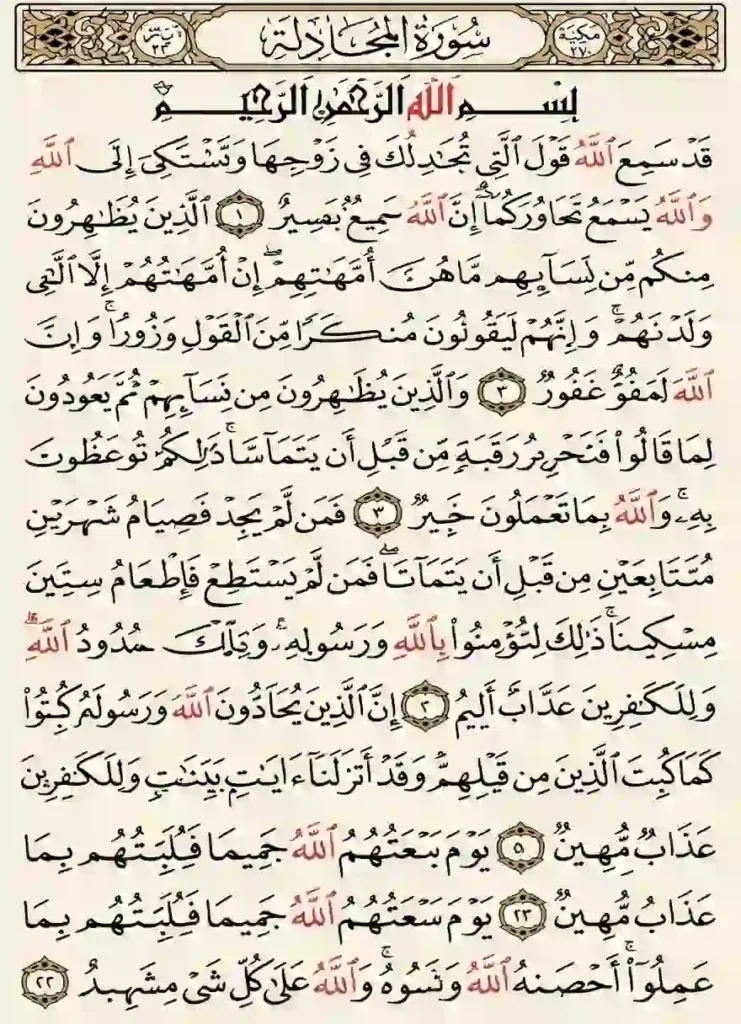
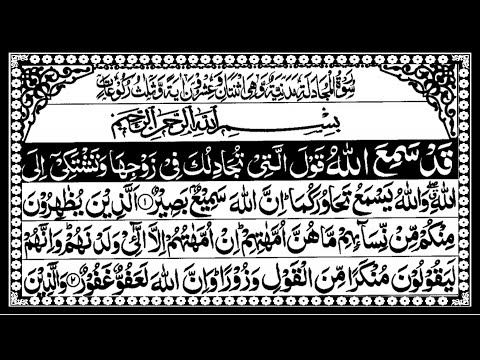
| 1. قَدْ سَمِعَ اللَّهُ قَوْلَ الَّتِي تُجَادِلُكَ فِي زَوْجِهَا وَتَشْتَكِي إِلَى اللَّهِ وَاللَّهُ يَسْمَعُ تَحَاوُرَكُمَا ۚ إِنَّ اللَّهَ سَمِيعٌ بَصِيرٌ | Qad sami’a Allahu qawla allatee tujaadiluka fee zawjihaa wa tashtakee ila Allahi wallahu yasma’u tahawurakuma inna Allaha samee’un baseer | Allah has certainly heard the statement of the one who argues with you, [O Muhammad], concerning her husband and directs her complaint to Allah. And Allah hears your dialogue; indeed, Allah is Hearing and Seeing. |
| 2. الَّذِينَ يُظَاهِرُونَ مِنكُم مِّن نِّسَائِهِم مَّا هُنَّ أُمَّهَاتِهِم ۖ إِن أُمَّهَاتُهُمْ إِلَّا اللَّائِي وَلَدْنَهُمْ ۚ وَإِنَّهُمْ لَيَقُولُونَ مُنكَرًا مِّنَ الْقَوْلِ وَزُورًا ۚ وَإِنَّ اللَّهَ لَعَفُوٌّ غَفُورٌ | Alladheen yuzaahirun minkum min nisa’ihim maa hunna ummahaitihim in ummahatum illa allaa’ee waladn-ahum wa innahum layaqoolun munkara min alqawli wa zura wa inna Allaha la’afuwun ghafur | Those who pronounce zihar among you [to separate from their wives] – they are not their mothers. Their mothers are only those who gave them birth. And indeed, they are saying an objectionable statement and a falsehood. But indeed, Allah is Pardoning and Forgiving. |
| 3. وَالَّذِينَ يُظَاهِرُونَ مِن نِّسَائِهِمْ ثُمَّ يَعُودُونَ لِمَا قَالُوا فَعَلَيْهِمْ تَحْرِيرُ رَقَبَةٍ مِّن قَبْلِ أَن يَتَمَاسَّا ۚ ذَٰلِكُمْ تُوعَظُونَ بِهِ ۚ وَاللَّهُ بِمَا تَعْمَلُونَ خَبِيرٌ | Walladheen yuzaahirun min nisa’ihim thumma ya’udun lima qalu fa’alayhim tahrir raqabatin min qabli an yatamassaa dhalikum tu’azun bihi wallahu bima ta’malun khabir | And those who pronounce zihar from among you and then go back to what they said, [the obligation is] the freeing of a slave before they touch one another. You are warned [to avoid this], and Allah is Acquainted with what you do. |
| 4. فَمَن لَّمْ يَجِدْ فَصِيَامُ شَهْرَيْنِ مُتَتَابِعَيْنِ مِن قَبْلِ أَن يَتَمَاسَّا ۖ فَمَن لَّمْ يَسْتَطِعْ فَإِطْعَامُ سِتِّينَ مِسْكِينًا ۚ ذَٰلِكَ لِتُؤْمِنُوا بِاللَّهِ وَرَسُولِهِ ۚ وَتِلْكَ حُدُودُ اللَّهِ ۗ وَلِلْكَافِرِينَ عَذَابٌ أَلِيمٌ | Faman lam yajid fasiyamu shahrayni mutatabI’ayni min qabli an yatamassaa faman lam yastati’ fa itaa’amu sitteen miskinan dhalika litu’minoo billahi wa rasulih wa tilka hudud Allah wa lil kafireen azabun aleem | And whoever finds not [the means] – then the feeding of sixty poor persons. That is for you to believe [completely] in Allah and His Messenger; and those are the limits of Allah. And for the disbelievers is a painful punishment. |
| 5. إِنَّ الَّذِينَ يُحَادُّونَ اللَّهَ وَرَسُولَهُ كُبِتُوا كَمَا كُبِتَ الَّذِينَ مِن قَبْلِهِمْ ۚ وَقَدْ أَنزَلْنَا آيَاتٍ بَيِّنَاتٍ ۚ وَلِلْكَافِرِينَ عَذَابٌ مُّهِينٌ | Inna alladheen yuhaaddun Allaha wa rasulahu kubitoo kama kubit alladheen min qablihim wa qad anzalna ayatin bayyinat wa lil kafireen azabun muhin | Indeed, those who oppose Allah and His Messenger will be among the most humiliated. Allah has written, “I will surely overcome, I and My messengers.” Indeed, Allah is Powerful and Exalted in Might. |
| 6. لَا تَجِدُ قَوْمًا يُؤْمِنُونَ بِاللَّهِ وَالْيَوْمِ الْآخِرِ يُوَادُّونَ مَن حَادَّ اللَّهَ وَرَسُولَهُ وَلَوْ كَانُوا آبَاءَهُمْ أَوْ أَبْنَاءَهُمْ أَوْ إِخْوَانَهُمْ أَوْ عَشِيرَتَهُمْ ۚ أُولَٰئِكَ كَتَبَ فِي قُلُوبِهِمُ الْإِيمَانُ وَأَيَّدَهُم بِرُوحٍ مِّنْهُ ۚ وَيُدْخِلُهُمْ جَنَّاتٍ تَجْرِي مِن تَحْتِهَا الْأَنْهَارُ خَالِدِينَ فِيهَا ۚ رَضِيَ اللَّهُ عَنْهُمْ وَرَضُوا عَنْهُ ۚ أُولَٰئِكَ حِزْبُ اللَّهِ ۚ أَلَا إِنَّ حِزْبَ اللَّهِ هُمُ الْمُفْلِحُونَ | La tajid qawman yu’minun billahi wa alyawm alakhir yuwidda un man hadd Allaha wa rasulahu wa law kanu aba’ahum aw abnaa’ahum aw ikhwanuhum aw ashiratahum ula’ika kataba fee qulubihim aliman wa ayyadahum biruh minh wa yudkhiluhum jannat tajri min tahtiha alanharu khalideen fiha radi Allahu anhum wa radoo anh ula’ika hizb Allah ala inna hizb Allah hum almuflihun | You will not find a people who believe in Allah and the Last Day while they show affection to those who have opposed Allah and His Messenger, even if they were their fathers or their sons or their brothers or their kindred. Those – He has written faith upon their hearts and supported them with spirit from Him. And We will admit them to gardens beneath which rivers flow, wherein they will abide eternally. Allah is pleased with them, and they are pleased with Him – those are the party of Allah. Unquestionably, the party of Allah – they are the successful ones. |
| 7. يَا أَيُّهَا الَّذِينَ آمَنُوا لَا تَتَوَلَّوا قَوْمًا غَضِبَ اللَّهُ عَلَيْهِمْ قَدْ يَئِسُوا مِنَ الْآخِرَةِ كَمَا يَئِسَ الْكُفَّارُ مِنْ أَصْحَابِ الْقُبُورِ | Ya ayyuha alladheen amanu la tatawalla qawman ghadiba Allahu alayhim qad ya’isoo min alakhira kama ya’is alkuffar min ashab alqubur | O you who have believed, do not take as allies a people with whom Allah has become angry. They have despaired of the Hereafter just as the disbelievers have despaired of the inhabitants of the graves. |
| 8. يَا أَيُّهَا الَّذِينَ آمَنُوا إِذَا نَادَيْتُمْ إِلَى الصَّلَاةِ مِن يَوْمِ الْجُمُعَةِ فَاسْعَوْا إِلَىٰ ذِكْرِ اللَّهِ وَذَرُوا الْبَيْعَ ۚ ذَٰلِكُمْ خَيْرٌ لَّكُمْ إِن كُنتُمْ تَعْلَمُونَ | Ya ayyuha alladheen amanu idha nadaytum ila alsalat min yawm aljumu’ah fasaa’w ila dhikr Allah wa dharoo albay’ dhalikum khayrun lakum in kuntum ta’lamun | O you who believe, when you are called to prayer on the day of Jumu’ah, hasten to the remembrance of Allah and leave off trade. That is better for you if you but know. |
| 9. فَإِذَا قُضِيَتِ الصَّلَاةُ فَانتَشِرُوا فِي الْأَرْضِ وَابْتَغُوا مِن فَضْلِ اللَّهِ وَاذْكُرُوا اللَّهَ كَثِيرًا لَّعَلَّكُمْ تُفْلِحُونَ | Fa idha qudiit alsalatu fantashayroo fee alarad wabtaghu min fadl Allah wadhkuru Allaha katheeran la’allakum tuflihun | And when the prayer has been concluded, disperse within the land and seek from the bounty of Allah, and remember Allah often that you might succeed. |
| 10. وَإِذَا رَأَوْا تِجَارَةً أَوْ لَهْوًا انفَضُّوا إِلَيْهَا وَتَرَكُوكَ قَائِمًا ۚ قُل مَا عِندَ اللَّهِ خَيْرٌ مِّنَ اللَّهْوِ وَمِنَ التِّجَارَةِ ۚ وَاللَّهُ خَيْرُ الرَّازِقِينَ | Wa idha ra’aw tijarah aw lahwan infaddu ilayha wa tarakuk qa’iman qul ma ‘ind Allah khayrun min allaahw wa min alttijarah wallahu khayru alrraziqin | But when they saw a transaction or amusement, [O Muhammad], they rushed to it and left you standing. Say, “What is with Allah is better than amusement and than transaction, and Allah is the best of providers.” |
| 11. لَا يَسْتَوِي الْقَاعِدُونَ مِنَ الْمُؤْمِنِينَ غَيْرُ أُولِي الضَّرَرِ وَالْمُجَاهِدُونَ فِي سَبِيلِ اللَّهِ بِأَمْوَالِهِمْ وَأَنفُسِهِمْ ۚ فَضَّلَ اللَّهُ الْمُجَاهِدِينَ بِأَمْوَالِهِمْ وَأَنفُسِهِمْ عَلَى الْقَاعِدِينَ دَرَجَةً ۚ وَكُلًّا وَعَدَ اللَّهُ الْحُسْنَىٰ ۚ وَفَضَّلَ اللَّهُ الْمُجَاهِدِينَ عَلَى الْقَاعِدِينَ بِأَجْرٍ عَظِيمٍ | La yastawee alqa’idun min almu’mineen ghayru uli aldarar wa almujahidun fee sabil Allah bi amwalihim wa anfusihim faddala Allah almujahideen bi amwalihim wa anfusihim ala alqa’ideen darajah wa kullan wa’ad Allah alhusnaa wa faddala Allah almujahideen ala alqa’ideen bi ajr ‘azim | Not equal are those believers who remain [at home] except those of injury and those who strive in the cause of Allah with their wealth and their lives. Allah has preferred those who strive with their wealth and their lives over those who remain [at home] by degrees. But to each, Allah has promised the best [reward]. And Allah has preferred the strivers over those who remain [at home] with a great reward. |
| 12. دَرَجَاتٌ مِّنْهُ وَمَغْفِرَةٌ وَرَحْمَةٌ ۚ وَكَانَ اللَّهُ غَفُورًا رَّحِيمًا | Darajat minhu wa maghfirah wa rahmah wa kan Allahu ghafu ran raheem | Degrees of honor from Him and forgiveness and mercy. And ever is Allah Forgiving and Merciful. |
| 13. إِنَّ الَّذِينَ آمَنُوا وَعَمِلُوا الصَّالِحَاتِ سَيَجْعَلُ لَهُمُ الرَّحْمَٰنُ وُدًّا | Inna alladheen amanu wa ‘amilu alsalihati sayaj’al lahum alrahman wudda | Indeed, those who have believed and done righteous deeds – the Most Merciful will appoint for them affection. |
| 14. فَإِنَّمَا يَسَّرْنَاهُ بِلِسَانِكَ لِتُبَشِّرَ بِهِ الْمُتَّقِينَ وَتُنذِرَ بِهِ قَوْمًا لُّدًّا | Fa innama yassarnahu bilisanik litubashshir bihi almuttaqin wa tundhir bihi qawman ludda | So We have only made this [Quran] easy in your own tongue that you might give good tidings to the righteous and warn thereby a hostile people. |
| 15. وَكَمْ أَرْسَلْنَا مِن نَّبِيٍّ قَبْلَكَ بِأُمَمٍ قَدْ خَلَتْ مِن قَبْلِهِمْ ۖ وَمَا يَأْتِيهِم مِّن نَّبِيٍّ إِلَّا كَانُوا بِهِ يَسْتَهْزِئُونَ | Wa kam arsalna min nabiyyin qablak bi umam qad khalat min qablihim wa ma ya’tihim min nabiyyin illa kanu bihi yastahzi’un | And We have already sent to communities before you messengers with clear proofs and revealed to them Scripture and the Criterion. And We have sent down to you the Remembrance that you might explain clearly to the people what was revealed to them. |
| 16. كَذَّبُوا بِآيَاتِنَا فَقَضَيْنَا عَلَىٰ الَّذِينَ كَفَرُوا ۖ فَكَيْفَ كَانَ نَكِيرِ | Kadhdhbu bi ayatina faqadayna ala alladheen kafaru fakayf kan nakeree | They denied Our signs, so We sent upon them punishment. So how was My repudiation? |
| 17. أَلَمْ تَرَ إِلَى الَّذِينَ تَوَلَّوْا قَوْمًا غَضِبَ اللَّهُ عَلَيْهِمْ مَا هُم مِّنكُمْ وَلَا مِنْهُمْ وَيَحْلِفُونَ عَلَىٰ الْكَذِبِ وَهُمْ يَعْلَمُونَ | Alam tara ila alladheen tawall qawman ghadiba Allahu alayhim ma hum minkum wa la minhum wa yahliful ala alkaldhib wa hum ya’lamun | Have you not observed those who take as allies a people upon whom is the wrath of Allah? They are neither of you nor of them, and they swear to falsehood while they know [they are lying]. |
| 18. أَعَدَّ اللَّهُ لَهُمْ عَذَابًا شَدِيدًا ۖ إِنَّهُمْ سَاءَ مَا كَانُوا يَعْمَلُونَ | A’add Allahu lahum azaban shadidan innahum saa ma kanu ya’malun | Allah has prepared for them a severe punishment. Indeed, it is evil that they were doing. |
| 19. اتَّخَذُوا أَيْمَانَهُمْ جُنَّةً فَصَدُّوا عَن سَبِيلِ اللَّهِ فَلَهُمْ عَذَابٌ مُّهِينٌ | Ittakhudhu aymanahum junnah fasadu ‘an sabil Allah falahum azabun muhin | They have taken their oaths as a shield and prevented [people] from the way of Allah, so they will have a humiliating punishment. |
| 20. لَن تُغْنِي عَنْهُمْ أَمْوَالُهُمْ وَلَا أَوْلَادُهُم مِّنَ اللَّهِ شَيْئًا ۚ أُولَٰئِكَ أَصْحَابُ النَّارِ ۖ هُمْ فِيهَا خَالِدُونَ | Lan tughnee anhum amwaluhum wa la awladuhum min Allah shay’a ula’ika ashab alnnar hum fiha khalidun | Their wealth and their children will not avail them against Allah at all. Those are the companions of the Fire; they will abide therein eternally. |
| 21. يَوْمَ يَبْعَثُهُمُ اللَّهُ جَمِيعًا فَيَحْلِفُونَ لَهُ كَمَا يَحْلِفُونَ لَكُمْ ۖ وَيَحْسَبُونَ أَنَّهُمْ عَلَىٰ شَيْءٍ ۚ أَلَا إِنَّهُمْ هُمُ الْكَاذِبُونَ | Yawm yab’athuhum Allahu jami’an fayahlifun lahu kama yahliful lakum wa yahsabun annahum ala shay’ ala innahum hum alkadhbun | On the day when Allah will resurrect them all, they will swear to Him as they swear to you, and they think that they are upon something. Unquestionably, it is they who are the liars. |
| 22. اسْتَحْوَذَ عَلَيْهِمُ الشَّيْطَانُ فَأَنسَاهُمْ ذِكْرَ اللَّهِ ۚ أُولَٰئِكَ حِزْبُ الشَّيْطَانِ ۚ أَلَا إِنَّ حِزْبَ الشَّيْطَانِ هُمُ الْخَاسِرُونَ | Istahwadh alayihim alshaytan fa ansahum dhikr Allah ula’ika hizb alshaytan ala inna hizb alshaytan hum alkhusirun | Satan has overcome them and so has caused them to forget the remembrance of Allah. Those are the party of Satan. Unquestionably, the party of Satan – they will be the losers. |
Surah Al-Mujadilah (The Disputant) – Chapter 58 of the Quran
Also Read: Quran Stories in English For Kids
Qur’an References
Two verses worth exploring further, with short meanings and direct links:
- Surah Al-Mujadilah, Ayah 1 — Allah confirms He heard the woman’s plea and every word she exchanged with the Prophet ﷺ. Read on Quran.com
- Surah Al-Mujadilah, Ayah 11 — Believers who make room for others and seek knowledge are promised elevated ranks. Read on Quran.com
Hadith References
Two hadith that connect naturally with this chapter’s themes of speech and knowledge:
- Sahih al-Bukhari 6018 — The Prophet ﷺ said a true believer should either speak well or stay silent, alongside honouring guests and neighbours. View on Sunnah.com
- Sahih Muslim 2699a — The Prophet ﷺ said whoever travels a path seeking knowledge is given an easy path to Paradise by Allah. View on Sunnah.com
Hanafi Fiqh Resources for Further Study
For readers who want a deeper, classical Hanafi perspective on family rulings mentioned in this surah, two well-known titles are worth locating in a library or archive:
- Al-Hidayah fi Sharh Bidayat al-Mubtadi by Burhan al-Din al-Marghinani
- Radd al-Muhtar ala al-Durr al-Mukhtar by Ibn Abidin
Where to Learn More
For further discussion and community-driven Q&A on topics like this, two long-running platforms are worth bookmarking:
- Islamic Teachings Forum — a community space for asking questions about Qur’an and fiqh topics.
- IslamQA — a large archive of scholarly answers on everyday Islamic questions.
You can also read more general background on this chapter via Wikipedia’s entry on Al-Mujadila or Britannica’s overview of the Qur’an for wider historical context.
Categories: PRAYER ,ALMS , SAWN & The Holy Quran, Quran Jaz 1- 114
Study With Learn Quran for Free
If this chapter sparked your interest, our team at Learn Quran for Free offers guided, verse-by-verse lessons for readers at any level. Reach out on WhatsApp at +92 301 7363500 or email [email protected] to book a free trial class.
Those who want Taweez, Naqash of Surah Al-Mujadilah Benefits , please send contact by email- [email protected]
Download Surah Al-Mujadilah
Free Download Surah Al-Mujadilah Google Drive Link – ( Download)

Frequently Asked Questions
What is Surah Al-Mujadilah about?
It’s about a woman’s plea to the Prophet ﷺ over an unfair divorce custom called zihar, and it sets a fair, practical solution in its place.
Why is it called Al-Mujadilah?
The name comes from the Arabic word for “pleading” or “arguing,” referring to the woman who pleaded her case in the opening verse.
What is the main lesson of Surah Al-Mujadilah ayat 1?
It teaches that Allah hears every complaint, even quiet ones spoken in private, and responds with justice and mercy.
How many verses does Surah Al-Mujadilah have?
It contains 22 verses and belongs to the 28th juz, revealed during the Madinan period of the Prophet’s ﷺ mission.
What are the benefits of reading Al-Mujadilah regularly?
It strengthens understanding of fair speech, family rights, and the honour Allah gives to sincere knowledge-seekers among believers.
Final Thoughts
Surah Al-Mujadilah proves that scripture can be deeply personal and universally practical at once. One woman’s private plea became a lasting lesson on justice, kindness, and the value of knowledge. Read it slowly, and let it reshape how you speak and listen to others.
Recommended For You
- Quran Juz 1 to 30 List Free PDF Download
- Tracing Quran Juz 1-10 by Bil-Thikr Productions
- Tracing Quran Juz 11-20 by Bil-Thikr Productions
- Tracing Quran Juz 21-30 by Bil-Thikr Productions
- Tracing The Quran Juz By Juz: Download All 30 Parts