


Surah Al-Mumtahanah might be one of Islam’s most misunderstood chapters, yet it carries lessons that reshape how we approach friendships and allegiances. This surah teaches believers a critical lesson: loyalty to Allah must always come before loyalty to worldly relationships. Whether you’re navigating complex friendships or questioning where your true commitments lie, al mumtahanah surah offers clarity that modern life desperately needs.
Amazon Book Recommendation:Tafsir ibn Kathir ( 8 Vols. set) | তাফসীর ইবনে কাছীর (১ম-৮ম খণ্ড) – A detailed yet accessible explanation of Qur’anic verses with historical context and practical application for modern readers.
Understanding the Core Message
Al Mumtahina addresses a fundamental human struggle: who deserves our loyalty? In Prophet Muhammad’s time, believers faced impossible choices. Some had family members fighting against Islam. Others had close friends opposing the faith. The question wasn’t theoretical—it was deeply personal.
Why Surah Al-Mumtahanah Matters Today
The Loyalty Crisis
Modern society pulls us in conflicting directions constantly. Professional ambitions clash with religious principles. Friendships require compromises on values. Family pressure contradicts faith decisions. This surah provides a framework for navigating these conflicts without abandoning relationships or faith.
The Friendship Problem
Not every relationship serves your spiritual growth. Some friendships subtly discourage Islamic practice. Others mock your commitment or encourage compromises. Recognizing toxic relationships isn’t coldness—it’s wisdom. This surah teaches that distinction.
The Identity Question
Who are you, really? Are you defined by your relationships, your career, or your faith? This chapter challenges you to clarify your primary identity. When priorities conflict, your answer reveals your true self.
Also Read: The Holy Quran PDF Free Downloads
Surah Al-Mumtahanah (Chapter 60) – Complete Text
All 13 Verses: Arabic, Transliteration & English Translation
| Verse | Arabic Text | Transliteration | English Translation |
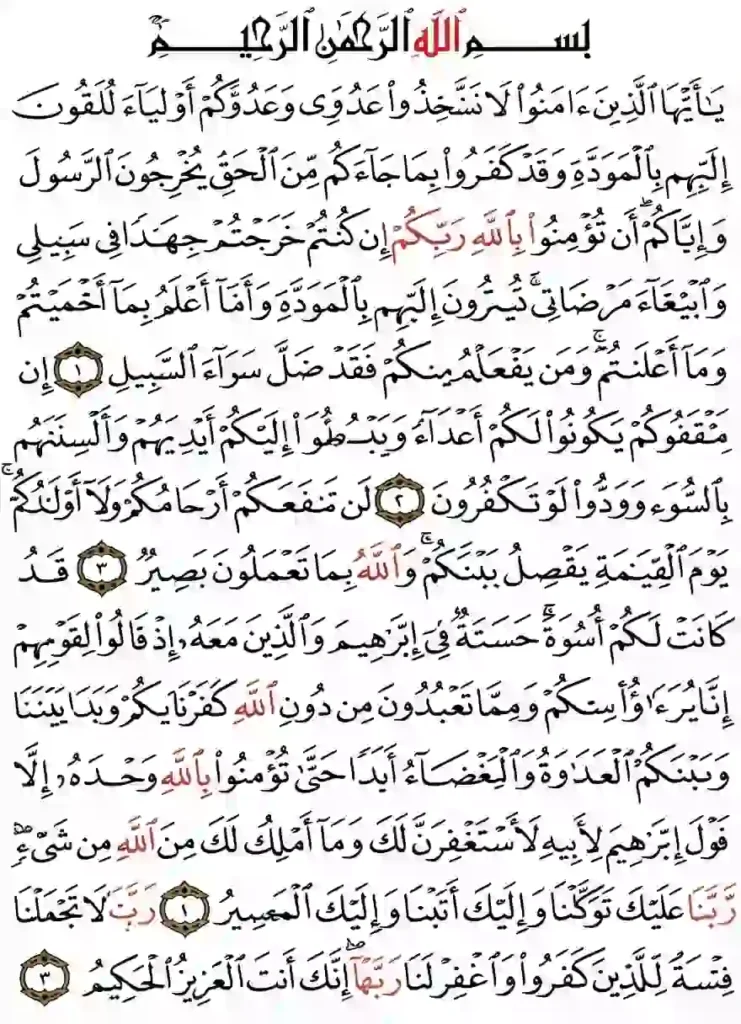
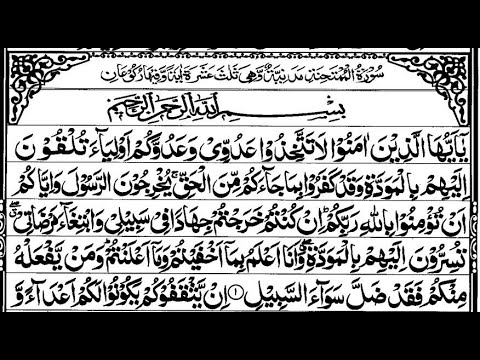
| 60:1 | يَا أَيُّهَا الَّذِينَ آمَنُوا لَا تَتَّخِذُوا عَدُوِّي وَعَدُوَّكُمْ أَوْلِيَاءَ تُلْقُونَ إِلَيْهِم بِالْمَوَدَّةِ وَقَدْ كَفَرُوا بِمَا جَاءَكُم مِّنَ الْحَقِّ يُخْرِجُونَ الرَّسُولَ وَإِيَّاكُمْ أَن تُؤْمِنُوا بِاللَّهِ رَبِّكُمْ | Yaa ayyuhal-lazeena aamanoo la tattakhizoo ‘aduwyy wa ‘aduwwakum awliyaa tulqoona ilayihim bil-mawwada wa qad kafaroo bimaa ja’akum minal-haqq yukhrijoonar-rasool wa iyyakum an tu’minoo billaahi rabbikum | O you who have believed, do not take My enemies and your enemies as allies, extending to them affection while they have disbelieved in what came to you of the truth, expelling the Messenger and yourselves [only] because you believe in Allah, your Lord. |
| 60:2 | إِن تَخْرُجُوا جِهَادًا فِي سَبِيلِي وَابْتِغَاءَ مَرْضَاتِي تُسِرُّونَ إِلَيْهِم بِالْمَوَدَّةِ وَأَنَا أَعْلَمُ بِمَا أَخْفَيْتُمْ وَمَا أَعْلَنتُمْ ۚ وَمَن يَفْعَلْهُ مِنكُمْ فَقَدْ ضَلَّ سَوَاءَ السَّبِيلِ | In takhrujoojihadan fee sabeelee wabtighaa mardhati tusirroona ilayihim bil-mawwada wa ana a’lamu bimaa akhfaitum wa maa a’lantum wa man yaf’alhu minkum faqad dhalla sawaa as-sabeel | If you go forth for jihad in My cause and seeking My approval, [concealing] your affection for them. But I am most knowing of what you conceal and what you declare. And whoever does that among you has certainly strayed from the soundness of the way. |
| 60:3 | إِن يَثْقَفُوكُمْ يَكُونُوا لَكُمْ أَعْدَاءً وَيَبْسُطُوا إِلَيْكُمْ أَيْدِيَهُمْ وَأَلْسِنَتَهُمْ بِالسُّوءِ وَوَدُّوا لَوْ تَكْفُرُونَ | In yathqifookum yakoonoo lakum a’daa wa yabasutoo ilaikum aydiyahum wa alsinatahum bis-soo wa wadoo law takfuroon | If they gain dominance over you, they would be to you enemies and extend against you their hands and their tongues with evil, and they wish that you would disbelieve. |
| 60:4 | قَدْ كَانَتْ لَكُمْ أُسْوَةٌ حَسَنَةٌ فِي إِبْرَاهِيمَ وَالَّذِينَ مَعَهُ إِذْ قَالُوا لِقَوْمِهِمْ إِنَّا بُرَآءُ مِنكُمْ وَمِمَّا تَعْبُدُونَ مِن دُونِ اللَّهِ كَفَرْنَا بِكُمْ وَبَدَا بَيْنَنَا وَبَيْنَكُمُ الْعَدَاوَةُ وَالْبَغْضَاءُ أَبَدًا حَتَّىٰ تُؤْمِنُوا بِاللَّهِ وَحْدَهُ ۖ إِلَّا قَوْلَ إِبْرَاهِيمَ لِأَبِيهِ لَأَسْتَغْفِرَنَّ لَكَ وَمَا أَمْلِكُ لَكَ مِنَ اللَّهِ مِن شَيْءٍ ۖ رَّبَّنَا عَلَيْكَ تَوَكَّلْنَا وَإِلَيْكَ أَنَبْنَا وَإِلَيْكَ الْمَصِيرُ | Qad kanat lakum uswatun hasanatun fee Ibraaheem wallazeena ma’ahu iz qaaloo liqawmihim inna buraaa’u minkum wa mimma ta’budoon min doonil-laah kafarnaaa bikum wa bada baynana wa baynakumul-‘adawatu wal-baghdhaa’ abada hatta tu’minoo billaahi wahdahu illa qawla Ibraaheem li-abeehi la-astaghfiranna laka wa maa amliku laka minal-laah min shay, rabbana alaikak tawakkalna wa ilaika anabna wa ilaikal-maseer | There has already been for you an excellent pattern in Abraham and those with him, when they said to their people, “Indeed, we are disassociated from you and from whatever you worship other than Allah. We have rejected you, and there has arisen, between us and you, enmity and hatred forever—unless you believe in Allah alone.” Except for the saying of Abraham to his father, “I will surely ask forgiveness for you, but I have not ability to do anything for you against Allah. Our Lord, upon You we have relied, and to You we have returned, and to You is the destination.” |
| 60:5 | رَبَّنَا لَا تَجْعَلْنَا فِتْنَةً لِّلَّذِينَ كَفَرُوا وَاغْفِرْ لَنَا رَبَّنَا ۖ إِنَّكَ أَنتَ الْعَزِيزُ الْحَكِيمُ | Rabbana la taj’alna fitnatan lillazeena kafaroo waghfir lana rabbana innaka antal-‘azizul-hakeem | Our Lord, make us not [objects of] torment for the disbelievers and forgive us, our Lord. Indeed, it is You who is the Exalted in Might, the Wise. |
| 60:6 | قَدْ كَانَ لَكُمْ فِيهِمْ أُسْوَةٌ حَسَنَةٌ لِّمَن كَانَ يَرْجُو اللَّهَ وَالْيَوْمَ الْآخِرَ ۚ وَمَن يَتَوَلَّ فَإِنَّ اللَّهَ هُوَ الْغَنِيُّ الْحَمِيدُ | Qad kaana lakum feehim uswatun hasanatan liman kaana yarjoul-laaha wal-yawmal-aakhir wa man yatawalla fa-innal-laaha huwal-ghaniyyul-hameed | There has certainly been for you in them an excellent example for anyone whose hope is in Allah and the Last Day. But whoever turns away—then indeed, Allah is the Free of need, the Praiseworthy. |
| 60:7 | عَسَىٰ اللَّهُ أَن يَجْعَلَ بَيْنَكُمْ وَبَيْنَ الَّذِينَ عَادَيْتُم مِّنْهُم مَّوَدَّةً ۚ وَاللَّهُ قَدِيرٌ ۚ وَاللَّهُ غَفُورٌ رَّحِيمٌ | ‘Asa-al-laahu ay yaj’ala baynakum wa bayna-al-lazeena ‘aadaytum minhum mawwada, wallaahu qadir wa wallaahu ghafoorun raheem | Perhaps Allah will put, between you and those to whom you have been enemies among them, affection. And Allah is competent, and Allah is Forgiving and Merciful. |
| 60:8 | لَا يَنْهَاكُمُ اللَّهُ عَنِ الَّذِينَ لَمْ يُقَاتِلُوكُمْ فِي الدِّينِ وَلَمْ يُخْرِجُوكُم مِّن دِيَارِكُمْ أَن تَبَرُّوهُمْ وَتُقْسِطُوا إِلَيْهِمْ ۚ إِنَّ اللَّهَ يُحِبُّ الْمُقْسِطِينَ | La yanhakumul-laahu ‘anil-lazeena lam yuqaatiloookum fee ad-deeni wa lam yukhrijookum min diyaarikum an tabarroo hum wa tuqsitoo ilayihim, innal-laaha yuhibbul-muqsitteen | Allah does not forbid you from those who do not fight you because of religion and do not expel you from your homes—from being righteous toward them and acting justly toward them. Indeed, Allah loves those who act justly. |
| 60:9 | إِنَّمَا يَنْهَاكُمُ اللَّهُ عَنِ الَّذِينَ قَاتَلُوكُمْ فِي الدِّينِ وَأَخْرَجُوكُم مِّن دِيَارِكُمْ وَظَاهَرُوا عَلَىٰ إِخْرَاجِكُمْ أَن تَوَلَّوْهُمْ ۚ وَمَن يَتَوَلَّهُمْ فَأُولَٰئِكَ هُمُ الظَّالِمُونَ | Innama yanhakumul-laahu ‘anil-lazeena qaataluukum fee ad-deeni wa akhrajookum min diyaarikum wa zaaharo ‘alaa ikhraajakum an tawallawhum, wa man yatawallahum fa-ola-ika humuz-zaalimoon | Allah only forbids you from those who fight you because of religion and expel you from your homes and aid in your expulsion—[forbids] that you make allies of them. And whoever makes allies of them, then it is those who are the wrongdoers. |
| 60:10 | يَا أَيُّهَا الَّذِينَ آمَنُوا إِذَا جَاءَكُمُ الْمُؤْمِنَاتُ مُهَاجِرَاتٍ فَامْتَحِنُوهُنَّ ۖ اللَّهُ أَعْلَمُ بِإِيمَانِهِنَّ ۖ فَإِنْ عَلِمْتُمُوهُنَّ مُؤْمِنَاتٍ فَلَا تَرْجِعُوهُنَّ إِلَى الْكُفَّارِ ۖ لَا هُنَّ حِلٌّ لَّهُمْ وَلَا هُمْ حِلٌّ لَّهُنَّ ۖ وَآتُوهُنَّ مَا أَنفَقُوا ۚ وَلَا جُنَاحَ عَلَيْكُمْ أَن تَنكِحُوهُنَّ إِذَا آتَيْتُمُوهُنَّ أُجُورَهُنَّ ۚ وَلَا تُمْسِكُوا بِعِصَمِ الْكَوَافِرِ وَاسْأَلُوا مَا أَنفَقْتُمْ وَلْيَسْأَلُوا مَا أَنفَقُوا ۚ ذَٰلِكُمْ حُكْمُ اللَّهِ ۖ يَحْكُمُ بَيْنَكُمْ ۚ وَاللَّهُ عَلِيمٌ حَكِيمٌ | Yaa ayyuhal-lazeena aamanoo iza jaa-akumul-mu’minaatu muhajiraat fam-tahinoohunna, allaahu a’lamu bi-eemaanahunna, fa-in ‘alimtumohunna mu’minaatin fala tarji’oohunna ilal-kuffaar, la hunna hillun lahum wa laa hum hillun lahunna wa aatoo hunna maa anfaqoo wa laa junaaha ‘alaikum an tankihoo hunna iza aataitumoo hunna ujoorahunna wa laa tumsikoo bi-‘issamil-kawafir was-aloo maa anfaqtum wa lyas-aloo maa anfaqoo, zaalikum hukumul-laah yahkum baynakum wallaahu ‘aleemun hakeem | O you who have believed, when the believing women come to you as emigrants, examine them. Allah is most knowing as to their faith. And if you know them to be believers, then do not return them to the disbelievers; [these women] are not lawful for the disbelievers, nor are the disbelievers lawful for them. But give the disbelievers what they have spent. And there is no blame upon you if you marry them when you have given them their due compensation. And hold not to marriage bonds with disbelieving women, but ask for what you have spent and let them ask for what they have spent. That is the judgment of Allah; He judges between you. And Allah is Knowing and Wise. |
| 60:11 | وَإِن فَاتَكُمْ شَيْءٌ مِّن أَزْوَاجِكُمْ إِلَى الْكُفَّارِ فَعَاقَبْتُمْ فَآتُوا الَّذِينَ ذَهَبَتْ أَزْوَاجُهُمْ مِثْلَ مَا أَنفَقُوا ۚ وَاتَّقُوا اللَّهَ الَّذِي أَنتُم بِهِ مُؤْمِنُونَ | Wa in faatakum shay-un min azwajikum ilal-kuffaar fa’aaqabtum fa-aatoowallazеena zahabat azwajuhum misla maa anfaqoo wattaqul-laah allaazee antum bihi mu’minoon | And if any of your wives go away to the disbelievers from which you obtain [something], then give those whose wives have gone the equivalent of what they had spent. And fear Allah, in whom you are believers. |
| 60:12 | يَا أَيُّهَا النَّبِيُّ إِذَا جَاءَكَ الْمُؤْمِنَاتُ يُبَايِعْنَكَ عَلَىٰ أَن لَّا يُشْرِكْنَ بِاللَّهِ شَيْئًا وَلَا يَسِقْنَ وَلَا يَزِنِينَ وَلَا يَقْتُلْنَ أَوْلَادَهُنَّ وَلَا يَأْتِينَ بِبُهْتَانٍ يَفْتَرِينَهُ بَيْنَ أَيْدِيهِنَّ وَأَرْجُلِهِنَّ وَلَا يَعْصِينَكَ فِي مَعْرُوفٍ ۙ فَبَايِعْهُنَّ وَاسْتَغْفِرْ لَهُنَّ اللَّهَ ۚ إِنَّ اللَّهَ غَفُورٌ رَّحِيمٌ | Yaa ayyuhan-nabiyyu iza ja-aka al-mu’minaatu yubayi’naka ‘alaa allaa yushrikna billaahi shay-an wa laa yasiqna wa laa yazeena wa laa yaqtulna awladahunna wa laa ya-teena bi-buhtanin yaftareena bayna aydihinna wa arjulihinna wa laa ya’seenaka fee ma’roof, fabayi’hunna wastaghfir lahunnal-laah, innal-laaha ghafoorun raheem | O Prophet, when the believing women come to you pledging to you that they will not associate anything with Allah, nor will they steal, nor will they commit unlawful sexual intercourse, nor will they kill their children, nor will they bring forth a scandal they have invented between their arms and legs, nor will they disobey you in what is right—then accept their pledge, and ask Allah’s forgiveness for them. Indeed, Allah is Forgiving and Merciful. |
| 60:13 | يَا أَيُّهَا الَّذِينَ آمَنُوا لَا تَتَوَلَّوْا قَوْمًا غَضِبَ اللَّهُ عَلَيْهِمْ قَدْ يَئِسُوا مِنَ الْآخِرَةِ كَمَا يَئِسَ الَّذِينَ كَفَرُوا مِنْ أَصْحَابِ الْقُبُورِ | Yaa ayyuhal-lazeena aamanoo laa tawallaw qawman ghadibul-laahu ‘alaihim qad ya-isoo minal-aakhirah kamaa ya-isal-lazeena kafaroo min ashabil-quboor | O you who have believed, do not take as allies a people with whom Allah has become angry, having despaired of [their salvation in] the Hereafter—the way the disbelievers have despaired of the residents of the graves. |
Also Read: The Clear Quran PDF Free Download – Quran Mualim 2025
Key Themes by Verse Group
Verses 1-3: The Warning Against False Loyalty
These opening verses establish the surah’s primary theme: don’t befriend Allah’s enemies while claiming faith. Concealing affection for them while fighting them is forbidden hypocrisy.
Verses 4-6: The Example of Abraham
Abraham and his companions demonstrate the proper stance toward those who reject faith. Their loyalty to Allah superseded all other relationships, yet Abraham’s kindness to his father remained constant.
Verses 7-9: The Balance of Justice
Allah clarifies the nuance many miss. You may show kindness to peaceful non-believers. Only those who fight your faith and expel you from homes are to be treated as enemies. Justice toward others is always required.
Verse 10-11: The Oath of Allegiance
This section addresses women pledging allegiance to the Prophet, establishing Islamic values and the practical implications of migration and loyalty.
Verses 12-13: The Covenant and Final Warning
Women pledge not to commit shirk, theft, adultery, infanticide, slander, or disobedience. The surah closes by warning against allying with those who’ve lost hope in the Hereafter.
Surah Al-Mumtahanah: Quick Reference
| Aspect | Details |
| Surah Number | 60th Chapter of the Qur’an |
| Total Verses | 13 Verses |
| Revelation | Madinah (revealed during the Madinah period) |
| Juz | 28th Juz |
| Named After | “The Woman to be Tested” (Al-Mumtahanah) |
| Primary Themes | Loyalty, allegiance, justice, Islamic values |
| Historical Context | Addresses women taking the oath at Hudaibiyyah treaty period |
| Main Message | Don’t befriend enemies of Islam; balance justice with faith |
Also Read: Madani Qaida English PDF Free Download
Practical Application Guide
| Verse Group | The Principle | How to Apply It | Expected Outcome |
| 1-3 | Don’t take enemies as allies | Set boundaries with those who oppose your faith | Clear conscience, spiritual integrity |
| 4-6 | Follow Abraham’s example | Maintain kindness while standing firm | Moral strength, lasting values |
| 7-9 | Justice toward peaceful people | Treat fair non-believers with kindness | Healthy relationships, good reputation |
| 10-11 | Accept those who migrate to faith | Welcome converts warmly | Stronger community, mutual support |
| 12-13 | Establish Islamic standards | Live by clear moral principles | Personal integrity, collective strength |
Also Read: Root word of Quran

Learn More About Surah Al-Mumtahanah
For comprehensive understanding and guided learning:
📱 WhatsApp: +923017363500
📧 Email: [email protected]
Explore these trusted Islamic platforms:
Reflection Questions
- Which verse speaks most directly to your current situation?
- What does “loyalty to Allah” mean in your daily life?
- How can you show justice toward others while maintaining your faith?
- Where do you need to strengthen your boundaries?
- What would Abraham do in your circumstances?
Key Qur’anic Verses from Surah Al-Mumtahanah
Verse 1: The Test of Friendship
Surah Al-Mumtahanah 60:1
Read on Alim.org – “O you who have believed, do not take My enemies and your enemies as allies, extending to them affection while they have disbelieved in what came to you of the truth.”
This opening verse sets the surah’s tone. Friendship cannot override faith-based principles. You honor relationships, but not at the cost of Islamic values.
Verse 2: The Balance of Mercy
Surah Al-Mumtahanah 60:8-9
Read on Alim.org – “Allah does not forbid you from those who do not fight you because of religion and do not expel you from your homes—from being righteous toward them and acting justly toward them.”
Here’s the nuance many miss. You can be kind to non-believers who aren’t hostile. Justice and compassion don’t require abandoning faith. The balance is achievable.
Also Read: Read Quran Online For Free: Access Sacred Text
Benefits of Surah Al-Mumtahanah for Your Life
1. Clarity in Relationships
The surah provides a clear test: Does this relationship pull me closer to Allah or further away? This simple question eliminates confusion and indecision.
2. Emotional Freedom
Constant compromises create internal conflict. Al mumtahanah surah permission to prioritize your faith releases the emotional burden of divided loyalties. You’re free to choose yourself.
3. Spiritual Strength
Believers tested and standing firm become spiritually resilient. You develop confidence that your faith is worth protecting. This strength compounds over time.
4. Better Judgment
Understanding true loyalty improves all your relationships. You invest more thoughtfully. You set healthier boundaries. You attract people who respect your values.
5. Peace of Mind
Living aligned with your principles brings deep peace. No more internal conflict. No more wondering if you’ve compromised too much. This peace is invaluable.
Hadith References: Practical Guidance
Hadith 1: The Weight of Loyalty
Sunan Abu Dawood, Book 41, Hadith 4832
Read on Sunnah.com – The Prophet Muhammad (peace be upon him) emphasized that a believer’s love and hatred should be rooted in faith, not merely personal preference or cultural expectations.
This hadith reinforces the surah’s message. Your emotional attachments should follow your faith convictions, not contradict them.
Hadith 2: The Beauty of True Friendship
Jami’ at-Tirmidhi, Book 25, Hadith 3646
Read on Sunnah.com – The Prophet taught that the best companions are those who remind you of Allah when you see them and increase your desire to perform good deeds.
This describes the kind of friendships to cultivate. These relationships strengthen your faith rather than test it negatively.
Testing Loyalty: A Practical Framework
| Situation | The Test | Guidance from Surah | Your Action |
| Family opposes your faith | Do you compromise or stand firm? | Honor parents but don’t abandon Islam | Be respectful, remain steadfast |
| Friend mocks your values | Do you laugh along or speak up? | Don’t take enemies as allies | Set boundaries with compassion |
| Career demands Sunday work | Do you skip Jumu’ah for advancement? | Loyalty to Allah exceeds worldly gain | Seek alignment, not compromise |
| Relationship conflicts with Islamic practice | Do you change your faith or the relationship? | Know what you won’t compromise on | Choose faith-aligned paths |
| Social circle pressures alcohol/haram | Do you conform or decline? | Justice means kindness without participation | Decline, remain dignified |
Hanafi Jurisprudence on Loyalty and Relationships
For deeper fiqh insights on relationship ethics, consult:
- Bada’i al-Sana’i fi Tartib al-Shara’i by Al-Kasani – Addresses loyalty, contracts, and social obligations within Islamic law
- Al-Mabsut by Al-Sarakhsi – Discusses relationships, trust, and their Islamic foundations
These classical texts connect Qur’anic teachings to practical legal frameworks, showing how loyalty principles apply to everyday situations.
For broader context on Islamic ethics and moral philosophy, and the development of Islamic jurisprudence, explore these educational resources.
Categories: PRAYER ,ALMS , SAWN HAJJ & DUA , Hadith and Tafseer, The Holy Quran, Quran Jaz 1- 114
The Wisdom of Testing
Surah Al-Mumtahanah presents testing as beneficial, not cruel. When your loyalty is tested, you discover your true character. Are you easily swayed? Do you compromise convictions for comfort? Or do you stand firm while remaining compassionate?
These tests build spiritual maturity. You become less dependent on external validation and more rooted in internal conviction. Over time, you attract people and opportunities aligned with your values. Your life becomes more coherent, less fragmented.
Real-Life Application: Three Steps
Step 1: Identify Your Loyalties
Write down your top five relationships and values. Where do they align? Where do they conflict? Honest assessment reveals patterns.
Step 2: Establish Your Non-Negotiables
Decide what you won’t compromise on—prayer time, dietary laws, honesty, modesty, family respect. Make this list clear. Share it thoughtfully with people who matter.
Step 3: Act with Compassion
Boundaries don’t require coldness. You can be kind while firm. You can respect people while declining their invitations. You can love family while not participating in un-Islamic activities.
Moving Beyond the Test
The ultimate goal isn’t isolation—it’s integration. You want relationships that strengthen your faith. You want friends who encourage your growth. You want work that aligns with your values. These exist. The surah teaches you to seek them and protect them.
When loyalty is tested, you have clarity. When friendships require compromise, you have courage. When the world pulls you off-course, you have direction.
Those who want Taweez, Surah Al-Mumtahanah Benefits , please send contact by email- [email protected]
Download Surah Al-Mumtahanah
Free Download Surah Al-Mumtahanah Google Drive Link – ( Download)
Learn Quran for Free – QuranMualim
Deepen your understanding of Surah Al-Mumtahanah and other chapters with expert guidance:
📱 WhatsApp: +923017363500
📧 Email: [email protected]
Explore these trusted Islamic learning platforms:
- Islamic Teachings Community – Engage with scholars and learners
- Ask Islam Q&A – Detailed answers to Islamic questions
Conclusion:
Surah Al-Mumtahanah isn’t about isolation or harshness. It’s about authentic living. It’s about knowing who you are and standing by it. It’s about relationships rooted in shared values rather than convenience. It’s about loyalty to something greater than yourself.
The test isn’t punishment. It’s opportunity. Every moment you choose faith over compromise, you become stronger. Every friendship you navigate with wisdom and kindness reflects this surah’s true message. Every boundary you set with compassion honors both Allah and humanity.
You’re tested because Allah believes you can handle it. You’re given these challenges because you’re capable of growth. That’s not burden. That’s trust.
Start today. Examine one relationship. Apply one principle. Experience the peace that comes from authentic loyalty. This is what Surah Al-Mumtahanah promises, and it’s absolutely achievable.
Frequently Asked Questions
What does “Al-Mumtahanah” actually mean?
Al-Mumtahanah means “the one to be tested” or “the examining woman.” The surah addresses women taking allegiance pledges to Prophet Muhammad and tests all believers’ loyalty to Islam.
Can I be friends with non-Muslims according to this surah?
Yes. Surah Al-Mumtahanah permits friendship with non-hostile non-believers. You can be just and kind toward them while maintaining Islamic principles and not taking them as close confidants on matters of faith.
Does this surah mean I should cut off my family?
No. The surah teaches distinguishing between kindness and alliance. Honor and respect your family while maintaining firm Islamic convictions. Kindness to parents is actually commanded elsewhere in the Qur’an.
How do I know if a friendship is spiritually harmful?
Ask yourself: Does this person remind me of Allah? Do they encourage my prayers and good deeds? Do they respect my values? If answers are consistently no, the friendship likely needs boundaries.
What if everyone around me opposes my faith?
Surah Al-Mumtahanah teaches that this isolation is temporary. Stay steadfast. Seek community with believers. Your firmness attracts like-minded people. History shows that believers standing alone eventually find their tribe.
Also Read:
- Surah Muzammil PDF Free Download
- Virtues & Benefits of Surah Al Muzzammil
- Surah Muzammil Read Online With Benefits
- Read Surah Muzammil with Urdu Translation
- Surah Muzammil Urdu Tarjuma: Arabic & English
- Surah Muzammil Benefits: Summary & Meaning
Similar Posts:
- Surah Mulk PDF Download
- Virtues and Benefits Surah Mulk?
- Read Surah Al Mulk in English Translation
- Read Surah Mulk in Urdu Tarjuma Online
- Surah Mulk Transliteration: Roman Script
- Surah e Mulk Complete: Read, Listen & Study
- Surah Mulk Read Online: Listen & PDF Download
Similar Posts:
- Surah Hijr PDF English, Arabic & Urdu
- Surah Fath PDF English, Arabic & Urdu
- Surah Araf PDF English, Arabic & Urdu
- Surah Hud PDF English, Arabic & Urdu
- Surah Jinn PDF English, Arabic & Urdu
- Surah Insan PDF English, Arabic & Urdu
- Surah Imran PDF English, Arabic & Urdu
- Surah Hadid PDF English, Arabic & Urdu
- Surah Furqan PDF English, Arabic & Urdu
- Surah Ibrahim PDF English, Arabic & Urdu
- Surah e Yusuf PDF English, Arabic & Urdu
- Surah Baqarah PDF English, Arabic & Urdu
- Surah Mursalat PDF English, Arabic & Urdu
- Surah e Maryam PDF English, Arabic & Urdu
- Surah Ar Rahman PDF English, Arabic & Urdu