
Every Muslim parent wants their child to grow up with a strong connection to the Book of Allah. Today, enrolling your child in Quran classes for kids is easier than ever, because qualified teachers can now teach children at home through live video lessons. Whether you live in a city with few mosques nearby or you simply have a busy schedule, online learning gives your family flexibility without lowering the quality of education. Families worldwide already learn this way, from online Quran classes in the UK and online Quran classes in Australia to online Quran classes in Canada.
In this guide, you will learn what children study in a good program, the best age to begin, how to choose a teacher, and how to help your child stay motivated. By the end, you will know exactly what to look for before you enroll.
Why Quran Classes for Kids Matter
Childhood is the best time to build lasting habits. Young children absorb sounds, rhythm, and language quickly, which makes early recitation training far more effective than starting later in life. Structured Quran classes for kids help children in several important ways:
- Correct pronunciation: Children learn the Arabic letters and their exit points properly from the start, so bad habits never form.
- Strong Islamic identity: Daily contact with the Quran gives children confidence in their faith and values.
- Better focus and memory: Regular memorization practice sharpens concentration, and this often improves school performance too.
- Good character: Lessons about honesty, kindness, and respect shape behavior at home and in school.
Also Read: Root word of Quran
What Do Children Learn in a Good Program?
A well-designed course moves step by step. Children are never rushed, and each stage prepares them for the next one.
1. Noorani Qaida (Foundation Stage)
Beginners start with the Arabic alphabet, short vowels, and the basic rules of joining letters. This stage builds the reading skills every young learner needs before opening the Quran.
2. Quran Reading with Tajweed
Once the basics are strong, students begin reading the Quran with Tajweed rules. They practice clear pronunciation, proper stops, and smooth recitation under the guidance of a teacher who corrects mistakes instantly.
3. Memorization (Hifz)
Children who are ready can memorize short surahs first and then move on to longer sections. A revision plan is just as important as new lessons, so a good teacher always balances both.
4. Daily Duas and Islamic Basics
Many programs also teach everyday supplications, the six articles of faith, the five pillars of Islam, and simple stories of the prophets. These lessons turn knowledge into daily practice.
Best Age to Start
Quran classes for kids can usually begin at around four or five years old, once a child can sit with a teacher for a short lesson. However, older children and teenagers can also start at any time. A good teacher adjusts the pace, lesson length, and teaching style to the age and ability of the student. Short, friendly sessions work best for younger learners, while older students can handle longer lessons and more advanced goals.
Benefits of Learning Online
Online learning has become the first choice for many families, and online Quran classes for kids are growing fast. Here is why parents prefer it:
- Learn from home: No travel, no traffic, and no rushed evenings.
- One-on-one attention: Private sessions let the teacher focus fully on your child’s needs.
- Flexible timings: Classes can be scheduled around school, homework, and family time, even across different time zones.
- Parental supervision: You can sit nearby, listen to the lesson, and see your child’s progress yourself.
- Male and female tutors: Families can choose the teacher they feel most comfortable with.
- Safe environment: Children learn in the comfort and safety of their own home.
Also Read: Juz Amma 30 For School Students PDF Download
How to Choose the Right Quran Classes for Kids
Not every academy offers the same quality. Before you enroll your child, check these points carefully:
- Qualified teachers: Look for tutors who hold Ijazah or formal training in Tajweed and have real experience with children.
- Free trial class: A trial lesson lets you and your child meet the teacher and test the platform before paying anything.
- Clear curriculum: The academy should explain what your child will learn in the first three, six, and twelve months.
- Progress reports: Regular feedback helps you track improvement and spot areas that need more practice.
- Child-friendly teaching: Kind, patient teachers who use stories, praise, and simple examples keep children interested.
- Reliable technology: Clear audio, a digital whiteboard, and stable video make learning smooth.
- Fair and transparent fees: There should be no hidden costs, and monthly packages should be easy to understand.
Tips to Help Your Child Succeed
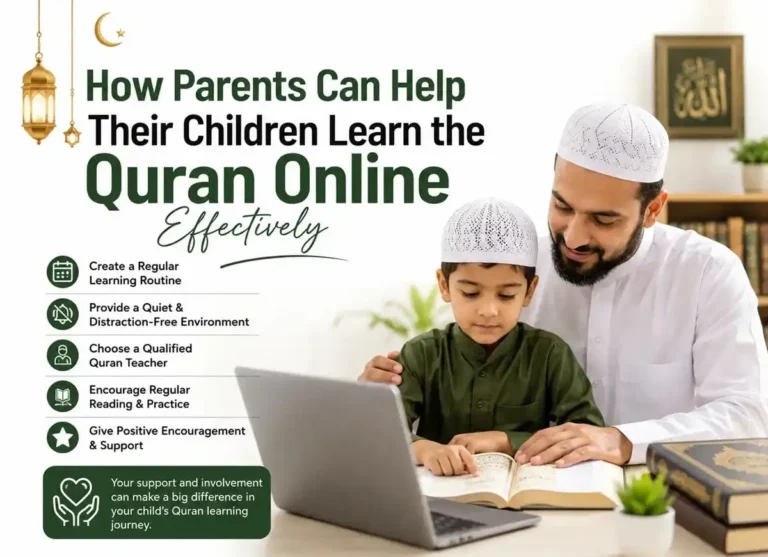
Parents play a big role in their child’s progress. To get the most out of Quran classes for kids, these simple habits make a real difference:
- Choose a fixed time every day so the lesson becomes part of the routine.
- Set up a quiet, tidy corner with a good device and headphones.
- Praise small achievements, such as learning a new letter or finishing a surah.
- Encourage ten minutes of daily revision between classes.
- Recite together as a family so your child sees that the Quran matters to everyone at home.
- Stay in touch with the teacher and ask how you can support learning.
How Long Does It Take to Learn?
Every child learns at a different speed in Quran classes for kids. On average, a beginner who attends three to five lessons a week can finish the basic reading stage in six to nine months. Reading the Quran fluently with Tajweed usually takes a year or more, and memorization depends on the child’s age, routine, and revision habits. Consistency matters far more than speed, so patience and steady practice always bring the best results.
Categories: PRAYER ,ALMS , SAWN & The Holy Quran, Quran Jaz 1- 114
Final Thoughts
Giving your child a strong Quranic foundation is one of the best gifts you can offer. With qualified teachers, a clear curriculum, and a loving learning environment, Quran classes for kids can shape your child’s faith, character, and confidence for life. Start with a trial lesson, observe how your child responds, and build a routine that your whole family can follow.
Frequently Asked Questions (FAQs)
1. What are Quran classes for kids?
They are structured lessons designed to teach children how to read, recite, and understand the Quran step by step. Programs usually begin with the Arabic alphabet and move on to Tajweed, memorization, and basic Islamic knowledge.
2. At what age should my child start learning the Quran?
Most children can begin at four or five years old. Older children can also start at any age, and a good teacher will adjust the lessons to their level.
3. Are online Quran classes effective for young children?
Yes. Online Quran classes for kids work well when they include live one-on-one sessions, a patient teacher, and parental support, children learn just as well online as they do in a classroom. Many families find it even more effective because lessons happen in a comfortable home setting.
4. How long should each class be?
Younger children usually do well with 25 to 30 minutes, while older students may study for 45 to 60 minutes. The teacher can adjust the length based on your child’s attention span.
5. Can my child learn Tajweed and memorization together?
Yes. Many students study Tajweed while memorizing short surahs, which helps them recite correctly from the beginning.
6. Do I need to know Arabic to help my child?
No. Parents do not need any Arabic knowledge. The teacher guides your child, and you only need to provide a quiet space, a regular schedule, and encouragement.
7. Is a free trial class available?
Most reputable academies offering Quran classes for kids provide a free trial so you can check the teacher, the teaching method, and the technology before you commit.
8. What do I need to start online lessons?
You need a laptop, tablet, or smartphone, a stable internet connection, and headphones. Most lessons run on common video platforms that are free and simple to use.
9. Can my daughter learn with a female teacher?
Yes. Many academies provide both male and female tutors, so families can choose the option that suits them best.
10. How can I check my child’s progress?
Ask the academy for regular progress reports, listen to a few minutes of each lesson, and have your child recite to you at home each week.
Recommended For You
- Quran Filetype PDF Free PDF Download
- A Quick Guide To Quran Tajweed Rules
- What is A Juz in Quran? Basic Information
- Quran PDF Arabic Only – Clear Arabic Script
- Quran Word By Word English Translation PDF
- Download Quran PDF With Urdu, Arabic & English
- Qur’an Juz by Juz PDF: A Journey Through The Holy Book
- Complete Quran Juz : Juz 1 To Juz 30 Free PDF Downloads