


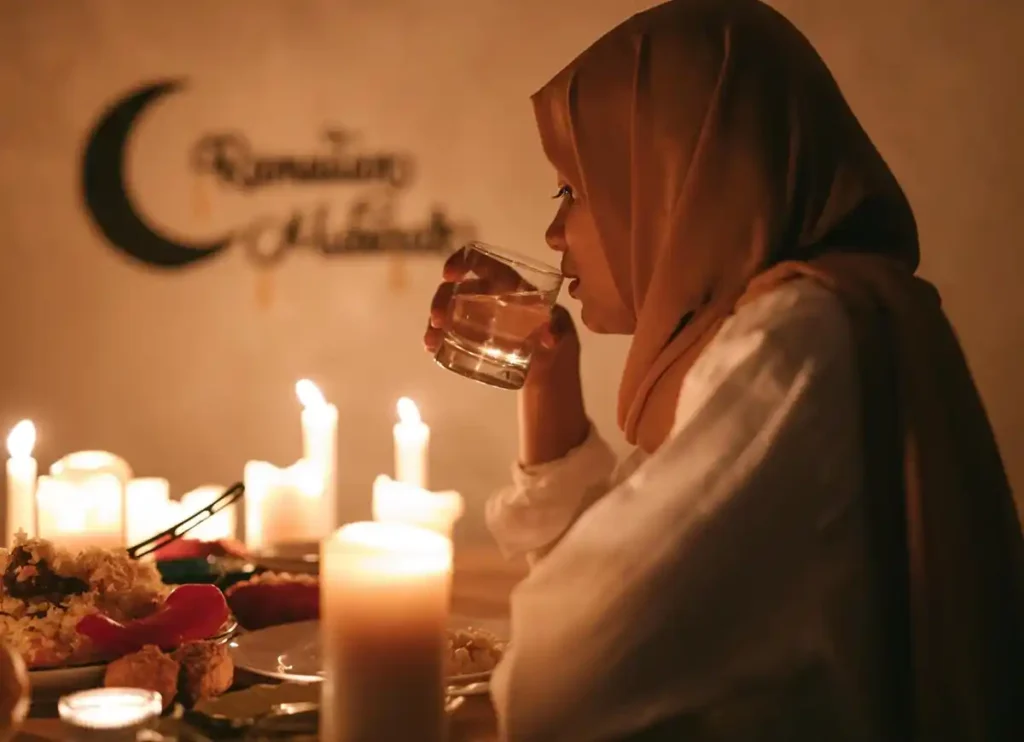
“Roza kholne ki dua” is the short supplication many Muslims say at sunset when they break the fast. It sounds simple, but in real life people still get stuck: “Which words are correct?” “Do I say it before the first sip?” “What if I’m at work or stuck in traffic?” This guide keeps it practical and calm.
Ramadan: A Guide to Fasting & Spiritual Growth (Amazon)
Arabic:
اَللّٰهُمَّ اِنَّی لَکَ صُمْتُ وَبِکَ اٰمَنْتُ وَعَلَيْکَ تَوَکَّلْتُ وَعَلٰی رِزْقِکَ اَفْطَرْتُ
Transliteration:
Allahumma inni laka sumtu, wa bika āmantu, wa ‘alayka tawakkaltu, wa ‘alā rizqika aftartu.
English Translation:
“O Allah, I fasted for You, I believe in You, I place my trust in You, and I break my fast with Your provision.”
Urdu Translation:
“اے اللہ! میں نے تیری خاطر روزہ رکھا، تجھ پر ایمان لایا، تجھ پر بھروسہ کیا، اور تیرے رزق سے روزہ افطار کرتا/کرتی ہوں۔”
Hindi Translation:
“ऐ अल्लाह! मैंने तेरे लिए रोज़ा रखा, तुझ पर ईमान लाया, तुझ पर भरोसा किया, और तेरे ही रिज़्क़ से रोज़ा खोल रहा/रही हूँ।”
The common problem Muslims face at iftar
In UK and US homes, iftar often happens in a rush. A child is hungry, the adhan is about to start, and everyone is checking the clock. Some people repeat a long dua from memory. Others stay silent, worried they’ll say it “wrong.” That pressure can steal the peace of the moment.
The key insight: keep the sunnah, keep the heart present
Islam makes iftar easy. You break the fast as soon as Maghrib enters. You thank Allah for His provision. You can say a short dua, and you can also make your own personal dua. The goal is gratitude, not perfection.
Qur’an reference 1: Allah is close and responds to dua
Surah Al-Baqarah (2:186)
Transliteration: Wa idhā sa’alaka ʿibādī ʿannī fa-innī qarīb, ujību daʿwata ad-dāʿi idhā daʿān.
Meaning (short): Allah is near and answers the caller when they call on Him: Surah Al-Baqarah 2:186 (Alim.org)
Qur’an reference 2: fasting has a clear ending time
Surah Al-Baqarah (2:187)
Transliteration: Thumma atimmū aṣ-ṣiyāma ilā al-layl.
Meaning (short): Complete the fast until night (sunset), then you may break it.: Surah Al-Baqarah 2:187 (Alim.org)
What to say at iftar: the most common duas people use
When people search “Iftar Dua,” they usually want a short, memorable line that matches the sunnah feeling of the moment. Many families read:
- Allahumma inni laka sumtu… (a popular wording in communities)
- Dhahaba adh-dhama’… (a well-known prophetic wording)
A helpful Hanafi-friendly approach is: break the fast on time, say a brief dua, and keep your heart grateful.
Hadith guidance: how the Prophet ﷺ broke his fast
The Sunnah gives us a simple pattern: break fast promptly, and keep it light and blessed.
Hadith reference 1: a beautiful dua at the moment of breaking the fast
Sunan Abu Dawood — Hadith 2357
Meaning (short): The Prophet ﷺ would say at iftar: thirst is gone, veins are refreshed, and reward is confirmed, if Allah wills. : Read the dua of the Prophet ﷺ at iftar (Abu Dawood 2357)
Hadith reference 2: break the fast with dates or water
Jami` at-Tirmidhi — Hadith 696
Meaning (short): The Prophet ﷺ would break fast with fresh dates, or dry dates, and if not available then with water. See how the Prophet ﷺ broke his fast (Tirmidhi 696)
Also Read: Ramadan Fasting Rules: Intimacy, Ghusl, Music/TV, Vitamins, Pregnancy

A simple “fiqh + real life” rule that reduces stress
Here’s the practical rule most people need: iftar begins when Maghrib time starts. Don’t delay without reason. If you’re unsure about the timetable, follow a trusted local masjid schedule or a reliable app used by your community.
In Ramadan, this one habit brings peace: stop debating at the table, and focus on worship and gratitude.
Solution: a quick iftar checklist you can follow daily
Use this in the UK/USA whether you’re at home, at the masjid, or at work.
- Confirm Maghrib time (local timetable).
- Make a short intention: “I’m breaking my fast for Allah.”
- Say your chosen dua briefly.
- Break with a date or wait if you can.
- Pray Maghrib, then eat calmly.
This is where Roza ki dua becomes real: not a long script, but a small moment of sincerity.
Suitable situations table
| Suitable situation | What to do in that moment | Keep it simple |
| Busy family table (kids hungry) | Say a short dua, break fast, then settle | One line is enough |
| Office break room (UK/USA) | Break with water/date, whisper dua | No need to be loud |
| Stuck in traffic at sunset | Pull over safely if possible, break with water | Safety first |
| Community iftar at masjid | Follow the adhan, break fast, pray | Don’t delay |
| Learning resources | Use trusted Islamic sites (example: www.quranmualim.com) | Learn steadily |
Three reliable background links for new readers
If you want quick, neutral background on iftar and Ramadan, these are easy reads:
- Wikipedia’s overview of iftar
- Britannica’s entry on ifṭār
- Islamic Relief UK’s guide to what iftar is and why it matters
Hanafi fiqh book titles to look up (titles only)
If you like reading traditional Hanafi references, search these titles in libraries or archives:
- Maraqi al-Falah (with Hashiyah al-Tahtawi)
- Al-Fatawa al-Hindiyya (Al-Fatawa al-‘Alamgiriyya)
- Kanz al-Daqa’iq
- Al-Ikhtiyar li Ta‘lil al-Mukhtar
- Sharh Ma‘ani al-Athar
Small habit tips that make iftar more meaningful
These are simple habits I’ve seen help families and students stay consistent:
- Keep dates and water ready five minutes before Maghrib.
- Let one person lead the dua so there’s no confusion.
- Make a short personal dua after the first sip (health, family, guidance).
- Avoid scrolling at iftar; give Allah that first minute.
- Teach children meaning, not just pronunciation.
And if you’re sharing food, remember: feeding others in Ramadan is a huge opportunity for reward and community warmth.
Categories: PRAYER ,ALMS , SAWN HAJJ & DUA , Hadith and Tafseer, The Holy Quran, Quran Jaz 1- 114
FAQ
Can I say the dua after I take the first sip?
Yes. It’s best to say it at the moment of iftar, but if you start eating first, you can still make dua right away.
What if I don’t remember any Arabic?
No problem. Make dua in English. Allah understands every language, and sincerity matters more than fluency.
Is “Allahumma laka sumtu…” always authentic?
Some wordings are popular in communities, but scholars discuss strength of chains. The safest approach is using well-known authentic supplications and making personal dua too.
Do I need to break fast with dates?
It’s a sunnah, not a strict requirement. If dates aren’t available, water is a beautiful and simple option.
How can I keep my iftar calm in Ramadan?
Prep early, keep one short dua, and avoid arguments at the table. A peaceful iftar often starts with good planning.
Conclusion
The best iftar is not the longest speech at the table. It’s a calm sunset, a grateful heart, and a steady sunnah routine. Choose a short Iftar dua you understand, break the fast on time, and make sincere personal dua every day of Ramadan. Roza kholne ki dua becomes powerful when it leads you back to gratitude and consistency.

Salatul Tasbih
- How To Perform Salatul Tasbih?
- Definition of Subhanallah and Its Meaning
- la ilaha illa anta subhanaka Inni Kuntu Minaz Zalimin
If You want to read daily Ramadan dua, Please visit this 30-day plan fo Ramadan
Recommended For You
- Ramadan Day 1 Prayers: How to Begin Your Month of Blessings
- Ramadan Day 2 Prayers: Strengthening Your Faith and Devotion
- Ramadan Day 3 Prayers: Embracing Patience and Gratitude
- Ramadan Day 4 Prayers: Deepening Your Connection with Allah
- Ramadan Day 5 Prayers: Fasting With Purpose and Focus
- Ramadan Day 6 Prayers: Seeking Forgiveness and Mercy
- Ramadan Day 7 Prayers: Reflecting on Your Spiritual Journey
- Ramadan Day 8 Prayers: Cultivating Humility and Peace
- Ramadan Day 9 Prayers: Your Relationship with the Quran
- Ramadan Day 10 Prayers: Seeking Protection from Evil and Harm
- Ramadan Day 11 Prayers: Embracing the Spirit of Charity
- Ramadan Day 12 Prayers: Finding Inner Peace through Worship
- Ramadan Day 13 Prayers: Showing Gratitude For Allah’s Blessings
- Ramadan Day 14 Prayers: Deepening Your Spiritual Focus
- Ramadan Day 15 Prayers: Strengthening Your Resolve in Faith
- Ramadan Day 16 Prayers: Connecting With Allah Through Dua
- Ramadan Day 17 Prayers: Embracing the Night of Decree
- Ramadan Day 18 Prayers: Reflecting on Your Growth and Sacrifice
- Ramadan Day 19 Prayers: Seeking Mercy and Forgiveness From Allah
- Ramadan Day 20 Prayers: Renewing Your Commitment to Worship
- Ramadan Day 21 Prayers: The Blessings of Fasting and Prayer
- Ramadan Day 22 Prayers: Reflecting on Allah’s Generosity
- Ramadan Day 23 Prayers: Increasing Your Devotion in The Last Ten Days
- Ramadan Day 24 Prayers: Deepening Your Understanding of The Quran
- Ramadan Day 25 Prayers: Making Dua for Yourself and Others
- Ramadan Day 26 Prayers: Seeking Allah’s Guidance and Protection
- Ramadan Day 27 Prayers: Embracing the Night of Power (Laylat al-Qadr)
- Ramadan Day 28 Prayers: Reflecting on The Mercy of Allah
- Ramadan Day 29 Prayers: Preparing For Eid With Gratitude
- Ramadan Day 30 Prayers: Closing Ramadan With Peace and Reflection