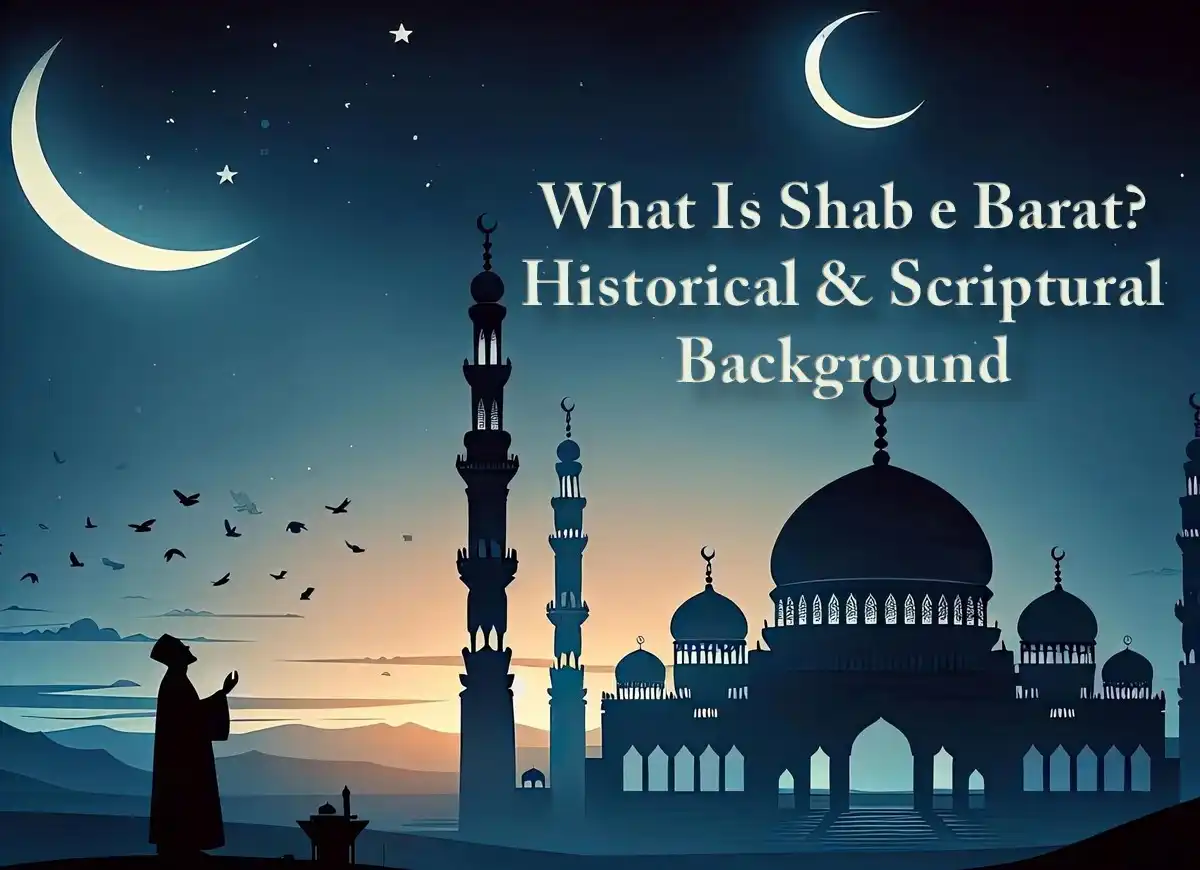

What is Shab-e-Barat?—This question often arises quietly on a calm evening in the middle of Sha‘ban. Lamps glow, mosques feel fuller, and elders speak in softer voices. For many Muslims, the night carries emotion before explanation. Understanding its meaning transforms tradition into intention and curiosity into conscious worship.
The Meaning Behind the Name
Shab e Barat is commonly translated as the “Night of Freedom” or “Night of Decree.” Linguistically, Barat refers to release or absolution. The night is associated with mercy, forgiveness, and divine attention. It is also called Lailatul Barat, a term found in South Asian Islamic cultures and literature.
Historical and Scriptural Background
Islamic scholars link this night to the 15th of Sha‘ban, the eighth month of the Islamic calendar. While the Qur’an does not mention it by name, interpretations connect it to verses discussing divine decrees. Classical tafsir literature explores these meanings with nuance and scholarly caution.
What Is Shab-e-Barat in Islam?
In discussions about what Is Shab e Barat, scholars emphasize balance. Some narrations describe Allah’s mercy descending abundantly on this night, while others advise moderation in specific practices. Mainstream scholarship agrees on its spiritual potential without equating it to obligatory worship like Ramadan nights.
Hadith Perspectives and Scholarly Views
Several hadith mention the 15th night of Sha‘ban as a time of forgiveness, excluding those who harbor hatred or persist in grave injustice. Scholars such as Imam Ibn Taymiyyah acknowledged its virtue while discouraging unfounded rituals. This balanced approach preserves spirituality without excess.
Why This Night Matters Spiritually
Shab-e-Barat invites reflection rather than spectacle. It offers Muslims a pause before Ramadan, encouraging inner readiness. The night becomes meaningful when worship is sincere, private, and rooted in self-accountability rather than social pressure or cultural expectation.
Categories: PRAYER , The Holy Quran, Quran Jaz 1- 114
Common Spiritual Themes of the Night
- Seeking forgiveness for past mistakes
- Renewing intentions before Ramadan
- Repairing strained relationships
- Reflecting on one’s spiritual direction
These themes align with broader Islamic teachings on repentance and mercy.
Common Practices Observed by Muslims
Across cultures, Muslims observe this night in various ways. While practices differ, many focus on voluntary worship rather than formalized rituals. Scholars advise keeping actions aligned with authentic teachings and personal sincerity.
Widely Observed Acts of Worship
- Offering voluntary prayers at night
- Reciting Qur’an calmly and thoughtfully
- Making du‘a for forgiveness and guidance
- Giving charity quietly
Learning proper worship manners through structured study, such as online Quran learning programs, helps keep practices grounded in knowledge.
Cultural Traditions vs Religious Guidance
In some regions, cultural customs—like food distribution or fireworks—have become attached to the night. While generosity is encouraged, Islam distinguishes between culture and worship. Scholars consistently remind believers to prioritize intention and avoid practices lacking religious basis.
Preparing the Heart Before Ramadan
One wisdom behind this night is preparation. Just as homes are cleaned before guests arrive, hearts benefit from reflection before Ramadan. Studying foundational concepts through Islamic studies courses helps believers approach sacred seasons with clarity rather than confusion.
Children and Learning the Meaning of the Night
Introducing children to the meaning of the night should be gentle and hopeful. Emphasizing Allah’s mercy builds love, not fear. Age-appropriate learning through Quran classes for kids helps young minds connect spirituality with compassion and understanding.
Scholarly Caution and Wisdom
Not all narrations about the night hold equal strength. Islamic scholarship teaches discernment—embracing virtue without inventing obligation. This careful approach protects the faith from extremes while allowing believers to benefit spiritually within authentic boundaries.
A Brief Look at Trusted References
For readers seeking deeper academic or historical context, reputable sources offer balanced insights. General background can be found in Wikipedia’s overview of Shab-e-Barat, while detailed jurisprudential discussions appear on platforms like IslamQA and reflective articles from Yaqeen Institute.
FAQ Section
Is this night mentioned directly in the Qur’an?
The Qur’an does not name the night explicitly. However, some scholars connect it to verses about divine decrees. These interpretations are scholarly reflections rather than definitive statements, which is why Muslims are encouraged to treat the night as virtuous but not obligatory.
Do I need to perform special prayers on this night?
There is no obligatory or fixed prayer prescribed. Voluntary worship, such as extra prayers or Qur’an recitation, is encouraged if done sincerely. Scholars caution against inventing specific rituals or formulas not supported by authentic sources.
Is fasting the next day required or recommended?
Fasting after the 15th of Sha‘ban is optional, not mandatory. Some Muslims choose to fast as part of general voluntary fasting, but it should not be considered a special obligation tied exclusively to this night.
Why do practices differ so much between cultures?
Cultural traditions often blend with religious observance over time. Islam allows cultural expression as long as it does not contradict core teachings. Differences usually reflect regional history rather than differences in foundational Islamic beliefs.
How can I make this night meaningful without overdoing it?
Focus on sincerity. A small amount of heartfelt worship, forgiveness, and reflection is more valuable than lengthy rituals done without understanding. The goal is spiritual growth, not exhaustion or performance.
Conclusion: Turning Awareness into Intention
Understanding What Is Shab e Barat shifts the night from habit to purpose. It becomes a quiet invitation to reset the heart, mend intentions, and walk toward Ramadan with clarity. When approached with knowledge and sincerity, the night leaves believers lighter, hopeful, and spiritually prepared for what lies ahead.
Recommended For You (Shabe Barat)
- Shab e Barat Mubarak (Lailatul Barat)
- What Should We Prayers of Shab e Barat?
- Best Shab e Barat Dua To Change Destiny
- The Night of Mid-Sha’ban (Shab e Barat)
- What Does Islam Say About Shab Barat?
- Common Dua in Taraweeh Prayer To Recite
- So Kar Uthne Ki Dua | Dua After Waking Up
- Shab-e-Barat Ki Dua – Duas For Mid Sha’ban
- Read Shab-e-Barat Quotes From The Quran
- Allahumma Rahmataka Arju: A Dua For Hope
- Why Do We Celebrate Shab-e-Barat in Islam?
- Shab e Barat Ki ibadat Ka Tarika (step-by-step)
- Berat Kandili – Holy Night of Forgiveness 2026
- Arabic Prayer With Transliteration and Meaning
- Berat Kandili Ne Zaman? Night of Forgiveness
- Sobe Barat- Historical & Scholarly Perspectives
- What To Recite in Shab e Barat Nawafil Namaz?
- Shab e Barat Ki Fazilat: Toba, Aur Maghfirat Ki Raat
- Shab e Barat Kya Hai? FaziLat, Ibaadat Aur Ehmiyat
- Shab e Barat Namaz Ka Tarika (Prayers For 15 Shaban)
- Shab e Barat Ibadat And Prayers – Night of Forgiveness
- Shab e Barat Ki Namaz Ka Tarika: A Simple Way To Pray
- Shab e Barat Prayers: A Guide to Prayers & Significance
- What Happened on Shab e Barat? Night of Mid Shaban
- What is The Shab e Barat meaning? Night of Forgiveness
- Shab e Barat Namaz Rakats: How To Pray Namaz Rakats?
Salatul Tasbih
- How To Perform Salatul Tasbih?
- Definition of Subhanallah and Its Meaning
- la ilaha illa anta subhanaka Inni Kuntu Minaz Zalimin