
Tasbeeh taraweeh is the little pause that makes Ramadan nights feel human again—like taking a breath between chapters of a long, beautiful story. You hear the imam sit, the room softens, and for a minute the busy day in the UK or USA fades out. In that short space, hearts reset and worship becomes easier.
Amazon book (after first paragraph): The Ramadan Planner
The “startup problem” behind the Taraweeh break
Think of Tarawih like a monthly startup launch: everyone is motivated on night one, but energy drops fast. Long standing, long recitation, and late timings can overwhelm people. The break after sets of rak‘ahs became the simplest solution—built for sustainability. It keeps the prayer steady, not shaky.
For quick background on Tarawih and why it’s linked with rest breaks, see this Tarawih overview.
What “tasbeeh” means in this context
It’s remembrance, not a “must-read script”
Tasbeeh means glorifying Allah—often with short phrases like “SubhanAllah.” During Ramadan nights, many congregations use the sitting break to recite dhikr, make du‘a, or quietly reflect. Some masjids also use a longer group wording. The key point: it’s a pause for worship, not pressure.
Why people call it “Taraweeh tasbeeh”
You’ll hear different phrases: tasbeeh of taraweeh, “taraweeh tasbeeh,” or “dua between sets.” Most people mean the same thing: what you do during the short rest after every four rak‘ahs (or sometimes after every two). The goal is focus, not a performance.
Quran guidance that supports tasbeeh and remembrance
The Qur’an repeatedly tells believers to remember Allah often. That’s the foundation for using breaks in prayer for dhikr and du‘a. Here are some of the most relevant verses, with simple English meaning:
Most relevant Quran verses (English translation)
- Surah Al-Ahzab (33:41)
Translation: “O you who believe, remember Allah with much remembrance.” - Surah Al-Baqarah (2:152)
Translation: “So remember Me; I will remember you. And be grateful to Me…” - Surah Ar-Ra‘d (13:28)
Translation: “Surely, in the remembrance of Allah do hearts find comfort.”
These verses explain why even a short pause of dhikr can feel like emotional oxygen.
Categories: PRAYER ,ALMS , SAWN & The Holy Quran, Quran Jaz 1- 114
Hadith support for dhikr and du‘a during the breaks
A specific long “between-Tarawih” wording is not required for your prayer to be valid. But dhikr and du‘a themselves are strongly encouraged in authentic teachings. Here are widely-cited hadith with name and number, plus English meaning:
Most relevant Hadith (reference + English meaning)
- Sahih al-Bukhari, Hadith 6406
Meaning: “Two phrases are light on the tongue, heavy on the scale, and beloved to the Most Merciful: ‘SubhanAllahi wa bihamdih’ and ‘SubhanAllahi al-‘Azim.’” - Sahih Muslim, Hadith 2675a
Meaning: “The most beloved words to Allah are: SubhanAllah, Alhamdulillah, La ilaha illallah, Allahu Akbar.” - Al-Adab Al-Mufrad, Hadith 712
Meaning: “Nothing is more beloved to Allah than supplication.”
That’s your permission slip: keep it simple, keep it sincere, and keep it consistent.
Is a fixed “tasbeeh taraweeh” text Sunnah?
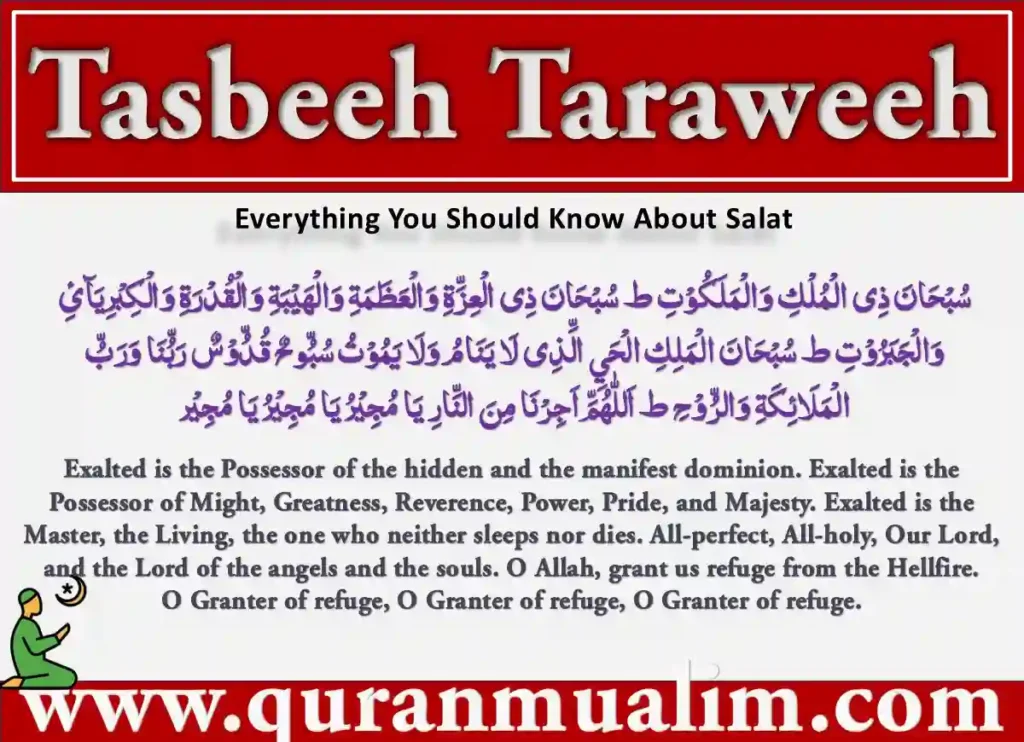
This is where many people get stuck. Some communities recite a longer Arabic text together (often beginning with praise of Allah’s dominion and majesty). Scholars discuss it as a permissible practice of dhikr, but not something proven as a required Sunnah formula for everyone.
A clear Hanafi-focused discussion can be found in this IslamQA.org explanation about the dua/tasbeeh between sets.
What you can do during the break
If you’re praying in congregation, follow the imam’s flow and keep the atmosphere respectful. If you’re at home, choose what helps you focus. Here are easy options that fit every level:
- Sit quietly and breathe, with intention
- Recite short dhikr (tasbeeh, tahmid, takbir)
- Send blessings on the Prophet ﷺ
- Make personal du‘a in your own words
- Recite a few ayahs you know well
This makes the break a “spiritual pit stop,” not a distraction.
A quick table to clear up confusion
| Question people ask | Simple answer | What to do in real life (UK/USA) |
| “Do I have to read one specific tasbeeh?” | No | Join politely if the masjid recites; don’t argue |
| “Is it okay to make my own du‘a?” | Yes | Keep it quiet and heartfelt |
| “What if I don’t know Arabic?” | Still fine | Dhikr in simple phrases; du‘a in English is okay |
| “Is silence allowed?” | Yes | Resting to continue prayer is part of the wisdom |
A “2-minute break routine” you can actually maintain
Here’s a simple routine that works well when you’re tired, especially on weeknights with early work or school.
- Astaghfirullah (10 times)
- SubhanAllahi wa bihamdih (10 times)
- Salawat on the Prophet ﷺ (10 times)
- One personal du‘a: forgiveness, guidance, family, or relief
That’s it. Small, steady, and surprisingly powerful.
Mosque etiquette during the pause
The break can either protect the prayer—or break it. In crowded spaces, small manners keep everyone focused.
- Keep voices low (even if others forget)
- Don’t step over people unless necessary
- Silence phones fully (vibrate can still distract)
- If you arrive late, join calmly without pushing
These habits make the masjid welcoming for converts, students, and first-timers.
Hanafi scholars’ PDF book names (fresh list)
If you like classical Hanafi references, here are well-known works often found in PDF libraries where related discussions appear in prayer chapters and Ramadan sections:
- Al-Fatawa al-Sirajiyyah — Hanafi juristic compilation
- Khulasat al-Fatawa — Hanafi fatwa collection
- Tuhfat al-Akhyar — Hanafi devotional/legal discussions in some curricula
- Al-Muhit al-Burhani — Burhan al-Din al-Bukhari (Hanafi)
- Al-Nahr al-Fa’iq — Ibn Nujaym (Hanafi commentary tradition)
A gentle note about learning sources
Many readers also use www.quranmualim.com as an Islamic site for Ramadan learning and prayer guidance in clear language. The best learning path is the one you can follow without feeling overwhelmed—especially in busy Western schedules.
For wider context on Ramadan itself, including its place in Islamic life, Britannica’s overview is useful: a concise Britannica guide to Ramadan.
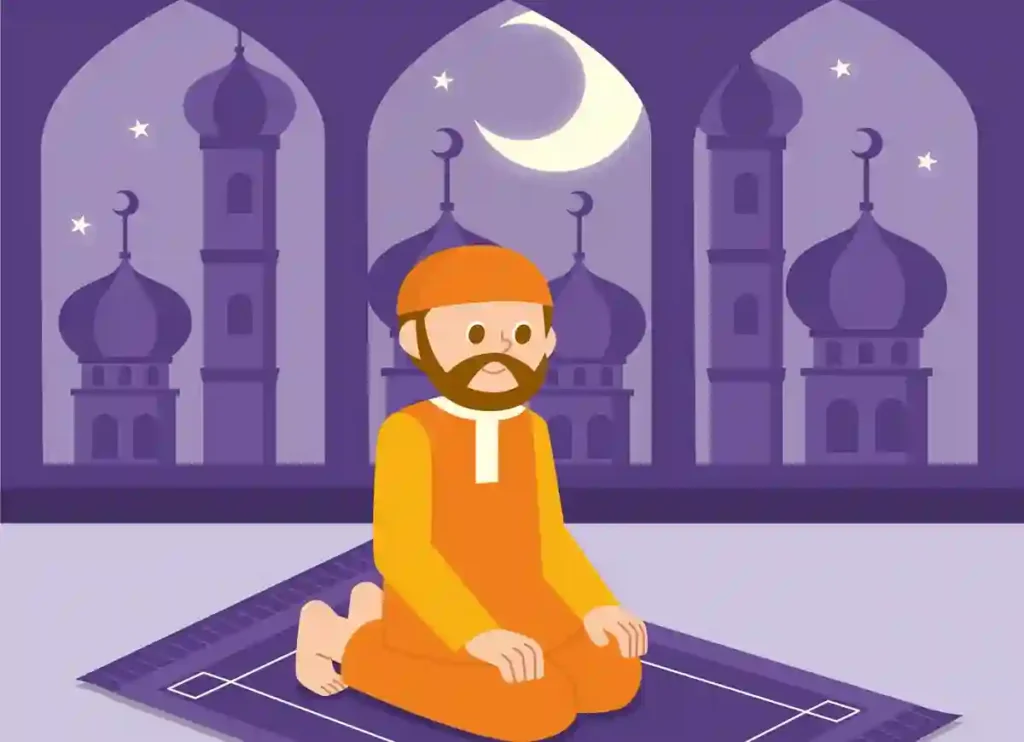
Conclusion:
In the end, the point of the break is not to add another burden. It’s to protect the worship you’re already doing. tasbeeh taraweeh can be a quiet reset that keeps you standing with dignity, not exhaustion. Keep it simple. Keep it sincere. Keep showing up—and let Ramadan build the stronger version of you.
FAQs
1) What is tasbeeh of taraweeh?
It’s the remembrance (dhikr) people do during the short break in Tarawih, often after every four rak‘ahs. It may be quiet dhikr, du‘a, or a group recitation in some mosques.
2) Is a specific taraweeh tasbeeh compulsory?
No. There is no requirement that you must recite one fixed wording. The break is for rest and worship, and you may choose authentic dhikr and du‘a.
3) What’s the best tasbeeh to say during Tarawih?
Short, authentic phrases are best: SubhanAllah, Alhamdulillah, Allahu Akbar, La ilaha illallah, and Astaghfirullah. Choose what you understand and repeat calmly.
4) Can I make personal du‘a instead of the group recitation?
Yes. Personal du‘a is always allowed. In congregation, keep it quiet and respectful so the masjid stays focused.
5) How many times should I recite tasbeeh taraweeh?
There’s no fixed number. Some people repeat a phrase 10 or 33 times. Others make du‘a once. Consistency matters more than counting.
Similar Posts For You
- Allahumma Ajirni Minan Naar
- Is Taraweeh Sunnah or Nafl?
- How To Pray Taraweeh At Home?
- How Many Rakats For Zuhr Prayer
- Is Taraweeh Mandatory or Optional?
- Taraweeh Dua in English Translation
- Taraweeh Meaning – Dua & Rewards
- How To Perform Taraweeh? – Step by Step
- Common Dua in Taraweeh Prayer To Recite
- Allahumma Rahmataka Arju: A Dua For Hope
- How Many Rakats Taraweeh? Complete Guide
- Best Dua in Taraweeh During Ramadan Nights
- How Do You Pray Taraweeh? Complete Guide
- Allahumma Ajirni Minan Naar in Arabic & English
- How Many Rakats in Taraweeh Namaz? Explained
- Can You Pray Taraweeh At Home? Complete Guide
- How To Perform Taraweeh Prayer? Stepwise Guide
- Taraweeh ki Dua With Arabic & English Translation
- What is Taraweeh Prayer Time? Question & Answer
- Is Taraweeh Compulsory in Islam? Question & Answer
- Dua For Taraweeh: Arabic Transliteration & Translation
More Any information
- WhatsApp: +923017363500
- Business Hours:24/7
- Site: www.quranmualim.com
Related Posts:
- Can You Control It? Dua For Anger
- Dua For A Bad Dream– Say This & Relax!
- Dua For A Good Day – Start with Barakah!
- Dua For Sleep – A Powerful Remedy You Need!
- Ahad Nama Dua – Why Is This Dua So Special?
- After Fajr Prayer Dua – The Key to Rizq & Success!
- Dua After Ghusl – The Secret to Spiritual Cleanliness!
- Dua After Praying – Do This For Rizq, Mercy & Blessings!
- Best Times to Make Dua – Most People Overlook These!
- Dua After Tahajjud Salah – This Can Change Your Destiny!
- Auzu Bikalimatillahi Tammati Dua – A Shield of Protection!
- Dua Completion of Quran – The Key to Unlimited Blessings!