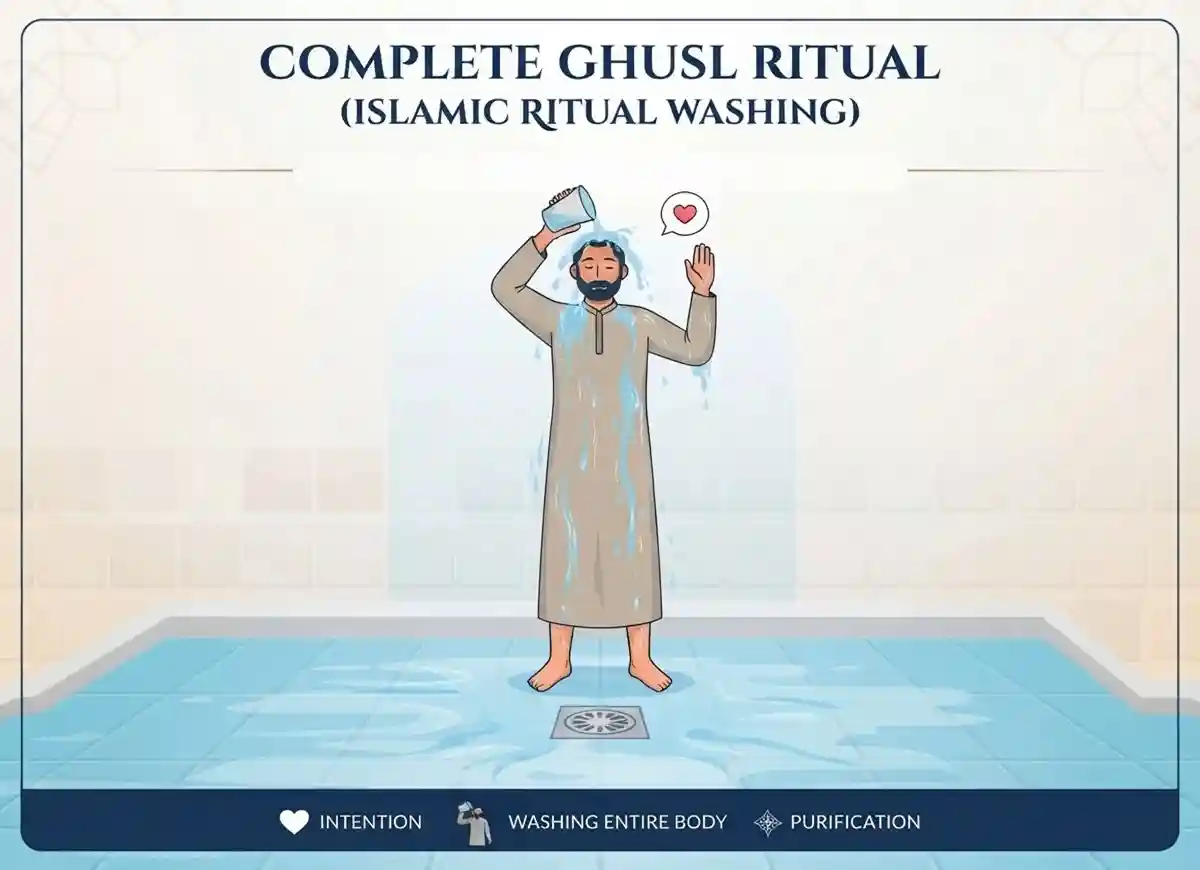

Ghusl is one of the most important acts of physical and spiritual cleanliness in a Muslim’s daily life. Many new Muslims, and even some who grew up in Muslim households, feel confused about when ghusl is required and how to perform it correctly. This confusion often leads to missed prayers or unnecessary worry.
Recommended: The Book of Purification – A Practical Guide to Islamic Cleanliness
The good news is that the Quran and Hadith give clear guidance on this. Once you understand the basic rule, Bath purification becomes a simple, calming part of your routine rather than a source of anxiety.
Also Read: Blessings Dua For Ghusl After Periods
Why Bath purification Matters in Islam
Bath purification is not just about washing the body. It’s about spiritual renewal. Islam links physical cleanliness directly to acceptance of worship. Without ghusl in required situations, acts like Salat and Quran recitation are not valid, which is why understanding the rules matters so much.
When Is Ghusl Required?
Muslims are required to perform Bath purification after specific events. These include sexual intimacy, wet dreams (with discharge), the end of menstruation, the end of postnatal bleeding, and before certain acts of worship like Jumu’ah prayer or Hajj.
Also Read: The Key To Purity: Dua For Ghusl After Menstruation
How to Do Ghusl: Step-by-Step
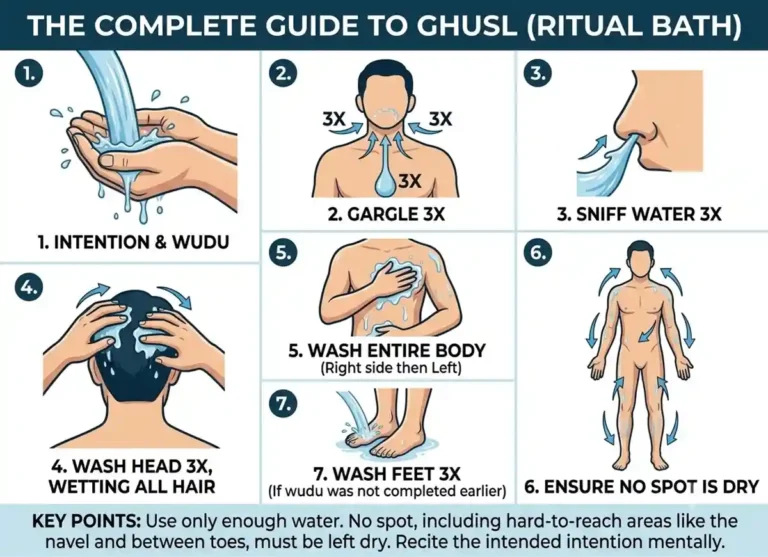
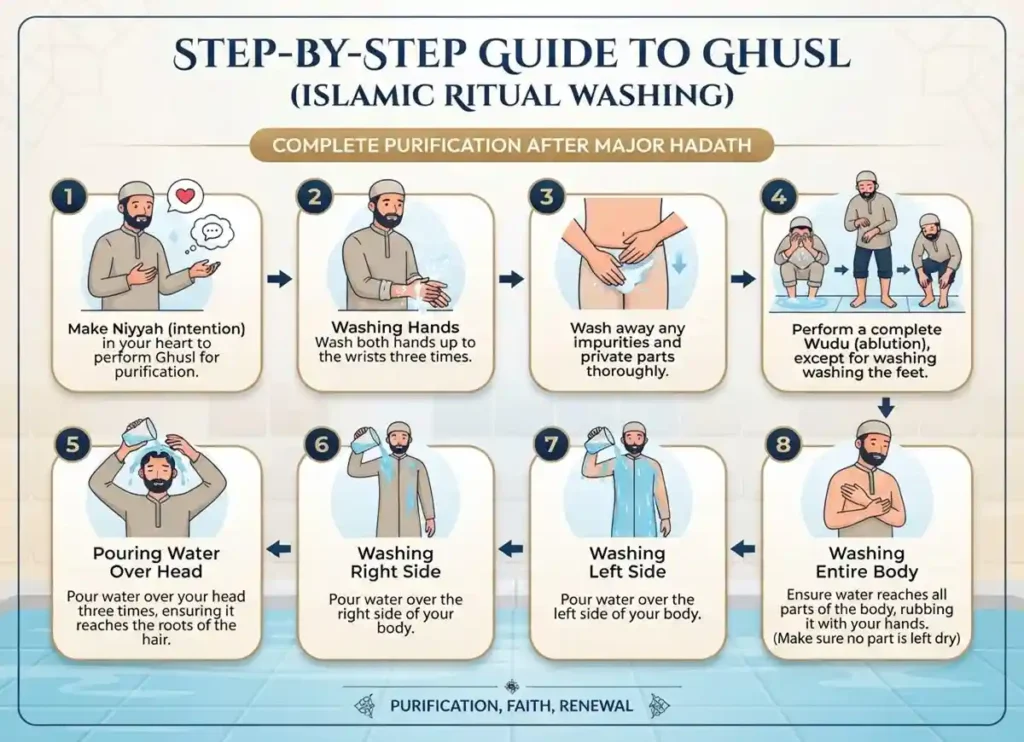
Learning how to do Bath purification correctly ensures your worship is accepted. Here is the standard method followed by the majority of scholars:
- Make the intention (niyyah) in your heart
- Say Bismillah
- Wash both hands three times
- Wash the private parts thoroughly
- Perform a complete wudu, as if preparing for prayer
- Pour water over the head three times, working it into the roots of the hair
- Pour water over the right side of the body, then the left
- Ensure water reaches every part of the skin, including the navel and behind the ears
Ghusl Steps
If you’re short on time, remember this simple checklist for Bath purification steps:
- Intention first, always
- Wash hands and private area
- Complete wudu
- Water over head three times
- Water over the whole body, right then left
Also Read: Can I Fast If I Make Ghusl After Fajr?
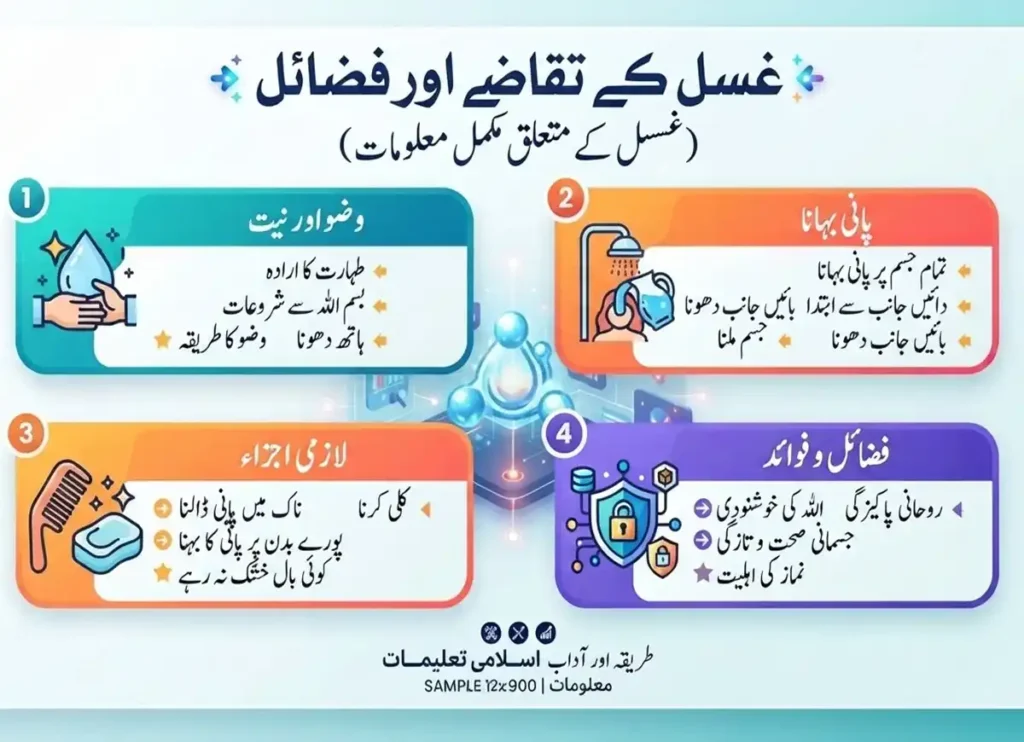
How to Make Ghusl Without Missing Any Part
A common mistake is rushing and missing dry patches. How to make Bath purification properly means being mindful — check your elbows, behind the knees, and the scalp under thick hair. Even a small dry spot can invalidate the Bath purification.
Quran Verses on Bath purification
Allah says in the Quran regarding purification before prayer:
Surah Al-Ma’idah (5:6) — “…and if you are in a state of janabah, then purify yourselves…” This verse directly commands ghusl after major impurity. Read on Quran.com
Surah Al-Baqarah (2:222) — “Indeed, Allah loves those who are constantly repentant and loves those who purify themselves.” This shows purification is beloved to Allah. Read on Quran.com
Hadith References on Ghusl
Sahih al-Bukhari 248 — Aisha (RA) described how the Prophet ﷺ would begin ghusl by washing his hands, then his private parts, before pouring water over his whole body. Read on Sunnah.com
Sahih Muslim 316 — This hadith confirms the Prophet ﷺ would use both hands to work water thoroughly into his hair during ghusl. Read on Sunnah.com
Also Read: Reading Quran Without Wudu: What’s Allowed?
Wudu vs Ghusl: Quick Comparison
| Feature | Wudu | Bath purification |
| Required for | Minor impurity (sleep, using toilet) | Major impurity (janabah, menstruation) |
| Body parts washed | Face, arms, head, feet | Entire body |
| Frequency | Before each prayer if broken | Only when triggered by specific events |
| Time needed | 2–3 minutes | 5–10 minutes |
Must Read: Wudu (Step-by-Step)
Can You Do Bath purification in the Bathroom?
Yes, the bathroom is the most practical place. Just ensure privacy, running water, and that the intention is made before you begin washing.
Recommended Hanafi Fiqh References
For deeper study, these classical Hanafi texts are widely available in libraries and Islamic archives:
- Bahishti Zewar by Maulana Ashraf Ali Thanvi
- Al-Fatawa al-Hindiyyah (Fatawa Alamgiri)
- Nur al-Idah by Imam Shurunbulali
- Kanz al-Daqa’iq by Imam Nasafi
Trusted Islamic Resources
For further rulings and scholarly answers, you can also visit IslamQA and the Islamic Teachings Forum. For general background, see Wikipedia’s entry on Ghusl and Britannica’s overview of Islamic purification.
Categories: Namaz ,Zakat , Roza , Prayer , Hadith & Supplications
Frequently Asked Questions
What is Ghusl?
Bath purificationis the full-body ritual washing required in Islam after specific conditions like sexual intimacy, menstruation, or postnatal bleeding, to restore a state of purity.
Can’t I just pray without ghusl?
No. If Bath purification is required and not performed, Salat is not valid. Purification is a condition for prayer to be accepted.
What does ghusl mean in Islam?
Bath purification means complete ritual bathing that removes major spiritual impurity, allowing a Muslim to perform prayer, touch the Quran, and enter the mosque.
Can Salat be offered without ghusl?
No, when Bath purification is obligatory, Salat offered without it is considered invalid until the ghusl is properly completed.
Can you do ghusl in the bathroom?
Yes, the bathroom is the normal and practical place, as long as there is running water and privacy for washing the whole body.
Who gave Bath purification to the prophet Muhammad (PBUH)?
After his passing, his family members, including Ali (RA) and Al-Abbas (RA), performed his ghusl, following the same method he taught to his companions.
Can you recite the Quran from the heart without Bath purification?
Scholars generally permit reciting Quran from memory without touching the mus’haf while in a state requiring Bath purification, though opinions vary slightly by school.
What are four conditions under which a Muslim performs Bath purification?
The four main conditions are: sexual intercourse, wet dreams with discharge, the end of menstruation, and the end of postnatal bleeding.
If I’ve done my Bath purification at night time, does that mean I have to pray Isha?
Bath purificationalone doesn’t create an obligation to pray Isha immediately, but once you’re pure, you should pray Isha within its normal time window.
How are you supposed to do Ghusl if it breaks your wudu if you touch your private parts?
Touching private parts during ghusl doesn’t invalidate the Bath purification itself; you simply continue washing. If you need wudu again afterward, perform it separately.
Final Thoughts
Bath purificationis more than a physical requirement — it’s a reset for the soul. Once the steps become familiar, this act of purification turns into a peaceful habit rather than a chore, keeping your prayers valid and your heart at ease.
Alasad Online Quran Tutor | Learn Quran, Tajweed & Islamic Studies Online
🌐 quranmualim.com | 📺 YouTube | 📱 WhatsApp Available
Related Posts For You:
- How to Perform Ghusl? PDF Download
- Ghusl Dua | Dua for Ghusl – Learn Islam
- How To Do Ghusl After Period: Step-by-Step Guide
- Ghusl: A Complete Guide To Islamic Ritual Purification
- Dua After Ghusl – The Secret to Spiritual Cleanliness!
- How To Clean Private Parts After Urination? Learn Islam
- Ramadan Fasting Rules: Intimacy, Ghusl, Music/TV, Vitamins, Pregnancy