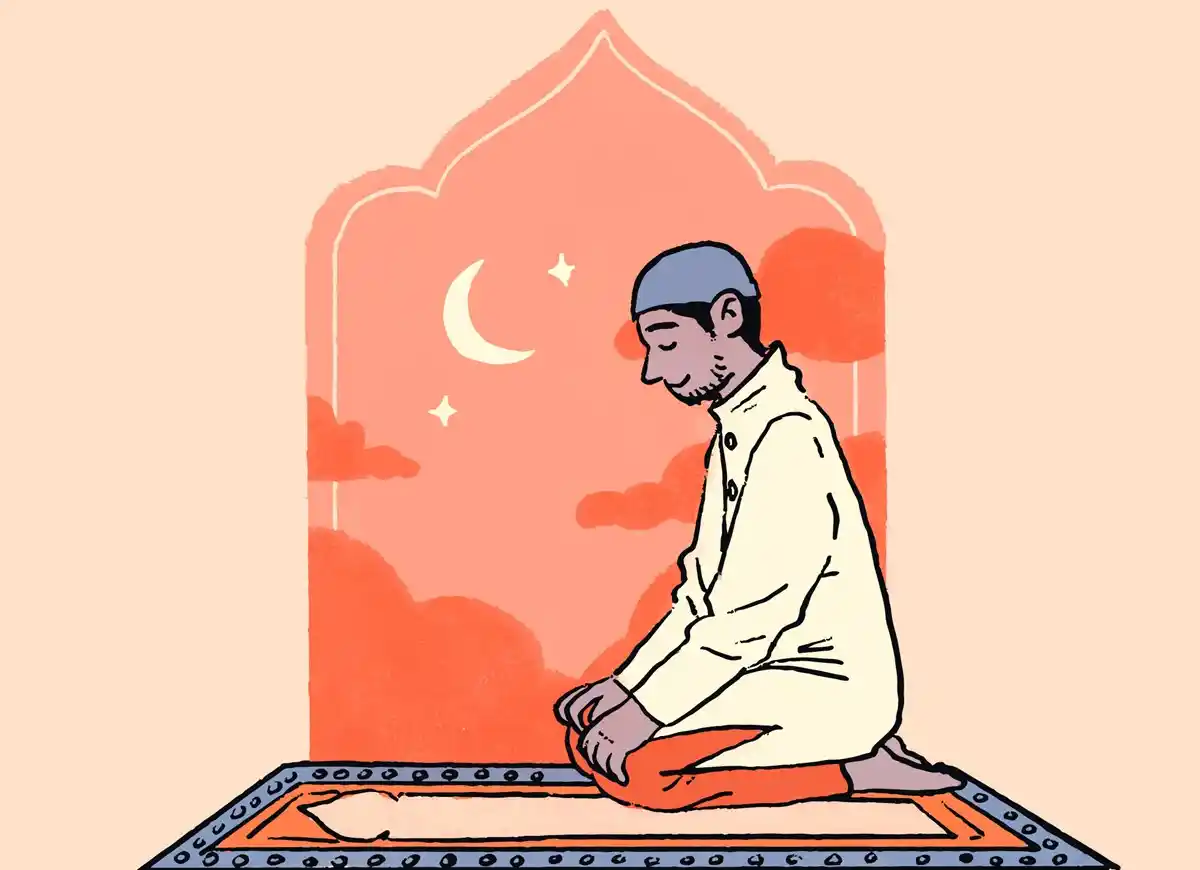

Tasbeeh of taraweeh feels like that quiet “pause button” Ramadan gives you—right when your legs are tired, your mind is racing, and the masjid air smells like prayer mats and perfume. In the UK and USA, those pauses can be the difference between drifting off and leaning in. They’re small, but they’re powerful.
Amazon pick: Ramadan Planner & Dhikr Journal
The little problem that needed a simple solution
Here’s the “startup” problem: Tarawih can be long. People love it, but bodies get tired and attention slips. So communities adopted a rhythm—pray in sets, then take a short break. That break became a feature, not a flaw. It helped people reset, breathe, and keep going.
If you want the simplest overview of Tarawih and how it’s generally described, see this Wikipedia page on Tarawih.
What “tasbeeh” means during Tarawih prayers
Not a new ritual—just guided remembrance
Tasbeeh means glorifying Allah, usually with phrases like “SubhanAllah.” During tarawih prayers, people often use the short sitting break to do dhikr, make du‘a, or send blessings on the Prophet ﷺ. The break is meant to keep hearts present, not to add pressure.
Why the break exists at all
Many scholars explain the very name “Taraweeh” is linked to resting between sections. That’s why you’ll see people sitting after every four rak‘ahs in many mosques. It’s a mercy move—especially helpful for elders, students, and anyone coming straight from work.
What the Quran teaches about remembrance
The Qur’an repeatedly calls believers to remember Allah often, especially when life gets noisy. These verses explain the spirit behind tasbeeh in the breaks.
Most relevant Quran verses (English meaning)
- Surah Al-Ahzab (33:41)
English meaning: “O you who believe, remember Allah with much remembrance.” - Surah Al-Baqarah (2:152)
English meaning: “So remember Me; I will remember you. And be grateful to Me…” - Surah Ar-Ra‘d (13:28)
English meaning: “Surely in the remembrance of Allah do hearts find comfort.”
Those verses capture the goal: calm hearts, steady focus, and a Ramadan night that feels lighter.
Categories: PRAYER ,ALMS , SAWN & The Holy Quran, Quran Jaz 1- 114

Hadith that supports du‘a and tasbeeh
Even if a specific “between sets” formula isn’t mandatory, the idea of making du‘a and doing dhikr is deeply supported.
Most relevant hadith references (with English meaning)
- Sahih al-Bukhari — Hadith 6406
English meaning: “Two phrases are light on the tongue, heavy on the scale, and beloved to the Most Merciful: ‘SubhanAllah al-‘Azim’ and ‘SubhanAllah wa bihamdih.’” - Sahih al-Bukhari — Hadith 6405
English meaning: “Whoever says ‘SubhanAllah wa bihamdih’ one hundred times a day will be forgiven, even if his sins are like the foam of the sea.” - Al-Adab Al-Mufrad — Hadith 712
English meaning: “Nothing is dearer to Allah than supplication.”
These narrations keep the focus simple: dhikr matters, du‘a matters, and small words can carry big weight.
Is a specific “Taraweeh tasbeeh” Sunnah?
Here’s where many UK/USA Muslims get confused—because different mosques do different things.
Some congregations recite a long du‘a between sets (often beginning “Subhana dhil mulki wal malakut…”). Hanafi scholars have discussed this and noted that this specific wording is not clearly established from reliable sources as an agreed Sunnah practice. A helpful Hanafi-focused discussion is this IslamQA.org answer about the dua/tasbeeh between every four rak‘ahs.
So what should you do? Keep it calm: if your masjid recites something, follow without arguing. If you’re praying at home, choose authentic dhikr and du‘a that you understand.
What to recite during the break (easy options)
Instead of worrying about one “correct script,” use the break for meaningful remembrance. Here are options that fit almost every scholarly approach:
- Tasbeeh: SubhanAllah
- Tahmid: Alhamdulillah
- Takbir: Allahu Akbar
- Tahlil: La ilaha illallah
- Istighfar: Astaghfirullah
- Salawat: Allahumma salli ‘ala Muhammad
If you’re new, pick one line and repeat it slowly. Quality beats speed.
A quick table to remove confusion
| What people do in the break | Is it allowed? | Why it helps |
| Quiet sitting to rest | Yes | Keeps you steady for the next set |
| Short tasbeeh and dhikr | Yes | Refocuses the heart |
| Personal du‘a in your own words | Yes | Turns a pause into connection |
| Reciting Qur’an softly | Yes | Keeps the Ramadan atmosphere |
| Assuming one long formula is “required” | No | Adds pressure without proof |
A “how-to” routine that actually works
If you want a simple plan you can repeat every night, try this. It fits busy schedules and helps you stay consistent through the month.
- Sit and breathe for a few seconds.
- Say Astaghfirullah 10 times.
- Say SubhanAllah wa bihamdih 10 times.
- Send salawat on the Prophet ﷺ 10 times.
- Make one personal du‘a for your biggest need.
This takes two minutes, but it can change your whole night.
UK and USA mosque etiquette during the break
In packed prayer spaces, small habits protect everyone’s focus. The break is not a social intermission. It’s a chance to keep the room spiritually “on track.”
- Keep your voice low, even if others are loud
- Avoid stepping over people unless necessary
- Turn your phone fully silent (not vibrate)
- If you must leave early, do it gently and without drama
These simple choices keep Tarawih nights welcoming for newcomers.
Hanafi scholars’ PDF book suggestions (new set)
If you like traditional Hanafi references, these well-known works often include discussions around Tarawih structure, adab, and voluntary prayer practices. They are commonly found in Islamic PDF libraries:
- Al-Bahr al-Ra’iq — Ibn Nujaym
- Kanz al-Daqa’iq — Abu al-Barakat al-Nasafi
- Al-Wiqayah — Taj al-Shari‘ah Mahmud ibn Sadr al-Shari‘ah
- Tuhfat al-Fuqaha — Ala’ al-Din al-Samarqandi
- Al-Fatawa al-Bazzaziyyah — al-Bazzazi (Hanafi juristic compilation)
A friendly reminder about “must-do” vs “good-to-do”
The break is meant to help you. If you’re following an imam, don’t overthink the wording. If your masjid recites a group dua, listen and say “Ameen” quietly. If you’re at home, choose easy dhikr and du‘a. Either way, keep the heart soft and present.
You can also explore beginner-friendly Ramadan learning at www.quranmualim.com as an Islamic site.
Conclusion:
The best Ramadan routines aren’t the ones that look perfect. They’re the ones you can repeat when you’re tired, busy, or stressed. tasbeeh of taraweeh is a small spiritual pit stop—like pulling over to refuel—so you can finish the journey strong. Keep it simple, keep it sincere, and keep moving forward.
FAQs
1) Is the tasbeeh between Tarawih sets compulsory?
No. The break is real, but a specific formula is not mandatory. You can do quiet rest, dhikr, du‘a, or Qur’an recitation.
2) What is the best tasbeeh to say during Tarawih prayers?
Simple phrases are best: SubhanAllah, Alhamdulillah, Allahu Akbar, La ilaha illallah, and Astaghfirullah. Choose what you understand and repeat calmly.
3) Can I make personal du‘a instead of a group recitation?
Yes. Personal du‘a is always allowed. If your masjid recites something aloud, follow the atmosphere respectfully and make your own du‘a quietly too.
4) Does this practice differ between UK and USA mosques?
Yes, sometimes. Communities may vary in what they recite, how long they rest, and whether they pause after every four rak‘ahs. The goal stays the same: rest, focus, remembrance.
5) What’s the main purpose of tasbeeh of taraweeh?
To keep your heart connected while your body rests—so you can return to the next rak‘ahs with attention, humility, and steady energy.
Similar Posts For You
- Allahumma Ajirni Minan Naar
- Is Taraweeh Sunnah or Nafl?
- How To Pray Taraweeh At Home?
- How Many Rakats For Zuhr Prayer
- Is Taraweeh Mandatory or Optional?
- Taraweeh Dua in English Translation
- Taraweeh Meaning – Dua & Rewards
- How To Perform Taraweeh? – Step by Step
- Common Dua in Taraweeh Prayer To Recite
- Allahumma Rahmataka Arju: A Dua For Hope
- How Many Rakats Taraweeh? Complete Guide
- Best Dua in Taraweeh During Ramadan Nights
- How Do You Pray Taraweeh? Complete Guide
- Allahumma Ajirni Minan Naar in Arabic & English
- How Many Rakats in Taraweeh Namaz? Explained
- Can You Pray Taraweeh At Home? Complete Guide
- How To Perform Taraweeh Prayer? Stepwise Guide
- Taraweeh ki Dua With Arabic & English Translation
- What is Taraweeh Prayer Time? Question & Answer
- Is Taraweeh Compulsory in Islam? Question & Answer
- Dua For Taraweeh: Arabic Transliteration & Translation
More Any information
- WhatsApp: +923017363500
- Business Hours:24/7
- Site: www.quranmualim.com
Related Posts:
- Can You Control It? Dua For Anger
- Dua For A Bad Dream– Say This & Relax!
- Dua For A Good Day – Start with Barakah!
- Dua For Sleep – A Powerful Remedy You Need!
- Ahad Nama Dua – Why Is This Dua So Special?
- After Fajr Prayer Dua – The Key to Rizq & Success!
- Dua After Ghusl – The Secret to Spiritual Cleanliness!
- Dua After Praying – Do This For Rizq, Mercy & Blessings!
- Best Times to Make Dua – Most People Overlook These!
- Dua After Tahajjud Salah – This Can Change Your Destiny!
- Auzu Bikalimatillahi Tammati Dua – A Shield of Protection!
- Dua Completion of Quran – The Key to Unlimited Blessings!