
Shab e Barat ki ibadat starts for many people the same way: with a quiet look at the calendar and a softer feeling in the chest. The house is still busy, but the night feels different. It’s like Allah is giving you a gentle nudge, saying, “Come back. Start again. I’m here.”
Some nights feel like a fresh startup launch. You’re not building an app. You’re rebuilding your heart. The problem is real—sins, distractions, and missed chances. The solution is simple—worship, repentance, and a clean intention to do better, one step at a time.
What makes this night so special?
Shab-e-Barat is commonly linked with the 15th night of Sha‘ban. Many Muslims treat it as a night of mercy, forgiveness, and sincere return to Allah. Traditions differ across cultures, but the main idea stays steady: turn off the noise, turn to Allah, and ask for a new page.
The Qur’an reminds us that Allah opens doors of hope, even for people who feel far away. “Do not lose hope in Allah’s mercy,” the verse says, and it continues by describing Allah as the All-Forgiving, Most Merciful.
Also Read: Third Kalima Tamjeed Arabic English Translation
A Qur’an reminder people connect with this night
Some scholars and communities connect the idea of a “blessed night” with this time of Sha‘ban, while others interpret it differently. Still, the verses are powerful for reflection: Allah says He sent it down “on a blessed night,” and that “every matter of wisdom is ordained.”
The most relevant Hadith
There are narrations about Allah’s mercy on the middle night of Sha‘ban that many scholars discuss. One report mentions Allah “looking” at His creation and forgiving many people—except those who commit shirk or those who carry hostility in their hearts.
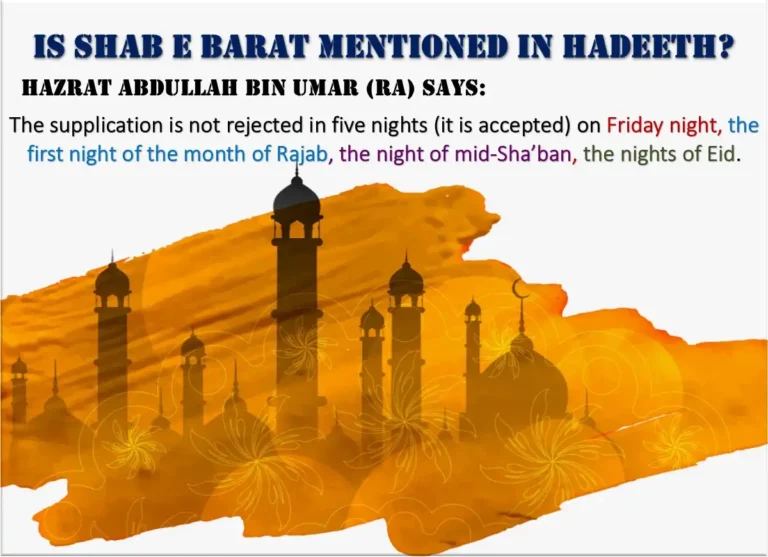
Another well-known narration from Sayyidah ‘Aishah (RA) mentions Allah’s descending to the lowest heaven on the middle night of Sha‘ban and forgiving many. This report is often cited in discussions about the night’s virtue.
The heart check that matters most
If you want one practical takeaway from these narrations, it’s this: don’t focus only on extra prayers while keeping a hard heart. Clear out grudges. Stop feeding hatred. Fix family ties if you can. A clean heart is not “extra credit.” It’s part of the worship.
A simple worship mindset that actually works
Think of this night as a reset button, not a performance. You’re not trying to finish a long checklist. You’re trying to meet Allah with honesty. The best worship is the one you can do calmly, without showing off, and without crashing the next day from exhaustion.
This is where the “startup plan” helps. In a startup, you don’t build everything on day one. You build a working version, test it, and improve it. On this night, you begin with what you can manage, then grow it over the year.
Shab-e-Barat ki ibadat ka tarika
Here is a practical flow you can follow at home. Keep it light, sincere, and focused:
- Pray ‘Isha on time, with attention
- Make tawbah: admit your mistakes and ask Allah to forgive you
- Pray a few rak‘ahs of nafl slowly
- Recite Qur’an (even a small amount with meaning)
- Make du‘a for yourself, parents, and the Ummah
- End with forgiveness for others and a plan for one change
Categories: PRAYER , The Holy Quran, Quran Jaz 1- 114
This plan fits real life. It respects your energy and your responsibilities, too.
What to pray: nafl, Qur’an, and du‘a
Many people love offering nawafil on this night, and that’s a beautiful choice. You can pray two rak‘ahs at a time, as many as you can with khushu‘. Keep it steady. If you feel tired, stop, sit, and make dhikr. Worship is not a race.
You’ll also hear people talk about reciting Surah Yasin, sometimes multiple times. Some scholars treat this as a long-standing community practice, even if it is not tied to a specific, proven instruction for this particular night.
A balanced way to handle common community practices
If your family or community has a routine—extra nafl, Qur’an recitation, dhikr—join with a good intention. But don’t turn a routine into a rule. The safest approach is to keep the night anchored in clear worship: prayer, Qur’an, repentance, du‘a, and good character.
Dua Shab-e-Barat ki ibadat:
Du‘a is where the night becomes personal. This is your private meeting with Allah, in your own words. Ask for what you truly need, without fancy lines. If you don’t know Arabic, speak in simple English. Allah understands every language and every tear.
Here are short du‘a ideas you can use:
- “O Allah, forgive me completely and guide me back to You.”
- “O Allah, remove hatred from my heart and give me peace.”
- “O Allah, bless my parents and have mercy on the deceased.”
- “O Allah, write goodness for my future and protect my faith.”
And remember the Qur’anic call to hope: never despair of Allah’s mercy.
Don’t forget the “people side” of worship
Worship is not only between you and Allah. It also shows up in how you treat people. If you want this night to change your year, add one human action:
- Send a kind message to someone you ignored
- Apologize for something you delayed
- Give charity quietly
- Help at home without being asked
- Make du‘a for someone who hurt you
This is how hearts get upgraded—gently, but permanently.
Shab-e-Barat ki raat ki ibadat
Not everyone can stay awake all night. Some people have jobs, kids, exams, or health issues. That does not block you from Allah’s mercy. Give the night one sincere hour. Even twenty minutes. Choose quality over quantity, and let consistency carry you forward.
If you can, add fasting the next day as a personal practice (where it’s suitable for you), because Sha‘ban is a month many Muslims use to prepare for Ramadan. But the core remains the same: repentance, prayer, and a heart that wants Allah.
A clear, confident ending you can live by
Shab e Barat ki ibadat is not about doing something “perfect” for one night and forgetting it the next morning. It’s about taking one real step that changes your direction. Ask Allah for forgiveness. Clean your heart. Pray with focus. Then walk into the next day like someone who has been invited back.
You don’t need to be fearless. You just need to be sincere. Start tonight. Build from there. Keep going.
FAQs
1) What is the best worship to do on the 15th night of Sha‘ban?
The best worship is what you can do sincerely: nafl prayer, Qur’an recitation, dhikr, and heartfelt du‘a. Focus on repentance and a clean heart, not on long checklists.
2) Is there a fixed number of rak‘ahs for this night?
Many people pray extra nafl in sets of two rak‘ahs, but there isn’t one universally agreed “must-do” number. Pray what you can with calm focus.
3) Can I make du‘a in English?
Yes. Du‘a in your own language is completely fine. Speak honestly and directly. The goal is sincerity, not perfect wording.
4) What should I avoid on this night?
Avoid showing off, wasting the night in gossip, and holding grudges. Hadith discussions about this night often highlight avoiding shirk and hostility in the heart.
5) What if I can’t stay awake late?
Do a smaller portion early in the night after ‘Isha: a little nafl, some Qur’an, and du‘a. Consistent worship—even short—is better than a one-time burnout.
Recommended For You (Shabe Barat)
- Shab e Barat Mubarak (Lailatul Barat)
- What Should We Prayers of Shab e Barat?
- Best Shab e Barat Dua To Change Destiny
- The Night of Mid-Sha’ban (Shab e Barat)
- What Does Islam Say About Shab Barat?
- Common Dua in Taraweeh Prayer To Recite
- So Kar Uthne Ki Dua | Dua After Waking Up
- Allahumma Rahmataka Arju: A Dua For Hope
- Why Do We Celebrate Shab-e-Barat in Islam?
- Arabic Prayer With Transliteration and Meaning
- Shab e Barat Ki Fazilat: Toba, Aur Maghfirat Ki Raat
- Shab e Barat Namaz Ka Tarika (Prayers For 15 Shaban)
- Shab e Barat Ibadat And Prayers – Night of Forgiveness
- What is The Shab e Barat meaning? Night of Forgiveness
- Shab e Barat Namaz Rakats: How To Pray Namaz Rakats?
Salatul Tasbih
- How To Perform Salatul Tasbih?
- Definition of Subhanallah and Its Meaning
- la ilaha illa anta subhanaka Inni Kuntu Minaz Zalimin