
How do I make dua? It is one of the most common questions Muslims ask, and the answer is gentler than most people expect. Dua is simply asking Allah, in your own words, with a sincere heart. This guide walks through the basics in plain steps, from the first word to the last.
For deeper reading, try Ghazali’s book on invocations and supplications.
How Do I Make Dua? A Simple Step-by-Step Way
Dua has a natural order that the Sunnah teaches. Once you know it, you can follow it for any request, big or small. Think of it as a path: begin with praise, ask clearly, and end the way you began.
How to make dua in Islam: the basic manners
- Begin with praise. Say Alhamdulillah or mention Allah’s names with love.
- Send blessings on the Prophet ﷺ. Learn more about salawat on Wikipedia.
- Ask clearly. Use your own language and name your exact need.
- Be certain. Do not say “if You will.” Ask firmly, because Allah can give anything.
- Do not rush. Repeat your dua and be patient.
- End with praise and blessings, just as you began.
How to make dua properly: a short checklist
- Mean it. Sincerity comes first.
- Keep your belief pure, as explained in Britannica’s entry on tawhid.
- Ask only for what is lawful.
- Keep your food and income as clean as you can.
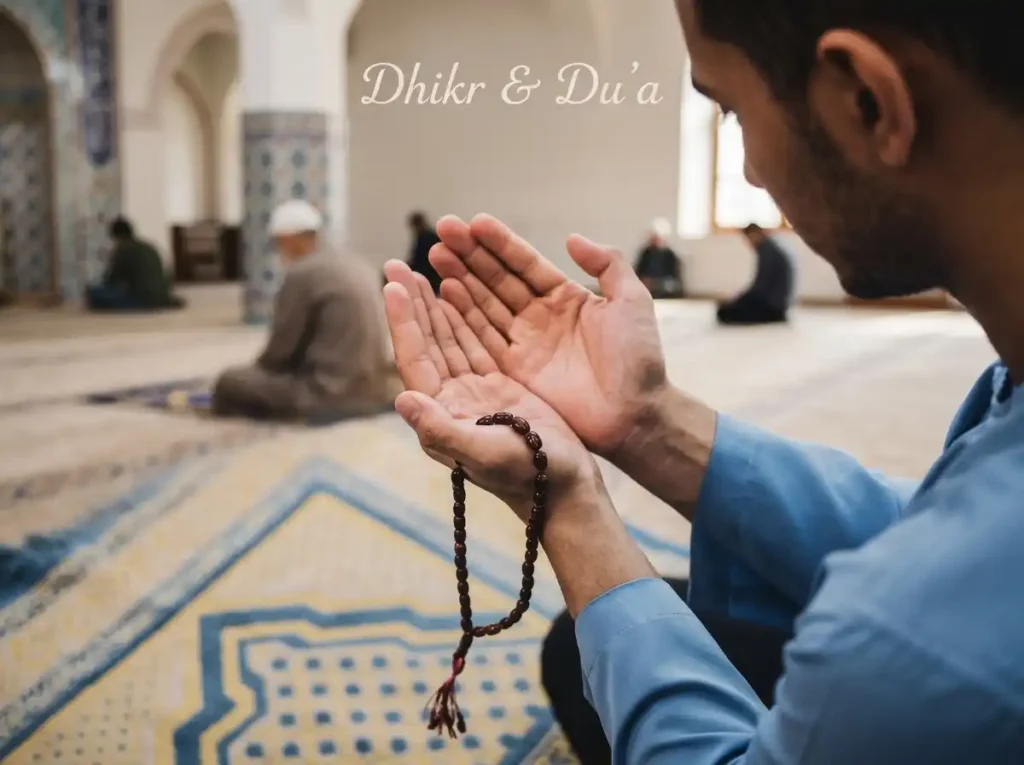
- Raise your hands if you can. It is a recommended manner.
Qur’an References
- Surah Al-Baqarah 2:186. Read Surah Al-Baqarah 2:186 on Quran.com. Wa idha sa’alaka ‘ibadi ‘anni fa inni qarib. Translation: When My servants ask about Me, I am near, and I answer the one who calls on Me.
- Surah Al-A’raf 7:180. Read Surah Al-A’raf 7:180 on Quran.com. Wa lillahil-asma’ul-husna fad’uhu biha. Translation: The most beautiful names belong to Allah, so call upon Him by them.
Hadith References
- Sunan an-Nasa’i 1284. In the Prophet’s correction of a hasty supplication, he teaches praise and blessings first. He then tells the man who did it properly: “Supplicate, you will be answered.”
- Sunan Ibn Majah 3865. In the hadith about Allah’s shyness, the Prophet ﷺ says your Lord is generous and shy to return His servant’s raised hands empty.
Also Read: As Alullah Al Azim Dua in Arabic (أسألُ اللهَ العَظِيمَ ربَّ العَرْشِ العَظيمِ أنْ يَشْفِيَكَ)
English Translation and Urdu Translation
| Reference | English | Urdu |
| Quran 2:186 | I am near and I answer the caller when he calls on Me. | میں قریب ہوں، پکارنے والے کی پکار کا جواب دیتا ہوں جب وہ مجھے پکارتا ہے۔ |
| Quran 7:180 | The most beautiful names belong to Allah, so call Him by them. | اللہ ہی کے لیے بہترین نام ہیں، پس اسے انہی کے ذریعے پکارو۔ |
| Nasa’i 1284 | Supplicate, you will be answered; ask, you will be given. | دعا کرو، تمہاری دعا قبول کی جائے گی؛ مانگو، تمہیں دیا جائے گا۔ |
| Ibn Majah 3865 | Your Lord is generous and shy to return raised hands empty. | تمہارا رب حیا والا اور کریم ہے، ہاتھ خالی لوٹاتے ہوئے شرماتا ہے۔ |
| Sample dua | O Allah, I ask You for guidance and ease. | اے اللہ! میں تجھ سے ہدایت اور آسانی مانگتا ہوں۔ |
Categories: Namaz ,Prayer , Hadith & Supplications
The Practical Fiqh Rule
Keep the rules simple and light:
- You may make dua in any language outside the prayer.
- Raising your hands and wiping your face afterward is a commonly taught Sunnah practice.
- No fixed wording is required. Use Quranic and Prophetic duas, then add your own.
- A delayed answer is not a rejected one.
For a fuller list of manners, see IslamQA’s answer on how to make dua.
A Simple Checklist and Habit Tips
Small habits make dua a daily practice:
- Make one short dua after each prayer.
- Keep a list of requests and update it.
- Learn one new Quranic dua each week.
- Ask for others too, not only for yourself.
Suitable Sites to Read More
| Site | Why it helps |
| IslamQA | Detailed answers on dua manners and conditions |
| Islamic Teachings Forum | Community discussion on everyday Islamic questions |
| Quran Mualim | Islamic site for Quran learning and guidance |
For further study, look for Ma’arif al-Sunan and Fath al-Mulhim. Both are Hanafi-school hadith commentaries rather than strict fiqh books, but they are widely studied in Hanafi circles.
Alasad online Quran Tutor
Want to learn the duas of the Quran with correct pronunciation? Join our free Quran learning help.
- WhatsApp: +923017363500
- Gmail: [email protected]
FAQs
How do I make dua if I don’t know Arabic?
Ask in any language you speak. Allah understands every tongue. You can also learn a few Quranic and Prophetic duas gradually, but your own words are enough.
Can I say “if You will” in my dua?
It is better not to. The Prophet ﷺ taught us to ask firmly, since nothing is too big for Allah to give.
Conclusion
Dua is not a test of eloquence. It is an open door, and you are always welcome to walk through it. Begin with praise, ask with certainty, and keep returning. Allah is near, and He loves to hear from you.
Recommended For You
- Dua For Waking Up – Learn Islam
- What is The Dua To Find Lost Item?
- Learn Dua Waking Up – Learn Islam
- Enter House Dua (As-salamu Alaykum)
- Learn Dua of Nabi Yunus – Learn Islam
- Dua For Traveling by Car – Learn Islam
- An Amazing Dua To Get What You Want
- Dua For Stomach Cramps – Learn Islam
- Dua For Thunder and Rain – Learn Islam
- Dua For Travelling by Plane – learn Islam
- Dua For Visiting Graveyard – Learn Islam
- Dua To Grow Taller (For Height Increase)
- Duas For Pain Relief in Islam – Learn Islam
- Best Dua For Safe Pregnancy And Delivery
- Dua For Protection of Family – Learn Islam
- Powerful Dua For Toothache Cure in Islam
- Best Dua To Bring Husband and Wife Closer
- Learn Dua in Between Sajdah (Prostrations)
- Powerful Dua Healing To Any illness Quickly
- So Kar Uthne Ki Dua | Dua After Waking Up
- Best Dua To Pass Driving Test – Learn Islam
- Dua For Rizq (How To Increase Your Money)
- la ilaha illa anta subhanaka inni kuntu arabic
- Allahumma Rahmataka Arju: A Dua For Hope
- What To Say When Someone Dies Islam Dua?
- Dua For Waking Up From Sleep – Learn Islam
- Learn Dua Increase Knowledge – Learn Islam
- Making Dua When It is Raining – Learn Islam
- Happy Nikah Anniversary Wishes – Learn Islam