

Surah Al-Haj (Chapter 22 of the Quran) is one of the most profound chapters addressing the Islamic pilgrimage and our relationship with Allah. If you’re interested in learning the deeper meaning behind the hajj or want to strengthen your Quran knowledge, understanding this surah changes how you see this sacred journey. This chapter teaches us about submission, sacrifice, and spiritual transformation through one of Islam’s five pillars.
Learn Quran for Free with personalized guidance. WhatsApp: +923017363500 | Email: [email protected]
Looking for deeper Quranic insight? Check out this comprehensive guide on Islamic teachings and forums where scholars discuss complex Islamic concepts.
Also Read: Words by words Quran PDF Download
Surah Al-Hajj (سورة الحج) — Chapter 22: “The Pilgrimage”
بِسْمِ اللَّهِ الرَّحْمَٰنِ الرَّحِيمِ Bismillāhir-Raḥmānir-Raḥīm — In the name of Allah, the Most Gracious, the Most Merciful
| # | Arabic | Transliteration | English Translation |
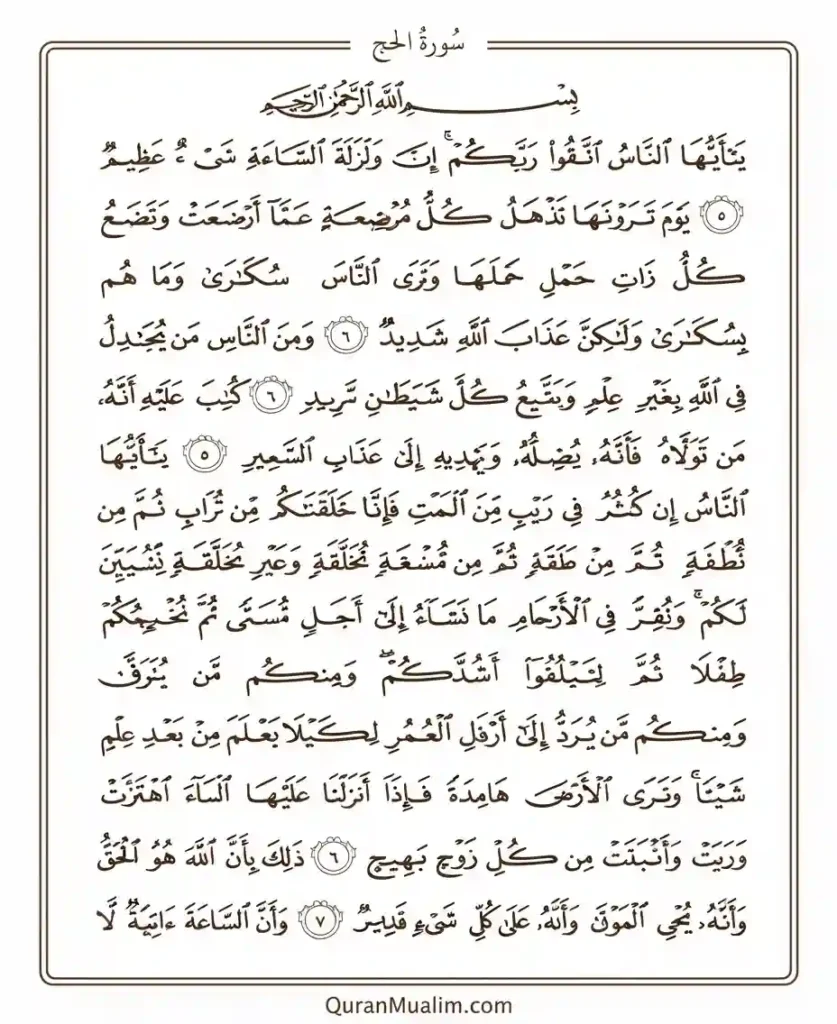
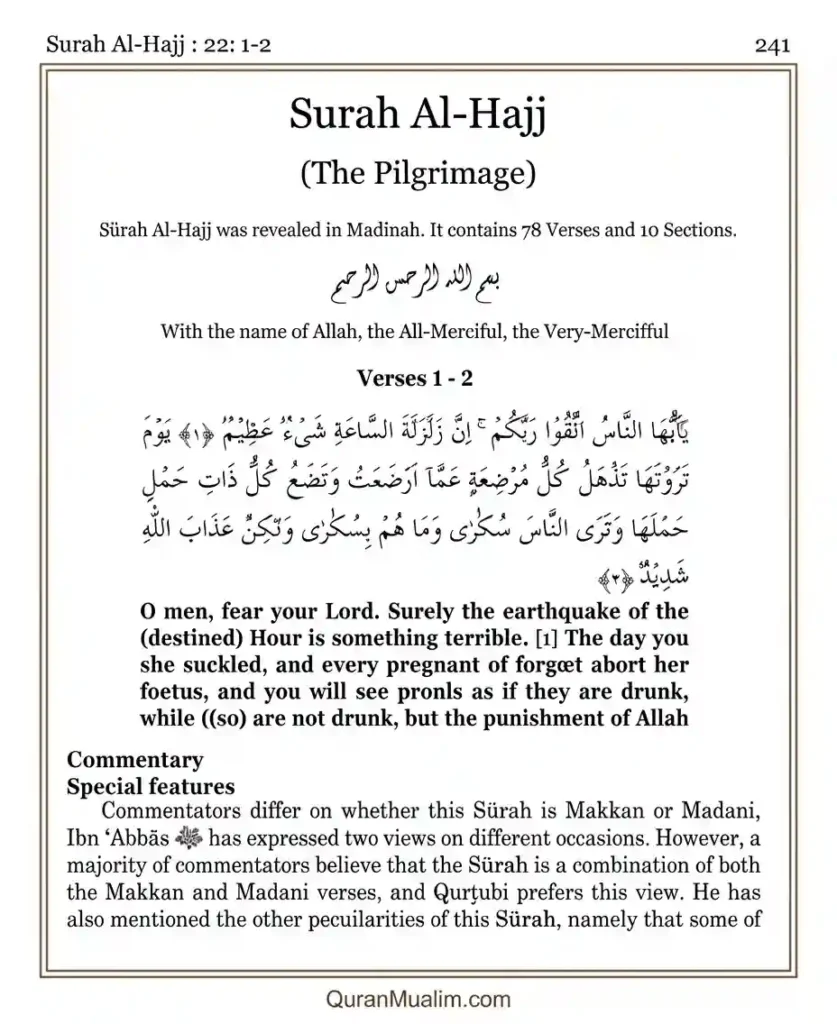
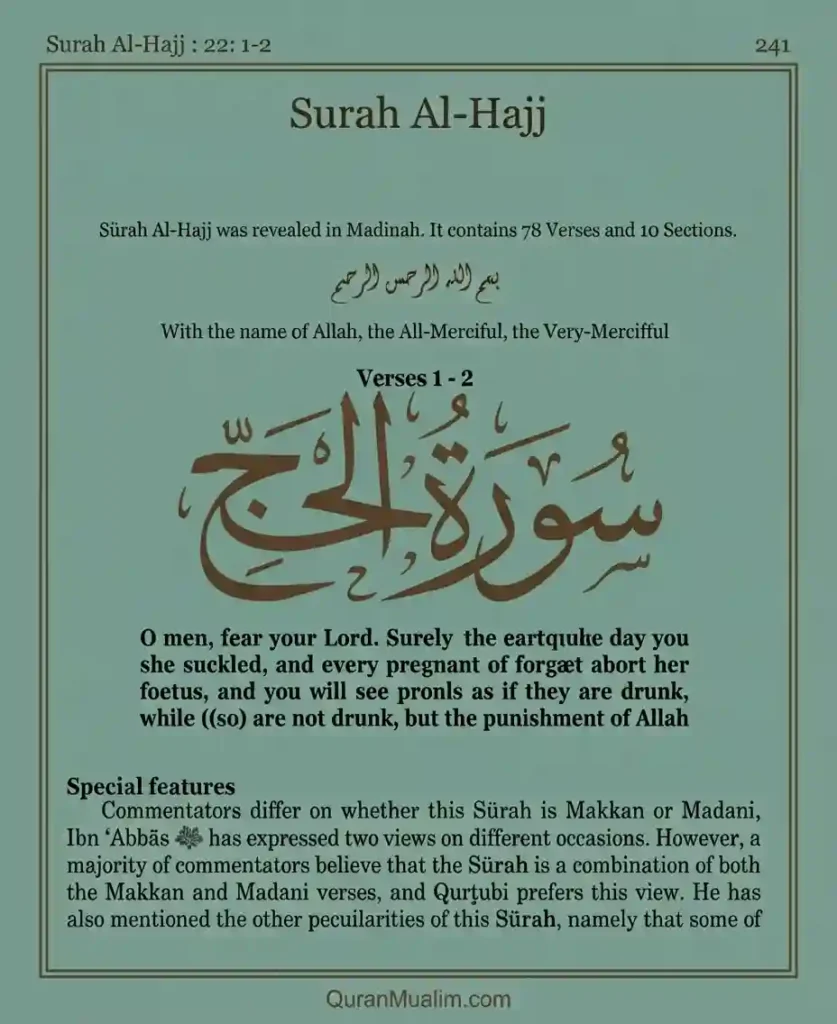
| 1 | يَا أَيُّهَا النَّاسُ اتَّقُوا رَبَّكُمْ ۚ إِنَّ زَلْزَلَةَ السَّاعَةِ شَيْءٌ عَظِيمٌ | Yā ayyuhā an-nāsu ittaqū rabbakum inna zalzalata as-sā’ati shay’un ‘aẓīmun | O mankind, fear your Lord. Indeed, the shaking of the [Final] Hour is a terrible thing. |
| 2 | يَوْمَ تَرَوْنَهَا تَذْهَلُ كُلُّ مُرْضِعَةٍ عَمَّا أَرْضَعَتْ وَتَضَعُ كُلُّ ذَاتِ حَمْلٍ حَمْلَهَا وَتَرَى النَّاسَ سُكَارَىٰ وَمَا هُمْ بِسُكَارَىٰ وَلَٰكِنَّ عَذَابَ اللَّهِ شَدِيدٌ | Yawma tarawnahā tadhhalu kullu murḍi’atin ‘ammā arḍa’at wa taḍa’u kullu dhāti ḥamlin ḥamlahā wa tarā an-nāsa sukārā wa mā hum bisukārā wa lākinna ‘adhāba Allāhi shadīdun | On the Day you see it, every nursing mother will forget her nursling, and every pregnant woman will deliver her burden, and you will see the people intoxicated, while they are not intoxicated; but the punishment of Allah is severe. |
| 3 | وَمِنَ النَّاسِ مَنْ يُجَادِلُ فِي اللَّهِ بِغَيْرِ عِلْمٍ وَيَتَّبِعُ كُلَّ شَيْطَانٍ مَرِيدٍ | Wa mina an-nāsi man yujādilu fī Allāhi bighayri ‘ilmin wa yattabi’u kulla shayṭānin marīdin | And among the people is he who disputes about Allah without knowledge and follows every rebellious devil. |
| 4 | كُتِبَ عَلَيْهِ أَنَّهُ مَنْ تَوَلَّاهُ فَأَنَّهُ يُضِلُّهُ وَيَهْدِيهِ إِلَىٰ عَذَابِ السَّعِيرِ | Kutiba ‘alayhi annahu man tawallāhu fa-annahu yuḍilluhu wa yahdīhi ilā ‘adhābi as-sa’īri | It has been decreed for him that whoever befriends him — he will misguide him and will lead him to the punishment of the Blaze. |
| 5 | يَا أَيُّهَا النَّاسُ إِنْ كُنْتُمْ فِي رَيْبٍ مِنَ الْبَعْثِ فَإِنَّا خَلَقْنَاكُمْ مِنْ تُرَابٍ ثُمَّ مِنْ نُطْفَةٍ ثُمَّ مِنْ عَلَقَةٍ ثُمَّ مِنْ مُضْغَةٍ مُخَلَّقَةٍ وَغَيْرِ مُخَلَّقَةٍ لِنُبَيِّنَ لَكُمْ ۚ وَنُقِرُّ فِي الْأَرْحَامِ مَا نَشَاءُ إِلَىٰ أَجَلٍ مُسَمًّى ثُمَّ نُخْرِجُكُمْ طِفْلًا ثُمَّ لِتَبْلُغُوا أَشُدَّكُمْ ۖ وَمِنْكُمْ مَنْ يُتَوَفَّىٰ وَمِنْكُمْ مَنْ يُرَدُّ إِلَىٰ أَرْذَلِ الْعُمُرِ لِكَيْلَا يَعْلَمَ مِنْ بَعْدِ عِلْمٍ شَيْئًا ۚ وَتَرَى الْأَرْضَ هَامِدَةً فَإِذَا أَنْزَلْنَا عَلَيْهَا الْمَاءَ اهْتَزَّتْ وَرَبَتْ وَأَنْبَتَتْ مِنْ كُلِّ زَوْجٍ بَهِيجٍ | Yā ayyuhā an-nāsu in kuntum fī raybin mina al-ba’thi fa-innā khalaqnākum min turābin thumma min nuṭfatin thumma min ‘alaqatin thumma min muḍghatin mukhallaqatin wa ghayri mukhallaqatin linubayyina lakum wa nuqirru fī al-arḥāmi mā nashā’u ilā ajalin musamman thumma nukhrijukum ṭiflan thumma litablughū ashuddakum wa minkum man yutawaffā wa minkum man yuraddu ilā ardhali al-‘umuri likaylā ya’lama min ba’di ‘ilmin shay’an wa tarā al-arḍa hāmidatan fa-idhā anzalnā ‘alayhā al-mā’a ihtazzat wa rabat wa anbatat min kulli zawjin bahījin | O people, if you should be in doubt about the Resurrection, then [consider that] indeed, We created you from dust, then from a sperm-drop, then from a clinging clot, then from a lump of flesh, formed and unformed, that We may show you. And We settle in the wombs whom We will for a specified term, then We bring you out as a child, and then [We develop you] that you reach your [time of] maturity. And among you is he who is taken in death, and among you is he who is returned to the most decrepit age, so that he knows, after knowledge, nothing. And you see the earth barren, but when We send down upon it rain, it quivers and swells and grows [something] of every beautiful kind. |
| 6 | ذَٰلِكَ بِأَنَّ اللَّهَ هُوَ الْحَقُّ وَأَنَّهُ يُحْيِي الْمَوْتَىٰ وَأَنَّهُ عَلَىٰ كُلِّ شَيْءٍ قَدِيرٌ | Dhālika bi-anna Allāha huwa al-ḥaqqu wa annahu yuḥyī al-mawtā wa annahu ‘alā kulli shay’in qadīrun | That is because Allah is the Truth and because He gives life to the dead and because He is over all things competent. |
| 7 | وَأَنَّ السَّاعَةَ آتِيَةٌ لَا رَيْبَ فِيهَا وَأَنَّ اللَّهَ يَبْعَثُ مَنْ فِي الْقُبُورِ | Wa anna as-sā’ata ātiyatun lā rayba fīhā wa anna Allāha yab’athu man fī al-qubūri | And [that they may know] that the Hour is coming — no doubt about it — and that Allah will resurrect those in the graves. |
| 8 | وَمِنَ النَّاسِ مَنْ يُجَادِلُ فِي اللَّهِ بِغَيْرِ عِلْمٍ وَلَا هُدًى وَلَا كِتَابٍ مُنِيرٍ | Wa mina an-nāsi man yujādilu fī Allāhi bighayri ‘ilmin wa lā hudan wa lā kitābin munīrin | And among the people is he who disputes about Allah without knowledge or guidance or an enlightening Book — |
| 9 | ثَانِيَ عِطْفِهِ لِيُضِلَّ عَنْ سَبِيلِ اللَّهِ ۖ لَهُ فِي الدُّنْيَا خِزْيٌ ۖ وَنُذِيقُهُ يَوْمَ الْقِيَامَةِ عَذَابَ الْحَرِيقِ | Thāniya ‘iṭfihi liyuḍilla ‘an sabīli Allāhi lahu fī ad-dunyā khizyun wa nudhīquhu yawma al-qiyāmati ‘adhāba al-ḥarīqi | Twisting his neck [in disdain] to mislead [people] from the way of Allah. For him in the world is disgrace, and We will make him taste on the Day of Resurrection the punishment of the Burning Fire. |
| 10 | ذَٰلِكَ بِمَا قَدَّمَتْ يَدَاكَ وَأَنَّ اللَّهَ لَيْسَ بِظَلَّامٍ لِلْعَبِيدِ | Dhālika bimā qaddamat yadāka wa anna Allāha laysa biẓallāmin lil’abīdi | That is for what your hands have put forth and because Allah is not ever unjust to His servants. |
| 11 | وَمِنَ النَّاسِ مَنْ يَعْبُدُ اللَّهَ عَلَىٰ حَرْفٍ ۖ فَإِنْ أَصَابَهُ خَيْرٌ اطْمَأَنَّ بِهِ ۖ وَإِنْ أَصَابَتْهُ فِتْنَةٌ انْقَلَبَ عَلَىٰ وَجْهِهِ خَسِرَ الدُّنْيَا وَالْآخِرَةَ ۚ ذَٰلِكَ هُوَ الْخُسْرَانُ الْمُبِينُ | Wa mina an-nāsi man ya’budu Allāha ‘alā ḥarfin fa-in aṣābahu khayrun iṭma’anna bihi wa in aṣābat-hu fitnatun inqalaba ‘alā wajhihi khasira ad-dunyā wal-ākhirata dhālika huwa al-khusrānu al-mubīnu | And among the people is he who worships Allah on an edge. If good befalls him, he is reassured by it; but if a trial befalls him, he turns back on his face [to disbelief]. He has lost this world and the Hereafter. That is the manifest loss. |
| 12 | يَدْعُو مِنْ دُونِ اللَّهِ مَا لَا يَضُرُّهُ وَمَا لَا يَنْفَعُهُ ۚ ذَٰلِكَ هُوَ الضَّلَالُ الْبَعِيدُ | Yad’ū min dūni Allāhi mā lā yaḍurruhu wa mā lā yanfa’uhu dhālika huwa aḍ-ḍalālu al-ba’īdu | He invokes instead of Allah that which neither harms him nor benefits him. That is what is the extreme error. |
| 13 | يَدْعُو لَمَنْ ضَرُّهُ أَقْرَبُ مِنْ نَفْعِهِ ۚ لَبِئْسَ الْمَوْلَىٰ وَلَبِئْسَ الْعَشِيرُ | Yad’ū laman ḍarruhu aqrabu min naf’ihi labi’sa al-mawlā wa labi’sa al-‘ashīru | He invokes one whose harm is closer than his benefit — how wretched a protector, and how wretched an associate. |
| 14 | إِنَّ اللَّهَ يُدْخِلُ الَّذِينَ آمَنُوا وَعَمِلُوا الصَّالِحَاتِ جَنَّاتٍ تَجْرِي مِنْ تَحْتِهَا الْأَنْهَارُ ۚ إِنَّ اللَّهَ يَفْعَلُ مَا يُرِيدُ | Inna Allāha yudkhilu al-ladhīna āmanū wa ‘amilū aṣ-ṣāliḥāti jannātin tajrī min taḥtihā al-anhāru inna Allāha yaf’alu mā yurīdu | Indeed, Allah will admit those who believe and do righteous deeds to gardens beneath which rivers flow. Indeed, Allah does what He intends. |
| 15 | مَنْ كَانَ يَظُنُّ أَنْ لَنْ يَنْصُرَهُ اللَّهُ فِي الدُّنْيَا وَالْآخِرَةِ فَلْيَمْدُدْ بِسَبَبٍ إِلَى السَّمَاءِ ثُمَّ لْيَقْطَعْ فَلْيَنْظُرْ هَلْ يُذْهِبَنَّ كَيْدُهُ مَا يَغِيظُ | Man kāna yaẓunnu an lan yanṣurahu Allāhu fī ad-dunyā wal-ākhirati falyamdud bisababin ilā as-samā’i thumma liyaqṭa’ falyanẓur hal yudhhibanna kaydahu mā yaghīẓu | Whoever thinks that Allah will not support him [i.e., Prophet Muhammad] in this world and the Hereafter — let him extend a rope to the ceiling, then cut off [his breath], and let him see: will his effort remove that which enrages [him]? |
| 16 | وَكَذَٰلِكَ أَنْزَلْنَاهُ آيَاتٍ بَيِّنَاتٍ وَأَنَّ اللَّهَ يَهْدِي مَنْ يُرِيدُ | Wa kadhālika anzalnāhu āyātin bayyinātin wa anna Allāha yahdī man yurīdu | And thus have We sent it down as verses of clear evidence, and because Allah guides whom He intends. |
| 17 | إِنَّ الَّذِينَ آمَنُوا وَالَّذِينَ هَادُوا وَالصَّابِئِينَ وَالنَّصَارَىٰ وَالْمَجُوسَ وَالَّذِينَ أَشْرَكُوا إِنَّ اللَّهَ يَفْصِلُ بَيْنَهُمْ يَوْمَ الْقِيَامَةِ ۚ إِنَّ اللَّهَ عَلَىٰ كُلِّ شَيْءٍ شَهِيدٌ | Inna al-ladhīna āmanū wal-ladhīna hādū waṣ-ṣābi’īna wan-naṣārā wal-majūsa wal-ladhīna ashrakū inna Allāha yafṣilu baynahum yawma al-qiyāmati inna Allāha ‘alā kulli shay’in shahīdun | Indeed, those who have believed and those who were Jews and the Sabians and the Christians and the Magians and those who associated with Allah — Allah will judge between them on the Day of Resurrection. Indeed Allah is, over all things, Witness. |
| 18 | أَلَمْ تَرَ أَنَّ اللَّهَ يَسْجُدُ لَهُ مَنْ فِي السَّمَاوَاتِ وَمَنْ فِي الْأَرْضِ وَالشَّمْسُ وَالْقَمَرُ وَالنُّجُومُ وَالْجِبَالُ وَالشَّجَرُ وَالدَّوَابُّ وَكَثِيرٌ مِنَ النَّاسِ ۖ وَكَثِيرٌ حَقَّ عَلَيْهِ الْعَذَابُ ۗ وَمَنْ يُهِنِ اللَّهُ فَمَا لَهُ مِنْ مُكْرِمٍ ۚ إِنَّ اللَّهَ يَفْعَلُ مَا يَشَاءُ ۩ | Alam tara anna Allāha yasjudu lahu man fī as-samāwāti wa man fī al-arḍi wash-shamsu wal-qamaru wan-nujūmu wal-jibālu wash-shajaru wad-dawābbu wa kathīrun mina an-nāsi wa kathīrun ḥaqqa ‘alayhi al-‘adhābu wa man yuhini Allāhu famā lahu min mukrimin inna Allāha yaf’alu mā yashā’u | Do you not see that to Allah prostrates whoever is in the heavens and whoever is on the earth and the sun, the moon, the stars, the mountains, the trees, the moving creatures, and many of the people? But upon many the punishment has been justified. And he whom Allah humiliates — for him there is no bestower of honor. Indeed, Allah does what He wills. |
| 19 | هَٰذَانِ خَصْمَانِ اخْتَصَمُوا فِي رَبِّهِمْ ۖ فَالَّذِينَ كَفَرُوا قُطِّعَتْ لَهُمْ ثِيَابٌ مِنْ نَارٍ يُصَبُّ مِنْ فَوْقِ رُءُوسِهِمُ الْحَمِيمُ | Hādhāni khaṣmāni ikhtaṣamū fī rabbihim fal-ladhīna kafarū quṭṭi’at lahum thiyābun min nārin yuṣabbu min fawqi ru’ūsihimu al-ḥamīmu | These are two adversaries who have disputed over their Lord. But those who disbelieved will have cut out for them garments of fire. Poured upon their heads will be scalding water |
| 20 | يُصْهَرُ بِهِ مَا فِي بُطُونِهِمْ وَالْجُلُودُ | Yuṣharu bihi mā fī buṭūnihim wal-julūdu | By which is melted that within their bellies and [their] skins as well. |
| 21 | وَلَهُمْ مَقَامِعُ مِنْ حَدِيدٍ | Wa lahum maqāmi’u min ḥadīdin | And for [striking] them are hooked rods of iron. |
| 22 | كُلَّمَا أَرَادُوا أَنْ يَخْرُجُوا مِنْهَا مِنْ غَمٍّ أُعِيدُوا فِيهَا وَذُوقُوا عَذَابَ الْحَرِيقِ | Kullamā arādū an yakhrujū minhā min ghammin u’īdū fīhā wa dhūqū ‘adhāba al-ḥarīqi | Every time they want to get out of it, from anguish, they will be returned to it, and [it will be said], “Taste the punishment of the Burning Fire!” |
| 23 | إِنَّ اللَّهَ يُدْخِلُ الَّذِينَ آمَنُوا وَعَمِلُوا الصَّالِحَاتِ جَنَّاتٍ تَجْرِي مِنْ تَحْتِهَا الْأَنْهَارُ يُحَلَّوْنَ فِيهَا مِنْ أَسَاوِرَ مِنْ ذَهَبٍ وَلُؤْلُؤًا ۖ وَلِبَاسُهُمْ فِيهَا حَرِيرٌ | Inna Allāha yudkhilu al-ladhīna āmanū wa ‘amilū aṣ-ṣāliḥāti jannātin tajrī min taḥtihā al-anhāru yuḥallawna fīhā min asāwira min dhahabin wa lu’lu’an wa libāsuhum fīhā ḥarīrun | Indeed, Allah will admit those who believe and do righteous deeds to gardens beneath which rivers flow. They will be adorned therein with bracelets of gold and pearls, and their garments therein will be silk. |
| 24 | وَهُدُوا إِلَى الطَّيِّبِ مِنَ الْقَوْلِ وَهُدُوا إِلَىٰ صِرَاطِ الْحَمِيدِ | Wa hudū ilā aṭ-ṭayyibi mina al-qawli wa hudū ilā ṣirāṭi al-ḥamīdi | And they had been guided [in worldly life] to good speech, and they were guided to the path of the Praiseworthy. |
| 25 | إِنَّ الَّذِينَ كَفَرُوا وَيَصُدُّونَ عَنْ سَبِيلِ اللَّهِ وَالْمَسْجِدِ الْحَرَامِ الَّذِي جَعَلْنَاهُ لِلنَّاسِ سَوَاءً الْعَاكِفُ فِيهِ وَالْبَادِ ۚ وَمَنْ يُرِدْ فِيهِ بِإِلْحَادٍ بِظُلْمٍ نُذِقْهُ مِنْ عَذَابٍ أَلِيمٍ | Inna al-ladhīna kafarū wa yaṣuddūna ‘an sabīli Allāhi wal-masjidi al-ḥarāmi al-ladhī ja’alnāhu lin-nāsi sawā’an al-‘ākifu fīhi wal-bādi wa man yurid fīhi bi-ilḥādin biẓulmin nudhiqhu min ‘adhābin alīmin | Indeed, those who have disbelieved and avert [people] from the way of Allah and from al-Masjid al-Haram, which We made for the people — equal are the residents therein and the visitors — and whoever intends deviation therein in wrongdoing, We will make him taste of a painful punishment. |
| 26 | وَإِذْ بَوَّأْنَا لِإِبْرَاهِيمَ مَكَانَ الْبَيْتِ أَنْ لَا تُشْرِكْ بِي شَيْئًا وَطَهِّرْ بَيْتِيَ لِلطَّائِفِينَ وَالْقَائِمِينَ وَالرُّكَّعِ السُّجُودِ | Wa idh bawwa’nā li-ibrāhīma makāna al-bayti an lā tushrik bī shay’an wa ṭahhir baytiya liṭ-ṭā’ifīna wal-qā’imīna war-rukka’i as-sujūdi | And [mention] when We designated for Abraham the site of the House, [saying], “Do not associate anything with Me and purify My House for those who circumambulate and those who stand [in prayer] and those who bow and prostrate. |
| 27 | وَأَذِّنْ فِي النَّاسِ بِالْحَجِّ يَأْتُوكَ رِجَالًا وَعَلَىٰ كُلِّ ضَامِرٍ يَأْتِينَ مِنْ كُلِّ فَجٍّ عَمِيقٍ | Wa adhdhin fī an-nāsi bilḥajji ya’tūka rijālan wa ‘alā kulli ḍāmirin ya’tīna min kulli fajjin ‘amīqin | And announce to the people the Hajj [pilgrimage]; they will come to you on foot and on every lean camel; they will come from every distant pass — |
| 28 | لِيَشْهَدُوا مَنَافِعَ لَهُمْ وَيَذْكُرُوا اسْمَ اللَّهِ فِي أَيَّامٍ مَعْلُومَاتٍ عَلَىٰ مَا رَزَقَهُمْ مِنْ بَهِيمَةِ الْأَنْعَامِ ۖ فَكُلُوا مِنْهَا وَأَطْعِمُوا الْبَائِسَ الْفَقِيرَ | Liyash-hadū manāfi’a lahum wa yadhkurū isma Allāhi fī ayyāmin ma’lūmātin ‘alā mā razaqahum min bahīmati al-an’āmi fakulū minhā wa aṭ’imū al-bā’isa al-faqīra | That they may witness benefits for themselves and mention the name of Allah on known days over what He has provided for them of [sacrificial] animals. So eat of them and feed the miserable and poor. |
| 29 | ثُمَّ لْيَقْضُوا تَفَثَهُمْ وَلْيُوفُوا نُذُورَهُمْ وَلْيَطَّوَّفُوا بِالْبَيْتِ الْعَتِيقِ | Thumma liyaqḍū tafathahum wal-yūfū nudhūrahum wal-yaṭṭawwafū bilbayti al-‘atīqi | Then let them end their untidiness and fulfill their vows and perform Tawaf around the ancient House. |
| 30 | ذَٰلِكَ وَمَنْ يُعَظِّمْ حُرُمَاتِ اللَّهِ فَهُوَ خَيْرٌ لَهُ عِنْدَ رَبِّهِ ۗ وَأُحِلَّتْ لَكُمُ الْأَنْعَامُ إِلَّا مَا يُتْلَىٰ عَلَيْكُمْ ۖ فَاجْتَنِبُوا الرِّجْسَ مِنَ الْأَوْثَانِ وَاجْتَنِبُوا قَوْلَ الزُّورِ | Dhālika wa man yu’aẓẓim ḥurumāti Allāhi fahuwa khayrun lahu ‘inda rabbihi wa uḥillat lakumu al-an’āmu illā mā yutlā ‘alaykum fajtanibū ar-rijsa mina al-awthāni wajtanibū qawla az-zūri | That [is so]. And whoever honors the sacred ordinances of Allah — it is best for him in the sight of his Lord. And permitted to you are the grazing livestock, except what is recited to you. So avoid the uncleanliness of idols and avoid false statement, |
| 31 | حُنَفَاءَ لِلَّهِ غَيْرَ مُشْرِكِينَ بِهِ ۚ وَمَنْ يُشْرِكْ بِاللَّهِ فَكَأَنَّمَا خَرَّ مِنَ السَّمَاءِ فَتَخْطَفُهُ الطَّيْرُ أَوْ تَهْوِي بِهِ الرِّيحُ فِي مَكَانٍ سَحِيقٍ | Ḥunafā’a lillāhi ghayra mushrikīna bihi wa man yushrik billāhi faka’annamā kharra mina as-samā’i fatakhṭafuhu aṭ-ṭayru aw tahwī bihi ar-rīḥu fī makānin saḥīqin | Inclining [only] to Allah, not associating [anything] with Him. And he who associates with Allah is as though he had fallen from the sky and was snatched by the birds or the wind had blown him into a remote place. |
| 32 | ذَٰلِكَ وَمَنْ يُعَظِّمْ شَعَائِرَ اللَّهِ فَإِنَّهَا مِنْ تَقْوَى الْقُلُوبِ | Dhālika wa man yu’aẓẓim sha’ā’ira Allāhi fa-innahā min taqwā al-qulūbi | That [is so]. And whoever honors the symbols of Allah — indeed, it is from the piety of hearts. |
| 33 | لَكُمْ فِيهَا مَنَافِعُ إِلَىٰ أَجَلٍ مُسَمًّى ثُمَّ مَحِلُّهَا إِلَى الْبَيْتِ الْعَتِيقِ | Lakum fīhā manāfi’u ilā ajalin musamman thumma maḥilluhā ilā al-bayti al-‘atīqi | For you therein are benefits for a specified term; then their place of sacrifice is at the ancient House. |
| 34 | وَلِكُلِّ أُمَّةٍ جَعَلْنَا مَنْسَكًا لِيَذْكُرُوا اسْمَ اللَّهِ عَلَىٰ مَا رَزَقَهُمْ مِنْ بَهِيمَةِ الْأَنْعَامِ ۗ فَإِلَٰهُكُمْ إِلَٰهٌ وَاحِدٌ فَلَهُ أَسْلِمُوا ۗ وَبَشِّرِ الْمُخْبِتِينَ | Wa likulli ummatin ja’alnā mansakan liyadhkurū isma Allāhi ‘alā mā razaqahum min bahīmati al-an’āmi fa-ilāhukum ilāhun wāḥidun falahu aslimū wa bashshiri al-mukhbitīna | And for all religion We have appointed a rite [of sacrifice] that they may mention the name of Allah over what He has provided for them of sacrificial animals. For your god is one God, so to Him submit. And, [O Muhammad], give good tidings to the humble [before their Lord] |
| 35 | الَّذِينَ إِذَا ذُكِرَ اللَّهُ وَجِلَتْ قُلُوبُهُمْ وَالصَّابِرِينَ عَلَىٰ مَا أَصَابَهُمْ وَالْمُقِيمِي الصَّلَاةِ وَمِمَّا رَزَقْنَاهُمْ يُنْفِقُونَ | Al-ladhīna idhā dhukira Allāhu wajilat qulūbuhum waṣ-ṣābirīna ‘alā mā aṣābahum wal-muqīmī aṣ-ṣalāti wa mimmā razaqnāhum yunfiqūna | Who, when Allah is mentioned, their hearts are fearful, and [to] the patient over what has afflicted them, and the establishers of prayer and those who spend from what We have provided them. |
| 36 | وَالْبُدْنَ جَعَلْنَاهَا لَكُمْ مِنْ شَعَائِرِ اللَّهِ لَكُمْ فِيهَا خَيْرٌ ۖ فَاذْكُرُوا اسْمَ اللَّهِ عَلَيْهَا صَوَافَّ ۖ فَإِذَا وَجَبَتْ جُنُوبُهَا فَكُلُوا مِنْهَا وَأَطْعِمُوا الْقَانِعَ وَالْمُعْتَرَّ ۚ كَذَٰلِكَ سَخَّرْنَاهَا لَكُمْ لَعَلَّكُمْ تَشْكُرُونَ | Wal-budna ja’alnāhā lakum min sha’ā’iri Allāhi lakum fīhā khayrun fadhkurū isma Allāhi ‘alayhā ṣawāffa fa-idhā wajabat junūbuhā fakulū minhā wa aṭ’imū al-qāni’a wal-mu’tarra kadhālika sakhkharnāhā lakum la’allakum tashkurūna | And the camels and cattle We have appointed for you as among the symbols of Allah; for you therein is good. So mention the name of Allah upon them when lined up [for sacrifice]; and when they are [lifeless] on their sides, then eat from them and feed the needy who does not ask and the needy who asks. Thus have We subjected them to you that you may be grateful. |
| 37 | لَنْ يَنَالَ اللَّهَ لُحُومُهَا وَلَا دِمَاؤُهَا وَلَٰكِنْ يَنَالُهُ التَّقْوَىٰ مِنْكُمْ ۚ كَذَٰلِكَ سَخَّرَهَا لَكُمْ لِتُكَبِّرُوا اللَّهَ عَلَىٰ مَا هَدَاكُمْ ۗ وَبَشِّرِ الْمُحْسِنِينَ | Lan yanāla Allāha luḥūmuhā wa lā dimā’uhā wa lākin yanāluhu at-taqwā minkum kadhālika sakhkharahā lakum litukabbirū Allāha ‘alā mā hadākum wa bashshiri al-muḥsinīna | Their meat will not reach Allah, nor will their blood, but what reaches Him is piety from you. Thus have We subjected them to you that you may glorify Allah for that [to] which He has guided you; and give good tidings to the doers of good. |
| 38 | إِنَّ اللَّهَ يُدَافِعُ عَنِ الَّذِينَ آمَنُوا ۗ إِنَّ اللَّهَ لَا يُحِبُّ كُلَّ خَوَّانٍ كَفُورٍ | Inna Allāha yudāfi’u ‘ani al-ladhīna āmanū inna Allāha lā yuḥibbu kulla khawwānin kafūrin | Indeed, Allah defends those who have believed. Indeed, Allah does not like everyone treacherous and ungrateful. |
| 39 | أُذِنَ لِلَّذِينَ يُقَاتَلُونَ بِأَنَّهُمْ ظُلِمُوا ۚ وَإِنَّ اللَّهَ عَلَىٰ نَصْرِهِمْ لَقَدِيرٌ | Udhina lilladhīna yuqātalūna bi-annahum ẓulimū wa inna Allāha ‘alā naṣrihim laqadīrun | Permission [to fight] has been given to those who are being fought, because they were wronged. And indeed, Allah is competent to give them victory. |
| 40 | الَّذِينَ أُخْرِجُوا مِنْ دِيَارِهِمْ بِغَيْرِ حَقٍّ إِلَّا أَنْ يَقُولُوا رَبُّنَا اللَّهُ ۗ وَلَوْلَا دَفْعُ اللَّهِ النَّاسَ بَعْضَهُمْ بِبَعْضٍ لَهُدِّمَتْ صَوَامِعُ وَبِيَعٌ وَصَلَوَاتٌ وَمَسَاجِدُ يُذْكَرُ فِيهَا اسْمُ اللَّهِ كَثِيرًا ۗ وَلَيَنْصُرَنَّ اللَّهُ مَنْ يَنْصُرُهُ ۗ إِنَّ اللَّهَ لَقَوِيٌّ عَزِيزٌ | Al-ladhīna ukhrijū min diyārihim bighayri ḥaqqin illā an yaqūlū rabbunā Allāhu wa lawlā daf’u Allāhi an-nāsa ba’ḍahum biba’ḍin lahuddimat ṣawāmi’u wa biya’un wa ṣalawātun wa masājidu yudhkaru fīhā ismu Allāhi kathīran wa layanṣuranna Allāhu man yanṣuruhu inna Allāha laqawiyyun ‘azīzun | [They are] those who have been evicted from their homes without right — only because they say, “Our Lord is Allah.” And were it not that Allah checks the people, some by means of others, there would have been demolished monasteries, churches, synagogues, and mosques in which the name of Allah is much mentioned. And Allah will surely support those who support Him. Indeed, Allah is Powerful and Exalted in Might. |
| 41 | الَّذِينَ إِنْ مَكَّنَّاهُمْ فِي الْأَرْضِ أَقَامُوا الصَّلَاةَ وَآتَوُا الزَّكَاةَ وَأَمَرُوا بِالْمَعْرُوفِ وَنَهَوْا عَنِ الْمُنْكَرِ ۗ وَلِلَّهِ عَاقِبَةُ الْأُمُورِ | Al-ladhīna in makkannāhum fī al-arḍi aqāmū aṣ-ṣalāta wa ātawū az-zakāta wa amarū bilma’rūfi wa nahaw ‘ani al-munkari wa lillāhi ‘āqibatu al-umūri | [And they are] those who, if We establish them in the land, establish prayer and give zakah and enjoin what is right and forbid what is wrong. And to Allah belongs the outcome of [all] matters. |
| 42 | وَإِنْ يُكَذِّبُوكَ فَقَدْ كَذَّبَتْ قَبْلَهُمْ قَوْمُ نُوحٍ وَعَادٌ وَثَمُودُ | Wa in yukadhdhibūka faqad kadhdhabat qablahum qawmu Nūḥin wa ‘Ādun wa Thamūdu | And if they deny you, [O Muhammad] — so, before them, did the people of Noah, and ‘Aad and Thamud deny [their prophets], |
| 43 | وَقَوْمُ إِبْرَاهِيمَ وَقَوْمُ لُوطٍ | Wa qawmu Ibrāhīma wa qawmu Lūṭin | And the people of Abraham and the people of Lot |
| 44 | وَأَصْحَابُ مَدْيَنَ ۖ وَكُذِّبَ مُوسَىٰ فَأَمْلَيْتُ لِلْكَافِرِينَ ثُمَّ أَخَذْتُهُمْ ۖ فَكَيْفَ كَانَ نَكِيرِ | Wa aṣḥābu Madyana wa kudhdhiba Mūsā fa-amlaytu lilkāfirīna thumma akhadhtuhum fakayfa kāna nakīri | And the inhabitants of Madyan. And Moses was denied, so I prolonged enjoyment for the disbelievers; then I seized them, and how [terrible] was My reproach. |
| 45 | فَكَأَيِّنْ مِنْ قَرْيَةٍ أَهْلَكْنَاهَا وَهِيَ ظَالِمَةٌ فَهِيَ خَاوِيَةٌ عَلَىٰ عُرُوشِهَا وَبِئْرٍ مُعَطَّلَةٍ وَقَصْرٍ مَشِيدٍ | Fakaayyin min qaryatin ahlaknāhā wa hiya ẓālimatun fahiya khāwiyatun ‘alā ‘urūshihā wa bi’rin mu’aṭṭalatin wa qaṣrin mashīdin | And how many a city did We destroy while it was committing wrong — so it is [now] fallen into ruin — and [how many] an abandoned well and lofty palace. |
| 46 | أَفَلَمْ يَسِيرُوا فِي الْأَرْضِ فَتَكُونَ لَهُمْ قُلُوبٌ يَعْقِلُونَ بِهَا أَوْ آذَانٌ يَسْمَعُونَ بِهَا ۖ فَإِنَّهَا لَا تَعْمَى الْأَبْصَارُ وَلَٰكِنْ تَعْمَى الْقُلُوبُ الَّتِي فِي الصُّدُورِ | Afalam yasīrū fī al-arḍi fatakūna lahum qulūbun ya’qilūna bihā aw ādhānun yasma’ūna bihā fa-innahā lā ta’mā al-abṣāru wa lākin ta’mā al-qulūbu allatī fī aṣ-ṣudūri | So have they not traveled through the land and have hearts by which to reason and ears by which to hear? For indeed, it is not eyes that are blinded, but blinded are the hearts which are within the breasts. |
| 47 | وَيَسْتَعْجِلُونَكَ بِالْعَذَابِ وَلَنْ يُخْلِفَ اللَّهُ وَعْدَهُ ۚ وَإِنَّ يَوْمًا عِنْدَ رَبِّكَ كَأَلْفِ سَنَةٍ مِمَّا تَعُدُّونَ | Wa yasta’jilūnaka bil’adhābi wa lan yukhlifa Allāhu wa’dahu wa inna yawman ‘inda rabbika ka-alfi sanatin mimmā ta’uddūna | And they urge you to hasten the punishment. But Allah will never fail in His promise. And indeed, a day with your Lord is like a thousand years of those which you count. |
| 48 | وَكَأَيِّنْ مِنْ قَرْيَةٍ أَمْلَيْتُ لَهَا وَهِيَ ظَالِمَةٌ ثُمَّ أَخَذْتُهَا وَإِلَيَّ الْمَصِيرُ | Wa kaayyin min qaryatin amlaytu lahā wa hiya ẓālimatun thumma akhadhtuhā wa ilayya al-maṣīru | And for how many a city did I prolong enjoyment while it was committing wrong. Then I seized it, and to Me is the [final] destination. |
| 49 | قُلْ يَا أَيُّهَا النَّاسُ إِنَّمَا أَنَا لَكُمْ نَذِيرٌ مُبِينٌ | Qul yā ayyuhā an-nāsu innamā anā lakum nadhīrun mubīnun | Say, [O Muhammad], “O people, I am only to you a clear warner.” |
| 50 | فَالَّذِينَ آمَنُوا وَعَمِلُوا الصَّالِحَاتِ لَهُمْ مَغْفِرَةٌ وَرِزْقٌ كَرِيمٌ | Fal-ladhīna āmanū wa ‘amilū aṣ-ṣāliḥāti lahum maghfiratun wa rizqun karīmun | And those who have believed and done righteous deeds — for them is forgiveness and noble provision. |
| 51 | وَالَّذِينَ سَعَوْا فِي آيَاتِنَا مُعَاجِزِينَ أُولَٰئِكَ أَصْحَابُ الْجَحِيمِ | Wal-ladhīna sa’aw fī āyātinā mu’ājizīna ulā’ika aṣḥābu al-jaḥīmi | But the ones who strove against Our verses, seeking to cause failure [to Allah] — those are the companions of Hellfire. |
| 52 | وَمَا أَرْسَلْنَا مِنْ قَبْلِكَ مِنْ رَسُولٍ وَلَا نَبِيٍّ إِلَّا إِذَا تَمَنَّىٰ أَلْقَى الشَّيْطَانُ فِي أُمْنِيَّتِهِ فَيَنْسَخُ اللَّهُ مَا يُلْقِي الشَّيْطَانُ ثُمَّ يُحْكِمُ اللَّهُ آيَاتِهِ ۗ وَاللَّهُ عَلِيمٌ حَكِيمٌ | Wa mā arsalnā min qablika min rasūlin wa lā nabiyyin illā idhā tamannā alqā ash-shayṭānu fī umniyyatihi fayansakhu Allāhu mā yulqī ash-shayṭānu thumma yuḥkimu Allāhu āyātihi wallāhu ‘alīmun ḥakīmun | And We did not send before you any messenger or prophet except that when he spoke [or recited], Satan threw into it [some misunderstanding]. But Allah abolishes that which Satan throws in; then Allah makes precise His verses. And Allah is Knowing and Wise. |
| 53 | لِيَجْعَلَ مَا يُلْقِي الشَّيْطَانُ فِتْنَةً لِلَّذِينَ فِي قُلُوبِهِمْ مَرَضٌ وَالْقَاسِيَةِ قُلُوبُهُمْ ۗ وَإِنَّ الظَّالِمِينَ لَفِي شِقَاقٍ بَعِيدٍ | Liyaj’ala mā yulqī ash-shayṭānu fitnatan lilladhīna fī qulūbihim maraḍun wal-qāsiyati qulūbuhum wa inna aẓ-ẓālimīna lafī shiqāqin ba’īdin | [That is] so He may make what Satan throws in a trial for those within whose hearts is disease and those whose hearts are hardened. And indeed, the wrongdoers are in extreme dissension. |
| 54 | وَلِيَعْلَمَ الَّذِينَ أُوتُوا الْعِلْمَ أَنَّهُ الْحَقُّ مِنْ رَبِّكَ فَيُؤْمِنُوا بِهِ فَتُخْبِتَ لَهُ قُلُوبُهُمْ ۗ وَإِنَّ اللَّهَ لَهَادِ الَّذِينَ آمَنُوا إِلَىٰ صِرَاطٍ مُسْتَقِيمٍ | Wa liya’lama al-ladhīna ūtū al-‘ilma annahu al-ḥaqqu min rabbika fayu’minū bihi fatukhbita lahu qulūbuhum wa inna Allāha lahādi al-ladhīna āmanū ilā ṣirāṭin mustaqīmin | And so those who were given knowledge may know that it is the truth from your Lord and [therefore] believe in it, and their hearts humbly submit to it. And indeed is Allah the Guide of those who have believed to a straight path. |
| 55 | وَلَا يَزَالُ الَّذِينَ كَفَرُوا فِي مِرْيَةٍ مِنْهُ حَتَّىٰ تَأْتِيَهُمُ السَّاعَةُ بَغْتَةً أَوْ يَأْتِيَهُمْ عَذَابُ يَوْمٍ عَقِيمٍ | Wa lā yazālu al-ladhīna kafarū fī miryatin minhu ḥattā ta’tiyahumu as-sā’atu baghtatan aw ya’tiyahum ‘adhābu yawmin ‘aqīmin | But those who disbelieve will not cease to be in doubt of it until the Hour comes upon them unexpectedly or there comes to them the punishment of a barren Day. |
| 56 | الْمُلْكُ يَوْمَئِذٍ لِلَّهِ يَحْكُمُ بَيْنَهُمْ ۚ فَالَّذِينَ آمَنُوا وَعَمِلُوا الصَّالِحَاتِ فِي جَنَّاتِ النَّعِيمِ | Al-mulku yawma’idhin lillāhi yaḥkumu baynahum fal-ladhīna āmanū wa ‘amilū aṣ-ṣāliḥāti fī jannāti an-na’īmi | [All] sovereignty that Day is for Allah; He will judge between them. So they who believed and did righteous deeds will be in the Gardens of Pleasure. |
| 57 | وَالَّذِينَ كَفَرُوا وَكَذَّبُوا بِآيَاتِنَا فَأُولَٰئِكَ لَهُمْ عَذَابٌ مُهِينٌ | Wal-ladhīna kafarū wa kadhdhabū bi-āyātinā fa-ulā’ika lahum ‘adhābun muhīnun | And they who disbelieved and denied Our signs — for them there will be a humiliating punishment. |
| 58 | وَالَّذِينَ هَاجَرُوا فِي سَبِيلِ اللَّهِ ثُمَّ قُتِلُوا أَوْ مَاتُوا لَيَرْزُقَنَّهُمُ اللَّهُ رِزْقًا حَسَنًا ۚ وَإِنَّ اللَّهَ لَهُوَ خَيْرُ الرَّازِقِينَ | Wal-ladhīna hājarū fī sabīli Allāhi thumma qutilū aw mātū layarzuqannahumu Allāhu rizqan ḥasanan wa inna Allāha lahuwa khayru ar-rāziqīna | And those who emigrated for the cause of Allah and then were killed or died — Allah will surely provide for them a good provision. And indeed, it is Allah who is the best of providers. |
| 59 | لَيُدْخِلَنَّهُمْ مُدْخَلًا يَرْضَوْنَهُ ۗ وَإِنَّ اللَّهَ لَعَلِيمٌ حَلِيمٌ | Layudkhilannahum mudkhalan yarḍawnahu wa inna Allāha la’alīmun ḥalīmun | He will surely cause them to enter an entrance with which they will be pleased, and indeed, Allah is Knowing and Forbearing. |
| 60 | ذَٰلِكَ وَمَنْ عَاقَبَ بِمِثْلِ مَا عُوقِبَ بِهِ ثُمَّ بُغِيَ عَلَيْهِ لَيَنْصُرَنَّهُ اللَّهُ ۗ إِنَّ اللَّهَ لَعَفُوٌّ غَفُورٌ | Dhālika wa man ‘āqaba bimithli mā ‘ūqiba bihi thumma bughiya ‘alayhi layanṣurannahu Allāhu inna Allāha la’afuwwun ghafūrun | That [is so]. And whoever has responded [to injustice] with the equivalent of that which he was wronged and then is tyrannized — Allah will surely aid him. Indeed, Allah is Pardoning and Forgiving. |
| 61 | ذَٰلِكَ بِأَنَّ اللَّهَ يُولِجُ اللَّيْلَ فِي النَّهَارِ وَيُولِجُ النَّهَارَ فِي اللَّيْلِ وَأَنَّ اللَّهَ سَمِيعٌ بَصِيرٌ | Dhālika bi-anna Allāha yūliju al-layla fī an-nahāri wa yūliju an-nahāra fī al-layli wa anna Allāha samī’un baṣīrun | That is because Allah causes the night to enter the day and causes the day to enter the night and because Allah is Hearing and Seeing. |
| 62 | ذَٰلِكَ بِأَنَّ اللَّهَ هُوَ الْحَقُّ وَأَنَّ مَا يَدْعُونَ مِنْ دُونِهِ هُوَ الْبَاطِلُ وَأَنَّ اللَّهَ هُوَ الْعَلِيُّ الْكَبِيرُ | Dhālika bi-anna Allāha huwa al-ḥaqqu wa anna mā yad’ūna min dūnihi huwa al-bāṭilu wa anna Allāha huwa al-‘aliyyu al-kabīru | That is because Allah is the Truth, and that whatever they invoke besides Him is falsehood, and because Allah is the Most High, the Grand. |
| 63 | أَلَمْ تَرَ أَنَّ اللَّهَ أَنْزَلَ مِنَ السَّمَاءِ مَاءً فَتُصْبِحُ الْأَرْضُ مُخْضَرَّةً ۗ إِنَّ اللَّهَ لَطِيفٌ خَبِيرٌ | Alam tara anna Allāha anzala mina as-samā’i mā’an fatuṣbiḥu al-arḍu mukhḍarratan inna Allāha laṭīfun khabīrun | Do you not see that Allah has sent down rain from the sky, and the earth becomes green? Indeed, Allah is Subtle and Acquainted. |
| 64 | لَهُ مَا فِي السَّمَاوَاتِ وَمَا فِي الْأَرْضِ ۗ وَإِنَّ اللَّهَ لَهُوَ الْغَنِيُّ الْحَمِيدُ | Lahu mā fī as-samāwāti wa mā fī al-arḍi wa inna Allāha lahuwa al-ghaniyyu al-ḥamīdu | To Him belongs whatever is in the heavens and whatever is on the earth. And indeed, Allah is the Free of need, the Praiseworthy. |
| 65 | أَلَمْ تَرَ أَنَّ اللَّهَ سَخَّرَ لَكُمْ مَا فِي الْأَرْضِ وَالْفُلْكَ تَجْرِي فِي الْبَحْرِ بِأَمْرِهِ وَيُمْسِكُ السَّمَاءَ أَنْ تَقَعَ عَلَى الْأَرْضِ إِلَّا بِإِذْنِهِ ۗ إِنَّ اللَّهَ بِالنَّاسِ لَرَءُوفٌ رَحِيمٌ | Alam tara anna Allāha sakhkhara lakum mā fī al-arḍi wal-fulka tajrī fī al-baḥri bi-amrihi wa yumsiku as-samā’a an taqa’a ‘alā al-arḍi illā bi-idhnihi inna Allāha bin-nāsi lara’ūfun raḥīmun | Do you not see that Allah has subjected to you whatever is on the earth and the ships which run through the sea by His command? And He restrains the sky from falling upon the earth, unless by His permission. Indeed Allah, to the people, is Kind and Merciful. |
| 66 | وَهُوَ الَّذِي أَحْيَاكُمْ ثُمَّ يُمِيتُكُمْ ثُمَّ يُحْيِيكُمْ ۗ إِنَّ الْإِنْسَانَ لَكَفُورٌ | Wa huwa al-ladhī aḥyākum thumma yumītukum thumma yuḥyīkum inna al-insāna lakafūrun | And it is He who gave you life, then causes you to die and then will [again] give you life. Indeed, mankind is ungrateful. |
| 67 | لِكُلِّ أُمَّةٍ جَعَلْنَا مَنْسَكًا هُمْ نَاسِكُوهُ ۖ فَلَا يُنَازِعُنَّكَ فِي الْأَمْرِ ۚ وَادْعُ إِلَىٰ رَبِّكَ ۖ إِنَّكَ لَعَلَىٰ هُدًى مُسْتَقِيمٍ | Likulli ummatin ja’alnā mansakan hum nāsikūhu falā yunāzi’unnaka fī al-amri wad’u ilā rabbika innaka la’alā hudan mustaqīmin | For every religion We have appointed rites which they perform. So let them [i.e., the disbelievers] not contend with you over the matter but invite them to your Lord. Indeed, you are upon straight guidance. |
| 68 | وَإِنْ جَادَلُوكَ فَقُلِ اللَّهُ أَعْلَمُ بِمَا تَعْمَلُونَ | Wa in jādalūka faquli Allāhu a’lamu bimā ta’malūna | And if they dispute with you, then say, “Allah is most knowing of what you do.” |
| 69 | اللَّهُ يَحْكُمُ بَيْنَكُمْ يَوْمَ الْقِيَامَةِ فِيمَا كُنْتُمْ فِيهِ تَخْتَلِفُونَ | Allāhu yaḥkumu baynakum yawma al-qiyāmati fīmā kuntum fīhi takhtalifūna | Allah will judge between you on the Day of Resurrection concerning that over which you used to differ. |
| 70 | أَلَمْ تَعْلَمْ أَنَّ اللَّهَ يَعْلَمُ مَا فِي السَّمَاءِ وَالْأَرْضِ ۗ إِنَّ ذَٰلِكَ فِي كِتَابٍ ۚ إِنَّ ذَٰلِكَ عَلَى اللَّهِ يَسِيرٌ | Alam ta’lam anna Allāha ya’lamu mā fī as-samā’i wal-arḍi inna dhālika fī kitābin inna dhālika ‘alā Allāhi yasīrun | Do you not know that Allah knows what is in the heaven and earth? Indeed, that is in a Record. Indeed that, for Allah, is easy. |
| 71 | وَيَعْبُدُونَ مِنْ دُونِ اللَّهِ مَا لَمْ يُنَزِّلْ بِهِ سُلْطَانًا وَمَا لَيْسَ لَهُمْ بِهِ عِلْمٌ ۗ وَمَا لِلظَّالِمِينَ مِنْ نَصِيرٍ | Wa ya’budūna min dūni Allāhi mā lam yunazzil bihi sulṭānan wa mā laysa lahum bihi ‘ilmun wa mā liẓ-ẓālimīna min naṣīrin | And they worship besides Allah that for which He has not sent down authority and that of which they have no knowledge. And there will not be for the wrongdoers any helper. |
| 72 | وَإِذَا تُتْلَىٰ عَلَيْهِمْ آيَاتُنَا بَيِّنَاتٍ تَعْرِفُ فِي وُجُوهِ الَّذِينَ كَفَرُوا الْمُنْكَرَ ۖ يَكَادُونَ يَسْطُونَ بِالَّذِينَ يَتْلُونَ عَلَيْهِمْ آيَاتِنَا ۗ قُلْ أَفَأُنَبِّئُكُمْ بِشَرٍّ مِنْ ذَٰلِكُمُ ۗ النَّارُ وَعَدَهَا اللَّهُ الَّذِينَ كَفَرُوا ۖ وَبِئْسَ الْمَصِيرُ | Wa idhā tutlā ‘alayhim āyātunā bayyinātin ta’rifu fī wujūhi al-ladhīna kafarū al-munkara yakādūna yasṭūna billadhīna yatlūna ‘alayhim āyātinā qul afa-unabbi’ukum bisharrin min dhālikumu an-nāru wa’adahā Allāhu al-ladhīna kafarū wa bi’sa al-maṣīru | And when Our verses are recited to them as clear evidence, you recognize in the faces of those who disbelieve disapproval. They are almost on the verge of assaulting those who recite to them Our verses. Say, “Then shall I inform you of [something] worse than that? [It is] the Fire which Allah has promised those who disbelieve, and wretched is the destination.” |
| 73 | يَا أَيُّهَا النَّاسُ ضُرِبَ مَثَلٌ فَاسْتَمِعُوا لَهُ ۚ إِنَّ الَّذِينَ تَدْعُونَ مِنْ دُونِ اللَّهِ لَنْ يَخْلُقُوا ذُبَابًا وَلَوِ اجْتَمَعُوا لَهُ ۖ وَإِنْ يَسْلُبْهُمُ الذُّبَابُ شَيْئًا لَا يَسْتَنْقِذُوهُ مِنْهُ ۚ ضَعُفَ الطَّالِبُ وَالْمَطْلُوبُ | Yā ayyuhā an-nāsu ḍuriba mathalun fastami’ū lahu inna al-ladhīna tad’ūna min dūni Allāhi lan yakhluqū dhubāban wa lawi ijtama’ū lahu wa in yaslubhumu adh-dhubābu shay’an lā yastanqidhūhu minhu ḍa’ufa aṭ-ṭālibu wal-maṭlūbu | O people, an example is presented, so listen to it. Indeed, those you invoke besides Allah will never create [as much as] a fly, even if they gathered together for that purpose. And if the fly should steal away from them a [tiny] thing, they could not recover it from him. Weak are the pursuer and pursued. |
| 74 | مَا قَدَرُوا اللَّهَ حَقَّ قَدْرِهِ ۗ إِنَّ اللَّهَ لَقَوِيٌّ عَزِيزٌ | Mā qadarū Allāha ḥaqqa qadrihi inna Allāha laqawiyyun ‘azīzun | They have not appraised Allah with true appraisal. Indeed, Allah is Powerful and Exalted in Might. |
| 75 | اللَّهُ يَصْطَفِي مِنَ الْمَلَائِكَةِ رُسُلًا وَمِنَ النَّاسِ ۚ إِنَّ اللَّهَ سَمِيعٌ بَصِيرٌ | Allāhu yaṣṭafī mina al-malā’ikati rusulan wa mina an-nāsi inna Allāha samī’un baṣīrun | Allah chooses from the angels messengers and from the people. Indeed, Allah is Hearing and Seeing. |
| 76 | يَعْلَمُ مَا بَيْنَ أَيْدِيهِمْ وَمَا خَلْفَهُمْ ۗ وَإِلَى اللَّهِ تُرْجَعُ الْأُمُورُ | Ya’lamu mā bayna aydīhim wa mā khalfahum wa ilā Allāhi turja’u al-umūru | He knows what is before them and what is behind them. And to Allah will [all] matters be returned. |
| 77 | يَا أَيُّهَا الَّذِينَ آمَنُوا ارْكَعُوا وَاسْجُدُوا وَاعْبُدُوا رَبَّكُمْ وَافْعَلُوا الْخَيْرَ لَعَلَّكُمْ تُفْلِحُونَ ۩ | Yā ayyuhā al-ladhīna āmanū irka’ū wasjudū wa’budū rabbakum waf’alū al-khayra la’allakum tufliḥūna | O you who have believed, bow and prostrate and worship your Lord and do good — that you may succeed. |
| 78 | وَجَاهِدُوا فِي اللَّهِ حَقَّ جِهَادِهِ ۚ هُوَ اجْتَبَاكُمْ وَمَا جَعَلَ عَلَيْكُمْ فِي الدِّينِ مِنْ حَرَجٍ ۚ مِلَّةَ أَبِيكُمْ إِبْرَاهِيمَ ۚ هُوَ سَمَّاكُمُ الْمُسْلِمِينَ مِنْ قَبْلُ وَفِي هَٰذَا لِيَكُونَ الرَّسُولُ شَهِيدًا عَلَيْكُمْ وَتَكُونُوا شُهَدَاءَ عَلَى النَّاسِ ۚ فَأَقِيمُوا الصَّلَاةَ وَآتُوا الزَّكَاةَ وَاعْتَصِمُوا بِاللَّهِ هُوَ مَوْلَاكُمْ ۖ فَنِعْمَ الْمَوْلَىٰ وَنِعْمَ النَّصِيرُ | Wa jāhidū fī Allāhi ḥaqqa jihādihi huwa ijtabākum wa mā ja’ala ‘alaykum fī ad-dīni min ḥarajin millata abīkum Ibrāhīma huwa sammākumu al-muslimīna min qablu wa fī hādhā liyakūna ar-rasūlu shahīdan ‘alaykum wa takūnū shuhadā’a ‘alā an-nāsi fa-aqīmū aṣ-ṣalāta wa ātū az-zakāta wa’taṣimū billāhi huwa mawlākum fani’ma al-mawlā wa ni’ma an-naṣīru | And strive for Allah with the striving due to Him. He has chosen you and has not placed upon you in the religion any difficulty. It is the religion of your father, Abraham. He [i.e., Allah] named you “Muslims” before [in former scriptures] and in this [revelation] that the Messenger may be a witness over you and you may be witnesses over the people. So establish prayer and give zakah and hold fast to Allah. He is your protector, and excellent is the protector, and excellent is the helper. |
Also Read: A List of 114 Quran Surahs in The Holy Quran

What Is Surah Al-Haj?
Surah Al-Haj contains 78 verses and was revealed during the Medinan period. The name comes from “Hajj,” the Islamic pilgrimage to Makkah that every Muslim must undertake at least once in their lifetime if able. This surah beautifully explains the spiritual significance of this journey, not just its physical rituals.
The chapter covers the pilgrimage ceremonies, the call to faith, and the final judgment. It’s a complete spiritual roadmap for those seeking to understand the heart of Islamic worship.
Why Is Surah Al-Haj Important?
This surah holds a special place in Islamic teaching for several reasons. First, it connects worldly actions with eternal consequences. The pilgrimage isn’t just a physical journey—it’s a spiritual renewal. Second, it emphasizes unity among believers from all nations gathering for one sacred purpose. Third, it provides practical guidance for both those performing hajj and those learning about Islamic practices.
Scholars across centuries have highlighted how this surah strengthens faith and encourages spiritual discipline. It’s not just theoretical knowledge; it’s practical guidance for living as a Muslim.
Key Benefits of Understanding Surah Al-Haj
Spiritual Growth: Learning this surah deepens your connection to the Five Pillars of Islam and their purpose.
Practical Knowledge: If you’re planning hajj or want to understand what pilgrims do, this chapter explains everything clearly.
Moral Lessons: The surah teaches patience, submission, sacrifice, and trust in Allah—qualities beneficial in daily life.
Community Awareness: It highlights the global Muslim community and our shared beliefs, fostering unity and compassion.
Enhanced Quran Understanding: This chapter connects to other surahs, helping you grasp the Quran’s broader message about faith and obedience.
For more trusted Islamic guidance, visit Islam Q&A for detailed explanations on Islamic law and practice.
Recommended Reading: To explore hajj in depth, consider The Hajj: The Muslim Pilgrimage to Mecca available on Amazon, which provides historical context and spiritual insights.
Also Read: Quran With Urdu Translation PDF Download
Most Relevant Qur’an Verses in Surah Al-Haj
Verse 1: The Fear and Hope of the Day of Judgment
Surah Al-Haj, Ayah 1: “O mankind, fear your Lord. Indeed, the convulsion of the [final] Hour is a tremendous thing.” Read on Quran.com
This opening verse sets the tone for the entire surah. It reminds us that our actions have consequences and that the Day of Judgment is real and significant.
Verse 2: The Purpose of Hajj and Pilgrimage
Surah Al-Haj, Ayah 27: “And [mention, O Muhammad], when We designated for Abraham the site of the House, [saying], ‘Do not associate anything with Me and purify My House for those who perform Tawaf and those who stand [in prayer] and those who bow and prostrate.’ Read on Quran.com
This verse explains the sacred purpose of the Kaaba and why the pilgrimage exists. It’s not just a ritual—it’s an act of worship honoring Allah’s house.
Hadith References: Prophet’s Guidance on Hajj
Hadith 1: The Excellence of Hajj
Sahih al-Bukhari, Hadith 1773: The Prophet Muhammad (peace be upon him) said, “The best of deeds is belief in Allah and His Messenger, and the worst of deeds is polytheism and giving evil counsel.” He also emphasized that performing hajj with sincere intention purifies the soul from sin.
This hadith shows us that hajj, when performed with pure intentions, has spiritual cleansing power.
Hadith 2: Staying Close to Allah Through Pilgrimage
Sahih Muslim, Hadith 1218: It is narrated that the Messenger of Allah said, “Whoever performs Hajj without obscenity and wrongdoing will return as the day his mother gave birth to him.” This beautiful teaching explains hajj’s transformative power.
This reminds us that hajj isn’t about showing off—it’s about genuine spiritual renewal.
Surah Al-Haj in Practice: A Quick Reference Table
| Aspect | Quranic Guidance | Spiritual Value |
| Unity | Believers from all nations gather together | Breaks down barriers; unites Muslims globally |
| Submission | Complete obedience to Allah’s commands | Strengthens faith and discipline |
| Sacrifice | Offering animals in remembrance of Prophet Ibrahim | Teaches generosity and letting go of attachments |
| Purification | Rituals cleanse the soul from sins | Provides spiritual reset and renewal |
| Remembrance | Constant talbiyah (saying “Labbaik Allahumma…”) | Keeps focus on Allah throughout the journey |
Hanafi Fiqh Guidance on Hajj
Understanding how different schools of Islamic law interpret hajj enriches your knowledge. Two valuable Hanafi fiqh resources commonly available in libraries and archives:
- “Fatawa al-Hindiyyah” (Fatawa-i ‘Alamgiri) – A comprehensive Hanafi jurisprudence manual covering hajj rituals in detail.
- “Al-Hidayah fi Sharh Bidayat al-Mubtadi” – Provides deep explanations of Hanafi jurisprudence including pilgrimage rules.
These texts are references; consult qualified Islamic scholars for personal guidance.
Categories: PRAYER ,ALMS , SAWN & The Holy Quran, Quran Jaz 1- 114
Common Questions About Surah Al-Haj and Hajj
Is performing Hajj mandatory for everyone?
Yes, for Muslims who are physically and financially able. Surah Al-Haj emphasizes that all believers share responsibility. However, exceptions apply for those with genuine hardship.
What does “Al-Haj” mean exactly?
Al-Haj means “the pilgrimage” in Arabic. It refers to the spiritual and physical journey to the Kaaba in Makkah performed during specific Islamic months, fulfilling one of Islam’s Five Pillars.
Can women perform Hajj?
Absolutely. Surah Al-Haj uses gender-inclusive language when discussing pilgrims. Women have performed hajj for centuries and are encouraged to do so with proper preparation and mahram (guardian) if needed.
What’s the connection between Surah Al-Haj and Surah Al-Imran?
Both surahs discuss hajj, but Surah Al-Imran focuses on Prophet Ibrahim’s role, while Surah Al-Haj details the rituals and spiritual benefits more comprehensively.
How should I prepare for reading Surah Al-Haj?
Start by learning its historical context (Medinan revelation), understand basic hajj terminology, and read translations alongside the Arabic text. Consistency beats speed—even 10 verses daily builds deep understanding over time.
Final Thoughts:
Understanding Surah Al-Haj transforms how you see pilgrimage and Islamic practice. Whether you’re preparing for actual hajj or seeking to deepen your faith, this chapter offers timeless wisdom. The surah teaches us that our relationship with Allah goes beyond words—it requires action, sincerity, and sacrifice.
Start today by reading one ayah (verse) daily. Reflect on its meaning. Share it with others. This consistent approach builds lasting knowledge and spiritual growth.
For structured Quranic learning with expert guidance, Learn Quran for Free today. WhatsApp: +923017363500 | Email: [email protected]
Need comprehensive Islamic knowledge? Visit Quranmualim.com for free resources on Quranic studies, Islamic teachings, and guided learning plans.
Recommended For You:
- Surah Fajr in English PDF Download
- Surah Al Mulk Meaning and Benefits
- Surah e Muhammad PDF Free Download
- Surah Tauba Last 2 Ayat PDF Download
- Benefits of Surah Baqarah For Protection
- Benefits of Surah Al Mulk Before Sleeping
- Surah Jinn in English PDF Free Download
- Surah Rahman Reading Online Arabic Text
- Surah Mulk Read Online & PDF Download
- Surah Muzammil Read Online With Benefits
- Surah Jum’ah in English PDF Free Download
- Surah Al Qalam in English PDF Free Download
- Surah Nuh Transliteration PDF Free Download
- Surah Al-Ma’arij in English PDF Free Download
- Surah At Tahrim in English PDF Free Download
- Surah Al-Haqqah in English PDF Free Download
- Surah Taghabun in English PDF Free Download
- Surah Al Mursalat Transliteration PDF Download
- Surah Al Mulk Transliteration PDF Free Download