
Surah Al Mulk transliteration is one of the most requested guides for Muslims building a nightly recitation habit. Chapter 67 of the Quran opens by declaring that all dominion belongs to Allah alone. It is short, rhythmic, and packed with reminders about creation, death, and gratitude, which is exactly why so many people recite it before sleep.
For step-by-step lessons on Tajweed and memorization, Learn Quran for Free offers structured classes for every level. You can also reach out directly on WhatsApp at +923017363500 or by email at [email protected] to book a free trial class.
A helpful companion book for home study is Tafsir As-Sa’di (English), which explains verses in plain, accessible language.
About Surah Al-Mulk
Al-Mulk, meaning “The Dominion” or “The Sovereignty,” is the 67th chapter of the Quran with 30 verses. It was revealed in Makkah and opens by affirming that Allah alone holds control over life, death, and everything that exists.
Also Read: Read Quran Online For Free: Access Sacred Text
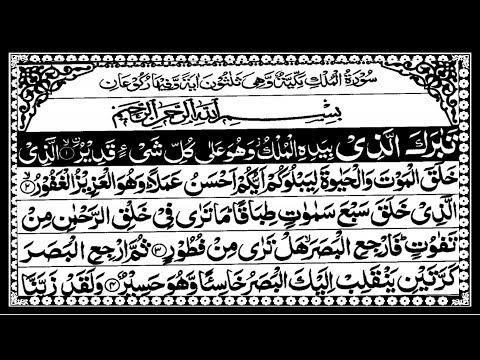
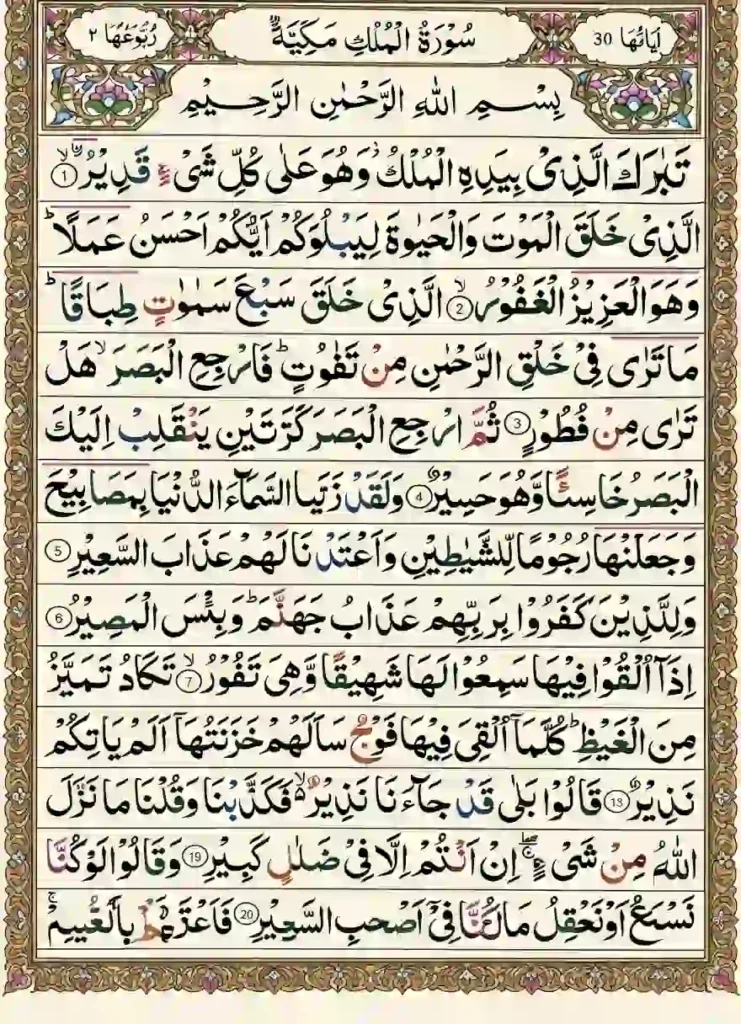
Surah Al-Mulk (سورة الملك), complete 30 Ayahs:
| Ayah | Arabic | English Transliteration | English Translation |
| 1 | تَبَارَكَ الَّذِي بِيَدِهِ الْمُلْكُ وَهُوَ عَلَىٰ كُلِّ شَيْءٍ قَدِيرٌ | Tabāraka alladhī biyadihi al-mulku wa huwa ʿalā kulli shay’in qadīr. | Blessed is He in whose hand is dominion, and He is over all things competent. |
| 2 | الَّذِي خَلَقَ الْمَوْتَ وَالْحَيَاةَ لِيَبْلُوَكُمْ أَيُّكُمْ أَحْسَنُ عَمَلًا وَهُوَ الْعَزِيزُ الْغَفُورُ | Alladhī khalaqa al-mawta wal-ḥayāta liyabluwakum ayyukum aḥsanu ʿamalan wa huwa al-ʿazīzu al-ghafūr. | [He] who created death and life to test you [as to] which of you is best in deed—and He is the Exalted in Might, the Forgiving. |
| 3 | الَّذِي خَلَقَ سَبْعَ سَمَاوَاتٍ طِبَاقًا مَا تَرَىٰ فِي خَلْقِ الرَّحْمَٰنِ مِنْ تَفَاوُتٍ فَارْجِعِ الْبَصَرَ هَلْ تَرَىٰ مِنْ فُطُورٍ | Alladhī khalaqa sabʿa samāwātin ṭibāqan mā tarā fī khalqi al-Raḥmāni min tafāwut, farjiʿi al-baṣara hal tarā min fuṭūr. | [He] who created seven heavens in layers. You do not see in the creation of the Most Merciful any inconsistency. So return [your] vision [to the sky]; do you see any breaks? |
| 4 | ثُمَّ ارْجِعِ الْبَصَرَ كَرَّتَيْنِ يَنْقَلِبْ إِلَيْكَ الْبَصَرُ خَاسِئًا وَهُوَ حَسِيرٌ | Thumma irjiʿi al-baṣara karratayni yanqalib ilayka al-baṣaru khāsi’an wa huwa ḥasīr. | Then return [your] vision twice again. [Your] vision will return to you humbled while it is fatigued. |
| 5 | وَلَقَدْ زَيَّنَّا السَّمَاءَ الدُّنْيَا بِمَصَابِيحَ وَجَعَلْنَاهَا رُجُومًا لِلشَّيَاطِينِ وَأَعْتَدْنَا لَهُمْ عَذَابَ السَّعِيرِ | Walaqad zayyannā al-samā’a al-dunyā bimaṣābīḥa wa jaʿalnāhā rujūman lil-shayāṭīn, wa aʿtadnā lahum ʿadhāba al-saʿīr. | And We have certainly beautified the nearest heaven with stars and have made [from] them what is thrown at the devils and have prepared for them the punishment of the Blaze. |
| 6 | وَلِلَّذِينَ كَفَرُوا بِرَبِّهِمْ عَذَابُ جَهَنَّمَ وَبِئْسَ الْمَصِيرُ | Walilladhīna kafarū birabbihim ʿadhābu jahannama wa bi’sa al-maṣīr. | And for those who disbelieved in their Lord is the punishment of Hell, and wretched is the destination. |
| 7 | إِذَا أُلْقُوا فِيهَا سَمِعُوا لَهَا شَهِيقًا وَهِيَ تَفُورُ | Idhā ulqū fīhā samiʿū lahā shahīqan wa hiya tafūr. | When they are thrown into it, they hear from it a [dreadful] inhaling while it boils. |
| 8 | تَكَادُ تَمَيَّزُ مِنَ الْغَيْظِ كُلَّمَا أُلْقِيَ فِيهَا فَوْجٌ سَأَلَهُمْ خَزَنَتُهَا أَلَمْ يَأْتِكُمْ نَذِيرٌ | Takādu tamayyazu min al-ghayẓi kullamā ulqiya fīhā fawjun sa’alahum khazanatuhā alam ya’tikum nadhīr. | It almost bursts with rage. Every time a company is thrown into it, its keepers ask them, “Did there not come to you a warner?” |
| 9 | قَالُوا بَلَىٰ قَدْ جَاءَنَا نَذِيرٌ فَكَذَّبْنَا وَقُلْنَا مَا نَزَّلَ اللَّهُ مِنْ شَيْءٍ إِنْ أَنْتُمْ إِلَّا فِي ضَلَالٍ كَبِيرٍ | Qālū balā qad jā’anā nadhīrun fakadhdhabnā wa qulnā mā nazzala Allāhu min shay’in in antum illā fī ḍalālin kabīr. | They will say, “Yes, a warner had come to us, but we denied and said, ‘Allah has not sent down anything. You are not but in great error.’” |
| 10 | وَقَالُوا لَوْ كُنَّا نَسْمَعُ أَوْ نَعْقِلُ مَا كُنَّا فِي أَصْحَابِ السَّعِيرِ | Wa qālū law kunnā nasmaʿu aw naʿqilu mā kunnā fī aṣḥābi al-saʿīr. | And they will say, “If only we had been listening or reasoning, we would not be among the companions of the Blaze.” |
| 11 | فَاعْتَرَفُوا بِذَنْبِهِمْ فَسُحْقًا لِأَصْحَابِ السَّعِيرِ | Faʿtarafū bidhambihim fa-suḥqan li-aṣḥābi al-saʿīr. | And they will admit their sin, so [it is] alienation for the companions of the Blaze. |
| 12 | إِنَّ الَّذِينَ يَخْشَوْنَ رَبَّهُمْ بِالْغَيْبِ لَهُمْ مَغْفِرَةٌ وَأَجْرٌ كَبِيرٌ | Inna alladhīna yakhshawna rabbahum bil-ghaybi lahum maghfiratun wa ajrun kabīr. | Indeed, those who fear their Lord unseen will have forgiveness and great reward. |
| 13 | وَأَسِرُّوا قَوْلَكُمْ أَوِ اجْهَرُوا بِهِ إِنَّهُ عَلِيمٌ بِذَاتِ الصُّدُورِ | Wa asirrū qawlakum aw ijharū bihi innahu ʿalīmun bidhāti al-ṣudūr. | And conceal your speech or publicize it; indeed, He is Knowing of that within the breasts. |
| 14 | أَلَا يَعْلَمُ مَنْ خَلَقَ وَهُوَ اللَّطِيفُ الْخَبِيرُ | Alā yaʿlamu man khalaqa wa huwa al-laṭīfu al-khabīr. | Does He who created not know, while He is the Subtle, the Acquainted? |
| 15 | هُوَ الَّذِي جَعَلَ لَكُمُ الْأَرْضَ ذَلُولًا فَامْشُوا فِي مَنَاكِبِهَا وَكُلُوا مِنْ رِزْقِهِ وَإِلَيْهِ النُّشُورُ | Huwa alladhī jaʿala lakumu al-arḍa dhalūlan famshū fī manākibihā wa kulū min rizqihi wa ilayhi al-nushūr. | It is He who made the earth tame for you—so walk among its slopes and eat of His provision—and to Him is the resurrection. |
| 16 | أَأَمِنْتُمْ مَنْ فِي السَّمَاءِ أَنْ يَخْسِفَ بِكُمُ الْأَرْضَ فَإِذَا هِيَ تَمُورُ | A-amintum man fī al-samā’i an yakhsifa bikumu al-arḍa fa-idhā hiya tamūr. | Do you feel secure that He who [holds authority] in the heaven would not cause the earth to swallow you and suddenly it would sway? |
| 17 | أَمْ أَمِنْتُمْ مَنْ فِي السَّمَاءِ أَنْ يُرْسِلَ عَلَيْكُمْ حَاصِبًا فَسَتَعْلَمُونَ كَيْفَ نَذِيرِ | Am amintum man fī al-samā’i an yursila ʿalaykum ḥāṣiban fa-sataʿlamūna kayfa nadhīr. | Or do you feel secure that He who [holds authority] in the heaven would not send against you a storm of stones? Then you would know how [severe] was My warning. |
| 18 | وَلَقَدْ كَذَّبَ الَّذِينَ مِنْ قَبْلِهِمْ فَكَيْفَ كَانَ نَكِيرِ | Walaqad kadhdhaba alladhīna min qablihim fakayfa kāna nakīr. | And already had those before them denied, and how [terrible] was My reproach. |
| 19 | أَوَلَمْ يَرَوْا إِلَى الطَّيْرِ فَوْقَهُمْ صَافَّاتٍ وَيَقْبِضْنَ مَا يُمْسِكُهُنَّ إِلَّا الرَّحْمَٰنُ إِنَّهُ بِكُلِّ شَيْءٍ بَصِيرٌ | Awalam yaraw ilā al-ṭayri fawqahum ṣāffātin wa yaqbiḍna mā yumsikuhunna illā al-Raḥmān, innahu bikulli shay’in baṣīr. | Do they not see the birds above them with wings outspread and sometimes folded in? None holds them [aloft] except the Most Merciful. Indeed, He is, of all things, Seeing. |
| 20 | أَمَّنْ هَٰذَا الَّذِي هُوَ جُنْدٌ لَكُمْ يَنْصُرُكُمْ مِنْ دُونِ الرَّحْمَٰنِ إِنِ الْكَافِرُونَ إِلَّا فِي غُرُورٍ | Amman hādhā alladhī huwa jundun lakum yanṣurukum min dūni al-Raḥmān, in al-kāfirūna illā fī ghurūr. | Or who is it that could be an army for you to aid you other than the Most Merciful? The disbelievers are not but in delusion. |
| 21 | أَمَّنْ هَٰذَا الَّذِي يَرْزُقُكُمْ إِنْ أَمْسَكَ رِزْقَهُ بَلْ لَجُّوا فِي عُتُوٍّ وَنُفُورٍ | Amman hādhā alladhī yarzuqukum in amsaka rizqahu bal lajjū fī ʿutuwwin wa nufūr. | Or who is it that could provide for you if He withheld His provision? But they have persisted in insolence and aversion. |
| 22 | أَفَمَنْ يَمْشِي مُكِبًّا عَلَىٰ وَجْهِهِ أَهْدَىٰ أَمَّنْ يَمْشِي سَوِيًّا عَلَىٰ صِرَاطٍ مُسْتَقِيمٍ | Afaman yamshī mukibban ʿalā wajhihi ahdā amman yamshī sawiyyan ʿalā ṣirāṭin mustaqīm. | Then is one who walks fallen on his face better guided or one who walks erect on a straight path? |
| 23 | قُلْ هُوَ الَّذِي أَنْشَأَكُمْ وَجَعَلَ لَكُمُ السَّمْعَ وَالْأَبْصَارَ وَالْأَفْئِدَةَ قَلِيلًا مَا تَشْكُرُونَ | Qul huwa alladhī ansha’akum wa jaʿala lakumu al-samʿa wal-abṣāra wal-af’idah, qalīlan mā tashkurūn. | Say, “It is He who produced you and made for you hearing and vision and hearts; little are you grateful.” |
| 24 | قُلْ هُوَ الَّذِي ذَرَأَكُمْ فِي الْأَرْضِ وَإِلَيْهِ تُحْشَرُونَ | Qul huwa alladhī dhara’akum fī al-arḍi wa ilayhi tuḥsharūn. | Say, “It is He who has multiplied you throughout the earth, and to Him you will be gathered.” |
| 25 | وَيَقُولُونَ مَتَىٰ هَٰذَا الْوَعْدُ إِنْ كُنْتُمْ صَادِقِينَ | Wa yaqūlūna matā hādhā al-waʿdu in kuntum ṣādiqīn. | And they say, “When is this promise, if you should be truthful?” |
| 26 | قُلْ إِنَّمَا الْعِلْمُ عِنْدَ اللَّهِ وَإِنَّمَا أَنَا نَذِيرٌ مُبِينٌ | Qul innamā al-ʿilmu ʿinda Allāhi wa innamā anā nadhīrun mubīn. | Say, “The knowledge is only with Allah, and I am only a clear warner.” |
| 27 | فَلَمَّا رَأَوْهُ زُلْفَةً سِيئَتْ وُجُوهُ الَّذِينَ كَفَرُوا وَقِيلَ هَٰذَا الَّذِي كُنْتُمْ بِهِ تَدَّعُونَ | Falammā ra’awhu zulfatan sī’at wujūhu alladhīna kafarū wa qīla hādhā alladhī kuntum bihi taddaʿūn. | But when they see it approaching, the faces of those who disbelieved will be distressed, and it will be said, “This is that for which you were calling.” |
| 28 | قُلْ أَرَأَيْتُمْ إِنْ أَهْلَكَنِيَ اللَّهُ وَمَنْ مَعِيَ أَوْ رَحِمَنَا فَمَنْ يُجِيرُ الْكَافِرِينَ مِنْ عَذَابٍ أَلِيمٍ | Qul ara’aytum in ahlakani Allāhu wa man maʿiya aw raḥimanā faman yujīru al-kāfirīna min ʿadhābin alīm. | Say, “Have you considered: whether Allah should destroy me and those with me or have mercy upon us, who can protect the disbelievers from a painful punishment?” |
| 29 | قُلْ هُوَ الرَّحْمَٰنُ آمَنَّا بِهِ وَعَلَيْهِ تَوَكَّلْنَا فَسَتَعْلَمُونَ مَنْ هُوَ فِي ضَلَالٍ مُبِينٍ | Qul huwa al-Raḥmānu āmannā bihi wa ʿalayhi tawakkalnā fasataʿlamūna man huwa fī ḍalālin mubīn. | Say, “He is the Most Merciful; we have believed in Him, and upon Him we have relied. And you will know who it is that is in clear error.” |
| 30 | قُلْ أَرَأَيْتُمْ إِنْ أَصْبَحَ مَاؤُكُمْ غَوْرًا فَمَنْ يَأْتِيكُمْ بِمَاءٍ مَعِينٍ | Qul ara’aytum in aṣbaḥa mā’ukum ghawran faman ya’tīkum bimā’in maʿīn. | Say, “Have you considered: if your water was to become sunken [into the earth], then who could bring you flowing water?” |
Also Read: The Holy Quran PDF Free Downloads
Learn Quran for Free
Many students want a short surah that is easy to memorize and rich in meaning. Al-Mulk fits perfectly, since its rhythm makes repetition natural.
- Read the surah al mulk english transliteration slowly before trying the Arabic script
- Recite it nightly to build a lasting habit
- Pair it with a short reflection on one verse each week
Importance and Benefits of Surah Al Mulk
Scholars and reciters commonly point to these benefits:
- It reminds believers that death and life exist to test our actions
- It reflects on the vastness of creation, from the skies to the smallest details
- It is traditionally recited before sleep for spiritual protection
- It builds humility by contrasting human weakness with divine power
Surah Al-Mulk Transliteration and Meaning
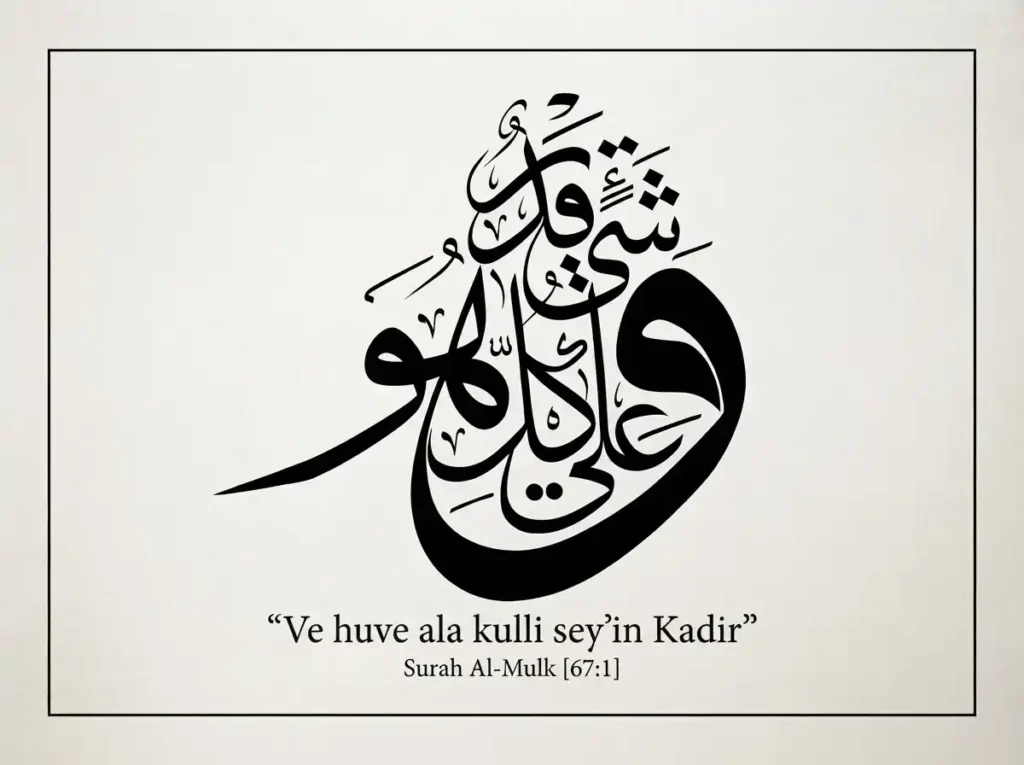
Understanding the surah al-mulk transliteration and meaning together helps beginners connect sound with sense. The opening verse transliterates as: “Tabaarakalladhi Biyadihil Mulku Wa Huwa ‘Alaa Kulli Shay’in Qadeer” — meaning “Blessed is He in whose hand is all dominion, and He is over all things competent.”
What the Verses Actually Say
Early verses describe how Allah created death and life specifically to test who does the best deeds. Later verses ask the reader to look at the sky, again and again, and find no flaw in its design. The surah closes by asking who could possibly provide for us besides Allah.
Qur’an References (With Transliteration and Translation)
| Surah & Ayah | Meaning (Short) | Source |
| Al-Mulk 67:1-2 | Allah, in whose hand is all dominion, created death and life to test who does best in deeds. | Read on Quran.com |
| Al-Mulk 67:15 | Allah made the earth manageable, so walk its paths and eat from His provision. | Read on Quran.com |
Also Read: Juz Amma 30 For School Students PDF Download
Hadith References
| Book & Number | Meaning (Short) | Source |
| Sahih al-Bukhari 3293 | Reciting words affirming Allah’s sole dominion one hundred times daily carries immense reward. | Read on Sunnah.com |
| Sahih Muslim 2742 | This world is attractive, but Allah made it a testing ground to see how people behave. | Read on Sunnah.com |
Hanafi Fiqh Resources
Students following the Hanafi school often reference these texts, commonly found in Islamic libraries and archives:
- Maraqi al-Falah by Hasan bin Ammar Ash-Shurunbulali
- Nur al-Idah by Hasan bin Ammar Ash-Shurunbulali
Suitable Sights for Further Learning
| Platform | What It Offers |
| IslamQA | Verified fatwa answers on worship, belief, and daily fiqh matters |
| IslamicTeachings Forum | Community discussion space for Quran study and tafsir questions |
| Quranmualim | Free structured lessons, transliteration guides, and tafsir summaries |
According to Wikipedia’s entry on Al-Mulk, the chapter is widely known by another name, “Al-Waqiyah” (The Protector), because of its role in shielding reciters from the punishment of the grave. Britannica’s overview of the Qur’an itself explains how Meccan chapters like this one emphasize the oneness of God ahead of later legal instruction found in Medinan surahs.
Categories: PRAYER ,ALMS , SAWN HAJJ & DUA , Hadith and Tafseer, The Holy Quran, Quran Jaz 1- 114
Frequently Asked Questions
What does Al-Mulk mean in English?
Al-Mulk means “The Dominion” or “The Sovereignty.” The name reflects the surah’s opening theme, that all control over creation belongs to Allah alone.
Why do Muslims recite Surah Al-Mulk before sleeping?
Tradition holds that reciting it nightly offers protection and reflects trust in Allah before rest. Many scholars encourage this as a simple, consistent habit.
Is Surah Al-Mulk easy to memorize?
Yes, its 30 verses flow with a clear rhythm. Most students find it manageable within a few weeks of steady daily practice.
What is the central message of the surah?
The central message is that Allah alone holds dominion over life and death. Everything exists to test how people act and worship during their time on earth.
Where can I find a reliable surah al mulk english transliteration?
Reliable transliterations are available on trusted platforms like Quran.com and Alim.org, both offering the Arabic text alongside transliteration and translation.
Final Thoughts
Surah Al-Mulk packs profound reminders about creation, gratitude, and accountability into just thirty verses. Learning its transliteration is a small step that can shape a lifelong nightly habit. Start tonight, read it slowly, and let its message settle into your heart.
Recommended For You:
- Quran Filetype PDF Free PDF Download
- A Quick Guide To Quran Tajweed Rules
- What is A Juz in Quran? Basic Information
- Quran PDF Arabic Only – Clear Arabic Script
- Quran Word By Word English Translation PDF
- Download Quran PDF With Urdu, Arabic & English
- Qur’an Juz by Juz PDF: A Journey Through The Holy Book
- Complete Quran Juz : Juz 1 To Juz 30 Free PDF Downloads