

Surah An-Nur is the 24th chapter of the Qur’an, a Medinan surah with 64 verses, and it’s one of the most practical chapters for daily life. Anyone typing surah an nur into a search bar is usually looking for guidance on modesty, family conduct, or simply the surah noor translation.
Before going further, if you’d like a clear printed reference at home, this Qur’an English Translation with Commentary on Amazon makes studying this surah much easier.
Surah An-Nur (The Light)
Chapter 24 of the Quran – 64 Verses
| Verse | Arabic Text | Transliteration | English Translation |
|---|---|---|---|
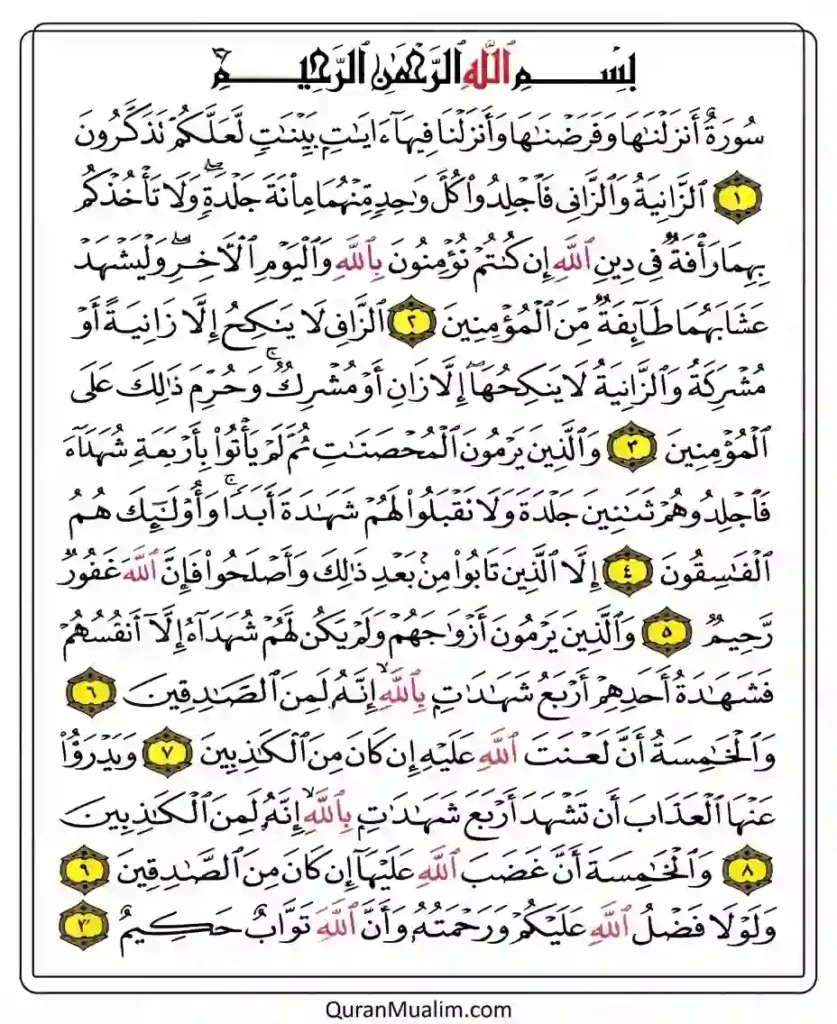
| 1 | سُورَةٌ أَنزَلْنَاهَا وَفَرَضْنَاهَا وَأَنزَلْنَا فِيهَا آيَاتٍ بَيِّنَاتٍ لَّعَلَّكُمْ تَذَكَّرُونَ | Sūratun anzalnāhā wa faradznaḥā wa anzalnā fīhā āyāt bayyināt la’allakum tadhakkarūn. | [This is] a Surah which We have sent down and made [it] obligatory and in which We have revealed clear verses that you might remember. |
| 2 | الزَّانِيَةُ وَالزَّانِي فَاجْلِدُوا كُلَّ وَاحِدٍ مِّنْهُمَا مِائَةَ جَلْدَةٍ ۖ وَلَا تَأْخُذْكُم بِهِمَا رَأْفَةٌ فِي دِينِ اللَّهِ إِن كُنتُمْ تُؤْمِنُونَ بِاللَّهِ وَالْيَوْمِ الْآخِرِ ۖ وَلْيَشْهَدْ عَذَابَهُمَا طَائِفَةٌ مِّنَ الْمُؤْمِنِينَ | Al-zāniyatu wa-al-zānī fa-ajlidū kulla wāḥidin minhumā mi’ata jaldah wa lā ta’khudhkum bihimā ra’fah fī dīn Allāh in kuntum tu’minūn bi-Allāh wa-al-yawm al-ākhir wa lyashḥad ‘adhābahuma tā’ifah min al-mu’minīn. | The woman and the man among you who commit adultery – punish each one of them with a hundred lashes, and do not be taken by pity for them in the religion of Allah, if you should believe in Allah and the Last Day. And let a group of the believers witness their punishment. |
| 3 | الزَّانِي لَا يَنكِحُ إِلَّا زَانِيَةً أَوْ مُشْرِكَةً وَالزَّانِيَةُ لَا يَنكِحُهَا إِلَّا زَانٍ أَوْ مُشْرِكٌ ۚ وَحُرِّمَ ذَٰلِكَ عَلَى الْمُؤْمِنِينَ | Al-zānī lā yankiḥu illā zāniyatan aw mushrikah wa-al-zāniyatu lā yankiḥuhā illā zānin aw mushrik wa ḥurrim dhālik ‘ala al-mu’minīn. | The fornicator will not marry except a [female] fornicator or polytheist, and none are permitted to marry him except a [female] fornicator or polytheist. And that has been made unlawful to the believers. |
| 4 | وَالَّذِينَ يَرْمُونَ الْمُحْصَنَاتِ ثُمَّ لَمْ يَأْتُوا بِأَرْبَعَةِ شُهَدَاءَ فَاجْلِدُوهُمْ ثَمَانِينَ جَلْدَةً وَلَا تَقْبَلُوا لَهُمْ شَهَادَةً أَبَدًا ۚ وَأُولَٰئِكَ هُمُ الْفَاسِقُونَ | Wa-al-ladhīn yarmūn al-muḥsanāt thumma lam ya’tū bi-arba’at shuhadā’ fa-ajlidūhum thamānīn jaldah wa lā taqbalū lahum shahādah abadā wa ulā’ik hum al-fāsiqūn. | And those who accuse chaste women and do not bring four witnesses – lash them with eighty lashes and do not accept from them [any] testimony ever after. And those are the defiantly disobedient. |
| 5 | إِلَّا الَّذِينَ تَابُوا مِن بَعْدِ ذَٰلِكَ وَأَصْلَحُوا فَإِنَّ اللَّهَ غَفُورٌ رَّحِيمٌ | Illā al-ladhīn tābū min ba’di dhālik wa aṣlaḥū fa-inna Allāh ghafūr rahīm. | Except for those who repent after that and correct themselves. For indeed, Allah is Forgiving and Merciful. |
| 6 | وَالَّذِينَ يَرْمُونَ أَزْوَاجَهُمْ وَلَمْ يَكُن لَّهُمْ شُهَدَاءُ إِلَّا أَنفُسُهُمْ فَشَهَادَةُ أَحَدِهِمْ أَرْبَعُ شَهَادَاتٍ بِاللَّهِ ۙ إِنَّهُ لَمِنَ الصَّادِقِينَ | Wa-al-ladhīn yarmūn azwājahum wa lam yakun lahum shuhadā’ illā anfusuhum fa-shahādat aḥadihim arba’ shahādāt bi-Allāh innahu la-min al-sādiqīn. | And those who accuse their wives [of adultery] and have, [as evidence] only themselves – the testimony of one of them [shall be] four testimonies [swearing] by Allah that indeed, he is of the truthful. |
| 7 | وَالْخَامِسَةُ أَنَّ لَعْنَتَ اللَّهِ عَلَيْهِ إِن كَانَ مِنَ الْكَاذِبِينَ | Wa-al-khāmisatu anna la’nat Allāh ‘alayhi in kāna min al-kādhībīn. | And the fifth, that the curse of Allah be upon him if he should be among the liars. |
| 8 | وَيَدْرَأُ عَنْهَا الْعَذَابَ أَن تَشْهَدَ أَرْبَعَ شَهَادَاتٍ بِاللَّهِ ۙ إِنَّهُ لَمِنَ الْكَاذِبِينَ | Wa yadr’u ‘anhā al-‘adhāb an tashhad arba’ shahādāt bi-Allāh innahu la-min al-kādhībīn. | But it will prevent the punishment from her if she gives four testimonies [swearing] by Allah that indeed, he is of the liars. |
| 9 | وَالْخَامِسَةُ أَنَّ غَضَبَ اللَّهِ عَلَيْهَا إِن كَانَ مِنَ الصَّادِقِينَ | Wa-al-khāmisatu anna ghaḍab Allāh ‘alayhā in kāna min al-sādiqīn. | And the fifth, that the wrath of Allah be upon her if he was of the truthful. |
| 10 | وَلَوْلَا فَضْلُ اللَّهِ عَلَيْكُمْ وَرَحْمَتُهُ وَأَنَّ اللَّهَ تَوَّابٌ حَكِيمٌ | Wa lawlā fadl Allāh ‘alaykum wa raḥmataḥ wa anna Allāh tawwāb ḥakīm. | And if not for the favor of Allah upon you and His mercy and that Allah is Accepting of repentance and Wise… |
| 11 | إِنَّ الَّذِينَ جَاءُوا بِالْإِفْكِ عُصْبَةٌ مِّنكُمْ ۚ لَا تَحْسَبُوهُ شَرًّا لَّكُم ۖ بَلْ هُوَ خَيْرٌ لَّكُمْ ۖ لِكُلِّ امْرِئٍ مِّنْهُم مَّا اكْتَسَبَ مِنَ الْإِثْمِ ۚ وَالَّذِي تَوَلَّىٰ كِبْرَهُ مِنْهُمْ لَهُ عَذَابٌ عَظِيمٌ | Inna al-ladhīn jāū bi-al-ifk ‘usba min kum lā taḥsabūhu sharran lakum bal huwa khayrun lakum li-kulli imri’ minḥum mā iktasab min al-ithm wa-al-ladhī tawallā kibrahu minḥum lahu ‘adhāb ‘azīm. | Indeed, those who brought [false] accusations are a group among you. Do not think it bad for you; rather it is good for you. For every person among them is what [punishment] he has earned from the sin, and he among them who took upon himself the greater portion thereof – for him is a great punishment. |
| 12 | لَّوْلَا إِذْ سَمِعْتُمُوهُ ظَنَّ الْمُؤْمِنُونَ وَالْمُؤْمِنَاتُ بِأَنفُسِهِمْ خَيْرًا وَقَالُوا هَٰذَا إِفْكٌ مُّبِينٌ | Lawlā idh sami’tumūhu zanna al-mu’minūn wa-al-mu’mināt bi-anfusihim khayran wa qālū hādhā ifk mubīn. | Why, when you heard it, did not the believing men and believing women think good of one another and say, ‘This is an obvious falsehood’? |
| 13 | لَّوْلَا جَاءُوا عَلَيْهِ بِأَرْبَعَةِ شُهَدَاءَ ۚ فَإِذْ لَمْ يَأْتُوا بِالشُّهَدَاءِ فَأُولَٰئِكَ عِندَ اللَّهِ هُمُ الْكَاذِبُونَ | Lawlā jāū ‘alayhi bi-arba’at shuhadā’ fa-idh lam ya’tū bi-al-shuhadā’ fa-ulā’ik ‘inda Allāh hum al-kādhībūn. | Why did they not produce for it four witnesses? And when they have not produced the witnesses, then it is they, in the sight of Allah, who are the liars. |
| 14 | وَلَوْلَا فَضْلُ اللَّهِ عَلَيْكُمْ وَرَحْمَتُهُ فِي الدُّنْيَا وَالْآخِرَةِ لَمَسَّكُمْ فِي مَا أَفَضْتُمْ فِيهِ عَذَابٌ عَظِيمٌ | Wa lawlā fadl Allāh ‘alaykum wa raḥmataḥ fi al-dunyā wa-al-ākhirah la-massikum fi mā afadzum fīhi ‘adhāb ‘azīm. | And if not for the favor of Allah upon you and His mercy in this world and the Hereafter, you would have been touched for that into which you plunged by a great punishment. |
| 15 | إِذْ تَلَقَّوْنَهُ بِأَلْسِنَتِكُمْ وَتَقُولُونَ بِأَفْوَاهِكُم مَّا لَيْسَ لَكُم بِهِ عِلْمٌ وَتَحْسَبُونَهُ هَيِّنًا وَهُوَ عِندَ اللَّهِ عَظِيمٌ | Idh talaqawnaḥ bi-alsintikum wa taqūlūn bi-afwāhikum mā laysa lakum bihi ‘ilm wa taḥsabūnaḥ hayyinan wa huwa ‘inda Allāh ‘azīm. | [Remember] when you received it on your tongues and said with your mouths that of which you had no knowledge and thought it was [something] insignificant, while it was, in the sight of Allah, tremendous. |
| 16 | وَلَوْلَا إِذْ سَمِعْتُمُوهُ قُلْتُم مَّا يَكُونُ لَنَا أَن نَّتَكَلَّمَ بِهَٰذَا سُبْحَانَكَ هَٰذَا بُهْتَانٌ عَظِيمٌ | Wa lawlā idh sami’tumūhu qultum mā yakūn lanā an natakallamahu bi-hādhā subḥānak hādhā buhtān ‘azīm. | And why, when you heard it, did you not say, ‘It is not for us to speak of this. Exalted are You, [O Allah]; this is a great slander’? |
| 17 | يَعِظُكُمُ اللَّهُ أَن تَعُودُوا لِمِثْلِهِ أَبَدًا إِن كُنتُم مُّؤْمِنِينَ | Ya’izukum Allāh an ta’ūdū li-mithliḥ abadā in kuntum mu’minīn. | Allah warns you against returning to the likes of this [behavior], ever, if you should be believers. |
| 18 | وَيُبَيِّنُ اللَّهُ لَكُمُ الْآيَاتِ ۚ وَاللَّهُ عَلِيمٌ حَكِيمٌ | Wa yubayyinu Allāh lakum al-āyāt wa-Allāh ‘alīm ḥakīm. | And Allah makes clear to you the verses, and Allah is Knowing and Wise. |
| 19 | إِنَّ الَّذِينَ يُحِبُّونَ أَن تَشِيعَ الْفَاحِشَةُ فِي الَّذِينَ آمَنُوا لَهُمْ عَذَابٌ أَلِيمٌ فِي الدُّنْيَا وَالْآخِرَةِ ۚ وَاللَّهُ يَعْلَمُ وَأَنتُمْ لَا تَعْلَمُونَ | Inna al-ladhīn yuḥibbūn an tashī’ al-fāḥishah fi al-ladhīn āmanū lahum ‘adhāb alīm fi al-dunyā wa-al-ākhirah wa-Allāh ya’lam wa antum lā ta’lamūn. | Indeed, those who like that immorality should be spread [among] those who have believed will have a painful punishment in this world and the Hereafter. And Allah knows and you know not. |
| 20 | وَلَوْلَا فَضْلُ اللَّهِ عَلَيْكُمْ وَرَحْمَتُهُ وَأَنَّ اللَّهَ رَءُوفٌ رَّحِيمٌ | Wa lawlā fadl Allāh ‘alaykum wa raḥmataḥ wa anna Allāh ra’ūf rahīm. | And if not for the favor of Allah upon you and His mercy and that Allah is Kind and Merciful… |
| 21 | يَا أَيُّهَا الَّذِينَ آمَنُوا لَا تَتَّبِعُوا خُطُوَاتِ الشَّيْطَانِ ۚ وَمَن يَتَّبِعْ خُطُوَاتِ الشَّيْطَانِ فَإِنَّهُ يَأْمُرُ بِالْفَحْشَاءِ وَالْمُنكَرِ ۚ وَلَوْلَا فَضْلُ اللَّهِ عَلَيْكُمْ وَرَحْمَتُهُ مَا زَكَىٰ مِنكُم مِّنْ أَحَدٍ أَبَدًا وَلَٰكِنَّ اللَّهَ يُزَكِّي مَن يَشَاءُ ۗ وَاللَّهُ سَمِيعٌ عَلِيمٌ | Yā ayyuhā al-ladhīn āmanū lā tattabi’ū khuṭuwāt al-shaytān wa man yattabi’ khuṭuwāt al-shaytān fa-innahu ya’mur bi-al-fāḥshā’ wa-al-munkar wa lawlā fadl Allāh ‘alaykum wa raḥmataḥ mā zakā minkum min aḥad abadā wa lākin Allāh yuzakkī man yashā’ wa-Allāh samī’ ‘alīm. | O you who have believed, do not follow the footsteps of Satan. And whoever follows the footsteps of Satan – indeed, he enjoins immorality and wrongdoing. And if not for the favor of Allah upon you and His mercy, not one of you would have been pure, ever, but Allah purifies whom He wills. And Allah is Hearing and Knowing. |
| 22 | وَلَا يَأْتَلِ أُولُو الْفَضْلِ مِنكُمْ وَالسَّعَةِ أَن يُؤْتُوا أُولِي الْقُرْبَىٰ وَالْمَسَاكِينَ وَالْمُهَاجِرِينَ فِي سَبِيلِ اللَّهِ ۖ وَلْيَعْفُوا وَلْيَصْفَحُوا ۗ أَلَا تُحِبُّونَ أَن يَغْفِرَ اللَّهُ لَكُمْ ۗ وَاللَّهُ غَفُورٌ رَّحِيمٌ | Wa lā ya’tal ulū al-fadl minkum wa-al-sa’ah an yu’tū ulī al-qurbā wa-al-masākīn wa-al-muhājirīn fi sabīl Allāh wa lyafu wa lyasḥaw ala tuḥibbūn an yaghfir Allāh lakum wa-Allāh ghafūr rahīm. | Let not those of virtue among you and wealth swear not to give [aid] to their relatives and the indigent and those who have emigrated in the way of Allah. Let them pardon and overlook. Would you not like that Allah should forgive you? And Allah is Forgiving and Merciful. |
| 23 | إِنَّ الَّذِينَ يَرْمُونَ الْمُحْصَنَاتِ الْغَافِلَاتِ الْمُؤْمِنَاتِ لُعِنُوا فِي الدُّنْيَا وَالْآخِرَةِ وَلَهُمْ عَذَابٌ عَظِيمٌ | Inna al-ladhīn yarmūn al-muḥsanāt al-ghāfilāt al-mu’mināt lu’inū fi al-dunyā wa-al-ākhirah wa lahum ‘adhāb ‘azīm. | Indeed, those who accuse chaste, unaware, believing women are cursed in this world and the Hereafter. And they will have a great punishment. |
| 24 | يَوْمَ تَشْهَدُ عَلَيْهِمْ أَلْسِنَتُهُمْ وَأَيْدِيهِمْ وَأَرْجُلُهُم بِمَا كَانُوا يَعْمَلُونَ | Yawm tashhad ‘alayhim alsinatuhum wa aydīhim wa arjuluhum bi-mā kānū ya’malūn. | [It is] a Day when their tongues, their hands, and their feet will testify against them as to what they used to do. |
| 25 | يَوْمَئِذٍ يَوَفِّيهِمُ اللَّهُ دِينَهُمُ الْحَقَّ وَيَعْلَمُونَ أَنَّ اللَّهَ هُوَ الْحَقُّ الْمُبِينُ | Yawmidhin yawaffīhim Allāh dīnahum al-ḥaqq wa ya’lamūn anna Allāh huwa al-ḥaqq al-mubīn. | That Day, Allah will fully recompense them for their deeds and they will know that Allah is the manifest truth. |
| 26 | الْخَبِيثَاتُ لِلْخَبِيثِينَ وَالْخَبِيثُونَ لِلْخَبِيثَاتِ ۖ وَالطَّيِّبَاتُ لِلطَّيِّبِينَ وَالطَّيِّبُونَ لِلطَّيِّبَاتِ ۚ أُولَٰئِكَ مُبَرَّءُونَ مِمَّا يَقُولُونَ ۖ لَهُم مَّغْفِرَةٌ وَرِزْقٌ كَرِيمٌ | Al-khabīthāt li-al-khabīthīn wa-al-khabīthūn li-al-khabīthāt wa-al-tayyibāt li-al-tayyibīn wa-al-tayyibūn li-al-tayyibāt ulā’ik mubarrā’ūn mimma yaqūlūn lahum maghfirah wa rizq karīm. | Evil women are for evil men, and evil men are for evil women. And good women are for good men, and good men are for good women; these are declared innocent of what they say. For them is forgiveness and noble provision. |
| 27 | يَا أَيُّهَا الَّذِينَ آمَنُوا لَا تَدْخُلُوا بُيُوتًا غَيْرَ بُيُوتِكُمْ حَتَّىٰ تَسْتَأْنِسُوا وَتُسَلِّمُوا عَلَىٰ أَهْلِهَا ۚ ذَٰلِكُمْ خَيْرٌ لَّكُمْ لَعَلَّكُمْ تَذَكَّرُونَ | Yā ayyuhā al-ladhīn āmanū lā tadkhulū buyūtan ghayra buyūtikum ḥattā tastan’isū wa tusallimū ‘alā ahlihā dhālikum khayrun lakum la’allakum tadhakkarūn. | O you who have believed, do not enter houses other than your own houses until you ascertain welcome and greet their inhabitants with peace. That is best for you; perhaps you will be reminded. |
| 28 | فَإِن لَّمْ تَجِدُوا فِيهَا أَحَدًا فَلَا تَدْخُلُوهَا حَتَّىٰ يُؤْذَنَ لَكُمْ ۖ وَإِن قِيلَ لَكُمُ ارْجِعُوا فَارْجِعُوا ۖ هُوَ أَزْكَىٰ لَكُمْ ۚ وَاللَّهُ بِمَا تَعْمَلُونَ عَلِيمٌ | Fa-in lam tajidū fīhā aḥadan fa-lā tadkhulūhā ḥattā yu’dhan lakum wa-in qīl lakum-u rji’ū fa-rji’ū huwa azka lakum wa-Allāh bi-mā ta’malūn ‘alīm. | And if you do not find anyone therein, do not enter them until permission has been given to you. And if it is said to you, ‘Go back,’ then go back; it is purer for you. And Allah is Knowing of what you do. |
| 29 | لَيْسَ عَلَيْكُمْ جُنَاحٌ أَن تَدْخُلُوا بُيُوتًا غَيْرَ مَأْهُولَةٍ فِيهَا مَتَاعٌ لَّكُمْ ۚ وَاللَّهُ يَعْلَمُ مَا تُبْدُونَ وَمَا تَكْتُمُونَ | Laysa ‘alaykum junāḥ an tadkhulū buyūtan ghayra ma’hūlah fīhā matā’ lakum wa-Allāh ya’lam mā tubdūn wa mā taktumin. | There is no blame upon you for entering uninhabited houses wherein there is convenience for you. And Allah knows what you reveal and what you conceal. |
| 30 | قُل لِّلْمُؤْمِنِينَ يَغُضُّوا مِنْ أَبْصَارِهِمْ وَيَحْفَظُوا فُرُوجَهُمْ ۚ ذَٰلِكَ أَزْكَىٰ لَهُمْ ۚ إِنَّ اللَّهَ خَبِيرٌ بِمَا يَصْنَعُونَ | Qul li-al-mu’minīn yaghuzz min absārihim wa yaḥfazū furūjahum dhālik azka lahum inna Allāh khabīr bi-mā yasna’ūn. | Tell the believing men to reduce [some] of their vision and guard their private parts. That is purer for them. Indeed, Allah is Acquainted with what they do. |
| 31 | وَقُل لِّلْمُؤْمِنَاتِ يَغْضُضْنَ مِنْ أَبْصَارِهِنَّ وَيَحْفَظْنَ فُرُوجَهُنَّ وَلَا يُبْدِينَ زِينَتَهُنَّ إِلَّا مَا ظَهَرَ مِنْهَا ۖ وَلْيَضْرِبْنَ بِخُمُرِهِنَّ عَلَىٰ جُيُوبِهِنَّ ۖ وَلَا يُبْدِينَ زِينَتَهُنَّ إِلَّا لِبُعُولَتِهِنَّ أَوْ آبَائِهِنَّ أَوْ آبَاءِ بُعُولَتِهِنَّ أَوْ أَبْنَائِهِنَّ أَوْ أَبْنَاءِ بُعُولَتِهِنَّ أَوْ إِخْوَانِهِنَّ أَوْ بَنِي إِخْوَانِهِنَّ أَوْ بَنِي أَخَوَاتِهِنَّ أَوْ نِسَائِهِنَّ أَوْ مَا مَلَكَتْ أَيْمَانُهُنَّ أَوِ التَّابِعِينَ غَيْرِ أُولِي الْإِرْبَةِ مِنَ الرِّجَالِ أَوِ الطِّفْلِ الَّذِينَ لَمْ يَظْهَرُوا عَلَىٰ عَوْرَاتِ النِّسَاءِ ۖ وَلَا يَضْرِبْنَ بِأَرْجُلِهِنَّ لِيُعْلَمَ مَا يُخْفِينَ مِن زِينَتِهِنَّ ۚ وَتُوبُوا إِلَى اللَّهِ جَمِيعًا أَيُّهَ الْمُؤْمِنُونَ لَعَلَّكُمْ تُفْلِحُونَ | Wa qul li-al-mu’mināt yaghdzna min absārihinna wa yaḥfazna furūjahunna wa lā yubdīn zīnatahunna illā mā zahar minhā wa lyadzribna bi-khumurihinna ‘alā juyūbihinna wa lā yubdīn zīnatahunna illā li-bu’ūlatihinna aw ābā’ihinna aw ābā’ bu’ūlatihinna aw abnā’ihinna aw abnā’ bu’ūlatihinna aw ikhwānihinna aw banī ikhwānihinna aw banī akhawātihinna aw nisā’ihinna aw mā malakat aymānuhunna aw al-tābi’īn ghayri ulī al-irbah min al-rijāl aw al-tifl al-ladhīn lam yazharū ‘alā ‘awrāt al-nisā’ wa lā yadzribna bi-arjulihinna li-yu’lam mā yakhfīn min zīnatihinna wa tūbū ilā Allāh jamī’an ayyuh al-mu’minūn la’allakum tuflihūn. | And tell the believing women to reduce [some] of their vision and guard their private parts and not expose their adornment except to their husbands, their fathers, their husbands’ fathers, their sons, their husbands’ sons, their brothers, their brothers’ sons, their sisters’ sons, their women, those whom their right hands possess, or among the men, the followers with no desire, or children before they become aware of the private aspects of women. And let them not stamp their feet to make known what they conceal of their adornment. And turn to Allah in repentance, all of you, O believers, that you might succeed. |
| 32 | وَأَنكِحُوا الْأَيَامَىٰ مِنكُمْ وَالصَّالِحِينَ مِنْ عِبَادِكُمْ وَإِمَائِكُمْ ۚ إِن يَكُونُوا فُقَرَاءَ يُغْنِهِمُ اللَّهُ مِن فَضْلِهِ ۗ وَاللَّهُ وَاسِعٌ عَلِيمٌ | Wa ankiḥū al-ayāmā minkum wa-al-sālihīn min ‘ibādikum wa imā’ikum in yakūnū fuqarā’ yughnihim Allāh min fadlihi wa-Allāh wāsi’ ‘alīm. | And marry the unmarried among you and the righteous among your male slaves and female slaves. If they should be poor, Allah will enrich them from His bounty. And Allah is all-Encompassing and Knowing. |
| 33 | وَلْيَسْتَعْفِفِ الَّذِينَ لَا يَجِدُونَ نِكَاحًا حَتَّىٰ يُغْنِيَهُمُ اللَّهُ مِن فَضْلِهِ ۗ وَالَّذِينَ يَبْتَغُونَ الْكِتَابَ مِمَّا مَلَكَتْ أَيْمَانُكُمْ فَكَاتِبُوهُمْ إِن عَلِمْتُمْ فِيهِمْ خَيْرًا ۖ وَآتُوهُم مِّن مَّالِ اللَّهِ الَّذِي آتَاكُمْ ۚ وَلَا تُكْرِهُوا فَتَيَاتِكُمْ عَلَى الْبِغَاءِ إِن أَرَدْنَ تَحَصُّنًا لِّتَبْتَغُوا عَرَضَ الْحَيَاةِ الدُّنْيَا ۚ وَمَن يُكْرِههُّنَّ فَإِنَّ اللَّهَ مِن بَعْدِ إِكْرَاهِهِنَّ غَفُورٌ رَّحِيمٌ | Wa lyasta’fif al-ladhīn lā yajidūn nikāḥan ḥattā yughniyahum Allāh min fadlihi wa-al-ladhīn yabtaghūn al-kitāb mimma malakat aymānukum fa-kātibūhum in ‘alimtum fīhim khayran wa ātūhum min māl Allāh al-ladhī ātākum wa lā tukrihū fayātikum ‘alā al-bighā’ in aradna taḥassun li-tabtaghū ‘arad al-ḥayāt al-dunyā wa man yukrihuhunna fa-inna Allāh min ba’d ikrāhihinna ghafūr rahīm. | And let those who find not the means for marriage keep themselves chaste, until Allah enriches them from His bounty. And those who seek a contract [for eventual freedom] from among whom your right hands possess – then make a contract with them if you know there is within them goodness and give them from the wealth of Allah which He has given you. And do not compel your slave girls to prostitution, if they desire chastity, to seek [thereby] the temporary interests of worldly life. And if someone compels them, then indeed, Allah is [to them] after their compulsion, Forgiving and Merciful. |
| 34 | وَلَقَدْ أَنزَلْنَا إِلَيْكُمْ آيَاتٌ مُّبَيِّنَةٌ وَمَثَلٌ مِّنَ الَّذِينَ خَلَوْا مِن قَبْلِكُمْ وَمَوْعِظَةٌ لِّلْمُتَّقِينَ | Wa laqad anzalnā ilaykum āyāt mubayyinah wa mathal min al-ladhīn khalaw min qablikum wa maw’izat li-al-muttaqīn. | And We have certainly sent down to you verses making things clear and an example from those [prophets] who were before you and an admonition for those conscious of Allah. |
| 35 | اللَّهُ نُورُ السَّمَاوَاتِ وَالْأَرْضِ ۚ مَثَلُ نُورِهِ كَمِشْكَاةٍ فِيهَا مِصْبَاحٌ ۖ الْمِصْبَاحُ فِي زُجَاجَةٍ ۖ الزُّجَاجَةُ كَأَنَّهَا كَوْكَبٌ دُرِّيٌّ يُوقَدُ مِن شَجَرَةٍ مُّبَارَكَةٍ زَيْتُونَةٍ لَّا شَرْقِيَّةٍ وَلَا غَرْبِيَّةٍ يَكَادُ زَيْتُهَا يُضِيءُ وَلَوْ لَمْ تَمْسَسْهُ نَارٌ ۚ نُورٌ عَلَىٰ نُورٍ ۗ يَهْدِي اللَّهُ لِنُورِهِ مَن يَشَاءُ ۚ وَيَضْرِبُ اللَّهُ الْأَمْثَالَ لِلنَّاسِ ۗ وَاللَّهُ بِكُلِّ شَيْءٍ عَلِيمٌ | Allāh nūr al-samāwāt wa-al-ard mathal nūrihi ka-mishkāh fīhā misābāḥ al-misābāḥ fi zujāj al-zujāj ka-annaha kawkab durriyy yūqad min shajarah mubarakh zaytūnah lā sharqiyyah wa lā gharbiyyah yakād zaytuhā yudī’ wa law lam tammash-hu nār nūr ‘alā nūr yahdī Allāh li-nūrihi man yashā’ wa yaḍrib Allāh al-amthāl li-al-nās wa-Allāh bi-kulli shay’ ‘alīm. | Allah is the Light of the heavens and the earth. The example of His light is like a niche within which is a lamp, the lamp is within glass, the glass as if it were a pearlescent [star] lit from [the oil of] a blessed olive tree, neither of the east nor of the west, whose oil would almost glow even if untouched by fire. Light upon light. Allah guides to His light whom He wills. And Allah presents examples for the people, and Allah is Knowing of all things. |
| 36 | فِي بُيُوتٍ أَذِنَ اللَّهُ أَن تُرْفَعَ وَيُذْكَرَ فِيهَا اسْمُهُ يُسَبِّحُ لَهُ فِيهَا بِالْغُدُوِّ وَالْآصَالِ | Fi buyūt adhina Allāh an turfa’ wa yudhkar fīhā asmuhh yusabbiḥ lahu fīhā bi-al-ghuduww wa-al-āsāl. | [Wherein are] houses in which Allah has permitted to be raised and wherein His name is remembered; exalting Him within them in the morning and the evenings. |
| 37 | رِجَالٌ لَّا تُلْهِيهِمْ تِجَارَةٌ وَلَا بَيْعٌ عَن ذِكْرِ اللَّهِ وَإِقَامِ الصَّلَاةِ وَإِيتَاءِ الزَّكَاةِ ۚ يَخَافُونَ يَوْمًا تَتَقَلَّبُ فِيهِ الْقُلُوبُ وَالْأَبْصَارُ | Rijāl lā tulhīhim tijārah wa lā bay’ ‘an dhikr Allāh wa iqāmat al-salāh wa ītā’ al-zakāh yakhāfūn yawman tataqqalab fīhi al-qulūb wa-al-absār. | Men whom neither commerce nor sale distracts from the remembrance of Allah and performance of prayer and giving of zakah. They fear a Day in which the hearts and eyes will [fearfully] turn about. |
| 38 | لِيَجْزِيَهُمُ اللَّهُ أَحْسَنَ مَا عَمِلُوا وَيَزِيدَهُم مِّن فَضْلِهِ ۗ وَاللَّهُ يَرْزُقُ مَن يَشَاءُ بِغَيْرِ حِسَابٍ | Li-yajziyahum Allāh ahsan mā ‘amilū wa yazīdahum min fadlihi wa-Allāh yarzuq man yashā’ bi-ghayri hisāb. | [So] that Allah may give them the best of what they did and increase them from His bounty. And Allah provides for whom He wills without account. |
| 39 | وَالَّذِينَ كَفَرُوا أَعْمَالُهُمْ كَسَرَابٍ بِقِيعَةٍ يَحْسَبُهُ الظَّمْآنُ مَاءً حَتَّىٰ إِذَا جَاءَهُ لَمْ يَجِدْهُ شَيْئًا وَوَجَدَ اللَّهَ عِندَهُ فَوَفَّاهُ حِسَابَهُ ۗ وَاللَّهُ سَرِيعُ الْحِسَابِ | Wa-al-ladhīn kafarū a’māluhem kasarāb bi-qi’ah yaḥsabuh al-zama’ān mā’an ḥattā idhā jā’ahu lam yajid-hu shay’an wa wajad Allāh ‘indahu fa-waffāhu ḥisābahu wa-Allāh sarī’ al-ḥisāb. | But those who disbelieved – their deeds are like a mirage in a lowland which a thirsty one thinks is water until, when he comes to it, he finds it to be nothing but finds Allah before him, and Allah will pay him his due in full; and Allah is swift in account. |
| 40 | أَوْ كَظُلُمَاتٍ فِي بَحْرٍ لُّجِيٍّ يَغْشَاهُ مَوْجٌ مِّن فَوْقِهِ مَوْجٌ مِّن فَوْقِهِ سَحَابٌ ۚ ظُلُمَاتٌ بَعْضُهَا فَوْقَ بَعْضٍ إِذَا أَخْرَجَ يَدَهُ لَمْ يَكَدْ يَرَاهَا ۚ وَمَن لَّمْ يَجْعَلِ اللَّهُ لَهُ نُورًا فَمَا لَهُ مِن نُورٍ | Aw kazulumāt fi baḥr lujjiyy yaghshāhu mawj min fawqihi mawj min fawqihi ḥāb zulumāt ba’duhā fawq ba’duhā idhā akhraj yadahu lam yakad yarāhā wa man lam yaj’al Allāh lahu nūran fa-mā lahu min nūr. | Or [they are] like darknesses within an unfathomable sea which is covered by waves upon which are waves, over which are clouds – darknesses, some of them upon others. When one puts out his hand [therein], he can hardly see it. And he to whom Allah has not given light – for him there is no light. |
| 41 | أَلَمْ تَرَ أَنَّ اللَّهَ يُسَبِّحُ لَهُ مَن فِي السَّمَاوَاتِ وَالْأَرْضِ وَالطَّيْرُ صَافَّاتٍ ۖ كُلٌّ قَدْ عَلِمَ صَلَاتَهُ وَتَسْبِيحَهُ ۗ وَاللَّهُ عَلِيمٌ بِمَا يَفْعَلُونَ | Alam tara anna Allāh yusabbiḥ lahu man fi al-samāwāt wa-al-ard wa-al-tayir sāffāt kull qad ‘alim salātahu wa tasbīḥahu wa-Allāh ‘alīm bi-mā yaf’alūn. | Do you not see that Allah is exalted by whomever is in the heavens and the earth and [by] the birds with wings spread [in flight]? Each [knows] its [mode of] prayer and exalting [Him], and Allah is Knowing of what they do. |
| 42 | وَلِلَّهِ مُلْكُ السَّمَاوَاتِ وَالْأَرْضِ ۖ وَإِلَى اللَّهِ الْمَصِيرُ | Wa li-Allāh mulk al-samāwāt wa-al-ard wa ilā Allāh al-masīr. | And to Allah belongs the dominion of the heavens and the earth, and to Allah is the [final] destination. |
| 43 | أَلَمْ تَرَ أَنَّ اللَّهَ يُزِجِي السَّحَابَ ثُمَّ يُؤَلِّفُ بَيْنَهُ ثُمَّ يَجْعَلُهُ رُكَامًا فَتَرَى الْوَدْقَ يَخْرُجُ مِن خِلَالِهِ ۖ وَيُنَزِّلُ مِنَ السَّمَاءِ مِن جِبَالٍ فِيهَا مِن بَرَدٍ فَيُصِيبُ بِهِ مَن يَشَاءُ وَيَصْرِفُهُ عَن مَّن يَشَاءُ ۖ يَكَادُ سَنَا بَرْقِهِ يَذْهَبُ بِالْأَبْصَارِ | Alam tara anna Allāh yuzjī al-sahāb thumma yu’allif baynahu thumma yaj’aluhu rukāman fa-tarā al-wdaq yakhraj min khilālihi wa yunazzil min al-samā’ min jibāl fīhā min baradin fa-yusīb bihi man yashā’ wa yasrifuh ‘an man yashā’ yakād sanā barqihi yadhab bi-al-absār. | Have you not seen that Allah drives clouds? Then He brings them together, then He makes them into a mass, and you see the rain emerge from within it. And He sends down from the sky, from mountains therein of hail, and strikes with it whom He wills and averts it from whom He wills. The flash of its lightning almost takes away the eyesight. |
| 44 | يُقَلِّبُ اللَّهُ اللَّيْلَ وَالنَّهَارَ ۚ إِنَّ فِي ذَٰلِكَ لَعِبْرَةً لِّأُولِي الْأَبْصَارِ | Yuqallub Allāh al-layl wa-al-nahār inna fi dhālik la-‘ibrah li-ulī al-absār. | Allah alternates the night and the day. Indeed in that is a lesson for those of vision. |
| 45 | وَاللَّهُ خَلَقَ كُلَّ دَابَّةٍ مِن مَّاءٍ ۖ فَمِنْهُم مَّن يَمْشِي عَلَىٰ بَطْنِهِ وَمِنْهُم مَّن يَمْشِي عَلَىٰ رِجْلَيْنِ وَمِنْهُم مَّن يَمْشِي عَلَىٰ أَرْبَعٍ ۚ يَخْلُقُ اللَّهُ مَا يَشَاءُ ۚ إِنَّ اللَّهَ عَلَىٰ كُلِّ شَيْءٍ قَدِيرٌ | Wa-Allāh khalaqa kull dābbah min mā’ī fa-minhum man yamshi ‘alā baṭnihi wa minhum man yamshi ‘alā rijlayn wa minhum man yamshi ‘alā arba’ yakhluq Allāh mā yashā’ inna Allāh ‘alā kulli shay’ qadīr. | And Allah has created from water every [living] creature. So of them are those that walk upon their bellies, and of them are those that walk upon two legs, and of them are those that walk upon four. Allah creates what He wills. Indeed, Allah is over all things competent. |
| 46 | لَقَدْ أَنزَلْنَا آيَاتٍ مُّبَيِّنَةً ۖ وَاللَّهُ يَهْدِي مَن يَشَاءُ إِلَىٰ صِرَاطٍ مُّسْتَقِيمٍ | Laqad anzalnā āyāt mubayyinah wa-Allāh yahdī man yashā’ ilā sirāṭ mustaqīm. | We have certainly sent down verses of clear proofs, and Allah guides to a straight path whom He wills. |
| 47 | وَيَقُولُونَ آمَنَّا بِاللَّهِ وَبِالرَّسُولِ وَأَطَعْنَا ثُمَّ يَتَوَلَّىٰ فَرِيقٌ مِّنْهُم مِّن بَعْدِ ذَٰلِكَ ۚ وَمَا أُولَٰئِكَ بِالْمُؤْمِنِينَ | Wa yaqūlūn āmannā bi-Allāh wa bi-al-rasūl wa ata’nā thumma yatawallā farīq minhum min ba’d dhālik wa mā ulā’ik bi-al-mu’minīn. | And they say, ‘We have believed in Allah and in the Messenger, and we obey.’ Then a faction of them turns away after that – and those are not believers. |
| 48 | وَإِذَا دُعُوا إِلَى اللَّهِ وَرَسُولِهِ لِيَحْكُمَ بَيْنَهُمْ إِذَا فَرِيقٌ مِّنْهُم مُّعْرِضُونَ | Wa idhā du’ū ilā Allāh wa rasūlihi li-yaḥkum baynamh idhā farīq minhum mu’ridūn. | And when they are called to Allah and His Messenger to judge between them, at once a faction of them turns away. |
| 49 | وَإِن يَكُن لَّهُمُ الْحَقُّ يَأْتُوا إِلَيْهِ مُذْعِنِينَ | Wa in yakun lahum al-ḥaqq ya’tū ilayhi mudh’inīn. | But if the right is theirs, they come to him in prompt obedience. |
| 50 | أَفِي قُلُوبِهِم مَّرَضٌ أَمِ ارْتَابُوا أَمْ يَخَافُونَ أَن يَحِيفَ اللَّهُ عَلَيْهِمْ وَرَسُولُهُ ۚ بَلْ أُولَٰئِكَ هُمُ الظَّالِمُونَ | Afi qulūbihim maraz am irtābū am yakhāfūn an yaḥīf Allāhu ‘alayhim wa rasūluhu bal ulā’ik hum al-zālimūn. | Is there disease in their hearts, or have they doubted, or do they fear that Allah and His Messenger will be unjust to them? Rather, it is they who are the wrongdoers. |
| 51 | إِنَّمَا كَانَ قَوْلَ الْمُؤْمِنِينَ إِذَا دُعُوا إِلَى اللَّهِ وَرَسُولِهِ لِيَحْكُمَ بَيْنَهُمْ أَن يَقُولُوا سَمِعْنَا وَأَطَعْنَا ۚ وَأُولَٰئِكَ هُمُ الْمُفْلِحُونَ | Innamā kān qawl al-mu’minīn idhā du’ū ilā Allāh wa rasūlihi li-yaḥkum baynamh an yaqūlū sami’nā wa ata’nā wa ulā’ik hum al-muflihūn. | The only statement of the [true] believers when they are called to Allah and His Messenger to judge between them is that they say, ‘We hear and we obey.’ And those are the successful. |
| 52 | وَمَن يُطِعِ اللَّهَ وَرَسُولَهُ وَيَخْشَ اللَّهَ وَيَتَّقْهِ فَأُولَٰئِكَ هُمُ الْفَائِزُونَ | Wa man yut’i Allāh wa rasūlahu wa yakhsh Allāh wa yattaqih fa-ulā’ik hum al-fā’izūn. | And whoever obeys Allah and His Messenger and fears Allah and is conscious of Him – it is those who are the winners. |
| 53 | وَأَقْسَمُوا بِاللَّهِ جَهْدَ أَيْمَانِهِمْ لَئِنْ أَمَرْتَهُمْ لَيَخْرُجُنَّ ۖ قُل لَّا تُقْسِمُوا ۖ طَاعَةٌ مَّعْرُوفَةٌ ۚ إِنَّ اللَّهَ خَبِيرٌ بِمَا تَعْمَلُونَ | Wa aqsamū bi-Allāh jahd aymānihim la-in amarathum layakhrijun qul lā tuqsimū tā’ah ma’rūfah inna Allāh khabīr bi-mā ta’malūn. | And they swear by Allah their strongest oaths that if you ordered them, they would go forth [in obedience]. Say, ‘Do not swear. Obedience is [known]. Indeed, Allah is Acquainted with what you do.’ |
| 54 | قُلْ أَطِيعُوا اللَّهَ وَأَطِيعُوا الرَّسُولَ ۖ فَإِن تَوَلَّوْا فَإِنَّمَا عَلَيْهِ مَا حُمِّلَ وَعَلَيْكُم مَّا حُمِّلْتُمْ ۖ وَإِن تُطِيعُوهُ تَهْتَدُوا ۚ وَمَا عَلَى الرَّسُولِ إِلَّا الْبَلَاغُ الْمُبِينُ | Qul atī’ū Allāh wa atī’ū al-rasūl fa-in tawallā fa-innamā ‘alayhi mā ḥummil wa ‘alaykum mā ḥummiltum wa in tut’īūhu tahtadū wa mā ‘alā al-rasūl illā al-balāgh al-mubīn. | Say, ‘Obey Allah and obey the Messenger. But if you turn away, then upon him is only that [duty] with which he has been charged, and upon you is that with which you have been charged. If you obey him, you will be guided. And there is not upon the Messenger except the [responsibility for] clear notification.’ |
| 55 | اللَّهُ يَعِدُكُمْ إِن تُؤْمِنُوا وَتَعْمَلُوا الصَّالِحَاتِ أَن لَّهُمْ مَّغْفِرَةً وَأَجْرًا عَظِيمًا | Allāhu ya’idukum in tu’minū wa ta’malū al-sālihāt an lahum maghfirah wa ajr ‘azīm. | Allah promises those who have believed and done righteous deeds forgiveness and a great reward. |
| 56 | وَالَّذِينَ كَفَرُوا وَكَذَّبُوا بِآيَاتِنَا أُولَٰئِكَ أَصْحَابُ الْجَحِيمِ | Wa-al-ladhīn kafarū wa kadhdhbū bi-āyātinā ulā’ik ashāb al-jahīm. | But those who have disbelieved and denied Our signs – those are the companions of Hellfire. |
| 57 | يَا أَيُّهَا الَّذِينَ آمَنُوا لَا تَحَلِفُوا بِآبَائِكُمْ وَأُمَّهَاتِكُمْ ۚ وَمَن يَحْلِفْ فِيكُمْ فَلْيَكُن لِّلَّهِ ۚ وَإِن كُنتُمْ تُؤْمِنُونَ | Yā ayyuhā al-ladhīn āmanū lā taḥlifū bi-ābā’ikum wa ummāhātikum wa man yaḥlif fīkum fa-lya-kun li-Allāh wa in kuntum tu’minūn. | O you who have believed, do not take your fathers and your mothers as allies if they choose disbelief over belief. And whoever among you does so – then those are the wrongdoers. |
| 58 | قُل تَوَاصَوْا بِالْقِسْطِ وَالرَّحْمَةِ ۚ تِلْكَ وَصِيَّتِي لِمَن تَبِعَنِي ۚ وَسُبْحَانَ اللَّهِ وَمَا أَنَا مِنَ الْمُشْرِكِينَ | Qul tawāṣaw bi-al-qist wa-al-raḥmah tilk waṣiyyatī li-man tabi’anī wa subḥān Allāh wa mā anā min al-mushrikīn. | Say, ‘My Lord has commanded justice and that you maintain yourselves [in worship] at every place [of worship] and invoke Him, sincere to Him in religion.’ Just as He produced you initially, you will return.’ |
| 59 | قُل إِن أَبَائِي وَأُمَّهَاتِي وَأَنسَابِي وَأَمْوَالِي وَمَكَاسِبِي الَّتِي اكْتَسَبْتُ وَمُتَاعِي لَدَيَّ ۗ بَلْ أَتِبَاعُ اللَّهِ ۖ وَهُوَ يَحِبُّ ۗ وَسُبْحَانَ اللَّهِ وَمَا أَنَا مِنَ الْمُشْرِكِينَ | Qul in abā’ī wa ummāhatī wa ansābī wa amwālī wa makāsibī al-latī iktasabt wa mutā’ī ladayya bal attabi’u Allāh wa huwa yaḥibb wa subḥān Allāh wa mā anā min al-mushrikīn. | Say, ‘Indeed my fathers and my mothers and my family and my wealth and those I have gained and the people I lead are with Allah.’ But I do not follow except what is revealed to me. And this [Quran] is not but a reminder to the worlds.’ |
| 60 | أَلَمْ يَعْلَمُوا أَنَّهُ مَن يُحَادِّ اللَّهَ وَرَسُولَهُ فَأَنَّ لَهُ نَارَ جَهَنَّمَ خَالِدًا فِيهَا ۚ ذَٰلِكَ الْخِزْيُ الْعَظِيمُ | Alam ya’lamū annahu man yuḥādd Allāh wa rasūlahu fa-inna lahu nār jahannam khālidā fīhā dhālik al-khizyu al-‘azīm. | Do they not know that whoever opposes Allah and His Messenger – for him is the fire of Hell, wherein he will abide forever? That is the great disgrace. |
| 61 | يَسْتَتْفِتُونَكَ قُلِ اللَّهُ يُفْتِيكُمْ فِي الْكَلَالَةِ ۚ إِنِ امْرُؤٌ هَلَكَ لَيْسَ لَهُ وَلَدٌ وَلَهُ أُخْتٌ فَلَهَا نِصْفُ مَا تَرَكَ ۚ وَهُوَ يَرِثُهَا إِن لَّمْ يَكُن لَّهَا وَلَدٌ ۚ فَإِن كَانَتَا اثْنَتَيْنِ فَلَهُمَا الثُّلُثَانِ مِمَّا تَرَكَ ۚ وَإِن كَانُوا إِخْوَةً رِّجَالًا وَنِسَاءً فَلِلذَّكَرِ مِثْلُ حَظِّ الْأُنثَيَيْنِ ۗ يُبَيِّنُ اللَّهُ لَكُمْ أَن تَضِلُّوا ۗ وَاللَّهُ بِكُلِّ شَيْءٍ عَلِيمٌ | Yastaftūnaka qul Allāhu yuftīkum fi al-kalālah in imru’ halak laysa lahu wald wa lahu ukht fa-lahā nusf mā taraka wa huwa yarithuhā in lam yakun lahā wald fa-in kānat-a ithnatayn fa-lahumā al-thulthān mimmā taraka wa in kānū ikhwah rijāl wa nisā’ fa-li-al-dhakari mithl ḥazz al-unthayayn yubayyinu Allāhu lakum an tadillū wa-Allāh bi-kulli shay’ ‘alīm. | They request from you a ruling [in the matter]. Say, ‘Allah gives you a ruling concerning one having neither descendants nor ascendants [as heirs].’ If a man dies, leaving no child but [only] a sister, she will have half of what he left. And he inherits from her if she [dies and] has no child. But if there are two sisters, they will have two-thirds of what he left. If there are brothers and sisters, the male will have the share of two females. Allah makes clear to you [His law] lest you go astray. And Allah is Knowing of all things.” |
| 62 | وَتِلْكَ حُدُودُ اللَّهِ ۚ وَمَن يُطِعِ اللَّهَ وَرَسُولَهُ يُدْخِلْهُ جَنَّاتٍ تَجْرِي مِن تَحْتِهَا الْأَنْهَارُ خَالِدًا فِيهَا ۚ وَذَٰلِكَ الْفَوْزُ الْعَظِيمُ | Wa tilk ḥudūd Allāh wa man yut’i Allāh wa rasūlahu yudhkhilhu jannāt tajrī min taḥtihā al-anhār khālidā fīhā wa dhālik al-fawz al-‘azīm. | These are the limits [set by] Allah, and whoever obeys Allah and His Messenger will be admitted by Him to gardens beneath which rivers flow, abiding eternally therein; and that is the great attainment. |
| 63 | وَمَن يَعْصِ اللَّهَ وَرَسُولَهُ وَيَتَعَدَّ حُدُودَهُ يُدْخِلْهُ نَارًا خَالِدًا فِيهَا وَلَهُ عَذَابٌ مُّهِينٌ | Wa man ya’si Allāh wa rasūlahu wa yata’adda ḥudūdahu yudhkhilhu nāran khālidā fīhā wa lahu ‘adhāb muhīn. | And whoever disobeys Allah and His Messenger and transgresses His limits – He will put him into the Fire, abiding eternally therein, and he will have a humiliating punishment. |
| 64 | وَالَّذِينَ يَرْمُونَ الْمُحْصَنَاتِ ثُمَّ لَمْ يَأْتُوا بِأَرْبَعَةِ شُهَدَاءَ فَاجْلِدُوهُمْ ثَمَانِينَ جَلْدَةً وَلَا تَقْبَلُوا لَهُمْ شَهَادَةً أَبَدًا ۖ وَأُولَٰئِكَ هُمُ الْفَاسِقُونَ | Wa-al-ladhīn yarmūn al-muḥsanāt thumma lam ya’tū bi-arba’at shuhadā’ fa-ajlidūhum thamānīn jaldah wa lā taqbalū lahum shahādah abadā wa ulā’ik hum al-fāsiqūn. | And those who accuse chaste women and do not bring four witnesses – lash them with eighty lashes and do not accept from them [any] testimony ever after. And those are the defiantly disobedient. |
Also Read: Quran Read Pen With Multi Language Translation

Quick Overview of Surah An-Nur
| Detail | Information |
| Surah Number | 24 |
| Total Verses | 64 |
| Revelation Place | Madinah |
| Meaning of Name | “The Light” |
| Core Theme | Modesty, family conduct, truthfulness |
| Famous Verse | Ayah 35 — the Light Verse (Ayat an-Nur) |
Why This Surah Still Matters Today
This surah matters because modern life constantly tests modesty, privacy, and honesty. The famous Light Verse compares Allah’s guidance to a lamp glowing inside glass, radiant and clear. That single image has comforted readers for centuries during moments of doubt or confusion.
Key Benefits of Reading Surah An-Nur
- Clarifies boundaries that protect family honor
- Encourages truthful speech and avoiding false accusations
- Strengthens trust between spouses and relatives
- Offers comfort through the imagery of divine light
- Teaches manners for entering homes and greeting others
Also Read: The Complete Quran Word Frequency List – Quran Mualim 2025
Qur’an References (Alim.org)
Surah An-Nur, Ayah 35
Allah is the Light of the heavens and the earth, compared to a lamp glowing brightly within glass. Read on Alim.org
Surah An-Nur, Ayah 30
Believing men are told to lower their gaze and guard their modesty, as this brings them purity. Read on Alim.org
Hadith References (Sahih al-Bukhari & Sahih Muslim)
Sahih al-Bukhari
The Prophet ﷺ said that whoever guards his tongue and private parts will be guaranteed Paradise. Read on Sunnah.com
Sahih Muslim
The Prophet ﷺ said that modesty brings nothing except goodness into a person’s character and life. Read on Sunnah.com
Also Read: Tracing The Quran Juz By Juz: Download All 30 Parts


A Word on Fiqh and Deeper Study
For readers who want to explore classical Hanafi rulings related to modesty, family conduct, and social etiquette mentioned in this surah, two respected references worth locating in libraries or archives are:
- Radd al-Muhtar by Ibn Abidin
- Al-Muhit al-Burhani by Burhan al-Din al-Bukhari
If you’d like one-on-one help understanding Surah An-Nur, tajweed, or memorization, Learn Quran for Free offers free sessions. Reach out on WhatsApp at +923017363500 or email [email protected] to begin learning today.
Helpful Islamic Resources
For further reading and community discussion, these platforms are worth visiting:
- Islamic Teachings Forum — friendly community for questions and discussion
- IslamQA — clear, scholarly answers for everyday concerns
You can also read the surah’s historical background on Wikipedia or explore the Qur’an’s wider structure on Britannica.
Those who want Taweez, Naqash of Surah An-Nur Benefits , please send contact by email- [email protected]
Download Free Arabic Quran Majeed
Download Arabic Quran Majeed From Google Drive Link – ( Download)
Frequently Asked Questions
What does Surah An-Nur mean?
An-Nur means “The Light,” referring to Allah’s guidance that illuminates hearts and minds, most famously described in the powerful Light Verse.
How many verses does Surah An-Nur have?
Surah An-Nur contains 64 verses and was revealed in Madinah, focusing mainly on modesty, family etiquette, and protecting reputations within the community.
Why is the Light Verse so famous?
Ayah 35 beautifully compares divine guidance to a glowing lamp inside glass, symbolizing clarity, purity, and hope shining through darkness and confusion.
Does Surah An-Nur only talk about modesty?
No, it also covers truthfulness, false accusations, family privacy, and proper manners when entering homes or interacting with others respectfully.
Is Surah An-Nur Meccan or Medinan?
It is a Medinan surah, revealed after the migration, addressing practical social and family matters relevant to the growing Muslim community at that time.
Final Thoughts
Surah An-Nur offers timeless guidance wrapped in gentle imagery, reminding every reader that modesty and truthfulness protect rather than restrict. Read it slowly, reflect on the Light Verse, and let its wisdom brighten your daily choices.
Categories: PRAYER ,ALMS , SAWN & The Holy Quran, Quran Jaz 1- 114
Recommended for You
- Surah Nuh Transliteration and Benefits
- Surah Al Ala Transliteration and Benefits
- Surah al Tariq Transliteration & Benefits
- Surah Al-Buruj Transliteration & Benefits
- Surah Insan Transliteration and Benefits
- Surah Tur Transliteration and Translation
- Surah Abasa Transliteration and Benefits
- Surah Qaf Transliteration and Translation
- Surah Fatir Transliteration and Translation
- Surah Saba Transliteration and Translation
- Surah Ya-Sin Transliteration and Translation
- Surah Saffat Transliteration and Translation
- Surah Najm Transliteration and Translation
- Surah Shura Transliteration and Translation
- Surah Ghafir Transliteration and Translation
- Surah Sajdah Transliteration and Translation
- Surah Jathiya Transliteration and Translation
- Surah Al Fath Transliteration and Translation
- Surah Hujurat Transliteration and Translation
- Surah Al Haqqah Transliteration and Benefits
- Surah Fussilat Transliteration and Translation
- Surah Luqman Transliteration and Translation
- Surah Qamar Transliteration and Translation
- Surah Ankabut Transliteration and Translation
- Surah An-Naml Transliteration and Translation
- Surah Al-Ahzab Transliteration and Translation
- Surah Al-Ahqaf Transliteration and Translation
- Surah Al-Hadid Transliteration and Translation
- Surah Al-Qasas Transliteration and Translation
- Surah Az-Zumar Transliteration and Translation
- Surah Az-Zumar Transliteration and Translation
- Surah Al-Waqi’ah Transliteration and Translation
- Surah Ar-Rahman Transliteration and Translation
- Surah Az Zukhruf Transliteration and Translation
- Surah Ad-Dukhan Transliteration and Translation
- Surah Saff Transliteration, Meaning and Benefits
- Surah Jum’ah Transliteration, Meaning & Benefits
- Surah Hashr Transliteration meaning And Benefits
- Surah Al-Mujadilah Transliteration and Translation
- Surah Al-Mumtahanah Transliteration and Benefits
- Surah Adh-Dhariyat Transliteration and Translation
- Surah Muhammad Transliteration and Translation
- Surah Ash-Shu’ara Transliteration and Translation
- Surah Al-Furqan Transliteration and Translation