


Surah Ash-Shu’ara is the 26th chapter of the Qur’an, a long Makki surah with 227 verses, and it’s one of the most story-rich chapters in the entire book. Many people searching for surah shuara want to understand why poets are mentioned right at the end of this powerful surah.
If you want a solid printed reference to follow along, this Qur’an with English Translation and Commentary on Amazon makes a great addition to your shelf.
Surah Ash-Shu’ara (سورة الشعراء) — Chapter 26: “The Poets”
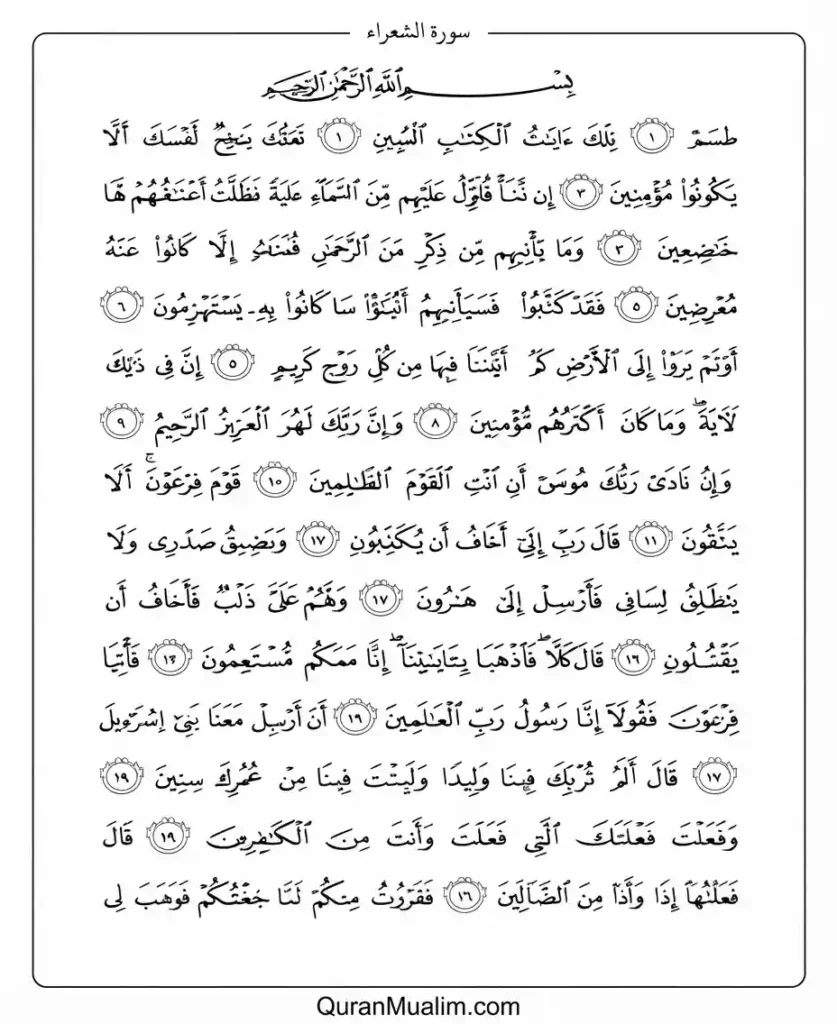
بِسْمِ اللَّهِ الرَّحْمَٰنِ الرَّحِيمِ Bismillāhir-Raḥmānir-Raḥīm — In the name of Allah, the Most Gracious, the Most Merciful
| # | Arabic | Transliteration | English Translation |
| 1 | طسم | Ṭā-Sīn-Mīm | Ta, Seen, Meem. |
| 2 | تِلْكَ آيَاتُ الْكِتَابِ الْمُبِينِ | Tilka āyātu al-kitābi al-mubīni | These are the verses of the clear Book. |
| 3 | لَعَلَّكَ بَاخِعٌ نَفْسَكَ أَلَّا يَكُونُوا مُؤْمِنِينَ | La’allaka bākhi’un nafsaka allā yakūnū mu’minīna | Perhaps, [O Muhammad], you would kill yourself with grief that they will not be believers. |
| 4 | إِنْ نَشَأْ نُنَزِّلْ عَلَيْهِمْ مِنَ السَّمَاءِ آيَةً فَظَلَّتْ أَعْنَاقُهُمْ لَهَا خَاضِعِينَ | In nasha’ nunazzil ‘alayhim mina as-samā’i āyatan faẓallat a’nāquhum lahā khāḍi’īna | If We willed, We could send down to them from the sky a sign, so their necks would remain humbled to it. |
| 5 | وَمَا يَأْتِيهِمْ مِنْ ذِكْرٍ مِنَ الرَّحْمَٰنِ مُحْدَثٍ إِلَّا كَانُوا عَنْهُ مُعْرِضِينَ | Wa mā ya’tīhim min dhikrin mina ar-raḥmāni muḥdathin illā kānū ‘anhu mu’riḍīna | And no fresh reminder comes to them from the Most Merciful except that they turn away from it. |
| 6 | فَقَدْ كَذَّبُوا فَسَيَأْتِيهِمْ أَنْبَاءُ مَا كَانُوا بِهِ يَسْتَهْزِئُونَ | Faqad kadhdhabū fasaya’tīhim anbā’u mā kānū bihi yastahzi’ūna | For they have already denied, but there will come to them news of that which they used to ridicule. |
| 7 | أَوَلَمْ يَرَوْا إِلَى الْأَرْضِ كَمْ أَنْبَتْنَا فِيهَا مِنْ كُلِّ زَوْجٍ كَرِيمٍ | Awa lam yaraw ilā al-arḍi kam anbatnā fīhā min kulli zawjin karīmin | Did they not look at the earth — how much We have produced therein from every noble kind? |
| 8 | إِنَّ فِي ذَٰلِكَ لَآيَةً ۖ وَمَا كَانَ أَكْثَرُهُمْ مُؤْمِنِينَ | Inna fī dhālika la-āyatan wa mā kāna aktharuhum mu’minīna | Indeed in that is a sign, but most of them were not to be believers. |
| 9 | وَإِنَّ رَبَّكَ لَهُوَ الْعَزِيزُ الرَّحِيمُ | Wa inna rabbaka lahuwa al-‘azīzu ar-raḥīmu | And indeed, your Lord — He is the Exalted in Might, the Merciful. |
| 10 | وَإِذْ نَادَىٰ رَبُّكَ مُوسَىٰ أَنِ ائْتِ الْقَوْمَ الظَّالِمِينَ | Wa idh nādā rabbuka Mūsā ani i’ti al-qawma aẓ-ẓālimīna | And [mention] when your Lord called Moses, [saying], “Go to the wrongdoing people — |
| 11 | قَوْمَ فِرْعَوْنَ ۚ أَلَا يَتَّقُونَ | Qawma Fir’awna alā yattaqūna | The people of Pharaoh. Will they not fear Allah?” |
| 12 | قَالَ رَبِّ إِنِّي أَخَافُ أَنْ يُكَذِّبُونِ | Qāla rabbi innī akhāfu an yukadhdhibūni | He said, “My Lord, indeed I fear that they will deny me |
| 13 | وَيَضِيقُ صَدْرِي وَلَا يَنْطَلِقُ لِسَانِي فَأَرْسِلْ إِلَىٰ هَارُونَ | Wa yaḍīqu ṣadrī wa lā yanṭaliqu lisānī fa-arsil ilā Hārūna | And that my breast will tighten and my tongue will not be fluent, so send for Aaron. |
| 14 | وَلَهُمْ عَلَيَّ ذَنْبٌ فَأَخَافُ أَنْ يَقْتُلُونِ | Wa lahum ‘alayya dhanbun fa-akhāfu an yaqtulūni | And they have upon me a [claim due to] sin, so I fear that they will kill me.” |
| 15 | قَالَ كَلَّا ۖ فَاذْهَبَا بِآيَاتِنَا ۖ إِنَّا مَعَكُمْ مُسْتَمِعُونَ | Qāla kallā fadh-habā bi-āyātinā innā ma’akum mustami’ūna | [Allah] said, “No. Go both of you with Our signs; indeed, We are with you, listening. |
| 16 | فَأْتِيَا فِرْعَوْنَ فَقُولَا إِنَّا رَسُولُ رَبِّ الْعَالَمِينَ | Fa’tiyā Fir’awna faqūlā innā rasūlu rabbi al-‘ālamīna | Go to Pharaoh and say, ‘We are the messengers of the Lord of the worlds, |
| 17 | أَنْ أَرْسِلْ مَعَنَا بَنِي إِسْرَائِيلَ | An arsil ma’anā banī isrā’īla | [Commanded to say], “Send with us the Children of Israel.”‘” |
| 18 | قَالَ أَلَمْ نُرَبِّكَ فِينَا وَلِيدًا وَلَبِثْتَ فِينَا مِنْ عُمُرِكَ سِنِينَ | Qāla alam nurabbika fīnā walīdan wa labithta fīnā min ‘umurika sinīna | [Pharaoh] said, “Did we not raise you among us as a child, and you remained among us for years of your life? |
| 19 | وَفَعَلْتَ فَعْلَتَكَ الَّتِي فَعَلْتَ وَأَنْتَ مِنَ الْكَافِرِينَ | Wa fa’alta fa’lataka allatī fa’alta wa anta mina al-kāfirīna | And [then] you did your deed which you did, and you were of the ungrateful.” |
| 20 | قَالَ فَعَلْتُهَا إِذًا وَأَنَا مِنَ الضَّالِّينَ | Qāla fa’altuhā idhan wa anā mina aḍ-ḍāllīna | [Moses] said, “I did it, then, while I was of those astray. |
| 21 | فَفَرَرْتُ مِنْكُمْ لَمَّا خِفْتُكُمْ فَوَهَبَ لِي رَبِّي حُكْمًا وَجَعَلَنِي مِنَ الْمُرْسَلِينَ | Fafarartu minkum lammā khiftukum fawahaba lī rabbī ḥukman wa ja’alanī mina al-mursalīna | So I fled from you when I feared you. Then my Lord gave me judgment and made me of the messengers. |
| 22 | وَتِلْكَ نِعْمَةٌ تَمُنُّهَا عَلَيَّ أَنْ عَبَّدْتَ بَنِي إِسْرَائِيلَ | Wa tilka ni’matun tamunnuhā ‘alayya an ‘abbadta banī isrā’īla | And is this a favor of which you remind me — that you enslaved the Children of Israel?” |
| 23 | قَالَ فِرْعَوْنُ وَمَا رَبُّ الْعَالَمِينَ | Qāla Fir’awnu wa mā rabbu al-‘ālamīna | Pharaoh said, “And what is the Lord of the worlds?” |
| 24 | قَالَ رَبُّ السَّمَاوَاتِ وَالْأَرْضِ وَمَا بَيْنَهُمَا ۖ إِنْ كُنْتُمْ مُوقِنِينَ | Qāla rabbu as-samāwāti wal-arḍi wa mā baynahumā in kuntum mūqinīna | [Moses] said, “The Lord of the heavens and earth and that between them, if you should be convinced.” |
| 25 | قَالَ لِمَنْ حَوْلَهُ أَلَا تَسْتَمِعُونَ | Qāla liman ḥawlahu alā tastami’ūna | [Pharaoh] said to those around him, “Do you not hear?” |
| 26 | قَالَ رَبُّكُمْ وَرَبُّ آبَائِكُمُ الْأَوَّلِينَ | Qāla rabbukum wa rabbu ābā’ikumu al-awwalīna | [Moses] said, “Your Lord and the Lord of your first forefathers.” |
| 27 | قَالَ إِنَّ رَسُولَكُمُ الَّذِي أُرْسِلَ إِلَيْكُمْ لَمَجْنُونٌ | Qāla inna rasūlakumu al-ladhī ursila ilaykum lamajnūnun | [Pharaoh] said, “Indeed, your messenger who has been sent to you is mad.” |
| 28 | قَالَ رَبُّ الْمَشْرِقِ وَالْمَغْرِبِ وَمَا بَيْنَهُمَا ۖ إِنْ كُنْتُمْ تَعْقِلُونَ | Qāla rabbu al-mashriqi wal-maghribi wa mā baynahumā in kuntum ta’qilūna | [Moses] said, “Lord of the east and the west and that between them, if you were to reason.” |
| 29 | قَالَ لَئِنِ اتَّخَذْتَ إِلَٰهًا غَيْرِي لَأَجْعَلَنَّكَ مِنَ الْمَسْجُونِينَ | Qāla la’ini ittakhadhta ilāhan ghayrī la-aj’alannaka mina al-masjūnīna | [Pharaoh] said, “If you take a god other than me, I will surely place you among those imprisoned.” |
| 30 | قَالَ أَوَلَوْ جِئْتُكَ بِشَيْءٍ مُبِينٍ | Qāla awa law ji’tuka bishay’in mubīnin | [Moses] said, “Even if I brought you something [i.e., proof] manifest?” |
| 31 | قَالَ فَأْتِ بِهِ إِنْ كُنْتَ مِنَ الصَّادِقِينَ | Qāla fa’ti bihi in kunta mina aṣ-ṣādiqīna | [Pharaoh] said, “Then bring it, if you should be of the truthful.” |
| 32 | فَأَلْقَىٰ عَصَاهُ فَإِذَا هِيَ ثُعْبَانٌ مُبِينٌ | Fa-alqā ‘aṣāhu fa-idhā hiya thu’bānun mubīnun | So [Moses] threw his staff, and suddenly it was a serpent, manifest. |
| 33 | وَنَزَعَ يَدَهُ فَإِذَا هِيَ بَيْضَاءُ لِلنَّاظِرِينَ | Wa naza’a yadahu fa-idhā hiya bayḍā’u lin-nāẓirīna | And he drew out his hand, and suddenly it was white for the observers. |
| 34 | قَالَ لِلْمَلَإِ حَوْلَهُ إِنَّ هَٰذَا لَسَاحِرٌ عَلِيمٌ | Qāla lilmala’i ḥawlahu inna hādhā lasāḥirun ‘alīmun | [Pharaoh] said to the eminent ones around him, “Indeed, this is a learned magician. |
| 35 | يُرِيدُ أَنْ يُخْرِجَكُمْ مِنْ أَرْضِكُمْ بِسِحْرِهِ فَمَاذَا تَأْمُرُونَ | Yurīdu an yukhrijakum min arḍikum bisiḥrihi famādhā ta’murūna | He wants to drive you out of your land by his magic, so what do you advise?” |
| 36 | قَالُوا أَرْجِهْ وَأَخَاهُ وَابْعَثْ فِي الْمَدَائِنِ حَاشِرِينَ | Qālū arjih wa akhāhu wab’ath fī al-madā’ini ḥāshirīna | They said, “Postpone [the matter of] him and his brother and send among the cities gatherers |
| 37 | يَأْتُوكَ بِكُلِّ سَحَّارٍ عَلِيمٍ | Ya’tūka bikulli saḥḥārin ‘alīmin | Who will bring you every learned, skilled magician.” |
| 38 | فَجُمِعَ السَّحَرَةُ لِمِيقَاتِ يَوْمٍ مَعْلُومٍ | Fajumi’a as-saḥaratu limīqāti yawmin ma’lūmin | So the magicians were assembled for the appointment of a well-known day. |
| 39 | وَقِيلَ لِلنَّاسِ هَلْ أَنْتُمْ مُجْتَمِعُونَ | Wa qīla lin-nāsi hal antum mujtami’ūna | And it was said to the people, “Will you assemble |
| 40 | لَعَلَّنَا نَتَّبِعُ السَّحَرَةَ إِنْ كَانُوا هُمُ الْغَالِبِينَ | La’allanā nattabi’u as-saḥarata in kānū humu al-ghālibīna | That we might follow the magicians if they are the predominant?” |
| 41 | فَلَمَّا جَاءَ السَّحَرَةُ قَالُوا لِفِرْعَوْنَ أَئِنَّ لَنَا لَأَجْرًا إِنْ كُنَّا نَحْنُ الْغَالِبِينَ | Falammā jā’a as-saḥaratu qālū lifir’awna a-inna lanā la-ajran in kunnā naḥnu al-ghālibīna | And when the magicians arrived, they said to Pharaoh, “Is there indeed for us a reward if we are the predominant?” |
| 42 | قَالَ نَعَمْ وَإِنَّكُمْ إِذًا لَمِنَ الْمُقَرَّبِينَ | Qāla na’am wa innakum idhan lamina al-muqarrabīna | He said, “Yes, and indeed, you will then be of those near [to me].” |
| 43 | قَالَ لَهُمْ مُوسَىٰ أَلْقُوا مَا أَنْتُمْ مُلْقُونَ | Qāla lahum Mūsā alqū mā antum mulqūna | Moses said to them, “Throw whatever you will throw.” |
| 44 | فَأَلْقَوْا حِبَالَهُمْ وَعِصِيَّهُمْ وَقَالُوا بِعِزَّةِ فِرْعَوْنَ إِنَّا لَنَحْنُ الْغَالِبُونَ | Fa-alqaw ḥibālahum wa ‘iṣiyyahum wa qālū bi’izzati Fir’awna innā lanaḥnu al-ghālibūna | So they threw their ropes and their staffs and said, “By the might of Pharaoh, indeed it is we who are predominant.” |
| 45 | فَأَلْقَىٰ مُوسَىٰ عَصَاهُ فَإِذَا هِيَ تَلْقَفُ مَا يَأْفِكُونَ | Fa-alqā Mūsā ‘aṣāhu fa-idhā hiya talqafu mā ya’fikūna | Then Moses threw his staff, and at once it devoured what they falsified. |
| 46 | فَأُلْقِيَ السَّحَرَةُ سَاجِدِينَ | Fa-ulqiya as-saḥaratu sājidīna | So the magicians fell down in prostration. |
| 47 | قَالُوا آمَنَّا بِرَبِّ الْعَالَمِينَ | Qālū āmannā birabbi al-‘ālamīna | They said, “We believe in the Lord of the worlds — |
| 48 | رَبِّ مُوسَىٰ وَهَارُونَ | Rabbi Mūsā wa Hārūna | The Lord of Moses and Aaron.” |
| 49 | قَالَ آمَنْتُمْ لَهُ قَبْلَ أَنْ آذَنَ لَكُمْ ۖ إِنَّهُ لَكَبِيرُكُمُ الَّذِي عَلَّمَكُمُ السِّحْرَ فَلَسَوْفَ تَعْلَمُونَ ۚ لَأُقَطِّعَنَّ أَيْدِيَكُمْ وَأَرْجُلَكُمْ مِنْ خِلَافٍ وَلَأُصَلِّبَنَّكُمْ أَجْمَعِينَ | Qāla āmantum lahu qabla an ādhana lakum innahu lakabīrukumu al-ladhī ‘allamakumu as-siḥra falasawfa ta’lamūna la-uqaṭṭi’anna aydiyakum wa arjulakum min khilāfin wa la-uṣallibannakum ajma’īna | [Pharaoh] said, “You believed him before I gave you permission. Indeed, he is your leader who has taught you magic, and you will surely know. I will surely cut off your hands and your feet on opposite sides, and I will surely crucify you all.” |
| 50 | قَالُوا لَا ضَيْرَ ۖ إِنَّا إِلَىٰ رَبِّنَا مُنْقَلِبُونَ | Qālū lā ḍayra innā ilā rabbinā munqalibūna | They said, “No harm. Indeed, to our Lord we will return. |
| 51 | إِنَّا نَطْمَعُ أَنْ يَغْفِرَ لَنَا رَبُّنَا خَطَايَانَا أَنْ كُنَّا أَوَّلَ الْمُؤْمِنِينَ | Innā naṭma’u an yaghfira lanā rabbunā khaṭāyānā an kunnā awwala al-mu’minīna | Indeed, we aspire that our Lord will forgive us our sins because we were the first of the believers.” |
| 52 | وَأَوْحَيْنَا إِلَىٰ مُوسَىٰ أَنْ أَسْرِ بِعِبَادِي إِنَّكُمْ مُتَّبَعُونَ | Wa awḥaynā ilā Mūsā an asri bi’ibādī innakum muttaba’ūna | And We inspired to Moses, “Travel by night with My servants; indeed, you will be pursued.” |
| 53 | فَأَرْسَلَ فِرْعَوْنُ فِي الْمَدَائِنِ حَاشِرِينَ | Fa-arsala Fir’awnu fī al-madā’ini ḥāshirīna | Then Pharaoh sent among the cities gatherers |
| 54 | إِنَّ هَٰؤُلَاءِ لَشِرْذِمَةٌ قَلِيلُونَ | Inna hā’ulā’i lashirdhimatun qalīlūna | [And said], “Indeed, these are but a small band, |
| 55 | وَإِنَّهُمْ لَنَا لَغَائِظُونَ | Wa innahum lanā laghā’iẓūna | And indeed, they are enraging us, |
| 56 | وَإِنَّا لَجَمِيعٌ حَاذِرُونَ | Wa innā lajamī’un ḥādhirūna | And indeed, we are a cautious multitude.” |
| 57 | فَأَخْرَجْنَاهُمْ مِنْ جَنَّاتٍ وَعُيُونٍ | Fa-akhrajnāhum min jannātin wa ‘uyūnin | So We removed them from gardens and springs |
| 58 | وَكُنُوزٍ وَمَقَامٍ كَرِيمٍ | Wa kunūzin wa maqāmin karīmin | And treasures and honorable station — |
| 59 | كَذَٰلِكَ وَأَوْرَثْنَاهَا بَنِي إِسْرَائِيلَ | Kadhālika wa awrathnāhā banī isrā’īla | Thus. And We caused to inherit it the Children of Israel. |
| 60 | فَأَتْبَعُوهُمْ مُشْرِقِينَ | Fa-atba’ūhum mushriqīna | So they pursued them at sunrise. |
| 61 | فَلَمَّا تَرَاءَى الْجَمْعَانِ قَالَ أَصْحَابُ مُوسَىٰ إِنَّا لَمُدْرَكُونَ | Falammā tarā’ā al-jam’āni qāla aṣḥābu Mūsā innā lamudrakūna | And when the two companies saw one another, the companions of Moses said, “Indeed, we are to be overtaken!” |
| 62 | قَالَ كَلَّا ۖ إِنَّ مَعِيَ رَبِّي سَيَهْدِينِ | Qāla kallā inna ma’iya rabbī sayahdīni | [Moses] said, “No! Indeed, with me is my Lord; He will guide me.” |
| 63 | فَأَوْحَيْنَا إِلَىٰ مُوسَىٰ أَنِ اضْرِبْ بِعَصَاكَ الْبَحْرَ ۖ فَانْفَلَقَ فَكَانَ كُلُّ فِرْقٍ كَالطَّوْدِ الْعَظِيمِ | Fa-awḥaynā ilā Mūsā ani iḍrib bi’aṣāka al-baḥra fanfalaqa fakāna kullu firqin kaṭ-ṭawdi al-‘aẓīmi | Then We inspired to Moses, “Strike with your staff the sea,” and it parted, and each portion was like a great towering mountain. |
| 64 | وَأَزْلَفْنَا ثَمَّ الْآخَرِينَ | Wa azlafnā thamma al-ākharīna | And We advanced thereto the others [i.e., Pharaoh and his people]. |
| 65 | وَأَنْجَيْنَا مُوسَىٰ وَمَنْ مَعَهُ أَجْمَعِينَ | Wa anjaynā Mūsā wa man ma’ahu ajma’īna | And We saved Moses and those with him, all together. |
| 66 | ثُمَّ أَغْرَقْنَا الْآخَرِينَ | Thumma aghraqnā al-ākharīna | Then We drowned the others. |
| 67 | إِنَّ فِي ذَٰلِكَ لَآيَةً ۖ وَمَا كَانَ أَكْثَرُهُمْ مُؤْمِنِينَ | Inna fī dhālika la-āyatan wa mā kāna aktharuhum mu’minīna | Indeed in that is a sign, but most of them were not to be believers. |
| 68 | وَإِنَّ رَبَّكَ لَهُوَ الْعَزِيزُ الرَّحِيمُ | Wa inna rabbaka lahuwa al-‘azīzu ar-raḥīmu | And indeed, your Lord — He is the Exalted in Might, the Merciful. |
| 69 | وَاتْلُ عَلَيْهِمْ نَبَأَ إِبْرَاهِيمَ | Watlu ‘alayhim naba’a Ibrāhīma | And recite to them the news of Abraham, |
| 70 | إِذْ قَالَ لِأَبِيهِ وَقَوْمِهِ مَا تَعْبُدُونَ | Idh qāla li-abīhi wa qawmihi mā ta’budūna | When he said to his father and his people, “What do you worship?” |
| 71 | قَالُوا نَعْبُدُ أَصْنَامًا فَنَظَلُّ لَهَا عَاكِفِينَ | Qālū na’budu aṣnāman fanaẓallu lahā ‘ākifīna | They said, “We worship idols and remain to them devoted.” |
| 72 | قَالَ هَلْ يَسْمَعُونَكُمْ إِذْ تَدْعُونَ | Qāla hal yasma’ūnakum idh tad’ūna | He said, “Do they hear you when you supplicate? |
| 73 | أَوْ يَنْفَعُونَكُمْ أَوْ يَضُرُّونَ | Aw yanfa’ūnakum aw yaḍurrūna | Or do they benefit you, or do they harm?” |
| 74 | قَالُوا بَلْ وَجَدْنَا آبَاءَنَا كَذَٰلِكَ يَفْعَلُونَ | Qālū bal wajadnā ābā’anā kadhālika yaf’alūna | They said, “But we found our fathers doing thus.” |
| 75 | قَالَ أَفَرَأَيْتُمْ مَا كُنْتُمْ تَعْبُدُونَ | Qāla afara’aytum mā kuntum ta’budūna | He said, “Then do you see what you have been worshipping — |
| 76 | أَنْتُمْ وَآبَاؤُكُمُ الْأَقْدَمُونَ | Antum wa ābā’ukumu al-aqdamūna | You and your ancient forefathers? |
| 77 | فَإِنَّهُمْ عَدُوٌّ لِي إِلَّا رَبَّ الْعَالَمِينَ | Fa-innahum ‘aduwwun lī illā rabba al-‘ālamīna | Indeed, they are enemies to me, except the Lord of the worlds, |
| 78 | الَّذِي خَلَقَنِي فَهُوَ يَهْدِينِ | Al-ladhī khalaqanī fahuwa yahdīni | Who created me, and He guides me. |
| 79 | وَالَّذِي هُوَ يُطْعِمُنِي وَيَسْقِينِ | Wal-ladhī huwa yuṭ’imunī wa yasqīni | And it is He who feeds me and gives me drink. |
| 80 | وَإِذَا مَرِضْتُ فَهُوَ يَشْفِينِ | Wa idhā mariḍtu fahuwa yashfīni | And when I am ill, it is He who cures me |
| 81 | وَالَّذِي يُمِيتُنِي ثُمَّ يُحْيِينِ | Wal-ladhī yumītunī thumma yuḥyīni | And who will cause me to die and then bring me to life |
| 82 | وَالَّذِي أَطْمَعُ أَنْ يَغْفِرَ لِي خَطِيئَتِي يَوْمَ الدِّينِ | Wal-ladhī aṭma’u an yaghfira lī khaṭī’atī yawma ad-dīni | And who I aspire that He will forgive me my sin on the Day of Recompense.” |
| 83 | رَبِّ هَبْ لِي حُكْمًا وَأَلْحِقْنِي بِالصَّالِحِينَ | Rabbi hab lī ḥukman wa alḥiqnī biṣ-ṣāliḥīna | [Abraham said], “My Lord, grant me judgment and join me with the righteous. |
| 84 | وَاجْعَلْ لِي لِسَانَ صِدْقٍ فِي الْآخِرِينَ | Waj’al lī lisāna ṣidqin fī al-ākhirīna | And grant me a reputation of honor among later generations. |
| 85 | وَاجْعَلْنِي مِنْ وَرَثَةِ جَنَّةِ النَّعِيمِ | Waj’alnī min warathati jannati an-na’īmi | And place me among the inheritors of the Garden of Pleasure. |
| 86 | وَاغْفِرْ لِأَبِي إِنَّهُ كَانَ مِنَ الضَّالِّينَ | Waghfir li-abī innahu kāna mina aḍ-ḍāllīna | And forgive my father. Indeed, he has been of those astray. |
| 87 | وَلَا تُخْزِنِي يَوْمَ يُبْعَثُونَ | Wa lā tukhzinī yawma yub’athūna | And do not disgrace me on the Day they are resurrected — |
| 88 | يَوْمَ لَا يَنْفَعُ مَالٌ وَلَا بَنُونَ | Yawma lā yanfa’u mālun wa lā banūna | The Day when there will not benefit [anyone] wealth or children |
| 89 | إِلَّا مَنْ أَتَى اللَّهَ بِقَلْبٍ سَلِيمٍ | Illā man atā Allāha biqalbin salīmin | But only one who comes to Allah with a sound heart.” |
| 90 | وَأُزْلِفَتِ الْجَنَّةُ لِلْمُتَّقِينَ | Wa uzlifati al-jannatu lilmuttaqīna | And Paradise will be brought near to the righteous. |
| 91 | وَبُرِّزَتِ الْجَحِيمُ لِلْغَاوِينَ | Wa burrizati al-jaḥīmu lilghāwīna | And Hellfire will be brought forth for the deviators, |
| 92 | وَقِيلَ لَهُمْ أَيْنَ مَا كُنْتُمْ تَعْبُدُونَ | Wa qīla lahum ayna mā kuntum ta’budūna | And it will be said to them, “Where are those you used to worship |
| 93 | مِنْ دُونِ اللَّهِ هَلْ يَنْصُرُونَكُمْ أَوْ يَنْتَصِرُونَ | Min dūni Allāhi hal yanṣurūnakum aw yantaṣirūna | Other than Allah? Can they help you or help themselves?” |
| 94 | فَكُبْكِبُوا فِيهَا هُمْ وَالْغَاوُونَ | Fakubkibū fīhā hum wal-ghāwūna | So they will be overturned into it, they and the deviators |
| 95 | وَجُنُودُ إِبْلِيسَ أَجْمَعُونَ | Wa junūdu Iblīsa ajma’ūna | And the soldiers of Iblis, all together. |
| 96 | قَالُوا وَهُمْ فِيهَا يَخْتَصِمُونَ | Qālū wa hum fīhā yakhtaṣimūna | They will say while they dispute therein, |
| 97 | تَاللَّهِ إِنْ كُنَّا لَفِي ضَلَالٍ مُبِينٍ | Tallāhi in kunnā lafī ḍalālin mubīnin | “By Allah, we were indeed in manifest error |
| 98 | إِذْ نُسَوِّيكُمْ بِرَبِّ الْعَالَمِينَ | Idh nusawwīkum birabbi al-‘ālamīna | When we equated you with the Lord of the worlds. |
| 99 | وَمَا أَضَلَّنَا إِلَّا الْمُجْرِمُونَ | Wa mā aḍallanā illā al-mujrimūna | And no one misguided us except the criminals. |
| 100 | فَمَا لَنَا مِنْ شَافِعِينَ | Famā lanā min shāfi’īna | So now we have no intercessors |
| 101 | وَلَا صَدِيقٍ حَمِيمٍ | Wa lā ṣadīqin ḥamīmin | Nor a devoted friend. |
| 102 | فَلَوْ أَنَّ لَنَا كَرَّةً فَنَكُونَ مِنَ الْمُؤْمِنِينَ | Falaw anna lanā karratan fanakūna mina al-mu’minīna | Then if we only had a return [to the world] and could be of the believers… |
| 103 | إِنَّ فِي ذَٰلِكَ لَآيَةً ۖ وَمَا كَانَ أَكْثَرُهُمْ مُؤْمِنِينَ | Inna fī dhālika la-āyatan wa mā kāna aktharuhum mu’minīna | Indeed in that is a sign, but most of them were not to be believers. |
| 104 | وَإِنَّ رَبَّكَ لَهُوَ الْعَزِيزُ الرَّحِيمُ | Wa inna rabbaka lahuwa al-‘azīzu ar-raḥīmu | And indeed, your Lord — He is the Exalted in Might, the Merciful. |
| 105 | كَذَّبَتْ قَوْمُ نُوحٍ الْمُرْسَلِينَ | Kadhdhabat qawmu Nūḥin al-mursalīna | The people of Noah denied the messengers |
| 106 | إِذْ قَالَ لَهُمْ أَخُوهُمْ نُوحٌ أَلَا تَتَّقُونَ | Idh qāla lahum akhūhum Nūḥun alā tattaqūna | When their brother Noah said to them, “Will you not fear Allah? |
| 107 | إِنِّي لَكُمْ رَسُولٌ أَمِينٌ | Innī lakum rasūlun amīnun | Indeed, I am to you a trustworthy messenger. |
| 108 | فَاتَّقُوا اللَّهَ وَأَطِيعُونِ | Fattaqū Allāha wa aṭī’ūni | So fear Allah and obey me. |
| 109 | وَمَا أَسْأَلُكُمْ عَلَيْهِ مِنْ أَجْرٍ ۖ إِنْ أَجْرِيَ إِلَّا عَلَىٰ رَبِّ الْعَالَمِينَ | Wa mā as’alukum ‘alayhi min ajrin in ajriya illā ‘alā rabbi al-‘ālamīna | And I do not ask you for it any payment. My payment is only from the Lord of the worlds. |
| 110 | فَاتَّقُوا اللَّهَ وَأَطِيعُونِ | Fattaqū Allāha wa aṭī’ūni | So fear Allah and obey me.” |
| 111 | قَالُوا أَنُؤْمِنُ لَكَ وَاتَّبَعَكَ الْأَرْذَلُونَ | Qālū anu’minu laka wattaba’aka al-ardhalūna | They said, “Should we believe you while you are followed by the lowest [class of people]?” |
| 112 | قَالَ وَمَا عِلْمِي بِمَا كَانُوا يَعْمَلُونَ | Qāla wa mā ‘ilmī bimā kānū ya’malūna | He said, “And what is my knowledge of what they used to do? |
| 113 | إِنْ حِسَابُهُمْ إِلَّا عَلَىٰ رَبِّي ۖ لَوْ تَشْعُرُونَ | In ḥisābuhum illā ‘alā rabbī law tash’urūna | Their account is only upon my Lord, if you [could but] perceive. |
| 114 | وَمَا أَنَا بِطَارِدِ الْمُؤْمِنِينَ | Wa mā anā biṭāridi al-mu’minīna | And I am not one to drive away the believers. |
| 115 | إِنْ أَنَا إِلَّا نَذِيرٌ مُبِينٌ | In anā illā nadhīrun mubīnun | I am only a clear warner.” |
| 116 | قَالُوا لَئِنْ لَمْ تَنْتَهِ يَا نُوحُ لَتَكُونَنَّ مِنَ الْمَرْجُومِينَ | Qālū la’in lam tantahi yā Nūḥu latakūnanna mina al-marjūmīna | They said, “If you do not desist, O Noah, you will surely be of those who are stoned.” |
| 117 | قَالَ رَبِّ إِنَّ قَوْمِي كَذَّبُونِ | Qāla rabbi inna qawmī kadhdhabūni | He said, “My Lord, indeed my people have denied me. |
| 118 | فَافْتَحْ بَيْنِي وَبَيْنَهُمْ فَتْحًا وَنَجِّنِي وَمَنْ مَعِيَ مِنَ الْمُؤْمِنِينَ | Faftaḥ baynī wa baynahum fatḥan wa najjinī wa man ma’iya mina al-mu’minīna | Then judge between me and them with decisive judgment, and save me and those who are with me of the believers.” |
| 119 | فَأَنْجَيْنَاهُ وَمَنْ مَعَهُ فِي الْفُلْكِ الْمَشْحُونِ | Fa-anjaynāhu wa man ma’ahu fī al-fulki al-mashḥūni | So We saved him and those with him in the laden ship. |
| 120 | ثُمَّ أَغْرَقْنَا بَعْدُ الْبَاقِينَ | Thumma aghraqnā ba’du al-bāqīna | Then We drowned thereafter the remaining ones. |
| 121 | إِنَّ فِي ذَٰلِكَ لَآيَةً ۖ وَمَا كَانَ أَكْثَرُهُمْ مُؤْمِنِينَ | Inna fī dhālika la-āyatan wa mā kāna aktharuhum mu’minīna | Indeed in that is a sign, but most of them were not to be believers. |
| 122 | وَإِنَّ رَبَّكَ لَهُوَ الْعَزِيزُ الرَّحِيمُ | Wa inna rabbaka lahuwa al-‘azīzu ar-raḥīmu | And indeed, your Lord — He is the Exalted in Might, the Merciful. |
| 123 | كَذَّبَتْ عَادٌ الْمُرْسَلِينَ | Kadhdhabat ‘Ādun al-mursalīna | ‘Aad denied the messengers |
| 124 | إِذْ قَالَ لَهُمْ أَخُوهُمْ هُودٌ أَلَا تَتَّقُونَ | Idh qāla lahum akhūhum Hūdun alā tattaqūna | When their brother Hud said to them, “Will you not fear Allah? |
| 125 | إِنِّي لَكُمْ رَسُولٌ أَمِينٌ | Innī lakum rasūlun amīnun | Indeed, I am to you a trustworthy messenger. |
| 126 | فَاتَّقُوا اللَّهَ وَأَطِيعُونِ | Fattaqū Allāha wa aṭī’ūni | So fear Allah and obey me. |
| 127 | وَمَا أَسْأَلُكُمْ عَلَيْهِ مِنْ أَجْرٍ ۖ إِنْ أَجْرِيَ إِلَّا عَلَىٰ رَبِّ الْعَالَمِينَ | Wa mā as’alukum ‘alayhi min ajrin in ajriya illā ‘alā rabbi al-‘ālamīna | And I do not ask you for it any payment. My payment is only from the Lord of the worlds. |
| 128 | أَتَبْنُونَ بِكُلِّ رِيعٍ آيَةً تَعْبَثُونَ | Atabnūna bikulli rī’in āyatan ta’bathūna | Do you construct on every elevation a sign, amusing yourselves, |
| 129 | وَتَتَّخِذُونَ مَصَانِعَ لَعَلَّكُمْ تَخْلُدُونَ | Wa tattakhidhūna maṣāni’a la’allakum takhludūna | And take for yourselves palaces and fortresses that you might abide eternally? |
| 130 | وَإِذَا بَطَشْتُمْ بَطَشْتُمْ جَبَّارِينَ | Wa idhā baṭashtum baṭashtum jabbārīna | And when you strike, you strike as tyrants. |
| 131 | فَاتَّقُوا اللَّهَ وَأَطِيعُونِ | Fattaqū Allāha wa aṭī’ūni | So fear Allah and obey me. |
| 132 | وَاتَّقُوا الَّذِي أَمَدَّكُمْ بِمَا تَعْلَمُونَ | Wattaqū al-ladhī amaddakum bimā ta’lamūna | And fear He who provided you with that which you know, |
| 133 | أَمَدَّكُمْ بِأَنْعَامٍ وَبَنِينَ | Amaddakum bi-an’āmin wa banīna | Provided you with grazing livestock and children |
| 134 | وَجَنَّاتٍ وَعُيُونٍ | Wa jannātin wa ‘uyūnin | And gardens and springs. |
| 135 | إِنِّي أَخَافُ عَلَيْكُمْ عَذَابَ يَوْمٍ عَظِيمٍ | Innī akhāfu ‘alaykum ‘adhāba yawmin ‘aẓīmin | Indeed, I fear for you the punishment of a terrible day.” |
| 136 | قَالُوا سَوَاءٌ عَلَيْنَا أَوَعَظْتَ أَمْ لَمْ تَكُنْ مِنَ الْوَاعِظِينَ | Qālū sawā’un ‘alaynā awa’aẓta am lam takun mina al-wā’iẓīna | They said, “It is all the same to us whether you advise us or are not of the advisers. |
| 137 | إِنْ هَٰذَا إِلَّا خُلُقُ الْأَوَّلِينَ | In hādhā illā khuluqu al-awwalīna | This is not but the custom of the former peoples, |
| 138 | وَمَا نَحْنُ بِمُعَذَّبِينَ | Wa mā naḥnu bimu’adhdhabīna | And we are not to be punished.” |
| 139 | فَكَذَّبُوهُ فَأَهْلَكْنَاهُمْ ۗ إِنَّ فِي ذَٰلِكَ لَآيَةً ۖ وَمَا كَانَ أَكْثَرُهُمْ مُؤْمِنِينَ | Fakadhdhabūhu fa-ahlaknāhum inna fī dhālika la-āyatan wa mā kāna aktharuhum mu’minīna | So they denied him, and We destroyed them. Indeed in that is a sign, but most of them were not to be believers. |
| 140 | وَإِنَّ رَبَّكَ لَهُوَ الْعَزِيزُ الرَّحِيمُ | Wa inna rabbaka lahuwa al-‘azīzu ar-raḥīmu | And indeed, your Lord — He is the Exalted in Might, the Merciful. |
| 141 | كَذَّبَتْ ثَمُودُ الْمُرْسَلِينَ | Kadhdhabat Thamūdu al-mursalīna | Thamud denied the messengers |
| 142 | إِذْ قَالَ لَهُمْ أَخُوهُمْ صَالِحٌ أَلَا تَتَّقُونَ | Idh qāla lahum akhūhum Ṣāliḥun alā tattaqūna | When their brother Salih said to them, “Will you not fear Allah? |
| 143 | إِنِّي لَكُمْ رَسُولٌ أَمِينٌ | Innī lakum rasūlun amīnun | Indeed, I am to you a trustworthy messenger. |
| 144 | فَاتَّقُوا اللَّهَ وَأَطِيعُونِ | Fattaqū Allāha wa aṭī’ūni | So fear Allah and obey me. |
| 145 | وَمَا أَسْأَلُكُمْ عَلَيْهِ مِنْ أَجْرٍ ۖ إِنْ أَجْرِيَ إِلَّا عَلَىٰ رَبِّ الْعَالَمِينَ | Wa mā as’alukum ‘alayhi min ajrin in ajriya illā ‘alā rabbi al-‘ālamīna | And I do not ask you for it any payment. My payment is only from the Lord of the worlds. |
| 146 | أَتُتْرَكُونَ فِي مَا هَاهُنَا آمِنِينَ | Atutrakūna fī mā hāhunā āminīna | Will you be left secure in that which is here — |
| 147 | فِي جَنَّاتٍ وَعُيُونٍ | Fī jannātin wa ‘uyūnin | Among gardens and springs |
| 148 | وَزُرُوعٍ وَنَخْلٍ طَلْعُهَا هَضِيمٌ | Wa zurū’in wa nakhlin ṭal’uhā haḍīmun | And crops and palm trees with soft, delicate spadix? |
| 149 | وَتَنْحِتُونَ مِنَ الْجِبَالِ بُيُوتًا فَارِهِينَ | Wa tanḥitūna mina al-jibāli buyūtan fārihīna | And you carve out of the mountains, homes, with skill. |
| 150 | فَاتَّقُوا اللَّهَ وَأَطِيعُونِ | Fattaqū Allāha wa aṭī’ūni | So fear Allah and obey me |
| 151 | وَلَا تُطِيعُوا أَمْرَ الْمُسْرِفِينَ | Wa lā tuṭī’ū amra al-musrifīna | And do not obey the order of the transgressors, |
| 152 | الَّذِينَ يُفْسِدُونَ فِي الْأَرْضِ وَلَا يُصْلِحُونَ | Al-ladhīna yufsidūna fī al-arḍi wa lā yuṣliḥūna | Who cause corruption in the land and do not amend [it].” |
| 153 | قَالُوا إِنَّمَا أَنْتَ مِنَ الْمُسَحَّرِينَ | Qālū innamā anta mina al-musaḥḥarīna | They said, “You are only of those affected by magic. |
| 154 | مَا أَنْتَ إِلَّا بَشَرٌ مِثْلُنَا فَأْتِ بِآيَةٍ إِنْ كُنْتَ مِنَ الصَّادِقِينَ | Mā anta illā basharun mithlunā fa’ti bi-āyatin in kunta mina aṣ-ṣādiqīna | You are but a man like ourselves, so bring a sign, if you should be of the truthful.” |
| 155 | قَالَ هَٰذِهِ نَاقَةٌ لَهَا شِرْبٌ وَلَكُمْ شِرْبُ يَوْمٍ مَعْلُومٍ | Qāla hādhihi nāqatun lahā shirbun wa lakum shirbu yawmin ma’lūmin | He said, “This is a she-camel; for her is a [time of] drink, and for you is a [time of] drink, [each] on a known day. |
| 156 | وَلَا تَمَسُّوهَا بِسُوءٍ فَيَأْخُذَكُمْ عَذَابُ يَوْمٍ عَظِيمٍ | Wa lā tamassūhā bisū’in faya’khudhakum ‘adhābu yawmin ‘aẓīmin | And do not touch her with harm, lest you be seized by the punishment of a terrible day.” |
| 157 | فَعَقَرُوهَا فَأَصْبَحُوا نَادِمِينَ | Fa’aqarūhā fa-aṣbaḥū nādimīna | But they hamstrung her and became regretful. |
| 158 | فَأَخَذَهُمُ الْعَذَابُ ۗ إِنَّ فِي ذَٰلِكَ لَآيَةً ۖ وَمَا كَانَ أَكْثَرُهُمْ مُؤْمِنِينَ | Fa-akhadhahumu al-‘adhābu inna fī dhālika la-āyatan wa mā kāna aktharuhum mu’minīna | So the punishment seized them. Indeed in that is a sign, but most of them were not to be believers. |
| 159 | وَإِنَّ رَبَّكَ لَهُوَ الْعَزِيزُ الرَّحِيمُ | Wa inna rabbaka lahuwa al-‘azīzu ar-raḥīmu | And indeed, your Lord — He is the Exalted in Might, the Merciful. |
| 160 | كَذَّبَتْ قَوْمُ لُوطٍ الْمُرْسَلِينَ | Kadhdhabat qawmu Lūṭin al-mursalīna | The people of Lot denied the messengers |
| 161 | إِذْ قَالَ لَهُمْ أَخُوهُمْ لُوطٌ أَلَا تَتَّقُونَ | Idh qāla lahum akhūhum Lūṭun alā tattaqūna | When their brother Lot said to them, “Will you not fear Allah? |
| 162 | إِنِّي لَكُمْ رَسُولٌ أَمِينٌ | Innī lakum rasūlun amīnun | Indeed, I am to you a trustworthy messenger. |
| 163 | فَاتَّقُوا اللَّهَ وَأَطِيعُونِ | Fattaqū Allāha wa aṭī’ūni | So fear Allah and obey me. |
| 164 | وَمَا أَسْأَلُكُمْ عَلَيْهِ مِنْ أَجْرٍ ۖ إِنْ أَجْرِيَ إِلَّا عَلَىٰ رَبِّ الْعَالَمِينَ | Wa mā as’alukum ‘alayhi min ajrin in ajriya illā ‘alā rabbi al-‘ālamīna | And I do not ask you for it any payment. My payment is only from the Lord of the worlds. |
| 165 | أَتَأْتُونَ الذُّكْرَانَ مِنَ الْعَالَمِينَ | Ata’tūna adh-dhukrāna mina al-‘ālamīna | Do you approach males among the worlds [i.e., peoples] |
| 166 | وَتَذَرُونَ مَا خَلَقَ لَكُمْ رَبُّكُمْ مِنْ أَزْوَاجِكُمْ ۚ بَلْ أَنْتُمْ قَوْمٌ عَادُونَ | Wa tadharūna mā khalaqa lakum rabbukum min azwājikum bal antum qawmun ‘ādūna | And leave what your Lord has created for you as mates? But you are a people transgressing.” |
| 167 | قَالُوا لَئِنْ لَمْ تَنْتَهِ يَا لُوطُ لَتَكُونَنَّ مِنَ الْمُخْرَجِينَ | Qālū la’in lam tantahi yā Lūṭu latakūnanna mina al-mukhrajīna | They said, “If you do not desist, O Lot, you will surely be of those expelled.” |
| 168 | قَالَ إِنِّي لِعَمَلِكُمْ مِنَ الْقَالِينَ | Qāla innī li’amalikum mina al-qālīna | He said, “Indeed, I am, toward your deed, of those who detest [it]. |
| 169 | رَبِّ نَجِّنِي وَأَهْلِي مِمَّا يَعْمَلُونَ | Rabbi najjinī wa ahlī mimmā ya’malūna | My Lord, save me and my family from what they do.” |
| 170 | فَنَجَّيْنَاهُ وَأَهْلَهُ أَجْمَعِينَ | Fanajjaynāhu wa ahlahu ajma’īna | So We saved him and his family, all, |
| 171 | إِلَّا عَجُوزًا فِي الْغَابِرِينَ | Illā ‘ajūzan fī al-ghābirīna | Except an old woman among those who remained behind. |
| 172 | ثُمَّ دَمَّرْنَا الْآخَرِينَ | Thumma dammarnā al-ākharīna | Then We destroyed the others. |
| 173 | وَأَمْطَرْنَا عَلَيْهِمْ مَطَرًا ۖ فَسَاءَ مَطَرُ الْمُنْذَرِينَ | Wa amṭarnā ‘alayhim maṭaran fasā’a maṭaru al-mundharīna | And We rained upon them a rain [of stones], and evil was the rain of those who were warned. |
| 174 | إِنَّ فِي ذَٰلِكَ لَآيَةً ۖ وَمَا كَانَ أَكْثَرُهُمْ مُؤْمِنِينَ | Inna fī dhālika la-āyatan wa mā kāna aktharuhum mu’minīna | Indeed in that is a sign, but most of them were not to be believers. |
| 175 | وَإِنَّ رَبَّكَ لَهُوَ الْعَزِيزُ الرَّحِيمُ | Wa inna rabbaka lahuwa al-‘azīzu ar-raḥīmu | And indeed, your Lord — He is the Exalted in Might, the Merciful. |
| 176 | كَذَّبَ أَصْحَابُ الْأَيْكَةِ الْمُرْسَلِينَ | Kadhdhaba aṣḥābu al-aykati al-mursalīna | The companions of the thicket denied the messengers |
| 177 | إِذْ قَالَ لَهُمْ شُعَيْبٌ أَلَا تَتَّقُونَ | Idh qāla lahum Shu’aybun alā tattaqūna | When Shu’ayb said to them, “Will you not fear Allah? |
| 178 | إِنِّي لَكُمْ رَسُولٌ أَمِينٌ | Innī lakum rasūlun amīnun | Indeed, I am to you a trustworthy messenger. |
| 179 | فَاتَّقُوا اللَّهَ وَأَطِيعُونِ | Fattaqū Allāha wa aṭī’ūni | So fear Allah and obey me. |
| 180 | وَمَا أَسْأَلُكُمْ عَلَيْهِ مِنْ أَجْرٍ ۖ إِنْ أَجْرِيَ إِلَّا عَلَىٰ رَبِّ الْعَالَمِينَ | Wa mā as’alukum ‘alayhi min ajrin in ajriya illā ‘alā rabbi al-‘ālamīna | And I do not ask you for it any payment. My payment is only from the Lord of the worlds. |
| 181 | أَوْفُوا الْكَيْلَ وَلَا تَكُونُوا مِنَ الْمُخْسِرِينَ | Awfū al-kayla wa lā takūnū mina al-mukhsirīna | Give full measure and do not be of those who cause loss. |
| 182 | وَزِنُوا بِالْقِسْطَاسِ الْمُسْتَقِيمِ | Wa zinū bilqisṭāsi al-mustaqīmi | And weigh with an even balance. |
| 183 | وَلَا تَبْخَسُوا النَّاسَ أَشْيَاءَهُمْ وَلَا تَعْثَوْا فِي الْأَرْضِ مُفْسِدِينَ | Wa lā tabkhasū an-nāsa ashyā’ahum wa lā ta’thaw fī al-arḍi mufsidīna | And do not deprive people of their due and do not commit abuse on earth, spreading corruption. |
| 184 | وَاتَّقُوا الَّذِي خَلَقَكُمْ وَالْجِبِلَّةَ الْأَوَّلِينَ | Wattaqū al-ladhī khalaqakum wal-jibillata al-awwalīna | And fear He who created you and the former creation.” |
| 185 | قَالُوا إِنَّمَا أَنْتَ مِنَ الْمُسَحَّرِينَ | Qālū innamā anta mina al-musaḥḥarīna | They said, “You are only of those affected by magic. |
| 186 | وَمَا أَنْتَ إِلَّا بَشَرٌ مِثْلُنَا وَإِنْ نَظُنُّكَ لَمِنَ الْكَاذِبِينَ | Wa mā anta illā basharun mithlunā wa in naẓunnuka lamina al-kādhibīna | You are but a man like ourselves, and indeed, we think you are of the liars. |
| 187 | فَأَسْقِطْ عَلَيْنَا كِسَفًا مِنَ السَّمَاءِ إِنْ كُنْتَ مِنَ الصَّادِقِينَ | Fa-asqiṭ ‘alaynā kisafan mina as-samā’i in kunta mina aṣ-ṣādiqīna | So cause fragments of the sky to fall upon us, if you should be of the truthful.” |
| 188 | قَالَ رَبِّي أَعْلَمُ بِمَا تَعْمَلُونَ | Qāla rabbī a’lamu bimā ta’malūna | He said, “My Lord is most knowing of what you do.” |
| 189 | فَكَذَّبُوهُ فَأَخَذَهُمْ عَذَابُ يَوْمِ الظُّلَّةِ ۚ إِنَّهُ كَانَ عَذَابَ يَوْمٍ عَظِيمٍ | Fakadhdhabūhu fa-akhadhahum ‘adhābu yawmi aẓ-ẓullati innahu kāna ‘adhāba yawmin ‘aẓīmin | And they denied him, so the punishment of the day of the shadow seized them. Indeed, it was the punishment of a terrible day. |
| 190 | إِنَّ فِي ذَٰلِكَ لَآيَةً ۖ وَمَا كَانَ أَكْثَرُهُمْ مُؤْمِنِينَ | Inna fī dhālika la-āyatan wa mā kāna aktharuhum mu’minīna | Indeed in that is a sign, but most of them were not to be believers. |
| 191 | وَإِنَّ رَبَّكَ لَهُوَ الْعَزِيزُ الرَّحِيمُ | Wa inna rabbaka lahuwa al-‘azīzu ar-raḥīmu | And indeed, your Lord — He is the Exalted in Might, the Merciful. |
| 192 | وَإِنَّهُ لَتَنْزِيلُ رَبِّ الْعَالَمِينَ | Wa innahu latanzīlu rabbi al-‘ālamīna | And indeed, it [i.e., the Qur’an] is the revelation of the Lord of the worlds. |
| 193 | نَزَلَ بِهِ الرُّوحُ الْأَمِينُ | Nazala bihi ar-rūḥu al-amīnu | The Trustworthy Spirit [i.e., Gabriel] has brought it down |
| 194 | عَلَىٰ قَلْبِكَ لِتَكُونَ مِنَ الْمُنْذِرِينَ | ‘Alā qalbika litakūna mina al-mundhirīna | Upon your heart, [O Muhammad] — that you may be of the warners — |
| 195 | بِلِسَانٍ عَرَبِيٍّ مُبِينٍ | Bilisānin ‘arabiyyin mubīnin | In a clear Arabic language. |
| 196 | وَإِنَّهُ لَفِي زُبُرِ الْأَوَّلِينَ | Wa innahu lafī zuburi al-awwalīna | And indeed, it is [mentioned] in the scriptures of former peoples. |
| 197 | أَوَلَمْ يَكُنْ لَهُمْ آيَةً أَنْ يَعْلَمَهُ عُلَمَاءُ بَنِي إِسْرَائِيلَ | Awa lam yakun lahum āyatan an ya’lamahu ‘ulamā’u banī isrā’īla | And has it not been a sign to them that it is known to the scholars of the Children of Israel? |
| 198 | وَلَوْ نَزَّلْنَاهُ عَلَىٰ بَعْضِ الْأَعْجَمِينَ | Wa law nazzalnāhu ‘alā ba’ḍi al-a’jamīna | And even if We had revealed it to one among the foreigners |
| 199 | فَقَرَأَهُ عَلَيْهِمْ مَا كَانُوا بِهِ مُؤْمِنِينَ | Faqara’ahu ‘alayhim mā kānū bihi mu’minīna | And he had recited it to them [in Arabic], they would not have been believers in it. |
| 200 | كَذَٰلِكَ سَلَكْنَاهُ فِي قُلُوبِ الْمُجْرِمِينَ | Kadhālika salaknāhu fī qulūbi al-mujrimīna | Thus have We inserted disbelief into the hearts of the criminals. |
| 201 | لَا يُؤْمِنُونَ بِهِ حَتَّىٰ يَرَوُا الْعَذَابَ الْأَلِيمَ | Lā yu’minūna bihi ḥattā yarawū al-‘adhāba al-alīma | They will not believe in it until they see the painful punishment. |
| 202 | فَيَأْتِيَهُمْ بَغْتَةً وَهُمْ لَا يَشْعُرُونَ | Faya’tiyahum baghtatan wa hum lā yash’urūna | And it will come to them suddenly while they perceive not. |
| 203 | فَيَقُولُوا هَلْ نَحْنُ مُنْظَرُونَ | Fayaqūlū hal naḥnu munẓarūna | Then they will say, “Are we to be reprieved?” |
| 204 | أَفَبِعَذَابِنَا يَسْتَعْجِلُونَ | Afabi’adhābinā yasta’jilūna | So for Our punishment are they impatient? |
| 205 | أَفَرَأَيْتَ إِنْ مَتَّعْنَاهُمْ سِنِينَ | Afara’ayta in matta’nāhum sinīna | Then have you considered if We gave them enjoyment for years |
| 206 | ثُمَّ جَاءَهُمْ مَا كَانُوا يُوعَدُونَ | Thumma jā’ahum mā kānū yū’adūna | And then there came to them that which they were promised? |
| 207 | مَا أَغْنَىٰ عَنْهُمْ مَا كَانُوا يُمَتَّعُونَ | Mā aghnā ‘anhum mā kānū yumatta’ūna | It did not avail them, the enjoyment they were given. |
| 208 | وَمَا أَهْلَكْنَا مِنْ قَرْيَةٍ إِلَّا لَهَا مُنْذِرُونَ | Wa mā ahlaknā min qaryatin illā lahā mundhirūna | And We did not destroy any city except that it had warners |
| 209 | ذِكْرَىٰ وَمَا كُنَّا ظَالِمِينَ | Dhikrā wa mā kunnā ẓālimīna | As a reminder; and never have We been unjust. |
| 210 | وَمَا تَنَزَّلَتْ بِهِ الشَّيَاطِينُ | Wa mā tanazzalat bihi ash-shayāṭīnu | And the devils have not brought it [i.e., the Qur’an] down. |
| 211 | وَمَا يَنْبَغِي لَهُمْ وَمَا يَسْتَطِيعُونَ | Wa mā yanbaghī lahum wa mā yastaṭī’ūna | It is not fitting for them, nor would they be able. |
| 212 | إِنَّهُمْ عَنِ السَّمْعِ لَمَعْزُولُونَ | Innahum ‘ani as-sam’i lama’zūlūna | Indeed they, from [its] hearing, are removed. |
| 213 | فَلَا تَدْعُ مَعَ اللَّهِ إِلَٰهًا آخَرَ فَتَكُونَ مِنَ الْمُعَذَّبِينَ | Falā tad’u ma’a Allāhi ilāhan ākhara fatakūna mina al-mu’adhdhabīna | So do not invoke with Allah another deity and [thus] be among the punished. |
| 214 | وَأَنْذِرْ عَشِيرَتَكَ الْأَقْرَبِينَ | Wa andhir ‘ashīrataka al-aqrabīna | And warn, [O Muhammad], your closest kindred. |
| 215 | وَاخْفِضْ جَنَاحَكَ لِمَنِ اتَّبَعَكَ مِنَ الْمُؤْمِنِينَ | Wakhfiḍ janāḥaka limani ittaba’aka mina al-mu’minīna | And lower your wing to those who follow you of the believers. |
| 216 | فَإِنْ عَصَوْكَ فَقُلْ إِنِّي بَرِيءٌ مِمَّا تَعْمَلُونَ | Fa-in ‘aṣawka faqul innī barī’un mimmā ta’malūna | And if they disobey you, then say, “Indeed, I am disassociated from what you are doing.” |
| 217 | وَتَوَكَّلْ عَلَى الْعَزِيزِ الرَّحِيمِ | Wa tawakkal ‘alā al-‘azīzi ar-raḥīmi | And rely upon the Exalted in Might, the Merciful, |
| 218 | الَّذِي يَرَاكَ حِينَ تَقُومُ | Al-ladhī yarāka ḥīna taqūmu | Who sees you when you arise |
| 219 | وَتَقَلُّبَكَ فِي السَّاجِدِينَ | Wa taqallubaka fī as-sājidīna | And your movement among those who prostrate. |
| 220 | إِنَّهُ هُوَ السَّمِيعُ الْعَلِيمُ | Innahu huwa as-samī’u al-‘alīmu | Indeed, He is the Hearing, the Knowing. |
| 221 | هَلْ أُنَبِّئُكُمْ عَلَىٰ مَنْ تَنَزَّلُ الشَّيَاطِينُ | Hal unabbi’ukum ‘alā man tanazzalu ash-shayāṭīnu | Shall I inform you upon whom the devils descend? |
| 222 | تَنَزَّلُ عَلَىٰ كُلِّ أَفَّاكٍ أَثِيمٍ | Tanazzalu ‘alā kulli affākin athīmin | They descend upon every sinful liar. |
| 223 | يُلْقُونَ السَّمْعَ وَأَكْثَرُهُمْ كَاذِبُونَ | Yulqūna as-sam’a wa aktharuhum kādhibūna | They pass on what is heard, and most of them are liars. |
| 224 | وَالشُّعَرَاءُ يَتَّبِعُهُمُ الْغَاوُونَ | Wash-shu’arā’u yattabi’uhumu al-ghāwūna | And the poets — [only] the deviators follow them; |
| 225 | أَلَمْ تَرَ أَنَّهُمْ فِي كُلِّ وَادٍ يَهِيمُونَ | Alam tara annahum fī kulli wādin yahīmūna | Do you not see that in every valley they roam |
| 226 | وَأَنَّهُمْ يَقُولُونَ مَا لَا يَفْعَلُونَ | Wa annahum yaqūlūna mā lā yaf’alūna | And that they say what they do not do — |
| 227 | إِلَّا الَّذِينَ آمَنُوا وَعَمِلُوا الصَّالِحَاتِ وَذَكَرُوا اللَّهَ كَثِيرًا وَانْتَصَرُوا مِنْ بَعْدِ مَا ظُلِمُوا ۗ وَسَيَعْلَمُ الَّذِينَ ظَلَمُوا أَيَّ مُنْقَلَبٍ يَنْقَلِبُونَ | Illā al-ladhīna āmanū wa ‘amilū aṣ-ṣāliḥāti wa dhakarū Allāha kathīran wantaṣarū min ba’di mā ẓulimū wa saya’lamu al-ladhīna ẓalamū ayya munqalabin yanqalibūna | Except those [poets] who believe and do righteous deeds and remember Allah often and defend themselves after they were wronged. And those who have wronged are going to know to what [kind of] return they will be returned. |
Also Read: A List of 114 Quran Surahs in The Holy Quran

The Problem:
A lot of people open surah shura (as it’s sometimes mistakenly called, though the real name is Ash-Shu’ara) and get lost. It moves quickly between Musa, Ibrahim, Nuh, Lut, and Shu’ayb, one after another. Without context, the pattern behind these stories is easy to miss entirely.
The Insight:
Here’s the insight that makes everything click: every prophet in surah al shur faces rejection, warns his people patiently, and Allah eventually saves the believers while punishing the arrogant. This repeated structure isn’t random — it’s a teaching method the Qur’an uses on purpose.
The Solution:
Once you see the pattern, reading surah al-shu’ara becomes much easier. Below is a simple table summarizing the surah, followed by a short checklist you can use every time you sit down to read it.
Quick Overview of Surah Ash-Shu’ara
| Detail | Information |
| Surah Number | 26 |
| Total Verses | 227 |
| Revelation Place | Makkah |
| Main Theme | Prophets warning their nations |
| Prophets Mentioned | Musa, Ibrahim, Nuh, Hud, Salih, Lut, Shu’ayb |
| Famous Closing Topic | Poets and the power of words |
Why This Surah Deserves Your Attention
Surah Ash-Shu’ara matters because it shows a timeless truth — every generation resists change, yet truth always prevails eventually. The stories of Nuh and Lut remind readers that patience under pressure is a quality shared by every messenger Allah ever sent to humanity.
Key Benefits of Reading This Surah
- Strengthens patience during personal or family conflict
- Shows how truth survives generations of rejection
- Highlights Musa’s courage before Pharaoh
- Warns against arrogance, a theme seen in Pharaoh’s downfall
- Explains the responsibility that comes with words and poetry


Qur’an References (Alim.org)
Surah Ash-Shu’ara, Ayah 80
Ibrahim says that when he becomes sick, it is Allah alone who heals him.
Read on Alim.org
Surah Ash-Shu’ara, Ayah 214
Allah commands the Prophet ﷺ to warn his nearest relatives first, before anyone else.
Read on Alim.org
Hadith References (Sunan Abu Dawood & Jami` at-Tirmidhi)
Sunan Abu Dawood
The Prophet ﷺ said that the best of you are those who learn the Qur’an and teach it to others.
Read on Sunnah.com
Jami` at-Tirmidhi
The Prophet ﷺ said that whoever recites a letter of the Qur’an receives a good deed multiplied ten times.
Read on Sunnah.com
A Word on Fiqh and Deeper Study
For readers interested in classical Hanafi rulings connected to worship and daily practice touched on in this surah, two respected references worth locating in libraries or archives are:
- Maraqi al-Falah by Imam Hasan al-Shurunbulali
- Nur al-Idah by Imam Hasan al-Shurunbulali
Learn Quran for Free — One-on-One Guidance
If you want personal help with tajweed, memorization, or understanding Surah Ash-Shu’ara in more depth, Learn Quran for Free offers free sessions. Message on WhatsApp at +923017363500 or email [email protected] to get started today.
Helpful Islamic Resources
For further reading and community discussion, these sites are worth bookmarking:
- Islamic Teachings Forum — active Q&A community
- IslamQA — clear, scholarly answers to common questions
- QuranMualim — helpful articles for everyday learners
You can also explore the surah’s background on Wikipedia or read more about the Qur’an’s structure on Britannica.

Frequently Asked Questions
What does Surah Ash-Shu’ara mean?
It means “The Poets,” named after verses near the end that discuss poets and the responsibility that comes with powerful, persuasive words.
How many verses does Surah 26 have?
Surah Ash-Shu’ara contains 227 verses, making it one of the longer Makki surahs, filled with detailed stories of multiple prophets and their nations.
Which prophets are mentioned in this surah?
Musa, Ibrahim, Nuh, Hud, Salih, Lut, and Shu’ayb all appear, each facing rejection from their people before Allah’s help finally arrives.
Why are poets discussed at the end of the surah?
The closing verses distinguish between poets who mislead people with empty words and believers who use speech responsibly and truthfully.
Is Surah Ash-Shu’ara Meccan or Medinan?
It is a Meccan surah, revealed during a period of hardship, focusing on patience, warning, and the consequences faced by nations who rejected their prophets.
Final Thoughts
Surah Ash-Shu’ara reminds every reader that rejection isn’t the end of the story — patience and truth always outlast arrogance. Take time to read it slowly, reflect on each prophet’s journey, and let their courage strengthen your own faith.
Recommended for You
- Surah Nuh Transliteration and Benefits
- Surah Al Ala Transliteration and Benefits
- Surah al Tariq Transliteration & Benefits
- Surah Al-Buruj Transliteration & Benefits
- Surah Insan Transliteration and Benefits
- Surah Tur Transliteration and Translation
- Surah Abasa Transliteration and Benefits
- Surah Qaf Transliteration and Translation
- Surah Fatir Transliteration and Translation
- Surah Saba Transliteration and Translation
- Surah Ya-Sin Transliteration and Translation
- Surah Saffat Transliteration and Translation
- Surah Najm Transliteration and Translation
- Surah Shura Transliteration and Translation
- Surah Ghafir Transliteration and Translation
- Surah Sajdah Transliteration and Translation
- Surah Jathiya Transliteration and Translation
- Surah Al Fath Transliteration and Translation
- Surah Hujurat Transliteration and Translation
- Surah Al Haqqah Transliteration and Benefits
- Surah Fussilat Transliteration and Translation
- Surah Luqman Transliteration and Translation
- Surah Qamar Transliteration and Translation
- Surah Ankabut Transliteration and Translation
- Surah An-Naml Transliteration and Translation
- Surah Al-Ahzab Transliteration and Translation
- Surah Al-Ahqaf Transliteration and Translation
- Surah Al-Hadid Transliteration and Translation
- Surah Al-Qasas Transliteration and Translation
- Surah Az-Zumar Transliteration and Translation
- Surah Az-Zumar Transliteration and Translation
- Surah Al-Waqi’ah Transliteration and Translation
- Surah Ar-Rahman Transliteration and Translation
- Surah Az Zukhruf Transliteration and Translation
- Surah Ad-Dukhan Transliteration and Translation
- Surah Saff Transliteration, Meaning and Benefits
- Surah Jum’ah Transliteration, Meaning & Benefits
- Surah Hashr Transliteration meaning And Benefits
- Surah Al-Mujadilah Transliteration and Translation
- Surah Al-Mumtahanah Transliteration and Benefits
- Surah Adh-Dhariyat Transliteration and Translation
- Surah Muhammad Transliteration and Translation