

Surah Az-Zumar is the 39th chapter of the Holy Quran, revealed in Makkah during one of the hardest periods for the earliest believers. Many readers ask what this chapter truly teaches and why scholars describe it as one of the most emotionally moving parts of the Quran. The short answer: it is a chapter about hope, sincerity, and Allah’s boundless mercy.
If you want a deeper study companion at home, this English translation makes a solid starting point: Tafsir Ibn Kathir (Abridged) on Amazon.
Many Muslims recite the Quran daily but rush past the meaning behind each chapter. That’s the real problem. The insight is simple: Az-Zumar speaks directly to despair, past sins, and fear of punishment. The solution is understanding it properly, and that’s exactly what this guide walks you through, step by step.
What Is Surah Az-Zumar About?
So, what is surah az zumar about, in plain terms? It’s a Makkan chapter with 75 verses centered on tawheed, the oneness of Allah. It contrasts sincere worship with the confusion of turning to idols or intermediaries. The chapter also pictures the Day of Judgment, when people are gathered in troops or “zumar,” which gives the surah its name.
Also Read: Al Quran PDF in Arabic & English
| Verse | Arabic Text | Transliteration | English Translation |
| 1 | الۤمۤ | Alif Lam Meem | Alif, Lam, Meem. |
| 2 | تَنزِيلُ الْكِتَابِ مِنَ اللَّهِ الْعَزِيزِ الْحَكِيمِ | Tanzeelu-al-Kitaab min-Allaah al-Azeez al-Hakeem | The revelation of this Book is from Allah, the All-Mighty, the All-Wise. |
| 3 | إِنَّا أَنزَلْنَا إِلَيْكَ الْكِتَابَ بِالْحَقِّ فَاعْبُدِ اللَّهَ مُخْلِصًا لَّهُ الدِّينَ | Inna anzalna ilayak al-Kitaab bil-Haqq fa’bud-Allaah mukhlisan lahu-ad-Deen | Verily, We have sent down the Book to you (O Muhammad) in truth. So worship Allah (Alone) by doing religious deeds sincerely for Allah’s sake only. |
| 4 | أَلَا لِلَّهِ الدِّينُ الْخَالِصُ ۚ وَالَّذِينَ اتَّخَذُوا مِن دُونِهِ أَوْلِيَاءَ مَا نَعْبُدُهُمْ إِلَّا لِيُقَرِّبُونَا إِلَى اللَّهِ زُلْفَىٰ | Ala lillaah ad-Deen al-Khalis, wa-allazeena ittakhazu min dunuh awliyaa ma na’buduhum illa liyuqarribuna ilaa-Allaah zulfa | Surely, the religion (i.e. the worship and obedience) is for Allah only. And those who have taken Auliya (protectors and helpers) besides Him (say): We worship them only that they may bring us near to Allah. |
| 5 | إِنَّ اللَّهَ يَحْكُمُ بَيْنَهُمْ فِي مَا هُمْ فِيهِ يَخْتَلِفُونَ ۗ إِنَّ اللَّهَ لَا يَهْدِي مَن هُوَ كَاذِبٌ كَفَّارٌ | Inna-Allaah yahkum baynahum fi ma hum fih yakhtalifun, inna-Allaah la yahdi man huwa kadhib kafar | Certainly, Allah will judge between them in that wherein they differ. Truly, Allah guides not him who is a liar, and a disbeliever. |
| 6 | لَّوْ أَرَادَ اللَّهُ أَن يَتَّخِذَ وَلَدًا مَّا اصْطَفَىٰ مِمَّا يَخْلُقُ مَا يَشَاءُ ۚ سُبْحَانَهُ ۖ هُوَ اللَّهُ الْوَاحِدُ الْقَهَّارُ | Law arada-Allaah an yattakhiz waladan ma istafa mimma yakhluq ma yasha, Subhanahu, Huwa-Allaah al-Wahid al-Qahhar | If Allah had willed to take a son, He could have chosen whom He pleased out of those whom He created. But glory be to Him! (He is above such things). He is Allah, the One, the Irresistible. |
| 7 | خَلَقَ السَّمَاوَاتِ وَالْأَرْضَ بِالْحَقِّ ۚ يُكَوِّرُ اللَّيْلَ عَلَى النَّهَارِ وَيُكَوِّرُ النَّهَارَ عَلَى اللَّيْلِ ۚ وَسَخَّرَ الشَّمْسَ وَالْقَمَرَ ۖ كُلٌّ يَجْرِي لِأَجَلٍ مُّسَمًّى ۗ أَلَا هُوَ الْعَزِيزُ الْغَفَّارُ | Khalaq as-samawat wa-al-Ard bil-Haqq, yuakkwir al-Layl ala-an-Nhar wa yuakkwir an-Nhar ala-al-Layl, wa sakhkhara ash-Shams wa-al-Qamar, kullun yajri li-ajal musamman, ala huwa-al-Azeez al-Ghaffar | He has created the heavens and the earth with truth. He makes the night to go in the day and makes the day to go in the night. And He has subjected the sun and the moon, each running for an appointed term. Verily, He is the All-Mighty, the Oft-Forgiving. |
| 8 | خَلَقَكُم مِّن نَّفْسٍ وَاحِدَةٍ ثُمَّ جَعَلَ مِنْهَا زَوْجَهَا وَأَنزَلَ لَكُم مِّنَ الْأَنْعَامِ ثَمَانِيَةَ أَزْوَاجٍ ۚ يَخْلُقُكُمْ فِي بُطُونِ أُمَّهَاتِكُمْ خَلْقًا مِّن بَعْدِ خَلْقٍ فِي ظُلُمَاتٍ ثَلَاثٍ | Khalaqakum min nafs wahidah thumma ja’al minha zawjaha wa anzal lakum min-al-An’am thaniyah azwaj, yakhluqukum fi butooni ummahatkum khalqan min ba’d khalq fi zulumatin thalas | He has created you from a single person, and made from him his wife, and from them both He has created many men and women. And He has created for you eight heads of cattle in pairs. |
| 9 | يَخْلُقُكُمْ فِي بُطُونِ أُمَّهَاتِكُمْ خَلْقًا مِّن بَعْدِ خَلْقٍ فِي ظُلُمَاتٍ ثَلَاثٍ ۚ ذَٰلِكُمُ اللَّهُ رَبُّكُمْ لَهُ الْمُلْكُ ۚ لَا إِلَٰهَ إِلَّا هُوَ ۖ فَأَنَّىٰ تُصْرَفُونَ | Yakhluqukum fi butooni ummahatkum khalqan min ba’d khalq fi zulumatin thalas, dhaalikum-Allaah Rabbukum, lahu-al-Mulk, la ilaha illahu, fa anna tusrafun | He creates you in the wombs of your mothers, in stages, one after another in three veils of darkness. Such is Allah your Lord. His is the kingdom, there is none worthy of worship but He. How then are you turned away? |
| 10 | إِن تَكْفُرُوا فَإِنَّ اللَّهَ غَنِيٌّ عَنكُمْ ۖ وَلَا يَرْضَىٰ لِعِبَادِهِ الْكُفْرَ ۖ وَإِن تَشْكُرُوا يَرْضَهُ لَكُمْ | In takfuru fa inna-Allaah Ghaniyy ankum, wa la yarda li-ibadih al-Kufr, wa in tashkuru yardhu lrakum | If you disbelieve, then verily, Allah is not in need of you. And He likes not disbelief for His slaves. And if you are grateful (by being believers), He is pleased therewith for you. |
| 11 | وَمَا مِن دَابَّةٍ فِي الْأَرْضِ إِلَّا عَلَى اللَّهِ رِزْقُهَا وَيَعْلَمُ مُسْتَقَرَّهَا وَمُسْتَوْدَعَهَا ۚ كُلٌّ فِي كِتَابٍ مُّبِينٍ | Wa ma min dabbah fil-Ard illa ala-Allaah rizquhaa wa ya’lam mustaqarraha wa mustawda’aha, kullun fi Kitaab Mubin | And there is no creature on earth but its provision is due from Allah. And He knows its dwelling place and its deposit (in the uterus). All is in a Clear Book. |
| 12 | وَهُوَ الَّذِي خَلَقَ السَّمَاوَاتِ وَالْأَرْضَ فِي سِتَّةِ أَيَّامٍ وَكَانَ عَرْشُهُ عَلَى الْمَاءِ لِيَبْلُوَكُمْ أَيُّكُمْ أَحْسَنُ عَمَلًا | Wa huwa-alladhi khalaq as-samawat wa-al-Ard fi sittah ayyam wa kana arshuh ala-al-Maa, liyabluwakum ayyukum ahsan amala | And it is He Who has created the heavens and the earth in six Days, and His Throne was on the water, that He might test you, which of you is the best in deeds. |
| 13 | وَإِن تَكُذِّبْ فَقَدْ كَذَّبَ الَّذِينَ مِن قَبْلِكَ ۚ وَمَا الرَّسُولُ إِلَّا بَلَاغٌ مُّبِينٌ | Wa in takudhdhib fa qad kadhdhab-allazeena min qablak, wa ma-ar-Rasul illa balagh Mubin | But if you deny, then verily, those before you have denied (their Messengers). And to the Messenger is only a duty to convey (the Message) clearly. |
| 14 | أَلَمْ تَرَ أَنَّ اللَّهَ أَسْقَطَ مِن السَّمَاءِ مَاءً فَسَلَكَهُ يَنَابِيعَ فِي الْأَرْضِ ثُمَّ يُخْرِجُ بِهِ زَرْعًا مُّخْتَلِفًا أَلْوَانُهُ ثُمَّ يَهِيجُ فَتَرَاهُ مُصْفَرًّا ثُمَّ يَجْعَلُهُ حُطَامًا | Alam tara anna-Allaah asfata min as-samaa maa fa salakaahu yanabi’a fil-Ard thumma yukhraj bihi zar’an mukhtalifan alwanuh thumma yahij fa tarah musfarra thumma yaj’aluh hutama | Do you not see that Allah sends down water (rain) from the sky, and causes it to penetrate the earth, (and then makes it to spring up) as water springs (wells and streams and rivers), and then thereby produces crops of different colours? |
| 15 | إِنَّ فِي ذَٰلِكَ لَآيَةً لِّقَوْمٍ يَعْقِلُونَ | Inna fi dhaalik la-Ayah liqawm ya’qilun | Surely, therein is indeed a sign for men of understanding. |
| 16 | أَمْ جَعَلُوا لِلَّهِ شُرَكَاءَ خَلَقُوا كَخَلْقِهِ فَتَشَابَهَ الْخَلْقُ عَلَيْهِمْ ۚ قُلِ اللَّهُ خَالِقُ كُلِّ شَيْءٍ وَهُوَ الْوَاحِدُ الْقَهَّارُ | Am ja’alu lillaah shurakaa khalaqu ka khalqih fa tashabah al-khalq alayhim, Qul-Allaah Khaliq kull shay wa huwa-al-Wahid al-Qahhar | Or have they ascribed to Allah partners who have created the like of His creation, so that the creation (of the partners) seemed to them similar to the creation of Allah? Say: Allah is the Creator of all things, He is the One, the Irresistible. |
| 17 | يُنَزِّلُ الْمَاءَ مِنَ السَّمَاءِ فَتَسِيلُ أَوْدِيَةٌ بِقَدَرِهَا فَاحْتَمَلَ السَّيْلُ زَبَدًا رَّابِيًا ۚ وَمِمَّا يُوقِدُونَ عَلَيْهِ فِي النَّارِ ابْتِغَاءَ حِلْيَةٍ أَوْ مَتَاعٍ زَبَدٌ مِّثْلُهُ ۚ كَذَٰلِكَ يَضْرِبُ اللَّهُ الْحَقَّ وَالْبَاطِلَ | Yunazzil al-Maa min as-samaa fa tasil awdiyah bi qadarihaa fahtamal as-sayl zabadan rabiya, wa mimma yuqidun alayhih fin-Nar ibtighaa hilyah aw mita’a zabadun mithluh, kadhaalik yadrib-Allaah al-Haqq wa-al-Batil | He sends down water (rain) from the sky, then the valleys flow with water according to their measure, but the flood carries away the foam that rises to the surface. |
| 18 | فَأَمَّا الزَّبَدُ فَيَذْهَبُ جُفَاءً ۖ وَأَمَّا مَا يَنفَعُ النَّاسَ فَيَمْكُثُ فِي الْأَرْضِ ۚ كَذَٰلِكَ يَضْرِبُ اللَّهُ الْأَمْثَالَ | Fa amma-az-Zabadu fa yadhhabu jufaa wa amma ma yanfa-un-Nas fa yamkuth fil-Ard, kadhaalik yadrib-Allaah al-Amthal | As for the foam, it passes away as scum upon the banks, while as for that which is of use to mankind, it remains in the earth. Thus Allah puts forward (the) similitudes (parables). |
| 19 | لِّلَّذِينَ اسْتَجَابُوا لِرَبِّهِمُ الْحُسْنَىٰ ۚ وَالَّذِينَ لَمْ يَسْتَجِيبُوا لَهُ لَوْ أَنَّ لَهُم مَّا فِي الْأَرْضِ جَمِيعًا وَمِثْلَهُ مَعَهُ لَافْتَدَوْا بِهِ ۚ أُولَٰئِكَ لَهُمْ سُوءُ الْحِسَابِ وَمَأْوَاهُمْ جَهَنَّمُ ۖ وَبِئْسَ الْمِهَادُ | Lillazeena istajaboo li-Rabbihim al-Husna, wa-allazeena lam yastajiboo lahu law anna lahum ma fil-Ard jamia wa mithlahu ma’ahu laaftadaw bih, ula-ik lahum suul al-Hisab wa mawahu Jahannamu wa bi’es al-Mihad | For those who respond to their Lord, there is the ultimate good (Paradise). But as for those who did not respond to Him, even if they possessed all that is in the earth and as much more, they would offer it as ransom. For them will be an evil reckoning, and their abode will be Hell. Worst indeed is that place to rest! |
| 20 | أَفَمَن يَعْلَمُ أَنَّمَا أُنزِلَ إِلَيْكَ مِن رَّبِّكَ الْحَقُّ كَمَن هُوَ أَعْمَىٰ ۚ إِنَّمَا يَتَذَكَّرُ أُولُو الْأَلْبَابِ | Afaman ya’lam anna ma unzil ilayk min Rabbik al-Haqq kaman huwa a’ma, innama yatadhakkar ulul-albab | Is he who knows that what has been revealed unto you from your Lord is the truth, like him who is blind? But only men of understanding pay heed. |
| 21 | الَّذِينَ يُوفُونَ بِعَهْدِ اللَّهِ وَلَا يَنقُضُونَ الْمِيثَاقَ | Allazeena yufulun bi-ahd-Allaah wa la yanqdun al-Mithaq | Those who fulfill the Covenant of Allah and do not break the Mithaq (bond, treaty, covenant). |
| 22 | وَالَّذِينَ يَصِلُونَ مَا أَمَرَ اللَّهُ بِهِ أَن يُوصَلَ وَيَخْشَوْنَ رَبَّهُمْ وَيَخَافُونَ سُوءَ الْحِسَابِ | Wa-allazeena yasилun ma amara-Allaah bihi an yuusal wa yakhshawn Rabbahum wa yakhafun suul al-Hisab | Those who join that which Allah has commanded to be joined (i.e. they are kind and dutiful to their relatives, and do not sever the bond of kinship), fear their Lord, and are afraid of the evil reckoning. |
| 23 | وَالَّذِينَ صَبَرُوا ابْتِغَاءَ وَجْهِ رَبِّهِمْ وَأَقَامُوا الصَّلَاةَ وَأَنفَقُوا مِمَّا رَزَقْنَاهُمْ سِرًّا وَعَلَانِيَةً وَيَدْرَءُونَ بِالْحَسَنَةِ السَّيِّئَةَ أُولَٰئِكَ لَهُمْ عُقْبَى الدَّارِ | Wa-allazeena sabru-u ibtighaa wajh Rabbihim wa aqamul-Salah wa anfaqu mimma razaqnahum sirran wa allaniyyah wa yadru-un bil-Hasanah as-Sayyiah ula-ik lahum uqba-ad-Dar | And those who are patient, seeking the pleasure of their Lord, perform Salat (prayer), and spend out of that which We have bestowed upon them, secretly and openly, and who repel evil with good, for such there is a good end. |
| 24 | جَنَّاتُ عَدْنٍ يَدْخُلُونَهَا وَمَن صَلَحَ مِنْ آبَائِهِمْ وَأَزْوَاجِهِمْ وَذُرِّيَّاتِهِمْ ۖ وَالْمَلَائِكَةُ يَدْخُلُونَ عَلَيْهِم مِّن كُلِّ بَابٍ | Jannat-u Adn yadkhulunaha wa man salah min aba-ihim wa azwajihim wa dhurriyyatihim, wa-al-Mala-ikah yadkhulun alayhim min kull bab | Everlasting Gardens (Paradise) which they will enter, and (also) the righteous among their fathers, and their wives, and their offspring. And angels will enter unto them from every gate (saying). |
| 25 | سَلَامٌ عَلَيْكُمْ بِمَا صَبَرْتُمْ ۚ فَنِعْمَ عُقْبَى الدَّارِ | Assalamu alaikum bi-ma sabartum fa ni’ma uqba-ad-Dar | “Salamun Alaikum (peace be upon you) for that you persevered in patience! Excellent indeed is the final home!” |
| 26 | وَالَّذِينَ يَنقُضُونَ عَهْدَ اللَّهِ مِن بَعْدِ مِيثَاقِهِ وَيَقْطَعُونَ مَا أَمَرَ اللَّهُ بِهِ أَن يُوصَلَ وَيُفْسِدُونَ فِي الْأَرْضِ ۚ أُولَٰئِكَ لَهُمُ اللَّعْنَةُ وَلَهُمْ سُوءُ الدَّارِ | Wa-allazeena yanqdun ahd-Allaah min ba’d mithaqih wa yaqta-un ma amara-Allaah bih an yuusal wa yufsidun fil-Ard, ula-ik lahum-al-La’nah wa lahum suul ad-Dar | But those who break the Covenant of Allah, after its ratification, and sever that which Allah has commanded to be joined, and make mischief in the land, curse and have (a portion of) an evil home (i.e. Hell). |
| 27 | اللَّهُ يَبْسُطُ الرِّزْقَ لِمَن يَشَاءُ وَيَقْدِرُ ۚ وَفَرِحُوا بِالْحَيَاةِ الدُّنْيَا وَمَا الْحَيَاةُ الدُّنْيَا فِي الْآخِرَةِ إِلَّا مَتَاعٌ | Allaah yabsut ar-Rizq liman yasha wa yaqdir, wa farahu bil-Hayat ad-Dunya wa ma al-Hayat ad-Dunya fil-Akhirah illa mata’ | Allah expands the provision for whom He wills of His slaves, and restricts it for whom He wills. And they rejoiced in the life of the world, whereas the life of this world as compared with the Hereafter is but a brief enjoyment. |
| 28 | وَقَالَ الَّذِينَ كَفَرُوا لَوْلَا أُنزِلَ عَلَيْهِ آيَةٌ مِّن رَّبِّهِ ۚ قُلْ إِنَّ اللَّهَ يُضِلُّ مَن يَشَاءُ وَيَهْدِي إِلَيْهِ مَن أَنَابَ | Wa qaal-allazeena kafaroo lawla unzil alayhih Ayah min Rabbih, Qul inna-Allaah yudill man yasha wa yahdi ilayh man anab | And those who disbelieve say: “Why is not a sign sent down to him (Muhammad) from his Lord?” Say: “Surely Allah causes to stray whom He wills, and guides unto Himself all those who turn to Him in repentance. |
| 29 | الَّذِينَ آمَنُوا وَتَطْمَئِنُّ قُلُوبُهُم بِذِكْرِ اللَّهِ ۗ أَلَا بِذِكْرِ اللَّهِ تَطْمَئِنُّ الْقُلُوبُ | Allazeena amanu wa tatma-inn qulubuhum bi dhikr-Allaah, ala bi-dhikr-Allaah tatma-inn al-Qulub | Those who have believed, and whose hearts find rest in the remembrance of Allah, verily in the remembrance of Allah do hearts find rest. |
| 30 | الَّذِينَ آمَنُوا وَعَمِلُوا الصَّالِحَاتِ طُوبَىٰ لَهُمْ وَحُسْنُ مَآبٍ | Allazeena amanu wa amilul-Salihaat tubah lahum wa husn mab | For those who believe and do righteous deeds, there is bliss and a beautiful place of return (i.e. Paradise). |
| 31 | كَذَٰلِكَ أَرْسَلْنَاكَ فِي أُمَّةٍ قَدْ خَلَتْ مِن قَبْلِهَا أُمَمٌ لِّتَتْلُوَ عَلَيْهِمُ الَّذِي أَوْحَيْنَا إِلَيْكَ وَهُمْ يَكْفُرُونَ بِالرَّحْمَٰنِ ۚ قُلْ هُوَ رَبِّي لَا إِلَٰهَ إِلَّا هُوَ عَلَيْهِ تَوَكَّلْتُ وَإِلَيْهِ مَتَابِ | Kadhaalik arsalnaka fi ummah qad khalat min qablihaa umam litatluw alayhim-alladhi awhayna ilayk wa hum yakfirun bir-Rahman, Qul huwa Rabbi la ilaha illa hu alayh tawakkaltu wa ilayh matab | Thus have We sent you (O Muhammad) to a nation before whom other nations have passed away, that you might recite unto them what We have revealed to you, and they reject the Most Beneficent (Allah). Say: “He is my Lord! There is none worthy of worship but He. In Him do I put my trust, and to Him will be my return (after death).” |
| 32 | وَلَوْ أَنَّ قُرْآنًا سُيِّرَتْ بِهِ الْجِبَالُ أَوْ قُطِّعَتْ بِهِ الْأَرْضُ أَوْ كُلِّمَ بِهِ الْمَوْتَىٰ ۗ بَل لِّلَّهِ الْأَمْرُ جَمِيعًا ۗ أَفَلَمْ يَيْأَسِ الَّذِينَ آمَنُوا أَن لَّوْ يَشَاءُ اللَّهُ لَهَدَى النَّاسَ جَمِيعًا | Wa law anna Quran suyirat bihi al-Jibal aw qutii’at bihi al-Ard aw kullim bihi al-Mawta, bal lillaah al-Amr jami’a, Afalam yayyas allazeena amanu an law yasha-Allaah lahada-an-Nas jami’a | If there was a Qur’an with which mountains could be moved, or the earth could be cloven asunder, or the dead could be made to speak. Nay, but the decision of all things is with Allah. Have not those who believed yet known that had Allah willed, He could have guided all mankind? |
| 33 | وَلَا يَزَالُ الَّذِينَ كَفَرُوا تُصِيبُهُمْ بِمَا قَدَّمُوا قَارِعَةٌ أَوْ تَحِلُّ قَرِيبًا مِّن دَارِهِمْ حَتَّىٰ يَأْتِيَ وَعْدُ اللَّهِ ۚ إِنَّ اللَّهَ لَا يُخْلِفُ الْمِيعَادَ | Wa la yazal allazeena kafaroo tusibuhum bi-ma qaddamu qari’ah aw tahull qariban min darihim hatta ya’ti wa’ud-Allaah, inna-Allaah la yukhlifal-Mie’ad | And those who disbelieve are constantly being struck by calamities for their (deeds), or it alights in their houses until the threat of Allah comes to pass. Verily, Allah breaks not His Promise. |
| 34 | وَلَقَدْ أَرْسَلْنَا رُسُلًا مِّن قَبْلِكَ وَجَعَلْنَا لَهُمْ أَزْوَاجًا وَذُرِّيَّةً ۚ وَمَا كَانَ لِرَسُولٍ أَن يَأْتِيَ بِآيَةٍ إِلَّا بِإِذْنِ اللَّهِ ۚ لِكُلِّ أَجَلٍ كِتَابٌ | Wa laqad arsalna Rusulun min qablika wa ja’alna lahum azwajan wa dhurriyyah, wa ma kan li Rasul an ya’ti bi Ayah illa bi-idhn-Allaah, likulli ajal Kitab | And indeed We sent Messengers before you, and We made for them wives and offspring. And it was not for a Messenger to bring a sign except by the Permission of Allah. For every matter, there is a decreed term from Allah. |
| 35 | يَمْحُو اللَّهُ مَا يَشَاءُ وَيُثْبِتُ ۖ وَعِندَهُ أُمُّ الْكِتَابِ | Yamhu-Allaah ma yasha wa yuthbit, wa indahu umm-al-Kitab | Allah blots out or confirms what He wills, and with Him is the Mother of the Book (Al-Lauh Al-Mahfuz, the Preserved Tablet). |
| 36 | وَإِن مَّا نُرِيَنَّكَ بَعْضَ الَّذِي نَعِدُهُمْ أَوْ نَتَوَفَّيَنَّكَ فَإِلَيْنَا مَرْجِعُهُمْ ثُمَّ اللَّهُ شَهِيدٌ عَلَىٰ مَا يَفْعَلُونَ | Wa in-ma nuriyana ka ba’atha-allazeena na’iduhum aw natawaffaynnak fa ilayna marji’uhum thumma-Allaah shahid ala ma yaf’alun | And whether We show you (O Muhammad) some part of what We have promised them or We cause you to die, to Us is their return. |
| 37 | وَلِكُلِّ أُمَّةٍ رَّسُولٌ ۚ فَإِذَا جَاءَ رَسُولُهُمْ قُضِيَ بَيْنَهُم بِالْقِسْطِ وَهُمْ لَا يُظْلَمُونَ | Wa li-kullu ummah Rasul, fa idha ja-a Rasuluhum quda baynahum bil-Qist wa hum la yuzlamun | For every nation, there is a Messenger. And when their Messenger comes, the matter will be judged between them with justice, and they will not be wronged. |
| 38 | وَيَقُولُونَ مَتَىٰ هَٰذَا الْوَعْدُ إِن كُنتُمْ صَادِقِينَ | Wa yaqulun mata ha-dhaa al-Wa’d in kuntum sadiqin | And they say: When will this promise (come to pass) if you are truthful? |
| 39 | قُلْ لَّكُمْ مِّيعَادُ يَوْمٍ لَّا تَسْتَأْخِرُونَ عَنْهُ سَاعَةً وَلَا تَسْتَقْدِمُونَ | Qul lakum mi’ad yawmin la tasta-khirun anhu sa’ah wa la tasqadimun | Say: For you is the promise of a Day which you cannot put back for an hour nor put forward. |
| 40 | وَقَالَ الَّذِينَ كَفَرُوا لَن نُّؤْمِنَ بِهَٰذَا الْقُرْآنِ وَلَا بِالَّذِي مِن قَبْلِهِ ۗ وَلَوْ تَرَىٰ إِذِ الظَّالِمُونَ مَوْقُوفُونَ عِندَ رَبِّهِمْ يَرْجِعُ بَعْضُهُمْ إِلَىٰ بَعْضٍ الْقَوْلَ | Wa qaal-allazeena kafaroo lan nu-min bi-ha-dha-al-Quran wa la billadhi min qablih, wa law tara idh-az-Zhalimuun mawqufun inda Rabbihim yarji’ ba’duhum ila ba’din al-Qawl | And those who disbelieve say: We believe not in this Qur’an, nor in that which was before it. But if you could see when the wrongdoers are made to stand before their Lord, how they will cast the word (of blame) back one to another! |
| 41 | قَالَ الَّذِينَ اسْتُضْعِفُوا لِلَّذِينَ اسْتَكْبَرُوا بَلْ مَكْرُ اللَّهِ وَرَسُولِهِ أَمَّا إِن كُنتُمْ مُؤْمِنِينَ | Qaal-allazeena istudia’fu lillazeena istakbaru bal makr-Allaah wa Rasulih, amma in kuntum mu-minun | Those who were oppressed will say to those who were arrogant (in the world): “Nay! It was your plotting by night and day, when you ordered us to disbelieve in Allah and to set up rivals with Him!” |
| 42 | وَأَسَرُّوا النَّدَامَةَ لَمَّا رَأَوُا الْعَذَابَ وَجَعَلْنَا الْأَغْلَالَ فِي أَعْنَاقِ الَّذِينَ كَفَرُوا ۚ هَل يُجْزَوْنَ إِلَّا مَا كَانُوا يَعْمَلُونَ | Wa asarru-an-Nadamah lamma ra-ul-Adhab wa ja’alna al-Aghaal fi a’naq-allazeena kafaroo, hal yuj-zawn illa ma kanu ya’malun | And they will conceal their regret when they see the punishment, and We shall put iron collars round the necks of those who disbelieved. Are they recompensed aught except what they used to do? |
| 43 | وَمَا أَرْسَلْنَا فِي قَرْيَةٍ مِّن نَّبِيٍّ إِلَّا أَخَذْنَا أَهْلَهَا بِالْبَأْسَاءِ وَالضَّرَّاءِ لَعَلَّهُمْ يَضِعُونَ | Wa ma arsalna fi qaryah min-Nabiyyin illa akhdhana ahlaha bil-Ba-sa wa-ad-Darra lala-ahum yada-un | And We never sent a Prophet into any city, but We seized its people with suffering (adversity), in order that they might humble themselves (to Us). |
| 44 | ثُمَّ بَدَّلْنَا مَكَانَ السَّيِّئَةِ الْحَسَنَةَ حَتَّىٰ عَفَوْا وَقَالُوا قَدْ مَسَّ آبَاءَنَا الضَّرَّاءُ وَالسَّرَّاءُ فَأَخَذْنَاهُم بَغْتَةً وَهُمْ لَا يَشْعُرُونَ | Thumma baddalna makan as-Sayyiah al-Hasanah hatta afaw wa qalu qad massa aba-ana ad-Darra wa-as-Sirra fa akhdhna-hum baghtah wa hum la yash’urun | Then We changed the evil with good until they became prosperous, and said: “Indeed suffering and happiness befell our fathers.” Then We seized them unawares, when they were not aware. |
| 45 | وَلَوْ أَنَّ أَهْلَ الْقُرَىٰ آمَنُوا وَاتَّقَوْا لَفَتَحْنَا عَلَيْهِم بَرَكَاتٍ مِّنَ السَّمَاءِ وَالْأَرْضِ وَلَٰكِن كَذَّبُوا فَأَخَذْنَاهُم بِمَا كَانُوا يَكْسِبُونَ | Wa law anna ahl-al-Qura amanu wa-ittaqaw lafatahnaa alayhim barakatin min as-sama wa-al-Ard wa lakin kadhdhbu fa akhdhna-hum bi-ma kanu yaksibun | If only the people of the towns believed and feared Allah, We would have opened for them blessings from the heaven and the earth, but they belied (the Messengers), so We seized them with a punishment for what they used to earn. |
| 46 | أَفَأَمِنَ أَهْلُ الْقُرَىٰ أَن يَأْتِيَهُمْ بَأْسُنَا بَيَاتًا وَهُمْ نَائِمُونَ | Afa-amin ahl-al-Qura an ya-tiahum ba-suna bayatan wa hum na-imun | Did the people of the towns then feel secure against the coming of Our punishment by night while they are asleep? |
| 47 | أَوَأَمِنَ أَهْلُ الْقُرَىٰ أَن يَأْتِيَهُمْ بَأْسُنَا ضُحًى وَهُمْ يَلْعَبُونَ | Aw a-amin ahl-al-Qura an ya-tiahum ba-suna duha wa hum yal’abun | Or did the people of the towns feel secure against the coming of Our punishment in the forenoon while they play? |
| 48 | أَفَأَمِنُوا مَكْرَ اللَّهِ ۚ فَلَا يَأْمَنُ مَكْرَ اللَّهِ إِلَّا الْقَوْمُ الْخَاسِرُونَ | Afa-aminul makr-Allaah, fa la ya-man makr-Allaah illa al-Qawm al-Khashirun | Did they then feel secure against the Plan of Allah? None feels secure from the Plan of Allah except the people who are the losers. |
| 49 | أَوَلَمْ يَهْدِ لِلَّذِينَ يَرِثُونَ الْأَرْضَ مِن بَعْدِ أَهْلِهَا أَن لَّوْ نَشَاءُ أَصَبْنَاهُم بِذُنُوبِهِمْ ۚ وَنَطْبَعُ عَلَىٰ قُلُوبِهِمْ فَهُمْ لَا يَسْمَعُونَ | Aw alam yahdi lillazeena yarithun al-Ard min ba’d ahlihaa an law nasha-asabna-hum bi-dhunubihim, wa natba’ ala qulubihim fa hum la yasma’un | Do they not see that We gradually reduce the land (by taking pieces of it from its borders) in their hands? And Allah judges, there is none to alter His judgment, and He is the Swiftest in taking account. |
| 50 | تِلْكَ آيَاتُ اللَّهِ نَتْلُوهَا عَلَيْكَ بِالْحَقِّ ۖ فَبِأَيِّ حَدِيثٍ بَعْدَ اللَّهِ وَآيَاتِهِ يُؤْمِنُونَ | Tilka Ayat-Allaah natluhaa alayak bil-Haqq, fa bi-ayyi hadith ba’d-Allaah wa ayatih yu-minun | These are the Verses of Allah which We recite to you with truth. Then in which statement after Allah and His Verses will they believe? |
| 51 | وَيْلٌ لِّكُلِّ أَفَّاكٍ أَثِيمٍ | Waylun li-kullu affak athim | Woe to every sinful liar. |
| 52 | يَسْمَعُ آيَاتِ اللَّهِ تُتْلَىٰ عَلَيْهِ ثُمَّ يُصِرُّ مُسْتَكْبِرًا كَأَن لَّمْ يَسْمَعْهَا ۖ فَبَشِّرْهُ بِعَذَابٍ أَلِيمٍ | Yasma’-u Ayat-Allaah tutla alayh thumma yusirr mustakbiran ka-an lam yasma’ha, fa bashshirhu bi-adhab alim | Who hears the Verses of Allah recited to him, then persists arrogantly as if he heard them not. Give him therefore the tidings of a painful torment. |
| 53 | وَإِذَا عَلِمَ مِنْ آيَاتِنَا شَيْئًا اتَّخَذَهَا هُزُوًا ۚ أُولَٰئِكَ لَهُمْ عَذَابٌ مُّهِينٌ | Wa idha alima min Ayatina shay-an ittakhdhaha huzuwa, ula-ik lahum adhab muheen | And when he learns something of Our Verses (Ayat), he makes them a mockery. For such there will be a humiliating torment. |
| 54 | مِن وَرَائِهِمْ جَهَنَّمُ ۖ وَلَا يَغْنِي عَنْهُمْ مَّا كَسَبُوا شَيْئًا وَلَا مَا اتَّخَذُوا مِن دُونِ اللَّهِ أَوْلِيَاءَ ۖ وَلَهُمْ عَذَابٌ عَظِيمٌ | Min war-a-ihim Jahannamu wa la yaghni anhum ma kasabul shay-an wa la ma-ittakhdu min dun-Allaah awliya wa lahum adhab adhim | Before them is Hell, and that which they have earned will not avail them, nor those whom they took as Auliya (gods, protectors and helpers) besides Allah. And they will have a great punishment. |
| 55 | هَٰذَا هُدًى ۖ وَالَّذِينَ كَفَرُوا بِآيَاتِ رَبِّهِمْ لَهُمْ عَذَابٌ مِّن رِّجْزٍ أَلِيمٌ | Ha-dhaa Hudan, wa-allazeena kafaroo bi-Ayat Rabbihim lahum adhab min rijz alim | This is guidance. And those who disbelieve in the Verses of their Lord, for them there is a painful torment of Rijz (the worst kind of punishment). |
| 56 | اللَّهُ الَّذِي سَخَّرَ لَكُمُ الْبَحْرَ لِتَجْرِيَ الْفُلْكُ فِيهِ بِأَمْرِهِ وَلِتَبْتَغُوا مِن فَضْلِهِ وَلَعَلَّكُمْ تَشْكُرُونَ | Allaah alladhi sakhkhara lakum al-Bahr litajri al-Fulk fih bi-amrih wa litabtaghu min fadlih wa la-allakum tashkurun | It is Allah Who has made the sea subject to you, that ships may sail through it by His command, and that you may seek of His Bounty, and that you may be grateful. |
| 57 | وَسَخَّرَ لَكُمْ مَا فِي السَّمَاوَاتِ وَمَا فِي الْأَرْضِ جَمِيعًا مِّنْهُ ۚ إِنَّ فِي ذَٰلِكَ لَآيَاتٍ لِّقَوْمٍ يَتَفَكَّرُونَ | Wa sakhkhara lakum ma fil-Samawat wa ma fil-Ard jamian minhu, inna fi dhaalik l-Ayat liqawm yatafakkarun | And He has subjected to you all that is in the heavens and all that is in the earth; it is all from Him. Surely, in that are indeed signs for a people who reflect. |
| 58 | قُل لِّلَّذِينَ آمَنُوا يَغْفِرُونَ لِلَّذِينَ لَا يَرْجُونَ أَيَّامَ اللَّهِ لِيَجْزِيَ قَوْمًا بِمَا كَانُوا يَكْسِبُونَ | Qul lillazeena amanu yaghfirun lillazeena la yarjun ayyam-Allaah liyajzi qawman bi-ma kanu yaksibun | Tell those who believe to forgive those who hope not for the Days of Allah; in order that He may recompense people according to what they have earned. |
| 59 | مَنْ عَمِلَ صَالِحًا فَلِنَفْسِهِ ۖ وَمَنْ أَسَاءَ فَعَلَيْهَا ۗ ثُمَّ إِلَىٰ رَبِّكُمْ تُرْجَعُونَ | Man amil salihan fa li-nafsih wa man asa fa alayha, thumma ila Rabbikum turja’un | Whosoever does good, it is for his own self; and whosoever does evil, it is against his own self. Then to your Lord you will be returned. |
| 60 | وَلَقَدْ آتَيْنَا بَنِي إِسْرَائِيلَ الْكِتَابَ وَالْحُكْمَ وَالنُّبُوَّةَ وَرَزَقْنَاهُم مِّنَ الطَّيِّبَاتِ وَفَضَّلْنَاهُمْ عَلَى الْعَالَمِينَ | Wa laqad atyna bani Isra-il al-Kitab wa-al-Hukm wa-an-Nubuwwah wa razaqnahum min-at-Tayyibat wa faddlna-hum ala-al-Alameen | Indeed, We gave the Children of Isra’il the Scripture, understanding and prophethood, and provided them with good things, and preferred them above the nations (of that time). |
| 61 | وَآتَيْنَاهُم بَيِّنَاتٍ مِّنَ الْأَمْرِ ۚ فَمَا اخْتَلَفُوا إِلَّا مِن بَعْدِ مَا جَاءَهُمُ الْعِلْمُ بَغْيًا بَيْنَهُمْ ۚ إِنَّ رَبَّكَ يَقْضِي بَيْنَهُمْ يَوْمَ الْقِيَامَةِ فِيمَا كَانُوا فِيهِ يَخْتَلِفُونَ | Wa atyna-hum bayyinat min al-Amr, fa ma-ikhtalafu illa min ba’d ma ja-a-hum al-Ilm baghyan baynahum, inna Rabbak yaqdhi baynahum yawm al-Qiyamah fima kanu fih yakhtalifun | And We gave them clear signs in the matter. And they differed not until after knowledge had come to them through selfish transgression between them. Verily, your Lord will judge between them on the Day of Resurrection, concerning that wherein they used to differ. |
| 62 | ثُمَّ جَعَلْنَاكَ عَلَىٰ شَرِيعَةٍ مِّنَ الْأَمْرِ فَاتَّبِعْهَا وَلَا تَتَّبِعْ أَهْوَاءَ الَّذِينَ لَا يَعْلَمُونَ | Thumma ja’alna ka ala Shari’ah min al-Amr fattabi’ha wa la tattabi’ ahwa-a-allazeena la ya’lamun | Then We put you on a clear way of Our Command. So follow it, and follow not the desires of those who know not. |
| 63 | إِنَّهُمْ لَن يُغْنُوا عَنكَ مِنَ اللَّهِ شَيْئًا ۚ وَإِنَّ الظَّالِمِينَ بَعْضُهُمْ أَوْلِيَاءُ بَعْضٍ ۖ وَاللَّهُ وَلِيُّ الْمُتَّقِينَ | Innahum lan yughnul ankka min-Allaah shay-an wa inna-az-Zhalimuun ba’duhum awliya ba’d, wa-Allaah waliyu-al-Muttaqin | Surely, they will not avail you anything against Allah. And certainly, the transgressors are allies to each other, but Allah is the Walî (Protector and Helper) of the Muttaqun (the pious). |
| 64 | هَٰذَا بَصَائِرُ مِن رَّبِّكُمْ وَهُدًى وَرَحْمَةٌ لِّقَوْمٍ يُؤْمِنُونَ | Ha-dhaa Basa-ir min Rabbikum wa Hudan wa Rahmah liqawm yu-minun | These are clear proofs for mankind, and a guidance and a mercy for those who believe. |
| 65 | أَمْ حَسِبَ الَّذِينَ اجْتَرَحُوا السَّيِّئَاتِ أَن نَّجْعَلَهُمْ كَالَّذِينَ آمَنُوا وَعَمِلُوا الصَّالِحَاتِ سَوَاءً مَّحْيَاهُمْ وَمَمَاتُهُمْ ۚ سَاءَ مَا يَحْكُمُونَ | Am hasab-allazeena-jtarahu-as-Sayyiat ann najahum ka-allazeena amanu wa amilul-Salihaat sawaan mahya-hum wa mamatu-hum, sa-a ma yahkumun | Do those who commit evil deeds think that We shall make them like those who believe and do righteous good deeds, in their life and their death? Evil is the judgment that they make. |
| 66 | وَخَلَقَ اللَّهُ السَّمَاوَاتِ وَالْأَرْضَ بِالْحَقِّ وَلِتُجْزَىٰ كُلُّ نَفْسٍ بِمَا كَسَبَتْ وَهُمْ لَا يُظْلَمُونَ | Wa khalaq-Allaah as-Samawat wa-al-Ard bil-Haqq wa litujza kulla nafs bi-ma kasabat wa hum la yuzlamun | And Allah has created the heavens and the earth with truth, and in order that each soul may be requited what it has earned, and they will not be wronged. |
| 67 | أَفَرَأَيْتَ مَنِ اتَّخَذَ إِلَٰهَهُ هَوَاهُ وَأَضَلَّهُ اللَّهُ عَلَىٰ عِلْمٍ وَخَتَمَ عَلَىٰ سَمْعِهِ وَقَلْبِهِ وَجَعَلَ عَلَىٰ بَصَرِهِ غِشَاوَةً ۖ فَمَن يَهْدِيهِ مِن بَعْدِ اللَّهِ ۚ أَفَلَا تَذَكَّرُونَ | Afara-ayta man-ittakhaza ilaha-hu hawa-hu wa adalahu-Allaah ala ilm wa khatama ala sama’ih wa qalbih wa ja’al ala basarih ghishawah, fa man yahdiih min ba’d-Allaah, afala tadhakkarun | Have you seen him who has taken his own lust (desires) as his ilah (god), and Allah has left him astray though he has knowledge, and sealed his hearing and his heart, and put a cover on his sight. Who then will guide him after Allah? Will you not then remember? |
| 68 | وَقَالُوا مَا هِيَ إِلَّا حَيَاتُنَا الدُّنْيَا نَمُوتُ وَنَحْيَا وَمَا يُهْلِكُنَا إِلَّا الدَّهْرُ ۚ وَمَا لَهُم بِذَٰلِكَ مِنْ عِلْمٍ ۖ إِنْ هُمْ إِلَّا يَخْرُصُونَ | Wa qalu ma hiya illa hayatu-na ad-Dunya namutu wa nahya wa ma yuhlikuna illa-ad-Dahr, wa ma lahum bi-dhaalik min ilm, in hum illa yakhrusun | And they say: “There is nothing but our life of this world! We die and we live and nothing destroys us except Ad-Dahr (time). And they have no knowledge of it; they only guess. |
| 69 | وَإِذَا تُتْلَىٰ عَلَيْهِمْ آيَاتُنَا بَيِّنَاتٍ مَّا كَانَ حُجَّتُهُمْ إِلَّا أَن قَالُوا ائْتُوا بِآبَائِنَا إِن كُنتُمْ صَادِقِينَ | Wa idha tutla alayhim Ayatu-na bayyinat ma kan hujjatu-hum illa an qalu-itu bi-aba-ina in kuntum sadiqin | And when Our clear Verses are recited to them, their argument is nothing but that they say: “Bring us our forefathers, if you are truthful!” |
| 70 | قُلِ اللَّهُ يُحْيِيكُمْ ثُمَّ يُمِيتُكُمْ ثُمَّ يَجْمَعُكُمْ إِلَىٰ يَوْمِ الْقِيَامَةِ لَا رَيْبَ فِيهِ وَلَٰكِنَّ أَكْثَرَ النَّاسِ لَا يَعْلَمُونَ | Qul-Allaah yuhyikum thumma yumitkum thumma yajma’ukum ila yawm al-Qiyamah la rayb fih wa lakin akthir an-Nas la ya’lamun | Say: “Allah gives you life, then gives you death, then He will assemble you together for the Day of Resurrection about which there is no doubt. But most of mankind know not.” |
| 71 | وَلِلَّهِ مُلْكُ السَّمَاوَاتِ وَالْأَرْضِ ۚ وَيَوْمَ تَقُومُ السَّاعَةُ يَوْمَئِذٍ يَخْسَرُ الْمُبْطِلُونَ | Wa lillaah Mulk-as-Samawat wa-al-Ard, wa yawm taqum-as-Sa’ah yawma-idhin yakhsrul-Mubtilun | And to Allah belongs the Dominion of the heavens and the earth. And on the Day when the Hour will be established, that Day the followers of falsehood will lose. |
| 72 | وَتَرَىٰ كُلَّ أُمَّةٍ جَاثِيَةً ۚ كُلُّ أُمَّةٍ تُدْعَىٰ إِلَىٰ كِتَابِهَا ۚ الْيَوْمَ تُجْزَوْنَ بِمَا كُنتُمْ تَعْمَلُونَ | Wa tara kulla ummah jathiyah, kulla ummah tud’a ila Kitabihaa, al-Yawm tuj-zawn bi-ma kuntum ta’malun | And you will see every nation kneeling down (before Allah). Each nation will be called to its Book (of Records). Today you will be recompensed for what you used to do. |
| 73 | هَٰذَا كِتَابُنَا يَنطِقُ عَلَيْكُم بِالْحَقِّ ۚ إِنَّا كُنَّا نَسْتَنسِخُ مَا كُنتُمْ تَعْمَلُونَ | Ha-dhaa Kitabu-na yantiq alaikum bil-Haqq, inna kunna nasta-niskh ma kuntum ta’malun | This is Our Book which speaks about you with the truth. Surely, We were recording all that you used to do (in the Book of your deeds). |
| 74 | فَأَمَّا الَّذِينَ آمَنُوا وَعَمِلُوا الصَّالِحَاتِ فَيُدْخِلُهُمْ رَبُّهُمْ فِي رَحْمَتِهِ ۚ ذَٰلِكَ هُوَ الْفَوْزُ الْمُبِينُ | Fa amma-allazeena amanu wa amilul-Salihaat fa yudkhiluhum Rabbuhum fi Rahmatih, dhaalik huwa-al-Fawz al-Mubin | As for those who believed and did righteous good deeds, surely, He will admit them in His Mercy. That will be the obvious success. |
| 75 | وَأَمَّا الَّذِينَ كَفَرُوا أَفَلَمْ تَكُن آيَاتِي تُتْلَىٰ عَلَيْكُمْ فَاسْتَكْبَرْتُمْ وَكُنتُمْ قَوْمًا مُّجْرِمِينَ | Wa amma-allazeena kafaroo afalm takun Ayati tutla alaikum fasta-kbartum wa kuntum qawman mujrimin | But as for those who disbelieved: “Were not My Verses recited to you? But you were arrogant, and you were people of criminals.” |
Also Read: A List of 114 Quran Surahs in The Holy Quran


Benefits of Reading Az-Zumar
Reading this chapter regularly brings several practical benefits for daily faith:
- Strengthens belief in Allah’s oneness and rejects reliance on false hopes
- Offers real comfort to anyone who feels distant from forgiveness
- Encourages nightly reflection, following the Prophet’s own habit
- Builds patience through vivid reminders that trials are temporary
- Clarifies the reality of accountability and the afterlife without fear-mongering
Quran Verses from Surah Az-Zumar
Here are two verses from Az-Zumar worth memorizing, along with short, reader-friendly meanings.
| Surah & Ayah | Short Meaning | Link |
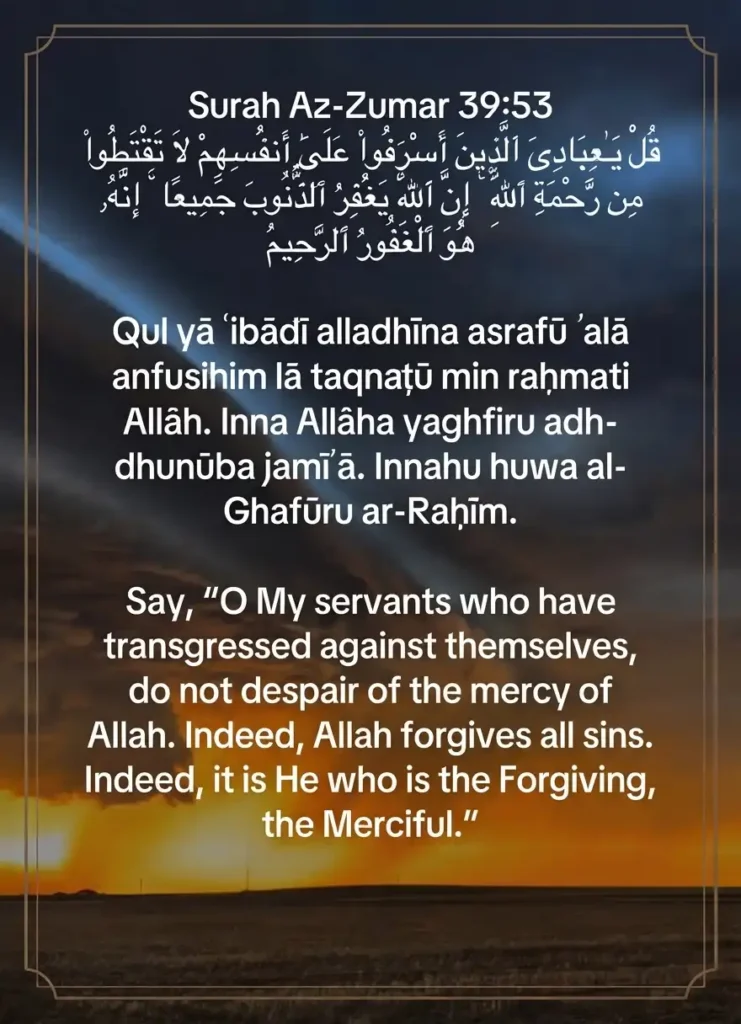
| Az-Zumar 39:53 | Allah tells even the most sinful person never to lose hope in His mercy, since He forgives all sins. | Read on Quran.com |
| Az-Zumar 39:10 | Those who remain patient through hardship will be rewarded without any limit or measure. | Read on Quran.com |
Transliteration for 39:53 begins: “Qul ya ‘ibadiya alladhina asrafu ‘ala anfusihim, la taqnatu min rahmatillah.” It’s often quoted precisely because it removes any excuse for giving up on repentance.
Hadith References
The mercy theme in Az-Zumar lines up closely with authentic hadith teachings on the same subject.
- Allah’s mercy overcoming His anger, recorded in Sahih al-Bukhari — the Prophet ﷺ said that when Allah created the creation, He wrote that His mercy predominates over His wrath.
- The same comforting truth, narrated in Sahih Muslim — a parallel narration confirming that Allah’s mercy excels His wrath toward His servants.
Suitable Study Resources
For anyone wanting to go deeper, these platforms are worth bookmarking:
| Resource | Best Used For |
| Islamic Teachings Forum | Community discussion and peer questions |
| IslamQA | Verified, fatwa-style answers from scholars |
| Quran.com | Verse-by-verse reading with audio recitation |
Also Read: Quran Read Pen With Multi Language Translation

Recommended Fiqh Reading
For readers who follow the Hanafi school and want structured background reading, two classic titles are commonly available in libraries and public archives as PDFs:
- Al-Hidayah by Burhan al-Din al-Marghinani
- Bahishti Zewar by Maulana Ashraf Ali Thanvi
Both cover foundational fiqh rulings in accessible language, without requiring a background in classical Arabic.
Also Read: The Complete Quran Word Frequency List – Quran Mualim 2025
Historical and Academic Background
According to Wikipedia’s overview of the chapter, Az-Zumar was revealed in the mid-Meccan period when persecution of believers had intensified sharply. For a broader academic view of the Quran’s structure and history, Britannica’s entry on the Quran is also a reliable reference point for students and researchers alike.
Learn Quran for Free
If reading Surah Az-Zumar sparked interest in learning proper Quran recitation, tajweed, or basic tafsir, free one-on-one guidance is available. Reach out directly:
- WhatsApp: +923017363500
- Email: [email protected]
Those who want Taweez, Naqash of Surah Az-Zumar Benefits , please send contact by email- [email protected]
Download Free Arabic Quran Majeed
Download Arabic Quran Majeed From Google Drive Link – ( Download)
No pressure, no cost — just a starting point for anyone serious about learning at their own pace.
Frequently Asked Questions
What does Surah Az-Zumar mean in English?
It roughly translates to “The Troops” or “The Groups,” referring to how people will be gathered in groups on Judgment Day, either toward Paradise or punishment.
How many verses are in Surah Az-Zumar?
It contains 75 verses, placed across Juz 23 and Juz 24 of the Quran, depending on the counting tradition used by different scholars.
Why did the Prophet recite this surah before sleeping?
Scholars suggest its themes of accountability, mercy, and reflection made it a fitting way to end the day with humility and remembrance of Allah.
Is Surah Az-Zumar Makkan or Madinan?
It’s a Makkan surah, revealed before the migration to Madinah, during a period of intense pressure and persecution against early Muslims.
What is the main lesson of Surah Az-Zumar?
Its core lesson is that sincere worship of Allah alone, combined with patience, opens the door to forgiveness no matter how serious past mistakes were.
Categories: PRAYER ,ALMS , SAWN & The Holy Quran, Quran Jaz 1- 114
Final Thoughts
Surah Az-Zumar isn’t just another chapter to recite quickly and move past. It’s a direct answer to doubt, guilt, and fear, wrapped in language built to comfort rather than condemn. Read it slowly, reflect on its verses, and let its message of mercy settle in — that’s where its real value shows up.
Recommended for You
- Surah Nuh Transliteration and Benefits
- Surah Al Ala Transliteration and Benefits
- Surah al Tariq Transliteration & Benefits
- Surah Al-Buruj Transliteration & Benefits
- Surah Insan Transliteration and Benefits
- Surah Abasa Transliteration and Benefits
- Surah Qaf Transliteration and Translation
- Surah Najm Transliteration and Translation
- Surah Shura Transliteration and Translation
- Surah Ghafir Transliteration and Translation
- Surah Jathiya Transliteration and Translation
- Surah Al Fath Transliteration and Translation
- Surah Hujurat Transliteration and Translation
- Surah Al Haqqah Transliteration and Benefits
- Surah Fussilat Transliteration and Translation
- Surah Al-Ahqaf Transliteration and Translation
- Surah Al-Hadid Transliteration and Translation
- Surah Al-Waqi’ah Transliteration and Translation
- Surah Ar-Rahman Transliteration and Translation
- Surah Az Zukhruf Transliteration and Translation
- Surah Ad-Dukhan Transliteration and Translation
- Surah Saff Transliteration, Meaning and Benefits
- Surah Jum’ah Transliteration, Meaning & Benefits
- Surah Hashr Transliteration meaning And Benefits
- Surah Al-Mujadilah Transliteration and Translation
- Surah Al-Mumtahanah Transliteration and Benefits
- Surah Adh-Dhariyat Transliteration and Translation