


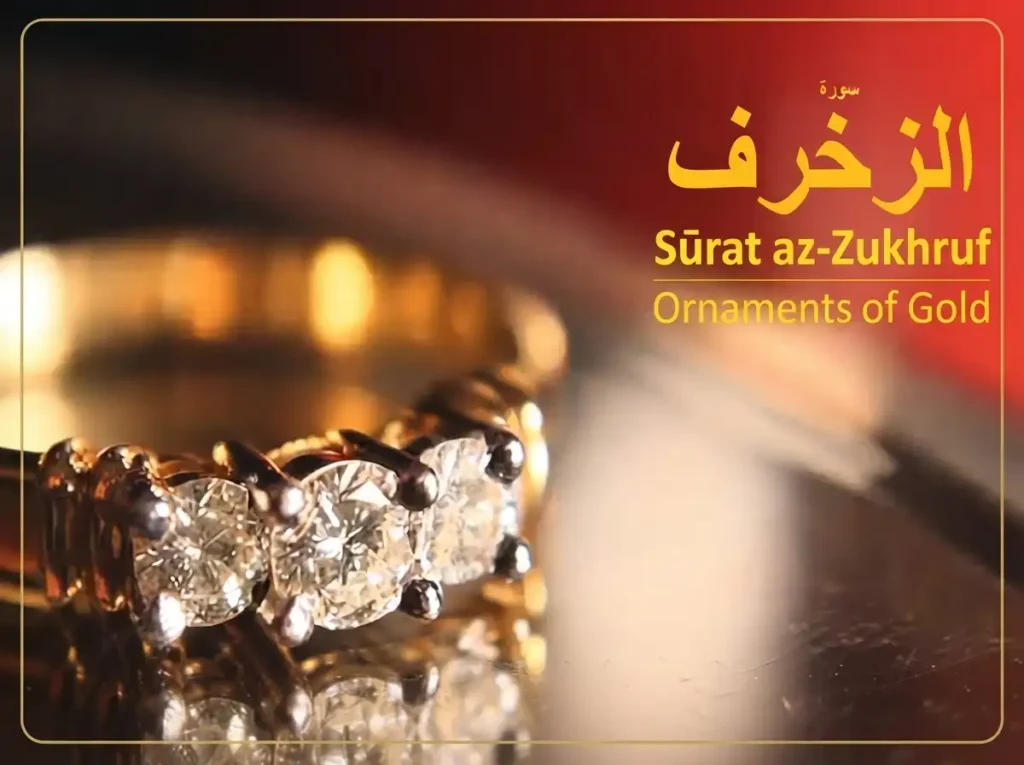
Surah Az-Zukhruf is the 43rd chapter of the Quran, a Meccan surah revealed during the early Islamic period. The name means “The Adornments” or “The Gold,” referring to the worldly ornaments that distract people from spiritual truth. If you’re seeking “Surah e Az-Zukhruf” understanding, exploring “Az-Zukhruf” meanings, reading “Surah Zukhruf,” finding “surah zukhruf in english,” or looking for “surah al zukhruf with urdu translation,” this comprehensive guide covers everything you need to know.
Why Surah Az-Zukhruf Matters Today
Idolatry isn’t just about statues and stone. It’s about worship—and we worship many things without realizing it. We worship wealth, status, celebrities, and tradition. We follow what our parents did without questioning. We accept what society says without thinking.
Surah Az-Zukhruf exposes this modern idolatry. It teaches us to question, to think, and to seek truth independently. This isn’t rebellion against parents—it’s about respectful truth-seeking.
The surah addresses three critical areas:
- False Authority: Questioning blind tradition and questioning claims without evidence
- True Monotheism: Understanding that only Allah deserves worship and submission
- Worldly Distraction: Recognizing how material adornments lead us away from spiritual purpose
Many people avoid these topics because they’re uncomfortable. But comfort isn’t the goal—truth is.
The Core Message: Beyond Ornaments and Traditions
Surah Az-Zukhruf opens by affirming the Quran’s divine origin. Then it immediately addresses those who accept their ancestors’ religion without question. “We found our fathers following a religion,” they say, “so we follow their footsteps.”
Also Read: The Clear Quran PDF Free Download
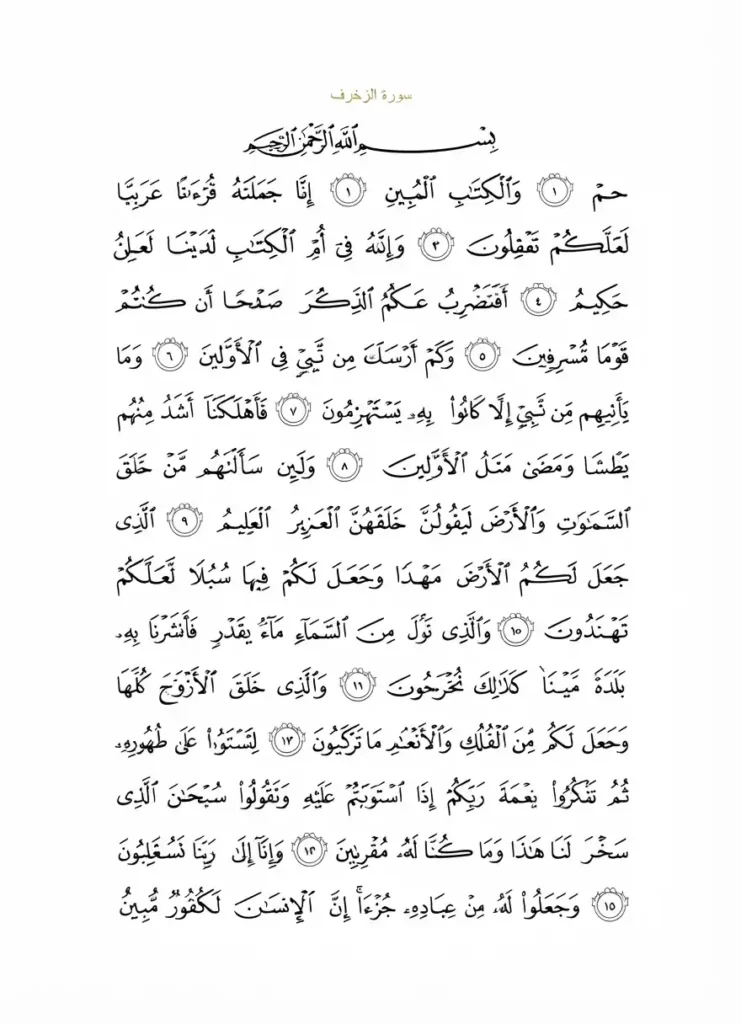
Surah Az-Zukhruf (The Gold Ornaments) — Surah 43
| # | Arabic | Transliteration | English Translation |
| 1 | حم | Hâ-Mĩm | Ha, Meem. |
| 2 | وَالْكِتَابِ الْمُبِينِ | Wa-al-kitābi al-mubīn | By the clear Book, |
| 3 | إِنَّا جَعَلْنَاهُ قُرْآنًا عَرَبِيًّا لَّعَلَّكُمْ تَعْقِلُونَ | Innā jaʿalnāhu Qurʾānan ʿArabiyyan laʿallakum taʿqilūn | Indeed, We have made it an Arabic Qur’an that you might understand. |
| 4 | وَإِنَّهُ فِي أُمِّ الْكِتَابِ لَدَيْنَا لَعَلِيٌّ حَكِيمٌ | Wa innahu fī ummi al-kitābi ladaynā la-ʿaliyyun ḥakīm | And indeed it is, in the Mother of the Book with Us, exalted and full of wisdom. |
| 5 | أَفَنَضْرِبُ عَنكُمُ الذِّكْرَ صَفْحًا أَن كُنتُمْ قَوْمًا مُّسْرِفِينَ | Afa-naḍribu ʿankumu adh-dhikra ṣafḥan an kuntum qawman musrifīn | Then should We turn the message away from you entirely because you are a transgressing people? |
| 6 | وَكَمْ أَرْسَلْنَا مِن نَّبِيٍّ فِي الْأَوَّلِينَ | Wa kam arsalnā min nabiyyin fī al-awwalīn | And how many a prophet did We send among the former peoples, |
| 7 | وَمَا يَأْتِيهِم مِّن نَّبِيٍّ إِلَّا كَانُوا بِهِ يَسْتَهْزِئُونَ | Wa mā yaʾtīhim min nabiyyin illā kānū bihi yastahziʾūn | But no prophet came to them except that they used to ridicule him. |
| 8 | فَأَهْلَكْنَا أَشَدَّ مِنْهُم بَطْشًا وَمَضَىٰ مَثَلُ الْأَوَّلِينَ | Fa-ahlaknā ashadda minhum baṭshan wa maḍā mathalu al-awwalīn | And We destroyed those stronger than them in power, and the example of the former peoples has already passed. |
| 9 | وَلَئِن سَأَلْتَهُم مَّنْ خَلَقَ السَّمَاوَاتِ وَالْأَرْضَ لَيَقُولُنَّ خَلَقَهُنَّ الْعَزِيزُ الْعَلِيمُ | Wa laʾin saʾaltahum man khalaqa as-samāwāti wa-al-arḍa la-yaqūlunna khalaqahunna al-ʿAzīzu al-ʿAlīm | And if you asked them who created the heavens and the earth, they would surely say, “The Exalted in Might, the Knowing, created them.” |
| 10 | الَّذِي جَعَلَ لَكُمُ الْأَرْضَ مَهْدًا وَجَعَلَ لَكُمْ فِيهَا سُبُلًا لَّعَلَّكُمْ تَهْتَدُونَ | Al-ladhī jaʿala lakumu al-arḍa mahdan wa jaʿala lakum fīhā subulan laʿallakum tahtadūn | He who made the earth a cradle for you and made for you upon it roads so that you might be guided, |
| 11 | وَالَّذِي نَزَّلَ مِنَ السَّمَاءِ مَاءً بِقَدَرٍ فَأَنشَرْنَا بِهِ بَلْدَةً مَّيْتًا كَذَٰلِكَ تُخْرَجُونَ | Wa-al-ladhī nazzala mina as-samāʾi māʾan bi-qadarin fa-ansharnā bihi baldatan maytan kadhālika tukhrajūn | And who sends down rain from the sky in a measured amount, and thereby We revive a dead land — thus will you [too] be brought forth — |
| 12 | وَالَّذِي خَلَقَ الْأَزْوَاجَ كُلَّهَا وَجَعَلَ لَكُم مِّنَ الْفُلْكِ وَالْأَنْعَامِ مَا تَرْكَبُونَ | Wa-al-ladhī khalaqa al-azwāja kullahā wa jaʿala lakum mina al-fulki wa-al-anʿāmi mā tarkabūn | And who created all the pairs and made for you ships and animals which you ride, |
| 13 | لِتَسْتَوُوا عَلَىٰ ظُهُورِهِ ثُمَّ تَذْكُرُوا نِعْمَةَ رَبِّكُمْ إِذَا اسْتَوَيْتُمْ عَلَيْهِ وَتَقُولُوا سُبْحَانَ الَّذِي سَخَّرَ لَنَا هَٰذَا وَمَا كُنَّا لَهُ مُقْرِنِينَ | Li-tastawū ʿalā ẓuhūrihi thumma tadhkurū niʿmata Rabbikum idhā istawaytum ʿalayhi wa taqūlū subḥāna al-ladhī sakhkhara lanā hādhā wa mā kunnā lahu muqrinīn | That you may settle yourselves upon their backs, then remember your Lord’s favor once you are settled, and say, “Exalted is He who subjected this to us, for we could not have done it ourselves. |
| 14 | وَإِنَّا إِلَىٰ رَبِّنَا لَمُنقَلِبُونَ | Wa innā ilā Rabbinā la-munqalibūn | And indeed, to our Lord we will return.” |
| 15 | وَجَعَلُوا لَهُ مِنْ عِبَادِهِ جُزْءًا إِنَّ الْإِنسَانَ لَكَفُورٌ مُّبِينٌ | Wa jaʿalū lahu min ʿibādihi juzʾan inna al-insāna la-kafūrun mubīn | Yet they have assigned to Him a portion from among His own servants. Indeed, man is clearly ungrateful. |
| 16 | أَمِ اتَّخَذَ مِمَّا يَخْلُقُ بَنَاتٍ وَأَصْفَاكُم بِالْبَنِينَ | Ami ittakhadha mimmā yakhluqu banātin wa aṣfākum bi-al-banīn | Or has He taken daughters out of what He creates and favored you with sons? |
| 17 | وَإِذَا بُشِّرَ أَحَدُهُم بِمَا ضَرَبَ لِلرَّحْمَٰنِ مَثَلًا ظَلَّ وَجْهُهُ مُسْوَدًّا وَهُوَ كَظِيمٌ | Wa idhā bushshira aḥaduhum bimā ḍaraba lir-Raḥmāni mathalan ẓalla wajhuhu muswaddan wa huwa kaẓīm | Yet when one of them is given news of that which he attributes to the Most Merciful [i.e., a daughter], his face turns dark and he is filled with grief. |
| 18 | أَوَمَن يُنَشَّأُ فِي الْحِلْيَةِ وَهُوَ فِي الْخِصَامِ غَيْرُ مُبِينٍ | Awaman yunashshaʾu fī al-ḥilyati wa huwa fī al-khiṣāmi ghayru mubīn | So is one raised amid ornaments, and unable to make his case clear in dispute, [attributed to Allah]? |
| 19 | وَجَعَلُوا الْمَلَائِكَةَ الَّذِينَ هُمْ عِبَادُ الرَّحْمَٰنِ إِنَاثًا أَشَهِدُوا خَلْقَهُمْ سَتُكْتَبُ شَهَادَتُهُمْ وَيُسْأَلُونَ | Wa jaʿalū al-malāʾikata al-ladhīna hum ʿibādu ar-Raḥmāni ināthan a-shahidū khalqahum sa-tuktabu shahādatuhum wa yusʾalūn | And they have made the angels, who are servants of the Most Merciful, females. Did they witness their creation? Their claim will be recorded, and they will be questioned. |
| 20 | وَقَالُوا لَوْ شَاءَ الرَّحْمَٰنُ مَا عَبَدْنَاهُم مَّا لَهُم بِذَٰلِكَ مِنْ عِلْمٍ إِنْ هُمْ إِلَّا يَخْرُصُونَ | Wa qālū law shāʾa ar-Raḥmānu mā ʿabadnāhum mā lahum bi-dhālika min ʿilmin in hum illā yakhruṣūn | And they say, “If the Most Merciful had willed, we would not have worshipped them.” They have no knowledge of that; they are only guessing. |
| 21 | أَمْ آتَيْنَاهُمْ كِتَابًا مِّن قَبْلِهِ فَهُم بِهِ مُسْتَمْسِكُونَ | Am ātaynāhum kitāban min qablihi fa-hum bihi mustamsikūn | Or have We given them a scripture before this to which they hold fast? |
| 22 | بَلْ قَالُوا إِنَّا وَجَدْنَا آبَاءَنَا عَلَىٰ أُمَّةٍ وَإِنَّا عَلَىٰ آثَارِهِم مُّهْتَدُونَ | Bal qālū innā wajadnā ābāʾanā ʿalā ummatin wa innā ʿalā āthārihim muhtadūn | Rather, they say, “We found our forefathers upon a way, and we are guided by their footsteps.” |
| 23 | وَكَذَٰلِكَ مَا أَرْسَلْنَا مِن قَبْلِكَ فِي قَرْيَةٍ مِّن نَّذِيرٍ إِلَّا قَالَ مُتْرَفُوهَا إِنَّا وَجَدْنَا آبَاءَنَا عَلَىٰ أُمَّةٍ وَإِنَّا عَلَىٰ آثَارِهِم مُّقْتَدُونَ | Wa kadhālika mā arsalnā min qablika fī qaryatin min nadhīrin illā qāla mutrafūhā innā wajadnā ābāʾanā ʿalā ummatin wa innā ʿalā āthārihim muqtadūn | And so it was: whenever We sent a warner before you into a town, its wealthy elite said the same, “We found our forefathers upon a way, and we are following in their footsteps.” |
| 24 | قَالَ أَوَلَوْ جِئْتُكُم بِأَهْدَىٰ مِمَّا وَجَدتُّمْ عَلَيْهِ آبَاءَكُمْ قَالُوا إِنَّا بِمَا أُرْسِلْتُم بِهِ كَافِرُونَ | Qāla awalaw jiʾtukum bi-ahdā mimmā wajadtum ʿalayhi ābāʾakum qālū innā bimā ursiltum bihi kāfirūn | Each [warner] said, “Even if I brought you better guidance than what you found your forefathers upon?” They said, “We reject what you have been sent with.” |
| 25 | فَانتَقَمْنَا مِنْهُمْ فَانظُرْ كَيْفَ كَانَ عَاقِبَةُ الْمُكَذِّبِينَ | Fa-intaqamnā minhum fa-unẓur kayfa kāna ʿāqibatu al-mukadhdhibīn | So We took retribution from them. See, then, how was the end of the deniers. |
| 26 | وَإِذْ قَالَ إِبْرَاهِيمُ لِأَبِيهِ وَقَوْمِهِ إِنَّنِي بَرَاءٌ مِّمَّا تَعْبُدُونَ | Wa idh qāla Ibrāhīmu li-abīhi wa qawmihi innanī barāʾun mimmā taʿbudūn | And [mention] when Abraham said to his father and his people, “Indeed, I am free of what you worship, |
| 27 | إِلَّا الَّذِي فَطَرَنِي فَإِنَّهُ سَيَهْدِينِ | Illā al-ladhī faṭaranī fa-innahu sa-yahdīn | Except Him who created me; indeed, He will guide me.” |
| 28 | وَجَعَلَهَا كَلِمَةً بَاقِيَةً فِي عَقِبِهِ لَعَلَّهُمْ يَرْجِعُونَ | Wa jaʿalahā kalimatan bāqiyatan fī ʿaqibihi laʿallahum yarjiʿūn | And he made it a lasting word among his descendants, so that they might return [to it]. |
| 29 | بَلْ مَتَّعْتُ هَٰؤُلَاءِ وَآبَاءَهُمْ حَتَّىٰ جَاءَهُمُ الْحَقُّ وَرَسُولٌ مُّبِينٌ | Bal mattaʿtu hāʾulāʾi wa ābāʾahum ḥattā jāʾahumu al-ḥaqqu wa rasūlun mubīn | But rather, I gave these people and their forefathers enjoyment [of life] until the truth came to them, along with a clear messenger. |
| 30 | وَلَمَّا جَاءَهُمُ الْحَقُّ قَالُوا هَٰذَا سِحْرٌ وَإِنَّا بِهِ كَافِرُونَ | Wa lammā jāʾahumu al-ḥaqqu qālū hādhā siḥrun wa innā bihi kāfirūn | But when the truth came to them, they said, “This is magic, and we reject it.” |
| 31 | وَقَالُوا لَوْلَا نُزِّلَ هَٰذَا الْقُرْآنُ عَلَىٰ رَجُلٍ مِّنَ الْقَرْيَتَيْنِ عَظِيمٍ | Wa qālū lawlā nuzzila hādhā al-Qurʾānu ʿalā rajulin mina al-qaryatayni ʿaẓīm | And they said, “Why was this Qur’an not sent down to a great man from [one of] the two cities?” |
| 32 | أَهُمْ يَقْسِمُونَ رَحْمَتَ رَبِّكَ نَحْنُ قَسَمْنَا بَيْنَهُم مَّعِيشَتَهُمْ فِي الْحَيَاةِ الدُّنْيَا وَرَفَعْنَا بَعْضَهُمْ فَوْقَ بَعْضٍ دَرَجَاتٍ لِّيَتَّخِذَ بَعْضُهُم بَعْضًا سُخْرِيًّا وَرَحْمَتُ رَبِّكَ خَيْرٌ مِّمَّا يَجْمَعُونَ | A-hum yaqsimūna raḥmata Rabbika naḥnu qasamnā baynahum maʿīshatahum fī al-ḥayāti ad-dunyā wa rafaʿnā baʿḍahum fawqa baʿḍin darajātin li-yattakhidha baʿḍuhum baʿḍan sukhriyyan wa raḥmatu Rabbika khayrun mimmā yajmaʿūn | Is it they who distribute your Lord’s mercy? It is We who apportion their livelihood in this worldly life and raise some of them above others in rank, so that some may take others into service. But your Lord’s mercy is better than what they accumulate. |
| 33 | وَلَوْلَا أَن يَكُونَ النَّاسُ أُمَّةً وَاحِدَةً لَجَعَلْنَا لِمَن يَكْفُرُ بِالرَّحْمَٰنِ لِبُيُوتِهِمْ سُقُفًا مِّن فَضَّةٍ وَمَعَارِجَ عَلَيْهَا يَظْهَرُونَ | Wa lawlā an yakūna an-nāsu ummatan wāḥidatan la-jaʿalnā li-man yakfuru bir-Raḥmāni li-buyūtihim suqufan min faḍḍatin wa maʿārija ʿalayhā yaẓharūn | And were it not that all people might become one [disbelieving] community, We would have given those who disbelieve in the Most Merciful houses with silver roofs and stairways to ascend, |
| 34 | وَلِبُيُوتِهِمْ أَبْوَابًا وَسُرُرًا عَلَيْهَا يَتَّكِئُونَ | Wa li-buyūtihim abwāban wa sururan ʿalayhā yattakiʾūn | And doors and couches [of silver] for their houses to recline upon, |
| 35 | وَزُخْرُفًا وَإِن كُلُّ ذَٰلِكَ لَمَّا مَتَاعُ الْحَيَاةِ الدُّنْيَا وَالْآخِرَةُ عِندَ رَبِّكَ لِلْمُتَّقِينَ | Wa zukhrufan wa in kullu dhālika lammā matāʿu al-ḥayāti ad-dunyā wa-al-ākhiratu ʿinda Rabbika lil-muttaqīn | And gold ornaments — but all of that is only the enjoyment of worldly life, while the Hereafter with your Lord is for the righteous. |
| 36 | وَمَن يَعْشُ عَن ذِكْرِ الرَّحْمَٰنِ نُقَيِّضْ لَهُ شَيْطَانًا فَهُوَ لَهُ قَرِينٌ | Wa man yaʿshu ʿan dhikri ar-Raḥmāni nuqayyiḍ lahu shayṭānan fa-huwa lahu qarīn | And whoever turns a blind eye to the remembrance of the Most Merciful — We appoint for him a devil who becomes his companion. |
| 37 | وَإِنَّهُمْ لَيَصُدُّونَهُمْ عَنِ السَّبِيلِ وَيَحْسَبُونَ أَنَّهُم مُّهْتَدُونَ | Wa innahum la-yaṣuddūnahum ʿani as-sabīli wa yaḥsabūna annahum muhtadūn | And indeed, they hinder them from the path while they think they are guided, |
| 38 | حَتَّىٰ إِذَا جَاءَنَا قَالَ يَا لَيْتَ بَيْنِي وَبَيْنَكَ بُعْدَ الْمَشْرِقَيْنِ فَبِئْسَ الْقَرِينُ | Ḥattā idhā jāʾanā qāla yā layta baynī wa baynaka buʿda al-mashriqayni fa-biʾsa al-qarīn | Until, when he comes to Us, he says [to his companion], “If only there were between me and you the distance of the two easts!” What a wretched companion. |
| 39 | وَلَن يَنفَعَكُمُ الْيَوْمَ إِذ ظَّلَمْتُمْ أَنَّكُمْ فِي الْعَذَابِ مُشْتَرِكُونَ | Wa lan yanfaʿakumu al-yawma idh ẓalamtum annakum fī al-ʿadhābi mushtarikūn | And it will not benefit you that Day, since you wronged, that you are sharing in the punishment. |
| 40 | أَفَأَنتَ تُسْمِعُ الصُّمَّ أَوْ تَهْدِي الْعُمْيَ وَمَن كَانَ فِي ضَلَالٍ مُّبِينٍ | Afa-anta tusmiʿu aṣ-ṣumma aw tahdī al-ʿumya wa man kāna fī ḍalālin mubīn | So can you make the deaf hear, or guide the blind and the one in manifest error? |
| 41 | فَإِمَّا نَذْهَبَنَّ بِكَ فَإِنَّا مِنْهُم مُّنتَقِمُونَ | Fa-immā nadhhabanna bika fa-innā minhum muntaqimūn | And whether We take you away [in death], We will surely take retribution from them, |
| 42 | أَوْ نُرِيَنَّكَ الَّذِي وَعَدْنَاهُمْ فَإِنَّا عَلَيْهِم مُّقْتَدِرُونَ | Aw nuriyannaka al-ladhī waʿadnāhum fa-innā ʿalayhim muqtadirūn | Or whether We show you what We have promised them — for indeed, We have full power over them. |
| 43 | فَاسْتَمْسِكْ بِالَّذِي أُوحِيَ إِلَيْكَ إِنَّكَ عَلَىٰ صِرَاطٍ مُّسْتَقِيمٍ | Fa-istamsik bi-al-ladhī ūḥiya ilayka innaka ʿalā ṣirāṭin mustaqīm | So hold firmly to what has been revealed to you; indeed, you are on a straight path. |
| 44 | وَإِنَّهُ لَذِكْرٌ لَّكَ وَلِقَوْمِكَ وَسَوْفَ تُسْأَلُونَ | Wa innahu la-dhikrun laka wa li-qawmika wa sawfa tusʾalūn | And indeed, it is a reminder for you and your people, and you will [all] be questioned. |
| 45 | وَاسْأَلْ مَنْ أَرْسَلْنَا مِن قَبْلِكَ مِن رُّسُلِنَا أَجَعَلْنَا مِن دُونِ الرَّحْمَٰنِ آلِهَةً يُعْبَدُونَ | Wa isʾal man arsalnā min qablika min rusulinā a-jaʿalnā min dūni ar-Raḥmāni ālihatan yuʿbadūn | And ask those We sent before you of Our messengers: did We ever appoint gods to be worshipped besides the Most Merciful? |
| 46 | وَلَقَدْ أَرْسَلْنَا مُوسَىٰ بِآيَاتِنَا إِلَىٰ فِرْعَوْنَ وَمَلَئِهِ فَقَالَ إِنِّي رَسُولُ رَبِّ الْعَالَمِينَ | Wa laqad arsalnā Mūsā bi-āyātinā ilā Firʿawna wa malaʾihi fa-qāla innī rasūlu Rabbi al-ʿālamīn | And We certainly sent Moses with Our signs to Pharaoh and his chiefs, and he said, “Indeed, I am the messenger of the Lord of the worlds.” |
| 47 | فَلَمَّا جَاءَهُم بِآيَاتِنَا إِذَا هُم مِّنْهَا يَضْحَكُونَ | Fa-lammā jāʾahum bi-āyātinā idhā hum minhā yaḍḥakūn | But when he brought them Our signs, they laughed at them at once. |
| 48 | وَمَا نُرِيهِم مِّنْ آيَةٍ إِلَّا هِيَ أَكْبَرُ مِنْ أُخْتِهَا وَأَخَذْنَاهُم بِالْعَذَابِ لَعَلَّهُمْ يَرْجِعُونَ | Wa mā nurīhim min āyatin illā hiya akbaru min ukhtihā wa akhadhnāhum bi-al-ʿadhābi laʿallahum yarjiʿūn | And We showed them no sign except that it was greater than the one before it, and We seized them with punishment so that they might return. |
| 49 | وَقَالُوا يَا أَيُّهَ السَّاحِرُ ادْعُ لَنَا رَبَّكَ بِمَا عَهِدَ عِندَكَ إِنَّنَا لَمُهْتَدُونَ | Wa qālū yā ayyuha as-sāḥiru udʿu lanā Rabbaka bimā ʿahida ʿindaka innanā la-muhtadūn | And they said, “O magician, call upon your Lord for us by the covenant He has made with you; indeed, we will be guided.” |
| 50 | فَلَمَّا كَشَفْنَا عَنْهُمُ الْعَذَابَ إِذَا هُمْ يَنكُثُونَ | Fa-lammā kashafnā ʿanhumu al-ʿadhāba idhā hum yankuthūn | But when We lifted the punishment from them, at once they broke their word. |
| 51 | وَنَادَىٰ فِرْعَوْنُ فِي قَوْمِهِ قَالَ يَا قَوْمِ أَلَيْسَ لِي مُلْكُ مِصْرَ وَهَٰذِهِ الْأَنْهَارُ تَجْرِي مِن تَحْتِي أَفَلَا تُبْصِرُونَ | Wa nādā Firʿawnu fī qawmihi qāla yā qawmi a-laysa lī mulku Miṣra wa hādhihi al-anhāru tajrī min taḥtī afa-lā tubṣirūn | And Pharaoh called out among his people, saying, “O my people, does not the kingdom of Egypt belong to me, with these rivers flowing beneath me? Do you not see? |
| 52 | أَمْ أَنَا خَيْرٌ مِّنْ هَٰذَا الَّذِي هُوَ مَهِينٌ وَلَا يَكَادُ يُبِينُ | Am anā khayrun min hādhā al-ladhī huwa mahīnun wa lā yakādu yubīn | Am I not better than this one, who is insignificant and can hardly express himself? |
| 53 | فَلَوْلَا أُلْقِيَ عَلَيْهِ أَسْوِرَةٌ مِّن ذَهَبٍ أَوْ جَاءَ مَعَهُ الْمَلَائِكَةُ مُقْتَرِنِينَ | Fa-lawlā ulqiya ʿalayhi aswiratun min dhahabin aw jāʾa maʿahu al-malāʾikatu muqtarinīn | Then why have no bracelets of gold been placed on him, or angels come accompanying him?” |
| 54 | فَاسْتَخَفَّ قَوْمَهُ فَأَطَاعُوهُ إِنَّهُمْ كَانُوا قَوْمًا فَاسِقِينَ | Fa-istakhaffa qawmahu fa-aṭāʿūhu innahum kānū qawman fāsiqīn | So he deceived his people, and they obeyed him; indeed, they were a defiantly disobedient people. |
| 55 | فَلَمَّا آسَفُونَا انتَقَمْنَا مِنْهُمْ فَأَغْرَقْنَاهُمْ أَجْمَعِينَ | Fa-lammā āsafūnā intaqamnā minhum fa-aghraqnāhum ajmaʿīn | So when they angered Us, We took retribution from them and drowned them all. |
| 56 | فَجَعَلْنَاهُمْ سَلَفًا وَمَثَلًا لِّلْآخِرِينَ | Fa-jaʿalnāhum salafan wa mathalan lil-ākhirīn | And We made them a precedent and an example for later generations. |
| 57 | وَلَمَّا ضُرِبَ ابْنُ مَرْيَمَ مَثَلًا إِذَا قَوْمُكَ مِنْهُ يَصِدُّونَ | Wa lammā ḍuriba ibnu Maryama mathalan idhā qawmuka minhu yaṣiddūn | And when the son of Mary was cited as an example, your people at once laughed loudly, |
| 58 | وَقَالُوا أَآلِهَتُنَا خَيْرٌ أَمْ هُوَ مَا ضَرَبُوهُ لَكَ إِلَّا جَدَلًا بَلْ هُمْ قَوْمٌ خَصِمُونَ | Wa qālū a-ālihatunā khayrun am huwa mā ḍarabūhu laka illā jadalan bal hum qawmun khaṣimūn | And said, “Are our gods better, or is he?” They raise this only to argue; they are simply a contentious people. |
| 59 | إِنْ هُوَ إِلَّا عَبْدٌ أَنْعَمْنَا عَلَيْهِ وَجَعَلْنَاهُ مَثَلًا لِّبَنِي إِسْرَائِيلَ | In huwa illā ʿabdun anʿamnā ʿalayhi wa jaʿalnāhu mathalan li-Banī Isrāʾīl | He was only a servant whom We favored, and We made him an example for the Children of Israel. |
| 60 | وَلَوْ نَشَاءُ لَجَعَلْنَا مِنكُم مَّلَائِكَةً فِي الْأَرْضِ يَخْلُفُونَ | Wa law nashāʾu la-jaʿalnā minkum malāʾikatan fī al-arḍi yakhlufūn | And if We willed, We could make angels succeed one another on the earth in your place. |
| 61 | وَإِنَّهُ لَعِلْمٌ لِّلسَّاعَةِ فَلَا تَمْتَرُنَّ بِهَا وَاتَّبِعُونِ هَٰذَا صِرَاطٌ مُّسْتَقِيمٌ | Wa innahu la-ʿilmun lis-sāʿati fa-lā tamtarunna bihā wa-ittabiʿūni hādhā ṣirāṭun mustaqīm | And indeed, he [Jesus] is a sign of the Hour, so have no doubt about it, and follow Me. This is a straight path. |
| 62 | وَلَا يَصُدَّنَّكُمُ الشَّيْطَانُ إِنَّهُ لَكُمْ عَدُوٌّ مُّبِينٌ | Wa lā yaṣuddannakumu ash-shayṭānu innahu lakum ʿaduwwun mubīn | And do not let Satan avert you; indeed, he is a clear enemy to you. |
| 63 | وَلَمَّا جَاءَ عِيسَىٰ بِالْبَيِّنَاتِ قَالَ قَدْ جِئْتُكُم بِالْحِكْمَةِ وَلِأُبَيِّنَ لَكُم بَعْضَ الَّذِي تَخْتَلِفُونَ فِيهِ فَاتَّقُوا اللَّهَ وَأَطِيعُونِ | Wa lammā jāʾa ʿĪsā bi-al-bayyināti qāla qad jiʾtukum bi-al-ḥikmati wa li-ubayyina lakum baʿḍa al-ladhī takhtalifūna fīhi fa-ittaqū Allāha wa aṭīʿūn | And when Jesus came with clear proofs, he said, “I have come to you with wisdom and to make clear to you some of what you differ over. So fear Allah and obey me. |
| 64 | إِنَّ اللَّهَ هُوَ رَبِّي وَرَبُّكُمْ فَاعْبُدُوهُ هَٰذَا صِرَاطٌ مُّسْتَقِيمٌ | Inna Allāha huwa Rabbī wa Rabbukum fa-uʿbudūhu hādhā ṣirāṭun mustaqīm | Indeed, Allah is my Lord and your Lord, so worship Him. This is a straight path.” |
| 65 | فَاخْتَلَفَ الْأَحْزَابُ مِن بَيْنِهِمْ فَوَيْلٌ لِّلَّذِينَ ظَلَمُوا مِنْ عَذَابِ يَوْمٍ أَلِيمٍ | Fa-ikhtalafa al-aḥzābu min baynihim fa-waylun lil-ladhīna ẓalamū min ʿadhābi yawmin alīm | But the factions differed among themselves, so woe to those who wronged, from the punishment of a painful Day. |
| 66 | هَلْ يَنظُرُونَ إِلَّا السَّاعَةَ أَن تَأْتِيَهُم بَغْتَةً وَهُمْ لَا يَشْعُرُونَ | Hal yanẓurūna illā as-sāʿata an taʾtiyahum baghtatan wa hum lā yashʿurūn | Are they waiting for anything but the Hour to come upon them suddenly, while they do not perceive it? |
| 67 | الْأَخِلَّاءُ يَوْمَئِذٍ بَعْضُهُمْ لِبَعْضٍ عَدُوٌّ إِلَّا الْمُتَّقِينَ | Al-akhillāʾu yawmaʾidhin baʿḍuhum li-baʿḍin ʿaduwwun illā al-muttaqīn | Close friends, that Day, will be enemies to one another, except for the righteous, |
| 68 | يَا عِبَادِ لَا خَوْفٌ عَلَيْكُمُ الْيَوْمَ وَلَا أَنتُمْ تَحْزَنُونَ | Yā ʿibādi lā khawfun ʿalaykumu al-yawma wa lā antum taḥzanūn | [To whom it will be said], “O My servants, no fear will there be for you today, nor will you grieve — |
| 69 | الَّذِينَ آمَنُوا بِآيَاتِنَا وَكَانُوا مُسْلِمِينَ | Al-ladhīna āmanū bi-āyātinā wa kānū muslimīn | [You] who believed in Our verses and were submitting [Muslims]. |
| 70 | ادْخُلُوا الْجَنَّةَ أَنتُمْ وَأَزْوَاجُكُمْ تُحْبَرُونَ | Udkhulū al-jannata antum wa azwājukum tuḥbarūn | Enter Paradise, you and your spouses, in joy.” |
| 71 | يُطَافُ عَلَيْهِم بِصِحَافٍ مِّن ذَهَبٍ وَأَكْوَابٍ وَفِيهَا مَا تَشْتَهِيهِ الْأَنفُسُ وَتَلَذُّ الْأَعْيُنُ وَأَنتُمْ فِيهَا خَالِدُونَ | Yuṭāfu ʿalayhim bi-ṣiḥāfin min dhahabin wa akwābin wa fīhā mā tashtahīhi al-anfusu wa taladhdhu al-aʿyunu wa antum fīhā khālidūn | There will be circulated among them plates and cups of gold, and therein is whatever the souls desire and the eyes delight in, and you will abide therein forever. |
| 72 | وَتِلْكَ الْجَنَّةُ الَّتِي أُورِثْتُمُوهَا بِمَا كُنتُمْ تَعْمَلُونَ | Wa tilka al-jannatu allatī ūrithtumūhā bimā kuntum taʿmalūn | And that is the Paradise which you are made to inherit for what you used to do. |
| 73 | لَكُمْ فِيهَا فَاكِهَةٌ كَثِيرَةٌ مِّنْهَا تَأْكُلُونَ | Lakum fīhā fākihatun kathīratun minhā taʾkulūn | For you therein is abundant fruit, from which you will eat. |
| 74 | إِنَّ الْمُجْرِمِينَ فِي عَذَابِ جَهَنَّمَ خَالِدُونَ | Inna al-mujrimīna fī ʿadhābi jahannama khālidūn | Indeed, the criminals will abide forever in the punishment of Hell. |
| 75 | لَا يُفَتَّرُ عَنْهُمْ وَهُمْ فِيهِ مُبْلِسُونَ | Lā yufattaru ʿanhum wa hum fīhi mublisūn | It will not be lightened for them, and they will be in despair therein. |
| 76 | وَمَا ظَلَمْنَاهُمْ وَلَٰكِن كَانُوا هُمُ الظَّالِمِينَ | Wa mā ẓalamnāhum wa lākin kānū humu aẓ-ẓālimīn | And We did not wrong them, but it was they who were the wrongdoers. |
| 77 | وَنَادَوْا يَا مَالِكُ لِيَقْضِ عَلَيْنَا رَبُّكَ قَالَ إِنَّكُم مَّاكِثُونَ | Wa nādaw yā Māliku li-yaqḍi ʿalaynā Rabbuka qāla innakum mākithūn | And they will call, “O Malik, let your Lord finish us off!” He will say, “Indeed, you will remain.” |
| 78 | لَقَدْ جِئْنَاكُم بِالْحَقِّ وَلَٰكِنَّ أَكْثَرَكُمْ لِلْحَقِّ كَارِهُونَ | Laqad jiʾnākum bi-al-ḥaqqi wa lākinna aktharakum lil-ḥaqqi kārihūn | We had certainly brought you the truth, but most of you were averse to the truth. |
| 79 | أَمْ أَبْرَمُوا أَمْرًا فَإِنَّا مُبْرِمُونَ | Am abramū amran fa-innā mubrimūn | Or have they devised some plan? Then indeed, We too are planning. |
| 80 | أَمْ يَحْسَبُونَ أَنَّا لَا نَسْمَعُ سِرَّهُمْ وَنَجْوَاهُم بَلَىٰ وَرُسُلُنَا لَدَيْهِمْ يَكْتُبُونَ | Am yaḥsabūna annā lā nasmaʿu sirrahum wa najwāhum balā wa rusulunā ladayhim yaktubūn | Or do they think that We do not hear their secrets and private talks? Yes indeed, and Our messengers are with them, recording. |
| 81 | قُلْ إِن كَانَ لِلرَّحْمَٰنِ وَلَدٌ فَأَنَا أَوَّلُ الْعَابِدِينَ | Qul in kāna lir-Raḥmāni waladun fa-anā awwalu al-ʿābidīn | Say, “If the Most Merciful had a son, I would be the first of those who worship [such a son].” |
| 82 | سُبْحَانَ رَبِّ السَّمَاوَاتِ وَالْأَرْضِ رَبِّ الْعَرْشِ عَمَّا يَصِفُونَ | Subḥāna Rabbi as-samāwāti wa-al-arḍi Rabbi al-ʿarshi ʿammā yaṣifūn | Exalted is the Lord of the heavens and the earth, Lord of the Throne, above what they describe. |
| 83 | فَذَرْهُمْ يَخُوضُوا وَيَلْعَبُوا حَتَّىٰ يُلَاقُوا يَوْمَهُمُ الَّذِي يُوعَدُونَ | Fa-dharhum yakhūḍū wa yalʿabū ḥattā yulāqū yawmahumu al-ladhī yūʿadūn | So leave them to indulge in falsehood and play until they meet their Day which they are promised. |
| 84 | وَهُوَ الَّذِي فِي السَّمَاءِ إِلَٰهٌ وَفِي الْأَرْضِ إِلَٰهٌ وَهُوَ الْحَكِيمُ الْعَلِيمُ | Wa huwa al-ladhī fī as-samāʾi ilāhun wa fī al-arḍi ilāhun wa huwa al-Ḥakīmu al-ʿAlīm | And it is He who is God in the heaven, and God on the earth. And He is the Wise, the Knowing. |
| 85 | وَتَبَارَكَ الَّذِي لَهُ مُلْكُ السَّمَاوَاتِ وَالْأَرْضِ وَمَا بَيْنَهُمَا وَعِندَهُ عِلْمُ السَّاعَةِ وَإِلَيْهِ تُرْجَعُونَ | Wa tabāraka al-ladhī lahu mulku as-samāwāti wa-al-arḍi wa mā baynahumā wa ʿindahu ʿilmu as-sāʿati wa ilayhi turjaʿūn | And blessed is He to whom belongs the dominion of the heavens and the earth and everything between them, and with Him is knowledge of the Hour, and to Him you will be returned. |
| 86 | وَلَا يَمْلِكُ الَّذِينَ يَدْعُونَ مِن دُونِهِ الشَّفَاعَةَ إِلَّا مَن شَهِدَ بِالْحَقِّ وَهُمْ يَعْلَمُونَ | Wa lā yamliku al-ladhīna yadʿūna min dūnihi ash-shafāʿata illā man shahida bi-al-ḥaqqi wa hum yaʿlamūn | And those they invoke besides Him have no power of intercession, except those who bear witness to the truth, knowingly. |
| 87 | وَلَئِن سَأَلْتَهُم مَّنْ خَلَقَهُمْ لَيَقُولُنَّ اللَّهُ فَأَنَّىٰ يُؤْفَكُونَ | Wa laʾin saʾaltahum man khalaqahum la-yaqūlunna Allāhu fa-annā yuʾfakūn | And if you asked them who created them, they would surely say, “Allah.” So how are they turned away [from the truth]? |
| 88 | وَقِيلِهِ يَا رَبِّ إِنَّ هَٰؤُلَاءِ قَوْمٌ لَّا يُؤْمِنُونَ | Wa qīlihi yā Rabbi inna hāʾulāʾi qawmun lā yuʾminūn | And [Allah has knowledge of] his [the Prophet’s] saying, “O my Lord, indeed these are a people who do not believe.” |
| 89 | فَاصْفَحْ عَنْهُمْ وَقُلْ سَلَامٌ فَسَوْفَ يَعْلَمُونَ | Fa-iṣfaḥ ʿanhum wa qul salāmun fa-sawfa yaʿlamūn | So turn away from them and say, “Peace.” And they are going to know. |
Also Read: A List of 114 Quran Surahs in The Holy Quran

Key Benefits of Understanding Surah Az-Zukhruf
Studying this surah produces profound spiritual and intellectual awakening.
Independence of Thought: You learn to question received wisdom and seek truth yourself. This doesn’t mean disrespecting elders—it means respectfully seeking understanding.
Clarity on Worship: You realize that worship isn’t confined to formal prayer. Whatever you devote your life to, whatever you prioritize, is what you truly worship. This creates accountability.
Resistance to Peer Pressure: The surah teaches courage to stand against cultural norms when they contradict truth. You become less swayed by what others think.
Stronger Faith Foundation: Your belief isn’t inherited or cultural—it’s personal and examined. This makes it unshakeable.
Recognition of Manipulation: The surah reveals how false deities are propped up by false narratives. You become alert to propaganda and misinformation.
True Freedom: Paradoxically, absolute submission to Allah alone brings complete freedom from all other masters.
Understanding the Debate in Surah Az-Zukhruf
A significant portion of this surah presents a debate between believers and those attached to false worship. The believers present rational arguments. The disbelievers respond with emotional attachment and cultural pride.
Notice the pattern: rational argument meets emotional resistance. Truth meets pride. Evidence meets tradition. This debate continues today. When you present logical Islamic arguments, some respond with “This is what my family practices” or “Our culture has always been this way.”
The surah validates this struggle. You’re not alone in facing cultural resistance to truth. Prophets faced it. Early Muslims faced it. You will too.
But the surah also offers hope: eventually, truth prevails. Not always in your lifetime, but in the grand scheme. Allah’s plan always comes to fruition.
Also Read: Quran Filetype PDF Free Download
Most Relevant Quranic Verses in Surah Az-Zukhruf
Verse 23-24: Questioning False Deities
Surah Az-Zukhruf 43:23-24 – “And similarly, We did not send before you any warner to a city except that its luxurious people said, ‘Indeed, we found our fathers upon a religion, and we, in their footsteps, are following.'”
This verse captures the universal human tendency toward blind tradition. It validates your experience when facing cultural resistance to Islamic truth.
Verse 87: The Declaration of Monotheism
Surah Az-Zukhruf 43:87 – “And if you ask them, ‘Who created them?’ They will surely say, ‘Allah.’ So how are they deluded?”
This verse is remarkable. Even those who worship false gods acknowledge that Allah created everything. Yet they don’t worship Him alone. This exposes the illogical nature of idolatry and multiple deity worship.
Hadith References on Monotheism and Critical Thinking
Hadith 1: Seeking Knowledge Over Blind Following
Sunan an-Nasa’i 5:4766 – The Prophet Muhammad (peace be upon him) said: “Whoever is guided by Allah, no one can lead them astray. Whoever is led astray by Allah, no one can guide them.” This hadith emphasizes personal accountability. You can’t hide behind “my parents taught me this.” Your faith is your responsibility.
Hadith 2: Truth Over Tradition
Sunan Ibn Majah 1:224 – The Prophet (peace be upon him) said: “The best of generations is my generation, then those who follow them, then those who follow them.” This doesn’t mean blindly copying ancestors. It means following their righteousness, not their mistakes.
Categories: PRAYER ,ALMS , SAWN & The Holy Quran, Quran Jaz 1- 114
Learning Resources and Classical Scholarship
Deepen your understanding with these classical Hanafi texts:
- Badai’ as-Sanai’ (Innovations of Jurisprudence) by Al-Kasani – A comprehensive Hanafi legal reference
- Kitab an-Nihayah (The End) by Al-Marghinani – Commentary on Islamic jurisprudence
For contemporary exploration, explore this helpful resource:
Monotheism Across Cultures: An Islamic Perspective – A thoughtful examination of Islamic belief systems and cultural differences
Trusted Islamic Learning Communities
Strengthen your understanding through these reliable platforms:
- IslamQA Scholarly Answers – Get authoritative answers on Islamic questions
- Quran Mualim Forum – Connect with Quranic scholars and learners worldwide
Quick Reference: Surah Az-Zukhruf Essentials
| Aspect | Details |
| Surah Number | 43rd Chapter of the Quran |
| Revelation Period | Mecca (early Islamic period) |
| Number of Verses | 89 verses |
| Main Theme | Rejecting false deities and idolatry |
| Primary Message | True monotheism vs blind tradition |
| Key Focus | Rational argument against polytheism |
Practical Implementation: A 4-Week Challenge
Week 1 – Examine Your Traditions: Which beliefs or practices do you follow simply because “that’s how it’s always been”? List them. Ask yourself: Do I actually agree with these? Are they based on Islamic truth or cultural comfort?
Week 2 – Question Wisely: Respectfully ask elders why they practice certain things. Listen to their answers. Research Islamic evidence. You might agree with them on new grounds, or you might respectfully differ.
Week 3 – Stand for Truth: Choose one area where Islamic truth differs from your cultural tradition. Make a decision to follow Islamic guidance, even if it creates tension.
Week 4 – Help Others Think: Guide someone toward critical thinking about their inherited beliefs. Don’t force your conclusion—help them develop their own thinking process.
Those who want Taweez, Naqash of Surah Az Zukhruf Benefits , please send contact by email- [email protected]
Download Arabic Quran Juz Wise
Free Download Arabic Quran juz Wise Google Drive Link – ( Download)
Frequently Asked Questions About Surah Az-Zukhruf
What exactly does “Surah Az-Zukhruf” mean?
Answer: Az-Zukhruf means “The Adornments” or “The Gold.” It’s the 43rd chapter with 89 verses, addressing the rejection of idolatry and false deities. It challenges blind tradition and encourages rational, independent faith.
Why study “Surah e Az-Zukhruf” specifically?
Answer: This surah empowers independent thinking while maintaining respect for tradition. It clarifies monotheism, exposes logical flaws in polytheism, and provides courage to follow truth even when it contradicts cultural norms.
What does “surah zukhruf in english” teach about modern life?
Answer: It reveals how modern “idols” (wealth, status, celebrities, tradition) distract us from truth. It encourages questioning what we inherit without examining. It’s deeply relevant to contemporary spiritual struggles.
How can I memorize “surah al zukhruf”?
Answer: With 89 verses, memorization takes 8-12 weeks with daily 15-20 minute practice. Break it into sections of 8-10 verses. Review consistently. Understanding the themes helps retention significantly.
What’s the connection to modern family conflicts?
Answer: The surah addresses tension between tradition and Islamic truth. It validates your struggle while teaching respect for elders. It shows that righteous questioning isn’t rebellion but spiritual responsibility.
The Deeper Wisdom: Tradition vs. Truth
Surah Az-Zukhruf teaches that tradition isn’t inherently wrong—but blind tradition is. Every good practice started as someone’s choice. Your ancestors who practiced something correctly made a choice based on Islamic evidence.
But somewhere along the line, many practices became about culture, not conviction. People continue them without knowing why. The surah calls us to reclaim intention.
This doesn’t mean rejecting all inherited wisdom. Many traditions embody deep Islamic values. But practice them consciously, not mechanically. Understand them. Embrace them because they’re true, not because they’re familiar.
Building Courage for Truth
One of the hardest lessons in this surah is learning to stand alone for truth. When everyone around you follows one path, it takes courage to take another—even when you’re convinced it’s right.
The surah validates this struggle. It shows that Prophets faced exactly this. They were alone, initially. They were mocked. They persisted because truth mattered more than comfort.
Your struggle is noble. Whether it’s against cultural idolatry or personal attachment to false ideas, choosing truth is choosing Allah.
Conclusion
Surah Az-Zukhruf teaches that monotheism requires more than words—it requires independent thinking and the courage to follow truth even when it contradicts tradition. Whether you’re exploring “Surah e Az-Zukhruf” for the first time, reading “Az-Zukhruf” deeply, studying “Surah Zukhruf,” finding “surah zukhruf in english,” or seeking “surah al zukhruf with urdu translation,” this chapter offers timeless wisdom.
The worldly adornments that distract us are temporary. The false gods we worship are powerless. But the truth of monotheism is eternal and liberating.
Start engaging with this surah today. Let it awaken your critical thinking. Let it strengthen your faith. Let it give you courage to stand for truth, respectfully and wisely.
📞 Learn Quran for Free
Deepen your understanding with expert guidance:
📱 WhatsApp: +923017363500
📧 Email: [email protected]
Connect with qualified tutors and build a strong Islamic foundation.
External Islamic Resources
Expand your knowledge through these trusted sources:
- Wikipedia: Monotheism in Religion – Comparative religious perspective on monotheistic beliefs
- Britannica: Islamic Theology – Academic overview of Islamic theological concepts
- Islamic Teachings Forum – Community platform for Quranic discussion and learning
Recommended for You
- Surah Nuh Transliteration and Benefits
- Surah Al Ala Transliteration and Benefits
- Surah al Tariq Transliteration & Benefits
- Surah Al-Buruj Transliteration & Benefits
- Surah Insan Transliteration and Benefits
- Surah Abasa Transliteration and Benefits
- Surah Qaf Transliteration and Translation
- Surah Najm Transliteration and Translation
- Surah Jathiya Transliteration and Translation
- Surah Al Fath Transliteration and Translation
- Surah Hujurat Transliteration and Translation
- Surah Al Haqqah Transliteration and Benefits
- Surah Al-Ahqaf Transliteration and Translation
- Surah Al-Hadid Transliteration and Translation
- Surah Ad-Dukhan Transliteration and Translation
- Surah Saff Transliteration, Meaning and Benefits
- Surah Jum’ah Transliteration, Meaning & Benefits
- Surah Hashr Transliteration meaning And Benefits
- Surah Al-Mujadilah Transliteration and Translation
- Surah Al-Mumtahanah Transliteration and Benefits
- Surah Adh-Dhariyat Transliteration and Translation
- Surah Muhammad Transliteration and Translation
- Surah Al-Waqi’ah Transliteration and Translation
- Surah Ar-Rahman Transliteration and Translation
- Surah Qamar Transliteration and Translation
- Surah Tur Transliteration and Translation