
Surah Shura is the 42nd chapter of the Quran, a Meccan surah revealed during the early Islamic period when believers faced opposition from Meccan society. The name means “Consultation,” emphasizing a principle that would define Islamic governance and community life. If you’re searching for “surah ash-shura” guidance, exploring “quran surah shura” wisdom, or understanding “surah al shura,” this comprehensive article covers every aspect of this remarkable chapter.
Why Surah Shura Matters for Every Believer
Leadership challenges are universal. How do we make good decisions? How do we lead justly? How do we resolve conflicts? How do we balance individual rights with community needs?
Surah Shura doesn’t just answer these questions—it revolutionizes how we think about them. It teaches that good governance isn’t autocratic or tyrannical. It’s consultative, just, and rooted in divine guidance.
The surah addresses three critical areas:
- Democratic Consultation: How communities should make collective decisions
- Divine Justice: The principle that Allah’s law is fair and protects everyone
- Peaceful Resolution: How to handle disputes without violence or oppression
Many people assume Islam is authoritarian. This surah proves otherwise. It emphasizes counsel, justice, and mutual respect.
The Principle of Shura: Consultation as Islamic Practice
Shura means consultation—seeking advice before making decisions. This isn’t optional in Islam. It’s a core principle that should guide families, organizations, and nations.
Also Read; Root Words of Quran
Surah Ash-Shura (الشورى) — Chapter 42
“The Consultation” — Meccan Surah, 53 Verses
Translation: Abdullah Yusuf Ali
| # | Arabic | Transliteration | English Translation |
| 1 | حمٓ | Ḥā-Mīm | Ha-Mim. |
| 2 | عٓسٓقٓ | ‘Ain-Seen-Qaf | ‘Ain. Sin. Qaf. |
| 3 | كَذَٰلِكَ يُوحِيٓ إِلَيۡكَ وَإِلَى ٱلَّذِينَ مِن قَبۡلِكَ ٱللَّهُ ٱلۡعَزِيزُ ٱلۡحَكِيمُ | Kazaalika yooheee ilaika wa ilal lazeena min qablikal laahul ‘Azeezul Hakeem | Thus doth (He) send inspiration to thee as (He did) to those before thee — Allah, Exalted in Power, Full of Wisdom. |
| 4 | لَهُۥ مَا فِي ٱلسَّمَٰوَٰتِ وَمَا فِي ٱلۡأَرۡضِۖ وَهُوَ ٱلۡعَلِيُّ ٱلۡعَظِيمُ | Lahoo maa fis samaawaati wa maa fil ardi wa Huwal ‘Aliyul ‘Azeem | To Him belongs all that is in the heavens and on earth: and He is Most High, Most Great. |
| 5 | تَكَادُ ٱلسَّمَٰوَٰتُ يَتَفَطَّرۡنَ مِن فَوۡقِهِنَّۚ وَٱلۡمَلَٰٓئِكَةُ يُسَبِّحُونَ بِحَمۡدِ رَبِّهِمۡ وَيَسۡتَغۡفِرُونَ لِمَن فِي ٱلۡأَرۡضِۗ أَلَآ إِنَّ ٱللَّهَ هُوَ ٱلۡغَفُورُ ٱلرَّحِيمُ | Takaadus samaawaatu yatafattarna min fawqihinn; walmalaaa’ikatu yusabbihoona bihamdi Rabbihim wa yastaghfiroona liman fil ard; alaaa innal laaha huwal Ghafoorur Raheem | The heavens are almost rent asunder from above them: and the angels celebrate the praises of their Lord, and pray for forgiveness for (all) beings on earth. Behold! Verily Allah is He, the Oft-Forgiving, Most Merciful. |
| 6 | وَٱلَّذِينَ ٱتَّخَذُواْ مِن دُونِهِۦٓ أَوۡلِيَآءَ ٱللَّهُ حَفِيظٌ عَلَيۡهِمۡ وَمَآ أَنتَ عَلَيۡهِم بِوَكِيلٖ | Wallazeenat takhazoo min dooniheee awliyaaa’al laahu hafeezun ‘alaihim wa maaa anta ‘alaihim biwakeel | And those who take as protectors others besides Him — Allah doth watch over them; and thou art not the disposer of their affairs. |
| 7 | وَكَذَٰلِكَ أَوۡحَيۡنَآ إِلَيۡكَ قُرۡءَانًا عَرَبِيّٗا لِّتُنذِرَ أُمَّ ٱلۡقُرَىٰ وَمَنۡ حَوۡلَهَا وَتُنذِرَ يَوۡمَ ٱلۡجَمۡعِ لَا رَيۡبَ فِيهِۚ فَرِيقٞ فِي ٱلۡجَنَّةِ وَفَرِيقٞ فِي ٱلسَّعِيرِ | Wa kazaalika awhainaaa ilaika Qur-aanan ‘Arabiyyal litunzira Ummal Quraa wa man hawlahaa wa tunzira Yawmal Jam’i laa raiba feeh; fareequn fil jannati wa fareequn fissa’eer | Thus have We sent by inspiration to thee an Arabic Qur’an: that thou mayest warn the Mother of Cities and all around her, and warn (them) of the Day of Assembly, of which there is no doubt: (when) some will be in the Garden, and some in the Blazing Fire. |
| 8 | وَلَوۡ شَآءَ ٱللَّهُ لَجَعَلَهُمۡ أُمَّةٗ وَٰحِدَةٗ وَلَٰكِن يُدۡخِلُ مَن يَشَآءُ فِي رَحۡمَتِهِۦۚ وَٱلظَّٰلِمُونَ مَا لَهُم مِّن وَلِيّٖ وَلَا نَصِيرٍ | Wa law shaaa’al laahu laja’alahum ummatanw waahi datanw walaakiny yudkhilumany yashaaa’u fee rahmatih; waz zaalimoona maa lahum minw waliyyinw wa laa naseer | If Allah had so willed, He could have made them a single people; but He admits whom He will to His Mercy; and the Wrong-doers will have no protector nor helper. |
| 9 | أَمِ ٱتَّخَذُواْ مِن دُونِهِۦٓ أَوۡلِيَآءَۖ فَٱللَّهُ هُوَ ٱلۡوَلِيُّ وَهُوَ يُحۡيِ ٱلۡمَوۡتَىٰ وَهُوَ عَلَىٰ كُلِّ شَيۡءٖ قَدِيرٞ | Amit takhazoo min dooniheee awliyaaa’a fallaahu Huwal Waliyyu wa Huwa yuhyil mawtaa wa Huwa ‘alaa kulli shai’in Qadeer | What! Have they taken (for worship) protectors besides Him? But it is Allah — He is the Protector, and it is He Who gives life to the dead: it is He Who has power over all things. |
| 10 | وَمَا ٱخۡتَلَفۡتُمۡ فِيهِ مِن شَيۡءٖ فَحُكۡمُهُۥٓ إِلَى ٱللَّهِۚ ذَٰلِكُمُ ٱللَّهُ رَبِّي عَلَيۡهِ تَوَكَّلۡتُ وَإِلَيۡهِ أُنِيبُ | Wa makh-talaftum feehi min shai’in fahukmuhooo ilallaah; zaalikumul laahu Rabbee ‘alaihi tawakkaltu wa ilaihi uneeb | Whatever it be wherein ye differ, the decision thereof is with Allah: such is Allah my Lord: in Him I trust, and to Him I turn. |
| 11 | فَاطِرُ ٱلسَّمَٰوَٰتِ وَٱلۡأَرۡضِۚ جَعَلَ لَكُم مِّنۡ أَنفُسِكُمۡ أَزۡوَٰجٗا وَمِنَ ٱلۡأَنۡعَٰمِ أَزۡوَٰجٗا يَذۡرَؤُكُمۡ فِيهِۚ لَيۡسَ كَمِثۡلِهِۦ شَيۡءٞۖ وَهُوَ ٱلسَّمِيعُ ٱلۡبَصِيرُ | Faatirus samaawaati wal ard; ja’ala lakum min anfusikum azwaajanw wa minal an’aami azwaajai yazra’ukum feeh; laisa kamislihee shai’unw wa Huwas Samee’ul Baseer | (He is) the Creator of the heavens and the earth: He has made for you pairs from among yourselves, and pairs among cattle: by this means does He multiply you: there is nothing whatever like unto Him, and He is the One that hears and sees (all things). |
| 12 | لَهُۥ مَقَالِيدُ ٱلسَّمَٰوَٰتِ وَٱلۡأَرۡضِۖ يَبۡسُطُ ٱلرِّزۡقَ لِمَن يَشَآءُ وَيَقۡدِرُۚ إِنَّهُۥ بِكُلِّ شَيۡءٍ عَلِيمٞ | Lahoo maqaaleedus samaawaati wal ardi yabsutur rizqa limai yashaaa’u wa yaqdir; innahoo bikulli shai’in ‘Aleem | To Him belong the keys of the heavens and the earth: He enlarges and restricts the Sustenance to whom He will: for He knows full well all things. |
| 13 | ۞ شَرَعَ لَكُم مِّنَ ٱلدِّينِ مَا وَصَّىٰ بِهِۦ نُوحٗا وَٱلَّذِيٓ أَوۡحَيۡنَآ إِلَيۡكَ وَمَا وَصَّيۡنَا بِهِۦٓ إِبۡرَٰهِيمَ وَمُوسَىٰ وَعِيسَىٰٓۖ أَنۡ أَقِيمُواْ ٱلدِّينَ وَلَا تَتَفَرَّقُواْ فِيهِۚ كَبُرَ عَلَى ٱلۡمُشۡرِكِينَ مَا تَدۡعُوهُمۡ إِلَيۡهِۚ ٱللَّهُ يَجۡتَبِيٓ إِلَيۡهِ مَن يَشَآءُ وَيَهۡدِيٓ إِلَيۡهِ مَن يُنِيبُ | Shara’a lakum minad deeni maa wassaa bihee Noohanw wallazeee awhainaaa ilaika wa maa wassainaa biheee Ibraaheema wa Moosa wa ‘Eesaaa an aqeemud deena wa laa tatafarraqoo feeh; kabura ‘alal mushrikeena maa tad’oohum ilaih; Allaahu yajtabee ilaihi mai yashaaa’u wa yahdeee ilaihi mai yuneeb | The same religion has He established for you as that which He enjoined on Noah, that which We have sent by inspiration to thee, and that which We enjoined on Abraham, Moses, and Jesus: namely, that ye should remain steadfast in religion, and make no divisions therein. To those who worship other things than Allah, hard is the (way) to which thou callest them. Allah chooses to Himself those whom He pleases, and guides to Himself those who turn (to Him). |
| 14 | وَمَا تَفَرَّقُوٓاْ إِلَّا مِنۢ بَعۡدِ مَا جَآءَهُمُ ٱلۡعِلۡمُ بَغۡيَۢا بَيۡنَهُمۡۚ وَلَوۡلَا كَلِمَةٞ سَبَقَتۡ مِن رَّبِّكَ إِلَىٰٓ أَجَلٖ مُّسَمّٗى لَّقُضِيَ بَيۡنَهُمۡۚ وَإِنَّ ٱلَّذِينَ أُورِثُواْ ٱلۡكِتَٰبَ مِنۢ بَعۡدِهِمۡ لَفِي شَكّٖ مِّنۡهُ مُرِيبٖ | Wa maa tafarraqooo illaa mim ba’di maa jaaa’ahumul ‘ilmu baghyam bainahum; wa law laa Kalimatun sabaqat mir Rabbika ilaaa ajalim musammal laqudiya bainahum; wa innal lazeena oorisul Kitaaba mim ba’dihim lafee shakkim minhu mureeb | And they became divided only after Knowledge reached them, through selfish envy as between themselves. Had it not been for a Word that went forth before from thy Lord, (tending) to a Term appointed, the matter would have been settled between them. But truly those who have inherited the Book after them are in suspicious (disquieting) doubt concerning it. |
| 15 | فَلِذَٰلِكَ فَٱدۡعُۖ وَٱسۡتَقِمۡ كَمَآ أُمِرۡتَۖ وَلَا تَتَّبِعۡ أَهۡوَآءَهُمۡۖ وَقُلۡ ءَامَنتُ بِمَآ أَنزَلَ ٱللَّهُ مِن كِتَٰبٖۖ وَأُمِرۡتُ لِأَعۡدِلَ بَيۡنَكُمُۖ ٱللَّهُ رَبُّنَا وَرَبُّكُمۡۖ لَنَآ أَعۡمَٰلُنَا وَلَكُمۡ أَعۡمَٰلُكُمۡۖ لَا حُجَّةَ بَيۡنَنَا وَبَيۡنَكُمُۖ ٱللَّهُ يَجۡمَعُ بَيۡنَنَاۖ وَإِلَيۡهِ ٱلۡمَصِيرُ | Falizaalika fad’u wastaqim kamaaa umirta wa laa tattabi’ ahwaaa’ahum wa qul aamantu bimaaa anzalal laahu min Kitaab, wa umirtu li a’dila bainakum Allaahu Rabbunaa wa Rabbukum lanaaa a’maa lunaa wa lakum a’maalukum laa hujjata bainanaa wa baina kumul laahu yajma’u bainanaa wa ilaihil maseer | Now then, for that (reason), call (them to the Faith), and stand steadfast as thou art commanded, nor follow thou their vain desires; but say: “I believe in the Book which Allah has sent down; and I am commanded to judge justly between you. Allah is our Lord and your Lord: for us our deeds, and for you your deeds. There is no contention between us and you. Allah will bring us together, and to Him is our Final Goal.” |
| 16 | وَٱلَّذِينَ يُحَآجُّونَ فِي ٱللَّهِ مِنۢ بَعۡدِ مَا ٱسۡتُجِيبَ لَهُۥ حُجَّتُهُمۡ دَاحِضَةٌ عِندَ رَبِّهِمۡ وَعَلَيۡهِمۡ غَضَبٞ وَلَهُمۡ عَذَابٞ شَدِيدٌ | Wallazeena yuhaaajjoona fil laahi mim ba’di mastujeeba lahoo hujjatuhum daahidatun ‘inda Rabbihim wa ‘alaihim ghadabunw wa lahum ‘azaabun shadeed | But those who dispute concerning Allah after He has been accepted — futile is their dispute in the Sight of their Lord: on them will be a Penalty terrible. |
| 17 | ٱللَّهُ ٱلَّذِيٓ أَنزَلَ ٱلۡكِتَٰبَ بِٱلۡحَقِّ وَٱلۡمِيزَانَۗ وَمَا يُدۡرِيكَ لَعَلَّ ٱلسَّاعَةَ قَرِيبٞ | Allahul lazeee anzalal Kitaaba bilhaqqi wal Meezaan; wa ma yudreeka la’allas Saa’ata qareeb | It is Allah Who has sent down the Book in Truth, and the Balance (by which to weigh conduct). And what will make thee realise that perhaps the Hour is close at hand? |
| 18 | يَسۡتَعۡجِلُ بِهَا ٱلَّذِينَ لَا يُؤۡمِنُونَ بِهَاۖ وَٱلَّذِينَ ءَامَنُواْ مُشۡفِقُونَ مِنۡهَا وَيَعۡلَمُونَ أَنَّهَا ٱلۡحَقُّۗ أَلَآ إِنَّ ٱلَّذِينَ يُمَارُونَ فِي ٱلسَّاعَةِ لَفِي ضَلَٰلِۭ بَعِيدٍ | Yasta’jilu bihal lazeena laa yu’minoona bihaa wallazeena aamanoo mushfiqoona minhaa wa ya’lamoona annahal haqq; alaaa innal lazeena yumaaroona fis Saa’ati lafee dalaalin ba’eed | Only those wish to hasten it who believe not in it: those who believe hold it in awe, and know that it is the Truth. Behold, verily those that dispute concerning the Hour are far astray. |
| 19 | ٱللَّهُ لَطِيفُۢ بِعِبَادِهِۦ يَرۡزُقُ مَن يَشَآءُۖ وَهُوَ ٱلۡقَوِيُّ ٱلۡعَزِيزُ | Allahu lateefum bi’ibaadihee yarzuqu mai yashaaa’u wa Huwal Qawiyyul ‘Azeez | Gracious is Allah to His servants: He gives Sustenance to whom He pleases: and He has power and can carry out His Will. |
| 20 | مَن كَانَ يُرِيدُ حَرۡثَ ٱلۡأٓخِرَةِ نَزِدۡ لَهُۥ فِي حَرۡثِهِۦۖ وَمَن كَانَ يُرِيدُ حَرۡثَ ٱلدُّنۡيَا نُؤۡتِهِۦ مِنۡهَا وَمَا لَهُۥ فِي ٱلۡأٓخِرَةِ مِن نَّصِيبٍ | Man kaana yureedu harsal Aakhirati nazid lahoo fee harsihee wa man kaana yureedu harsad dunyaa nu’tihee minhaa wa maa lahoo fil Aakhirati min naseeb | To any that desires the tilth of the Hereafter, We give increase in his tilth, and to any that desires the tilth of this world, We grant somewhat thereof, but he has no share or lot in the Hereafter. |
| 21 | أَمۡ لَهُمۡ شُرَكَٰٓؤُاْ شَرَعُواْ لَهُم مِّنَ ٱلدِّينِ مَا لَمۡ يَأۡذَنۢ بِهِ ٱللَّهُۚ وَلَوۡلَا كَلِمَةُ ٱلۡفَصۡلِ لَقُضِيَ بَيۡنَهُمۡۗ وَإِنَّ ٱلظَّٰلِمِينَ لَهُمۡ عَذَابٌ أَلِيمٞ | Am lahum shurakaaa’u shara’oo lahum minad deeni maa lam ya’zan bihil laah; wa law laa kalimatul fasli laqudiya bainahum; wa innaz zaalimeena lahum ‘azaabun aleem | What! Have they partners (in godhead), who have established for them some religion without the permission of Allah? Had it not been for the Decree of Judgment, the matter would have been decided between them at once. But verily the Wrong-doers will have a grievous Penalty. |
| 22 | تَرَى ٱلظَّٰلِمِينَ مُشۡفِقِينَ مِمَّا كَسَبُواْ وَهُوَ وَاقِعُۢ بِهِمۡۗ وَٱلَّذِينَ ءَامَنُواْ وَعَمِلُواْ ٱلصَّٰلِحَٰتِ فِي رَوۡضَاتِ ٱلۡجَنَّاتِۖ لَهُم مَّا يَشَآءُونَ عِندَ رَبِّهِمۡۚ ذَٰلِكَ هُوَ ٱلۡفَضۡلُ ٱلۡكَبِيرُ | Taraz zaalimeena mushfiqeena mimmaa kasaboo wa huwa waaqi’um bihim; wallazeena aamanoo wa ‘amilus saalihaati fee rawdaatil jannaati lahum maa yashaaa’oona ‘inda Rabbihim; zaalika huwal fadlul kabeer | Thou wilt see the Wrong-doers in fear on account of what they have earned, and (the burden of) that must fall on them. But those who believe and work righteous deeds will be in the luxuriant meads of the Gardens: they shall have, before their Lord, all that they wish for. That will indeed be the magnificent Bounty (of Allah). |
| 23 | ذَٰلِكَ ٱلَّذِي يُبَشِّرُ ٱللَّهُ عِبَادَهُ ٱلَّذِينَ ءَامَنُواْ وَعَمِلُواْ ٱلصَّٰلِحَٰتِۗ قُل لَّآ أَسۡـَٔلُكُمۡ عَلَيۡهِ أَجۡرًا إِلَّا ٱلۡمَوَدَّةَ فِي ٱلۡقُرۡبَىٰۗ وَمَن يَقۡتَرِفۡ حَسَنَةٗ نَّزِدۡ لَهُۥ فِيهَا حُسۡنًاۚ إِنَّ ٱللَّهَ غَفُورٞ شَكُورٌ | Zaalikal lazee yubash shirul laahu ‘ibaadahul lazeena aamanoo wa ‘amilus saalihaat; qul laaa as’alukum ‘alaihi ajran illal mawaddata fil qurbaa; wa mai yaqtarif hasanatan nazid lahoo feehaa husnaa; innal laaha Ghafoorun Shakoor | That is the Bounty whereof Allah gives Glad Tidings to His Servants who believe and do righteous deeds. Say: “No reward do I ask of you for this except the love of those near of kin.” And if any one earns any good, We shall give him an increase of good in respect thereof: for Allah is Oft-Forgiving, Most Ready to appreciate service. |
| 24 | أَمۡ يَقُولُونَ ٱفۡتَرَىٰ عَلَى ٱللَّهِ كَذِبٗاۖ فَإِن يَشَإِ ٱللَّهُ يَخۡتِمۡ عَلَىٰ قَلۡبِكَۗ وَيَمۡحُ ٱللَّهُ ٱلۡبَٰطِلَ وَيُحِقُّ ٱلۡحَقَّ بِكَلِمَٰتِهِۦٓۚ إِنَّهُۥ عَلِيمُۢ بِذَاتِ ٱلصُّدُورِ | Am yaqooloonaf tara ‘alal laahi kaziban fa-iny yasha’ illaahu yakhtim ‘alaa qalbik; wa yamhul laahul baatila wa yuhiqqul haqqa bi Kalimaatih; innahoo ‘Aleemun bizaatis sudoor | What! Do they say, “He has forged a falsehood against Allah”? But if Allah willed, He could seal up thy heart. And Allah blots out Vanity, and proves the Truth by His Words. For He knows well the secrets of all hearts. |
| 25 | وَهُوَ ٱلَّذِي يَقۡبَلُ ٱلتَّوۡبَةَ عَنۡ عِبَادِهِۦ وَيَعۡفُواْ عَنِ ٱلسَّيِّـَٔاتِ وَيَعۡلَمُ مَا تَفۡعَلُونَ | Wa Huwal lazee yaqbalut tawbata ‘an ‘ibaadihee wa ya’foo ‘anis saiyiaati wa ya’lamu maa taf’aloon | He is the One that accepts repentance from His Servants and forgives sins: and He knows all that ye do. |
| 26 | وَيَسۡتَجِيبُ ٱلَّذِينَ ءَامَنُواْ وَعَمِلُواْ ٱلصَّٰلِحَٰتِ وَيَزِيدُهُم مِّن فَضۡلِهِۦۚ وَٱلۡكَٰفِرُونَ لَهُمۡ عَذَابٞ شَدِيدٞ | Wa yastajeebul lazeena aamanoo wa ‘amilu saalihaati wa yazeeduhum min fadlih; wal kaafiroona lahum ‘azaabun shadeed | And He listens to those who believe and do deeds of righteousness, and gives them increase of His Bounty: but for the Unbelievers there is a terrible Penalty. |
| 27 | ۞ وَلَوۡ بَسَطَ ٱللَّهُ ٱلرِّزۡقَ لِعِبَادِهِۦ لَبَغَوۡاْ فِي ٱلۡأَرۡضِ وَلَٰكِن يُنَزِّلُ بِقَدَرٖ مَّا يَشَآءُۚ إِنَّهُۥ بِعِبَادِهِۦ خَبِيرُۢ بَصِيرٞ | Wa law basatal laahur rizqa li’ibaadihee labaghaw fil ardi wa laakiny yunazzilu biqadarim maa yashaaa’; innahoo bi’ibaadihee Khabeerun Baseer | If Allah were to enlarge the provision for His Servants, they would indeed transgress beyond all bounds through the earth; but he sends it down in due measure as He pleases. For He is with His Servants Well-acquainted, Watchful. |
| 28 | وَهُوَ ٱلَّذِي يُنَزِّلُ ٱلۡغَيۡثَ مِنۢ بَعۡدِ مَا قَنَطُواْ وَيَنشُرُ رَحۡمَتَهُۥۚ وَهُوَ ٱلۡوَلِيُّ ٱلۡحَمِيدُ | Wa Huwal lazee yunazzilul ghaisa min ba’di maa qanatoo wa yanshuru rahmatah; wa Huwal Waliyyul Hameed | He is the One that sends down rain (even) after (men) have given up all hope, and scatters His Mercy (far and wide). And He is the Protector, Worthy of all Praise. |
| 29 | وَمِنۡ ءَايَٰتِهِۦ خَلۡقُ ٱلسَّمَٰوَٰتِ وَٱلۡأَرۡضِ وَمَا بَثَّ فِيهِمَا مِن دَآبَّةٖۚ وَهُوَ عَلَىٰ جَمۡعِهِمۡ إِذَا يَشَآءُ قَدِيرٞ | Wa min Aayaatihee khalqus samaawaati wal ardi wa maa bassa feehimaa min daaabbah; wa Huwa ‘alaa jam’ihim izaa yashaaa’u Qadeer | And among His Signs is the creation of the heavens and the earth, and the living creatures that He has scattered through them: and He has power to gather them together when He wills. |
| 30 | وَمَآ أَصَٰبَكُم مِّن مُّصِيبَةٖ فَبِمَا كَسَبَتۡ أَيۡدِيكُمۡ وَيَعۡفُواْ عَن كَثِيرٖ | Wa maaa asaabakum min museebatin fabimaa kasabat aydeekum wa ya’foo ‘an kaseer | Whatever misfortune happens to you, is because of the things your hands have wrought, and for many (of them) He grants forgiveness. |
| 31 | وَمَآ أَنتُم بِمُعۡجِزِينَ فِي ٱلۡأَرۡضِۖ وَمَا لَكُم مِّن دُونِ ٱللَّهِ مِن وَلِيّٖ وَلَا نَصِيرٖ | Wa maaa antum bimu’jizeena fil ardi wa maa lakum min doonil laahi minw wa liyyinw wa laa naseer | Nor can ye frustrate (aught), fleeing through the earth; nor have ye, besides Allah, any one to protect or to help. |
| 32 | وَمِنۡ ءَايَٰتِهِ ٱلۡجَوَارِ فِي ٱلۡبَحۡرِ كَٱلۡأَعۡلَٰمِ | Wa min Aayaatihil ja waarifil bahri kal a’lam | And among His Signs are the ships, smooth-running through the ocean, (tall) as mountains. |
| 33 | إِن يَشَأۡ يُسۡكِنِ ٱلرِّيحَ فَيَظۡلَلۡنَ رَوَاكِدَ عَلَىٰ ظَهۡرِهِۦٓۚ إِنَّ فِي ذَٰلِكَ لَأٓيَٰتٖ لِّكُلِّ صَبَّارٖ شَكُورٍ | Iny yashaaa yuskinir reeha fa yazlalna rawaakida ‘alaa zahrihi; inna fee zaalika la Aayaatil likulli sabbaarin shakoor | If it be His Will He can still the Wind: then would they become motionless on the back of the (ocean). Verily in this are Signs for everyone who patiently perseveres and is grateful. |
| 34 | أَوۡ يُوبِقۡهُنَّ بِمَا كَسَبُواْ وَيَعۡفُ عَن كَثِيرٖ | Aw yoobiqhunna bimaa kasaboo wa ya’fu ‘an kaseer | Or He can cause them to perish because of the (evil) which (the men) have earned; but much doth He forgive. |
| 35 | وَيَعۡلَمَ ٱلَّذِينَ يُجَٰدِلُونَ فِيٓ ءَايَٰتِنَا مَا لَهُم مِّن مَّحِيصٖ | Wa ya’lamal lazeena yujaadiloona feee Aayaatinaa maa lahum min mahees | But let those know, who dispute about Our Signs, that there is for them no way of escape. |
| 36 | فَمَآ أُوتِيتُم مِّن شَيۡءٖ فَمَتَٰعُ ٱلۡحَيَوٰةِ ٱلدُّنۡيَاۚ وَمَا عِندَ ٱللَّهِ خَيۡرٞ وَأَبۡقَىٰ لِلَّذِينَ ءَامَنُواْ وَعَلَىٰ رَبِّهِمۡ يَتَوَكَّلُونَ | Famaa ooteetum min shai’in famataa’ul hayaatid dunyaa wa maa ‘indal laahi khairunw wa abqaa lillazeena aamanoo wa ‘alaa Rabbihim yatawakkaloon | Whatever ye are given (here) is (but) a convenience of this life: but that which is with Allah is better and more lasting: (it is) for those who believe and put their trust in their Lord; |
| 37 | وَٱلَّذِينَ يَجۡتَنِبُونَ كَبَٰٓئِرَ ٱلۡإِثۡمِ وَٱلۡفَوَٰحِشَ وَإِذَا مَا غَضِبُواْ هُمۡ يَغۡفِرُونَ | Wallazeena yajtaniboona kabaaa’iral ismi wal fawaahisha wa izaa maa ghadiboo hum yaghfiroon | Those who avoid the greater crimes and shameful deeds, and, when they are angry even then forgive; |
| 38 | وَٱلَّذِينَ ٱسۡتَجَابُواْ لِرَبِّهِمۡ وَأَقَامُواْ ٱلصَّلَوٰةَ وَأَمۡرُهُمۡ شُورَىٰ بَيۡنَهُمۡ وَمِمَّا رَزَقۡنَٰهُمۡ يُنفِقُونَ | Wallazeenas tajaaboo li Rabbihim wa aqaamus Salaata wa amruhum shooraa bainahum wa mimmaa razaqnaahum yunfiqoon | Those who hearken to their Lord, and establish regular Prayer; who (conduct) their affairs by mutual Consultation; who spend out of what We bestow on them for Sustenance; |
| 39 | وَٱلَّذِينَ إِذَآ أَصَابَهُمُ ٱلۡبَغۡيُ هُمۡ يَنتَصِرُونَ | Wallazeena izaa asaabahumul baghyu hum yantasiroon | And those who, when an oppressive wrong is inflicted on them, help and defend themselves. |
| 40 | وَجَزَٰٓؤُاْ سَيِّئَةٖ سَيِّئَةٞ مِّثۡلُهَاۖ فَمَنۡ عَفَا وَأَصۡلَحَ فَأَجۡرُهُۥ عَلَى ٱللَّهِۚ إِنَّهُۥ لَا يُحِبُّ ٱلظَّٰلِمِينَ | Wa jazaaa’u saiyi’atin saiyi’atum misluha faman ‘afaa wa aslaha fa ajruhoo ‘alal laah; innahoo laa yuhibbuz zaalimeen | The recompense for an injury is an injury equal thereto (in degree): but if a person forgives and makes reconciliation, his reward is due from Allah: for (Allah) loveth not those who do wrong. |
| 41 | وَلَمَنِ ٱنتَصَرَ بَعۡدَ ظُلۡمِهِۦ فَأُوْلَٰٓئِكَ مَا عَلَيۡهِم مِّن سَبِيلٍ | Wa lamanin tasara ba’da zulmihee fa ulaaa’ika maa ‘alaihim min sabeel | But indeed if any do help and defend themselves after a wrong (done) to them, against such there is no cause of blame. |
| 42 | إِنَّمَا ٱلسَّبِيلُ عَلَى ٱلَّذِينَ يَظۡلِمُونَ ٱلنَّاسَ وَيَبۡغُونَ فِي ٱلۡأَرۡضِ بِغَيۡرِ ٱلۡحَقِّۚ أُوْلَٰٓئِكَ لَهُمۡ عَذَابٌ أَلِيمٞ | Innamas sabeelu ‘alal lazeena yazlimoonan naasa wa yabghoona fil ardi bighairil haqq; ulaaa’ika lahum ‘azaabun aleem | The blame is only against those who oppress men and insolently transgress beyond bounds through the land, defying right and justice: for such there will be a penalty grievous. |
| 43 | وَلَمَن صَبَرَ وَغَفَرَ إِنَّ ذَٰلِكَ لَمِنۡ عَزۡمِ ٱلۡأُمُورِ | Wa laman sabara wa ghafara inna zaalika lamin ‘azmil umoor | But indeed if any show patience and forgive, that would truly be an exercise of courageous will and resolution in the conduct of affairs. |
| 44 | وَمَن يُضۡلِلِ ٱللَّهُ فَمَا لَهُۥ مِن وَلِيّٖ مِّنۢ بَعۡدِهِۦۗ وَتَرَى ٱلظَّٰلِمِينَ لَمَّا رَأَوُاْ ٱلۡعَذَابَ يَقُولُونَ هَلۡ إِلَىٰ مَرَدّٖ مِّن سَبِيلٖ | Wa mai yudli lillaahu famaa lahoo minw waliyyin min ba’dih; wa taraz zaalimeena lammaa ra awul ‘azaaba yaqooloona hal ilaa maraddin min sabeel | For any whom Allah leaves astray, there is no protector thereafter. And thou wilt see the Wrong-doers, when in sight of the Penalty, say: “Is there any way (to effect) a return?” |
| 45 | وَتَرَىٰهُمۡ يُعۡرَضُونَ عَلَيۡهَا خَٰشِعِينَ مِنَ ٱلذُّلِّ يَنظُرُونَ مِن طَرۡفٍ خَفِيّٖۗ وَقَالَ ٱلَّذِينَ ءَامَنُوٓاْ إِنَّ ٱلۡخَٰسِرِينَ ٱلَّذِينَ خَسِرُوٓاْ أَنفُسَهُمۡ وَأَهۡلِيهِمۡ يَوۡمَ ٱلۡقِيَٰمَةِۗ أَلَآ إِنَّ ٱلظَّٰلِمِينَ فِي عَذَابٖ مُّقِيمٖ | Wa taraahum yu’radoona ‘alaihaa khaashi’eena minazzulli yanzuroona min tarfin khafiyy; wa qaalal lazeena aamanooo innal khaasireenal lazeena khasirooo anfusahum wa ahleehim Yawmal Qiyaamah; alaaa innaz zaalimeena fee ‘azaabin muqeem | And thou wilt see them brought forward to the Penalty, in a humble frame of mind because of their disgrace, looking with a stealthy glance. And the Believers will say: “Those are indeed in loss, who have given to perdition their own selves and those belonging to them on the Day of Judgment. Behold! Truly the Wrong-doers are in a lasting Penalty!” |
| 46 | وَمَا كَانَ لَهُم مِّنۡ أَوۡلِيَآءَ يَنصُرُونَهُم مِّن دُونِ ٱللَّهِۗ وَمَن يُضۡلِلِ ٱللَّهُ فَمَا لَهُۥ مِن سَبِيلٍ | Wa maa kaana lahum min awliyaaa’a yansuroonahum min doonil laah; wa mai yudlilil laahu famaa lahoo min sabeel | And no protectors have they to help them, other than Allah. And for any whom Allah leaves to stray, there is no way (to the Goal). |
| 47 | ٱسۡتَجِيبُواْ لِرَبِّكُم مِّن قَبۡلِ أَن يَأۡتِيَ يَوۡمٞ لَّا مَرَدَّ لَهُۥ مِنَ ٱللَّهِۚ مَا لَكُم مِّن مَّلۡجَإٖ يَوۡمَئِذٖ وَمَا لَكُم مِّن نَّكِيرٖ | Istajeeboo li Rabbikum min qabli any yaatiya Yawmul laa maradda lahoo min Allah; maa lakum min malja’ iny yawma’izinw wa maa lakum min nakeer | Hearken ye to your Lord, before there come a Day which there will be no putting back, because of (the Ordainment of) Allah! That Day there will be for you no place of refuge nor will there be for you any room for denial (of your sins)! |
| 48 | فَإِنۡ أَعۡرَضُواْ فَمَآ أَرۡسَلۡنَٰكَ عَلَيۡهِمۡ حَفِيظًاۖ إِنۡ عَلَيۡكَ إِلَّا ٱلۡبَلَٰغُۗ وَإِنَّآ إِذَآ أَذَقۡنَا ٱلۡإِنسَٰنَ مِنَّا رَحۡمَةٗ فَرِحَ بِهَاۖ وَإِن تُصِبۡهُمۡ سَيِّئَةُۢ بِمَا قَدَّمَتۡ أَيۡدِيهِمۡ فَإِنَّ ٱلۡإِنسَٰنَ كَفُورٞ | Fa-in a’radoo famaaa arsalnaaka ‘alaihim hafeezan in ‘alaika illal balaagh; wa innaaa izaaa azaqnal insaana minnaa rahmatan fariha bihaa wa in tusibhum saiyi’atun bimaa qaddamat aydeehim fa innal insaana kafoor | If then they run away, We have not sent thee as a guard over them. Thy duty is but to convey the Message. And truly, when We give man a taste of a Mercy from Ourselves, he doth exult thereat, but when some ill happens to him, on account of the deeds which his hands have sent forth, truly then is man ungrateful! |
| 49 | لِّلَّهِ مُلۡكُ ٱلسَّمَٰوَٰتِ وَٱلۡأَرۡضِۚ يَخۡلُقُ مَا يَشَآءُۚ يَهَبُ لِمَن يَشَآءُ إِنَٰثٗا وَيَهَبُ لِمَن يَشَآءُ ٱلذُّكُورَ | Lillaahi mulkus samaawaati wal ard; yakhluqu maa yashaaa’; yahabu limai yashaaa’u inaasanw wa yahabu limai yashaaa’uz zukoor | To Allah belongs the dominion of the heavens and the earth. He creates what He wills (and plans). He bestows (children) male or female according to His Will (and Plan), |
| 50 | أَوۡ يُزَوِّجُهُمۡ ذُكۡرَانٗا وَإِنَٰثٗاۖ وَيَجۡعَلُ مَن يَشَآءُ عَقِيمًاۚ إِنَّهُۥ عَلِيمٞ قَدِيرٞ | Aw yuzawwijuhum zukraananw wa inaasanw wa yaj’alu mai yashaaa’u ‘aqeemaa; innahoo ‘Aleemun Qadeer | Or He bestows both males and females, and He leaves barren whom He will: for He is full of Knowledge and Power. |
| 51 | ۞ وَمَا كَانَ لِبَشَرٍ أَن يُكَلِّمَهُ ٱللَّهُ إِلَّا وَحۡيًا أَوۡ مِن وَرَآيِٕ حِجَابٍ أَوۡ يُرۡسِلَ رَسُولٗا فَيُوحِيَ بِإِذۡنِهِۦ مَا يَشَآءُۚ إِنَّهُۥ عَلِيٌّ حَكِيمٞ | Wa maa kaana libasharin any yukallimahul laahu illaa wahyan aw minw waraaa’i hijaabin aw yursila Rasoolan fa yoohiya bi iznihee maa yashaaa’; innahoo ‘Aliyyun Hakeem | It is not fitting for a man that Allah should speak to him except by inspiration, or from behind a veil, or by the sending of a messenger to reveal, with Allah’s permission, what Allah wills: for He is Most High, Most Wise. |
| 52 | وَكَذَٰلِكَ أَوۡحَيۡنَآ إِلَيۡكَ رُوحٗا مِّنۡ أَمۡرِنَاۚ مَا كُنتَ تَدۡرِي مَا ٱلۡكِتَٰبُ وَلَا ٱلۡإِيمَٰنُ وَلَٰكِن جَعَلۡنَٰهُ نُورٗا نَّهۡدِي بِهِۦ مَن نَّشَآءُ مِنۡ عِبَادِنَاۚ وَإِنَّكَ لَتَهۡدِيٓ إِلَىٰ صِرَٰطٖ مُّسۡتَقِيمٖ | Wa kazaalika awhainaaa ilaika roohan min amrinaa; maa kunta tadree mal Kitaabu wa lal eemaanu wa laakin ja’alnaahu nooran nahdee bihee man nashaaa’u min ‘ibaadinaa; wa innaka latahdeee ilaaa Siraatin Mustaqeem | And thus have We, by Our Command, sent inspiration to thee: thou knewest not (before) what was Revelation, and what was Faith; but We have made the (Qur’an) a Light, wherewith We guide such of Our servants as We will; and verily thou dost guide (men) to the Straight Way, |
| 53 | صِرَٰطِ ٱللَّهِ ٱلَّذِي لَهُۥ مَا فِي ٱلسَّمَٰوَٰتِ وَمَا فِي ٱلۡأَرۡضِۗ أَلَآ إِلَى ٱللَّهِ تَصِيرُ ٱلۡأُمُورُ | Siraatil laahil lazee lahoo maa fis samaawaati wa maa fil ard; alaaa ilal laahi taseerul umoor | The Way of Allah, to Whom belongs whatever is in the heavens and whatever is on earth. Behold! (How) all affairs tend towards Allah! |
Also Read: A List of 114 Quran Surahs in The Holy Quran

Core Themes in Surah Shura
Divine Justice Above All: Allah’s legislation is just. His laws protect the weak and regulate the powerful. Understanding this transforms your approach to law and governance.
Consultation as Strength: Seeking advice isn’t weakness—it’s wisdom. The surah presents consultation as a sign of strength and sound judgment, not insecurity.
Peaceful Dispute Resolution: The surah teaches that conflicts should be resolved through wisdom and patience, not force. Revenge is addressed, but patience and forgiveness are presented as superior.
Common Ground Among Believers: Despite differences, all believers share core principles. Surah Shura emphasizes this unity and mutual respect.
Individual Rights Within Community: The surah balances individual freedom with collective responsibility. Rights come with duties.
Key Benefits of Understanding Surah Shura
Studying this surah produces practical wisdom that transforms leadership and relationships.
Better Decision-Making: You learn to seek input before deciding. This leads to better outcomes and stronger support from those affected.
Stronger Leadership: True leadership doesn’t come from authority—it comes from justice and wisdom. This surah teaches authentic leadership.
Healthier Relationships: Whether family, professional, or social, relationships improve when consultation replaces domination.
Conflict Resolution Skills: You learn to handle disputes peacefully and justly, not through force or manipulation.
Enhanced Justice Sense: Your understanding of fairness deepens. You become more alert to injustice and more committed to addressing it.
Community Building: Consultation creates bonds. People feel valued and respected when their voices matter.
Spiritual Growth: Understanding Islamic governance principles deepens your faith and strengthens your commitment to Islamic values.
Also Read: The Clear Quran PDF Free Download
Most Relevant Quranic Verses in Surah Shura
Verse 38: The Principle of Shura
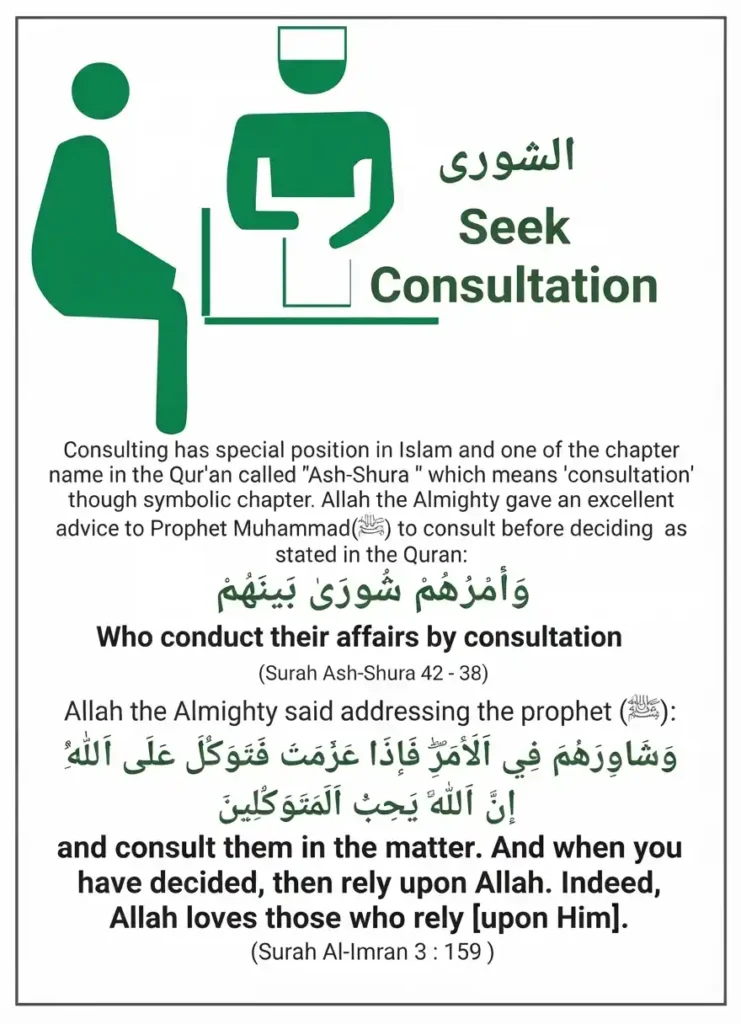
Surah Shura 42:38 – “And those who have responded to their Lord and established prayer and whose affair is by consultation among themselves, and from what We have provided them, they spend.”
This is the surah’s definitive statement. Believers are characterized by consultation. This isn’t a suggestion—it’s a defining trait of righteous communities.
Verse 40: Responding to Injustice with Justice
Surah Shura 42:40 – “The recompense for an injury is an injury equal thereto; but those who forgive and make amends will have their reward from Allah. Surely, He does not like the unjust.”
This verse balances justice with mercy. Yes, you have a right to respond to injustice. But forgiveness is presented as superior. This creates wisdom in how we handle conflicts.
Hadith References on Consultation and Justice
Hadith 1: The Value of Consultation
Sahih al-Bukhari 6:103:3 – The Prophet Muhammad (peace be upon him) said: “Whoever consults others will not regret.” This hadith validates what Surah Shura teaches. Consultation isn’t weakness—it’s the path to good decisions.
Hadith 2: Justice as Divine Command
Sahih Muslim 3:1854 – The Prophet (peace be upon him) said: “The just will be on raised platforms of light near Allah, those who are just in their judgments regarding family and those under their authority.” This hadith emphasizes that justice—in leadership, family, and community—is pleasing to Allah.
Also Read: Quran Filetype PDF Free Download
Recommended Learning Resources
Deepen your understanding with these classical Hanafi texts:
- Tanwir al-Absar wa Tahlil al-Azar (Illumination of the Eyes) by Tughan Zada – A comprehensive work on Hanafi jurisprudence
- Sharh al-Wiqayah (Commentary on the Protective Shield) by ‘Ubaidullah al-Ujaybi – Essential Hanafi legal reference
For contemporary exploration, explore this helpful resource:
Islamic Governance and Justice: A Modern Introduction – A practical guide to understanding Islamic principles in modern context
Trusted Islamic Knowledge Resources
Strengthen your understanding through these reliable platforms:
- Islamic Teachings Forum – Engage with scholars on Islamic governance and ethics
- IslamQA – Find answers to questions about Islamic law and principles
Quick Reference: Surah Shura Essentials
| Aspect | Details |
| Surah Number | 42nd Chapter of the Quran |
| Revelation Period | Mecca (early Islamic period) |
| Number of Verses | 53 verses |
| Main Theme | Consultation, justice, and governance |
| Core Principle | Shura (consultation) in decision-making |
| Key Message | Justice and consultation define righteous leadership |
Practical Application: A 4-Week Leadership Challenge
Week 1 – Practice Consultation at Home: As a family, use consultation for a decision. Ask everyone for input. Listen genuinely. Make a collective decision. Notice how this changes family dynamics.
Week 2 – Implement Shura at Work: If you’re in leadership, consult team members before deciding on important matters. Watch how involvement improves implementation and morale.
Week 3 – Resolve a Conflict Justly: Identify a dispute (personal or professional). Apply Surah Shura’s principle of justice and patience. Seek fair resolution, not victory.
Week 4 – Teach Others: Help a family member or colleague understand the power of consultation. Show how decisions made through consultation are stronger and more accepted.
Categories: PRAYER ,ALMS , SAWN & The Holy Quran, Quran Jaz 1- 114

Frequently Asked Questions About Surah Shura
What exactly does “Surah Shura” mean?
Answer: Surah Shura means “The Consultation.” It’s the 42nd chapter with 53 verses, emphasizing the Islamic principle that important decisions should be made through consultation. It addresses governance, justice, and community decision-making.
How does “surah ash-shura” apply to modern leadership?
Answer: Whether in government, business, or family, Surah Ash-Shura teaches that consulting others before deciding leads to better outcomes. Leaders who listen and value input are more effective and trusted.
What does “quran surah shura” teach about justice?
Answer: This surah emphasizes that Islamic law is just and fair. It protects everyone—rich and poor, powerful and weak—equally. Justice isn’t based on status but on divine principles.
Can I memorize “surah al shura” quickly?
Answer: With 53 verses, memorization takes 6-8 weeks with consistent 15-20 minute daily practice. Breaking it into sections and reviewing regularly ensures strong retention and understanding.
How does this surah relate to modern democracy?
Answer: While not identical, Surah Shura shares consultation principles with democracy. However, Islamic consultation is guided by divine law, whereas modern democracy is purely majority-based without necessarily considering justice.
The Wisdom of Consultation
Surah Shura teaches that consultation isn’t just practical—it’s spiritual. When you seek input from others, you’re acknowledging their worth and value. You’re recognizing that wisdom can come from unexpected sources. You’re building community.
This is revolutionary. In a world of narcissism and authoritarianism, Surah Shura offers a better way. It shows that the strongest leaders are those who listen. The wisest decisions come from collective thought. The most just societies are those where everyone’s voice matters.
Notice that consultation doesn’t mean weakness. The Prophet Muhammad (peace be upon him) was decisive. But he consulted. He listened. He considered different viewpoints. Then he decided. This is the Islamic model.
Building Consultation in Your Life
Start small. In your family, introduce decisions made through consultation. At work, ask colleagues for their input. In your community, create spaces where voices are heard.
You’ll notice something remarkable: people support what they help create. Consultation doesn’t slow things down—it speeds them up because everyone is invested in the outcome.
This is the wisdom of Surah Shura. It’s not just about governance. It’s about how to live together as humans, respecting each other’s dignity and seeking truth collectively.
Those who want Taweez, Naqash of Surah Shura Benefits , please send contact by email- [email protected]
Download Arabic Quran Juz Wise
Free Download Arabic Quran Juz Widse Google Drive Link – ( Download)
Conclusion
Surah Shura teaches that consultation is a cornerstone of Islamic life and governance, that justice protects everyone, and that peaceful resolution is superior to conflict. Whether you’re exploring “surah ash-shura” for the first time, understanding “quran surah shura” deeply, or studying “surah al shura” for transformation, this chapter offers timeless wisdom.
In a world of division and discord, this surah’s message is urgent. Consultation builds unity. Justice brings peace. Forgiveness creates healing. These aren’t utopian ideals—they’re practical principles that work when applied.
Start implementing these principles today. In your family, your work, your community. Watch how consultation transforms relationships. See how justice heals wounds. Experience how forgiveness liberates.
📞 Learn Quran for Free
Deepen your understanding with expert guidance:
📱 WhatsApp: +923017363500
📧 Email: [email protected]
Connect with qualified tutors and build comprehensive Islamic knowledge.
External Islamic Resources
Expand your understanding through these trusted platforms:
- Wikipedia: Islamic Governance – Overview of Islamic political principles and historical governance
- Britannica: Islamic Law – Comprehensive information on Islamic legal systems
- Quran Mualim Educational Hub – Dedicated resource for Quranic learning and Islamic education
Recommended for You
- Surah Nuh Transliteration and Benefits
- Surah Al Ala Transliteration and Benefits
- Surah al Tariq Transliteration & Benefits
- Surah Al-Buruj Transliteration & Benefits
- Surah Insan Transliteration and Benefits
- Surah Abasa Transliteration and Benefits
- Surah Qaf Transliteration and Translation
- Surah Najm Transliteration and Translation
- Surah Jathiya Transliteration and Translation
- Surah Al Fath Transliteration and Translation
- Surah Hujurat Transliteration and Translation
- Surah Al Haqqah Transliteration and Benefits
- Surah Al-Ahqaf Transliteration and Translation
- Surah Al-Hadid Transliteration and Translation
- Surah Al-Waqi’ah Transliteration and Translation
- Surah Ar-Rahman Transliteration and Translation
- Surah Az Zukhruf Transliteration and Translation
- Surah Ad-Dukhan Transliteration and Translation
- Surah Saff Transliteration, Meaning and Benefits
- Surah Jum’ah Transliteration, Meaning & Benefits
- Surah Hashr Transliteration meaning And Benefits
- Surah Al-Mujadilah Transliteration and Translation
- Surah Al-Mumtahanah Transliteration and Benefits