

Surah Jathiya is the 45th chapter of the Quran, a Meccan surah revealed during the early Islamic period. The name means “The Kneeling,” referring to the moment when every soul will bow before Allah on the Day of Judgment. If you’re searching for “surah al jathiya” understanding, exploring “jathiya surah” meanings, or seeking “surah jathiya benefits,” this comprehensive guide covers everything you need to know about this powerful chapter.
Why Understanding Surah Jathiya Changes Your Perspective
Life gets busy. We focus on work, family, and daily concerns. But Surah Jathiya stops you and asks the bigger question: What’s the point of it all? What happens after we die? Are we accountable for our
This surah addresses three foundational concepts:
- Divine Accountability: Every action you take is recorded and will be reviewed
- Allah’s Signs: The universe constantly shows us Allah’s power and wisdom
- The Real Life: This world is temporary; the afterlife is eternal
Many people avoid thinking about these topics. Surah Jathiya doesn’t let you avoid them—it presents them with clarity and compassion.
Also Read: Quran with Urdu Translation PDF Download
Core Themes in Surah Jathiya
Surah Jathiya opens with affirmation of the Quran’s divine origin. Then it moves directly to what matters most—the truth about our existence and purpose.
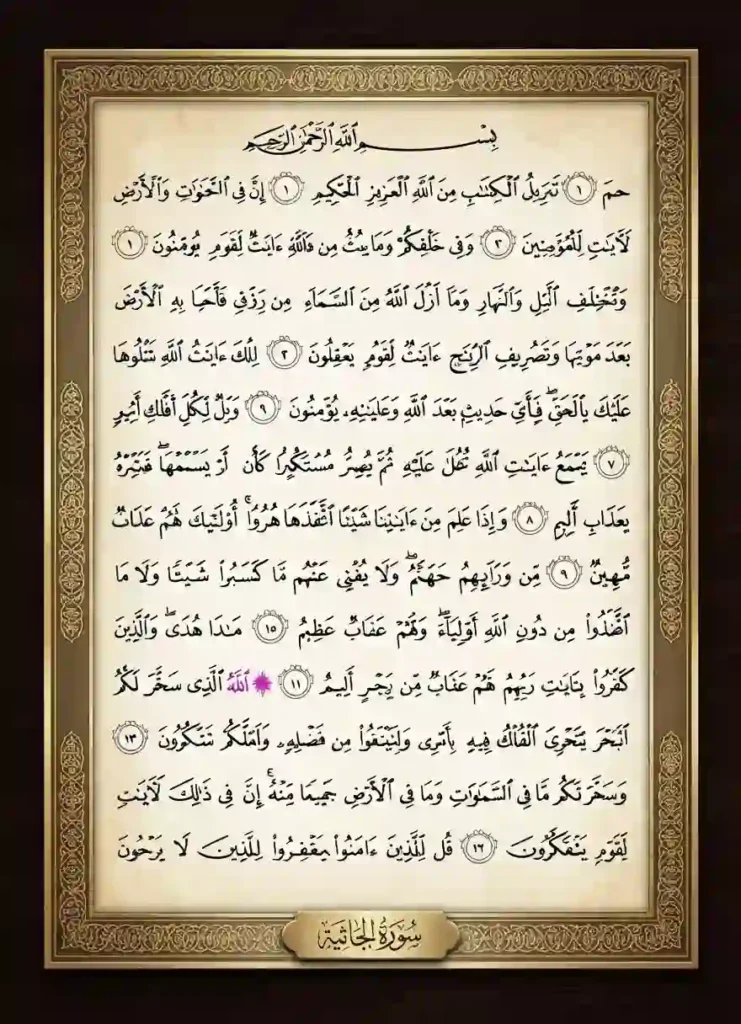
Surah Al-Jathiya (The Kneeling) — Surah 45
| # | Arabic | Transliteration | English Translation |
| 1 | حم | Hâ-Mĩm | Ha, Meem. |
| 2 | تَنزِيلُ الْكِتَابِ مِنَ اللَّهِ الْعَزِيزِ الْحَكِيمِ | Tanzīlu al-kitābi mina Allāhi al-ʿAzīzi al-Ḥakīm | The revelation of the Book is from Allah, the Almighty, the All-Wise. |
| 3 | إِنَّ فِي السَّمَاوَاتِ وَالْأَرْضِ لَآيَاتٍ لِّلْمُؤْمِنِينَ | Inna fī as-samāwāti wa-al-arḍi la-āyātin lil-muʾminīn | Indeed, in the heavens and the earth are signs for the believers. |
| 4 | وَفِي خَلْقِكُمْ وَمَا يَبُثُّ مِن دَابَّةٍ آيَاتٌ لِّقَوْمٍ يُوقِنُونَ | Wa fī khalqikum wa mā yabuthu min dābbatin āyātun li-qawmin yūqinūn | And in your own creation, and in the creatures He has scattered [throughout the earth], are signs for people of sure faith. |
| 5 | وَاخْتِلَافِ اللَّيْلِ وَالنَّهَارِ وَمَا أَنزَلَ اللَّهُ مِنَ السَّمَاءِ مِن رِّزْقٍ فَأَحْيَا بِهِ الْأَرْضَ بَعْدَ مَوْتِهَا وَتَصْرِيفِ الرِّيَاحِ آيَاتٌ لِّقَوْمٍ يَعْقِلُونَ | Wa ikhtilāfi al-layli wa-an-nahāri wa mā anzala Allāhu mina as-samāʾi min rizqin fa-aḥyā bihi al-arḍa baʿda mawtihā wa taṣrīfi ar-riyāḥi āyātun li-qawmin yaʿqilūn | And in the alternation of night and day, and the provision Allah sends down from the sky by which He gives life to the earth after its death, and in the shifting of the winds, are signs for people who use reason. |
| 6 | تِلْكَ آيَاتُ اللَّهِ نَتْلُوهَا عَلَيْكَ بِالْحَقِّ فَبِأَيِّ حَدِيثٍ بَعْدَ اللَّهِ وَآيَاتِهِ يُؤْمِنُونَ | Tilka āyātu Allāhi natlūhā ʿalayka bi-al-ḥaqqi fa-bi-ayyi ḥadīthin baʿda Allāhi wa āyātihi yuʾminūn | These are the verses of Allah which We recite to you in truth. Then in what statement after [that of] Allah and His verses will they believe? |
| 7 | وَيْلٌ لِّكُلِّ أَفَّاكٍ أَثِيمٍ | Waylun li-kulli affākin athīm | Woe to every sinful liar, |
| 8 | يَسْمَعُ آيَاتِ اللَّهِ تُتْلَى عَلَيْهِ ثُمَّ يُصِرُّ مُسْتَكْبِرًا كَأَن لَّمْ يَسْمَعْهَا فَبَشِّرْهُ بِعَذَابٍ أَلِيمٍ | Yasmaʿu āyāti Allāhi tutlā ʿalayhi thumma yuṣirru mustakbiran ka-an lam yasmaʿhā fa-bashshirhu bi-ʿadhābin alīm | who hears the verses of Allah recited to him, then persists arrogantly as if he had not heard them. So give him tidings of a painful punishment. |
| 9 | وَإِذَا عَلِمَ مِنْ آيَاتِنَا شَيْئًا اتَّخَذَهَا هُزُوًا أُولَٰئِكَ لَهُمْ عَذَابٌ مُّهِينٌ | Wa idhā ʿalima min āyātinā shayʾan ittakhadhahā huzuwan ulāʾika lahum ʿadhābun muhīn | And when he learns anything of Our verses, he takes them in mockery. Those — for them is a humiliating punishment. |
| 10 | مِّن وَرَائِهِمْ جَهَنَّمُ وَلَا يُغْنِي عَنْهُم مَّا كَسَبُوا شَيْئًا وَلَا مَا اتَّخَذُوا مِن دُونِ اللَّهِ أَوْلِيَاءَ وَلَهُمْ عَذَابٌ عَظِيمٌ | Min warāʾihim jahannamu wa lā yughnī ʿanhum mā kasabū shayʾan wa lā mā ittakhadhū min dūni Allāhi awliyāʾa wa lahum ʿadhābun ʿaẓīm | Before them is Hell, and nothing they earned will avail them at all, nor will the protectors they took besides Allah. And for them is a great punishment. |
| 11 | هَٰذَا هُدًى وَالَّذِينَ كَفَرُوا بِآيَاتِ رَبِّهِمْ لَهُمْ عَذَابٌ مِّن رِّجْزٍ أَلِيمٌ | Hādhā hudan wa-alladhīna kafarū bi-āyāti Rabbihim lahum ʿadhābun min rijzin alīm | This [Qur’an] is guidance. And those who disbelieve in the verses of their Lord will have a painful punishment of foul affliction. |
| 12 | اللَّهُ الَّذِي سَخَّرَ لَكُمُ الْبَحْرَ لِتَجْرِيَ الْفُلْكُ فِيهِ بِأَمْرِهِ وَلِتَبْتَغُوا مِن فَضْلِهِ وَلَعَلَّكُمْ تَشْكُرُونَ | Allāhu al-ladhī sakhkhara lakumu al-baḥra li-tajriya al-fulku fīhi bi-amrihi wa li-tabtaghū min faḍlihi wa laʿallakum tashkurūn | It is Allah who subjected the sea to you so that ships may sail upon it by His command, and that you may seek of His bounty, and that you may be grateful. |
| 13 | وَسَخَّرَ لَكُم مَّا فِي السَّمَاوَاتِ وَمَا فِي الْأَرْضِ جَمِيعًا مِّنْهُ إِنَّ فِي ذَٰلِكَ لَآيَاتٍ لِّقَوْمٍ يَتَفَكَّرُونَ | Wa sakhkhara lakum mā fī as-samāwāti wa mā fī al-arḍi jamīʿan minhu inna fī dhālika la-āyātin li-qawmin yatafakkarūn | And He has subjected to you whatever is in the heavens and whatever is on the earth — all from Him. Indeed in that are signs for a people who reflect. |
| 14 | قُل لِّلَّذِينَ آمَنُوا يَغْفِرُوا لِلَّذِينَ لَا يَرْجُونَ أَيَّامَ اللَّهِ لِيَجْزِيَ قَوْمًا بِمَا كَانُوا يَكْسِبُونَ | Qul lil-ladhīna āmanū yaghfirū lil-ladhīna lā yarjūna ayyāma Allāhi li-yajziya qawman bimā kānū yaksibūn | Tell those who have believed to forgive those who do not expect the days of Allah, so that He may recompense a people for what they used to earn. |
| 15 | مَنْ عَمِلَ صَالِحًا فَلِنَفْسِهِ وَمَنْ أَسَاءَ فَعَلَيْهَا ثُمَّ إِلَىٰ رَبِّكُمْ تُرْجَعُونَ | Man ʿamila ṣāliḥan fa-li-nafsihi wa man asāʾa fa-ʿalayhā thumma ilā Rabbikum turjaʿūn | Whoever does righteousness — it is for himself; and whoever does evil — it is against himself. Then to your Lord you will be returned. |
| 16 | وَلَقَدْ آتَيْنَا بَنِي إِسْرَائِيلَ الْكِتَابَ وَالْحُكْمَ وَالنُّبُوَّةَ وَرَزَقْنَاهُم مِّنَ الطَّيِّبَاتِ وَفَضَّلْنَاهُمْ عَلَى الْعَالَمِينَ | Wa laqad ātaynā Banī Isrāʾīla al-kitāba wa-al-ḥukma wa-an-nubuwwata wa razaqnāhum mina aṭ-ṭayyibāti wa faḍḍalnāhum ʿalā al-ʿālamīn | And We did certainly give the Children of Israel the Scripture, the judgment, and the prophethood, and We provided them with good things and preferred them over the worlds. |
| 17 | وَآتَيْنَاهُم بَيِّنَاتٍ مِّنَ الْأَمْرِ فَمَا اخْتَلَفُوا إِلَّا مِن بَعْدِ مَا جَاءَهُمُ الْعِلْمُ بَغْيًا بَيْنَهُمْ إِنَّ رَبَّكَ يَقْضِي بَيْنَهُمْ يَوْمَ الْقِيَامَةِ فِيمَا كَانُوا فِيهِ يَخْتَلِفُونَ | Wa ātaynāhum bayyinātin mina al-amri fa-mā ikhtalafū illā min baʿdi mā jāʾahumu al-ʿilmu baghyan baynahum inna Rabbaka yaqḍī baynahum yawma al-qiyāmati fīmā kānū fīhi yakhtalifūn | And We gave them clear proofs of the matter [of religion]. And they did not differ except after knowledge had come to them — out of envy among themselves. Indeed, your Lord will judge between them on the Day of Resurrection concerning that over which they used to differ. |
| 18 | ثُمَّ جَعَلْنَاكَ عَلَىٰ شَرِيعَةٍ مِّنَ الْأَمْرِ فَاتَّبِعْهَا وَلَا تَتَّبِعْ أَهْوَاءَ الَّذِينَ لَا يَعْلَمُونَ | Thumma jaʿalnāka ʿalā sharīʿatin mina al-amri fa-ittabiʿhā wa lā tattabiʿ ahwāʾa al-ladhīna lā yaʿlamūn | Then We put you, [O Muhammad], on a clear path of command; so follow it and do not follow the inclinations of those who do not know. |
| 19 | إِنَّهُمْ لَن يُغْنُوا عَنكَ مِنَ اللَّهِ شَيْئًا وَإِنَّ الظَّالِمِينَ بَعْضُهُمْ أَوْلِيَاءُ بَعْضٍ وَاللَّهُ وَلِيُّ الْمُتَّقِينَ | Innahum lan yughnū ʿanka mina Allāhi shayʾan wa inna aẓ-ẓālimīna baʿḍuhum awliyāʾu baʿḍin wa-Allāhu waliyyu al-muttaqīn | Indeed, they will never avail you against Allah at all. And indeed, the wrongdoers are allies of one another; but Allah is the ally of the righteous. |
| 20 | هَٰذَا بَصَائِرُ لِلنَّاسِ وَهُدًى وَرَحْمَةٌ لِّقَوْمٍ يُوقِنُونَ | Hādhā baṣāʾiru lin-nāsi wa hudan wa raḥmatun li-qawmin yūqinūn | This [Qur’an] is enlightenment for mankind and guidance and mercy for a people who are certain [in faith]. |
| 21 | أَمْ حَسِبَ الَّذِينَ اجْتَرَحُوا السَّيِّئَاتِ أَن نَّجْعَلَهُمْ كَالَّذِينَ آمَنُوا وَعَمِلُوا الصَّالِحَاتِ سَوَاءً مَّحْيَاهُمْ وَمَمَاتُهُمْ سَاءَ مَا يَحْكُمُونَ | Am ḥasiba al-ladhīna ijtaraḥū as-sayyiʾāti an najʿalahum ka-al-ladhīna āmanū wa ʿamilū aṣ-ṣāliḥāti sawāʾan maḥyāhum wa mamātuhum sāʾa mā yaḥkumūn | Or do those who commit evils think We will make them like those who believe and do righteous deeds — equal in their life and their death? Evil is that which they judge. |
| 22 | وَخَلَقَ اللَّهُ السَّمَاوَاتِ وَالْأَرْضَ بِالْحَقِّ وَلِتُجْزَىٰ كُلُّ نَفْسٍ بِمَا كَسَبَتْ وَهُمْ لَا يُظْلَمُونَ | Wa khalaqa Allāhu as-samāwāti wa-al-arḍa bi-al-ḥaqqi wa li-tujzā kullu nafsin bimā kasabat wa hum lā yuẓlamūn | And Allah created the heavens and the earth in truth, and so that every soul may be recompensed for what it has earned, and they will not be wronged. |
| 23 | أَفَرَأَيْتَ مَنِ اتَّخَذَ إِلَٰهَهُ هَوَاهُ وَأَضَلَّهُ اللَّهُ عَلَىٰ عِلْمٍ وَخَتَمَ عَلَىٰ سَمْعِهِ وَقَلْبِهِ وَجَعَلَ عَلَىٰ بَصَرِهِ غِشَاوَةً فَمَن يَهْدِيهِ مِن بَعْدِ اللَّهِ أَفَلَا تَذَكَّرُونَ | Afa-raʾayta mani ittakhadha ilāhahu hawāhu wa aḍallahu Allāhu ʿalā ʿilmin wa khatama ʿalā samʿihi wa qalbihi wa jaʿala ʿalā baṣarihi ghishāwatan fa-man yahdīhi min baʿdi Allāhi afa-lā tadhakkarūn | Have you seen the one who has taken his own desire as his god, and Allah has sent him astray due upon knowledge, sealed his hearing and heart, and placed a veil over his sight? Then who will guide him after Allah? Will you not then be reminded? |
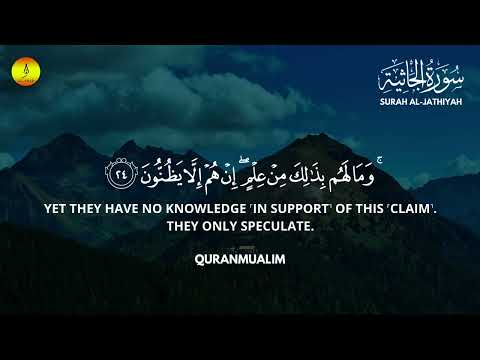
| 24 | وَقَالُوا مَا هِيَ إِلَّا حَيَاتُنَا الدُّنْيَا نَمُوتُ وَنَحْيَا وَمَا يُهْلِكُنَا إِلَّا الدَّهْرُ وَمَا لَهُم بِذَٰلِكَ مِنْ عِلْمٍ إِنْ هُمْ إِلَّا يَظُنُّونَ | Wa qālū mā hiya illā ḥayātunā ad-dunyā namūtu wa naḥyā wa mā yuhlikunā illā ad-dahru wa mā lahum bi-dhālika min ʿilmin in hum illā yaẓunnūn | And they say, “There is nothing but our worldly life; we die and live, and nothing destroys us but time.” But they have no knowledge of that; they are only guessing. |
| 25 | وَإِذَا تُتْلَىٰ عَلَيْهِمْ آيَاتُنَا بَيِّنَاتٍ مَّا كَانَ حُجَّتَهُمْ إِلَّا أَن قَالُوا ائْتُوا بِآبَائِنَا إِن كُنتُمْ صَادِقِينَ | Wa idhā tutlā ʿalayhim āyātunā bayyinātin mā kāna ḥujjatahum illā an qālū iʾtū bi-ābāʾinā in kuntum ṣādiqīn | And when Our verses are recited to them as clear evidences, their only argument is to say, “Bring back our forefathers, if you should be truthful.” |
| 26 | قُلِ اللَّهُ يُحْيِيكُمْ ثُمَّ يُمِيتُكُمْ ثُمَّ يَجْمَعُكُمْ إِلَىٰ يَوْمِ الْقِيَامَةِ لَا رَيْبَ فِيهِ وَلَٰكِنَّ أَكْثَرَ النَّاسِ لَا يَعْلَمُونَ | Quli Allāhu yuḥyīkum thumma yumītukum thumma yajmaʿukum ilā yawmi al-qiyāmati lā rayba fīhi wa lākinna akthara an-nāsi lā yaʿlamūn | Say, “Allah gives you life, then causes you to die; then He will gather you for the Day of Resurrection, about which there is no doubt — but most people do not know.” |
| 27 | وَلِلَّهِ مُلْكُ السَّمَاوَاتِ وَالْأَرْضِ وَيَوْمَ تَقُومُ السَّاعَةُ يَوْمَئِذٍ يَخْسَرُ الْمُبْطِلُونَ | Wa lillāhi mulku as-samāwāti wa-al-arḍi wa yawma taqūmu as-sāʿatu yawmaʾidhin yakhsaru al-mubṭilūn | And to Allah belongs the dominion of the heavens and the earth. And the Day the Hour appears — that Day the falsifiers will be in loss. |
| 28 | وَتَرَىٰ كُلَّ أُمَّةٍ جَاثِيَةً كُلُّ أُمَّةٍ تُدْعَىٰ إِلَىٰ كِتَابِهَا الْيَوْمَ تُجْزَوْنَ مَا كُنتُمْ تَعْمَلُونَ | Wa tarā kulla ummatin jāthiyatan kullu ummatin tudʿā ilā kitābihā al-yawma tujzawna mā kuntum taʿmalūn | And you will see every nation kneeling [from fear]. Every nation will be called to its record: “Today you will be recompensed for what you used to do.” |
| 29 | هَٰذَا كِتَابُنَا يَنطِقُ عَلَيْكُم بِالْحَقِّ إِنَّا كُنَّا نَسْتَنسِخُ مَا كُنتُمْ تَعْمَلُونَ | Hādhā kitābunā yanṭiqu ʿalaykum bi-al-ḥaqqi innā kunnā nastansikhu mā kuntum taʿmalūn | This, Our record, speaks about you in truth. Indeed, We were having recorded whatever you used to do. |
| 30 | فَأَمَّا الَّذِينَ آمَنُوا وَعَمِلُوا الصَّالِحَاتِ فَيُدْخِلُهُمْ رَبُّهُمْ فِي رَحْمَتِهِ ذَٰلِكَ هُوَ الْفَوْزُ الْمُبِينُ | Fa-ammā al-ladhīna āmanū wa ʿamilū aṣ-ṣāliḥāti fa-yudkhiluhum Rabbuhum fī raḥmatihi dhālika huwa al-fawzu al-mubīn | So as for those who believed and did righteous deeds, their Lord will admit them into His mercy. That is the clear attainment. |
| 31 | وَأَمَّا الَّذِينَ كَفَرُوا أَفَلَمْ تَكُنْ آيَاتِي تُتْلَىٰ عَلَيْكُمْ فَاسْتَكْبَرْتُمْ وَكُنتُمْ قَوْمًا مُّجْرِمِينَ | Wa ammā al-ladhīna kafarū afa-lam takun āyātī tutlā ʿalaykum fa-istakbartum wa kuntum qawman mujrimīn | But as for those who disbelieved, [it will be said], “Were not Our verses recited to you? But you were arrogant and became a people of criminals. |
| 32 | وَإِذَا قِيلَ إِنَّ وَعْدَ اللَّهِ حَقٌّ وَالسَّاعَةُ لَا رَيْبَ فِيهَا قُلْتُم مَّا نَدْرِي مَا السَّاعَةُ إِن نَّظُنُّ إِلَّا ظَنًّا وَمَا نَحْنُ بِمُسْتَيْقِنِينَ | Wa idhā qīla inna waʿda Allāhi ḥaqqun wa-as-sāʿatu lā rayba fīhā qultum mā nadrī mā as-sāʿatu in naẓunnu illā ẓannan wa mā naḥnu bi-mustayqinīn | And when it was said, ‘Indeed, the promise of Allah is true, and the Hour is not in doubt,’ you said, ‘We do not know what the Hour is; we only assume, and we are not convinced.'” |
| 33 | وَبَدَا لَهُمْ سَيِّئَاتُ مَا عَمِلُوا وَحَاقَ بِهِم مَّا كَانُوا بِهِ يَسْتَهْزِئُونَ | Wa badā lahum sayyiʾātu mā ʿamilū wa ḥāqa bihim mā kānū bihi yastahziʾūn | And the evil consequences of what they did will appear to them, and they will be surrounded by what they used to ridicule. |
| 34 | وَقِيلَ الْيَوْمَ نَنسَاكُمْ كَمَا نَسِيتُمْ لِقَاءَ يَوْمِكُمْ هَٰذَا وَمَأْوَاكُمُ النَّارُ وَمَا لَكُم مِّن نَّاصِرِينَ | Wa qīla al-yawma nansākum kamā nasītum liqāʾa yawmikum hādhā wa maʾwākumu an-nāru wa mā lakum min nāṣirīn | And it will be said, “Today We will forget you as you forgot the meeting of this Day of yours, and your refuge is the Fire, and you have no helpers. |
| 35 | ذَٰلِكُم بِأَنَّكُمُ اتَّخَذْتُمْ آيَاتِ اللَّهِ هُزُوًا وَغَرَّتْكُمُ الْحَيَاةُ الدُّنْيَا فَالْيَوْمَ لَا يُخْرَجُونَ مِنْهَا وَلَا هُمْ يُسْتَعْتَبُونَ | Dhālikum bi-annakumu ittakhadhtum āyāti Allāhi huzuwan wa gharratkumu al-ḥayātu ad-dunyā fa-al-yawma lā yukhrajūna minhā wa lā hum yustaʿtabūn | That is because you took the verses of Allah in mockery, and the worldly life deluded you.” So that Day they will not be taken out of it, nor will they be allowed to make amends. |
| 36 | فَلِلَّهِ الْحَمْدُ رَبِّ السَّمَاوَاتِ وَرَبِّ الْأَرْضِ رَبِّ الْعَالَمِينَ | Fa-lillāhi al-ḥamdu Rabbi as-samāwāti wa Rabbi al-arḍi Rabbi al-ʿālamīn | So praise belongs to Allah, Lord of the heavens and Lord of the earth, Lord of the worlds. |
| 37 | وَلَهُ الْكِبْرِيَاءُ فِي السَّمَاوَاتِ وَالْأَرْضِ وَهُوَ الْعَزِيزُ الْحَكِيمُ | Wa lahu al-kibriyāʾu fī as-samāwāti wa-al-arḍi wa huwa al-ʿAzīzu al-Ḥakīm | And to Him belongs [all] greatness in the heavens and the earth, and He is the Exalted in Might, the Wise. |
Key Benefits of Understanding Surah Jathiya
Studying this surah produces tangible spiritual transformation.
Clarity on Life’s Purpose: You stop chasing empty goals and start pursuing meaningful ones. Success isn’t defined by wealth or status—it’s defined by righteous action and sincere intention.
Stronger Decision-Making: When you remember accountability, you naturally make better choices. You consider consequences not just in this life, but in the next.
Recognition of Allah’s Signs: The surah teaches you to see Allah’s wisdom in creation. A flower, a star, your own body—each becomes a reminder of divine power.
Freedom from Anxiety: Paradoxically, accepting accountability brings peace. You realize you’re not responsible for outcomes—only for effort and sincerity.
Deeper Gratitude: Understanding that life is a test and a gift transforms your attitude. You become grateful even during hardship.
Enhanced Spirituality: This surah builds the foundation for genuine worship. You don’t worship out of habit or cultural pressure—you worship with real understanding.
Also Read: The Complete Quran Word Frequency List – Quran Mualim 2025
Understanding Resurrection and Accountability
The central message of Surah Jathiya revolves around resurrection. The surah addresses those who deny life after death—those who say we simply cease to exist.
The surah argues that if Allah created us once, recreating us is absolutely within His power. If He can organize the heavens and earth, surely He can organize a resurrection. This isn’t metaphorical. It’s literal truth.
But resurrection without accountability would be meaningless. The surah emphasizes that on the Day of Judgment, every soul will face its deeds. Good actions will be recorded. Wrong actions will be recorded. Justice will be absolute.
This creates a powerful incentive for righteousness. Your good deeds aren’t lost. They’re stored with Allah. Your mistakes aren’t hidden. They’re known. But through repentance and sincere intention, you can find redemption.
Most Relevant Quranic Verses in Surah Jathiya
Verse 22-23: The Signs of Allah
Surah Jathiya 45:22-23 – “And Allah created the heavens and the earth in truth and so that every soul may be recompensed for what it has earned, and they will not be wronged.”
This verse captures the purpose of creation. Everything exists for a reason. Every soul will be justly compensated. There’s no randomness, no injustice, no waste in Allah’s creation.
Verse 28: The Ultimate Kneeling
Surah Jathiya 45:28 – “And you will see every nation kneeling [before Allah]. Every nation will be called to its record. ‘This day you will be recompensed for what you used to do.'”
This verse is sobering and hopeful simultaneously. Yes, everyone will face accountability. But it’s fair accountability. The Creator who knows every secret of your heart will judge you perfectly.
Also Read: Quran Read Pen With Multi Language Translation
Hadith References on Accountability and Resurrection
Hadith 1: The Weight of Deeds
Sunan an-Nasa’i 46:4757 – The Prophet Muhammad (peace be upon him) said: “Fear Allah wherever you are. Follow a bad deed with a good deed to wipe it out, and treat people with good character.” This hadith directly supports Surah Jathiya’s teaching. Your deeds matter, and you can improve your record through righteous action.
Hadith 2: Recognizing Allah’s Signs
Sunan Ibn Majah 5:4082 – The Prophet (peace be upon him) said: “Whoever knows himself, knows his Lord.” Self-reflection helps you recognize Allah’s signs. When you understand your own creation, weakness, and dependency, you recognize Allah’s power and wisdom throughout creation.
Also Read: A List of 114 Quran Surahs in The Holy Quran
Recommended Islamic Learning Resources
Strengthen your understanding with these classical Hanafi fiqh texts:
- Kanz al-Ummal – A comprehensive collection of Islamic traditions and jurisprudence
- Al-Mabsut by As-Sarakhshi – A detailed commentary on Hanafi jurisprudence available in archives
For contemporary study, explore this helpful resource:
Quranic Themes: Death, Judgment, and the Afterlife – A thoughtful exploration of Islamic eschatology
Trusted Islamic Knowledge Platforms
Deepen your learning through these reliable sources:
- Islamic Q&A Database – Find answers from qualified Islamic scholars
- Quran Mualim Learning Community – Your dedicated resource for Quranic education and Islamic guidance
Quick Reference: Understanding Surah Jathiya at a Glance
| Aspect | Details |
| Surah Number | 45th Chapter of the Quran |
| Revelation Period | Mecca (early Islamic period) |
| Number of Verses | 37 verses |
| Main Theme | Resurrection, accountability, divine signs |
| Primary Message | Every soul will face judgment for its deeds |
| Practical Value | Motivates righteousness and self-reflection |
Making Surah Jathiya Practical: A 4-Week Implementation Plan
Week 1 – Contemplate Creation: Each day, spend 10 minutes observing nature. Watch clouds move. Notice how your body functions. Ask yourself: Who organized all this? This practice connects you to Surah Jathiya’s emphasis on recognizing Allah’s signs.
Week 2 – Review Your Deeds: Honestly assess your daily actions. Which ones pleased Allah? Which ones didn’t? Write them down. This mirrors the accountability emphasized in this surah.
Week 3 – Improve One Area: Choose one aspect of behavior to improve. More honest speech. Better patience. Increased kindness. Track it for a week. See how accountability motivates change.
Week 4 – Share the Message: Discuss Surah Jathiya with someone. Explain its meaning. Help others understand resurrection and responsibility. Teaching solidifies your own understanding.
Categories: PRAYER ,ALMS , SAWN & The Holy Quran, Quran Jaz 1- 114
Frequently Asked Questions About Surah Jathiya
What exactly does “Surah Jathiya” mean?
Answer: Surah Jathiya means “The Kneeling.” The name refers to verse 28, where every soul kneels before Allah on Judgment Day. It’s the 45th chapter, with 37 verses addressing resurrection and divine accountability.
Why should I study “surah al jathiya” specifically?
Answer: This surah clarifies life’s ultimate purpose and reality. It motivates spiritual growth, improves moral choices, and provides comfort about divine justice. Understanding it transforms how you approach daily decisions.
What are the main “surah jathiya benefits” for believers?
Answer: Benefits include clearer life purpose, stronger accountability mindset, deeper recognition of Allah’s signs, better decision-making, and enhanced spiritual peace. Regular reflection on this surah produces lasting positive changes.
How long does it take to memorize “jathiya surah”?
Answer: With daily practice of 15 minutes, most students memorize this 37-verse surah in 4-5 weeks. Breaking it into smaller sections and reviewing consistently ensures better retention and understanding.
Which verses of this surah are most important for beginners?
Answer: Start with verses 22-23 (on creation and justice) and verse 28 (on kneeling and judgment). These verses capture the surah’s essence. Gradually explore the complete chapter as your understanding deepens.
Living With Surah Jathiya’s Message
The beauty of this surah lies in its realism. It doesn’t offer false promises. It offers truth. Yes, you’ll face accountability. Yes, every action matters. But this isn’t meant to oppress you—it’s meant to liberate you.
When you truly grasp this message, you stop wasting energy on things that don’t matter. You invest in what’s real, lasting, and eternal. You become more forgiving, more just, and more compassionate.
The surah teaches that recognition of Allah’s signs brings wisdom. When you see His hand in creation—in your family, your challenges, your blessings—you approach life differently. You find meaning in struggle. You find gratitude in difficulty.
Your Journey Continues
Surah Jathiya is a call to wake up. Not to fear, but to purpose. Not to despair, but to meaningful action.
Each time you read these verses, let them speak to you anew. Ask yourself: Am I living intentionally? Am I recognizing Allah’s signs? Am I preparing for accountability?
The answers to these questions will shape your life. And that’s exactly what this surah intends.
Also Read: Quran Filetype PDF Free Download
Conclusion
Surah Jathiya presents Islam’s most fundamental teachings—that we’re created for a purpose, that our actions matter eternally, and that Allah’s justice is perfect. Whether you’re reading about “surah al jathiya” for the first time, seeking “jathiya surah” wisdom, or exploring “surah jathiya benefits,” this chapter offers timeless guidance.
Start your journey with this surah today. Read it. Reflect on it. Share it. Let its message transform how you live.
Those who want Taweez, Naqash of Surah JathiyaBenefits , please send contact by email- [email protected]
Download Free Quran in Arabic Juz wise
Free Download Quran in Arabic Juz wise From Google Drive Link – ( Download )
📞 Learn Quran for Free
Connect with our expert tutors and deepen your Quranic knowledge:
📱 WhatsApp: +923017363500
📧 Email: [email protected]
External Islamic Resources
Expand your knowledge through these trusted platforms:
- Wikipedia: Islamic Eschatology – Academic overview of Islamic beliefs about the afterlife
- Britannica: Quranic Studies – Foundational information on Quranic scholarship
- Islamic Teachings Forum – Community platform for Islamic discussion and learning
Recommended for You
- Surah Nuh Transliteration and Benefits
- Surah Al Ala Transliteration and Benefits
- Surah al Tariq Transliteration & Benefits
- Surah Al-Buruj Transliteration & Benefits
- Surah Insan Transliteration and Benefits
- Surah Abasa Transliteration and Benefits
- Surah Qaf Transliteration and Translation
- Surah Najm Transliteration and Translation
- Surah Al Fath Transliteration and Translation
- Surah Hujurat Transliteration and Translation
- Surah Al Haqqah Transliteration and Benefits
- Surah Al-Ahqaf Transliteration and Translation
- Surah Al-Hadid Transliteration and Translation
- Surah Saff Transliteration, Meaning and Benefits
- Surah Jum’ah Transliteration, Meaning & Benefits
- Surah Hashr Transliteration meaning And Benefits
- Surah Al-Mujadilah Transliteration and Translation
- Surah Al-Mumtahanah Transliteration and Benefits
- Surah Adh-Dhariyat Transliteration and Translation
- Surah Muhammad Transliteration and Translation
- Surah Al-Waqi’ah Transliteration and Translation
- Surah Ar-Rahman Transliteration and Translation
- Surah Qamar Transliteration and Translation
- Surah Tur Transliteration and Translation