


Surah Al-Ahzab often gets remembered only for its length or its detailed rulings, and that narrow view misses the bigger picture. Many readers open it looking for a quick summary, then get lost among various topics without seeing how they connect.
For readers wanting a solid companion at home, the Stories of the Prophets illustrated edition on Amazon pairs well with the historical background covered here.
What Is Surah Al-Ahzab About?
So, what is Surah Al-Ahzab about at its core? It is the 33rd chapter of the Quran, containing 73 verses, revealed in Madinah. The name means “The Confederates,” referring to the alliance of tribes that besieged Madinah during the Battle of the Trench.
Also Read: The Clear Quran PDF Free Download – Quran Mualim 2025
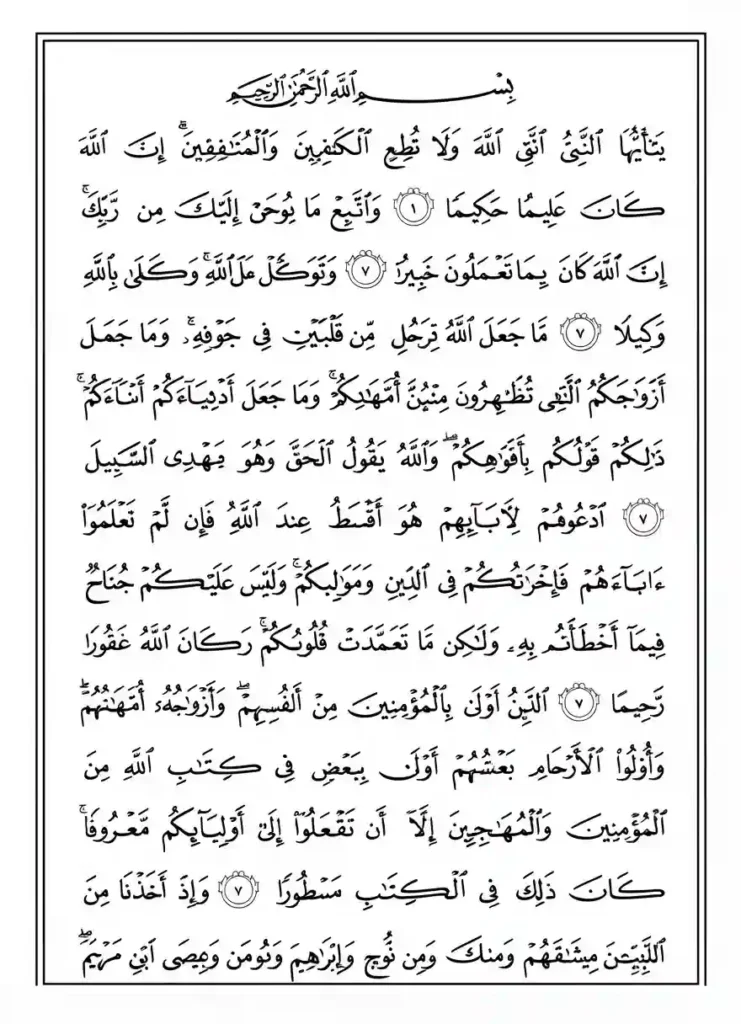
سورة الأحزاب – Surah Al-Ahzab
| Verse | Arabic (العربية) | Transliteration | English Translation |
| 1 | يَا أَيُّهَا النَّبِيُّ اتَّقِ اللَّهَ وَلَا تُطِعِ الْكَافِرِينَ وَالْمُنَافِقِينَ إِنَّ اللَّهَ كَانَ عَلِيمًا حَكِيمًا | Ya ayyuha an-nabiyyu ittaqi-llaha wa la tuti-il-kafirin wa-l-munafiqin, inna-llaha kana aliman hakiman | O Prophet, fear Allah and do not obey the disbelievers and the hypocrites. Indeed, Allah is Ever Knowing and Wise. |
| 2 | وَاتَّبِعْ مَا يُوحَىٰ إِلَيْكَ مِن رَّبِّكَ إِنَّ اللَّهَ كَانَ بِمَا تَعْمَلُونَ خَبِيرًا | Wa-ttabi’ ma yuha ila ka min rabbik, inna-llaha kana bima ta’malun khabir | And follow what is revealed to you from your Lord. Indeed, Allah is ever, with what you do, Acquainted. |
| 3 | وَتَوَكَّلْ عَلَى اللَّهِ وَكَفَىٰ بِاللَّهِ وَكِيلًا | Wa-tawakkal ‘ala-llahi wa-kafa bi-llahi wakil | And rely upon Allah. And sufficient is Allah as Disposer of affairs. |
| 4 | مَّا جَعَلَ اللَّهُ لِرَجُلٍ مِّن قَلْبَيْنِ فِي جَوْفِهِ وَمَا جَعَلَ أَزْوَاجَكُمُ اللَّائِي تُظَاهِرُونَ مِنْهُنَّ أُمَّهَاتِكُمْ وَمَا جَعَلَ أَدْعِيَاءَكُمْ أَبْنَاءَكُمْ ذَٰلِكُمْ قَوْلُكُم بِأَفْوَاهِكُمْ وَاللَّهُ يَقُولُ الْحَقَّ وَهُوَ يَهْدِي السَّبِيلَ | Ma ja’ala-llahu li-rajulin min qalbain fi jawfih wa-ma ja’ala azwajkumu-l-lai tutazirun minhunna ummahatikum wa-ma ja’ala ad’iyaa’kum abnaa’kum; dhaliukum qawlukum bi-afwahikum, wa-llahu yaqulu-l-haqq wa-huwa yahudu-s-sabil | Allah has not made for any man two hearts inside his body. And He has not made your wives, whom you declare unlawful, your mothers. And he has not made your adopted sons your [true] sons. That is [merely] your saying by your mouths, but Allah says the truth, and He guides to the [right] way. |
| 5 | اِدْعُوهُمْ لِآبَائِهِمْ هُوَ أَقْسَطُ عِندَ اللَّهِ فَإِن لَّمْ تَعْلَمُوا آبَاءَهُمْ فَإِخْوَانُكُمْ فِي الدِّينِ وَمَوَالِيكُمْ وَلَيْسَ عَلَيْكُمْ جُنَاحٌ فِيمَا أَخْطَأْتُم بِهِ وَلَٰكِن مَّا تَعَمَّدَتْ قُلُوبُكُمْ وَكَانَ اللَّهُ غَفُورًا رَّحِيمًا | Ud’uhum li-aba’ihim huwa aqsat ‘inda-llah; fa-in lam ta’lamu aba’ahum fa-ikhwanukum fi-d-din wa-mawaliykum, wa-laysa ‘alaikum junah fima akhtaa’tum bih, wa-lakin ma ta’ammadt qulubukum; wa-kana-llahu ghafur ar-rahim | Call them by [the names of] their fathers; it is more just in the sight of Allah. But if you do not know their fathers – then they are your brothers in religion and your allies. |
| 6 | النَّبِيُّ أَوْلَىٰ بِالْمُؤْمِنِينَ مِنْ أَنفُسِهِمْ وَأَزْوَاجُهُ أُمَّهَاتُهُمْ وَأُولُو الْأَرْحَامِ بَعْضُهُمْ أَوْلَىٰ بِبَعْضٍ فِي كِتَابِ اللَّهِ مِنَ الْمُؤْمِنِينَ وَالْمُهَاجِرِينَ إِلَّا أَن تَفْعَلُوا إِلَىٰ أَوْلِيَائِكُم مَّعْرُوفًا كَانَ ذَٰلِكَ فِي الْكِتَابِ مَسْطُورًا | An-nabiyyu awla bi-l-mu’minin min anfusihim wa-azwajuhu ummahatum, wa-ulu-l-arham ba’duhum awla bi-ba’d fi kitab-i-llah min al-mu’minin wa-l-muhajirun illa an taf’alu ila awliyaa’ikum ma’ruf; kana dhallka fi-l-kitab mastir | The Prophet is more worthy of the believers than themselves, and his wives are [in the position of] their mothers. And those connected by blood are more worthy of each other in the decree of Allah than [other] believers and the Muhajirun, except that you may do to your close ones a kindness [as a gift]. That has been written in the Book. |
| 7 | وَإِذْ أَخَذْنَا مِنَ النَّبِيِّينَ مِيثَاقَهُمْ وَمِنكَ وَمِن نُّوحٍ وَإِبْرَاهِيمَ وَمُوسَىٰ وَعِيسَىٰ ابْنِ مَرْيَمَ وَأَخَذْنَا مِنْهُم مِّيثَاقًا غَلِيظًا | Wa-idh akhdhna min an-nabiyyin misaqahum wa-minke wa-min nuh wa-Ibrahim wa-Musa wa-‘Isa ibna Maryam, wa-akhdhna minhum misaqan ghaliz | And [mention, O Muhammad], when We took from the prophets their covenant and from you and from Noah and Abraham and Moses and Jesus, the son of Mary; and We took from them a solemn covenant. |
| 8 | لِّيَسْأَلَ الصَّادِقِينَ عَن صِدْقِهِمْ وَأَعَدَّ لِلْكَافِرِينَ عَذَابًا أَلِيمًا | Li-yasa’al as-sadiqin ‘an sidqihim wa-a’adda li-l-kafirun adhaab alim | [That He may question the truthful about their truth. And He has prepared for the disbelievers a painful punishment. |
| 9 | يَا أَيُّهَا الَّذِينَ آمَنُوا اذْكُرُوا نِعْمَةَ اللَّهِ عَلَيْكُمْ إِذْ جَاءَتْكُمْ جُنُودٌ فَأَرْسَلْنَا عَلَيْهِمْ رِيحًا وَجُنُودًا لَّمْ تَرَوْهَا وَكَانَ اللَّهُ بِمَا تَعْمَلُونَ بَصِيرًا | Ya ayyuha-l-ladhina amanu-dhkuru ni’mat-i-llahi ‘alaikum idh ja’atkum junud fa-arsalna ‘alihim rih wa-junudan lam tarawhah, wa-kana-llahu bima ta’malun basiyr | O you who have believed, remember the favor of Allah upon you, when there came against you soldiers [of the Confederates]. We sent against them a wind and soldiers [angels] that you did not see. And ever is Allah, of what you do, Seeing. |
| 10 | إِذْ جَاءُوكُم مِّن فَوْقِكُمْ وَمِنْ أَسْفَلَ مِنكُمْ وَإِذْ زَاغَتِ الْأَبْصَارُ وَبَلَغَتِ الْقُلُوبُ الْحَنَاجِرَ وَتَظُنُّونَ بِاللَّهِ الظُّنُونَا | Idh jaa’ukum min fawqikum wa-min asfal minkum wa-idh zaaght al-absar wa-balaght al-qulub al-hanajir wa-tatannun bi-llahi az-zunu | [Remember] when they came at you from above you and from below you, and when the eyes shifted [in fear], and the hearts rose to the throats, and you assumed about Allah [various] assumptions. |
| 11 | هُنَالِكَ ابْتُلِيَ الْمُؤْمِنُونَ وَزُلْزِلُوا زِلْزَالًا شَدِيدًا | Hunalika ibtuliya al-mu’minun wa-zuzlilu zilzal shadid | There the believers were tested and shaken with a severe shaking. |
| 12 | وَإِذْ يَقُولُ الْمُنَافِقُونَ وَالَّذِينَ فِي قُلُوبِهِم مَّرَضٌ مَّا وَعَدَنَا اللَّهُ وَرَسُولُهُ إِلَّا غُرُورًا | Wa-idh yaqul al-munafiqun wa-alladhina fi qulubihim marad ma wa’adna-llahu wa-rasuluh illa ghrurar | And [remember] when the hypocrites and those in whose hearts is disease said, ‘Allah and His Messenger did not promise us except delusion.’ |
| 13 | وَإِذْ قَالَت طَّائِفَةٌ مِّنْهُمْ يَا أَهْلَ يَثْرِبَ لَا مُقَامَ لَكُمْ فَارْجِعُوا وَيَسْتَأْذِنُ فَرِيقٌ مِّنْهُمُ النَّبِيَّ يَقُولُونَ إِنَّ بُيُوتَنَا عَوْرَةٌ وَمَا هِيَ بِعَوْرَةٍ إِن يُرِيدُونَ إِلَّا فِرَارًا | Wa-idh qalat taifah minhum ya ahl Yathrib la muqam lakum farji’u wa-yasta’dhinu fariq minhumun-nabiyya yaqulun inna buyutna awrah wa-ma hiya bi-awrah, in yridun illa firrar | And [remember] when a faction of them said, ‘O people of Yathrib, there is no stability for you [here], so return,’ and a party of them asked permission of the Prophet, [saying], ‘Indeed, our houses are undefended,’ while they were not undefended. They did not desire except to flee. |
| 14 | وَلَوْ دُخِلَتْ عَلَيْهِم مِّنْ أَقْطَارِهَا ثُمَّ سُئِلُوا الْفِتْنَةَ لَآتَوْهَا وَمَا تَلَبَّثُوا بِهَا إِلَّا يَسِيرًا | Wa-law dukhilat ‘alihim min aqtarha thumma sui’lu al-fitna la’atawhaha wa-ma talabbathu bihah illa yasir | And if the city had been entered upon them from its surrounding areas and then they were asked to [cause] discord, they would have done it except for a few of them. And they had certainly made a covenant with Allah not to turn their backs [in flight]. And ever is a covenant with Allah questioned about. |
| 15 | قُل لَّن يَنفَعَكُمُ الْفِرَارُ إِن فَرَرْتُم مِّنَ الْمَوْتِ أَوِ الْقَتْلِ وَإِذًا مَّا تُمَتَّعُونَ إِلَّا قَلِيلًا | Qul lan yanfa’akum al-firaru in farartum min al-mawt aw al-qatl wa-idhan ma tumatta’un illa qalil | Say, ‘Never will fleeing benefit you if you should flee from death or killing; and then [if you survive], you would not be given enjoyment except for a little.’ |
| 16 | قُلْ مَن ذَا الَّذِي يَعْصِمُكُم مِّنَ اللَّهِ إِنْ أَرَادَ بِكُمْ سُوءًا أَوْ أَرَادَ بِكُمْ رَحْمَةً وَلَا يَجِدُونَ لَهُم مِّن دُونِ اللَّهِ وَلِيًّا وَلَا نَصِيرًا | Qul man dha-lladi ya’simukum min-i-llahi in arada bikum su’ aw arada bikum rahmah; wa-la yajidun lahum min dun-i-llah waliyyan wa-la nasir | Say, ‘Who is it that can protect you from Allah if He intends for you an evil, or intends for you a mercy?’ And they will not find for themselves, other than Allah, any protector or any helper. |
| 17 | قَدْ يَعْلَمُ اللَّهُ الْمُعَوِّقِينَ مِنكُمْ وَالْقَائِلِينَ لِإِخْوَانِهِمْ هَلُمَّ إِلَيْنَا وَلَا يَأْتُونَ الْبَأْسَ إِلَّا قَلِيلًا | Qad ya’lam-i-llahu al-mu’awwiqin minkum wa-l-qa’ilin li-ikhwanihim halumma ilaina wa-la ya’tun al-ba’s illa qalil | Allah already knows those of you who hinder [the others] and those who say to their brothers, ‘Come to us,’ and do not go to battle except for a few. |
| 18 | أَشِحَّةً عَلَيْكُمْ فَإِذَا جَاءَ الْخَوْفُ رَأَيْتَهُمْ يَنظُرُونَ إِلَيْكَ تَدُورُ أَعْيُنُهُمْ كَالَّذِي يُغْشَىٰ عَلَيْهِ مِنَ الْمَوْتِ فَإِذَا ذَهَبَ الْخَوْفُ سَلَقُوكُم بِأَلْسِنَةٍ حِدَادٍ أَشِحَّةً عَلَى الْخَيْرِ أُولَٰئِكَ لَمْ يُؤْمِنُوا فَأَحْبَطَ اللَّهُ أَعْمَالَهُمْ وَكَانَ ذَٰلِكَ عَلَى اللَّهِ يَسِيرًا | Ashihha ‘alaikum fa-idha ja’a al-khawf raaytahum yanzurun ilayka taduru a’yunuhum ka-alladhi yughsha ‘alih min al-mawt fa-idha dhahab al-khawf salaqukum bi-alsinat hidad ashihha ‘ala al-khair; ula’ika lam yu’minu fa-ahbat-i-llahu a’malahum wa-kana dhallka ‘ala-llahi yasir | [Being] stingy toward you. But when fear comes, you see them looking to you, their eyes rolling like one to whom death has come. But when fear departs, they lash you with sharp tongues, stingy for [any] good. Those have not believed, so Allah has rendered their deeds worthless, and that, for Allah, is easy. |
| 19 | يَحْسَبُونَ الْأَحْزَابَ لَمْ يَذْهَبُوا وَإِن يَأْتِ الْأَحْزَابُ يَوَدُّوا لَوْ أَنَّهُم بَادُونَ فِي الْأَعْرَابِ يَسْأَلُونَ عَنْ أَنبَائِكُمْ وَلَوْ كَانُوا فِيكُم مَّا قَاتَلُوا إِلَّا قَلِيلًا | Yahsabun al-ahzab lam yadhhabu wa-in ya’ti al-ahzab yawaddu law annahum badun fi-l-a’rab yas’alun ‘an anbaa’ikum wa-law kanu fikus ma qatalul illa qalil | They think the confederates have not [yet] gone. And if the confederates should come [again], they would wish they were in the desert with the Bedouins, asking about your news, and if they were among you, they would not fight except for a little. |
| 20 | لَّقَدْ كَانَ لَكُمْ فِي رَسُولِ اللَّهِ أُسْوَةٌ حَسَنَةٌ لِّمَن كَانَ يَرْجُو اللَّهَ وَالْيَوْمَ الْآخِرَ وَذَكَرَ اللَّهَ كَثِيرًا | Laqad kana lakum fi rasul-i-llahi uswah hasanah liman kana yarji al-llaha wa-l-yawm al-akhir wa-dhakara-llaha kathir | There has certainly been for you in the Messenger of Allah an excellent pattern for anyone whose hope is in Allah and the Last Day and [who] remembers Allah much. |
| 21 | وَلَمَّا رَأَى الْمُؤْمِنُونَ الْأَحْزَابَ قَالُوا هَٰذَا مَا وَعَدَنَا اللَّهُ وَرَسُولُهُ وَصَدَقَ اللَّهُ وَرَسُولُهُ وَمَا زَادَهُمْ إِلَّا إِيمَانًا وَتَسْلِيمًا | Wa-lamma ra al-mu’minun al-ahzab qalu hadha ma wa’adna-llahu wa-rasuluh wa-sadaqa-llahu wa-rasuluh wa-ma zadahum illa iman wa-taslim | And when the believers saw the confederates, they said, ‘This is what Allah and His Messenger promised us, and Allah and His Messenger spoke the truth.’ And it increased them only in faith and acceptance. |
| 22 | مِّنَ الْمُؤْمِنِينَ رِجَالٌ صَدَقُوا مَا عَاهَدُوا اللَّهَ عَلَيْهِ فَمِنْهُم مَّن قَضَىٰ نَحْبَهُ وَمِنْهُم مَّن يَنتَظِرُ وَمَا بَدَّلُوا تَبْدِيلًا | Min al-mu’minin rijal sadaqu ma ‘ahadu-llaha ‘alih fa-minhum man qada nahbah wa-minhum man yantazir wa-ma baddalu tabdil | Among the believers are men true to what they promised Allah. Among them is he who has fulfilled his vow [to the death], and among them is he who awaits [his chance]. And they did not alter [the terms of their commitment] in the least. |
| 23 | لِّيَجْزِيَ اللَّهُ الصَّادِقِينَ بِصِدْقِهِمْ وَيُعَذِّبَ الْمُنَافِقِينَ إِن شَاءَ أَوْ يَتُوبَ عَلَيْهِمْ إِنَّ اللَّهَ كَانَ غَفُورًا رَّحِيمًا | Li-yajzi-llahu as-sadiqin bi-sidqihim wa-yu’adhdhib al-munafiqin in sha’ aw yatubu ‘alihim; inna-llaha kana ghafur ar-rahim | [That] Allah may reward the truthful for their truth and punish the hypocrites if He wills or turn in mercy upon them. Indeed, Allah is ever Forgiving and Merciful. |
| 24 | وَرَدَّ اللَّهُ الَّذِينَ كَفَرُوا بِغَيْظِهِمْ لَمْ يَنَالُوا خَيْرًا وَكَفَى اللَّهُ الْمُؤْمِنِينَ الْقِتَالَ وَكَانَ اللَّهُ قَوِيًّا عَزِيزًا | Wa-radda-llahu alladhina kafaru bi-ghayzhihim lam yanalul khair wa-kafal-llahu al-mu’minin al-qital wa-kana-llahu qawi ‘aziz | And Allah repelled those who disbelieved, in their rage, not having obtained any good. And sufficient was Allah for the believers in battle, and ever is Allah Powerful and Exalted in Might. |
| 25 | وَأَنزَلَ الَّذِينَ ظَاهَرُوهُم مِّنْ أَهْلِ الْكِتَابِ مِن صَيَاصِيهِمْ وَقَذَفَ فِي قُلُوبِهِمُ الرُّعْبَ فَرِيقًا تَقْتُلُونَ وَتَأْسِرُونَ فَرِيقًا | Wa-anzal alladhina zaharu minhum min ahl al-kitab min siyasihim wa-qadhafa fi qulubihim al-ru’b fariqan taqtalun wa-ta’sirun fariqah | And He brought down those who supported them among the People of the Scripture from their fortresses and cast fear into their hearts, [so] a faction you slaughtered, and a faction you took captive. |
| 26 | وَأَوْرَثَكُمْ أَرْضَهُمْ وَدِيَارَهُمْ وَأَمْوَالَهُمْ وَأَرْضًا لَّمْ تَطَئُوهَا وَكَانَ اللَّهُ عَلَىٰ كُلِّ شَيْءٍ قَدِيرًا | Wa-awrathakum ardhahum wa-diyarahum wa-amwalahum wa-ardan lam tata’uha wa-kana-llahu ‘ala kulli shay’ qadir | And He caused you to inherit their lands, their homes, and their wealth – and a land which you have not trodden. And ever is Allah, over all things, competent. |
| 27 | يَا أَيُّهَا النَّبِيُّ قُل لِّأَزْوَاجِكَ إِن كُنتُنَّ تُرِدْنَ الْحَيَاةَ الدُّنْيَا وَزِينَتَهَا فَتَعَالَيْنَ أُمَتِّعْكُنَّ وَأُسَرِّحْكُنَّ سَرَاحًا جَمِيلًا | Ya ayyuha an-nabiyyu qul li-azwajik in kuntunna turdin al-hayat ad-dunya wa-zinataha fa-ta’aln umatti’kn wa-usarrikhkn sarah jamil | O Prophet, say to your wives, ‘If you should desire the worldly life and its adornment, then come, I will provide for you and release you with kindness.’ |
| 28 | وَإِن كُنتُنَّ تُرِدْنَ اللَّهَ وَرَسُولَهُ وَالدَّارَ الْآخِرَةَ فَإِنَّ اللَّهَ أَعَدَّ لِلْمُحْسِنَاتِ مِنكُنَّ أَجْرًا عَظِيمًا | Wa-in kuntunna turdin-i-llaha wa-rasulah wa-ad-dar al-akhirah fa-inna-llaha a’adda li-l-muhsinat minkn ajr ‘azim | But if you desire Allah and His Messenger and the home of the Hereafter – then indeed, Allah has prepared for the doers of good among you a great reward. |
| 29 | يَا نِسَاءَ النَّبِيِّ مَن يَأْتِ مِنكُنَّ بِفَاحِشَةٍ مُّبَيِّنَةٍ يُضَاعَفْ لَهَا الْعَذَابُ ضِعْفَيْنِ وَكَانَ ذَٰلِكَ عَلَى اللَّهِ يَسِيرًا | Ya nisa’ an-nabiyyi man ya’ti minkunna bi-fahisha mubayyinah yuda”af laha al-‘adhab di’fain wa-kana dhallka ‘ala-llahi yasir | O wives of the Prophet, whoever among you commits a clear immorality – for her the punishment will be doubled, and that, for Allah, is easy. |
| 30 | وَمَن يَقْنُتْ مِنكُنَّ لِلَّهِ وَرَسُولِهِ وَتَعْمَلْ صَالِحًا نُّؤْتِهَا أَجْرَهَا مَرَّتَيْنِ وَأَعْتَدْنَا لَهَا رِزْقًا كَرِيمًا | Wa-man yaqnut minkunna li-llahi wa-rasulih wa-ta’mal salih nu’tiha ajraha marratain wa-a’tadna laha rizq karim | And whoever among you is obedient to Allah and His Messenger and does righteousness – We will give her her reward twice, and We have prepared for her noble provision. |
| 31 | يَا نِسَاءَ النَّبِيِّ لَسْتُنَّ كَأَحَدٍ مِّنَ النِّسَاءِ إِنِ اتَّقَيْتُنَّ فَلَا تَخْضَعْنَ بِالْقَوْلِ فَيَطْمَعَ الَّذِي فِي قَلْبِهِ مَرَضٌ وَقُلْنَ قَوْلًا مَّعْرُوفًا | Ya nisa’ an-nabiyyi lastun ka-ahad min an-nisa’i in ittaqaitun fa-la takhda’n bi-l-qawl fa-yatma’a alladhi fi qalbih marad wa-qulna qawl ma’ruf | O wives of the Prophet, you are not like any other women. If you fear Allah, then do not be soft in speech [to men], lest he in whose heart is disease should covet, but speak with appropriate speech. |
| 32 | وَقَرْنَ فِي بُيُوتِكُنَّ وَلَا تَبَرَّجْنَ تَبَرُّجَ الْجَاهِلِيَّةِ الْأُولَىٰ وَأَقِمْنَ الصَّلَاةَ وَآتِينَ الزَّكَاةَ وَأَطِعْنَ اللَّهَ وَرَسُولَهُ إِنَّمَا يُرِيدُ اللَّهُ لِيُذْهِبَ عَنكُمُ الرِّجْسَ أَهْلَ الْبَيْتِ وَيُطَهِّرَكُمْ تَطْهِيرًا | Wa-qarn fi buyutikun wa-la tabarra’jn tabarruj al-jahiliyya al-ula wa-aqimn as-salah wa-atin az-zakah wa-ati’n-i-llaha wa-rasulah; innama yurid-i-llahu li-yudhhib ‘ankum ar-rijis ahl al-bayt wa-yutahhirakum tahthir | And abide in your houses and do not display yourselves as [was] the display of the former times of ignorance. And establish prayer and give zakah and obey Allah and His Messenger. Allah intends only to remove from you the blame [of sin], O people of the [Prophet’s] household, and to purify you with [extensive] purification. |
| 33 | وَاذْكُرْنَ مَا يُتْلَىٰ فِي بُيُوتِكُنَّ مِنْ آيَاتِ اللَّهِ وَالْحِكْمَةِ إِنَّ اللَّهَ كَانَ لَطِيفًا خَبِيرًا | Wa-dhkurn ma yutla fi buyutikun min ayat-i-llahi wa-l-hikmah; inna-llaha kana latif khabir | And remember what is recited within your houses of the verses of Allah and wisdom. Indeed, Allah is ever Subtle and Acquainted [with all things]. |
| 34 | إِنَّ الْمُسْلِمِينَ وَالْمُسْلِمَاتِ وَالْمُؤْمِنِينَ وَالْمُؤْمِنَاتِ وَالْقَانِتِينَ وَالْقَانِتَاتِ وَالصَّادِقِينَ وَالصَّادِقَاتِ وَالصَّابِرِينَ وَالصَّابِرَاتِ وَالْخَاشِعِينَ وَالْخَاشِعَاتِ وَالْمُتَصَدِّقِينَ وَالْمُتَصَدِّقَاتِ وَالصَّائِمِينَ وَالصَّائِمَاتِ وَالْحَافِظِينَ فُرُوجَهُمْ وَالْحَافِظَاتِ وَالذَّاكِرِينَ اللَّهَ كَثِيرًا وَالذَّاكِرَاتِ أَعَدَّ اللَّهُ لَهُم مَّغْفِرَةً وَأَجْرًا عَظِيمًا | Inna al-muslimin wa-al-muslimat wa-al-mu’minin wa-al-mu’minat wa-al-qanitin wa-al-qanitat wa-as-sadiqin wa-as-sadiqat wa-as-sabirin wa-as-sabirat wa-al-khaashi’in wa-al-khaashi’at wa-al-mutasaddiqin wa-al-mutasaddiqat wa-as-sa’imin wa-as-sa’imat wa-al-hafizin furuajahum wa-al-hafizat wa-adh-dhakirin-i-llah kathir wa-adh-dhakirat; a’adda-llahu lahum maghfir wa-ajr ‘azim | Indeed, the Muslim men and Muslim women, the believing men and believing women, the obedient men and obedient women, the truthful men and truthful women, the patient men and patient women, the humble men and humble women, the charitable men and charitable women, the fasting men and fasting women, the men who guard their private parts and the women who do so, and the men who remember Allah often and the women who do so – for them Allah has prepared forgiveness and a great reward. |
| 35 | وَمَا كَانَ لِمُؤْمِنٍ وَلَا مُؤْمِنَةٍ إِذَا قَضَى اللَّهُ وَرَسُولُهُ أَمْرًا أَن يَكُونَ لَهُمُ الْخِيَرَةُ مِنْ أَمْرِهِمْ وَمَن يَعْصِ اللَّهَ وَرَسُولَهُ فَقَدْ ضَلَّ ضَلَالًا مُّبِينًا | Wa-ma kana li-mu’min wa-la mu’minah idha qada-llahu wa-rasulah amr an yakun lahum al-khiyar min amrihim; wa-man ya’si-llaha wa-rasulah fa-qad dalla dalalal mubin | And it is not for a believing man or a believing woman, when Allah and His Messenger have decided a matter, that they should [thereafter] have any choice about their affair. And whoever disobeys Allah and His Messenger has certainly strayed into clear error. |
| 36 | وَإِذْ تَقُولُ لِلَّذِي أَنْعَمَ اللَّهُ عَلَيْهِ وَأَنْعَمْتَ عَلَيْهِ أَمْسِكْ عَلَيْكَ زَوْجَكَ وَاتَّقِ اللَّهَ وَتُخْفِي فِي نَفْسِكَ مَا اللَّهُ مُبْدِيهِ وَتَخْشَى النَّاسَ وَاللَّهُ أَحَقُّ أَن تَخْشَاهُ فَلَمَّا قَضَىٰ زَيْدٌ مِّنْهَا وَطَرًا زَوَّجْنَاكَهَا لِكَيْ لَا يَكُونَ عَلَىٰ الْمُؤْمِنِينَ حَرَجٌ فِي أَزْوَاجِ أَدْعِيَائِهِمْ إِذَا قَضَوْا مِنْهُنَّ وَطَرًا وَكَانَ أَمْرُ اللَّهِ مَفْعُولًا | Wa-idh taqul li-alladhi an’am-i-llahu ‘alih wa-an’amt ‘alih amsik ‘alayka zawjak wa-ittaqi-llah wa-tukhi fi nafsika ma-llahu mubdih wa-takhsha an-nas; wa-llahu ahaq an takhshah; fa-lamma qada Zaid minha watar zawwajnakaha li-kay la yakun ‘ala al-mu’minin haraj fi azwaj ad’iyaa’ihim idha qadaw minhunna watar; wa-kana amr-i-llahi maf’ul | And [remember, O Muhammad], when you said to the one on whom Allah bestowed favor and upon whom you had bestowed favor, ‘Keep your wife and fear Allah,’ while you concealed within yourself that which Allah would make manifest. And you feared the people, while Allah has more right that you fear Him. So when Zayd had no longer any need for her, We married her to you so that there would not be upon the believers any discomfort [i.e., guilt] concerning the wives of their adopted sons when the latter no longer have need of them. And ever is the command of Allah accomplished. |
| 37 | مَّا كَانَ عَلَى النَّبِيِّ مِنْ حَرَجٍ فِيمَا فَرَضَ اللَّهُ لَهُ سُنَّةَ اللَّهِ فِي الَّذِينَ خَلَوْا مِن قَبْلُ وَكَانَ أَمْرُ اللَّهِ قَدَرًا مَّقْدُورًا | Ma kana ‘ala an-nabiyyi min haraj fima fada-llahu lah sunnat-i-llah fi alladhina khalaw min qabl; wa-kana amr-i-llahi qadaran maqdur | There is no blame upon the Prophet for what Allah has imposed upon him of the obligation. [This is] the way of Allah with those [prophets] who have passed on before. And the command of Allah is a destiny determined. |
| 38 | الَّذِينَ يُبَلِّغُونَ رِسَالَاتِ اللَّهِ وَيَخْشَوْنَهُ وَلَا يَخْشَوْنَ أَحَدًا إِلَّا اللَّهَ وَكَفَىٰ بِاللَّهِ حَسِيبًا | Alladhina yubhallighi risalat-i-llah wa-yakhshawnh wa-la yakhshawn ahad illa-llah; wa-kafa bi-llahi hasib | [Those] who convey the messages of Allah and fear Him and do not fear anyone but Allah. And sufficient is Allah as Accountant. |
| 39 | مَّا كَانَ مُحَمَّدٌ أَبَا أَحَدٍ مِّن رِّجَالِكُمْ وَلَٰكِن رَّسُولَ اللَّهِ وَخَاتَمَ النَّبِيِّينَ وَكَانَ اللَّهُ بِكُلِّ شَيْءٍ عَلِيمًا | Ma kana Muhammad aba ahad min rijal wa-lakin rasul-i-llah wa-khatim an-nabiyyin; wa-kana-llahu bi-kulli shay’ ‘alim | Muhammad is not the father of [any] one of your men, but [he is] the Messenger of Allah and last of the prophets. And ever is Allah, of all things, Knowing. |
| 40 | يَا أَيُّهَا الَّذِينَ آمَنُوا اذْكُرُوا اللَّهَ ذِكْرًا كَثِيرًا | Ya ayyuha-l-ladhina amnu-dhkuru-llah dhikra kathir | O you who have believed, remember Allah with much remembrance. |
| 41 | وَسَبِّحُوهُ بُكْرَةً وَأَصِيلًا | Wa-sabbihu bukrah wa-asil | And exalt Him morning and evening. |
| 42 | هُوَ الَّذِي يُصَلِّي عَلَيْكُمْ وَمَلَائِكَتُهُ لِيُخْرِجَكُم مِّنَ الظُّلُمَاتِ إِلَى النُّورِ وَكَانَ بِالْمُؤْمِنِينَ رَحِيمًا | Huwa alladhi yusalli ‘alaikum wa-malai’katuh li-yukhjrikum min az-zulmat ila an-nur wa-kana bi-al-mu’minin rahim | It is He who confers blessing upon you, and His angels [ask forgiveness for you], that He may bring you out from darknesses into the light. And ever is He, to the believers, Merciful. |
| 43 | تَحِيَّتُهُمْ يَوْمَ يَلْقَوْنَهُ سَلَامٌ وَأَعَدَّ لَهُمْ أَجْرًا كَرِيمًا | Tahiyyatuhum yawm yalqawnh salam wa-a’adda lahum ajr karim | Their greeting on the Day they meet Him will be ‘Peace.’ And He has prepared for them a noble reward. |
| 44 | يَا أَيُّهَا النَّبِيُّ إِنَّا أَرْسَلْنَاكَ شَاهِدًا وَمُبَشِّرًا وَنَذِيرًا | Ya ayyuha an-nabiyyu inna arsalna-ka shahidan wa-mubashhira wa-nadhir | O Prophet, indeed, We have sent you as a witness and a bringer of good tidings and a warner. |
| 45 | وَدَاعِيًا إِلَى اللَّهِ بِإِذْنِهِ وَسِرَاجًا مُّنِيرًا | Wa-da’iyan ila-llah bi-idhnuh wa-sirajan munir | And [as] one who invites to Allah, by His permission, and as a lamp spreading light. |
| 46 | وَبَشِّرِ الَّذِينَ آمَنُوا أَنَّ لَهُمْ مِّنَ اللَّهِ فَضْلًا كَبِيرًا | Wa-bashshir alladhina amnu anna lahum min-i-llah fadl kabir | And give good tidings to the believers that for them from Allah is great bounty. |
| 47 | وَلَا تُطِعِ الْكَافِرِينَ وَالْمُنَافِقِينَ وَدَعْ أَذَاهُمْ وَتَوَكَّلْ عَلَى اللَّهِ وَكَفَىٰ بِاللَّهِ وَكِيلًا | Wa-la tuti-il-kafirun wa-al-munafiqun wa-da’ adhahum wa-tawakkal ‘ala-llah wa-kafa bi-llahi wakil | And do not obey the disbelievers and the hypocrites, and disregard their annoyance, and rely upon Allah. And sufficient is Allah as Disposer of affairs. |
| 48 | يَا أَيُّهَا الَّذِينَ آمَنُوا إِذَا نَكَحْتُمُ الْمُؤْمِنَاتِ ثُمَّ طَلَّقْتُمُوهُنَّ مِن قَبْلِ أَن تَمَسُّوهُنَّ فَمَا لَكُمْ عَلَيْهِنَّ مِنْ عِدَّةٍ تَعْتَدُّونَهَا فَمَتِّعُوهُنَّ وَسَرِّحُوهُنَّ سَرَاحًا جَمِيلًا | Ya ayyuha-l-ladhina amnu idha nakahtum al-mu’minat thumma tallaqtumuhunna min qabl an tamasuhunna fa-ma lakum ‘alihinna min ‘iddah ta’udduhnh; fa-mattu’uhunna wa-sarrihu sarmh jamil | O you who have believed, when you marry believing women and then divorce them before you have touched them, then there is not upon you, for them, any prescribed waiting period. So provide for them and release them in a gracious manner. |
| 49 | يَا أَيُّهَا النَّبِيُّ إِنَّا أَحْلَلْنَا لَكَ أَزْوَاجَكَ اللَّاتِي آتَيْتَ أُجُورَهُنَّ وَمَا مَلَكَتْ يَمِينُكَ مِمَّا أَفَاءَ اللَّهُ عَلَيْكَ وَبَنَاتِ عَمِّكَ وَبَنَاتِ عَمَّاتِكَ وَبَنَاتِ خَالِكَ وَبَنَاتِ خَالَاتِكَ اللَّاتِي هَاجَرْنَ مَعَكَ وَامْرَأَةً مُّؤْمِنَةً إِن وَهَبَتْ نَفْسَهَا لِلنَّبِيِّ إِن أَرَادَ النَّبِيُّ أَن يَسْتَنكِحَهَا خَالِصَةً لَّكَ مِن دُونِ الْمُؤْمِنِينَ قَدْ عَلِمْنَا مَا فَرَضْنَا عَلَيْهِمْ فِي أَزْوَاجِهِمْ وَمَا مَلَكَتْ أَيْمَانُهُمْ لِكَيْلَا يَكُونَ عَلَيْكَ حَرَجٌ وَكَانَ اللَّهُ غَفُورًا رَّحِيمًا | Ya ayyuha an-nabiyyu inna ahlalna laka azwajak allaati atayt ujurahunna wa-ma malakat yaminuk mimma afa-llahu ‘alaka wa-banat ‘ammik wa-banat ammtik wa-banat khalik wa-banat khalatik allaati hajarn ma’ak wa-imra’ah mu’minah in wahabat nafsaha li-n-nabiyyi in arada an-nabiyyu an yastankihaha; khalisah lak min dun al-mu’minin qad ‘alimna ma faraina ‘alihim fi azwajihim wa-ma malakat aymanuhum li-kay la yakun ‘alaka haraj; wa-kana-llahu ghafur ar-rahim | O Prophet, [We have made lawful to you] your wives to whom you have given their due compensation, and those your right hand possesses from what Allah has returned to you [of captives], and the daughters of your paternal uncles, and the daughters of your paternal aunts, and the daughters of your maternal uncles, and the daughters of your maternal aunts who emigrated with you and a believing woman if she gives herself to the Prophet [and] if the Prophet wishes to marry her – this is for you alone, excluding the [other] believers. We certainly know what We have imposed upon them regarding their wives and those their right hands possess, [in order] to avoid hardship for you. And ever is Allah Forgiving and Merciful. |
| 50 | تُرْجِي مَن تَشَاءُ مِنْهُنَّ وَتَضِمُّ إِلَيْكَ مَن تَشَاءُ وَمَنِ ابْتَغَيْتَ مِمَّنْ عَزَلْتَ فَلَا جُنَاحَ عَلَيْكَ ذَٰلِكَ أَدْنَىٰ أَن تَقَرَّ أَعْيُنُهُنَّ وَلَا يَحْزَنَّ وَرَضِينَ بِمَا آتَيْتَهُنَّ كُلُّهُنَّ وَاللَّهُ يَعْلَمُ مَا فِي قُلُوبِكُمْ وَكَانَ اللَّهُ عَلِيمًا حَلِيمًا | Turji man tasha minuhunna wa-tammu ilaka man tasha wa-mani btaghayt mimman ‘azalt fa-la junah ‘alaka; dhallka adna an taqarra a’yunuhunna wa-la yahzarna wa-radina bima ataitahunna kuluhunna; wa-llahu ya’lam ma fi qulubikum wa-kana-llahu ‘aliman halim | You may delay whom you will of them or take to yourself whom you will. And [as for] any of them that you desire to take [back], there is no blame upon you. That is more suitable for putting them at ease, and Allah knows what is in your hearts. And ever is Allah Knowing and Forbearing. |
| 51 | تَرْجِي مَن تَشَاءُ مِنْهُنَّ وَتُؤْوِي إِلَيْكَ مَن تَشَاءُ وَمَنِ ابْتَغَيْتَ مِمَّنْ عَزَلْتَ فَلَا جُنَاحَ عَلَيْكَ ذَٰلِكَ أَدْنَىٰ أَن تَقَرَّ أَعْيُنُهُنَّ وَلَا يَحْزَنَّ وَرَضِينَ بِمَا آتَيْتَهُنَّ وَاللَّهُ يَعْلَمُ مَا فِي قُلُوبِكُمْ وَكَانَ اللَّهُ عَلِيمًا حَلِيمًا | Tarji man tasha minuhunna wa-tu’wi ilayka man tasha wa-mani btaghayt mimman ‘azalt fa-la junah ‘alaka; dhallka adna an taqarra a’yunuhunna wa-la yahzarna wa-radina bima ataitahunna; wa-llahu ya’lam ma fi qulubikum wa-kana-llahu ‘aliman halim | You may put aside whom you will of them, and you may take to yourself [another] whom you will. And if you desire to take back those [from whom] you had [temporarily] separated, there is no blame upon you. That is more suitable for their comfort and satisfaction. And Allah knows what is in your hearts. And Allah is ever Knowing and Forbearing. |
| 52 | لَا يَحِلُّ لَكَ النِّسَاءُ مِن بَعْدُ وَلَا أَن تَبَدَّلَ بِهِنَّ مِنْ أَزْوَاجٍ وَلَوْ أَعْجَبَكَ حُسْنُهُنَّ إِلَّا مَا مَلَكَتْ يَمِينُكَ وَكَانَ اللَّهُ عَلَىٰ كُلِّ شَيْءٍ رَقِيبًا | La yahillu laka an-nisa min ba’d wa-la an tabaddal bihinn min azwaj wa-law a’jabak husnahunna illa ma malakat yaminuk; wa-kana-llahu ‘ala kulli shay’ raqib | It is not allowed to you to [take additional] women after this, [even] if their beauty were to please you, except those whom your right hand possesses. And ever is Allah, over all things, an Observer. |
| 53 | يَا أَيُّهَا الَّذِينَ آمَنُوا لَا تَدْخُلُوا بُيُوتَ النَّبِيِّ إِلَّا أَن يُؤْذَنَ لَكُمْ إِلَىٰ طَعَامٍ غَيْرَ نَاظِرِينَ إِنَاهُ وَلَٰكِنْ إِذَا دُعِيتُمْ فَادْخُلُوا فَإِذَا طَعِمْتُمْ فَانتَشِرُوا وَلَا مُسْتَأْنِسِينَ لِحَدِيثٍ إِنَّ ذَٰلِكُمْ كَانَ يُؤْذِي النَّبِيَّ فَيَسْتَحْيِي مِنكُمْ وَاللَّهُ لَا يَسْتَحْيِي مِنَ الْحَقِّ وَإِذَا سَأَلْتُمُوهُنَّ مَتَاعًا فَاسْأَلُوهُنَّ مِن وَرَاءِ حِجَابٍ ذَٰلِكُمْ أَطْهَرُ لِقُلُوبِكُمْ وَقُلُوبِهِنَّ وَمَا كَانَ لَكُمْ أَن تُؤْذُوا رَسُولَ اللَّهِ وَلَا أَن تَنكِحُوا أَزْوَاجَهُ مِن بَعْدِهِ أَبَدًا إِنَّ ذَٰلِكُمْ كَانَ عِندَ اللَّهِ عَظِيمًا | Ya ayyuha-l-ladhina amnu la tadkhulu buyut an-nabiyyi illa an yu’dhan lakum ila ta’am ghair nathirin inah wa-lakin idha du’itum fadkhulu fa-idha ta’imtum faintashiru wa-la mustanis lihidith; inna dhallkum kana yu’dhi an-nabiyya fa-yastahi minkum; wa-llahu la yastahi min al-haq; wa-idha sa’altumuhunna mata’an fas’aluhunna min wara hijab; dhallkum athar li-qulubikum wa-qulubihinn; wa-ma kana lakum an tu’dhu rasul-i-llah wa-la an tankihu azwajah min ba’dih abad; inna dhallkum kana ‘inda-llah ‘azim | O you who have believed, do not enter the houses of the Prophet except when you are permitted for a meal, [and] not while waiting for its preparation. But when you are invited, enter; and when you have eaten, disperse. And do not seek to linger for conversation. Indeed, that [behavior] was troubling the Prophet, and he is shy of [dismissing] you. But Allah is not shy of the truth. And when you ask [his wives] for something, ask them from behind a partition. That is purer for your hearts and their hearts. And it has never been for you to harm the Messenger of Allah, nor to marry his wives after him, [ever]. Indeed, that would be in the sight of Allah an enormity. |
| 54 | إِن تُبْدُوا شَيْئًا أَوْ تُخْفُوهُ فَإِنَّ اللَّهَ كَانَ بِكُلِّ شَيْءٍ عَلِيمًا | In tubdu shaiyan aw tukhfuh fa-inna-llaha kana bi-kulli shay’ ‘alim | Whether you reveal something or conceal it, indeed Allah is ever, of all things, Knowing. |
| 55 | لَّا جُنَاحَ عَلَيْهِنَّ فِي آبَائِهِنَّ وَلَا أَبْنَائِهِنَّ وَلَا إِخْوَانِهِنَّ وَلَا أَبْنَاءِ إِخْوَانِهِنَّ وَلَا أَبْنَاءِ أَخَوَاتِهِنَّ وَلَا نِسَائِهِنَّ وَلَا مَا مَلَكَتْ أَيْمَانُهُنَّ وَاتَّقِينَ اللَّهَ إِنَّ اللَّهَ كَانَ عَلَىٰ كُلِّ شَيْءٍ شَهِيدًا | La junah ‘alihinn fi aba’ihinn wa-la abnai’ihinn wa-la ikhwanihinn wa-la abnai ikhwanihinn wa-la abnai akhawatihinn wa-la nisai’ihinn wa-la ma malakat aymanuhunna; wa-ittaqin-i-llah; inna-llaha kana ‘ala kulli shay’ shahid | There is no blame upon the Prophet’s wives for their fathers, nor upon their sons, nor upon their brothers, nor upon their brothers’ sons, nor upon their sisters’ sons, nor upon their [own] women, nor upon what their right hands possess. And fear Allah; indeed, Allah is ever, over all things, a Witness. |
| 56 | إِنَّ اللَّهَ وَمَلَائِكَتَهُ يُصَلُّونَ عَلَى النَّبِيِّ يَا أَيُّهَا الَّذِينَ آمَنُوا صَلُّوا عَلَيْهِ وَسَلِّمُوا تَسْلِيمًا | Inna-llah wa-malai’katah yusalun ‘ala an-nabiyyi; ya ayyuha-l-ladhina amnu salu ‘alih wa-sallim taslim | Indeed, Allah and His angels send blessings upon the Prophet. O you who have believed, ask [ Allah to confer] blessings upon him and ask [ Allah to grant him] peace. |
| 57 | إِنَّ الَّذِينَ يُؤْذُونَ اللَّهَ وَرَسُولَهُ لَعَنَهُمُ اللَّهُ فِي الدُّنْيَا وَالْآخِرَةِ وَأَعَدَّ لَهُمْ عَذَابًا مُّهِينًا | Inna alladhina yu’dhun-i-llah wa-rasulah la’anahum-i-llahu fi ad-dunya wa-al-akhirah wa-a’adda lahum adhab muhin | Indeed, those who abuse Allah and His Messenger – Allah has cursed them in this world and the Hereafter and prepared for them a humiliating punishment. |
| 58 | وَالَّذِينَ يُؤْذُونَ الْمُؤْمِنِينَ وَالْمُؤْمِنَاتِ بِغَيْرِ مَا اكْتَسَبُوا فَقَدِ احْتَمَلُوا بُهْتَانًا وَإِثْمًا مُّبِينًا | Wa-alladhina yu’dhun al-mu’minin wa-al-mu’minat bi-ghair ma iktasabu faqad ihtamalu buhtanan wa-ithman mubin | And those who abuse believing men and believing women for [something] other than what they have earned have certainly born upon themselves a slander and a manifest sin. |
| 59 | يَا أَيُّهَا النَّبِيُّ قُل لِّأَزْوَاجِكَ وَبَنَاتِكَ وَنِسَاءِ الْمُؤْمِنِينَ يُدْنِينَ عَلَيْهِنَّ مِن جَلَابِيبِهِنَّ ذَٰلِكَ أَدْنَىٰ أَن يُعْرَفْنَ فَلَا يُؤْذَيْنَ وَكَانَ اللَّهُ غَفُورًا رَّحِيمًا | Ya ayyuha an-nabiyyu qul li-azwajik wa-banatayka wa-nisa al-mu’minin yudnin ‘alihinn min jalabibihinn; dhallka adna an yu’rafna fa-la yu’dhayn; wa-kana-llahu ghafur ar-rahim | O Prophet, tell your wives and your daughters and the women of the believers to bring down over themselves [part] of their outer garments. That is more suitable that they will be known and not be abused. And ever is Allah Forgiving and Merciful. |
| 60 | إِن لَّمْ يَنتَهِ الْمُنَافِقُونَ وَالَّذِينَ فِي قُلُوبِهِم مَّرَضٌ وَالْمُرْجِفُونَ فِي الْمَدِينَةِ لَنُغْرِيَنَّكَ بِهِمْ ثُمَّ لَا يَكُونُونَ فِيهَا جِيرَانَكَ إِلَّا قَلِيلًا | In lam yantahi al-munafiqun wa-alladhina fi qulubihim marad wa-al-murjifun fi al-madinah la-nughriyannaka bihim thumma la yakun fihah jiranaka illa qalil | [If the hypocrites and those in whose hearts is disease and the agitators in the city do not cease, We will surely grant you authority over them. Then they will not remain in it as your neighbors except for a little. |
| 61 | مَلْعُونِينَ أَيْنَمَا ثُقِفُوا أُخِذُوا وَقُتِّلُوا تَقْتِيلًا | Mal’unin aimma thuqifu ukidhu wa-quttilu taqtil | Accursed, wherever they are found, they will be seized and put to death. |
| 62 | سُنَّةَ اللَّهِ فِي الَّذِينَ خَلَوْا مِن قَبْلُ وَلَن تَجِدَ لِسُنَّةِ اللَّهِ تَبْدِيلًا | Sunnat-i-llah fi alladhina khalaw min qabl; wa-lan tajid li-sunnat-i-llah tabdil | [This is] the established way of Allah with those [people] before. And you will not find in the way of Allah any change. |
| 63 | يَسْأَلُكَ النَّاسُ عَنِ السَّاعَةِ قُلْ إِنَّ عِلْمَهَا عِندَ اللَّهِ وَمَا يَدْرِيكَ لَعَلَّ السَّاعَةَ تَكُونُ قَرِيبًا | Yas’aluka an-nas ‘an as-sa’ah; qul inna ‘ilmaha ‘inda-llah wa-ma yadryka la’alla as-sa’ah takun qarib | The people ask you, [O Muhammad], about the Hour. Say, ‘Its knowledge is only with Allah. And what can make you perceive? Perhaps the Hour is near.’ |
| 64 | إِنَّ اللَّهَ لَعَنَ الْكَافِرِينَ وَأَعَدَّ لَهُمْ سَعِيرًا | Inna-llaha la’an al-kafirin wa-a’adda lahum sa’ir | Indeed, Allah has cursed the disbelievers and has prepared for them a Blaze. |
| 65 | خَالِدِينَ فِيهَا أَبَدًا لَّا يَجِدُونَ وَلِيًّا وَلَا نَصِيرًا | Khaldin fiha abad la yajidun waliyyan wa-la nasir | Abiding therein forever, they will not find a protector or a helper. |
| 66 | يَوْمَ تُقَلَّبُ وُجُوهُهُمْ فِي النَّارِ يَقُولُونَ يَا لَيْتَنَا أَطَعْنَا اللَّهَ وَأَطَعْنَا الرَّسُولَا | Yawm tuqallab wujuhuhum fi an-nar yaqulun ya laytana ata’na-llah wa-ata’na ar-rasul | On the Day their faces will be turned over in the Fire, they will say, ‘Oh, how we wish we had obeyed Allah and obeyed the Messenger.’ |
| 67 | وَقَالُوا رَبَّنَا إِنَّا أَطَعْنَا سَادَتَنَا وَكُبَرَاءَنَا فَأَضَلُّونَا السَّبِيلَا | Wa-qalu rabban inna ata’na sadatna wa-kubara’ana fa-adallu as-sabil | And they will say, ‘Our Lord, indeed we obeyed our masters and our dignitaries, and they led us away from [the right] way.’ |
| 68 | رَبَّنَا آتِهِمْ ضِعْفَيْنِ مِنَ الْعَذَابِ وَالْعَنْهُمْ لَعْنًا كَبِيرًا | Rabban atihhim di’fain min al-adhab wa-al’anhum la’nan kabir | Our Lord, give them double punishment and curse them with a great curse.’ |
| 69 | يَا أَيُّهَا الَّذِينَ آمَنُوا لَا تَكُونُوا كَالَّذِينَ آذَوْا مُوسَىٰ فَبَرَّأَهُ اللَّهُ مِمَّا قَالُوا وَكَانَ عِندَ اللَّهِ وَجِيهًا | Ya ayyuha-l-ladhina amnu la takunu ka-alladhina adhaw Musa fa-barrahu-llahu mimma qalu wa-kana ‘inda-llahi wajihh | O you who have believed, do not be like those who abused Moses, but Allah cleared him of what they said. And he, in the sight of Allah, was honorable. |
| 70 | يَا أَيُّهَا الَّذِينَ آمَنُوا اتَّقُوا اللَّهَ وَقُولُوا قَوْلًا سَدِيدًا | Ya ayyuha-l-ladhina amnu ittaqu-llah wa-qulu qawl sadid | O you who have believed, fear Allah and speak words of appropriate justice. |
| 71 | يُصْلِحْ لَكُمْ أَعْمَالَكُمْ وَيَغْفِرْ لَكُمْ ذُنُوبَكُمْ وَمَن يُطِعِ اللَّهَ وَرَسُولَهُ فَقَدْ فَازَ فَوْزًا عَظِيمًا | Yuslih lakum a’malakum wa-yaghfir lakum dhunubakum wa-man yuti-llah wa-rasulah fa-qad faza fawzan ‘azim | He will correct for you your deeds and forgive you your sins. And whoever obeys Allah and His Messenger has certainly attained a great attainment. |
| 72 | إِنَّا عَرَضْنَا الْأَمَانَةَ عَلَى السَّمَاوَاتِ وَالْأَرْضِ وَالْجِبَالِ فَأَبَيْنَ أَن يَحْمِلْنَهَا وَأَشْفَقْنَ مِنْهَا وَحَمَلَهَا الْإِنسَانُ إِنَّهُ كَانَ ظَلُومًا جَهُولًا | Inna ‘aradna al-amanah ‘ala as-samawat wa-al-ard wa-al-jibal fa-abayn an yahmiln wa-ashfaqn minha wa-hamalha al-insan; innah kana zhaluman jahul | Indeed, we offered the Trust to the heavens and the earth and the mountains, and they declined to bear it and feared it; but man undertook it. Indeed, he has been unjust and ignorant. |
| 73 | لِّيُعَذِّبَ اللَّهُ الْمُنَافِقِينَ وَالْمُنَافِقَاتِ وَالْمُشْرِكِينَ وَالْمُشْرِكَاتِ وَيَتُوبَ اللَّهُ عَلَى الْمُؤْمِنِينَ وَالْمُؤْمِنَاتِ وَكَانَ اللَّهُ غَفُورًا رَّحِيمًا | Li-yu’adhdhib-i-llahu al-munafiqin wa-al-munafiqat wa-al-mushrikin wa-al-mushrikat wa-yatubu-llahu ‘ala al-mu’minin wa-al-mu’minat; wa-kana-llahu ghafur ar-rahim | [So] that Allah may punish the hypocrite men and hypocrite women and the polytheist men and polytheist women, and that Allah may turn in mercy upon the believing men and believing women. And ever is Allah Forgiving and Merciful. |
Also Read: Words by words Quran PDF Download

The Insight Behind the Chapter
Here is the insight tying everything together. During the Battle of the Trench, Madinah faced a coalition of enemy tribes far larger than the Muslim defenders. Fear spread, and some hypocrites used the crisis to spread doubt among weaker believers.
Importance of Surah Al-Ahzab
Recognizing why this chapter matters helps connect its many topics into one coherent lesson. A few consistent reasons explain its lasting importance among scholars and everyday readers.
- It documents a real historical event, giving practical proof that trust in God works under pressure.
- It distinguishes sincere believers from hypocrites through their actual behavior during crisis.
- It establishes important guidance around family life and modesty within the early Muslim community.
- It reinforces the Prophet’s role as a model of character, referenced directly in verse 21.
Benefits of Reading Surah Al-Ahzab
Reflecting on this surah brings grounded, practical benefits rather than abstract theory. These outcomes come from studying the events and guidance together, not separately.
- It strengthens resilience by showing how sincere believers reacted calmly during genuine danger.
- It clarifies the difference between real faith and convenient faith that disappears under pressure.
- It reinforces the Prophet (PBUH) as a practical example, encouraged directly within the text.
- It builds trust that difficult circumstances often precede relief, exactly as history confirmed afterward.
Also Read: Islamic Studies Books Grades 1-12 PDF Download
Qur’an References from Surah Al-Ahzab
Verses always carry more weight than any summary. Below are two verses from this chapter, including surah al ahzab transliteration, short meanings, and direct links for deeper study.
Surah Al-Ahzab, Ayah 21 Transliteration: Laqad kaana lakum fee rasoolillahi uswatun hasanah Meaning: “Indeed, in the Messenger of Allah you have an excellent example to follow.” Read on Quran.com
Surah Al-Ahzab, Ayah 22 Transliteration: Wa lammaa ra’al mu’minoonal ahzaaba qaaloo haadha maa wa’adanallahu wa rasooluh Meaning: “When the believers saw the confederates, they said, this is what Allah and His Messenger promised us.” Read on Quran.com
Hadith References
Hadith narrations add real texture to this surah’s message about sincerity and steadfastness. Below are two authentic references connected directly to those themes.
- Sunan Abu Dawood A narration describing the value of patience during hardship, matching the steadfast response of believers during the siege of Madinah. Sunan Abu Dawood on Sunnah.com
- **Jami at-Tirmidhi** A hadith highlighting the Prophet’s excellent character as a model for daily conduct, directly connected to the surah’s mention of his example. [Jami at-Tirmidhi on Sunnah.com](https://sunnah.com/tirmidhi)
Also Read: Root word of Quran
A Quick Overview Table
| Detail | Information |
| Surah Name | Surah Al-Ahzab |
| Number | 33rd Surah |
| Total Verses | 73 |
| Place of Revelation | Madinah |
| Juz | 21-22 |
| Main Themes | Battle of the Trench, Sincerity, Family Guidance |
Recommended Fiqh Reading
For readers wanting deeper classical grounding alongside Quranic study, two Hanafi fiqh titles worth locating in libraries or trusted archives are:
- Al-Mabsut by Muhammad ibn Ahmad al-Sarakhsi
- Tabyin al-Haqaiq by Uthman ibn Ali al-Zayla’i
Both texts remain widely referenced by advanced students working through Hanafi legal reasoning and case studies.
Where Else to Learn and Ask Questions
Questions naturally arise after reading a chapter this detailed, and outside input helps. The Islamic Teachings Forum allows you to post specific questions and read responses from experienced community members.
For verified religious rulings, IslamQA provides a searchable archive answered by qualified scholars. Another resource worth exploring for accessible Tafsir explanations is Quran Mualim, useful for slower, guided study.
For broader background, the Wikipedia entry on the Battle of the Trench covers the historical siege referenced in this surah, while the Britannica overview of early Islamic history provides wider context on this period.
Those who want Taweez, Naqash of Surah Al-Ahzab Benefits , please send contact by email- [email protected]
Download Free Arabic Quran Majeed
Download Arabic Quran Majeed From Google Drive Link – ( Download)
Learn Quran for Free
You do not have to work through Surah Al-Ahzab alone. Free, guided lessons are available for anyone wanting structured help with Tafsir, Tajweed, or basic Arabic reading skills.
- 📱 WhatsApp: +923017363500
- 📧 Email: [email protected]
Reach out directly, and a learning plan can be arranged around your own schedule, whether you are just starting out or already reciting with confidence.
Categories: PRAYER ,ALMS , SAWN HAJJ & DUA , Hadith and Tafseer, The Holy Quran, Quran Jaz 1- 114

Frequently Asked Questions
What is Surah Al-Ahzab about in simple terms?
It covers the Battle of the Trench, distinguishes sincere believers from hypocrites, and provides guidance on family life, all connected by the theme of steadfast faith.
How many verses does Surah Al-Ahzab contain?
Surah Al-Ahzab contains 73 verses. It is the 33rd chapter of the Quran, revealed in Madinah after the migration from Makkah.
Why is it called Surah Al-Ahzab?
The name means “The Confederates,” referring to the alliance of enemy tribes who besieged Madinah together during the Battle of the Trench.
Where can I find a reliable surah al ahzab translation?
Reliable translations are available on Quran.com and similar trusted platforms, offering verse-by-verse Arabic text alongside clear, easy-to-understand English meanings.
What lesson does the Battle of the Trench teach believers today?
It shows that genuine faith remains steady during real crisis, while weaker conviction tends to waver or spread doubt when pressure increases.
Final Thoughts
Surah Al-Ahzab proves that faith is tested loudest during the hardest moments, not the comfortable ones. The believers who stood firm during that siege still offer a working model today. Read this chapter closely, and let their steadiness shape how you handle your own difficult seasons.
Recommended for You
- Surah Nuh Transliteration and Benefits
- Surah Al Ala Transliteration and Benefits
- Surah al Tariq Transliteration & Benefits
- Surah Al-Buruj Transliteration & Benefits
- Surah Insan Transliteration and Benefits
- Surah Abasa Transliteration and Benefits
- Surah Qaf Transliteration and Translation
- Surah Fatir Transliteration and Translation
- Surah Saba Transliteration and Translation
- Surah Ya-Sin Transliteration and Translation
- Surah Saffat Transliteration and Translation
- Surah Najm Transliteration and Translation
- Surah Shura Transliteration and Translation
- Surah Ghafir Transliteration and Translation
- Surah Jathiya Transliteration and Translation
- Surah Al Fath Transliteration and Translation
- Surah Hujurat Transliteration and Translation
- Surah Al Haqqah Transliteration and Benefits
- Surah Fussilat Transliteration and Translation
- Surah Al-Ahqaf Transliteration and Translation
- Surah Al-Hadid Transliteration and Translation
- Surah Az-Zumar Transliteration and Translation
- Surah Az-Zumar Transliteration and Translation
- Surah Al-Waqi’ah Transliteration and Translation
- Surah Ar-Rahman Transliteration and Translation
- Surah Az Zukhruf Transliteration and Translation
- Surah Ad-Dukhan Transliteration and Translation
- Surah Saff Transliteration, Meaning and Benefits
- Surah Jum’ah Transliteration, Meaning & Benefits
- Surah Hashr Transliteration meaning And Benefits
- Surah Al-Mujadilah Transliteration and Translation
- Surah Al-Mumtahanah Transliteration and Benefits
- Surah Adh-Dhariyat Transliteration and Translation
- Surah Muhammad Transliteration and Translation
- Surah Qamar Transliteration and Translation
- Surah Tur Transliteration and Translation