


Surah Ankabut opens with a question that catches most readers off guard: do people really think they’ll be left alone just because they say “we believe”? That single line sets the tone for the entire chapter. This is exactly what makes Surah Ankabut so relevant, even centuries later.
For readers wanting a deeper commentary, this is a solid starting point: Tafsir As-Sa’di on Surah Ankabut.
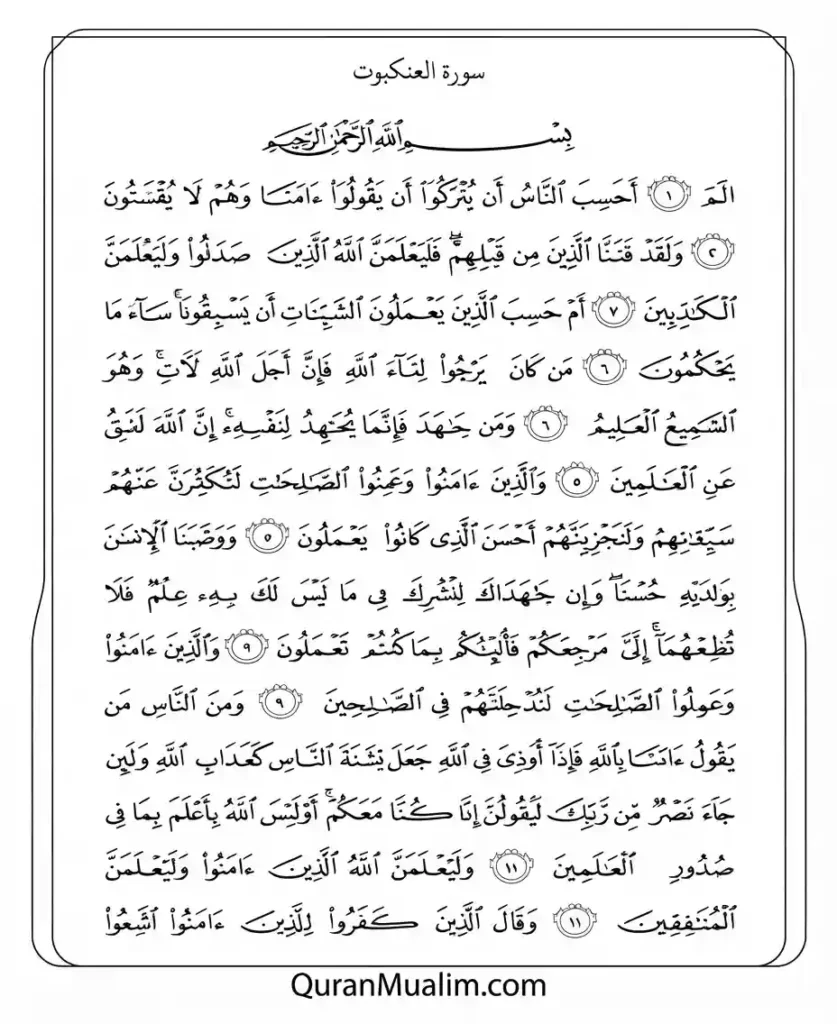
Surah Al-Ankabut (The Spider) سورة العنكبوت – 69
| Verse | Arabic Text | Transliteration | English Meaning |
| 1 | الم | Alif-Lām-Mīm | These are the symbolic letters, a sign of Allah’s revelation |
| 2 | أَحَسِبَ النَّاسُ أَن يُتْرَكُوا أَن يَقُولُوا آمَنَّا وَهُمْ لَا يُفْتَنُونَ | A-hasib an-nāsu an yutrakū an yaqūlū āmannā wa-hum lā yuftanūn | Do people think they will be left alone merely by saying ‘We believe’ without being tested? |
| 3 | وَلَقَدْ فَتَنَّا الَّذِينَ مِن قَبْلِهِمْ ۖ فَلَيَعْلَمَنَّ اللَّهُ الَّذِينَ صَدَقُوا وَلَيَعْلَمَنَّ الْكَاذِبِينَ | Wa-laqad fatannā al-ladhīna min qablihim fa-layaʿlamanna Allāhu al-ladhīna sadaqū wa-layaʿlamanna al-kādhībīn | We have tested those before them, and Allah will surely know those who are truthful and those who are liars |
| 4 | أَمْ حَسِبَ الَّذِينَ يَعْمَلُونَ السَّيِّئَاتِ أَن يَسْبِقُونَا ۚ سَاءَ مَا يَحْكُمُونَ | Am hasiba al-ladhīna yaʿmalūn as-sayyiāt an yasbiqūnā sāʾa mā yaḥkumūn | Do those who commit evil deeds think they can outpace Us? How terrible is their judgment! |
| 5 | مَن كَانَ يَرْجُو لِقَاءَ اللَّهِ فَإِنَّ أَجَلَ اللَّهِ لَآتٍ ۚ وَهُوَ السَّمِيعُ الْعَلِيمُ | Man kāna yarjū liqāʾ Allāhi fa-inna ajal Allāhi la-ātī wa-huwa as-samīʿ al-ʿalīm | Whoever hopes to meet Allah, know that Allah’s appointed time will come; He is the All-Hearing, All-Knowing |
| 6 | وَمَن جَاهَدَ فَإِنَّمَا يُجَاهِدُ لِنَفْسِهِ ۚ إِنَّ اللَّهَ لَغَنِيٌّ عَنِ الْعَالَمِينَ | Wa-man jāhada fa-innamā yujāhidu li-nafsih inn Allāha la-ghaniyy ʿan al-ʿālamīn | Whoever strives, it is only for their own benefit; indeed, Allah is free from need of all the worlds |
| 7 | وَالَّذِينَ آمَنُوا وَعَمِلُوا الصَّالِحَاتِ لَنُكَفِّرَنَّ عَنْهُمْ سَيِّئَاتِهِمْ وَلَنَجْزِيَنَّهُم بِأَحْسَنِ الَّذِي كَانُوا يَعْمَلُونَ | Wa-al-ladhīna āmanū wa-ʿamilū as-sālihāt la-nukaffiranna ʿanhum sayyiātihim wa-la-najziyanna-hum bi-aḥsan al-ladhī kānū yaʿmalūn | Those who believe and do righteous deeds – We will erase their misdeeds and reward them according to their finest actions |
| 8 | وَوَصَّيْنَا الْإِنسَانَ بِوَالِدَيْهِ حُسْنًا ۖ وَإِن جَاهَدَاكَ لِتُشْرِكَ بِي مَا لَيْسَ لَكَ بِهِ عِلْمٌ فَلَا تُطِعْهُمَا ۚ إِلَيَّ مَرْجِعُكُمْ فَأُنَبِّئُكُم بِمَا كُنتُمْ تَعْمَلُونَ | Wa-wassaynā al-insān bi-wālidayhi husnan wa-in jāhadāka li-tushrīk bī mā laysa laka bih ʿilm fa-lā tutīʿhumā ilayya marjiʿukum fa-unabbiu-kum bimā kuntum taʿmalūn | We have commanded people to treat their parents kindly, but if they pressure you to associate partners with Me, don’t obey them; all will return to Me and I’ll inform you of your deeds |
| 9 | وَالَّذِينَ آمَنُوا وَعَمِلُوا الصَّالِحَاتِ لَنُدْخِلَنَّهُمْ فِي الصَّالِحِينَ | Wa-al-ladhīna āmanū wa-ʿamilū as-sālihāt la-nudhkilanna-hum fī as-sālihīn | Those who believe and do righteous deeds will be admitted among the righteous |
| 10 | وَمِنَ النَّاسِ مَن يَقُولُ آمَنَّا بِاللَّهِ فَإِذَا أُوذِيَ فِي اللَّهِ جَعَلَ فِتْنَةَ النَّاسِ كَعَذَابِ اللَّهِ ۖ وَلَئِن نَّصَرَ رَبُّكَ لَيَقُولُنَّ إِنَّا كُنَّا مَعَكُمْ ۚ أَوَلَيْسَ اللَّهُ بِأَعْلَمَ بِمَا فِي صُدُورِ الْعَالَمِينَ | Wa-min an-nās man yaqūl āmannā bi-Allāhi fa-idhā ūdhiya fī Allāh jaʿal fitnat an-nās kaʿadhāb Allāh wa-la-in nasara rabbuka la-yaqūlunna inna kunnā maʿakum a-walaysa Allāh bi-aʿlam bimā fī sudūr al-ʿālamīn | Among people are those who claim to believe in Allah, but when they suffer for His sake, they consider people’s harm equivalent to Allah’s punishment; yet if your Lord grants victory, they say ‘We were with you.’ Doesn’t Allah know what is in all hearts? |
| 11 | وَلَيَعْلَمَنَّ اللَّهُ الَّذِينَ آمَنُوا وَلَيَعْلَمَنَّ الْمُنَافِقِينَ | Wa-layaʿlamanna Allāhu al-ladhīna āmanū wa-layaʿlamanna al-munāfiqīn | Allah will surely distinguish those who believe from the hypocrites |
| 12 | وَقَالَ الَّذِينَ كَفَرُوا لِلَّذِينَ آمَنُوا اتَّبِعُوا سَبِيلَنَا وَلْنَحْمِلْ خَطَايَاكُمْ ۚ وَمَا هُم بِحَامِلِينَ مِن خَطَايَاهُمْ مِن شَيْءٍ ۚ إِنَّهُمْ لَكَاذِبُونَ | Wa-qāl al-ladhīna kafarū li-l-ladhīna āmanū ittabiʿū sabīlanā wa-l-nahmal khitāyākum wa-mā hum bi-hāmilīn min khitāyāhum min shay-in innahum la-kādhībūn | The disbelievers say to those who believe ‘Follow our way and we’ll bear your sins,’ but they cannot bear anyone’s sins; they are indeed lying |
| 13 | وَلَيَحْمِلُنَّ أَثْقَالَهُمْ وَأَثْقَالًا مَّعَ أَثْقَالِهِمْ ۖ وَلَيُسْأَلُنَّ يَوْمَ الْقِيَامَةِ عَمَّا كَانُوا يَفْتَرُونَ | Wa-layaḥmilunna athqālahum wa-athqālan maʿa athqālihim wa-layus-alunna yawm al-qiyāmah ʿammā kānū yaftarūn | They will bear their own burdens and other burdens along with them, and on the Day of Judgment they will be questioned about their fabrications |
| 14 | وَلَقَدْ أَرْسَلْنَا نُوحًا إِلَىٰ قَوْمِهِ فَلَبِثَ فِيهِمْ أَلْفَ سَنَةٍ إِلَّا خَمْسِينَ عَامًا فَأَخَذَهُمُ الطُّوفَانُ وَهُمْ ظَالِمُونَ | Wa-laqad arsalnā Nūhan ilā qawmih fa-labhith fīhim alf sanat illa khamsīn ʿāman fa-akhdhahum at-tūfān wa-hum zhālimūn | We sent Nuh to his people, and he remained with them for 950 years; then the flood seized them while they were wrongdoers |
| 15 | فَأَنجَيْنَاهُ وَأَصْحَابَ السُّفِينَةِ وَجَعَلْنَاهَا آيَةً لِّلْعَالَمِينَ | Fa-anjaynāh wa-ashāb as-sufīnah wa-jaʿalnāhā āyah li-l-ʿālamīn | We saved him and the people of the Ark, and made it a sign for the worlds |
| 16 | وَإِبْرَاهِيمَ إِذْ قَالَ لِقَوْمِهِ اعْبُدُوا اللَّهَ وَاتَّقُوهُ ۖ ذَٰلِكُمْ خَيْرٌ لَّكُمْ إِن كُنتُمْ تَعْلَمُونَ | Wa-Ibrāhīm idh qāl li-qawmih iʿbudū Allāha wa-ttaqūh dhālikum khayrun lakum in kuntum taʿlamūn | And Ibrahim, when he said to his people ‘Worship Allah and fear Him; this is better for you if you only knew’ |
| 17 | إِنَّمَا تَعْبُدُونَ مِن دُونِ اللَّهِ أَوْثَانًا وَتَخْلُقُونَ إِفْكًا ۚ إِنَّ الَّذِينَ تَعْبُدُونَ مِن دُونِ اللَّهِ لَا يَمْلِكُونَ لَكُمْ رِزْقًا فَابْتَغُوا عِندَ اللَّهِ الرِّزْقَ وَاعْبُدُوهُ وَاشْكُرُوا لَهُ ۖ إِلَيْهِ تُرْجَعُونَ | Innamā taʿbudūn min dūn Allāh awthānan wa-takhluqūn ifk inn al-ladhīna taʿbudūn min dūn Allāh lā yamlikūn lakum rizq fab-taghū ʿind Allāh ar-rizq wa-ʿbudūh wa-shkurū lah ilayh turjaʿūn | You only worship idols instead of Allah and fabricate falsehood; those you worship besides Allah cannot provide for you, so seek provision from Allah, worship Him, and give thanks to Him – to Him you will return |
| 18 | وَإِن تُكَذِّبُوا فَقَدْ كَذَّبَ أُمَمٌ مِّن قَبْلِكُمْ ۖ وَمَا عَلَى الرَّسُولِ إِلَّا الْبَلَاغُ الْمُبِينُ | Wa-in tukadhdhibū fa-qad kadhdhaba umam min qablikum wa-mā ʿalā ar-rasūl illa al-balāgh al-mubīn | If you reject the message, know that nations before you also rejected their messengers; the Messenger’s duty is only clear conveyance |
| 19 | أَوَلَمْ يَرَوْا كَيْفَ يُبْدِئُ اللَّهُ الْخَلْقَ ثُمَّ يُعِيدُهُ ۚ إِنَّ ذَٰلِكَ عَلَى اللَّهِ يَسِيرٌ | A-wa-lam yaraw kayf yubdiu Allāhu al-khalq thumma yuʿīduh inn dhālik ʿalā Allāh yasīr | Do they not see how Allah originates creation and then repeats it? That is easy for Allah |
| 20 | قُلْ سِيرُوا فِي الْأَرْضِ فَانظُرُوا كَيْفَ بَدَأَ الْخَلْقَ ۚ ثُمَّ اللَّهُ يُنشِئُ النَّشْأَةَ الْآخِرَةَ ۚ إِنَّ اللَّهَ عَلَىٰ كُلِّ شَيْءٍ قَدِيرٌ | Qul sīrū fī al-ard fa-nzhurū kayf badaʾ al-khalq thumma Allāhu yunshi-u an-nash-aah al-ākhirah inn Allāh ʿalā kull shay-in qadīr | Say ‘Travel through the earth and see how He initiated creation; then Allah will initiate the next creation – indeed, Allah is over all things capable’ |
| 21 | يُعَذِّبُ مَن يَشَاءُ وَيَرْحَمُ مَن يَشَاءُ ۖ وَإِلَيْهِ تُرْجَعُونَ | Yuʿadhdhib man yashāʾ wa-yarḥam man yashāʾ wa-ilayh turjaʿūn | He punishes whom He wills and shows mercy to whom He wills; and to Him you will be returned |
| 22 | وَمَا أَنتُم بِمُعْجِزِينَ فِي الْأَرْضِ وَلَا فِي السَّمَاءِ ۖ وَمَا لَكُم مِّن دُونِ اللَّهِ مِن وَلِيٍّ وَلَا نَصِيرٍ | Wa-mā antum bi-muʿjizīn fī al-ard wa-lā fī as-samāʾ wa-mā lakum min dūn Allāh min waliyy wa-lā nasīr | You cannot escape Allah on earth or in heaven, and you have no protector or helper besides Allah |
| 23 | وَالَّذِينَ كَفَرُوا بِآيَاتِ اللَّهِ وَلِقَائِهِ أُولَٰئِكَ يَئِسُوا مِن رَّحْمَتِي وَأُولَٰئِكَ لَهُمْ عَذَابٌ أَلِيمٌ | Wa-al-ladhīna kafarū bi-āyāt Allāh wa-liqāih ūlāik yasū min raḥmatī wa-ūlāik lahum ʿadhāb alīm | Those who disbelieve in Allah’s signs and meeting with Him – they have despaired of My mercy, and those will have a painful punishment |
| 24 | فَمَا كَانَ جَوَابَ قَوْمِهِ إِلَّا أَن قَالُوا اقْتُلُوهُ أَوْ حَرِّقُوهُ ۖ فَأَنجَىٰ اللَّهُ مِنَ النَّارِ ۚ إِنَّ فِي ذَٰلِكَ لَآيَاتٍ لِّقَوْمٍ يُؤْمِنُونَ | Fa-mā kān jawāb qawmih illa an qālū iqtulūh aw harriqu h fa-anjayl Allāh min an-nār inn fī dhālik la-āyāt li-qawm yu-minūn | His people’s only response was to say ‘Kill him or burn him!’ but Allah saved him from the fire – surely there are signs in this for those who believe |
| 25 | وَقَالَ إِنَّمَا اتَّخَذْتُم مِّن دُونِ اللَّهِ أَوْثَانًا مَّوَدَّةَ بَيْنِكُمْ فِي الْحَيَاةِ الدُّنْيَا ثُمَّ يَوْمَ الْقِيَامَةِ يَكْفُرُ بَعْضُكُم بِبَعْضٍ وَيَلْعَنُ بَعْضُكُم بَعْضًا وَمَأْوَاكُمُ النَّارُ وَمَا لَكُم مِّن نَاصِرِينَ | Wa-qāl innamā ittakhadhtum min dūn Allāh awthānan mawaddah baynikum fī al-ḥayāh ad-dunyā thumma yawm al-qiyāmah yakfur baʿdukum bi-baʿd wa-yaʿan baʿdukum baʿdan wa-maawākum an-nār wa-mā lakum min nāsirīn | And he said ‘You have only taken idols besides Allah out of mutual affection in this worldly life, but on the Day of Resurrection you will disown one another and curse one another; your refuge will be the Fire, and you will have no helpers’ |
| 26 | فَآمَنَ لَهُ لُوطٌ ۚ وَقَالَ إِنِّي مُهَاجِرٌ إِلَىٰ رَبِّي ۖ إِنَّهُ هُوَ الْعَزِيزُ الْحَكِيمُ | Fa-āman lah Lūt wa-qāl innī muhājir ilā rabbī innahū huwa al-ʿazīz al-ḥakīm | Lut believed in him and said ‘Indeed, I will emigrate to my Lord; surely He is the Mighty, the Wise’ |
| 27 | وَوَهَبْنَا لَهُ إِسْحَاقَ وَيَعْقُوبَ وَجَعَلْنَا فِي ذُرِّيَّتِهِ النُّبُوَّةَ وَالْكِتَابَ وَآتَيْنَاهُ أَجْرَهُ فِي الدُّنْيَا ۖ وَإِنَّهُ فِي الْآخِرَةِ لَمِنَ الصَّالِحِينَ | Wa-wahabnā lah Ishāq wa-Yaʿqūb wa-jaʿalnā fī dhurriyyatih an-nubūwah wa-al-kitāb wa-ātaynāh ajrah fī ad-dunyā wa-innahū fī al-ākhirah la-min as-sālihīn | We granted him Ishaq and Yaqub, and We placed prophethood and Scripture in his descendants; We gave him his reward in this world, and in the Hereafter he will be among the righteous |
| 28 | وَلُوطًا إِذْ قَالَ لِقَوْمِهِ إِنَّكُمْ لَتَأْتُونَ الْفَاحِشَةَ مَا سَبَقَكُم بِهَا مِنْ أَحَدٍ مِّنَ الْعَالَمِينَ | Wa-Lūtan idh qāl li-qawmih innakum la-ta-tūn al-fāḥishah mā sabaqakum bihā min aḥad min al-ʿālamīn | And Lut, when he said to his people ‘You commit an indecency that no one before you has committed in the worlds’ |
| 29 | أَئِنَّكُمْ لَتَأْتُونَ الرِّجَالَ وَتَقْطَعُونَ السَّبِيلَ وَتَأْتُونَ فِي نَادِيكُمُ الْمُنكَرَ ۚ فَمَا كَانَ جَوَابَ قَوْمِهِ إِلَّا أَن قَالُوا ائْتِنَا بِعَذَابِ اللَّهِ إِن كُنتَ مِنَ الصَّادِقِينَ | A-inna-kum la-ta-tūn ar-rijāl wa-taqtaʿūn as-sabīl wa-ta-tūn fī nādīkum al-munkar fa-mā kān jawāb qawmih illa an qālū i-tinā bi-ʿadhāb Allāh in kunta min as-sādiqīn | Do you indeed approach men and cut off the way and commit depravity in your gatherings? His people’s only response was to say ‘Bring us Allah’s punishment if you are truthful’ |
| 30 | قَالَ رَبِّ انصُرْنِي عَلَى الْقَوْمِ الْمُفْسِدِينَ | Qāl rabbi ansurnī ʿalā al-qawm al-mufsidīn | He said ‘My Lord, help me against the corrupting people’ |
| 31 | وَلَمَّا جَاءَتْ رُسُلُنَا إِبْرَاهِيمَ بِالْبُشْرَىٰ قَالُوا إِنَّا مُهْلِكُو أَهْلِ هَٰذِهِ الْقَرْيَةِ ۖ إِنَّ أَهْلَهَا كَانُوا ظَالِمِينَ | Wa-lammā jāʾat rusulunā Ibrāhīm bi-al-bushrā qālū innā muhlikū ahl hādhih al-qaryah inn ahlahā kānū zhālimīn | When Our messengers came to Ibrahim with the good news, they said ‘We are about to destroy the people of this city; its inhabitants have been wrongdoers’ |
| 32 | قَالَ إِنَّ فِيهَا لُوطًا ۚ قَالُوا نَحْنُ أَعْلَمُ بِمَن فِيهَا ۖ لَنُنَجِّيَهُ وَأَهْلَهُ إِلَّا امْرَأَتَهُ كَانَتْ مِنَ الْغَابِرِينَ | Qāl inna fīhā Lūtan qālū naḥnu aʿlam biman fīhā la-nunjiyyah wa-ahlah illa imra-atah kānat min al-ghābirin | He said ‘Lut is there.’ They said ‘We know better who is there; we will save him and his family except his wife, who will be among those who remain’ |
| 33 | وَلَمَّا أَن جَاءَتْ رُسُلُنَا لُوطًا سِيءَ بِهِمْ وَضَاقَ بِهِمْ ذَرْعًا ۖ قَالُوا لَا تَخَفْ وَلَا تَحْزَنْ ۖ إِنَّا مُنَجُّوكَ وَأَهْلَكَ إِلَّا امْرَأَتَكَ كَانَتْ مِنَ الْغَابِرِينَ | Wa-lammā an jāʾat rusulunā Lūtan sīa bihim wa-dāqa bihim dharʿan qālū lā takhaf wa-lā tahzan innā munajjūka wa-ahlak illa imra-ataka kānat min al-ghābirin | When Our messengers came to Lut, he was distressed and worried for them; they said ‘Don’t fear or grieve; we will save you and your family except your wife, who will remain’ |
| 34 | إِنَّا مُنزِلُونَ عَلَىٰ أَهْلِ هَٰذِهِ الْقَرْيَةِ رِجْزًا مِّنَ السَّمَاءِ بِمَا كَانُوا يَفْسُقُونَ | Innā munzilūn ʿalā ahl hādhih al-qaryah rijz min as-samāʾ bimā kānū yafsiqūn | We are sending down upon the people of this city a punishment from the sky because of their transgression |
| 35 | وَلَقَدْ تَرَكْنَا مِنْهَا آيَةً بَيِّنَةً لِّقَوْمٍ يَعْقِلُونَ | Wa-laqad taraknā minhā āyah bayyinah li-qawm yaʿqilūn | We left a clear sign from it for people who use reason |
| 36 | وَإِلَىٰ مَدْيَنَ أَخَاهُمْ شُعَيْبًا ۚ قَالَ يَا قَوْمِ اعْبُدُوا اللَّهَ وَارْجُوا الْيَوْمَ الْآخِرَ وَلَا تَعْثَوْا فِي الْأَرْضِ مُفْسِدِينَ | Wa-ilā Madyan akhāhum Shuʿaybā qāl yā qawm iʿbudū Allāha wa-arjū al-yawm al-ākhir wa-lā taʿthaw fī al-ard mufsidīn | And to Midian We sent their brother Shuaib; he said ‘O my people, worship Allah and hope for the Last Day, and don’t commit corruption in the earth’ |
| 37 | فَكَذَّبُوهُ فَأَخَذَتْهُمْ رَجْفَةٌ فَأَصْبَحُوا فِي دَارِهِمْ جَاثِمِينَ | Fa-kadhdhabhūh fa-akhdhattuhm rajfah fa-asbahū fī dārihim jāthimīn | They rejected him, so an earthquake seized them and they became motionless in their dwelling place |
| 38 | وَعَادًا وَثَمُودَ وَقَدْ تَبَيَّنَ لَكُمْ مِّن مَّقَامِهِمْ ۚ وَالشَّيْطَانُ لَهُمْ أَعْمَالَهُمْ فَصَدَّهُمْ عَنِ السَّبِيلِ وَكَانُوا مُسْتَبْصِرِينَ | Wa-ʿād wa-Thamūd wa-qad tabayyun lakum min maqāmihim wa-ash-shaytān lahum aʿmālahum fa-saddahum ʿan as-sabīl wa-kānū mustabsirīn | And Aad and Thamud – their locations are clear to you; Satan beautified their deeds for them, so he turned them away from the path despite their ability to see |
| 39 | وَقَارُونَ وَفِرْعَوْنَ وَهَامَانَ ۖ وَلَقَدْ جَاءَهُمْ مُوسَىٰ بِالْبَيِّنَاتِ فَاسْتَكْبَرُوا فِي الْأَرْضِ وَمَا كَانُوا سَابِقِينَ | Wa-Qārūn wa-Firʿawn wa-Hāmān wa-laqad jāʾahum Mūsā bi-al-bayyināt fa-astakbarū fī al-ard wa-mā kānū sābiqīn | And Qarun, Pharaoh, and Haman – Musa came to them with clear signs, but they were arrogant in the earth and could not outrun Us |
| 40 | فَكُلًّا أَخَذْنَا بِذَنبِهِ ۖ فَمِنْهُم مَّنْ أَرْسَلْنَا عَلَيْهِ حَاصِبًا ۖ وَمِنْهُم مَّنْ أَخَذَتْهُ الصَّيْحَةُ ۖ وَمِنْهُم مَّنْ خَسَفْنَا بِهِ الْأَرْضَ ۖ وَمِنْهُم مَّنْ أَغْرَقْنَا ۚ وَمَا كَانَ اللَّهُ لِيَظْلِمَهُمْ وَلَٰكِن كَانُوا أَنفُسَهُمْ يَظْلِمُونَ | Fa-kullan akhdhānā bidhanbih fa-minhum man arsalnā ʿalayh ḥāsibā wa-minhum man akhdhattah as-sayḥah wa-minhum man khsafnā bih al-ard wa-minhum man aghraqnā wa-mā kān Allāhu li-yazhimahum wa-lākin kānū anfusahum yazhimūn | So each we seized for their sin: some We sent upon them a windstorm, some the blast seized, some We caused the earth to swallow, and some We drowned – Allah didn’t wrong them, but they wronged themselves |
| 41 | مَثَلُ الَّذِينَ اتَّخَذُوا مِن دُونِ اللَّهِ أَوْلِيَاءَ كَمَثَلِ الْعَنكَبُوتِ اتَّخَذَتْ بَيْتًا ۖ وَإِنَّ أَوْهَنَ الْبُيُوتِ لَبَيْتُ الْعَنكَبُوتِ ۖ لَوْ كَانُوا يَعْلَمُونَ | Mathal al-ladhīna ittakhadhū min dūn Allāh awliyāʾ ka-mathal al-ʿankabūt ittakhadhat bayt wa-inna awhan al-buyūt la-bayt al-ʿankabūt law kānū yaʿlamūn | The example of those who take protectors besides Allah is like the spider who builds a house; but surely the frailest of all houses is the spider’s house, if only they knew |
| 42 | إِنَّ اللَّهَ يَعْلَمُ مَا يَدْعُونَ مِن دُونِهِ مِن شَيْءٍ ۚ وَهُوَ الْعَزِيزُ الْحَكِيمُ | Inn Allāhu yaʿlam mā yadʿūn min dūnih min shay-in wa-huwa al-ʿazīz al-ḥakīm | Allah knows whatever they invoke besides Him; He is the Mighty, the Wise |
| 43 | وَتِلْكَ الْأَمْثَالُ نَضْرِبُهَا لِلنَّاسِ ۖ وَمَا يَعْقِلُهَا إِلَّا الْعَالِمُونَ | Wa-tilk al-amthāl nadribuhā li-an-nās wa-mā yaʿqiluhā illa al-ʿālamūn | These parables We strike for people, but none grasp them except the learned |
| 44 | خَلَقَ اللَّهُ السَّمَاوَاتِ وَالْأَرْضَ بِالْحَقِّ ۚ إِنَّ فِي ذَٰلِكَ لَآيَةً لِّلْمُؤْمِنِينَ | Khalaqa Allāhu as-samāwāt wa-al-ard bi-al-ḥaqq inn fī dhālik la-āyah li-al-mu-minīn | Allah created the heavens and the earth with truth; surely in that is a sign for the believers |
| 45 | اتْلُ مَا أُوحِيَ إِلَيْكَ مِنَ الْكِتَابِ وَأَقِمِ الصَّلَاةَ ۖ إِنَّ الصَّلَاةَ تَنْهَىٰ عَنِ الْفَحْشَاءِ وَالْمُنكَرِ ۗ وَلَذِكْرُ اللَّهِ أَكْبَرُ ۗ وَاللَّهُ يَعْلَمُ مَا تَصْنَعُونَ | Itlu mā ūḥiya ilayk min al-kitāb wa-aqim as-salāh inn as-salāh tanhā ʿan al-faḥshāʾ wa-al-munkar wa-la-dhikr Allāh akbar wa-Allāhu yaʿlam mā tasnaʿūn | Recite what has been revealed to you from the Book and establish prayer; indeed, prayer prevents depravity and wrongdoing, and the remembrance of Allah is greater; Allah knows what you do |
| 46 | وَلَا تُجَادِلُوا أَهْلَ الْكِتَابِ إِلَّا بِالَّتِي هِيَ أَحْسَنُ ۖ إِلَّا الَّذِينَ ظَلَمُوا مِنْهُمْ ۖ وَقُولُوا آمَنَّا بِالَّذِي أُنزِلَ إِلَيْنَا وَأُنزِلَ إِلَيْكُمْ وَإِلَٰهُنَا وَإِلَٰهُكُمْ وَاحِدٌ وَنَحْنُ لَهُ مُسْلِمُونَ | Wa-lā tujādilū ahl al-kitāb illā bi-al-latī hiya aḥsan illa al-ladhīn zhlamū minhum wa-qūlū āmannā bi-al-ladhī unzila ilaynā wa-unzila ilaykum wa-ilāhunā wa-ilāhukum wāḥid wa-naḥn lah muslimūn | And don’t argue with the People of the Book except in the best manner, except those of them who do wrong; say ‘We believe in what was revealed to us and revealed to you; our God and your God is One, and to Him we submit’ |
| 47 | وَكَذَٰلِكَ أَنزَلْنَا إِلَيْكَ الْكِتَابَ ۚ فَالَّذِينَ آتَيْنَاهُمُ الْكِتَابَ يُؤْمِنُونَ بِهِ ۖ وَمِنْ هَٰؤُلَاءِ مَن يُؤْمِنُ بِهِ ۚ وَمَا يَجْحَدُ بِآيَاتِنَا إِلَّا الْكَافِرُونَ | Wa-kadhālik anzalnā ilayk al-kitāb fa-al-ladhīna ātaynāhum al-kitāb yu-minūn bih wa-min hāʾulāʾ man yu-min bih wa-mā yajḥad bi-āyātinā illa al-kāfirūn | And thus We have revealed the Book to you; those to whom We gave the Scripture believe in it, and among these people some believe in it; none reject Our signs except the disbelievers |
| 48 | وَمَا كُنتَ تَتْلُو مِن قَبْلِهِ مِن كِتَابٍ وَلَا تَخُطُّهُ بِيَمِينِكَ ۖ إِذًا لَّارْتَابَ الْمُبْطِلُونَ | Wa-mā kunta tatlu min qablih min kitāb wa-lā takhuttuhu bi-yamīnik idhā la-artāb al-mubtilūn | You did not recite any scripture before this, nor did you write one with your hand; otherwise those who disdain would have doubted |
| 49 | بَلْ هُوَ آيَاتٌ بَيِّنَاتٌ فِي صُدُورِ الَّذِينَ أُوتُوا الْعِلْمَ ۚ وَمَا يَجْحَدُ بِآيَاتِنَا إِلَّا الظَّالِمُونَ | Bal huwa āyāt bayyināt fī sudūr al-ladhīna ūtū al-ʿilm wa-mā yajḥad bi-āyātinā illa az-zhālimūn | Rather it is clear signs in the breasts of those given knowledge; none reject Our signs except the wrongdoers |
| 50 | وَقَالُوا لَوْلَا أُنزِلَ عَلَيْهِ آيَاتٌ مِّن رَّبِّهِ ۚ قُلْ إِنَّمَا الْآيَاتُ عِندَ اللَّهِ وَإِنَّمَا أَنَا نَذِيرٌ مُّبِينٌ | Wa-qālū law-lā unzila ʿalayh āyāt min rabbih qul innamā al-āyāt ʿind Allāh wa-innamā anā nadhīr mubīn | They say ‘Why haven’t signs been sent down to him from his Lord?’ Say ‘Signs are with Allah only, and I am only a clear warner’ |
| 51 | أَوَلَمْ يَكْفِهِمْ أَنَّا أَنزَلْنَا عَلَيْكَ الْكِتَابَ يُتْلَىٰ عَلَيْهِمْ ۚ إِنَّ فِي ذَٰلِكَ لَرَحْمَةً وَذِكْرَىٰ لِقَوْمٍ يُؤْمِنُونَ | A-wa-lam yakfihim annā anzalnā ʿalayk al-kitāb yutlā ʿalayhim inn fī dhālik la-raḥmah wa-dhikrā li-qawm yu-minūn | Is it not sufficient for them that We have sent down to you the Book recited to them? Indeed in that is mercy and a reminder for a believing people |
| 52 | قُلْ كَفَىٰ بِاللَّهِ بَيْنِي وَبَيْنَكُمْ شَهِيدًا ۚ يَعْلَمُ مَا فِي السَّمَاوَاتِ وَالْأَرْضِ ۚ وَالَّذِينَ آمَنُوا بِالْبَاطِلِ وَكَفَرُوا بِاللَّهِ أُولَٰئِكَ هُمُ الْخَاسِرُونَ | Qul kafā bi-Allāh baynī wa-baynakum shahīdā yaʿlam mā fī as-samāwāt wa-al-ard wa-al-ladhīna āmanū bi-al-bātil wa-kafarū bi-Allāh ūlāik hum al-khāsirūn | Say ‘Allah is sufficient as a witness between me and you; He knows what is in the heavens and earth; those who believe in falsehood and disbelieve in Allah – those are the losers’ |
| 53 | وَيَسْتَعْجِلُونَكَ بِالْعَذَابِ ۖ وَلَوْلَا أَجَلٌ مُّسَمًّى لَّجَاءَهُمُ الْعَذَابُ ۚ وَلَيَأْتِيَنَّهُمْ بَغْتَةً وَهُمْ لَا يَشْعُرُونَ | Wa-yastaʿjilūnaka bi-al-ʿadhāb wa-law-lā ajal mussammā la-jāʾahum al-ʿadhāb wa-la-ya-tiyanna-hum baghtatah wa-hum lā yashʿurūn | They urge you to hasten the punishment; had not a specified term been written, punishment would have come to them; it will come to them unexpectedly while they don’t perceive |
| 54 | يَسْتَعْجِلُونَكَ بِالْعَذَابِ وَإِنَّ جَهَنَّمَ لَمُحِيطَةٌ بِالْكَافِرِينَ | Yastaʿjilūnka bi-al-ʿadhāb wa-inn jahannama la-muḥītah bi-al-kāfirīn | They urge you to hasten the punishment, and indeed Hell encompasses the disbelievers |
| 55 | يَوْمَ يَغْشَاهُمُ الْعَذَابُ مِن فَوْقِهِمْ وَمِن تَحْتِ أَرْجُلِهِمْ وَيَقُولُ ذُوقُوا مَا كُنتُمْ تَعْمَلُونَ | Yawm yaghashhāhum al-ʿadhāb min fawqihim wa-min taḥt arjulihim wa-yaqūl dhūqū mā kuntum taʿmalūn | The Day punishment overwhelms them from above and below their feet, He will say ‘Taste what you used to do’ |
| 56 | يَا عِبَادِ الَّذِينَ آمَنُوا إِنَّ أَرْضِي وَاسِعَةٌ فَإِيَّايَ فَاعْبُدُونِ | Yā ʿibād al-ladhīn āmanū inn ard wāsiʿah fa-iyyāya faʿbudūn | O My servants who believe, indeed My earth is vast, so worship Me alone |
| 57 | كُلُّ نَفْسٍ ذَائِقَةُ الْمَوْتِ ۖ ثُمَّ إِلَيْنَا تُرْجَعُونَ | Kull nafs dhāʾiqat al-mawt thumma ilaynā turjaʿūn | Every soul shall taste death; then to Us you will be returned |
| 58 | وَالَّذِينَ آمَنُوا وَعَمِلُوا الصَّالِحَاتِ لَنُبَوِّئَنَّهُمْ مِنَ الْجَنَّةِ غُرَفًا تَجْرِي مِن تَحْتِهَا الْأَنْهَارُ خَالِدِينَ فِيهَا ۚ نِعْمَ أَجْرُ الْعَامِلِينَ | Wa-al-ladhīna āmanū wa-ʿamilū as-sālihāt la-nubawwi-anna-hum min al-jannah ghurfan tajrī min taḥtihā al-anhār khālidīn fīhā niʿm ajr al-ʿāmilīn | Those who believe and do righteous deeds – We will lodge them in Gardens beneath which rivers flow, eternal therein; that is the reward of the workers |
| 59 | الَّذِينَ صَبَرُوا وَعَلَىٰ رَبِّهِمْ يَتَوَكَّلُونَ | Al-ladhīn sabarū wa-ʿalā rabbihim yatawakkalūn | Those who were patient and upon their Lord rely |
| 60 | وَكَأَيِّن مِّن دَابَّةٍ لَّا تَحْمِلُ رِزْقَهَا اللَّهُ يَرْزُقُهَا وَإِيَّاكُمْ ۚ وَهُوَ السَّمِيعُ الْعَلِيمُ | Wa-ka-ayy min dābbah lā taḥmil rizqahā Allāhu yarzuquhā wa-iyyākum wa-huwa as-samīʿ al-ʿalīm | How many creatures there are that do not carry their own provision? Allah provides for them and for you; He is the All-Hearing, All-Knowing |
| 61 | وَلَئِن سَأَلْتَهُمْ مَّن خَلَقَ السَّمَاوَاتِ وَالْأَرْضَ وَسَخَّرَ الشَّمْسَ وَالْقَمَرَ لَيَقُولُنَّ اللَّهُ ۖ فَأَنَّىٰ يُؤْفَكُونَ | Wa-la-in sa-altahum man khalaqa as-samāwāt wa-al-ard wa-sakhkhara ash-shams wa-al-qamar la-yaqūlunna Allāh fa-annā yu-fakūn | If you ask them ‘Who created the heavens and the earth and subjected the sun and moon?’ they will say ‘Allah,’ so how are they turned away? |
| 62 | اللَّهُ يَبْسُطُ الرِّزْقَ لِمَن يَشَاءُ مِنْ عِبَادِهِ وَيَقْدِرُ لَهُ ۚ وَاللَّهُ بِكُلِّ شَيْءٍ عَلِيمٌ | Allāhu yabsut ar-rizq li-man yashāʾ min ʿibādih wa-yaqdur lah wa-Allāhu bi-kull shay-in ʿalīm | Allah expands provision for whom He wills among His servants, or restricts it; Allah is All-Knowing of all things |
| 63 | وَلَئِن سَأَلْتَهُمْ مَّن نَّزَّلَ مِنَ السَّمَاءِ مَاءً فَأَحْيَا بِهِ الْأَرْضَ مِن بَعْدِ مَوْتِهَا لَيَقُولُنَّ اللَّهُ ۚ قُلِ الْحَمْدُ لِلَّهِ ۚ بَلْ أَكْثَرُهُمْ لَا يَعْقِلُونَ | Wa-la-in sa-altahum man nazzala min as-samāʾ māʾan fa-aḥyā bih al-ard min baʿd mawthihā la-yaqūlunna Allāh qul al-hamdu li-Allāh bal aktharu-hum lā yaʿqilūn | If you ask them ‘Who sent down water from the sky and revived the earth after its death?’ they will say ‘Allah.’ Say ‘Praise be to Allah,’ but most of them don’t understand |
| 64 | وَمَا الْحَيَاةُ الدُّنْيَا إِلَّا لَعِبٌ وَلَهْوٌ ۖ وَإِنَّ الدَّارَ الْآخِرَةَ لَهِيَ الْحَيَوَانُ ۚ لَوْ كَانُوا يَعْلَمُونَ | Wa-mā al-ḥayāh ad-dunyā illā laʿib wa-lahw wa-inn ad-dār al-ākhirah la-hiya al-ḥayawān law kānū yaʿlamūn | This worldly life is nothing but amusement and diversion; the Hereafter is truly the real life, if only they knew |
| 65 | فَإِذَا رَكِبُوا فِي الْفُلْكِ دَعَوُا اللَّهَ مُخْلِصِينَ لَهُ الدِّينَ فَلَمَّا نَجَّاهُمْ إِلَى الْبَرِّ إِذَا هُمْ يُشْرِكُونَ | Fa-idhā rakibū fī al-fulk daʿaw Allāh mukhlisīn lah ad-dīn fa-lammā najjāhum ilā al-barr idhā hum yushrikūn | When they embark on a ship, they call upon Allah, sincere in devotion to Him; but when He delivers them safely to land, they associate partners with Him |
| 66 | لِيَكْفُرُوا بِمَا آتَيْنَاهُمْ وَلِيَتَمَتَّعُوا ۖ فَسَوْفَ يَعْلَمُونَ | Li-yakfurū bimā ātaynāhum wa-li-yatamattaʿū fa-sawf yaʿlamūn | So they disbelieve in what We have given them and enjoy themselves; soon they will know |
| 67 | أَوَلَمْ يَرَوْا أَنَّا جَعَلْنَا حَرَمًا آمِنًا وَيُخْتَلَسُ النَّاسُ مِنْ حَوْلِهِمْ ۚ أَفَبِالْبَاطِلِ يُؤْمِنُونَ وَبِنِعْمَةِ اللَّهِ يَكْفُرُونَ | A-wa-lam yaraw anna jaʿalnā haraman āminan wa-yukhtalas an-nās min hawlihim a-fa-bi-al-bātil yu-minūn wa-bi-niʿmat Allāh yakfurūn | Do they not see that We have made a sacred sanctuary, yet people are seized around them? Will they believe in falsehood and deny Allah’s blessings? |
| 68 | وَمَنْ أَظْلَمُ مِمَّنِ افْتَرَىٰ عَلَى اللَّهِ كَذِبًا أَوْ كَذَّبَ بِالْحَقِّ لَمَّا جَاءَهُ ۚ أَلَيْسَ فِي جَهَنَّمَ مَثْوًى لِّلْكَافِرِينَ | Wa-man azhzlam mimman iftarā ʿalā Allāh kadhibā aw kadhdhab bi-al-ḥaqq lammā jāʾah a-laysa fī jahannama mathwan li-al-kāfirīn | Who is more unjust than those who fabricate falsehoods about Allah or deny the truth when it comes to them? Is not Hell the dwelling place of the disbelievers? |
| 69 | وَالَّذِينَ جَاهَدُوا فِينَا لَنَهْدِيَنَّهُمْ سُبُلَنَا ۚ وَإِنَّ اللَّهَ لَمَعَ الْمُحْسِنِينَ | Wa-al-ladhīn jāhadū fīnā la-nahdiyanna-hum subulanā wa-inn Allāha la-maʿa al-muḥsinīn | Those who strive for Us, We will guide them to Our paths; Allah is with the doers of good |
Also Read: A List of 114 Quran Surahs in The Holy Quran
The Insight: Trials Prove, They Don’t Punish
The chapter’s name means “The Spider,” referencing a striking comparison later in the text. Allah compares those who rely on things other than Him to a spider’s web, fragile and unreliable. It’s a visual reminder that only trust in Allah provides real strength during hard times.
This chapter also revisits stories of earlier prophets, Nuh, Ibrahim, Lut, and others, each facing rejection and hardship. The pattern is clear: struggle has always accompanied sincere faith, not contradicted it.
Importance and Benefits of Surah Ankabut
Here’s why this chapter deserves regular reflection:
- Reframes hardship as a natural part of belief, not a sign of abandonment
- Strengthens resilience through stories of earlier prophets and their patience
- Warns against false reliance on wealth, status, or other people
- Encourages consistent prayer as protection from bad behavior
- Builds perspective during personal or communal difficulty
Many readers look for surah ankabut pdf copies to keep nearby, especially during tough seasons, so they can return to its message whenever needed.
Also Read; Root Words of Quran
Most Relevant Quran Verses
Verse 1: The Nature of Being Tested
Surah Al-Ankabut, Ayah 2-3 asks whether people think they’ll be left without being tested after simply claiming faith, then confirms that those before them were tested too. Read on Quran.com
Verse 2: Prayer as Protection
Surah Al-Ankabut, Ayah 45 instructs believers to recite what’s revealed and establish prayer, noting that prayer restrains a person from indecency and wrongdoing. Read on Quran.com
Hadith References Worth Knowing
Hadith 1: On Facing Trials With Patience
Sunan an-Nasa’i narrates that the strength of a believer’s trial matches the strength of their faith, a theme that mirrors this chapter’s opening message. Explore this narration on Sunnah.com
Hadith 2: On the Value of Prayer
Sunan Ibn Majah records that prayer is a pillar separating belief from disbelief, reinforcing what surah ankabut translation reveals about prayer’s protective role. Read more hadiths on Sunnah.com
Also Read: Quran With Urdu Translation PDF Download

Quick Reference Table
| Lesson from Surah Ankabut | Verse Range | Practical Takeaway |
| Faith comes with testing | Ayah 2-3 | Expect challenges, don’t fear them |
| Weak reliance on others | Ayah 41 | Build trust in Allah above all else |
| Prophets faced hardship too | Ayah 14-40 | Draw strength from their patience |
| Prayer prevents wrongdoing | Ayah 45 | Keep daily prayer consistent |
Recommended Hanafi Fiqh Reading
For readers pairing Quranic reflection with classical jurisprudence, these titles are commonly found in Islamic libraries and archives:
- Radd-ul-Muhtar by Ibn Abidin
- Maraqi al-Falah by Hasan al-Shurunbulali
Learn Quran for Free
Chapters like Surah Ankabut carry deeper meaning with the right guidance. Our team offers completely free Quran lessons, tailored to your pace, whether you’re just starting out or continuing your journey.
WhatsApp: +923017363500 📧 Email: [email protected]
Reach out whenever you’re ready. There’s no cost and no pressure, just genuine support.
Those who want Taweez, Naqash of Surah Ankabut Benefits , please send contact by email- [email protected]
Download Free Arabic Quran Majeed
Download Arabic Quran Majeed From Google Drive Link – ( Download)
Where to Learn More
For background on the spider imagery used in this chapter, the Wikipedia entry on Al-Ankabut offers useful context. Britannica also provides a broader look at Quranic chapter themes and structure, helpful for new readers.
For trusted Islamic discussion, visit the Islamic Teachings forum or browse verified answers on IslamQA. You can also find well-organized Quranic study material at Quran Mualim, another resource worth bookmarking.
Also Read: Quran Excel Easy Understanding The Holy Quran
Frequently Asked Questions
How long is Surah Ankabut?
Surah Ankabut contains 69 verses, placed in the 20th and 21st Juz of the Quran, making it a moderately long Makkan chapter.
What is the main theme of Surah Ankabut?
The main theme is that faith naturally comes with trials, and true believers are tested to prove sincerity, just like earlier prophets and their followers were.
Why is it called Surah Al-Ankabut?
It’s named after the spider mentioned in verse 41, used as a metaphor for the fragile trust people place in anything besides Allah.
Where can I find a reliable surah ankabut pdf?
Trusted platforms like Quran.com offer free downloadable PDFs with Arabic text alongside clear surah ankabut translation options in multiple languages.
Does Surah Ankabut mention other prophets?
Yes, it references Nuh, Ibrahim, Lut, and others, showing how each faced rejection and hardship while remaining firm in their message.
Final Thoughts
Surah Ankabut leaves readers with a simple but powerful truth: real faith is never untested. Every trial, big or small, connects you to a long line of believers who faced the same pattern before finding strength. Let this chapter remind you that struggle isn’t a setback, it’s proof you’re on the right path.
Also Read: Al Quran PDF in Arabic & English
Recommended for You
- Surah Nuh Transliteration and Benefits
- Surah Al Ala Transliteration and Benefits
- Surah al Tariq Transliteration & Benefits
- Surah Al-Buruj Transliteration & Benefits
- Surah Insan Transliteration and Benefits
- Surah Tur Transliteration and Translation
- Surah Abasa Transliteration and Benefits
- Surah Qaf Transliteration and Translation
- Surah Fatir Transliteration and Translation
- Surah Saba Transliteration and Translation
- Surah Ya-Sin Transliteration and Translation
- Surah Saffat Transliteration and Translation
- Surah Najm Transliteration and Translation
- Surah Shura Transliteration and Translation
- Surah Ghafir Transliteration and Translation
- Surah Sajdah Transliteration and Translation
- Surah Jathiya Transliteration and Translation
- Surah Al Fath Transliteration and Translation
- Surah Hujurat Transliteration and Translation
- Surah Al Haqqah Transliteration and Benefits
- Surah Fussilat Transliteration and Translation
- Surah Luqman Transliteration and Translation
- Surah Qamar Transliteration and Translation
- Surah Al-Ahzab Transliteration and Translation
- Surah Al-Ahqaf Transliteration and Translation
- Surah Al-Hadid Transliteration and Translation
- Surah Az-Zumar Transliteration and Translation
- Surah Az-Zumar Transliteration and Translation
- Surah Al-Waqi’ah Transliteration and Translation
- Surah Ar-Rahman Transliteration and Translation
- Surah Az Zukhruf Transliteration and Translation
- Surah Ad-Dukhan Transliteration and Translation
- Surah Saff Transliteration, Meaning and Benefits
- Surah Jum’ah Transliteration, Meaning & Benefits
- Surah Hashr Transliteration meaning And Benefits
- Surah Al-Mujadilah Transliteration and Translation
- Surah Al-Mumtahanah Transliteration and Benefits
- Surah Adh-Dhariyat Transliteration and Translation
- Surah Muhammad Transliteration and Translation
- Surah Munafiqoon Transliteration, Meaning and Benefits