

Sexuality in Islam is often misunderstood, either dismissed as a taboo subject or reduced to a list of rules with no explanation behind them. Neither view is accurate. Islam actually treats sexual intercourse in islam as something natural, even rewarded, as long as it happens within the boundaries Allah has set. The confusion usually comes from silence, not from the religion itself.
This silence leaves many Muslims Googling questions they feel embarrassed to ask an imam or a parent. That’s a real gap, and it’s worth closing with clear, respectful information. Understanding sexual intercourse before marriage in islam, the purpose behind marital intimacy, and the etiquette involved gives Muslims a fuller, healthier picture of their own faith.
Why This Topic Deserves Honest Attention
Islam doesn’t treat the body as something shameful. It treats desire as a natural part of being human, something Allah created deliberately. What matters is the context — marriage — and the manner in which intimacy is approached. Getting this right brings real benefits to a couple’s spiritual and emotional life.
Couples who understand the Islamic purpose behind intimacy often report a stronger bond, less guilt, and a clearer sense of what their faith actually expects from them. It also protects against two extremes: treating sex as shameful even within marriage, or treating it as disconnected from spiritual responsibility altogether.
See this book on Amazon: Marriage and Family in Islam by Muhammad Iqbal Siddiqi
The Purpose of Sex in Islam
Islam frames marital intimacy around three main purposes, and none of them treat pleasure as an afterthought.
- Procreation and continuing the human family
- Emotional and physical closeness between spouses
- Legitimate fulfillment of desire, protecting both partners from sin
Unlike some religious traditions that treat physical pleasure as purely functional, Islam explicitly values it. A husband and wife are encouraged to bring each other satisfaction, not just fulfill a duty.
What the Quran Says
The Quran describes the marital relationship with striking tenderness, using language that reflects closeness rather than obligation alone.
Surah Al-Baqarah, Ayah 187 Allah describes spouses as garments for one another, offering protection, comfort, and closeness. Read on Quran.com
Surah Al-Baqarah, Ayah 223 Allah describes wives as a place of cultivation for husbands, meaning the relationship should be approached with care and in a manner they choose together. Read on Quran.com
Both verses reflect mutual respect rather than one-sided control. Intimacy in Islam is framed as something shared, not something owed.
Also Read: Navigating Muslim Marriage To Christian Partners
What Hadith Teaches About Intimacy
Hadith literature adds real depth to the Quranic framework, showing how spiritual mindfulness connects to even private moments between spouses.
Sahih al-Bukhari, Hadith 5165 The Prophet ﷺ taught a supplication to say before intimacy, asking Allah to keep Satan away from the couple and from any child that results. Read on Sunnah.com
Sahih Muslim, Hadith 1006 The Prophet ﷺ told his companions that lawful intimacy between spouses is rewarded as an act of charity, since avoiding what is forbidden and choosing what is permitted carries its own reward. Read on Sunnah.com
These hadiths show that Islam doesn’t separate the physical from the spiritual. Even something private carries the potential for reward when approached mindfully.
Must Read: Wudu (Step-by-Step)

Sexual Intercourse Before Marriage in Islam
Islam is clear that sexual intercourse before marriage in islam is not permitted. This applies equally to men and women, and it isn’t framed as a punishment for desire — it’s framed as protection for both individuals and for the family structure that marriage creates.
The reasoning isn’t about shaming desire itself. It’s about channeling it into a committed relationship where both partners have rights, responsibilities, and legal protection. Marriage gives structure to something Islam considers a serious and meaningful bond, not a casual one.
Also Read: What is The Concept of Modesty and Honor in Islam?
Etiquette of Sex in Islam
Islamic etiquette around intimacy focuses on kindness, privacy, and mutual consideration rather than rigid procedure. A few key principles guide this:
- Privacy must be respected; details should never be shared with others
- Kindness and gentleness are expected from both spouses
- Mutual consent and comfort matter throughout
- Foreplay and emotional connection are encouraged, not skipped
- Certain acts are excluded from what’s permitted, based on clear scholarly consensus
Islam doesn’t provide a rigid manual for how couples should be intimate. Classical fiqh focuses on what is and isn’t permitted rather than prescribing specific techniques, leaving the details of a couple’s private life between themselves.
Also Read: Can I Fast If I Make Ghusl After Fajr?
When Is Ghusl Compulsory for Spouses?
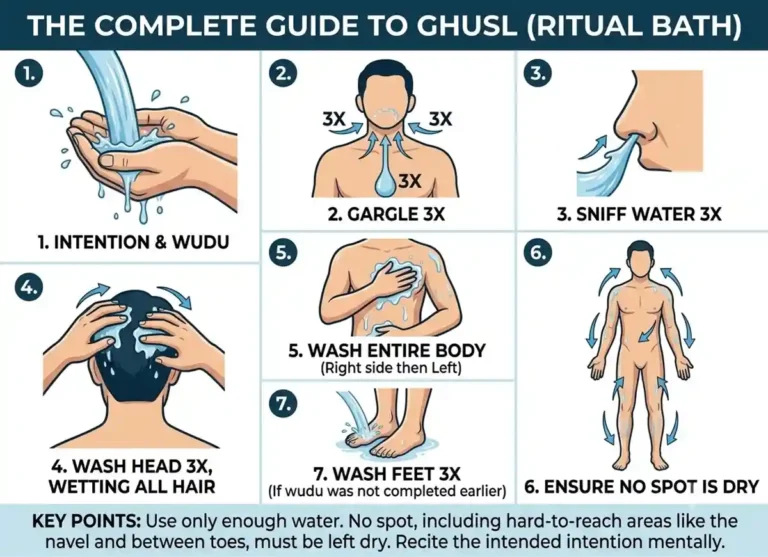
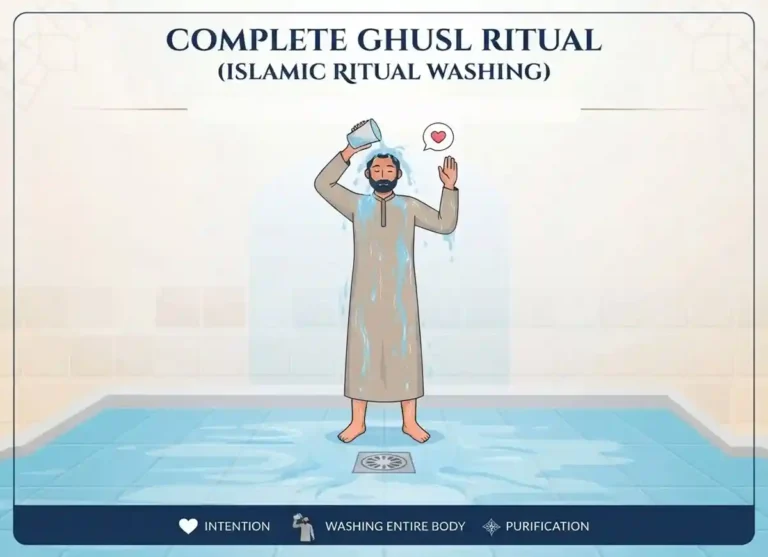
Ghusl, the full ritual bath, becomes obligatory for both spouses after intercourse, regardless of whether ejaculation occurs. This is based directly on hadith teaching that the meeting of the two partners in this way requires purification before prayer or handling the Quran.
Until ghusl is performed, a person remains in a state of major ritual impurity, meaning prayer and certain acts of worship aren’t valid. This is one of the clearest, most practically important rulings for married Muslims to understand early on.
A Quick Reference Table
| Topic | Islamic Ruling |
| Intimacy within marriage | Permitted and rewarded when approached mindfully |
| Intercourse before marriage | Not permitted under any circumstance |
| Consent and comfort | Required from both spouses |
| Privacy about marital matters | Strongly protected; sharing details is discouraged |
| Ghusl after intercourse | Obligatory before the next prayer |
For readers wanting deeper scholarly detail, IslamQA and the Islamic Teachings Forum both cover marital fiqh topics in more depth.
Recommended Hanafi Fiqh Books
For structured reading on marital fiqh, these titles are commonly available in Islamic libraries and archives:
- Bahishti Zewar by Maulana Ashraf Ali Thanvi
- Al-Hidayah by Burhan al-Din al-Marghinani
- Raddul Muhtar by Ibn Abidin
- Fatawa Alamgiri (relevant sections on marriage and purification)
Historical and General Background
According to Wikipedia, Islamic sexual jurisprudence addresses marital relations through a defined legal and ethical framework rooted in Quran and Hadith. Britannica also notes that most religious legal traditions frame sexual intimacy through the lens of marriage as a protected, contractual relationship.
If you’d like a structured academic overview of this subject, Save My Exams offers GCSE-level revision notes covering Islam and sexual relationships. For daily-life guidance rooted in Quran and Sunnah, articles on www.quranmualim.com cover related marriage and family topics.
Categories: PRAYER ,ALMS , SAWN & The Holy Quran, Quran Jaz 1- 114

Frequently Asked Questions
Is sex considered a sin in Islam?
No, not within marriage. Islam considers lawful intimacy between spouses a rewarded act, as long as it happens within the bounds of marriage and mutual consent.
What does Islam say about intimacy outside marriage?
It’s strictly prohibited for both men and women. Islam channels desire into marriage, which provides structure, rights, and responsibility for both partners.
Is ghusl required every time after intercourse?
Yes. Ghusl becomes obligatory after intercourse regardless of ejaculation, and must be completed before the next prayer or handling the Quran.
Does Islam value pleasure in marital intimacy?
Yes. Scholars emphasize mutual satisfaction, kindness, and consideration between spouses, not just intimacy as a duty or obligation to fulfill.
Can spouses discuss intimate matters with friends?
No. Islamic etiquette strongly discourages sharing private marital details with others, treating this privacy as a matter of trust and respect between spouses.
Final Thoughts
Sexuality in Islam isn’t a taboo subject once you look at it through the actual Quran and Hadith. It’s treated with dignity, structured through marriage, and even connected to spiritual reward when approached with the right intention. Understanding this brings clarity, removes unnecessary guilt, and helps couples build a relationship grounded in both faith and mutual care.
Also Read: The Key To Purity: Dua For Ghusl After Menstruation

Recommended For You
- Do Muslims Masturbate? Learn Islam
- Is Abortion Haram Islam? Learn Islam
- What Does The Quran Say About Killing?
- Do Cats Bring Angels in The House in Islam?
- Al-Aqsa Mosque: Why It’s Islam’s First Qibla
- Clear Sticky Discharge Male After Urination?
- Is Abortion Haram? What Islamic Teachings Say
- Can You Read Quran on Your Period? Learn Islam
- Ghusl: A Complete Guide to Islamic Ritual Purification
- Is It Permissible To Use Condom in Islam? Learn Islam
- How To Clean Private Parts After Urination? Learn Islam
- Bone Marrow Donation in Islam: Overview, Process & Side Effects
Related Blogs:
- Is Being Gay Haram – Learn Islam
- Is It Haram To Be Gay? – Learn Islam
- Can You Be Gay in Islam? learn Islam
- Is It Haram to Masturbate? Learn Islam
- Do Gay People Go To Heaven? Learn Islam
- Can Gay People Go To Heaven? Learn Islam
- What Islam Says About Gay People in Islam?
- What Does The Quran Say About Gay People?
- How Many Calories Does Masturbating Burn?
- Is Homosexuality in Islam Allowed? Learn Islam
- Can I Kiss My Wife Private Parts in Christianity?
- What Does The Quran Say About Homosexuality?
- What Does Islam Say About Homosexual Marriage?
- The Crucial Role of The Qur’an in Enlightened Living
- Religion and Sexuality – A Journey of A Gay Muslim
- Is Sodomy A Sin? Perspectives on Its Moral Standing