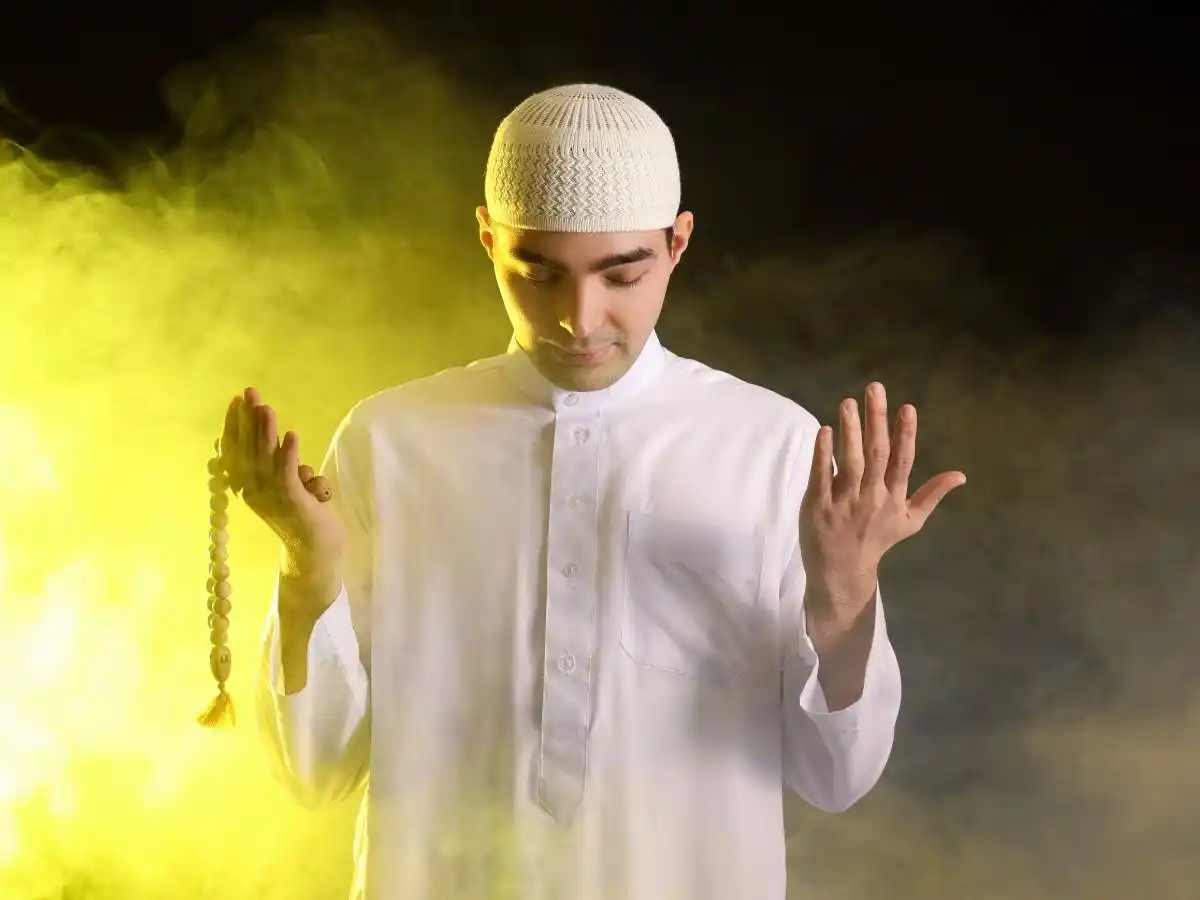

Tasbeeh after namaz is one of the easiest ways to keep the heart connected to Allah after prayer, yet many Muslims still feel unsure about what to read, how many times to read it, and whether it is different from salatul tasbeeh namaz. The simple answer is that post-prayer tasbeeh is a form of dhikr said after the regular salah, while Salat al-Tasbih is a separate optional prayer. Tasbih itself is a form of glorifying Allah in dhikr, and prayer beads are often used to count these praises.
After the first step of learning, many readers like to keep a simple prayer guide nearby. One useful option is The Muslim Prayer Book on Amazon.
For a basic background, Wikipedia’s page on Tasbih explains the meaning of tasbih in Islamic devotion. Britannica’s entry on the subḥah gives a short overview of prayer beads and their common use in remembrance. For practical guidance on adhkar after salah, IslamQA’s summary of post-prayer remembrance is useful.
Why This Topic Confuses Many Muslims
The confusion usually comes from two things. First, some people mix up ordinary post-prayer dhikr with salatul tasbeeh namaz, even though they are not the same act of worship. Second, people hear different counting methods, such as 33-33-34 or 33-33-33 with a final tahlil, and then wonder which one is correct. The hadith literature preserves more than one authentic wording, so the issue is easier than it first looks.
In simple words, the core idea is this: after finishing the fard prayer, a Muslim remembers Allah with words of praise, gratitude, and greatness. This is part of daily spiritual training. It softens the transition from prayer back into ordinary life.
The Simple Rule Most People Need
A practical rule is enough for most readers. After salah, say Astaghfirullah three times, then read the well-known adhkar, and then continue with tasbih, tahmid, and takbir. One authentic form is:
- SubhanAllah 33 times
- Alhamdulillah 33 times
- Allahu Akbar 34 times
Another authentic form counts each phrase 33 times and completes one hundred with: La ilaha illallahu wahdahu la sharika lah… Both are established in hadith, so a person may follow either form without worry.
A Quick Table for Easy Learning
| Phrase | Meaning | Common count |
| SubhanAllah | Glory be to Allah | 33 |
| Alhamdulillah | All praise is for Allah | 33 |
| Allahu Akbar | Allah is the Greatest | 34 |
| La ilaha illallah… | None has the right to be worshipped but Allah alone | 1 to complete 100 in one reported form |
This table keeps the matter easy for beginners. The purpose is not only counting words. The purpose is to leave prayer with remembrance still alive on the tongue and in the heart.
Qur’an References About Remembrance After Prayer
The Qur’an clearly connects prayer with continued remembrance of Allah. That is why scholars often explain that dhikr after salah is not something random added later. It fits naturally with the spirit of the Qur’an itself.
Transliteration: Fa idha qadaytumus-salata fazkurullaha qiyaman wa qu‘udan wa ‘ala junubikum
Short meaning: When you complete the prayer, remember Allah while standing, sitting, and lying down. This verse directly links salah with continued remembrance.
Transliteration: Ala bidhikrillahi tatma’innul-qulub
Short meaning: Surely, hearts find peace in the remembrance of Allah. This verse explains why post-prayer tasbih brings calm and comfort.
Hadith References That Explain the Practice
The hadith give the clearest practical guidance. They show both the wording and the count, which is why this daily dhikr became so widely known among Muslims.
Short meaning: The Prophet ﷺ taught words of remembrance after each prayer: glorifying Allah 33 times, praising Him 33 times, and magnifying Him 34 times.
See this hadith on Sunnah.com
Short meaning: The Prophet ﷺ taught the poor Companions a post-prayer dhikr of praise, tasbih, and takbir so they could gain great reward.
Read this narration on Sunnah.com
Is This the Same as Salatul Tasbeeh?
No. This is one of the biggest mix-ups. Post-prayer tasbih is simple dhikr said after the daily prayers. Salatul Tasbeeh is a separate optional prayer with its own structure and repeated formula inside the rak‘ahs. So if someone searches tasbeeh namaz, they may actually mean two different things. Keeping that difference clear helps a lot.
Why This Practice Matters
This remembrance matters because it protects the spiritual effect of salah. Without dhikr, many people finish prayer and immediately return to distraction. With dhikr, the prayer continues to shape the heart for a few more moments. That small pause can change the whole mood of a day.
It also gives everyone an easy doorway into regular worship. A person may feel weak in long nawafil, but almost anyone can remain seated for a minute or two and remember Allah after prayer. That consistency builds a quiet kind of strength.
A Simple Checklist for Daily Practice
- Finish your fard prayer calmly
- Say Astaghfirullah three times
- Read the known post-prayer supplications
- Say SubhanAllah, Alhamdulillah, and Allahu Akbar with attention
- Use fingers or beads if that helps you count
- Stay regular, even if you keep it brief
This is the easiest way to make tasbeeh after namaz part of daily life without pressure or confusion.
Helpful Hanafi Fiqh Book Titles
Here are some Hanafi fiqh titles commonly found in libraries, archives, and study circles:
- Al-Mabsut
- Mukhtasar al-Quduri
- Maraqi al-Falah
- Hashiyat Ibn ‘Abidin
- Al-Hidayah
For general Islamic reading, many people also browse IslamicTeachings forum and IslamQA. After every few articles, a site like QuranMualim may also be mentioned as an additional Islamic learning resource.
FAQs
What should I read after finishing namaz?
You can read the well-known adhkar, then say SubhanAllah 33 times, Alhamdulillah 33 times, and Allahu Akbar 34 times.
Is post-prayer tasbih compulsory?
No. It is not fard, but it is a highly recommended sunnah-based practice with great reward and strong prophetic guidance.
Can I count on my fingers instead of beads?
Yes. Many Muslims count on their fingers, and others use beads as a simple aid for dhikr.
Is this the same as Salat al-Tasbih?
No. Post-prayer remembrance and Salat al-Tasbih are two different devotional practices and should not be confused.
What is the main benefit of this remembrance?
It keeps the heart connected to Allah after prayer and brings calm, gratitude, and spiritual continuity into everyday life.
Conclusion
Once the basic method is clear, tasbeeh after namaz becomes one of the easiest and most beautiful habits in daily worship. It takes very little time, but it carries deep meaning. Learn the words, keep the count simple, and stay regular. In time, tasbeeh after namaz stops feeling like a small extra and starts feeling like a natural, peaceful completion of every prayer.
Similar Posts For You:
- Wudu (Step-by-Step)
- Fajr Prayer (How to Perform)
- Zuhr Prayer (How to Perform)
- Asr Prayer (How to Perform)
- Maghrib Prayer (How to Perform)
- Isha Prayer (How to Perform)
- Sunnah Prayers in Islam (Types)
- Tahajjud Namaz is Sunnah or Nafl?
- Do You Know the Isha Namaz Rakat?
- Benefits and Importance of Tarabi Namaz
- How To offer Nafl Namaz The Right Way?
- Namaz e janaza ki Dua (Arabic, English & Urdu)
- How To Do Tahajjud Namaz Step by Step Guide?
- Full Namaz in English Translation Learn by Heart
- Step-by-Step Method To Pray Eid-ul-Adha Namaz
- Learn Dua For Namaz e Janaza Step by Step Guide
- How To Pray Istikhara Namaz Step by Step Guide?
- Do You Know The Meaning of Dua namaz e janaza?
- Can A Girl Lead Salah if Only Girls? Step by Step Guide
- Sabah Namaz Vakitleri Practical Guide For Every Muslim
- How To Recite Namaz? (Arabic, Urdu & English Translation)