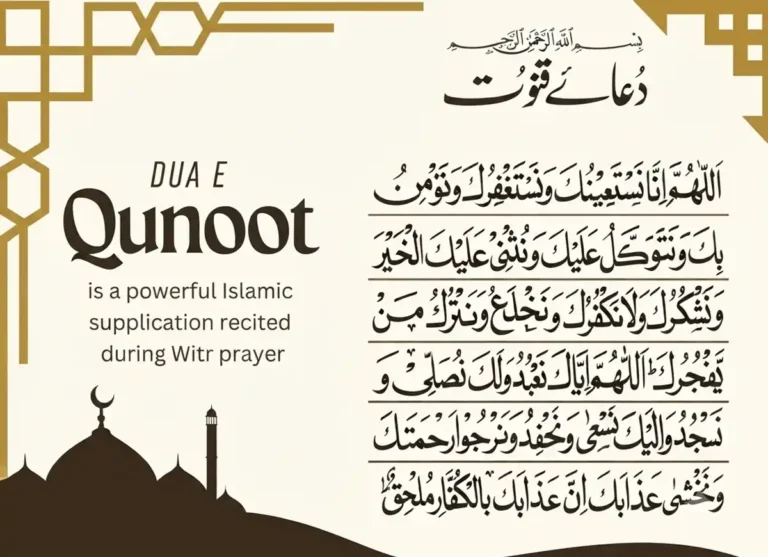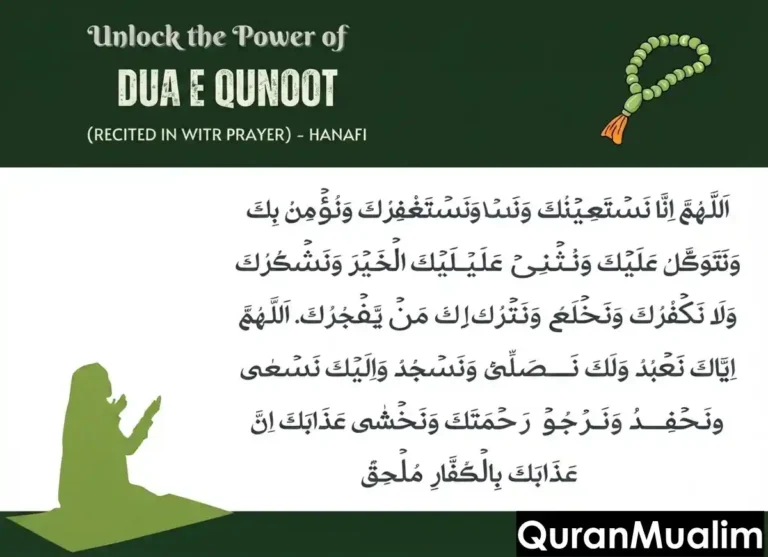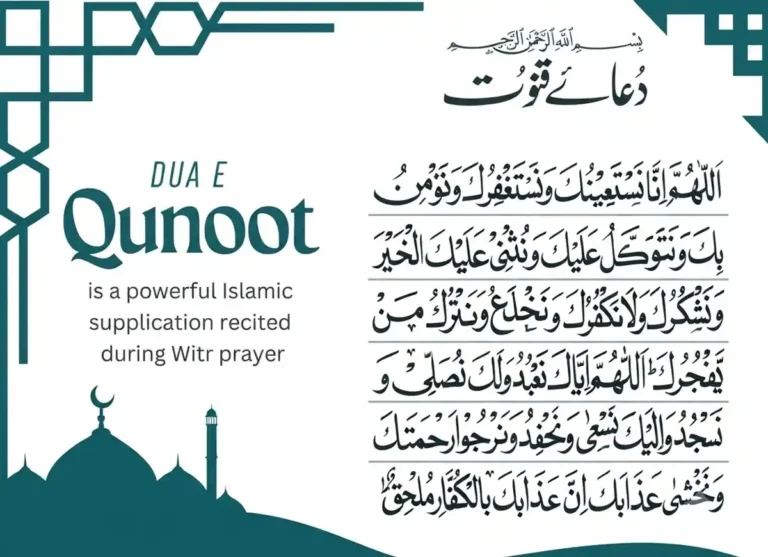


Dua e Qunoot English Transliteration is what most beginners type into the first time they hear the imam pause after ruku in Witr and say something unfamiliar. You want to follow along, maybe even recite it yourself one day, but Arabic script feels like a wall. That’s a completely normal starting point, and it’s exactly where this guide picks up.
This compact transliterated dua booklet on Amazon is a handy companion if you’d rather practice from a printed page than a phone screen.
Why Transliteration Helps Beginners
Learning Arabic recitation takes time, and there’s nothing wrong with using transliteration as a bridge while you build that skill. It lets you join in Witr prayer immediately instead of waiting months to feel ready. Most reciters, mosques, and Islamic teachers actually encourage this approach for new learners.
The goal isn’t to stay dependent on Roman letters forever. It’s to get you praying with confidence now, while gradually moving toward the Arabic script over time. Many long-time reciters started exactly this way, sounding out each phrase slowly before it became second nature.
Quran Verses on the Value of Dua
The Quran doesn’t reference this specific supplication, but it repeatedly reminds believers that calling on Allah is both encouraged and answered.
- Surah Al-Furqan 25:77 — Allah says He wouldn’t care about His servants if not for their dua, showing how central supplication is to worship. Read on Quran.com
- Surah Ibrahim 14:40 — This is the Prophet Ibrahim’s own dua asking to remain steadfast in prayer, a model for sincere and consistent supplication. Read on Quran.com
Hadith Sources for the Wording
The most authentic source for these words comes from Al-Hasan ibn Ali, who narrated that the Messenger of Allah ﷺ personally taught him specific phrases to recite during Witr, covering guidance, protection, and blessing. This chain is preserved with near-identical wording across multiple hadith collections. See Sunan an-Nasa’i 1746.
A closely related version appears in Sunan Ibn Majah, narrated by Al-Hasan as well, describing how his grandfather, the Prophet ﷺ, taught him these same words for Qunoot in Witr, with only minor differences in phrase order. See Sunan Ibn Majah 1178.
Also Read: How to Pray Salah: Step-by-Step Guide (Wudu + Fajr, Zuhr, Asr, Maghrib, Isha)

دعائے قنوت
اللَّهُمَّ اهْدِنِي فِيمَنْ هَدَيْتَ، وَعَافِنِي فِيمَنْ عَافَيْتَ، وَتَوَلَّنِي فِيمَنْ تَوَلَّيْتَ، وَبَارِكْ لِي فِيمَا أَعْطَيْتَ، وَقِنِي شَرَّ مَا قَضَيْتَ، فَإِنَّكَ تَقْضِي وَلَا يُقْضَى عَلَيْكَ، وَإِنَّهُ لَا يَذِلُّ مَنْ وَالَيْتَ، وَلَا يَعِزُّ مَنْ عَادَيْتَ، تَبَارَكْتَ رَبَّنَا وَتَعَالَيْتَ
The Full Transliterated Text
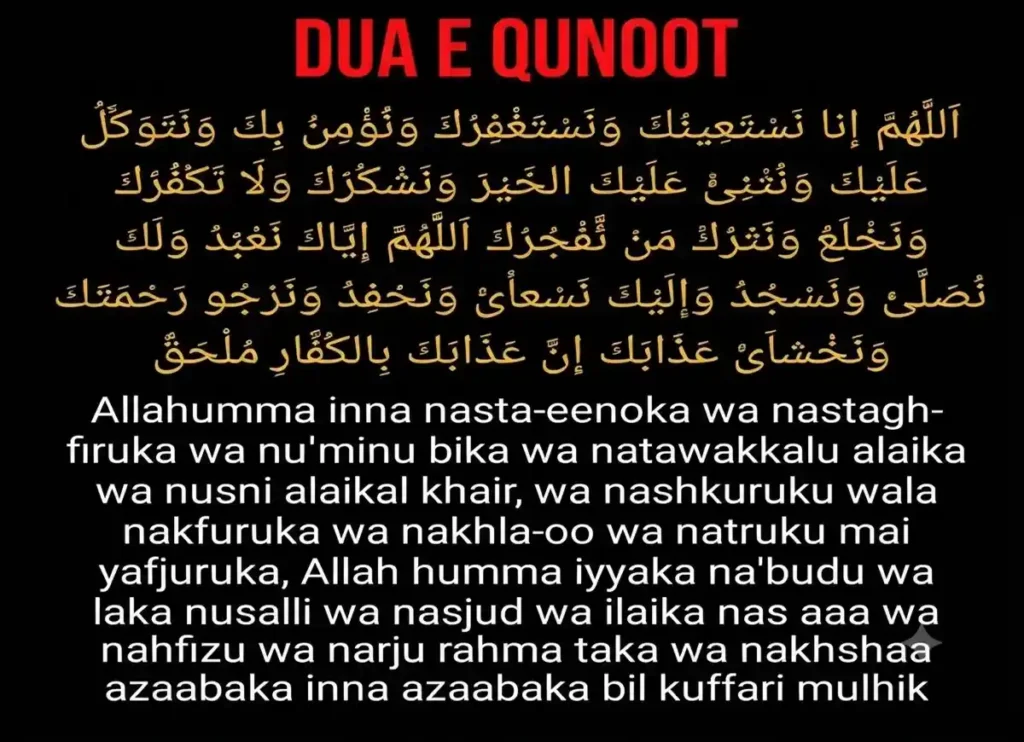
Here’s the complete dua e qunoot in english transliteration, written phrase by phrase so it’s easy to follow along, sometimes also written as dua e qunoot with english transliteration:
Allahumma-hdini fiman hadait, wa ‘afini fiman ‘afait, wa tawallani fiman tawallait, wa barik li fima a’tait, wa qini sharra ma qadait, fa innaka taqdi wa la yuqda ‘alaik, wa innahu la yadhillu man walait, wa la ya’izzu man ‘adait, tabarakta Rabbana wa ta’alait.
Dua e Qunoot – Transliteration (Word by Word)
| Arabic Word | Transliteration |
|---|---|
| اللَّهُمَّ | Allahumma |
| إِنَّا | Inna |
| نَسْتَعِينُكَ | Nasta’eenuka |
| وَنَسْتَغْفِرُكَ | Wa nastaghfiruka |
| وَنُؤْمِنُ بِكَ | Wa nu’minu bika |
| وَنَتَوَكَّلُ عَلَيْكَ | Wa natawakkalu ‘alaika |
| وَنُثْنِي عَلَيْكَ الْخَيْرَ | Wa nuthni ‘alaikal khair |
| وَنَشْكُرُكَ | Wa nashkuruka |
| وَلَا نَكْفُرُكَ | Wa la nakfuruka |
| وَنَخْلَعُ | Wa nakhla’u |
| وَنَتْرُكُ | Wa natruku |
| مَنْ يَفْجُرُكَ | Man yafjuruka |
| اللَّهُمَّ | Allahumma |
| إِيَّاكَ نَعْبُدُ | Iyyaka na’budu |
| وَلَكَ نُصَلِّي | Wa laka nusalli |
| وَنَسْجُدُ | Wa nasjud |
| وَإِلَيْكَ نَسْعَى | Wa ilaika nas’a |
| وَنَحْفِدُ | Wa nahfid |
| نَرْجُو رَحْمَتَكَ | Narju rahmataka |
| وَنَخْشَى عَذَابَكَ | Wa nakhsha ‘adhabaka |
| إِنَّ عَذَابَكَ | Inna ‘adhabaka |
| بِالْكُفَّارِ مُلْحِقٌ | Bil kuffari mulhiq |
Read it slowly at first, phrase by phrase, pausing between each line. Speed comes naturally once the sounds feel familiar. Most learners find they’ve memorized it within a week or two of regular practice.
Also Read: Learn Dua Qunoot in Arabic Text PDF Download
Quick Reference Table
| Step | What to Do |
| Week 1 | Read the transliteration slowly, phrase by phrase, during Witr |
| Week 2 | Start reciting from memory, checking the text only when stuck |
| Week 3 | Begin comparing your pronunciation with the Arabic script |
| Ongoing | Recite confidently, adding personal dua after the core wording |
Also Read: Dua After Praying – Do This For Rizq, Mercy & Blessings!
Hanafi Fiqh References
For readers who want to explore Witr and qunoot rulings in more depth, these classical Hanafi texts are widely referenced and commonly found in Islamic libraries and archives:
- Maraqi al-Falah by Hasan ibn Ammar al-Shurunbulali
- Al-Lubab fi Sharh al-Kitab by Abd al-Ghani al-Maydani
- Bahishti Zewar by Ashraf Ali Thanvi
Why Recite Dua e Qunoot?
Dua e Qunoot isn’t just a ritual add-on to Witr — it’s a moment where you pause and speak directly to Allah in words the Prophet ﷺ himself taught. Here’s why it matters:
- It came straight from the Prophet ﷺ. He personally taught these exact words to his grandson Al-Hasan ibn Ali for use in Witr. Reciting it connects you to that living chain of teaching, not something invented later.
- It’s a complete, balanced supplication. In a few lines, it covers guidance, protection, well-being, blessing, and safety from harm — everything a person needs to ask for in one place.
- It builds the habit of nightly reflection. Witr closes out your day. Pausing here gives you a quiet moment to hand over your worries before sleep, rather than rushing straight from prayer to bed.
- It’s flexible. After the core wording, you’re free to add your own personal requests. It becomes a template for real conversation with Allah, not just fixed recitation.
Also Read; Root Words of Quran
Benefits of Reciting Dua e Qunoot
- Seeking guidance — You’re directly asking to be counted among those Allah has guided, which keeps you mindful of staying on the right path.
- Asking for well-being — The dua covers both physical and spiritual wellness, a request scholars say covers this life and the next.
- Protection from harm — The line asking to be shielded from the evil of what’s decreed offers comfort, especially during hard times.
- Strengthening reliance on Allah — Saying “You decree and none can decree over You” is a powerful reminder that outcomes are in Allah’s hands, not yours to control.
- A source of honor and safety — The dua notes that whoever Allah befriends is never humiliated, reinforcing trust that nearness to Allah brings real protection.
- Consistency in worship — Reciting it nightly builds discipline and turns Witr into a more meaningful, personal close to your prayers rather than a routine formality.
Common Questions About This Dua
New learners often search simply for dua e qunoot, wanting one clear place with both the meaning and the pronunciation together. That’s really the point of pairing transliteration with translation — it removes the guesswork.
If you want to compare how different schools of thought approach the timing and wording, IslamQA and the forum discussions on IslamicTeachings.org are solid places to dig deeper. You can also find related Witr prayer guides on quranmualim.com for a fuller walkthrough.
For general background on Witr as a practice, Wikipedia’s entry on Witr and Britannica’s overview of the Five Pillars are useful starting points.
Categories: PRAYER ,ALMS , SAWN & The Holy Quran, Quran Jaz 1- 114

FAQs
Is it okay to recite Dua e Qunoot using transliteration only?
Yes, especially while learning. Many reciters start with transliteration and gradually shift to Arabic script as their confidence and pronunciation improve.
How long does it usually take to memorize?
Most people memorize it within one to two weeks with nightly practice, since Witr naturally repeats the phrases every evening.
Does mispronouncing a word invalidate my prayer?
No. Minor mistakes while learning don’t invalidate Witr. Keep practicing, and your pronunciation will steadily improve with repetition.
Can I use an app instead of a printed transliteration?
Either works well. Choose whichever format helps you stay consistent, whether that’s a printed booklet or a trusted prayer app.
Is the transliteration the same across all reliable sources?
It’s mostly consistent, though spelling of Arabic sounds in English letters can vary slightly between websites and books.
Final Thoughts
Mastering the Dua e Qunoot English Transliteration is a small, achievable goal that makes a real difference in how present you feel during Witr. Practice a little each night, don’t rush the process, and trust that fluency will come with consistency. Your prayer will feel more personal with every recitation.
Brought to you by Alasad Online Quran Tutor — visit Quranmualim.com for more Quran and Tajweed learning resources, or reach us on WhatsApp and YouTube (@quranmualim) to start your own learning journey.
Check Also Similar Post:
- Can I Pray Witr After Fajr?
- Is Witr Mandatory? – Learn Islam
- Can You Pray Tahajjud After Witr?
- How To Pray Salah Witr? Learn Islam
- How To Do Witr Prayer? – Learn Islam
- Witr Ki Dua (Dua e Qunoot) – Learn Islam
- Can You Pray Tahajjud After Witr Namaz?
- Dua e Qunoot (Recited Dua Qunoot in Witr)
- Do You Pray Witr After Tahajjud? Learn Islam
- How To Pray Witr Step-by-Step? – Learn Islam
- Witr Dua (recited in Witr prayer) – Learn Islam
- Everything You Need to Know About Witr Namaz
- How To Pray Witr Prayer Correctly? – Learn Islam
- Witr Namaz: A Complete Guide For Every Muslim
- What Is Witr? A Complete Guide for Every Muslim
- Dua e Qunoot English Translation and Transliteration
- How To Pray 3 Rak’ahs of Witr Prayer (Hanafi Method)