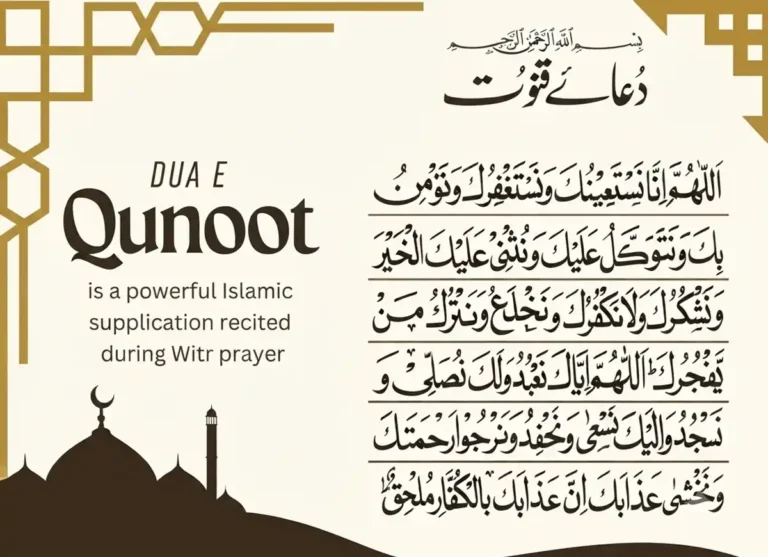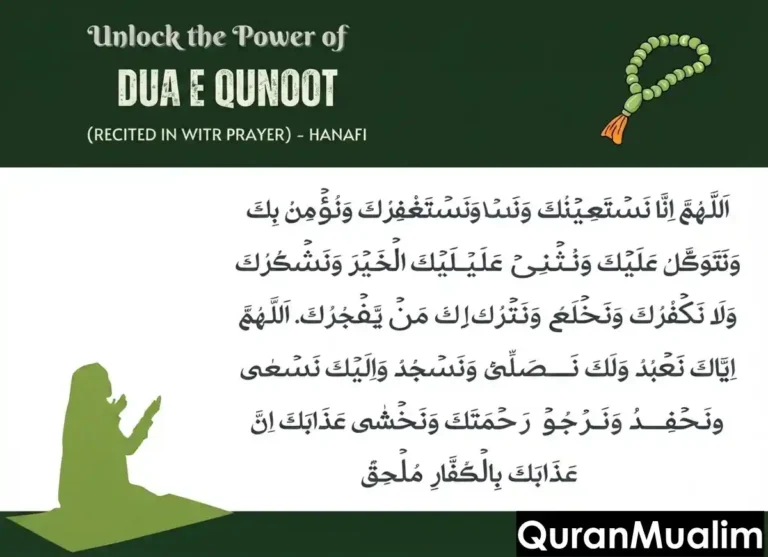
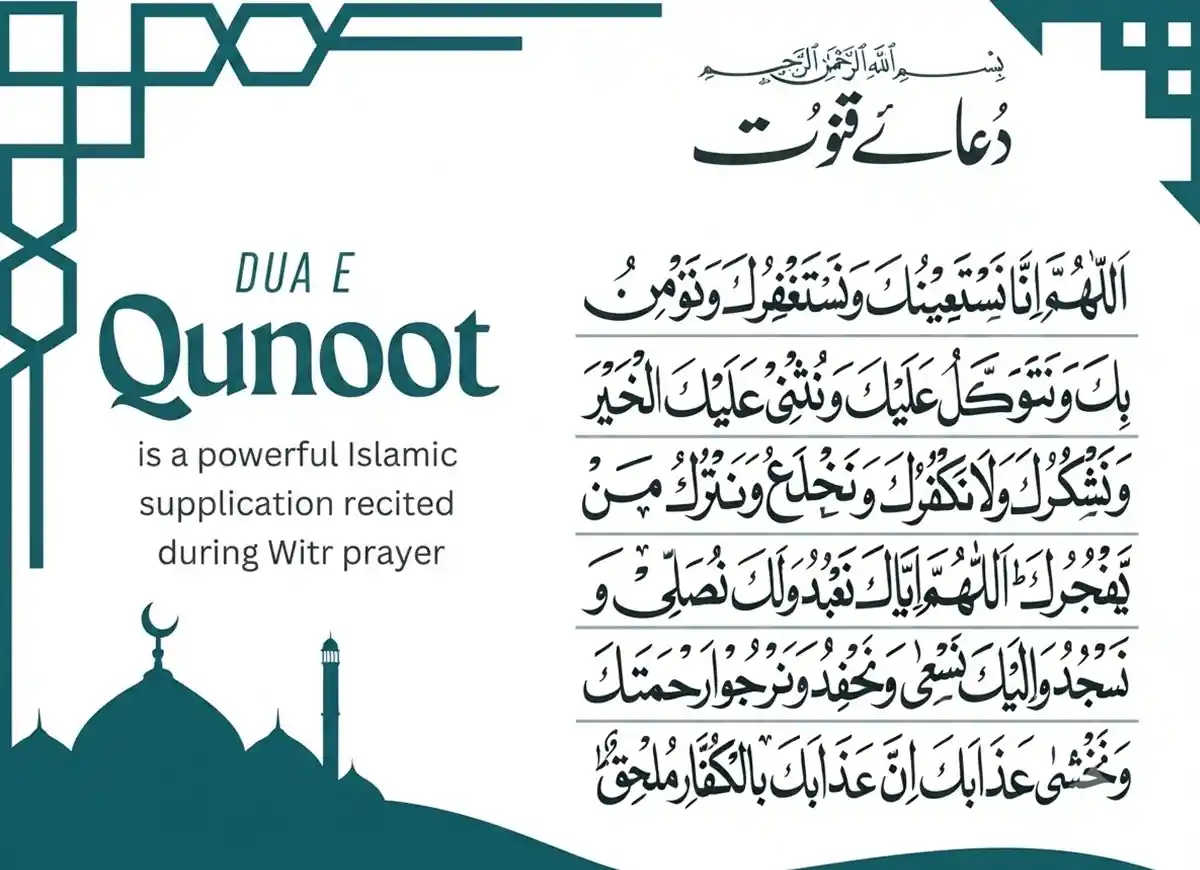

Dua e Qunoot is one of those small pieces of worship that trips up a lot of new Witr prayer readers. You hear the imam pause after ruku, raise his hands, and say something soft and unfamiliar — and you wonder if you missed a memo. You didn’t. It’s a sunnah supplication, not an obligation, and once you know the story behind it, the whole thing stops feeling mysterious.
Grab a pocket-sized Hisnul Muslim on Amazon to keep the Arabic and transliteration handy while you memorize it.
Why This Supplication Matters
This dua isn’t a random addition. It’s a set of words the Prophet ﷺ personally taught to his own grandson, which tells you something about how much weight it carries. Reciting it in Witr is a moment of quiet handover — you’re asking Allah for guidance, protection, and blessing in your own words, using words He approved through revelation to His Messenger.
For many Muslims, this short pause becomes the most personal part of the night prayer. There’s no rigid script beyond the core phrases, and scholars agree you can add your own requests. That flexibility is part of why it has stayed a beloved practice across centuries and across every school of thought.
Quran References on Supplication
The Quran doesn’t mention this specific Witr supplication by name, but it lays the foundation for why dua itself matters so much in a believer’s life.
- Surah Ghafir 40:60 — Allah says to call upon Him and He will respond. It’s a direct promise that supplication is never wasted effort. Read on Quran.com
- Surah Al-Baqarah 2:186 — Allah tells the believers He is near, and answers the caller when they call upon Him. This verse is often cited as proof that dua sits at the heart of worship. Read on Quran.com
Hadith Evidence for the Qunoot Dua
The clearest hadith on this topic comes from Al-Hasan ibn Ali, the Prophet’s grandson, who said the Messenger of Allah ﷺ taught him specific words to recite in Witr — the same lines Muslims recite today, asking for guidance, well-being, and protection from harm. This narration is preserved with slightly different wording across the hadith collections, and its authenticity is widely accepted.
A second, related hadith comes from Anas ibn Malik, who reported that the Prophet ﷺ once recited a form of qunoot after ruku for a full month during a period of hardship for the Muslim community, a practice known as Qunoot Nazilah. This shows qunoot has two uses: the regular Witr dua, and a special calamity dua added temporarily to obligatory prayers. See Sahih al-Bukhari 1002 and the parallel narration in Sahih Muslim 677.
Also Read: How To Pray Complete Namaz With Urdu translation Step by Step
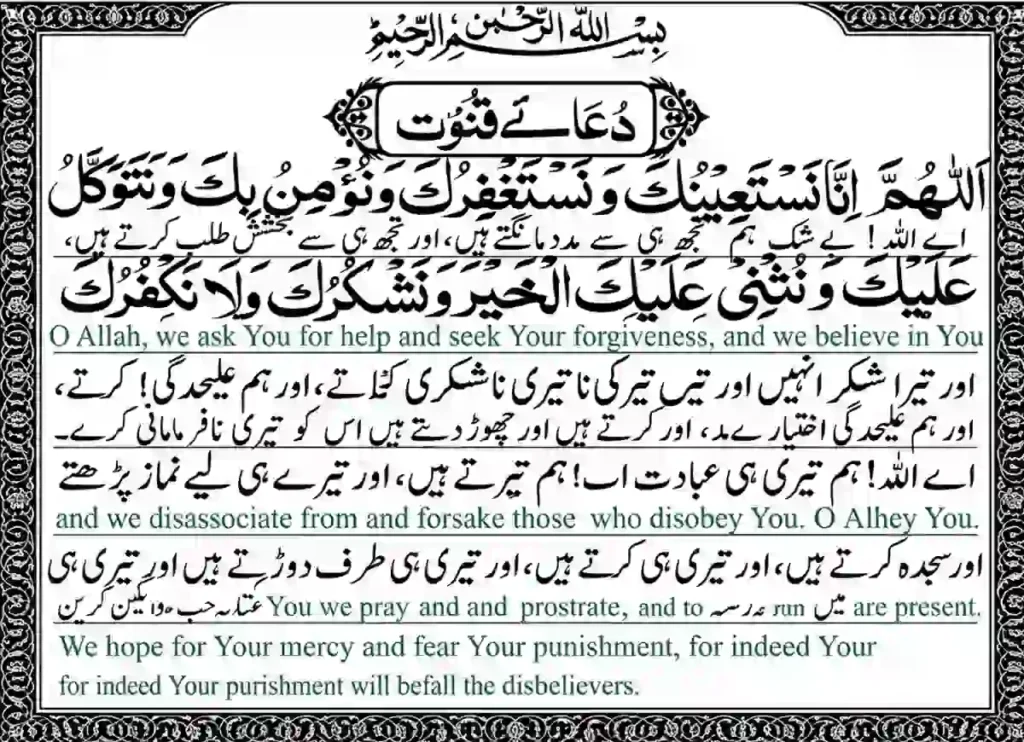
Qanoot and Urdu Translation
دعائے قنوت
اللَّهُمَّ اهْدِنِي فِيمَنْ هَدَيْتَ، وَعَافِنِي فِيمَنْ عَافَيْتَ، وَتَوَلَّنِي فِيمَنْ تَوَلَّيْتَ، وَبَارِكْ لِي فِيمَا أَعْطَيْتَ، وَقِنِي شَرَّ مَا قَضَيْتَ، فَإِنَّكَ تَقْضِي وَلَا يُقْضَى عَلَيْكَ، وَإِنَّهُ لَا يَذِلُّ مَنْ وَالَيْتَ، وَلَا يَعِزُّ مَنْ عَادَيْتَ، تَبَارَكْتَ رَبَّنَا وَتَعَالَيْتَ
اردو ترجمہ
اے اللہ! مجھے ہدایت دے ان لوگوں میں شامل کر کے جنہیں تو نے ہدایت دی، اور مجھے عافیت دے ان لوگوں میں شامل کر کے جنہیں تو نے عافیت دی، اور مجھے اپنی کفالت میں لے ان لوگوں میں شامل کر کے جنہیں تو نے اپنی کفالت میں لیا، اور مجھے برکت دے اس میں جو تو نے مجھے عطا کیا، اور مجھے اس چیز کے شر سے بچا جو تو نے مقدر کی، بے شک تو ہی فیصلہ کرتا ہے اور تیرے خلاف کوئی فیصلہ نہیں ہو سکتا، اور بے شک ذلیل نہیں ہوتا وہ جس سے تو دوستی رکھے، اور عزت نہیں پاتا وہ جس سے تو دشمنی رکھے، اے ہمارے رب! تو بابرکت اور بلند و بالا ہے۔
Dua e Qanoot – Step by Step Guide
Step 1: Understand When It Is Recited
Dua e Qanoot is recited in the third rak’ah of Witr prayer, after the Qira’at (recitation of Surah Al-Fatiha and another surah) and before bowing into Ruku.
Step 2: Complete the Qira’at First
Recite Surah Al-Fatiha followed by a surah of your choice in the third rak’ah, as done normally.
Step 3: Say Takbeer Before Qunoot
After finishing the Qira’at, raise both hands up to the ears and say “Allahu Akbar” (this Takbeer is specific to entering Qunoot, separate from the Ruku Takbeer).
Step 4: Fold the Hands
After the Takbeer, fold your hands below the navel (as in normal Qiyam position), and begin reciting the Dua e Qanoot.
Step 5: Recite the Dua e Qanoot
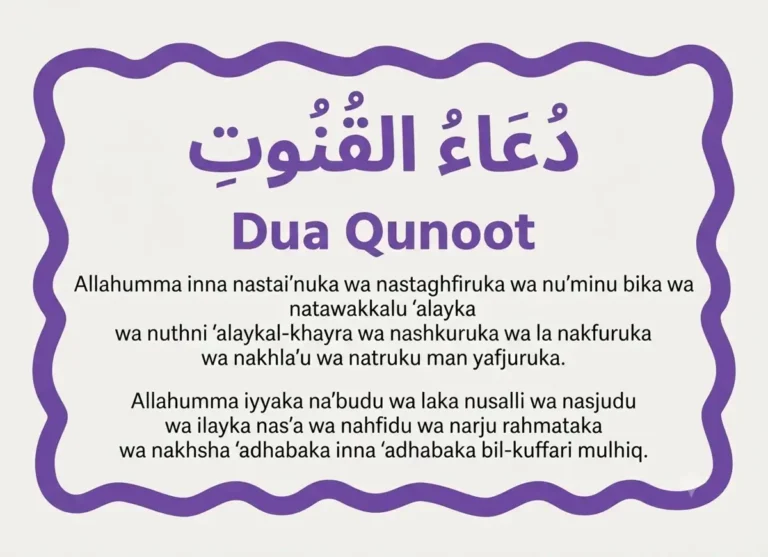
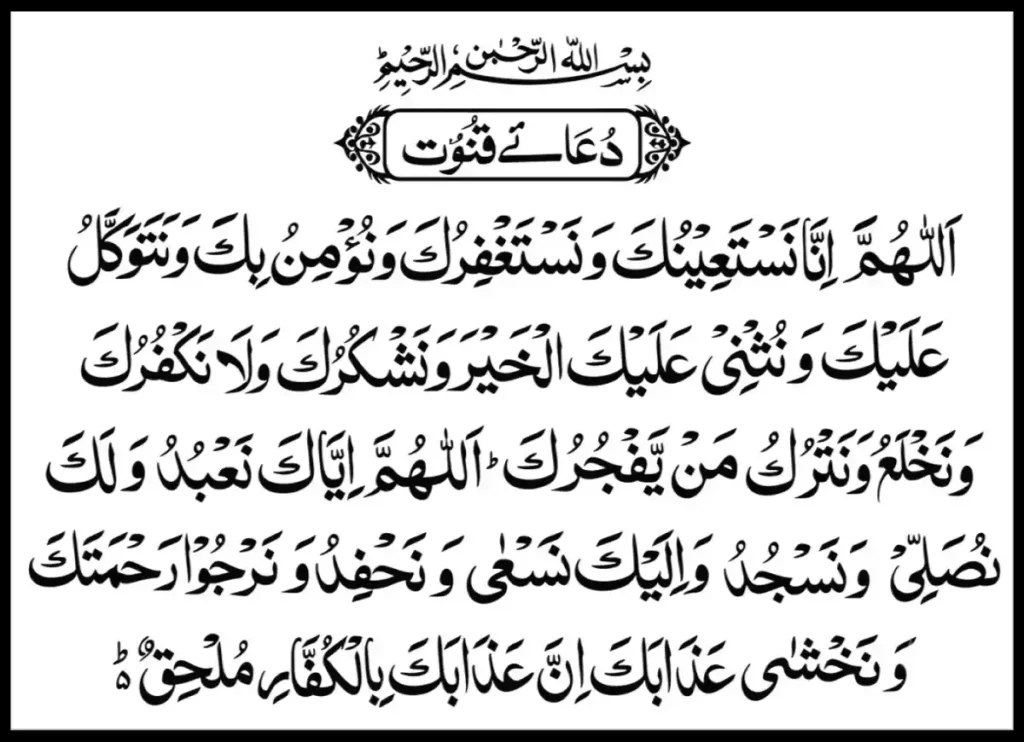
Recite the dua, either the well-known text (beginning with “Allahumma inna nasta’eenuka…”) or any other authentic supplication if the exact wording is not memorized.
Step 6: If You Don’t Know the Dua
If a person hasn’t memorized Dua e Qanoot, scholars permit reciting three times “Allahumma-ghfir lana” or any other short dua, or even reciting Surah Al-Fatiha as a substitute until it is learned.
Step 7: Proceed to Ruku
After completing the Qunoot, say “Allahu Akbar” and go into Ruku, continuing the rest of the Salah as normal (Ruku, Sujood, Tashahhud, etc.).
Step 8: Complete the Prayer
Finish the rak’ah and the Witr prayer as usual, ending with Tashahhud, Durood, dua, and Salam.
Also Read: How to Pray Salah: Step-by-Step Guide (Wudu + Fajr, Zuhr, Asr, Maghrib, Isha)
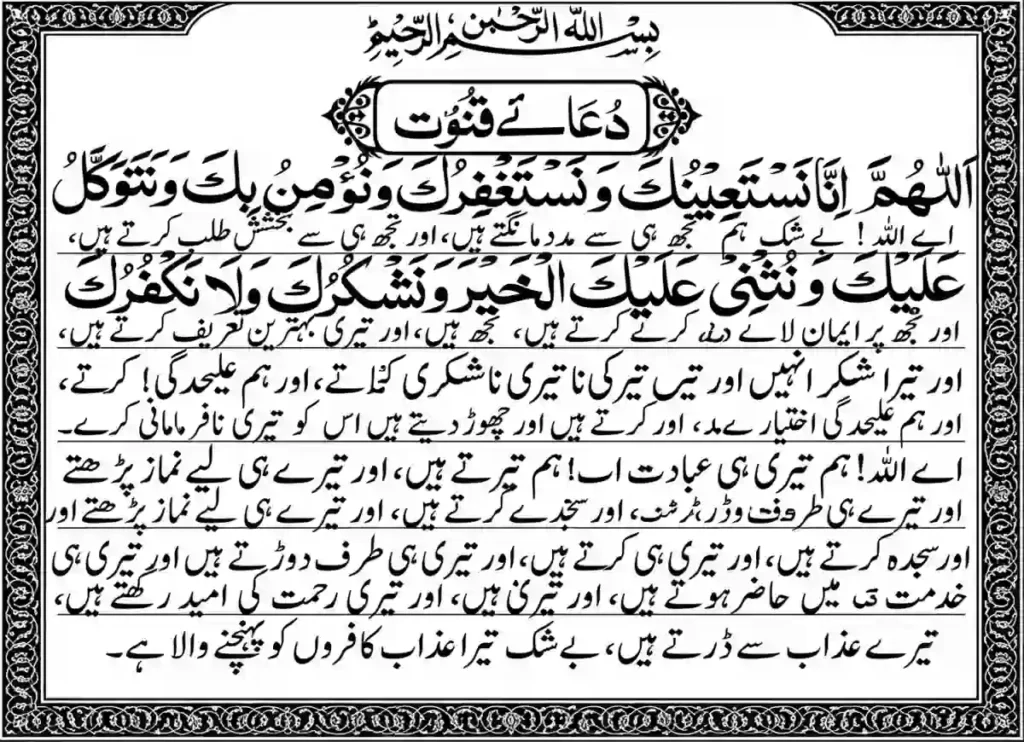
The Qunoot Supplication in English Transliteration
Many readers specifically search for dua e qunoot in english because memorizing Arabic feels intimidating at first. Here’s the transliteration alongside a short meaning:
Allahumma-hdini fiman hadait, wa ‘afini fiman ‘afait, wa tawallani fiman tawallait, wa barik li fima a’tait, wa qini sharra ma qadait…
Meaning: “O Allah, guide me among those You have guided, grant me health among those You have granted health, take me under Your care among those You have cared for, bless me in what You have given me, and protect me from the evil You have decreed.”
Quick Reference Table
| Question | Ruling / Answer |
| Is it obligatory to recite? | No, it’s sunnah — highly recommended but Witr is valid without it |
| When is it recited? | In the third rakat of Witr, usually before ruku |
| Can Surah Ikhlas replace it? | No, it serves a different purpose; see FAQ below |
| Is it only in Arabic? | Arabic is preferred, but learners can start in transliteration |
Also Read: As Alullah Al Azim Dua in Arabic
Hanafi Fiqh References
Students who want deeper jurisprudential detail on Witr and qunoot can look into these Hanafi texts, commonly available in Islamic libraries and archives:
- Al-Hidayah by Burhan al-Din al-Marghinani
- Radd al-Muhtar (Fatawa Shami) by Ibn Abidin
- Nur al-Idah by Hasan ibn Ammar al-Shurunbulali
Common Questions About Witr and Qunoot
Some readers wonder about do you have to read dua e qunoot in witr, and the short answer is that it’s strongly recommended but not a condition for your Witr to count.
Others ask can we recite surah ikhlas instead of the qunoot dua, and scholars generally say no — Surah Ikhlas is Quran recitation, while qunoot is a dua, and swapping one for the other misses the purpose of each.
If you’re still building your Witr routine, resources like IslamQA and the discussion threads on IslamicTeachings.org cover school-specific rulings in more depth. You can also browse related prayer guides on quranmualim.com for step-by-step Witr walkthroughs.
For historical background on how Witr developed as a practice, Britannica’s overview of Islamic prayer and Wikipedia’s entry on Qunut are useful starting points.
Categories: Namaz ,Zakat , Roza , Prayer , Hadith & Supplications
FAQs
What does Dua e Qunoot mean?
It’s a short supplication recited in Witr prayer, asking Allah for guidance, protection, and blessing, taught directly by the Prophet ﷺ to his grandson Al-Hasan.
Is this supplication only for Witr prayer?
Mainly, yes. A special version called Qunoot Nazilah is also added to other prayers temporarily during community hardship or calamity.
Can I recite the Qunoot dua in English only?
It’s better to learn the Arabic, but reciting a transliteration while memorizing is acceptable as a starting step for new learners.
What if I forget the Qunoot dua mid-prayer?
Simply continue your Witr prayer normally. Forgetting a sunnah addition doesn’t invalidate the prayer or require repeating anything.
Do all four madhabs agree on this dua?
They agree it’s recommended in Witr but differ on exact timing, wording, and whether it belongs before or after ruku.
Final Thoughts
This short supplication is a small habit with a big reward — a few quiet lines that connect your night prayer directly to something the Prophet ﷺ himself taught. Learn it gradually, keep a transliteration nearby if you need to, and let it become a natural part of your Witr. Consistency matters far more than perfection here.
Brought to you by Alasad Online Quran Tutor — visit Quranmualim.com for more Quran and Tajweed learning resources, or reach us on WhatsApp and YouTube (@quranmualim) to start your own learning journey.
Recommended For You:
- 6 Types of Sunnah Prayers In Islam
- How to Perform Wudu Step by Step?
- How to Perform Fajr Prayer (صلاة الفجر)?
- How to Perform Zuhr Prayer – صَلَاة ٱلظُّهْر?
- How to Perform Asr Prayer- صلاة العصر)?
- How to Perform Maghrib Prayer- صلاة المغرب?
- How to Perform Isha Prayer-صلاة العشاء?
Check Also Similar Post:
- Can I Pray Witr After Fajr?
- Is Witr Mandatory? – Learn Islam
- Can You Pray Tahajjud After Witr?
- How To Pray Salah Witr? Learn Islam
- How To Do Witr Prayer? – Learn Islam
- Witr Ki Dua (Dua e Qunoot) – Learn Islam
- Can You Pray Tahajjud After Witr Namaz?
- Do You Pray Witr After Tahajjud? Learn Islam
- How To Pray Witr Step-by-Step? – Learn Islam
- Witr Dua (recited in Witr prayer) – Learn Islam
- Everything You Need to Know About Witr Namaz
- How To Pray Witr Prayer Correctly? – Learn Islam
- Witr Namaz: A Complete Guide For Every Muslim
- What Is Witr? A Complete Guide for Every Muslim
- How To Pray 3 Rak’ahs of Witr Prayer (Hanafi Method)