

Dua Qunoot confuses a lot of Muslims the moment they pray behind an imam from a different school of thought and notice the timing feels off. Maybe you’re used to it after ruku, and suddenly you’re praying somewhere it’s said before. Neither person is wrong — this dua simply has more flexibility built into it than most people realize.
This concise Fiqh of Witr guide on Amazon breaks down these madhab differences clearly if you want a deeper reference at home.
What Is Dua Qunoot?
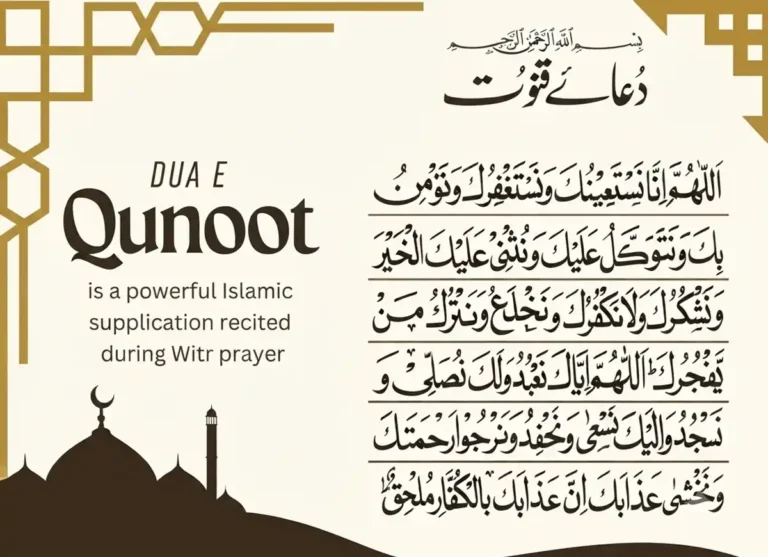
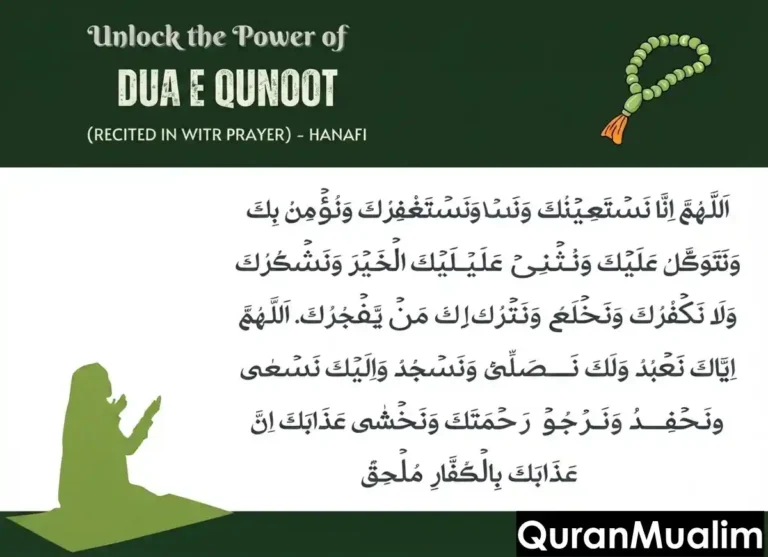
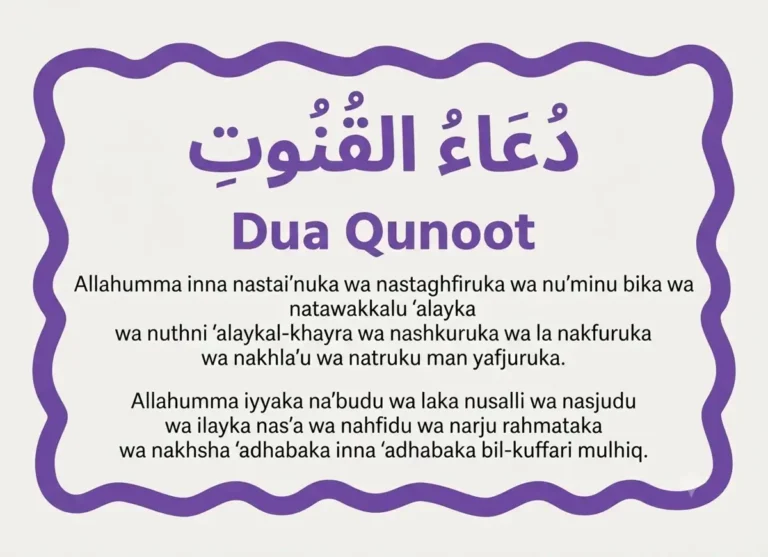
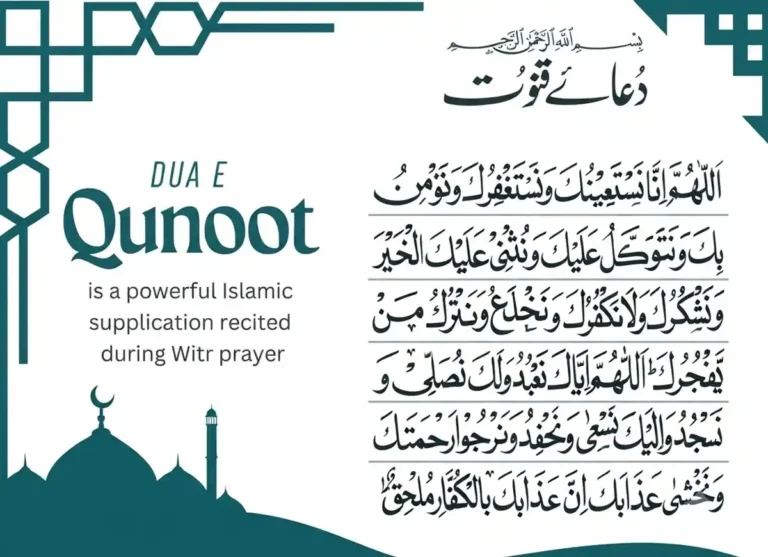
So, what is dua qunoot? It’s a short supplication recited in the last rakat of Witr, asking Allah for guidance, protection, and blessing. The wording traces back to a hadith where the Prophet ﷺ taught it directly to his grandson, Al-Hasan ibn Ali, making it one of the most well-attested duas for qunoot in the entire hadith tradition.
Some people also refer to it more broadly as qunoot duas, since a related but separate version, Qunoot Nazilah, is used temporarily during hardship in other prayers, not just Witr. Both share the same root idea of standing humbly before Allah in supplication.
Why Timing Differs by Madhab
The Hanafi school places the qunoot in the third rakat after ruku, with hands raised to chest height. The Shafi’i, Hanbali, and Maliki schools generally recite it before or after ruku depending on the specific narration each relies on, and Shafi’is famously add a version to Fajr prayer as well, especially in the latter half of Ramadan.
None of these positions cancel each other out. Each is backed by authentic hadith, and scholars across centuries have simply weighed the evidence differently. Praying behind an imam from another school doesn’t mean either of you is doing it incorrectly.
Also Read: Meaning and Translation of Allahu Alam (الله اعلم )
Quran Verses on the Value of Supplication
- Surah Ghafir 40:60 — Allah commands His servants to call upon Him, promising a response, which underlines why dua holds such weight in every prayer. Read on Alim.org
- Surah Al-A’raf 7:55 — This verse instructs believers to call upon Allah with humility and in private, a tone that fits perfectly with how qunoot is meant to be recited. Read on Alim.org
Hadith References
The primary hadith comes from Al-Hasan ibn Ali, who said the Prophet ﷺ taught him specific words to recite during Witr, covering guidance, well-being, and protection from harm. See Sunan an-Nasa’i 1746.
A closely matching narration appears in Sunan Ibn Majah, describing the same wording taught by the Prophet ﷺ to his grandson for use in Witr, with only minor differences in phrase order between collections. See Sunan Ibn Majah 1178.
Also Read: How to Pray Salah: Step-by-Step Guide (Wudu + Fajr, Zuhr, Asr, Maghrib, Isha)

What If You Forget the Words Mid-Prayer?
Nothing breaks. If you forget the specific wording, scholars agree you can recite any dua you know, or even a Quranic verse containing a request, such as “Rabbana atina fi’d-dunya hasanatan wa fi’l-akhirati hasanatan.” The point is turning toward Allah, not reciting a fixed script perfectly.
What to Read Instead If You Haven’t Memorized It
New learners often ask what to say if they haven’t memorized the full text yet. A short, simple line like “Allahumma-ghfir li” (O Allah, forgive me) is acceptable while you’re still learning. Reciting something sincere is always better than staying silent out of hesitation.
Also Read: Namaz Dua (Masnoon Duain) PDF Download
Quick Reference Table
| Madhab | General Position on Qunoot in Witr |
| Hanafi | Recited every night, after ruku, in the third rakat |
| Shafi’i | Recited in Witr and daily in Fajr, especially in Ramadan’s second half |
| Maliki | Recommended year-round in Witr, after rising from ruku |
| Hanbali | Sunnah in Witr; some scholars emphasize the second half of Ramadan |
Hanafi Fiqh References
Readers wanting deeper detail on how Hanafi scholars approach Witr and qunoot can explore these classical texts, commonly found in Islamic libraries and archives:
- Sharh Ma’ani al-Athar by Abu Ja’far al-Tahawi
- Umdat al-Qari by Badr al-Din al-Ayni
- Nur al-Anwar by Mulla Jiwan
Where to Learn More
For a closer comparison of madhab positions and detailed rulings, IslamQA and the discussion threads on IslamicTeachings.org go into far more nuance than a single article can. You’ll also find related Witr and Isha prayer guides on quranmualim.com for a fuller walkthrough. For general background on the prayer this dua belongs to, Wikipedia’s entry on Isha prayer and Britannica’s overview of the Sunnah offer helpful context.
Categories: Namaz ,Zakat , Roza & Prayer , Hadith

FAQs
Is this supplication the same in every madhab?
The core wording is largely shared, but timing and frequency differ. Hanafis recite it nightly after ruku, while other schools vary by prayer and season.
Can I switch positions if I pray behind different imams?
Yes. Following the imam’s practice in that specific prayer is fine, even if it differs from your usual madhab’s timing.
Does skipping it invalidate Witr?
No. It’s sunnah, not obligatory, so your Witr remains fully valid even if you occasionally leave it out.
Is Qunoot Nazilah the same as this dua?
No, though related. Qunoot Nazilah is a temporary addition during hardship, recited in different prayers, not just Witr.
Do I need to memorize the exact Arabic wording?
It helps, but scholars allow substituting other sincere duas or Quranic verses containing supplication if you haven’t memorized it yet.
Final Thoughts
Understanding how different madhabs approach Dua Qunoot removes a lot of unnecessary confusion and lets you pray with confidence anywhere you go. Learn your own school’s practice well, respect the flexibility built into this sunnah, and let each night’s Witr become a genuine, unhurried moment of supplication.
Brought to you by Alasad Online Quran Tutor — visit Quranmualim.com for more Quran and Tajweed learning resources, or reach us on WhatsApp and YouTube (@quranmualim) to start your own learning journey.
Check Also Similar Post:
- Can I Pray Witr After Fajr?
- Is Witr Mandatory? – Learn Islam
- Can You Pray Tahajjud After Witr?
- How To Pray Salah Witr? Learn Islam
- How To Do Witr Prayer? – Learn Islam
- Witr Ki Dua (Dua e Qunoot) – Learn Islam
- Can You Pray Tahajjud After Witr Namaz?
- Dua e Qunoot (Recited Dua Qunoot in Witr)
- Do You Pray Witr After Tahajjud? Learn Islam
- How To Pray Witr Step-by-Step? – Learn Islam
- Witr Dua (recited in Witr prayer) – Learn Islam
- Dua e Qunoot in Arabic (Recited in Witr Prayer)
- Everything You Need to Know About Witr Namaz
- How To Pray Witr Prayer Correctly? – Learn Islam
- Witr Namaz: A Complete Guide For Every Muslim
- What Is Witr? A Complete Guide for Every Muslim
- Dua e Qunoot English Translation and Transliteration
- Qua e Qunoot English Transliteration (Roman English)
- How To Pray 3 Rak’ahs of Witr Prayer (Hanafi Method)
- Dua Qunoot: What It Is, Why It Matters & How to Perform It