
Dua e Qunoot in Arabic is what most Muslims first encounter simply by listening — following the imam’s voice in Witr long before ever seeing the words written down. That’s how it’s traditionally learned, ear before eye. But once you want to read it yourself, recite it correctly, or teach it to your children, having the actual Arabic text in front of you makes all the difference.
This bilingual Fortress of the Muslim edition on Amazon is a solid pick if you want the Arabic script alongside a clear translation in one book.
What Is the Meaning of Dua e Qunoot?
At its core, this dua is a request for guidance, protection, well-being, and blessing, wrapped into a handful of lines the Prophet ﷺ personally taught. It’s recited in the third rakat of Witr, usually before ruku, though it’s also used in a different form during times of hardship, known as Qunoot Nazilah.
The word “qunoot” itself relates to devotion and standing humbly before Allah. So beyond the specific wording, the act of pausing to recite it is itself an expression of submission and sincerity within the prayer.
Can the Qunoot Dua Be Found in the Quran?
This is a common point of confusion. No, the exact wording of Dua e Qunoot doesn’t appear anywhere in the Quran. It comes from hadith — specifically, from what the Prophet ﷺ taught his grandson directly. The Quran does, however, establish the broader importance of dua as an act of worship, which is why this supplication fits so naturally into daily prayer life.
Also Read: How to Pray Salah: Step-by-Step Guide (Wudu + Fajr, Zuhr, Asr, Maghrib, Isha)
Quran Verses on the Power of Dua
While this specific text isn’t Quranic, these verses show why supplication holds such a central place in worship.
- Surah Al-Baqarah 2:186 — Allah tells believers He is near and responds to whoever calls upon Him, a foundational verse on the nature of dua. Read on Alim.org
- Surah Ghafir 40:60 — Allah instructs believers to call upon Him, promising a response, and warns against arrogance toward worship. Read on Alim.org
Hadith Sources Behind the Arabic Text
The primary source for this dua comes from Al-Hasan ibn Ali, who narrated that the Prophet ﷺ personally taught him specific words to recite during Witr, covering guidance, protection, and blessing. This hadith is widely cited across the six major collections with only minor wording differences. See Sahih al-Bukhari 1002 for the related account of the Prophet ﷺ reciting qunoot during a period of hardship.
A parallel narration appears in Sahih Muslim, describing the same practice of qunoot recited after ruku during a month of difficulty for the Muslim community, showing how the dua has both a regular and a special-occasion form. See Sahih Muslim 677a.
Also Read: Dua For Namaz: Simple Words That Steady The Heart, prayer
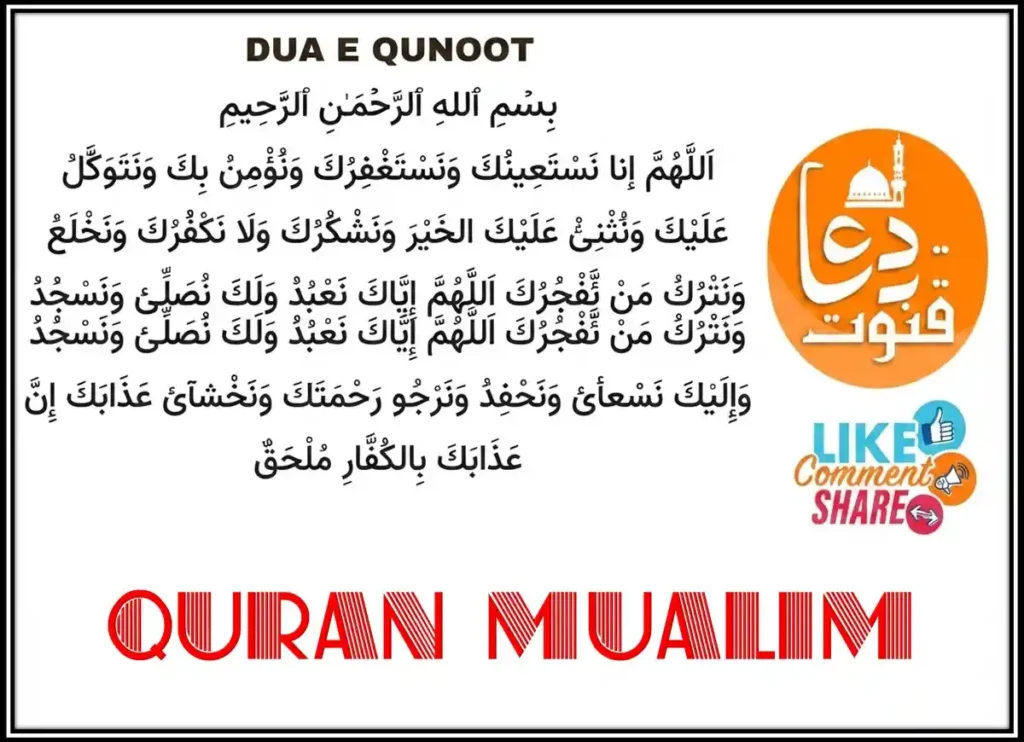
Dua e Qunoot Text in Arabic
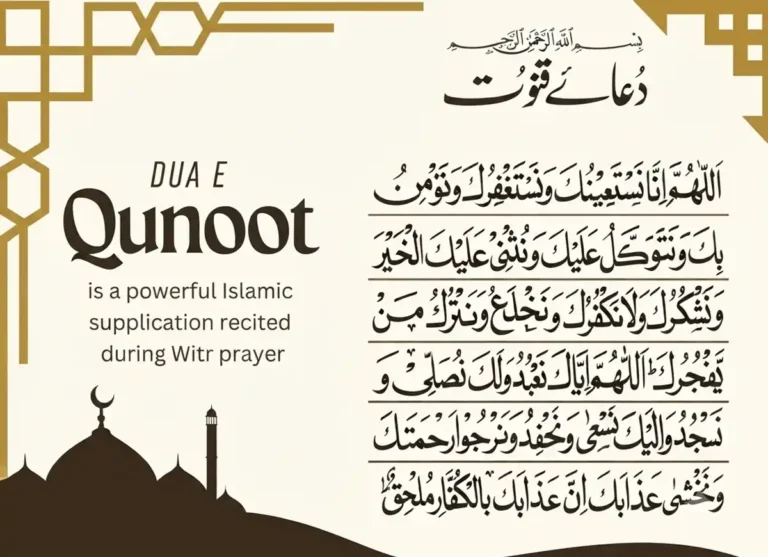
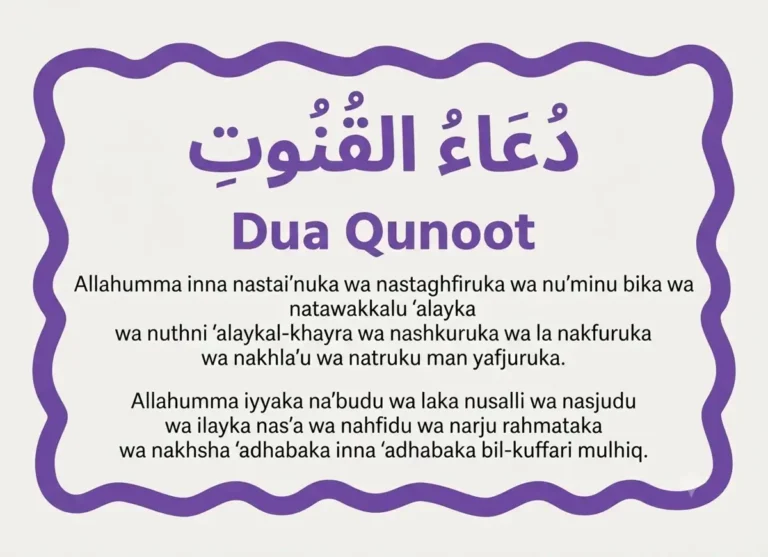
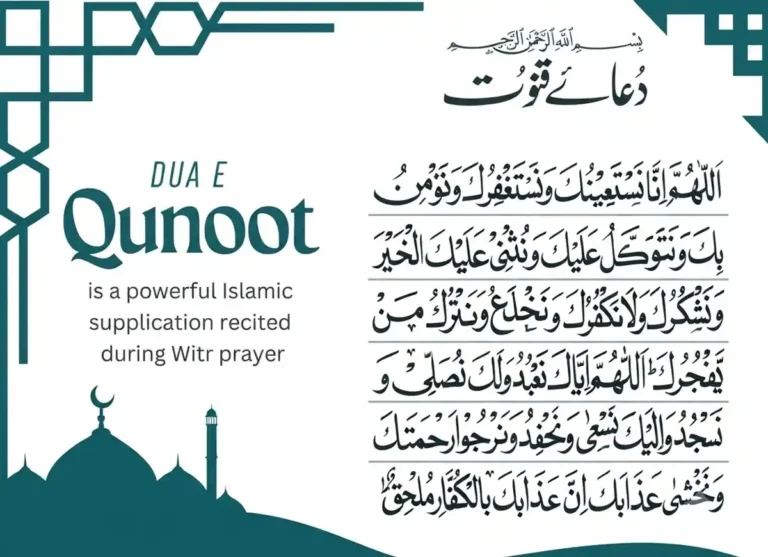
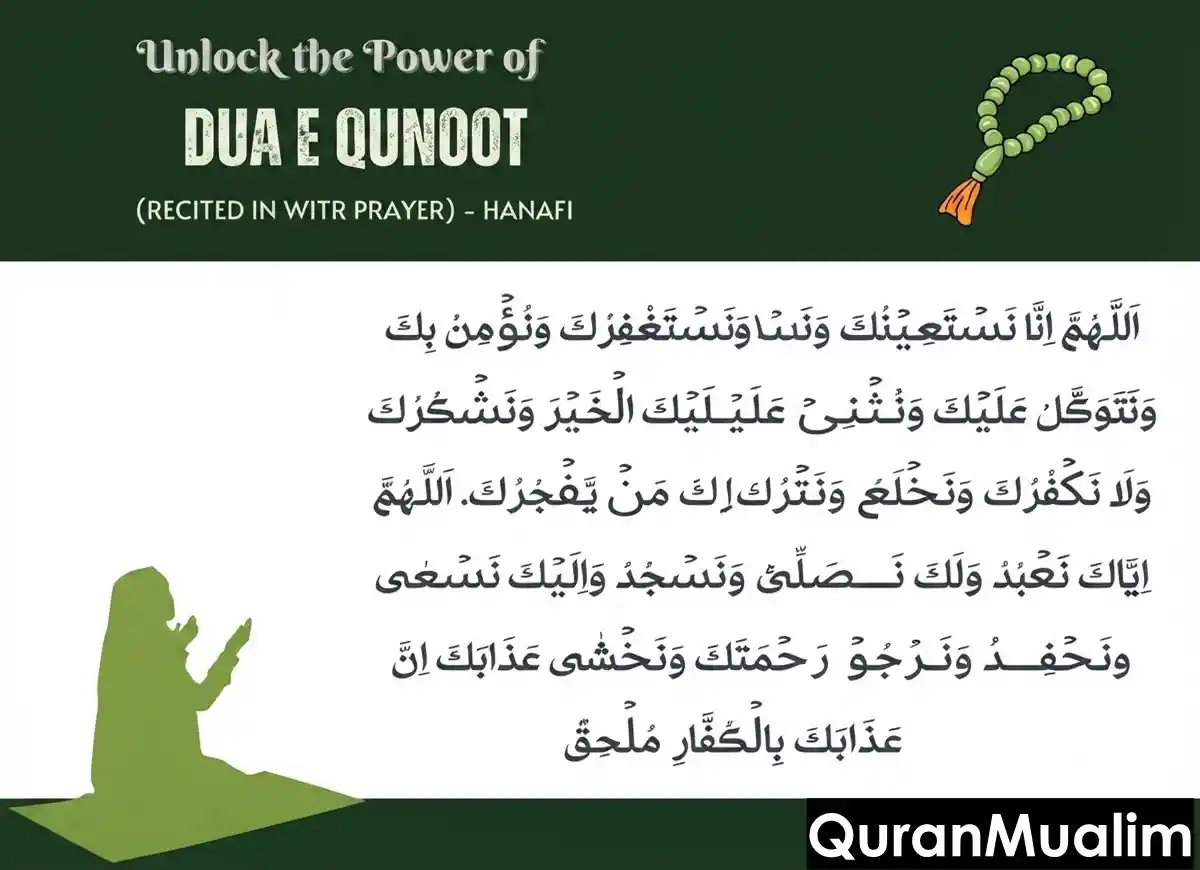
Here’s the dua e qunoot text in arabic, also written as dua e qunoot in arabic text, exactly as commonly recited in Witr:
دعائے قنوت
اللَّهُمَّ اهْدِنِي فِيمَنْ هَدَيْتَ، وَعَافِنِي فِيمَنْ عَافَيْتَ، وَتَوَلَّنِي فِيمَنْ تَوَلَّيْتَ، وَبَارِكْ لِي فِيمَا أَعْطَيْتَ، وَقِنِي شَرَّ مَا قَضَيْتَ، فَإِنَّكَ تَقْضِي وَلَا يُقْضَى عَلَيْكَ، وَإِنَّهُ لَا يَذِلُّ مَنْ وَالَيْتَ، وَلَا يَعِزُّ مَنْ عَادَيْتَ، تَبَارَكْتَ رَبَّنَا وَتَعَالَيْتَ
Transliteration
Allahumma-hdini fiman hadait, wa ‘afini fiman ‘afait, wa tawallani fiman tawallait, wa barik li fima a’tait, wa qini sharra ma qadait, fa innaka taqdi wa la yuqda ‘alaik, wa innahu la yadhillu man walait, wa la ya’izzu man ‘adait, tabarakta Rabbana wa ta’alait.
English Translation
English Meaning:
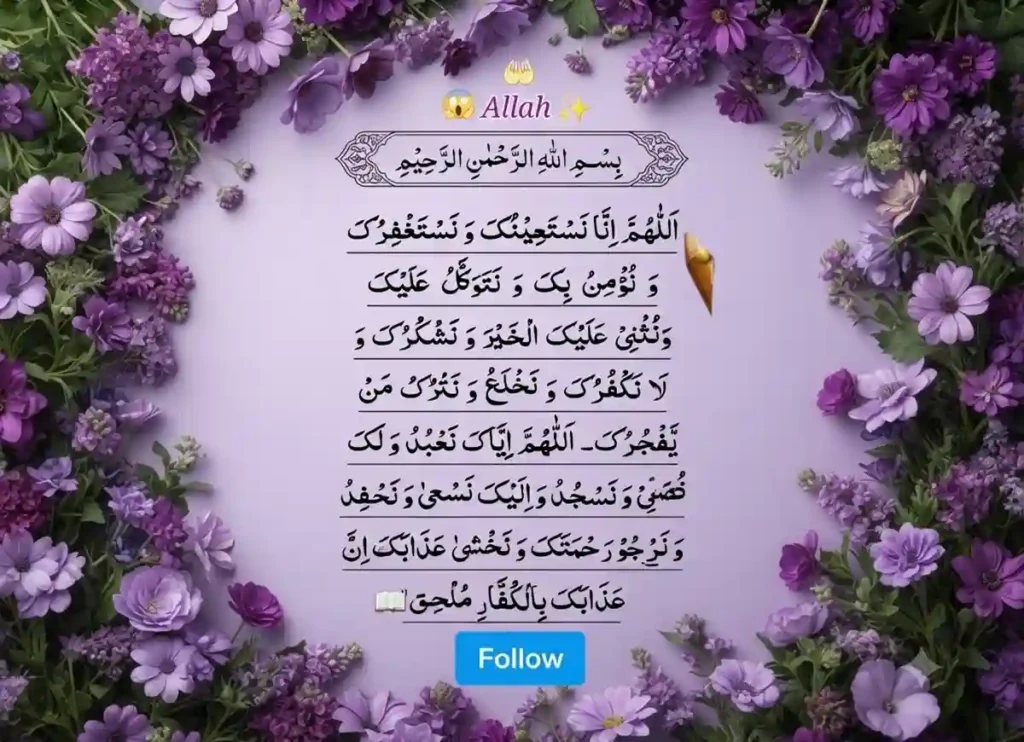
O Allah, we seek Your help, seek Your forgiveness, believe in You, and rely upon You. We praise You with all goodness. We thank You and do not disbelieve in You, and we forsake and leave whoever disobeys You.
O Allah, You alone we worship, and for You we pray and prostrate, and to You we hasten and strive. We hope for Your mercy and fear Your punishment. Indeed, Your punishment will surely reach the disbelievers.
Also Read: Learn Dua Qunoot in Arabic Text PDF Download
Another Dua For Qanoot
اللَّهُمَّ اهْدِنِي فِيمَنْ هَدَيْتَ، وَعَافِنِي فِيمَنْ عَافَيْتَ، وَتَوَلَّنِي فِيمَنْ تَوَلَّيْتَ، وَبَارِكْ لِي فِيمَا أَعْطَيْتَ، وَقِنِي شَرَّ مَا قَضَيْتَ، فَإِنَّكَ تَقْضِي وَلَا يُقْضَى عَلَيْكَ، وَإِنَّهُ لَا يَذِلُّ مَنْ وَالَيْتَ، وَلَا يَعِزُّ مَنْ عَادَيْتَ، تَبَارَكْتَ رَبَّنَا وَتَعَالَيْتَ
If you’re searching for dua e qunoot in arabic with meaning, the short version is this: it asks Allah for guidance, well-being, care, blessing, and protection from harm, closing with an affirmation that Allah alone decrees and none can decree over Him.
شرح المعنى:
هذا الدعاء يُقرأ في صلاة الوتر، في الركعة الثالثة بعد القراءة وقبل الركوع. يبدأ العبد بطلب العون من الله والاستغفار، ثم يُقر بالإيمان بالله والتوكل عليه وحده.
بعد ذلك، يُثني العبد على الله بجميع صفات الخير، ويشكره على نعمه، ويتبرأ من الكفر والمعصية، معلنًا تركه لكل من يخالف أمر الله.
في الجزء الثاني، يؤكد العبد أن العبادة والصلاة والسجود كلها لله وحده، وأن السعي والاجتهاد يكون في طاعته. يختم الدعاء برجاء رحمة الله والخوف من عذابه، مع التنبيه إلى أن عذاب الله لاحق بالكافرين لا محالة.
Quick Reference Table
| Element | Detail |
| Language of origin | Arabic, taught directly by the Prophet ﷺ |
| Where recited | Third rakat of Witr, usually before ruku |
| Found in Quran? | No, it comes from hadith, not Quranic text |
| Status | Sunnah — recommended, not obligatory |
Dua e Qunoot – Arabic Word by Word Meaning (Urdu Translation)
| Arabic Word | English Meaning | Urdu Tarjuma |
|---|---|---|
| اللَّهُمَّ | O Allah | اے اللہ |
| إِنَّا | Indeed, we | بےشک ہم |
| نَسْتَعِينُكَ | We seek Your help | تجھ سے مدد مانگتے ہیں |
| وَنَسْتَغْفِرُكَ | And we seek Your forgiveness | اور تجھ سے بخشش مانگتے ہیں |
| وَنُؤْمِنُ بِكَ | And we believe in You | اور تجھ پر ایمان لاتے ہیں |
| وَنَتَوَكَّلُ عَلَيْكَ | And we rely upon You | اور تجھ پر بھروسہ کرتے ہیں |
| وَنُثْنِي عَلَيْكَ الْخَيْرَ | And we praise You with all goodness | اور تیری اچھی طرح تعریف کرتے ہیں |
| وَنَشْكُرُكَ | And we thank You | اور تیرا شکر ادا کرتے ہیں |
| وَلَا نَكْفُرُكَ | And we do not disbelieve in You | اور تیری ناشکری نہیں کرتے |
| وَنَخْلَعُ | And we discard/forsake | اور ہم چھوڑ دیتے ہیں |
| وَنَتْرُكُ | And we leave | اور ترک کرتے ہیں |
| مَنْ يَفْجُرُكَ | Whoever disobeys You | اس کو جو تیری نافرمانی کرے |
| اللَّهُمَّ | O Allah | اے اللہ |
| إِيَّاكَ نَعْبُدُ | You alone we worship | ہم صرف تیری عبادت کرتے ہیں |
| وَلَكَ نُصَلِّي | And for You we pray | اور تیرے لیے نماز پڑھتے ہیں |
| وَنَسْجُدُ | And we prostrate | اور سجدہ کرتے ہیں |
| وَإِلَيْكَ نَسْعَى | And to You we hasten | اور تیری طرف دوڑتے ہیں |
| وَنَحْفِدُ | And we strive | اور کوشش کرتے ہیں |
| نَرْجُو رَحْمَتَكَ | We hope for Your mercy | ہم تیری رحمت کی امید رکھتے ہیں |
| وَنَخْشَى عَذَابَكَ | And we fear Your punishment | اور تیرے عذاب سے ڈرتے ہیں |
| إِنَّ عَذَابَكَ | Indeed, Your punishment | بےشک تیرا عذاب |
| بِالْكُفَّارِ مُلْحِقٌ | Will surely reach the disbelievers | کافروں کو ضرور پہنچنے والا ہے |
Hanafi Fiqh References
For readers wanting deeper jurisprudential background on Witr and qunoot, these classical Hanafi texts are commonly available in Islamic libraries and archives:
- Al-Mabsut by Muhammad ibn Ahmad al-Sarakhsi
- Bada’i al-Sana’i by Ala al-Din al-Kasani
- Tabyin al-Haqa’iq by Uthman ibn Ali al-Zayla’i
Learning the Arabic Text Properly
Reading the Arabic script correctly takes practice, especially with the tashkeel marks guiding pronunciation. Resources like IslamQA and the discussion forum on IslamicTeachings.org often address specific pronunciation and fiqh questions in more detail.
You’ll also find related Tajweed and Witr guides on quranmualim.com if you want structured lessons. For background on the Arabic language itself and its role in worship, Wikipedia’s entry on Salah and Britannica’s entry on hadith are useful references.
Categories: Namaz ,Zakat , Roza , Prayer , Hadith & Supplications
FAQs
Where does the Arabic text of Dua e Qunoot come from?
It comes from hadith, specifically the narration where the Prophet ﷺ taught these exact words to his grandson Al-Hasan ibn Ali for Witr prayer.
Is the Arabic text the same across all mosques?
Mostly yes. Minor regional variations exist in phrase order, but the core wording taught in the hadith remains consistent worldwide.
Do I need tashkeel marks to read it correctly?
Tashkeel marks help beginners with pronunciation significantly. As your Arabic reading improves, you’ll rely on them less over time.
Is reciting it in Arabic required, or can I use English?
Arabic is preferred during prayer itself. English is best used beforehand simply to understand the meaning, not for recitation.
Can children start learning the Arabic text early?
Yes, many parents introduce it gradually alongside short Quran memorization, since repetition in Witr naturally reinforces the wording.
Final Thoughts
Having the Dua e Qunoot in Arabic text in front of you turns a memorized routine into something you can read, understand, and pass on with confidence. Practice the script a little each day, keep the meaning in mind while reciting, and let this small dua become a steady part of your nightly Witr.
Brought to you by Alasad Online Quran Tutor — visit Quranmualim.com for more Quran and Tajweed learning resources, or reach us on WhatsApp and YouTube (@quranmualim) to start your own learning journey.
Check Also Similar Post:
- Can I Pray Witr After Fajr?
- Is Witr Mandatory? – Learn Islam
- Can You Pray Tahajjud After Witr?
- How To Pray Salah Witr? Learn Islam
- How To Do Witr Prayer? – Learn Islam
- Witr Ki Dua (Dua e Qunoot) – Learn Islam
- Can You Pray Tahajjud After Witr Namaz?
- Dua e Qunoot (Recited Dua Qunoot in Witr)
- Do You Pray Witr After Tahajjud? Learn Islam
- How To Pray Witr Step-by-Step? – Learn Islam
- Witr Dua (recited in Witr prayer) – Learn Islam
- Everything You Need to Know About Witr Namaz
- How To Pray Witr Prayer Correctly? – Learn Islam
- Witr Namaz: A Complete Guide For Every Muslim
- What Is Witr? A Complete Guide for Every Muslim
- Dua e Qunoot English Translation and Transliteration
- Qua e Qunoot English Transliteration (Roman English)
- How To Pray 3 Rak’ahs of Witr Prayer (Hanafi Method)