

Surah Rum opens with something unusual for the Quran: a prophecy about a losing empire that would rise again. Many readers skim past this detail, not realizing it’s one of the most talked-about predictions in Islamic history. This confusion, “what is surah rum about,” is what we’ll untangle in this article.
For deeper study material, here’s a helpful pick: Tafsir Ibn Kathir on Surah Rum.
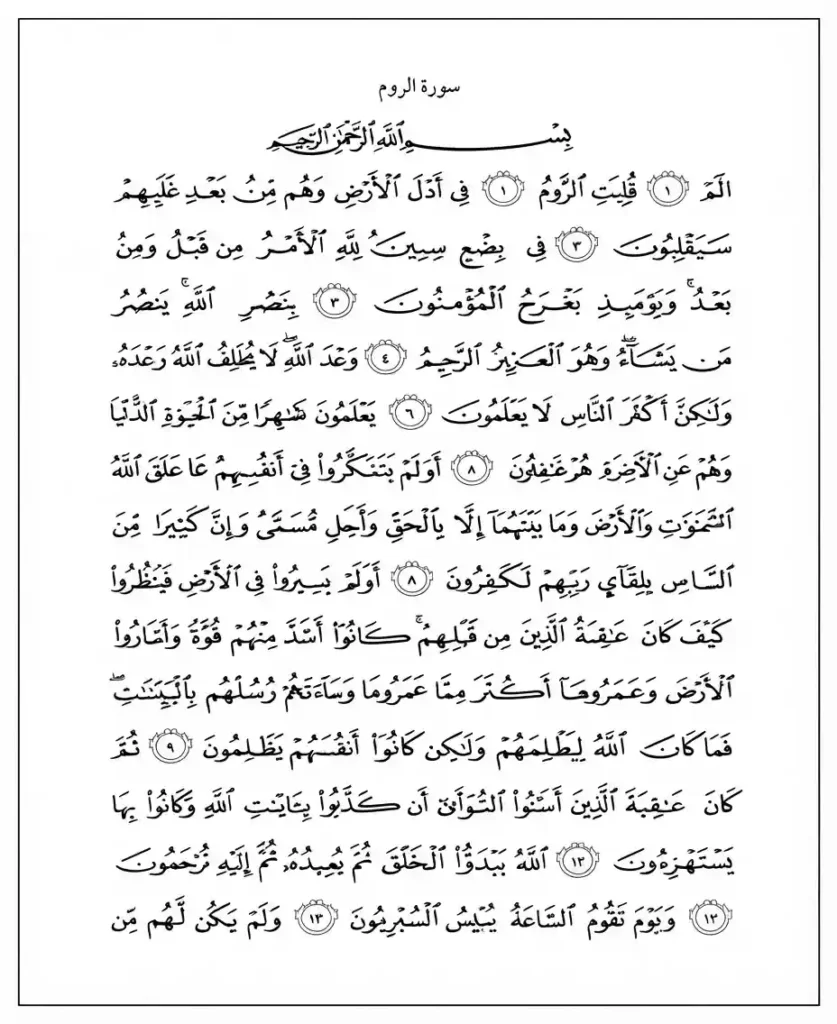
Surah Ar-Rum (The Romans) — سُورَة الروم
| No | Arabic | Transliteration | Translation |
| Bismillah | بِسْمِ اللَّهِ الرَّحْمَٰنِ الرَّحِيمِ | Bismillahi r-rahmani r-raheem | In the name of Allah, the Entirely Merciful, the Especially Merciful. |
| 1 | الٓمٓ | Alif-lam-meem | Alif, Lam, Meem. |
| 2 | غُلِبَتِ الرُّومُ | Ghulibati ar-Room | The Byzantines have been defeated |
| 3 | فِي أَدْنَى الْأَرْضِ وَهُمْ مِنْ بَعْدِ غَلَبِهِمْ سَيَغْلِبُونَ | Fee adna al-ardi wahum min ba’di ghalabihim sayaghliboon | In the nearest land. But they, after their defeat, will overcome |
| 4 | فِي بِضْعِ سِنِينَ ۗ لِلَّهِ الْأَمْرُ مِنْ قَبْلُ وَمِنْ بَعْدُ ۚ وَيَوْمَئِذٍ يَفْرَحُ الْمُؤْمِنُونَ | Fee bid’i sineen, lillahi al-amru min qablu wa min ba’d, wa yawma-ithin yafrahu al-mu’minoon | Within three to nine years. To Allah belongs the command before and after. And that day the believers will rejoice |
| 5 | بِنَصْرِ اللَّهِ ۚ يَنْصُرُ مَنْ يَشَاءُ ۖ وَهُوَ الْعَزِيزُ الرَّحِيمُ | Binasri Allahi, yansuru man yashao, wa huwa al-‘azeezu ar-raheem | In the victory of Allah. He gives victory to whom He wills, and He is the Exalted in Might, the Merciful. |
| 6 | وَعْدَ اللَّهِ ۖ لَا يُخْلِفُ اللَّهُ وَعْدَهُ وَلَٰكِنَّ أَكْثَرَ النَّاسِ لَا يَعْلَمُونَ | Wa’da Allahi, la yukhlifu Allahu wa’dahu wa lakinna akthara an-nasi la ya’lamoon | [It is] the promise of Allah. Allah does not fail in His promise, but most of the people do not know. |
| 7 | يَعْلَمُونَ ظَاهِرًا مِنَ الْحَيَاةِ الدُّنْيَا وَهُمْ عَنِ الْآخِرَةِ هُمْ غَافِلُونَ | Ya’lamoona thahiran mina al-hayati ad-dunya wa hum ‘ani al-akhirati hum ghafiloon | They know what is apparent of the worldly life, but they, of the Hereafter, are unaware. |
| 8 | أَوَلَمْ يَتَفَكَّرُوا فِي أَنْفُسِهِمْ ۗ مَا خَلَقَ اللَّهُ السَّمَاوَاتِ وَالْأَرْضَ وَمَا بَيْنَهُمَا إِلَّا بِالْحَقِّ وَأَجَلٍ مُسَمًّى ۗ وَإِنَّ كَثِيرًا مِنَ النَّاسِ بِلِقَاءِ رَبِّهِمْ لَكَافِرُونَ | Awa lam yatafakkaroo fee anfusihim, ma khalaqa Allahu as-samawati wal-arda wa ma baynahuma illa bil-haqqi wa ajalin musamma, wa inna katheeran mina an-nasi biliqa’i rabbihim lakafiroon | Do they not contemplate within themselves? Allah has not created the heavens and the earth and what is between them except in truth and for a specified term. And indeed, many of the people, in the matter of the meeting with their Lord, are disbelievers. |
| 9 | أَوَلَمْ يَسِيرُوا فِي الْأَرْضِ فَيَنْظُرُوا كَيْفَ كَانَ عَاقِبَةُ الَّذِينَ مِنْ قَبْلِهِمْ ۚ كَانُوا أَشَدَّ مِنْهُمْ قُوَّةً وَأَثَارُوا الْأَرْضَ وَعَمَرُوهَا أَكْثَرَ مِمَّا عَمَرُوهَا وَجَاءَتْهُمْ رُسُلُهُمْ بِالْبَيِّنَاتِ ۖ فَمَا كَانَ اللَّهُ لِيَظْلِمَهُمْ وَلَٰكِنْ كَانُوا أَنْفُسَهُمْ يَظْلِمُونَ | Awa lam yaseeroo fee al-ardi fayanthuroo kayfa kana ‘aqibatu allatheena min qablihim, kanoo ashadda minhum quwwatan wa atharoo al-arda wa ‘amarooha akthara mimma ‘amarooha wa ja’at-hum rusuluhum bil-bayyinati, fama kana Allahu liyathlimahum wa lakin kanoo anfusahum yathlimoon | Have they not traveled through the earth and observed how was the end of those before them? They were greater than them in power, and they plowed the earth and built it up more than they have built it up, and their messengers came to them with clear evidences. And Allah would not ever have wronged them, but they were wronging themselves. |
| 10 | ثُمَّ كَانَ عَاقِبَةَ الَّذِينَ أَسَاءُوا السُّوأَىٰ أَنْ كَذَّبُوا بِآيَاتِ اللَّهِ وَكَانُوا بِهَا يَسْتَهْزِئُونَ | Thumma kana ‘aqibata allatheena asa’oo as-soo’a an kaththaboo bi-ayati Allahi wa kanoo biha yastahzi’oon | Then the end of those who did evil was the worst [consequence] because they denied the signs of Allah and used to ridicule them. |
| 11 | اللَّهُ يَبْدَأُ الْخَلْقَ ثُمَّ يُعِيدُهُ ثُمَّ إِلَيْهِ تُرْجَعُونَ | Allahu yabda’u al-khalqa thumma yu’eeduhu thumma ilayhi turja’oon | Allah begins creation; then He will repeat it; then to Him you will be returned. |
| 12 | وَيَوْمَ تَقُومُ السَّاعَةُ يُبْلِسُ الْمُجْرِمُونَ | Wa yawma taqoomu as-sa’atu yublisu al-mujrimoon | And the Day the Hour appears the criminals will be in despair. |
| 13 | وَلَمْ يَكُنْ لَهُمْ مِنْ شُرَكَائِهِمْ شُفَعَاءُ وَكَانُوا بِشُرَكَائِهِمْ كَافِرِينَ | Wa lam yakun lahum min shuraka’ihim shufa’ao wa kanoo bishuraka’ihim kafireen | And there will not be for them among their [alleged] partners any intercessors, and they will [then] be disbelievers in their partners. |
| 14 | وَيَوْمَ تَقُومُ السَّاعَةُ يَوْمَئِذٍ يَتَفَرَّقُونَ | Wa yawma taqoomu as-sa’atu yawma-ithin yatafarraqoon | And the Day the Hour appears – that Day they will become separated. |
| 15 | فَأَمَّا الَّذِينَ آمَنُوا وَعَمِلُوا الصَّالِحَاتِ فَهُمْ فِي رَوْضَةٍ يُحْبَرُونَ | Fa-amma allatheena amanoo wa ‘amiloo as-salihati fahum fee rawdatin yuhbaroon | And as for those who had believed and done righteous deeds, they will be in a garden [of Paradise], delighted. |
| 16 | وَأَمَّا الَّذِينَ كَفَرُوا وَكَذَّبُوا بِآيَاتِنَا وَلِقَاءِ الْآخِرَةِ فَأُولَٰئِكَ فِي الْعَذَابِ مُحْضَرُونَ | Wa-amma allatheena kafaroo wa kaththaboo bi-ayatina wa liqa’i al-akhirati fa-ola’ika fee al-‘athabi muhdaroon | But as for those who disbelieved and denied Our verses and the meeting of the Hereafter, those will be brought into the punishment [to remain]. |
| 17 | فَسُبْحَانَ اللَّهِ حِينَ تُمْسُونَ وَحِينَ تُصْبِحُونَ | Fasubhana Allahi heena tumsoona wa heena tusbihoon | So exalted is Allah when you reach the evening and when you reach the morning. |
| 18 | وَلَهُ الْحَمْدُ فِي السَّمَاوَاتِ وَالْأَرْضِ وَعَشِيًّا وَحِينَ تُظْهِرُونَ | Wa lahu al-hamdu fee as-samawati wal-ardi wa ‘ashiyyan wa heena tuthhiroon | And to Him is [due all] praise throughout the heavens and the earth. And [exalted is He] at night and when you are at noon. |
| 19 | يُخْرِجُ الْحَيَّ مِنَ الْمَيِّتِ وَيُخْرِجُ الْمَيِّتَ مِنَ الْحَيِّ وَيُحْيِي الْأَرْضَ بَعْدَ مَوْتِهَا ۚ وَكَذَٰلِكَ تُخْرَجُونَ | Yukhriju al-hayya mina al-mayyiti wa yukhriju al-mayyita mina al-hayyi wa yuhyee al-arda ba’da mawtiha, wa kathalika tukhrajoon | He brings the living out of the dead and brings the dead out of the living and brings to life the earth after its lifelessness. And thus will you be brought out. |
| 20 | وَمِنْ آيَاتِهِ أَنْ خَلَقَكُمْ مِنْ تُرَابٍ ثُمَّ إِذَا أَنْتُمْ بَشَرٌ تَنْتَشِرُونَ | Wa min ayatihi an khalaqakum min turabin thumma itha antum basharun tantashiroon | And of His signs is that He created you from dust; then, suddenly you were human beings dispersing [throughout the earth]. |
| 21 | وَمِنْ آيَاتِهِ أَنْ خَلَقَ لَكُمْ مِنْ أَنْفُسِكُمْ أَزْوَاجًا لِتَسْكُنُوا إِلَيْهَا وَجَعَلَ بَيْنَكُمْ مَوَدَّةً وَرَحْمَةً ۚ إِنَّ فِي ذَٰلِكَ لَآيَاتٍ لِقَوْمٍ يَتَفَكَّرُونَ | Wa min ayatihi an khalaqa lakum min anfusikum azwajan litaskunoo ilayha wa ja’ala baynakum mawaddatan wa rahmatan, inna fee thalika la-ayatin liqawmin yatafakkaroon | And of His signs is that He created for you from yourselves mates that you may find tranquillity in them; and He placed between you affection and mercy. Indeed in that are signs for a people who give thought. |
| 22 | وَمِنْ آيَاتِهِ خَلْقُ السَّمَاوَاتِ وَالْأَرْضِ وَاخْتِلَافُ أَلْسِنَتِكُمْ وَأَلْوَانِكُمْ ۚ إِنَّ فِي ذَٰلِكَ لَآيَاتٍ لِلْعَالِمِينَ | Wa min ayatihi khalqu as-samawati wal-ardi wakhtilafu alsinatikum wa alwanikum, inna fee thalika la-ayatin lil-‘alimeen | And of His signs is the creation of the heavens and the earth and the diversity of your languages and your colors. Indeed in that are signs for those of knowledge. |
| 23 | وَمِنْ آيَاتِهِ مَنَامُكُمْ بِاللَّيْلِ وَالنَّهَارِ وَابْتِغَاؤُكُمْ مِنْ فَضْلِهِ ۚ إِنَّ فِي ذَٰلِكَ لَآيَاتٍ لِقَوْمٍ يَسْمَعُونَ | Wa min ayatihi manamukum billayli wan-nahari wabtigha’ukum min fadlihi, inna fee thalika la-ayatin liqawmin yasma’oon | And of His signs is your sleep by night and day and your seeking of His bounty. Indeed in that are signs for a people who listen. |
| 24 | وَمِنْ آيَاتِهِ يُرِيكُمُ الْبَرْقَ خَوْفًا وَطَمَعًا وَيُنَزِّلُ مِنَ السَّمَاءِ مَاءً فَيُحْيِي بِهِ الْأَرْضَ بَعْدَ مَوْتِهَا ۚ إِنَّ فِي ذَٰلِكَ لَآيَاتٍ لِقَوْمٍ يَعْقِلُونَ | Wa min ayatihi yureekumu al-barqa khawfan wa tama’an wa yunazzilu mina as-sama’i ma’an fayuhyee bihi al-arda ba’da mawtiha, inna fee thalika la-ayatin liqawmin ya’qiloon | And of His signs is [that] He shows you the lightning [causing] fear and aspiration, and He sends down rain from the sky by which He brings to life the earth after its lifelessness. Indeed in that are signs for a people who use reason. |
| 25 | وَمِنْ آيَاتِهِ أَنْ تَقُومَ السَّمَاءُ وَالْأَرْضُ بِأَمْرِهِ ۚ ثُمَّ إِذَا دَعَاكُمْ دَعْوَةً مِنَ الْأَرْضِ إِذَا أَنْتُمْ تَخْرُجُونَ | Wa min ayatihi an taqooma as-sama’u wal-ardu bi-amrihi thumma itha da’akum da’watan mina al-ardi itha antum takhrujoon | And of His signs is that the heaven and earth remain by His command. Then when He calls you with a [single] call from the earth, immediately you will come forth. |
| 26 | وَلَهُ مَنْ فِي السَّمَاوَاتِ وَالْأَرْضِ ۖ كُلٌّ لَهُ قَانِتُونَ | Wa lahu man fee as-samawati wal-ardi kullun lahu qanitoon | And to Him belongs whoever is in the heavens and earth. All are to Him devoutly obedient. |
| 27 | وَهُوَ الَّذِي يَبْدَأُ الْخَلْقَ ثُمَّ يُعِيدُهُ وَهُوَ أَهْوَنُ عَلَيْهِ ۚ وَلَهُ الْمَثَلُ الْأَعْلَىٰ فِي السَّمَاوَاتِ وَالْأَرْضِ ۚ وَهُوَ الْعَزِيزُ الْحَكِيمُ | Wa huwa allathee yabda’u al-khalqa thumma yu’eeduhu wa huwa ahwanu ‘alayhi, wa lahu al-mathalu al-a’la fee as-samawati wal-ardi, wa huwa al-‘azeezu al-hakeem | And it is He who begins creation; then He repeats it, and that is [even] easier for Him. To Him belongs the highest attribute in the heavens and earth. And He is the Exalted in Might, the Wise. |
| 28 | ضَرَبَ لَكُمْ مَثَلًا مِنْ أَنْفُسِكُمْ ۖ هَلْ لَكُمْ مِنْ مَا مَلَكَتْ أَيْمَانُكُمْ مِنْ شُرَكَاءَ فِي مَا رَزَقْنَاكُمْ فَأَنْتُمْ فِيهِ سَوَاءٌ تَخَافُونَهُمْ كَخِيفَتِكُمْ أَنْفُسَكُمْ ۚ كَذَٰلِكَ نُفَصِّلُ الْآيَاتِ لِقَوْمٍ يَعْقِلُونَ | Daraba lakum mathalan min anfusikum, hal lakum mimma malakat aymanukum min shuraka’a fee ma razaqnakum fa-antum feehi sawa’un takhafoonahum kakheefatikum anfusakum, kathalika nufassilu al-ayati liqawmin ya’qiloon | He presents to you an example from yourselves. Do you have among those whom your right hands possess any partners in what We have provided for you so that you are equal therein [and] would fear them as your fear of one another? Thus do We detail the verses for a people who use reason. |
| 29 | بَلِ اتَّبَعَ الَّذِينَ ظَلَمُوا أَهْوَاءَهُمْ بِغَيْرِ عِلْمٍ ۖ فَمَنْ يَهْدِي مَنْ أَضَلَّ اللَّهُ ۖ وَمَا لَهُمْ مِنْ نَاصِرِينَ | Bali ittaba’a allatheena thalamoo ahwa’ahum bighayri ‘ilmin, faman yahdee man adalla Allahu wa ma lahum min nasireen | But those who wrong follow their [own] desires without knowledge. Then who can guide one whom Allah has sent astray? And for them there are no helpers. |
| 30 | فَأَقِمْ وَجْهَكَ لِلدِّينِ حَنِيفًا ۚ فِطْرَتَ اللَّهِ الَّتِي فَطَرَ النَّاسَ عَلَيْهَا ۚ لَا تَبْدِيلَ لِخَلْقِ اللَّهِ ۚ ذَٰلِكَ الدِّينُ الْقَيِّمُ وَلَٰكِنَّ أَكْثَرَ النَّاسِ لَا يَعْلَمُونَ | Fa-aqim wajhaka liddeeni haneefan, fitrata Allahi allatee fatara an-nasa ‘alayha, la tabdeela likhalqi Allahi, thalika ad-deenu al-qayyimu wa lakinna akthara an-nasi la ya’lamoon | So direct your face toward the religion, inclining to truth. [Adhere to] the fitrah of Allah upon which He has created [all] people. No change should there be in the creation of Allah. That is the correct religion, but most of the people do not know. |
| 31 | مُنِيبِينَ إِلَيْهِ وَاتَّقُوهُ وَأَقِيمُوا الصَّلَاةَ وَلَا تَكُونُوا مِنَ الْمُشْرِكِينَ | Muneebeena ilayhi wattaqoohu wa aqeemoo as-salata wa la takoonoo mina al-mushrikeen | [Adhere to it], turning in repentance to Him, and fear Him and establish prayer and do not be of those who associate others with Allah |
| 32 | مِنَ الَّذِينَ فَرَّقُوا دِينَهُمْ وَكَانُوا شِيَعًا ۖ كُلُّ حِزْبٍ بِمَا لَدَيْهِمْ فَرِحُونَ | Mina allatheena farraqoo deenahum wa kanoo shiya’an kullu hizbin bima ladayhim farihoon | [Or] of those who have divided their religion and become sects, every faction rejoicing in what it has. |
| 33 | وَإِذَا مَسَّ النَّاسَ ضُرٌّ دَعَوْا رَبَّهُمْ مُنِيبِينَ إِلَيْهِ ثُمَّ إِذَا أَذَاقَهُمْ مِنْهُ رَحْمَةً إِذَا فَرِيقٌ مِنْهُمْ بِرَبِّهِمْ يُشْرِكُونَ | Wa-itha massa an-nasa durrun da’aw rabbahum muneebeena ilayhi thumma itha athaqahum minhu rahmatan itha fareequn minhum birabbihim yushrikoon | And when adversity touches the people, they call upon their Lord, turning in repentance to Him. Then when He lets them taste mercy from Him, at once a party of them associate others with their Lord, |
| 34 | لِيَكْفُرُوا بِمَا آتَيْنَاهُمْ ۚ فَتَمَتَّعُوا فَسَوْفَ تَعْلَمُونَ | Liyakfuroo bima ataynahum fatamatta’oo fasawfa ta’lamoon | So that they will deny what We have granted them. Then enjoy yourselves, for you are going to know. |
| 35 | أَمْ أَنْزَلْنَا عَلَيْهِمْ سُلْطَانًا فَهُوَ يَتَكَلَّمُ بِمَا كَانُوا بِهِ يُشْرِكُونَ | Am anzalna ‘alayhim sultanan fahuwa yatakallamu bima kanoo bihi yushrikoon | Or have We sent down to them an authority, and it speaks of what they were associating with Him? |
| 36 | وَإِذَا أَذَقْنَا النَّاسَ رَحْمَةً فَرِحُوا بِهَا ۖ وَإِنْ تُصِبْهُمْ سَيِّئَةٌ بِمَا قَدَّمَتْ أَيْدِيهِمْ إِذَا هُمْ يَقْنَطُونَ | Wa-itha athaqna an-nasa rahmatan farihoo biha wa-in tusibhum sayyi’atun bima qaddamat aydeehim itha hum yaqnatoon | And when We let the people taste mercy, they rejoice therein, but if evil afflicts them for what their hands have put forth, immediately they despair. |
| 37 | أَوَلَمْ يَرَوْا أَنَّ اللَّهَ يَبْسُطُ الرِّزْقَ لِمَنْ يَشَاءُ وَيَقْدِرُ ۚ إِنَّ فِي ذَٰلِكَ لَآيَاتٍ لِقَوْمٍ يُؤْمِنُونَ | Awa lam yaraw anna Allaha yabsutu ar-rizqa liman yashao wa yaqdiru, inna fee thalika la-ayatin liqawmin yu’minoon | Do they not see that Allah extends provision for whom He wills and restricts [it]? Indeed, in that are signs for a people who believe. |
| 38 | فَآتِ ذَا الْقُرْبَىٰ حَقَّهُ وَالْمِسْكِينَ وَابْنَ السَّبِيلِ ۚ ذَٰلِكَ خَيْرٌ لِلَّذِينَ يُرِيدُونَ وَجْهَ اللَّهِ ۖ وَأُولَٰئِكَ هُمُ الْمُفْلِحُونَ | Fa-ati tha al-qurba haqqahu wal-miskeena wabna as-sabeeli, thalika khayrun lillatheena yureedoona wajha Allahi wa ola’ika humu al-muflihoon | So give the relative his right, as well as the needy and the traveler. That is best for those who desire the countenance of Allah, and it is they who will be the successful. |
| 39 | وَمَا آتَيْتُمْ مِنْ رِبًا لِيَرْبُوَ فِي أَمْوَالِ النَّاسِ فَلَا يَرْبُو عِنْدَ اللَّهِ ۖ وَمَا آتَيْتُمْ مِنْ زَكَاةٍ تُرِيدُونَ وَجْهَ اللَّهِ فَأُولَٰئِكَ هُمُ الْمُضْعِفُونَ | Wa ma ataytum min riban liyarbuwa fee amwali an-nasi fala yarboo ‘inda Allahi, wa ma ataytum min zakatin tureedoona wajha Allahi fa-ola’ika humu al-mud’ifoon | And whatever you give for interest to increase within the wealth of people will not increase with Allah. But what you give in zakah, desiring the countenance of Allah – those are the multipliers. |
| 40 | اللَّهُ الَّذِي خَلَقَكُمْ ثُمَّ رَزَقَكُمْ ثُمَّ يُمِيتُكُمْ ثُمَّ يُحْيِيكُمْ ۖ هَلْ مِنْ شُرَكَائِكُمْ مَنْ يَفْعَلُ مِنْ ذَٰلِكُمْ مِنْ شَيْءٍ ۚ سُبْحَانَهُ وَتَعَالَىٰ عَمَّا يُشْرِكُونَ | Allahu allathee khalaqakum thumma razaqakum thumma yumeetukum thumma yuhyeekum, hal min shuraka’ikum man yaf’alu min thalikum min shay’in, subhanahu wa ta’ala ‘amma yushrikoon | Allah is the one who created you, then provided for you, then will cause you to die, and then will give you life. Are there any of your “partners” who does anything of that? Exalted is He and high above what they associate with Him. |
| 41 | ظَهَرَ الْفَسَادُ فِي الْبَرِّ وَالْبَحْرِ بِمَا كَسَبَتْ أَيْدِي النَّاسِ لِيُذِيقَهُمْ بَعْضَ الَّذِي عَمِلُوا لَعَلَّهُمْ يَرْجِعُونَ | Thahara al-fasadu fee al-barri wal-bahri bima kasabat aydee an-nasi liyutheeqahum ba’da allathee ‘amiloo la’allahum yarji’oon | Corruption has appeared throughout the land and sea by [reason of] what the hands of people have earned so He may let them taste part of [the consequence of] what they have done that perhaps they will return [to righteousness]. |
| 42 | قُلْ سِيرُوا فِي الْأَرْضِ فَانْظُرُوا كَيْفَ كَانَ عَاقِبَةُ الَّذِينَ مِنْ قَبْلُ ۚ كَانَ أَكْثَرُهُمْ مُشْرِكِينَ | Qul seeroo fee al-ardi fanthuroo kayfa kana ‘aqibatu allatheena min qablu, kana aktharuhum mushrikeen | Say, [O Muhammad], “Travel through the land and observe how was the end of those before. Most of them were associators [of others with Allah].” |
| 43 | فَأَقِمْ وَجْهَكَ لِلدِّينِ الْقَيِّمِ مِنْ قَبْلِ أَنْ يَأْتِيَ يَوْمٌ لَا مَرَدَّ لَهُ مِنَ اللَّهِ ۖ يَوْمَئِذٍ يَصَّدَّعُونَ | Fa-aqim wajhaka liddeeni al-qayyimi min qabli an ya’tiya yawmun la maradda lahu mina Allahi, yawma-ithin yassadda’oon | So direct your face toward the correct religion before a Day comes from Allah of which there is no repelling. That Day, they will be divided. |
| 44 | مَنْ كَفَرَ فَعَلَيْهِ كُفْرُهُ ۖ وَمَنْ عَمِلَ صَالِحًا فَلِأَنْفُسِهِمْ يَمْهَدُونَ | Man kafara fa’alayhi kufruhu wa man ‘amila salihan fali-anfusihim yamhadoon | Whoever disbelieves – upon him is [the consequence of] his disbelief. And whoever does righteousness – they are for themselves preparing, |
| 45 | لِيَجْزِيَ الَّذِينَ آمَنُوا وَعَمِلُوا الصَّالِحَاتِ مِنْ فَضْلِهِ ۚ إِنَّهُ لَا يُحِبُّ الْكَافِرِينَ | Liyajziya allatheena amanoo wa ‘amiloo as-salihati min fadlihi, innahu la yuhibbu al-kafireen | That He may reward those who have believed and done righteous deeds out of His bounty. Indeed, He does not like the disbelievers. |
| 46 | وَمِنْ آيَاتِهِ أَنْ يُرْسِلَ الرِّيَاحَ مُبَشِّرَاتٍ وَلِيُذِيقَكُمْ مِنْ رَحْمَتِهِ وَلِتَجْرِيَ الْفُلْكُ بِأَمْرِهِ وَلِتَبْتَغُوا مِنْ فَضْلِهِ وَلَعَلَّكُمْ تَشْكُرُونَ | Wa min ayatihi an yursila ar-riyaha mubashshiratin wa liyutheeqakum min rahmatihi wa litajriya al-fulku bi-amrihi wa litabtaghoo min fadlihi wa la’allakum tashkuroon | And of His signs is that He sends the winds as bringers of good tidings and to let you taste His mercy and so the ships may sail at His command and so you may seek of His bounty, and perhaps you will be grateful. |
| 47 | وَلَقَدْ أَرْسَلْنَا مِنْ قَبْلِكَ رُسُلًا إِلَىٰ قَوْمِهِمْ فَجَاءُوهُمْ بِالْبَيِّنَاتِ فَانْتَقَمْنَا مِنَ الَّذِينَ أَجْرَمُوا ۖ وَكَانَ حَقًّا عَلَيْنَا نَصْرُ الْمُؤْمِنِينَ | Wa laqad arsalna min qablika rusulan ila qawmihim faja’oohum bil-bayyinati fantaqamna mina allatheena ajramoo, wa kana haqqan ‘alayna nasru al-mu’mineen | And We have already sent messengers before you to their peoples, and they came to them with clear evidences; then We took retribution from those who committed crimes, and incumbent upon Us was support of the believers. |
| 48 | اللَّهُ الَّذِي يُرْسِلُ الرِّيَاحَ فَتُثِيرُ سَحَابًا فَيَبْسُطُهُ فِي السَّمَاءِ كَيْفَ يَشَاءُ وَيَجْعَلُهُ كِسَفًا فَتَرَى الْوَدْقَ يَخْرُجُ مِنْ خِلَالِهِ ۖ فَإِذَا أَصَابَ بِهِ مَنْ يَشَاءُ مِنْ عِبَادِهِ إِذَا هُمْ يَسْتَبْشِرُونَ | Allahu allathee yursilu ar-riyaha fatutheeru sahaban fayabsutuhu fee as-sama’i kayfa yashao wa yaj’aluhu kisafan fatara al-wadqa yakhruju min khilalihi, fa-itha asaba bihi man yashao min ‘ibadihi itha hum yastabshiroon | It is Allah who sends the winds, and they stir the clouds and spread them in the sky however He wills, and He makes them fragments so you see the rain emerge from within them. And when He causes it to fall upon whom He wills of His servants, immediately they rejoice |
| 49 | وَإِنْ كَانُوا مِنْ قَبْلِ أَنْ يُنَزَّلَ عَلَيْهِمْ مِنْ قَبْلِهِ لَمُبْلِسِينَ | Wa-in kanoo min qabli an yunazzala ‘alayhim min qablihi lamubliseen | Although they were, before it was sent down upon them – before that, in despair. |
| 50 | فَانْظُرْ إِلَىٰ آثَارِ رَحْمَتِ اللَّهِ كَيْفَ يُحْيِي الْأَرْضَ بَعْدَ مَوْتِهَا ۚ إِنَّ ذَٰلِكَ لَمُحْيِي الْمَوْتَىٰ ۖ وَهُوَ عَلَىٰ كُلِّ شَيْءٍ قَدِيرٌ | Fanthur ila athari rahmati Allahi kayfa yuhyee al-arda ba’da mawtiha, inna thalika lamuhyee al-mawta wa huwa ‘ala kulli shay’in qadeer | So observe the effects of the mercy of Allah – how He gives life to the earth after its lifelessness. Indeed, that [same one] will give life to the dead, and He is over all things competent. |
| 51 | وَلَئِنْ أَرْسَلْنَا رِيحًا فَرَأَوْهُ مُصْفَرًّا لَظَلُّوا مِنْ بَعْدِهِ يَكْفُرُونَ | Wa la-in arsalna reehan fara’awhu musfarran lathalloo min ba’dihi yakfuroon | But if We should send a [bad] wind and they saw [their crops] turned yellow, they would remain thereafter disbelievers. |
| 52 | فَإِنَّكَ لَا تُسْمِعُ الْمَوْتَىٰ وَلَا تُسْمِعُ الصُّمَّ الدُّعَاءَ إِذَا وَلَّوْا مُدْبِرِينَ | Fa-innaka la tusmi’u al-mawta wa la tusmi’u as-summa ad-du’a’a itha wallaw mudbireen | So indeed, you will not make the dead hear, nor will you make the deaf hear the call when they turn their backs, retreating. |
| 53 | وَمَا أَنْتَ بِهَادِ الْعُمْيِ عَنْ ضَلَالَتِهِمْ ۖ إِنْ تُسْمِعُ إِلَّا مَنْ يُؤْمِنُ بِآيَاتِنَا فَهُمْ مُسْلِمُونَ | Wa ma anta bihadi al-‘umyi ‘an dalalatihim, in tusmi’u illa man yu’minu bi-ayatina fahum muslimoon | And you cannot guide the blind away from their error. You will only make hear those who believe in Our verses so they are Muslims [in submission to Allah]. |
| 54 | اللَّهُ الَّذِي خَلَقَكُمْ مِنْ ضَعْفٍ ثُمَّ جَعَلَ مِنْ بَعْدِ ضَعْفٍ قُوَّةً ثُمَّ جَعَلَ مِنْ بَعْدِ قُوَّةٍ ضَعْفًا وَشَيْبَةً ۚ يَخْلُقُ مَا يَشَاءُ ۖ وَهُوَ الْعَلِيمُ الْقَدِيرُ | Allahu allathee khalaqakum min da’fin thumma ja’ala min ba’di da’fin quwwatan thumma ja’ala min ba’di quwwatin da’fan wa shaybatan, yakhluqu ma yashao wa huwa al-‘aleemu al-qadeer | Allah is the one who created you from weakness, then made after weakness strength, then made after strength weakness and white hair. He creates what He wills, and He is the Knowing, the Competent. |
| 55 | وَيَوْمَ تَقُومُ السَّاعَةُ يُقْسِمُ الْمُجْرِمُونَ مَا لَبِثُوا غَيْرَ سَاعَةٍ ۚ كَذَٰلِكَ كَانُوا يُؤْفَكُونَ | Wa yawma taqoomu as-sa’atu yuqsimu al-mujrimoona ma labithoo ghayra sa’atin, kathalika kanoo yu’fakoon | And the Day the Hour appears the criminals will swear they had remained but an hour. Thus they were deluded. |
| 56 | وَقَالَ الَّذِينَ أُوتُوا الْعِلْمَ وَالْإِيمَانَ لَقَدْ لَبِثْتُمْ فِي كِتَابِ اللَّهِ إِلَىٰ يَوْمِ الْبَعْثِ ۖ فَهَٰذَا يَوْمُ الْبَعْثِ وَلَٰكِنَّكُمْ كُنْتُمْ لَا تَعْلَمُونَ | Wa qala allatheena ootoo al-‘ilma wal-eemana laqad labithtum fee kitabi Allahi ila yawmi al-ba’thi, fahatha yawmu al-ba’thi wa lakinnakum kuntum la ta’lamoon | But those who were given knowledge and faith will say, “You remained the extent of Allah’s decree until the Day of Resurrection, and this is the Day of Resurrection, but you did not used to know.” |
| 57 | فَيَوْمَئِذٍ لَا يَنْفَعُ الَّذِينَ ظَلَمُوا مَعْذِرَتُهُمْ وَلَا هُمْ يُسْتَعْتَبُونَ | Fayawma-ithin la yanfa’u allatheena thalamoo ma’thiratuhum wa la hum yusta’taboon | So that Day, their excuse will not benefit those who wronged, nor will they be asked to appease [Allah]. |
| 58 | وَلَقَدْ ضَرَبْنَا لِلنَّاسِ فِي هَٰذَا الْقُرْآنِ مِنْ كُلِّ مَثَلٍ ۚ وَلَئِنْ جِئْتَهُمْ بِآيَةٍ لَيَقُولَنَّ الَّذِينَ كَفَرُوا إِنْ أَنْتُمْ إِلَّا مُبْطِلُونَ | Wa laqad darabna linnasi fee hatha al-qur’ani min kulli mathalin, wa la-in ji’tahum bi-ayatin layaqoolanna allatheena kafaroo in antum illa mubtiloon | And We have certainly presented to the people in this Qur’an from every [kind of] example. But, [O Muhammad], if you should bring them a sign, the disbelievers will surely say, “You [believers] are but falsifiers.” |
| 59 | كَذَٰلِكَ يَطْبَعُ اللَّهُ عَلَىٰ قُلُوبِ الَّذِينَ لَا يَعْلَمُونَ | Kathalika yatba’u Allahu ‘ala quloobi allatheena la ya’lamoon | Thus does Allah seal the hearts of those who do not know. |
| 60 | فَاصْبِرْ إِنَّ وَعْدَ اللَّهِ حَقٌّ ۖ وَلَا يَسْتَخِفَّنَّكَ الَّذِينَ لَا يُوقِنُونَ | Fasbir inna wa’da Allahi haqqun, wa la yastakhiffannaka allatheena la yooqinoon | So be patient. Indeed, the promise of Allah is truth. And let them not disquiet you who are not certain [in faith]. |
Also Read: Read Quran Online For Free: Access Sacred Text

The Insight: Prophecy Meets Everyday Life
The chapter begins with the Byzantines, or Romans, having just lost a major battle to the Persians. The Quran predicted they would win again within a few years, a bold claim at the time. History later confirmed it. This wasn’t guesswork; it was a sign meant to strengthen faith.
But Surah Rum doesn’t stop at history. It shifts into deeply personal territory, talking about marriage, emotional peace, and how creation itself points to a Creator. That range is what makes this chapter so special.
Importance and Benefits of Surah Rum
Scholars often highlight practical reasons to study this chapter closely:
- Strengthens trust in Allah’s promises, even when situations look hopeless
- Explains marriage as a source of comfort, not just obligation
- Connects nature and creation to daily reflection and gratitude
- Encourages patience through examples of historical reversal
- Reminds readers that worldly power shifts, but faith remains steady
Reading Surah Rum regularly, especially during hard times, tends to shift a person’s mindset from worry to quiet confidence.
Also Read: The Clear Quran PDF Free Download – Quran Mualim 2025
Most Relevant Quran Verses
Verse 1: A Promise Fulfilled
Surah Ar-Rum, Ayah 2-4 describes the Romans being defeated nearby, then promises they will overcome their enemy again within a few years, a matter fully in Allah’s control. Read on Alim.org
Verse 2: Peace Found in Marriage
Surah Ar-Rum, Ayah 21 explains that spouses are created for one another so hearts can find comfort, and that love and mercy between them are signs for those who reflect. Read on Alim.org
Hadith References Worth Knowing
Hadith 1: On Trusting Allah’s Timing
Sunan Abu Dawood narrates that patience during difficulty brings a reward beyond what a person expects, a lesson that mirrors the Romans’ eventual victory. Explore this narration on Sunnah.com
Hadith 2: On Marriage as a Blessing
Jami` at-Tirmidhi records that marriage completes half of a believer’s faith, echoing the tranquility described in surah al rum’s verses on spouses. Read more hadiths on Sunnah.com
Also Read: Islamic Studies Books Grades 1-12 PDF Download
Quick Reference Table
| Lesson from Surah Rum | Verse Range | Practical Takeaway |
| Trust in Allah’s promise | Ayah 2-4 | Stay hopeful during setbacks |
| Marriage as comfort | Ayah 21 | Value emotional connection, not just duty |
| Signs in creation | Ayah 22-25 | Reflect on nature as a daily habit |
| Patience through hardship | Ayah 60 | Keep steady faith despite delays |
Recommended Hanafi Fiqh Reading
For readers wanting to pair Quranic study with classical Islamic jurisprudence, these titles are commonly available in Islamic libraries and archives:
- Al-Hidayah by Burhan al-Din al-Marghinani
- Kanz-ud-Daqaiq by Abu al-Barakat al-Nasafi
Learn Quran for Free
Understanding chapters like Surah Rum becomes easier with proper guidance. Our team offers free Quran lessons for beginners and advanced learners, with no hidden costs.
📱 WhatsApp: +923017363500 📧 Email: [email protected]
Feel free to reach out anytime. We’re here to help you connect with the Quran at your own pace.
Those who want Taweez, Naqash of Surah Rum Benefits , please send contact by email- [email protected]
Download Free Arabic Quran Majeed
Download Arabic Quran Majeed From Google Drive Link – ( Download)
Where to Learn More
For historical context on the Byzantine-Persian conflict mentioned in this chapter, the Wikipedia entry on the Byzantine-Sasanian War is worth reading. Britannica also offers background on the Byzantine Empire’s history, useful for understanding the era.
For community discussion and verified Islamic answers, visit the Islamic Teachings forum or browse rulings on IslamQA. Both remain trusted spaces for genuine questions.
Also Read: The Holy Quran PDF Free Downloads
Frequently Asked Questions
What is Surah Rum about?
It’s about a historical prophecy involving the Romans, alongside deeper themes like marriage, creation, patience, and trust in Allah’s timing during hardship.
Why is the Roman prophecy in Surah Rum significant?
Because it predicted a specific historical outcome that came true, strengthening belief that the Quran’s message carries divine knowledge beyond human prediction.
Is the surah ar rum transliteration hard to learn?
Not particularly. Its rhythm flows naturally, and most reciters find it manageable once they understand the meaning behind each verse.
What does Surah Rum say about marriage?
It describes spouses as sources of comfort and mercy for each other, framing marriage as an emotional and spiritual partnership, not just a social contract.
How many verses does Surah Ar-Rum contain?
Surah Rum contains 60 verses, placed in the 21st Juz of the Quran, blending prophecy, natural signs, and guidance on daily life.
Final Thoughts
Surah Rum reminds us that setbacks are never permanent when faith stays firm. From a defeated empire’s comeback to the quiet comfort found in marriage, this chapter carries lessons for both history and the heart. Read it slowly, and let its patience settle into your own life.
Recommended for You
- Surah Nuh Transliteration and Benefits
- Surah Al Ala Transliteration and Benefits
- Surah al Tariq Transliteration & Benefits
- Surah Al-Buruj Transliteration & Benefits
- Surah Insan Transliteration and Benefits
- Surah Abasa Transliteration and Benefits
- Surah Qaf Transliteration and Translation
- Surah Fatir Transliteration and Translation
- Surah Saba Transliteration and Translation
- Surah Ya-Sin Transliteration and Translation
- Surah Saffat Transliteration and Translation
- Surah Najm Transliteration and Translation
- Surah Shura Transliteration and Translation
- Surah Ghafir Transliteration and Translation
- Surah Sajdah Transliteration and Translation
- Surah Jathiya Transliteration and Translation
- Surah Al Fath Transliteration and Translation
- Surah Hujurat Transliteration and Translation
- Surah Al Haqqah Transliteration and Benefits
- Surah Fussilat Transliteration and Translation
- Surah Luqman Transliteration and Translation
- Surah Al-Ahzab Transliteration and Translation
- Surah Al-Ahqaf Transliteration and Translation
- Surah Al-Hadid Transliteration and Translation
- Surah Az-Zumar Transliteration and Translation
- Surah Az-Zumar Transliteration and Translation
- Surah Al-Waqi’ah Transliteration and Translation
- Surah Ar-Rahman Transliteration and Translation
- Surah Az Zukhruf Transliteration and Translation
- Surah Ad-Dukhan Transliteration and Translation
- Surah Saff Transliteration, Meaning and Benefits
- Surah Jum’ah Transliteration, Meaning & Benefits
- Surah Hashr Transliteration meaning And Benefits
- Surah Al-Mujadilah Transliteration and Translation
- Surah Al-Mumtahanah Transliteration and Benefits
- Surah Adh-Dhariyat Transliteration and Translation
- Surah Muhammad Transliteration and Translation