


Surah Al-Qasas is the 28th chapter of the Holy Qur’an, a Makki surah with 88 verses, and it tells one of the richest stories in the entire scripture — the life of Prophet Musa (peace be upon him). Many readers search for surah al qasas hoping to understand why this chapter still feels so relevant today.
If you’d like a beautiful reference copy to follow along while reading, this Arabic-English Qur’an with Tafsir on Amazon is a lovely addition to any home library.
Surah Al-Qasas (سورة القصص) — “The Story”
Translation: Yusu Ali
| No | Arabic | Transliteration | Translation |
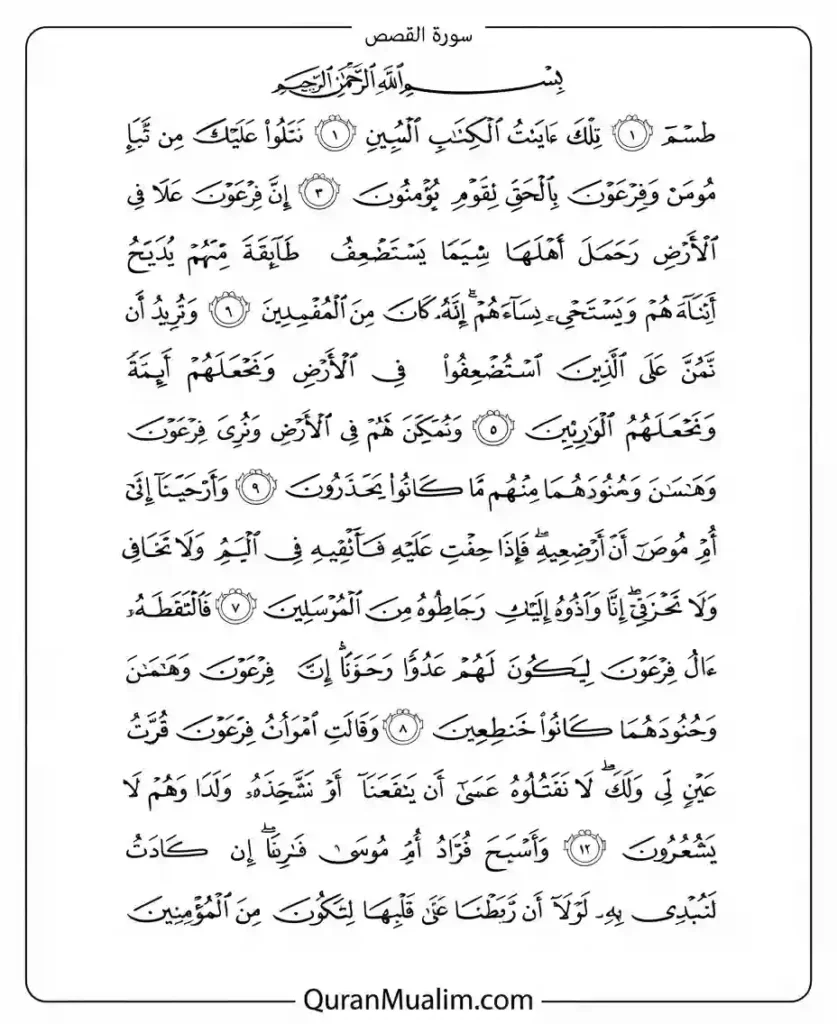
| 1 | طسٓمٓ | Tā-Sīn-Mīm | Ta. Sin. Mim. |
| 2 | تِلْكَ آيَاتُ الْكِتَابِ الْمُبِينِ | Tilka āyātu l-kitābi l-mubīn | These are Verses of the Book that makes (things) clear. |
| 3 | نَتْلُو عَلَيْكَ مِن نَّبَإِ مُوسَىٰ وَفِرْعَوْنَ بِالْحَقِّ لِقَوْمٍ يُؤْمِنُونَ | Natlū ʿalayka min naba’i mūsā wa firʿawna bil-ḥaqqi li-qawmin yu’minūn | We rehearse to thee some of the story of Moses and Pharaoh in Truth, for people who believe. |
| 4 | إِنَّ فِرْعَوْنَ عَلَا فِي الْأَرْضِ وَجَعَلَ أَهْلَهَا شِيَعًا يَسْتَضْعِفُ طَائِفَةً مِّنْهُمْ يُذَبِّحُ أَبْنَاءَهُمْ وَيَسْتَحْيِي نِسَاءَهُمْ ۚ إِنَّهُ كَانَ مِنَ الْمُفْسِدِينَ | Inna firʿawna ʿalā fī l-arḍi wa jaʿala ahlahā shiyaʿan yastaḍʿifu ṭā’ifatan minhum yudhabbiḥu abnā’ahum wa yastaḥyī nisā’ahum innahu kāna mina l-mufsidīn | Truly Pharaoh elated himself in the land and broke up its people into sections, depressing a small group among them: their sons he slew, but he kept alive their females: for he was indeed a maker of mischief. |
| 5 | وَنُرِيدُ أَن نَّمُنَّ عَلَى الَّذِينَ اسْتُضْعِفُوا فِي الْأَرْضِ وَنَجْعَلَهُمْ أَئِمَّةً وَنَجْعَلَهُمُ الْوَارِثِينَ | Wa nurīdu an namunna ʿalā lladhīna stuḍʿifū fī l-arḍi wa najʿalahum a’immatan wa najʿalahumu l-wārithīn | And We wished to be Gracious to those who were being depressed in the land, to make them leaders (in Faith) and make them heirs. |
| 6 | وَنُمَكِّنَ لَهُمْ فِي الْأَرْضِ وَنُرِيَ فِرْعَوْنَ وَهَامَانَ وَجُنُودَهُمَا مِنْهُم مَّا كَانُوا يَحْذَرُونَ | Wa numakkina lahum fī l-arḍi wa nuriya firʿawna wa hāmāna wa junūdahumā minhum mā kānū yaḥdharūn | To establish a firm place for them in the land, and to show Pharaoh, Haman, and their hosts, at their hands, the very things against which they were taking precautions. |
| 7 | وَأَوْحَيْنَا إِلَىٰ أُمِّ مُوسَىٰ أَنْ أَرْضِعِيهِ ۖ فَإِذَا خِفْتِ عَلَيْهِ فَأَلْقِيهِ فِي الْيَمِّ وَلَا تَخَافِي وَلَا تَحْزَنِي ۖ إِنَّا رَادُّوهُ إِلَيْكِ وَجَاعِلُوهُ مِنَ الْمُرْسَلِينَ | Wa awḥaynā ilā ummi mūsā an arḍiʿīhi fa-idhā khifti ʿalayhi fa-alqīhi fī l-yammi wa lā takhāfī wa lā taḥzanī innā rāddūhu ilayki wa jāʿilūhu mina l-mursalīn | So We sent this inspiration to the mother of Moses: “Suckle (thy child), but when thou hast fears about him, cast him into the river, but fear not nor grieve: for We shall restore him to thee, and We shall make him one of Our apostles.” |
| 8 | فَالْتَقَطَهُ آلُ فِرْعَوْنَ لِيَكُونَ لَهُمْ عَدُوًّا وَحَزَنًا ۗ إِنَّ فِرْعَوْنَ وَهَامَانَ وَجُنُودَهُمَا كَانُوا خَاطِئِينَ | Fal-taqaṭahu ālu firʿawna li-yakūna lahum ʿaduwwan wa ḥazanan inna firʿawna wa hāmāna wa junūdahumā kānū khāṭi’īn | Then the people of Pharaoh picked him up (from the river): (It was intended) that (Moses) should be to them an adversary and a cause of sorrow: for Pharaoh and Haman and (all) their hosts were men of sin. |
| 9 | وَقَالَتِ امْرَأَتُ فِرْعَوْنَ قُرَّتُ عَيْنٍ لِّي وَلَكَ ۖ لَا تَقْتُلُوهُ عَسَىٰ أَن يَنفَعَنَا أَوْ نَتَّخِذَهُ وَلَدًا وَهُمْ لَا يَشْعُرُونَ | Wa qālati mra’atu firʿawna qurratu ʿaynin lī wa laka lā taqtulūhu ʿasā an yanfaʿanā aw nattakhidhahu waladan wa hum lā yashʿurūn | The wife of Pharaoh said: “(Here is) joy of the eye, for me and for thee: slay him not. It may be that he will be of use to us, or we may adopt him as a son.” And they perceived not (what they were doing). |
| 10 | وَأَصْبَحَ فُؤَادُ أُمِّ مُوسَىٰ فَارِغًا ۖ إِن كَادَتْ لَتُبْدِي بِهِ لَوْلَا أَن رَّبَطْنَا عَلَىٰ قَلْبِهَا لِتَكُونَ مِنَ الْمُؤْمِنِينَ | Wa aṣbaḥa fu’ādu ummi mūsā fārighan in kādat la-tubdī bihi lawlā an rabaṭnā ʿalā qalbihā li-takūna mina l-mu’minīn | But there came to be a void in the heart of the mother of Moses: she was going almost to disclose his (case), had We not strengthened her heart (with faith), so that she might remain a (firm) believer. |
| 11 | وَقَالَتْ لِأُخْتِهِ قُصِّيهِ ۖ فَبَصُرَتْ بِهِ عَن جُنُبٍ وَهُمْ لَا يَشْعُرُونَ | Wa qālat li-ukhtihi quṣṣīhi fa-baṣurat bihi ʿan junubin wa hum lā yashʿurūn | And she said to the sister of (Moses), “Follow him.” So she (the sister) watched him in the character of a stranger. And they knew not. |
| 12 | ۞ وَحَرَّمْنَا عَلَيْهِ الْمَرَاضِعَ مِن قَبْلُ فَقَالَتْ هَلْ أَدُلُّكُمْ عَلَىٰ أَهْلِ بَيْتٍ يَكْفُلُونَهُ لَكُمْ وَهُمْ لَهُ نَاصِحُونَ | Wa ḥarramnā ʿalayhi l-marāḍiʿa min qablu fa-qālat hal adullukum ʿalā ahli baytin yakfulūnahu lakum wa hum lahu nāṣiḥūn | And we ordained that he refused suck at first, until (his sister came up and) said: “Shall I point out to you the people of a house that will nourish and bring him up for you and be sincerely attached to him?” |
| 13 | فَرَدَدْنَاهُ إِلَىٰ أُمِّهِ كَيْ تَقَرَّ عَيْنُهَا وَلَا تَحْزَنَ وَلِتَعْلَمَ أَنَّ وَعْدَ اللَّهِ حَقٌّ وَلَٰكِنَّ أَكْثَرَهُمْ لَا يَعْلَمُونَ | Fa-radadnāhu ilā ummihi kay taqarra ʿaynuhā wa lā taḥzana wa li-taʿlama anna waʿda llāhi ḥaqqun wa lākinna aktharahum lā yaʿlamūn | Thus did We restore him to his mother, that her eye might be comforted, that she might not grieve, and that she might know that the promise of Allah is true: but most of them do not understand. |
| 14 | وَلَمَّا بَلَغَ أَشُدَّهُ وَاسْتَوَىٰ آتَيْنَاهُ حُكْمًا وَعِلْمًا ۚ وَكَذَٰلِكَ نَجْزِي الْمُحْسِنِينَ | Wa lammā balagha ashuddahu wa stawā ātaynāhu ḥukman wa ʿilman wa kadhālika najzī l-muḥsinīn | When he reached full age, and was firmly established (in life), We bestowed on him wisdom and knowledge: for thus do We reward those who do good. |
| 15 | وَدَخَلَ الْمَدِينَةَ عَلَىٰ حِينِ غَفْلَةٍ مِّنْ أَهْلِهَا فَوَجَدَ فِيهَا رَجُلَيْنِ يَقْتَتِلَانِ هَٰذَا مِن شِيعَتِهِ وَهَٰذَا مِنْ عَدُوِّهِ ۖ فَاسْتَغَاثَهُ الَّذِي مِن شِيعَتِهِ عَلَى الَّذِي مِنْ عَدُوِّهِ فَوَكَزَهُ مُوسَىٰ فَقَضَىٰ عَلَيْهِ ۖ قَالَ هَٰذَا مِنْ عَمَلِ الشَّيْطَانِ ۖ إِنَّهُ عَدُوٌّ مُّضِلٌّ مُّبِينٌ | Wa dakhala l-madīnata ʿalā ḥīni ghaflatin min ahlihā fa-wajada fīhā rajulayni yaqtatilāni hādhā min shīʿatihi wa hādhā min ʿaduwwihi fa-staghāthahu lladhī min shīʿatihi ʿalā lladhī min ʿaduwwihi fa-wakazahu mūsā fa-qaḍā ʿalayhi qāla hādhā min ʿamali sh-shayṭāni innahu ʿaduwwun muḍillun mubīn | And he entered the city at a time when its people were not watching: and he found there two men fighting — one of his own religion, and the other, of his foes. Now the man of his own religion appealed to him against his foe, and Moses struck him with his fist and made an end of him. He said: “This is a work of Evil (Satan): for he is an enemy that manifestly misleads!” |
| 16 | قَالَ رَبِّ إِنِّي ظَلَمْتُ نَفْسِي فَاغْفِرْ لِي فَغَفَرَ لَهُ ۚ إِنَّهُ هُوَ الْغَفُورُ الرَّحِيمُ | Qāla rabbi innī ẓalamtu nafsī fa-ghfir lī fa-ghafara lahu innahu huwa l-ghafūru r-raḥīm | He prayed: “O my Lord! I have indeed wronged my soul! Do Thou then forgive me!” So (Allah) forgave him: for He is the Oft-Forgiving, Most Merciful. |
| 17 | قَالَ رَبِّ بِمَا أَنْعَمْتَ عَلَيَّ فَلَنْ أَكُونَ ظَهِيرًا لِّلْمُجْرِمِينَ | Qāla rabbi bimā anʿamta ʿalayya fa-lan akūna ẓahīran lil-mujrimīn | He said: “O my Lord! For that Thou hast bestowed Thy Grace on me, never shall I be a help to those who sin!” |
| 18 | فَأَصْبَحَ فِي الْمَدِينَةِ خَائِفًا يَتَرَقَّبُ فَإِذَا الَّذِي اسْتَنصَرَهُ بِالْأَمْسِ يَسْتَصْرِخُهُ ۚ قَالَ لَهُ مُوسَىٰ إِنَّكَ لَغَوِيٌّ مُّبِينٌ | Fa-aṣbaḥa fī l-madīnati khā’ifan yataraqqabu fa-idhā lladhī stanṣarahu bil-amsi yastaṣrikhuhu qāla lahu mūsā innaka la-ghawiyyun mubīn | So he saw the morning in the city, looking about, in a state of fear, when behold, the man who had, the day before, sought his help called aloud for his help (again). Moses said to him: “Thou art truly, it is clear, a quarrelsome fellow!” |
| 19 | فَلَمَّا أَنْ أَرَادَ أَن يَبْطِشَ بِالَّذِي هُوَ عَدُوٌّ لَّهُمَا قَالَ يَا مُوسَىٰ أَتُرِيدُ أَن تَقْتُلَنِي كَمَا قَتَلْتَ نَفْسًا بِالْأَمْسِ ۖ إِن تُرِيدُ إِلَّا أَن تَكُونَ جَبَّارًا فِي الْأَرْضِ وَمَا تُرِيدُ أَن تَكُونَ مِنَ الْمُصْلِحِينَ | Fa-lammā an arāda an yabṭisha bi-lladhī huwa ʿaduwwun lahumā qāla yā mūsā a-turīdu an taqtulanī kamā qatalta nafsan bil-amsi in turīdu illā an takūna jabbāran fī l-arḍi wa mā turīdu an takūna mina l-muṣliḥīn | Then, when he decided to lay hold of the man who was an enemy to both of them, that man said: “O Moses! Is it thy intention to slay me as thou slewest a man yesterday? Thy intention is none other than to become a powerful violent man in the land, and not to be one who sets things right!” |
| 20 | وَجَاءَ رَجُلٌ مِّنْ أَقْصَى الْمَدِينَةِ يَسْعَىٰ قَالَ يَا مُوسَىٰ إِنَّ الْمَلَأَ يَأْتَمِرُونَ بِكَ لِيَقْتُلُوكَ فَاخْرُجْ إِنِّي لَكَ مِنَ النَّاصِحِينَ | Wa jā’a rajulun min aqṣā l-madīnati yasʿā qāla yā mūsā inna l-mala’a ya’tamirūna bika li-yaqtulūka fa-khruj innī laka mina n-nāṣiḥīn | And there came a man, running, from the furthest end of the City. He said: “O Moses! the Chiefs are taking counsel together about thee, to slay thee: so get thee away, for I do give thee sincere advice.” |
| 21 | فَخَرَجَ مِنْهَا خَائِفًا يَتَرَقَّبُ ۖ قَالَ رَبِّ نَجِّنِي مِنَ الْقَوْمِ الظَّالِمِينَ | Fa-kharaja minhā khā’ifan yataraqqabu qāla rabbi najjinī mina l-qawmi ẓ-ẓālimīn | He therefore got away therefrom, looking about, in a state of fear. He prayed: “O my Lord! save me from people given to wrong-doing.” |
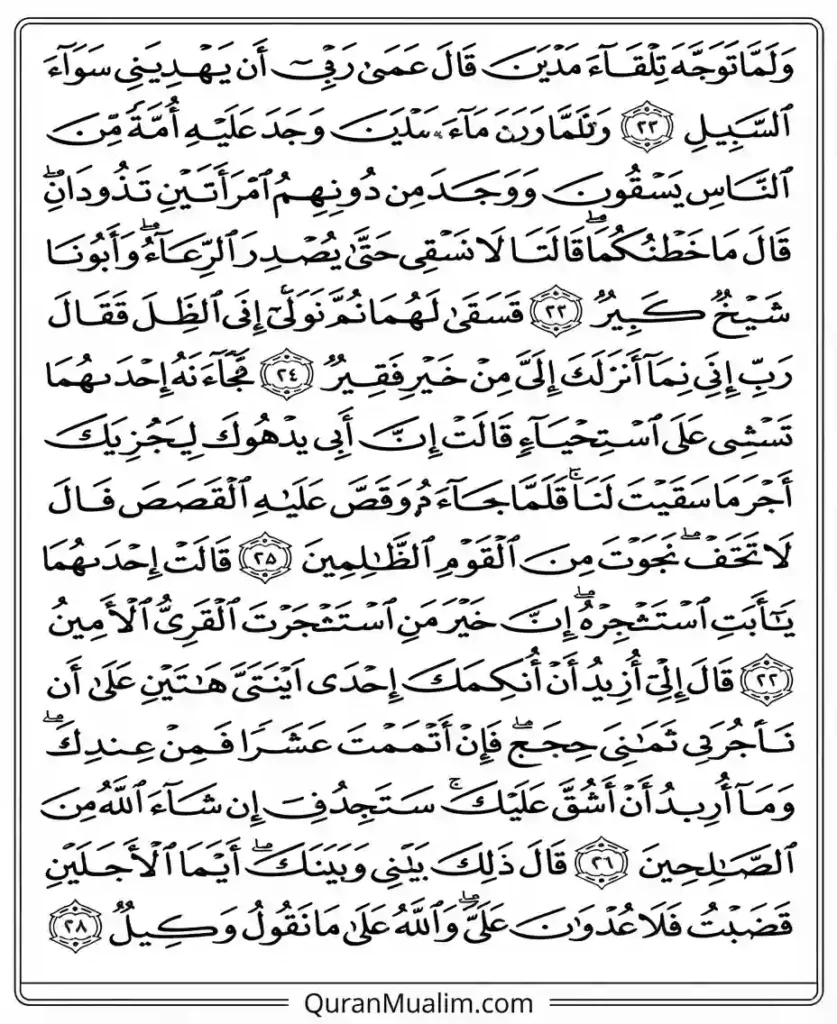
| 22 | وَلَمَّا تَوَجَّهَ تِلْقَاءَ مَدْيَنَ قَالَ عَسَىٰ رَبِّي أَن يَهْدِيَنِي سَوَاءَ السَّبِيلِ | Wa lammā tawajjaha tilqā’a madyana qāla ʿasā rabbī an yahdiyanī sawā’a s-sabīl | Then, when he turned his face towards (the land of) Madyan, he said: “I do hope that my Lord will show me the smooth and straight Path.” |
| 23 | وَلَمَّا وَرَدَ مَاءَ مَدْيَنَ وَجَدَ عَلَيْهِ أُمَّةً مِّنَ النَّاسِ يَسْقُونَ وَوَجَدَ مِن دُونِهِمُ امْرَأَتَيْنِ تَذُودَانِ ۖ قَالَ مَا خَطْبُكُمَا ۖ قَالَتَا لَا نَسْقِي حَتَّىٰ يُصْدِرَ الرِّعَاءُ ۖ وَأَبُونَا شَيْخٌ كَبِيرٌ | Wa lammā warada mā’a madyana wajada ʿalayhi ummatan mina n-nāsi yasqūna wa wajada min dūnihimu mra’atayni tadhūdāni qāla mā khaṭbukumā qālatā lā nasqī ḥattā yuṣdira r-riʿā’u wa abūnā shaykhun kabīr | And when he arrived at the watering (place) in Madyan, he found there a group of men watering (their flocks), and besides them he found two women who were keeping back (their flocks). He said: “What is the matter with you?” They said: “We cannot water (our flocks) until the shepherds take back (their flocks): and our father is a very old man.” |
| 24 | فَسَقَىٰ لَهُمَا ثُمَّ تَوَلَّىٰ إِلَى الظِّلِّ فَقَالَ رَبِّ إِنِّي لِمَا أَنزَلْتَ إِلَيَّ مِنْ خَيْرٍ فَقِيرٌ | Fa-saqā lahumā thumma tawallā ila ẓ-ẓilli fa-qāla rabbi innī li-mā anzalta ilayya min khayrin faqīr | So he watered (their flocks) for them; then he turned back to the shade, and said: “O my Lord! truly am I in (desperate) need of any good that Thou dost send me!” |
| 25 | فَجَاءَتْهُ إِحْدَاهُمَا تَمْشِي عَلَى اسْتِحْيَاءٍ قَالَتْ إِنَّ أَبِي يَدْعُوكَ لِيَجْزِيَكَ أَجْرَ مَا سَقَيْتَ لَنَا ۚ فَلَمَّا جَاءَهُ وَقَصَّ عَلَيْهِ الْقَصَصَ قَالَ لَا تَخَفْ ۖ نَجَوْتَ مِنَ الْقَوْمِ الظَّالِمِينَ | Fa-jā’athu iḥdāhumā tamshī ʿalā stiḥyā’in qālat inna abī yadʿūka li-yajziyaka ajra mā saqayta lanā fa-lammā jā’ahu wa qaṣṣa ʿalayhi l-qaṣaṣa qāla lā takhaf najawta mina l-qawmi ẓ-ẓālimīn | Afterwards one of the (damsels) came (back) to him, walking bashfully. She said: “My father invites thee that he may reward thee for having watered (our flocks) for us.” So when he came to him and narrated the story, he said: “Fear thou not: (well) hast thou escaped from unjust people.” |
| 26 | قَالَتْ إِحْدَاهُمَا يَا أَبَتِ اسْتَأْجِرْهُ ۖ إِنَّ خَيْرَ مَنِ اسْتَأْجَرْتَ الْقَوِيُّ الْأَمِينُ | Qālat iḥdāhumā yā abati sta’jirhu inna khayra mani sta’jarta l-qawiyyu l-amīn | Said one of the (damsels): “O my (dear) father! engage him on wages: truly the best of men for thee to employ is the (man) who is strong and trusty.” |
| 27 | قَالَ إِنِّي أُرِيدُ أَنْ أُنكِحَكَ إِحْدَى ابْنَتَيَّ هَاتَيْنِ عَلَىٰ أَن تَأْجُرَنِي ثَمَانِيَ حِجَجٍ ۖ فَإِنْ أَتْمَمْتَ عَشْرًا فَمِنْ عِندِكَ ۖ وَمَا أُرِيدُ أَنْ أَشُقَّ عَلَيْكَ ۚ سَتَجِدُنِي إِن شَاءَ اللَّهُ مِنَ الصَّالِحِينَ | Qāla innī urīdu an unkiḥaka iḥdā bnatayya hātayni ʿalā an ta’juranī thamāniya ḥijajin fa-in atmamta ʿashran fa-min ʿindika wa mā urīdu an ashuqqa ʿalayka sa-tajidunī in shā’a llāhu mina ṣ-ṣāliḥīn | He said: “I intend to wed one of these my daughters to thee, on condition that thou serve me for eight years; but if thou complete ten years, it will be (grace) from thee. But I intend not to place thee under a difficulty: thou wilt find me, indeed, if Allah wills, one of the righteous.” |
| 28 | قَالَ ذَٰلِكَ بَيْنِي وَبَيْنَكَ ۖ أَيَّمَا الْأَجَلَيْنِ قَضَيْتُ فَلَا عُدْوَانَ عَلَيَّ ۖ وَاللَّهُ عَلَىٰ مَا نَقُولُ وَكِيلٌ | Qāla dhālika baynī wa baynaka ayyamā l-ajalayni qaḍaytu fa-lā ʿudwāna ʿalayya wallāhu ʿalā mā naqūlu wakīl | He said: “Be that (the agreement) between me and thee: whichever of the two terms I fulfil, let there be no ill-will to me. Be Allah a witness to what we say.” |
| 29 | ۞ فَلَمَّا قَضَىٰ مُوسَى الْأَجَلَ وَسَارَ بِأَهْلِهِ آنَسَ مِن جَانِبِ الطُّورِ نَارًا قَالَ لِأَهْلِهِ امْكُثُوا إِنِّي آنَسْتُ نَارًا لَّعَلِّي آتِيكُم مِّنْهَا بِخَبَرٍ أَوْ جَذْوَةٍ مِّنَ النَّارِ لَعَلَّكُمْ تَصْطَلُونَ | Fa-lammā qaḍā mūsā l-ajala wa sāra bi-ahlihi ānasa min jānibi ṭ-ṭūri nāran qāla li-ahlihi mkuthū innī ānastu nāran laʿallī ātīkum minhā bi-khabarin aw jadhwatin mina n-nāri laʿallakum taṣṭalūn | Now when Moses had fulfilled the term, and was travelling with his family, he perceived a fire in the direction of Mount Tur. He said to his family: “Tarry ye; I perceive a fire; I hope to bring you from there some information, or a burning firebrand, that ye may warm yourselves.” |
| 30 | فَلَمَّا أَتَاهَا نُودِيَ مِن شَاطِئِ الْوَادِ الْأَيْمَنِ فِي الْبُقْعَةِ الْمُبَارَكَةِ مِنَ الشَّجَرَةِ أَن يَا مُوسَىٰ إِنِّي أَنَا اللَّهُ رَبُّ الْعَالَمِينَ | Fa-lammā atāhā nūdiya min shāṭi’i l-wādi l-aymani fī l-buqʿati l-mubārakati mina sh-shajarati an yā mūsā innī anā llāhu rabbu l-ʿālamīn | But when he came to the (fire), a voice was heard from the right bank of the valley, from a tree in hallowed ground: “O Moses! Verily I am Allah, the Lord of the Worlds…” |
| 31 | وَأَنْ أَلْقِ عَصَاكَ ۖ فَلَمَّا رَآهَا تَهْتَزُّ كَأَنَّهَا جَانٌّ وَلَّىٰ مُدْبِرًا وَلَمْ يُعَقِّبْ ۚ يَا مُوسَىٰ أَقْبِلْ وَلَا تَخَفْ ۖ إِنَّكَ مِنَ الْآمِنِينَ | Wa an alqi ʿaṣāka fa-lammā ra’āhā tahtazzu ka’annahā jānnun wallā mudbiran wa lam yuʿaqqib yā mūsā aqbil wa lā takhaf innaka mina l-āminīn | “Now do thou throw thy rod!” But when he saw it moving (of its own accord) as if it had been a snake, he turned back in retreat, and retraced not his steps: “O Moses!” (it was said), “Draw near, and fear not: for thou art of those who are secure.” |
| 32 | اسْلُكْ يَدَكَ فِي جَيْبِكَ تَخْرُجْ بَيْضَاءَ مِنْ غَيْرِ سُوءٍ وَاضْمُمْ إِلَيْكَ جَنَاحَكَ مِنَ الرَّهْبِ ۖ فَذَانِكَ بُرْهَانَانِ مِن رَّبِّكَ إِلَىٰ فِرْعَوْنَ وَمَلَئِهِ ۚ إِنَّهُمْ كَانُوا قَوْمًا فَاسِقِينَ | Usluk yadaka fī jaybika takhruj bayḍā’a min ghayri sū’in wa-ḍmum ilayka janāḥaka mina r-rahbi fa-dhānika burhānāni min rabbika ilā firʿawna wa mala’ihi innahum kānū qawman fāsiqīn | “Move thy hand into thy bosom, and it will come forth white without stain (or harm), and draw thy hand close to thy side (to guard) against fear. Those are the two credentials from thy Lord to Pharaoh and his Chiefs: for truly they are a people rebellious and wicked.” |
| 33 | قَالَ رَبِّ إِنِّي قَتَلْتُ مِنْهُمْ نَفْسًا فَأَخَافُ أَن يَقْتُلُونِ | Qāla rabbi innī qataltu minhum nafsan fa-akhāfu an yaqtulūn | He said: “O my Lord! I have slain a man among them, and I fear lest they slay me.” |
| 34 | وَأَخِي هَارُونُ هُوَ أَفْصَحُ مِنِّي لِسَانًا فَأَرْسِلْهُ مَعِيَ رِدْءًا يُصَدِّقُنِي ۖ إِنِّي أَخَافُ أَن يُكَذِّبُونِ | Wa akhī hārūnu huwa afṣaḥu minnī lisānan fa-arsilhu maʿiya rid’an yuṣaddiqunī innī akhāfu an yukadhdhibūn | “And my brother Aaron — he is more eloquent in speech than I: so send him with me as a helper, to confirm (and strengthen) me: for I fear that they may accuse me of falsehood.” |
| 35 | قَالَ سَنَشُدُّ عَضُدَكَ بِأَخِيكَ وَنَجْعَلُ لَكُمَا سُلْطَانًا فَلَا يَصِلُونَ إِلَيْكُمَا ۚ بِآيَاتِنَا أَنتُمَا وَمَنِ اتَّبَعَكُمَا الْغَالِبُونَ | Qāla sa-nashuddu ʿaḍudaka bi-akhīka wa najʿalu lakumā sulṭānan fa-lā yaṣilūna ilaykumā bi-āyātinā antumā wa mani ttabaʿakumā l-ghālibūn | He said: “We will certainly strengthen thy arm through thy brother, and invest you both with authority, so they shall not be able to touch you: with Our Signs shall ye triumph — you two as well as those who follow you.” |
| 36 | فَلَمَّا جَاءَهُم مُّوسَىٰ بِآيَاتِنَا بَيِّنَاتٍ قَالُوا مَا هَٰذَا إِلَّا سِحْرٌ مُّفْتَرًى وَمَا سَمِعْنَا بِهَٰذَا فِي آبَائِنَا الْأَوَّلِينَ | Fa-lammā jā’ahum mūsā bi-āyātinā bayyinātin qālū mā hādhā illā siḥrun muftaran wa mā samiʿnā bi-hādhā fī ābā’inā l-awwalīn | When Moses came to them with Our clear signs, they said: “This is nothing but sorcery faked up: never did we hear the like among our fathers of old!” |
| 37 | وَقَالَ مُوسَىٰ رَبِّي أَعْلَمُ بِمَن جَاءَ بِالْهُدَىٰ مِنْ عِندِهِ وَمَن تَكُونُ لَهُ عَاقِبَةُ الدَّارِ ۖ إِنَّهُ لَا يُفْلِحُ الظَّالِمُونَ | Wa qāla mūsā rabbī aʿlamu bi-man jā’a bil-hudā min ʿindihi wa man takūnu lahu ʿāqibatu d-dāri innahu lā yufliḥu ẓ-ẓālimūn | Moses said: “My Lord knows best who it is that comes with guidance from Him and whose end will be best in the Hereafter: certain it is that the wrong-doers will not prosper.” |
| 38 | وَقَالَ فِرْعَوْنُ يَا أَيُّهَا الْمَلَأُ مَا عَلِمْتُ لَكُم مِّنْ إِلَٰهٍ غَيْرِي فَأَوْقِدْ لِي يَا هَامَانُ عَلَى الطِّينِ فَاجْعَل لِّي صَرْحًا لَّعَلِّي أَطَّلِعُ إِلَىٰ إِلَٰهِ مُوسَىٰ وَإِنِّي لَأَظُنُّهُ مِنَ الْكَاذِبِينَ | Wa qāla firʿawnu yā ayyuha l-mala’u mā ʿalimtu lakum min ilāhin ghayrī fa-awqid lī yā hāmānu ʿalā ṭ-ṭīni fa-jʿal lī ṣarḥan laʿallī aṭṭaliʿu ilā ilāhi mūsā wa innī la-aẓunnuhu mina l-kādhibīn | Pharaoh said: “O Chiefs! no god do I know for you but myself: therefore, O Haman! light me a (kiln to bake bricks) out of clay, and build me a lofty palace, that I may mount up to the god of Moses: but as far as I am concerned, I think (Moses) is a liar!” |
| 39 | وَاسْتَكْبَرَ هُوَ وَجُنُودُهُ فِي الْأَرْضِ بِغَيْرِ الْحَقِّ وَظَنُّوا أَنَّهُمْ إِلَيْنَا لَا يُرْجَعُونَ | Wa stakbara huwa wa junūduhu fī l-arḍi bi-ghayri l-ḥaqqi wa ẓannū annahum ilaynā lā yurjaʿūn | And he was arrogant and insolent in the land, beyond reason — he and his hosts: they thought that they would not have to return to Us. |
| 40 | فَأَخَذْنَاهُ وَجُنُودَهُ فَنَبَذْنَاهُمْ فِي الْيَمِّ ۖ فَانظُرْ كَيْفَ كَانَ عَاقِبَةُ الظَّالِمِينَ | Fa-akhadhnāhu wa junūdahu fa-nabadhnāhum fī l-yammi fa-nẓur kayfa kāna ʿāqibatu ẓ-ẓālimīn | So We seized him and his hosts, and We flung them into the sea: now behold what was the end of those who did wrong! |
| 41 | وَجَعَلْنَاهُمْ أَئِمَّةً يَدْعُونَ إِلَى النَّارِ ۖ وَيَوْمَ الْقِيَامَةِ لَا يُنصَرُونَ | Wa jaʿalnāhum a’immatan yadʿūna ilā n-nāri wa yawma l-qiyāmati lā yunṣarūn | And We made them (but) leaders inviting to the Fire; and on the Day of Judgment no help shall they find. |
| 42 | وَأَتْبَعْنَاهُمْ فِي هَٰذِهِ الدُّنْيَا لَعْنَةً ۖ وَيَوْمَ الْقِيَامَةِ هُم مِّنَ الْمَقْبُوحِينَ | Wa atbaʿnāhum fī hādhihi d-dunyā laʿnatan wa yawma l-qiyāmati hum mina l-maqbūḥīn | In this world We made a curse to follow them, and on the Day of Judgment they will be among the loathed (and despised). |
| 43 | وَلَقَدْ آتَيْنَا مُوسَى الْكِتَابَ مِن بَعْدِ مَا أَهْلَكْنَا الْقُرُونَ الْأُولَىٰ بَصَائِرَ لِلنَّاسِ وَهُدًى وَرَحْمَةً لَّعَلَّهُمْ يَتَذَكَّرُونَ | Wa laqad ātaynā mūsā l-kitāba min baʿdi mā ahlaknā l-qurūna l-ūlā baṣā’ira lin-nāsi wa hudan wa raḥmatan laʿallahum yatadhakkarūn | We did reveal to Moses the Book after We had destroyed the earlier generations, (to give) Insight to men, and guidance and Mercy, that they might receive admonition. |
| 44 | وَمَا كُنتَ بِجَانِبِ الْغَرْبِيِّ إِذْ قَضَيْنَا إِلَىٰ مُوسَى الْأَمْرَ وَمَا كُنتَ مِنَ الشَّاهِدِينَ | Wa mā kunta bi-jānibi l-gharbiyyi idh qaḍaynā ilā mūsā l-amra wa mā kunta mina sh-shāhidīn | Thou wast not on the Western side when We decreed the Commission to Moses, nor wast thou a witness (of those events). |
| 45 | وَلَٰكِنَّا أَنشَأْنَا قُرُونًا فَتَطَاوَلَ عَلَيْهِمُ الْعُمُرُ ۚ وَمَا كُنتَ ثَاوِيًا فِي أَهْلِ مَدْيَنَ تَتْلُو عَلَيْهِمْ آيَاتِنَا وَلَٰكِنَّا كُنَّا مُرْسِلِينَ | Wa lākinnā ansha’nā qurūnan fa-taṭāwala ʿalayhimu l-ʿumuru wa mā kunta thāwiyan fī ahli madyana tatlū ʿalayhim āyātinā wa lākinnā kunnā mursilīn | But We raised up (new) generations, and long were the ages that passed over them; but thou wast not a dweller among the people of Madyan, rehearsing Our Signs to them; but it is We Who send apostles (with inspiration). |
| 46 | وَمَا كُنتَ بِجَانِبِ الطُّورِ إِذْ نَادَيْنَا وَلَٰكِن رَّحْمَةً مِّن رَّبِّكَ لِتُنذِرَ قَوْمًا مَّا أَتَاهُم مِّن نَّذِيرٍ مِّن قَبْلِكَ لَعَلَّهُمْ يَتَذَكَّرُونَ | Wa mā kunta bi-jānibi ṭ-ṭūri idh nādaynā wa lākin raḥmatan min rabbika li-tundhira qawman mā atāhum min nadhīrin min qablika laʿallahum yatadhakkarūn | Nor wast thou at the side of (the Mountain of) Tur when we called (to Moses). Yet (art thou sent) as Mercy from thy Lord, to give warning to a people to whom no warner had come before thee: in order that they may receive admonition. |
| 47 | وَلَوْلَا أَن تُصِيبَهُم مُّصِيبَةٌ بِمَا قَدَّمَتْ أَيْدِيهِمْ فَيَقُولُوا رَبَّنَا لَوْلَا أَرْسَلْتَ إِلَيْنَا رَسُولًا فَنَتَّبِعَ آيَاتِكَ وَنَكُونَ مِنَ الْمُؤْمِنِينَ | Wa lawlā an tuṣībahum muṣībatun bimā qaddamat aydīhim fa-yaqūlū rabbanā lawlā arsalta ilaynā rasūlan fa-nattabiʿa āyātika wa nakūna mina l-mu’minīn | If (We had) not (sent thee to the Quraish), in case a calamity should seize them for (the deeds) that their hands have sent forth, they might say: “Our Lord! why didst Thou not send us an apostle? We should then have followed Thy Signs and been amongst those who believe!” |
| 48 | فَلَمَّا جَاءَهُمُ الْحَقُّ مِنْ عِندِنَا قَالُوا لَوْلَا أُوتِيَ مِثْلَ مَا أُوتِيَ مُوسَىٰ ۚ أَوَلَمْ يَكْفُرُوا بِمَا أُوتِيَ مُوسَىٰ مِن قَبْلُ ۖ قَالُوا سِحْرَانِ تَظَاهَرَا وَقَالُوا إِنَّا بِكُلٍّ كَافِرُونَ | Fa-lammā jā’ahumu l-ḥaqqu min ʿindinā qālū lawlā ūtiya mithla mā ūtiya mūsā awalam yakfurū bimā ūtiya mūsā min qablu qālū siḥrāni taẓāharā wa qālū innā bikullin kāfirūn | But (now), when the Truth has come to them from Ourselves, they say, “Why are not (Signs) sent to him, like those which were sent to Moses?” Do they not then reject (the Signs) which were formerly sent to Moses? They say: “Two kinds of sorcery, each assisting the other!” And they say: “For us, we reject all (such things)!” |
| 49 | قُلْ فَأْتُوا بِكِتَابٍ مِّنْ عِندِ اللَّهِ هُوَ أَهْدَىٰ مِنْهُمَا أَتَّبِعْهُ إِن كُنتُمْ صَادِقِينَ | Qul fa’tū bi-kitābin min ʿindi llāhi huwa ahdā minhumā attabiʿhu in kuntum ṣādiqīn | Say: “Then bring ye a Book from Allah, which is a better guide than either of them, that I may follow it, if ye are truthful!” |
| 50 | فَإِن لَّمْ يَسْتَجِيبُوا لَكَ فَاعْلَمْ أَنَّمَا يَتَّبِعُونَ أَهْوَاءَهُمْ ۚ وَمَنْ أَضَلُّ مِمَّنِ اتَّبَعَ هَوَاهُ بِغَيْرِ هُدًى مِّنَ اللَّهِ ۚ إِنَّ اللَّهَ لَا يَهْدِي الْقَوْمَ الظَّالِمِينَ | Fa-in lam yastajībū laka fa-ʿlam annamā yattabiʿūna ahwā’ahum wa man aḍallu mimmani ttabaʿa hawāhu bi-ghayri hudan mina llāhi inna llāha lā yahdī l-qawma ẓ-ẓālimīn | But if they hearken not to thee, know that they only follow their own lusts: and who is more astray than one who follows his own lusts, devoid of guidance from Allah? For Allah guides not people given to wrong-doing. |
| 51 | ۞ وَلَقَدْ وَصَّلْنَا لَهُمُ الْقَوْلَ لَعَلَّهُمْ يَتَذَكَّرُونَ | Wa laqad waṣṣalnā lahumu l-qawla laʿallahum yatadhakkarūn | Now have We caused the Word to reach them themselves, in order that they may receive admonition. |
| 52 | الَّذِينَ آتَيْنَاهُمُ الْكِتَابَ مِن قَبْلِهِ هُم بِهِ يُؤْمِنُونَ | Alladhīna ātaynāhumu l-kitāba min qablihi hum bihi yu’minūn | Those to whom We sent the Book before this — they do believe in this (revelation). |
| 53 | وَإِذَا يُتْلَىٰ عَلَيْهِمْ قَالُوا آمَنَّا بِهِ إِنَّهُ الْحَقُّ مِن رَّبِّنَا إِنَّا كُنَّا مِن قَبْلِهِ مُسْلِمِينَ | Wa idhā yutlā ʿalayhim qālū āmannā bihi innahu l-ḥaqqu min rabbinā innā kunnā min qablihi muslimīn | And when it is recited to them, they say: “We believe therein, for it is the Truth from our Lord: indeed we have been Muslims (bowing to Allah’s Will) from before this.” |
| 54 | أُولَٰئِكَ يُؤْتَوْنَ أَجْرَهُم مَّرَّتَيْنِ بِمَا صَبَرُوا وَيَدْرَءُونَ بِالْحَسَنَةِ السَّيِّئَةَ وَمِمَّا رَزَقْنَاهُمْ يُنفِقُونَ | Ulā’ika yu’tawna ajrahum marratayni bimā ṣabarū wa yadra’ūna bil-ḥasanati s-sayyi’ata wa mimmā razaqnāhum yunfiqūn | Twice will they be given their reward, for that they have persevered, that they avert Evil with Good, and that they spend (in charity) out of what We have given them. |
| 55 | وَإِذَا سَمِعُوا اللَّغْوَ أَعْرَضُوا عَنْهُ وَقَالُوا لَنَا أَعْمَالُنَا وَلَكُمْ أَعْمَالُكُمْ سَلَامٌ عَلَيْكُمْ لَا نَبْتَغِي الْجَاهِلِينَ | Wa idhā samiʿū l-laghwa aʿraḍū ʿanhu wa qālū lanā aʿmālunā wa lakum aʿmālukum salāmun ʿalaykum lā nabtaghī l-jāhilīn | And when they hear vain talk, they turn away therefrom and say: “To us our deeds, and to you yours; peace be to you: we seek not the ignorant.” |
| 56 | إِنَّكَ لَا تَهْدِي مَنْ أَحْبَبْتَ وَلَٰكِنَّ اللَّهَ يَهْدِي مَن يَشَاءُ ۚ وَهُوَ أَعْلَمُ بِالْمُهْتَدِينَ | Innaka lā tahdī man aḥbabta wa lākinna llāha yahdī man yashā’u wa huwa aʿlamu bil-muhtadīn | It is true thou wilt not be able to guide every one whom thou lovest; but Allah guides those whom He will, and He knows best those who receive guidance. |
| 57 | وَقَالُوا إِن نَّتَّبِعِ الْهُدَىٰ مَعَكَ نُتَخَطَّفْ مِنْ أَرْضِنَا ۚ أَوَلَمْ نُمَكِّن لَّهُمْ حَرَمًا آمِنًا يُجْبَىٰ إِلَيْهِ ثَمَرَاتُ كُلِّ شَيْءٍ رِّزْقًا مِّن لَّدُنَّا وَلَٰكِنَّ أَكْثَرَهُمْ لَا يَعْلَمُونَ | Wa qālū in nattabiʿi l-hudā maʿaka nutakhaṭṭaf min arḍinā awalam numakkin lahum ḥaraman āminan yujbā ilayhi thamarātu kulli shay’in rizqan min ladunnā wa lākinna aktharahum lā yaʿlamūn | They say: “If we were to follow the guidance with thee, we should be snatched away from our land.” Have We not established for them a secure sanctuary, to which are brought as tribute fruits of all kinds — a provision from Ourselves? But most of them understand not. |
| 58 | وَكَمْ أَهْلَكْنَا مِن قَرْيَةٍ بَطِرَتْ مَعِيشَتَهَا ۖ فَتِلْكَ مَسَاكِنُهُمْ لَمْ تُسْكَن مِّن بَعْدِهِمْ إِلَّا قَلِيلًا ۖ وَكُنَّا نَحْنُ الْوَارِثِينَ | Wa kam ahlaknā min qaryatin baṭirat maʿīshatahā fa-tilka masākinuhum lam tuskan min baʿdihim illā qalīlan wa kunnā naḥnu l-wārithīn | And how many populations We destroyed, which exulted in their life (of ease and plenty)! Now those habitations of theirs, after them, are deserted — all but a (miserable) few! And We are their heirs. |
| 59 | وَمَا كَانَ رَبُّكَ مُهْلِكَ الْقُرَىٰ حَتَّىٰ يَبْعَثَ فِي أُمِّهَا رَسُولًا يَتْلُو عَلَيْهِمْ آيَاتِنَا ۚ وَمَا كُنَّا مُهْلِكِي الْقُرَىٰ إِلَّا وَأَهْلُهَا ظَالِمُونَ | Wa mā kāna rabbuka muhlika l-qurā ḥattā yabʿatha fī ummihā rasūlan yatlū ʿalayhim āyātinā wa mā kunnā muhlikī l-qurā illā wa-ahluhā ẓālimūn | Nor was thy Lord the one to destroy a population until He had sent to its centre an apostle, rehearsing to them Our Signs; nor are We going to destroy a population except when its members practise iniquity. |
| 60 | وَمَا أُوتِيتُم مِّن شَيْءٍ فَمَتَاعُ الْحَيَاةِ الدُّنْيَا وَزِينَتُهَا ۚ وَمَا عِندَ اللَّهِ خَيْرٌ وَأَبْقَىٰ ۚ أَفَلَا تَعْقِلُونَ | Wa mā ūtītum min shay’in fa-matāʿu l-ḥayāti d-dunyā wa zīnatuhā wa mā ʿinda llāhi khayrun wa abqā afalā taʿqilūn | The (material) things which ye are given are but the conveniences of this life and the glitter thereof; but that which is with Allah is better and more enduring: will ye not then be wise? |
| 61 | أَفَمَن وَعَدْنَاهُ وَعْدًا حَسَنًا فَهُوَ لَاقِيهِ كَمَن مَّتَّعْنَاهُ مَتَاعَ الْحَيَاةِ الدُّنْيَا ثُمَّ هُوَ يَوْمَ الْقِيَامَةِ مِنَ الْمُحْضَرِينَ | Afaman waʿadnāhu waʿdan ḥasanan fa-huwa lāqīhi ka-man mattaʿnāhu matāʿa l-ḥayāti d-dunyā thumma huwa yawma l-qiyāmati mina l-muḥḍarīn | Are (these two) alike? — one to whom We have made a goodly promise, and who is going to reach its (fulfilment), and one to whom We have given the good things of this life, but who, on the Day of Judgment, is to be among those brought up (for punishment). |
| 62 | وَيَوْمَ يُنَادِيهِمْ فَيَقُولُ أَيْنَ شُرَكَائِيَ الَّذِينَ كُنتُمْ تَزْعُمُونَ | Wa yawma yunādīhim fa-yaqūlu ayna shurakā’iya lladhīna kuntum tazʿumūn | That Day (Allah) will call to them, and say: “Where are my ‘partners’? — whom ye imagined (to be such)?” |
| 63 | قَالَ الَّذِينَ حَقَّ عَلَيْهِمُ الْقَوْلُ رَبَّنَا هَٰؤُلَاءِ الَّذِينَ أَغْوَيْنَا أَغْوَيْنَاهُمْ كَمَا غَوَيْنَا ۖ تَبَرَّأْنَا إِلَيْكَ ۖ مَا كَانُوا إِيَّانَا يَعْبُدُونَ | Qāla lladhīna ḥaqqa ʿalayhimu l-qawlu rabbanā hā’ulā’i lladhīna aghwaynā aghwaynāhum kamā ghawaynā tabarra’nā ilayka mā kānū iyyānā yaʿbudūn | Those against whom the charge will be proved will say: “Our Lord! These are the ones whom we led astray: we led them astray, as we were astray ourselves: we free ourselves (from them) in Thy presence: it was not us they worshipped.” |
| 64 | وَقِيلَ ادْعُوا شُرَكَاءَكُمْ فَدَعَوْهُمْ فَلَمْ يَسْتَجِيبُوا لَهُمْ وَرَأَوُا الْعَذَابَ ۚ لَوْ أَنَّهُمْ كَانُوا يَهْتَدُونَ | Wa qīla dʿū shurakā’akum fa-daʿawhum fa-lam yastajībū lahum wa ra’awu l-ʿadhāba law annahum kānū yahtadūn | It will be said (to them): “Call upon your ‘partners’ (for help)”: they will call upon them, but they will not listen to them; and they will see the Penalty (before them); (how they will wish) ‘if only they had been open to guidance!’ |
| 65 | وَيَوْمَ يُنَادِيهِمْ فَيَقُولُ مَاذَا أَجَبْتُمُ الْمُرْسَلِينَ | Wa yawma yunādīhim fa-yaqūlu mādhā ajabtumu l-mursalīn | That Day (Allah) will call to them, and say: “What was the answer ye gave to the apostles?” |
| 66 | فَعَمِيَتْ عَلَيْهِمُ الْأَنبَاءُ يَوْمَئِذٍ فَهُمْ لَا يَتَسَاءَلُونَ | Fa-ʿamiyat ʿalayhimu l-anbā’u yawma’idhin fa-hum lā yatasā’alūn | Then the (whole) story that Day will seem obscure to them (like light to the blind) and they will not be able (even) to question each other. |
| 67 | فَأَمَّا مَن تَابَ وَآمَنَ وَعَمِلَ صَالِحًا فَعَسَىٰ أَن يَكُونَ مِنَ الْمُفْلِحِينَ | Fa-ammā man tāba wa āmana wa ʿamila ṣāliḥan fa-ʿasā an yakūna mina l-mufliḥīn | But any that (in this life) had repented, believed, and worked righteousness, will have hopes to be among those who achieve salvation. |
| 68 | وَرَبُّكَ يَخْلُقُ مَا يَشَاءُ وَيَخْتَارُ ۗ مَا كَانَ لَهُمُ الْخِيَرَةُ ۚ سُبْحَانَ اللَّهِ وَتَعَالَىٰ عَمَّا يُشْرِكُونَ | Wa rabbuka yakhluqu mā yashā’u wa yakhtāru mā kāna lahumu l-khiyaratu subḥāna llāhi wa taʿālā ʿammā yushrikūn | Thy Lord does create and choose as He pleases: no choice have they (in the matter): Glory to Allah! and far is He above the partners they ascribe (to Him). |
| 69 | وَرَبُّكَ يَعْلَمُ مَا تُكِنُّ صُدُورُهُمْ وَمَا يُعْلِنُونَ | Wa rabbuka yaʿlamu mā tukinnu ṣudūruhum wa mā yuʿlinūn | And thy Lord knows all that their hearts conceal and all that they reveal. |
| 70 | وَهُوَ اللَّهُ لَا إِلَٰهَ إِلَّا هُوَ ۖ لَهُ الْحَمْدُ فِي الْأُولَىٰ وَالْآخِرَةِ ۖ وَلَهُ الْحُكْمُ وَإِلَيْهِ تُرْجَعُونَ | Wa huwa llāhu lā ilāha illā huwa lahu l-ḥamdu fī l-ūlā wal-ākhirati wa lahu l-ḥukmu wa ilayhi turjaʿūn | And He is Allah: there is no god but He. To Him be praise, at the first and at the last: for Him is the Command, and to Him shall ye (all) be brought back. |
| 71 | قُلْ أَرَأَيْتُمْ إِن جَعَلَ اللَّهُ عَلَيْكُمُ اللَّيْلَ سَرْمَدًا إِلَىٰ يَوْمِ الْقِيَامَةِ مَنْ إِلَٰهٌ غَيْرُ اللَّهِ يَأْتِيكُم بِضِيَاءٍ ۖ أَفَلَا تَسْمَعُونَ | Qul ara’aytum in jaʿala llāhu ʿalaykumu l-layla sarmadan ilā yawmi l-qiyāmati man ilāhun ghayru llāhi ya’tīkum bi-ḍiyā’in afalā tasmaʿūn | Say: See ye? If Allah were to make the night perpetual over you to the Day of Judgment, what god is there other than Allah, who can give you enlightenment? Will ye not then hearken? |
| 72 | قُلْ أَرَأَيْتُمْ إِن جَعَلَ اللَّهُ عَلَيْكُمُ النَّهَارَ سَرْمَدًا إِلَىٰ يَوْمِ الْقِيَامَةِ مَنْ إِلَٰهٌ غَيْرُ اللَّهِ يَأْتِيكُم بِلَيْلٍ تَسْكُنُونَ فِيهِ ۖ أَفَلَا تُبْصِرُونَ | Qul ara’aytum in jaʿala llāhu ʿalaykumu n-nahāra sarmadan ilā yawmi l-qiyāmati man ilāhun ghayru llāhi ya’tīkum bi-laylin taskunūna fīhi afalā tubṣirūn | Say: See ye? If Allah were to make the day perpetual over you to the Day of Judgment, what god is there other than Allah, who can give you a night in which ye can rest? Will ye not then see? |
| 73 | وَمِن رَّحْمَتِهِ جَعَلَ لَكُمُ اللَّيْلَ وَالنَّهَارَ لِتَسْكُنُوا فِيهِ وَلِتَبْتَغُوا مِن فَضْلِهِ وَلَعَلَّكُمْ تَشْكُرُونَ | Wa min raḥmatihi jaʿala lakumu l-layla wan-nahāra li-taskunū fīhi wa li-tabtaghū min faḍlihi wa laʿallakum tashkurūn | It is out of His Mercy that He has made for you Night and Day — that ye may rest therein, and that ye may seek of His Grace; and in order that ye may be grateful. |
| 74 | وَيَوْمَ يُنَادِيهِمْ فَيَقُولُ أَيْنَ شُرَكَائِيَ الَّذِينَ كُنتُمْ تَزْعُمُونَ | Wa yawma yunādīhim fa-yaqūlu ayna shurakā’iya lladhīna kuntum tazʿumūn | The Day that He will call on them, He will say: “Where are my ‘partners’? whom ye imagined (to be such)?” |
| 75 | وَنَزَعْنَا مِن كُلِّ أُمَّةٍ شَهِيدًا فَقُلْنَا هَاتُوا بُرْهَانَكُمْ فَعَلِمُوا أَنَّ الْحَقَّ لِلَّهِ وَضَلَّ عَنْهُم مَّا كَانُوا يَفْتَرُونَ | Wa nazaʿnā min kulli ummatin shahīdan fa-qulnā hātū burhānakum fa-ʿalimū anna l-ḥaqqa lillāhi wa ḍalla ʿanhum mā kānū yaftarūn | And from each people shall We draw a witness, and We shall say: “Produce your Proof”: then shall they know that the Truth is in Allah (alone), and the (lies) which they invented will leave them in the lurch. |
| 76 | ۞ إِنَّ قَارُونَ كَانَ مِن قَوْمِ مُوسَىٰ فَبَغَىٰ عَلَيْهِمْ ۖ وَآتَيْنَاهُ مِنَ الْكُنُوزِ مَا إِنَّ مَفَاتِحَهُ لَتَنُوءُ بِالْعُصْبَةِ أُولِي الْقُوَّةِ إِذْ قَالَ لَهُ قَوْمُهُ لَا تَفْرَحْ ۖ إِنَّ اللَّهَ لَا يُحِبُّ الْفَرِحِينَ | Inna qārūna kāna min qawmi mūsā fa-baghā ʿalayhim wa ātaynāhu mina l-kunūzi mā inna mafātiḥahu la-tanū’u bil-ʿuṣbati ulī l-quwwati idh qāla lahu qawmuhu lā tafraḥ inna llāha lā yuḥibbu l-fariḥīn | Qarun was doubtless of the people of Moses; but he acted insolently towards them: such were the treasures We had bestowed on him that their very keys would have been a burden to a body of strong men. Behold, his people said to him: “Exult not, for Allah loveth not those who exult (in riches).” |
| 77 | وَابْتَغِ فِيمَا آتَاكَ اللَّهُ الدَّارَ الْآخِرَةَ ۖ وَلَا تَنسَ نَصِيبَكَ مِنَ الدُّنْيَا ۖ وَأَحْسِن كَمَا أَحْسَنَ اللَّهُ إِلَيْكَ ۖ وَلَا تَبْغِ الْفَسَادَ فِي الْأَرْضِ ۖ إِنَّ اللَّهَ لَا يُحِبُّ الْمُفْسِدِينَ | Wa-btaghi fīmā ātāka llāhu d-dāra l-ākhirata wa lā tansa naṣībaka mina d-dunyā wa aḥsin kamā aḥsana llāhu ilayka wa lā tabghi l-fasāda fī l-arḍi inna llāha lā yuḥibbu l-mufsidīn | “But seek, with the (wealth) which Allah has bestowed on thee, the Home of the Hereafter, nor forget thy portion in this world: but do thou good, as Allah has been good to thee, and seek not (occasions for) mischief in the land: for Allah loves not those who do mischief.” |
| 78 | قَالَ إِنَّمَا أُوتِيتُهُ عَلَىٰ عِلْمٍ عِندِي ۚ أَوَلَمْ يَعْلَمْ أَنَّ اللَّهَ قَدْ أَهْلَكَ مِن قَبْلِهِ مِنَ الْقُرُونِ مَنْ هُوَ أَشَدُّ مِنْهُ قُوَّةً وَأَكْثَرُ جَمْعًا ۚ وَلَا يُسْأَلُ عَن ذُنُوبِهِمُ الْمُجْرِمُونَ | Qāla innamā ūtītuhu ʿalā ʿilmin ʿindī awalam yaʿlam anna llāha qad ahlaka min qablihi mina l-qurūni man huwa ashaddu minhu quwwatan wa aktharu jamʿan wa lā yus’alu ʿan dhunūbihimu l-mujrimūn | He said: “This has been given to me because of a certain knowledge which I have.” Did he not know that Allah had destroyed, before him, (whole) generations, which were superior to him in strength and greater in the amount (of riches) they had collected? But the wicked are not called (immediately) to account for their sins. |
| 79 | فَخَرَجَ عَلَىٰ قَوْمِهِ فِي زِينَتِهِ ۖ قَالَ الَّذِينَ يُرِيدُونَ الْحَيَاةَ الدُّنْيَا يَا لَيْتَ لَنَا مِثْلَ مَا أُوتِيَ قَارُونُ إِنَّهُ لَذُو حَظٍّ عَظِيمٍ | Fa-kharaja ʿalā qawmihi fī zīnatihi qāla lladhīna yurīdūna l-ḥayāta d-dunyā yā layta lanā mithla mā ūtiya qārūnu innahu la-dhū ḥaẓẓin ʿaẓīm | So he went forth among his people in the (pride of his worldly) glitter. Said those whose aim is the Life of this World: “Oh! that we had the like of what Qarun has got! for he is truly a lord of mighty good fortune!” |
| 80 | وَقَالَ الَّذِينَ أُوتُوا الْعِلْمَ وَيْلَكُمْ ثَوَابُ اللَّهِ خَيْرٌ لِّمَنْ آمَنَ وَعَمِلَ صَالِحًا وَلَا يُلَقَّاهَا إِلَّا الصَّابِرُونَ | Wa qāla lladhīna ūtū l-ʿilma waylakum thawābu llāhi khayrun li-man āmana wa ʿamila ṣāliḥan wa lā yulaqqāhā illā ṣ-ṣābirūn | But those who had been granted (true) knowledge said: “Alas for you! The reward of Allah (in the Hereafter) is best for those who believe and work righteousness: but this none shall attain, save those who steadfastly persevere (in good).” |
| 81 | فَخَسَفْنَا بِهِ وَبِدَارِهِ الْأَرْضَ فَمَا كَانَ لَهُ مِن فِئَةٍ يَنصُرُونَهُ مِن دُونِ اللَّهِ وَمَا كَانَ مِنَ الْمُنتَصِرِينَ | Fa-khasafnā bihi wa bi-dārihi l-arḍa fa-mā kāna lahu min fi’atin yanṣurūnahu min dūni llāhi wa mā kāna mina l-muntaṣirīn | Then We caused the earth to swallow up him and his house; and he had not (the least little) party to help him against Allah, nor could he defend himself. |
| 82 | وَأَصْبَحَ الَّذِينَ تَمَنَّوْا مَكَانَهُ بِالْأَمْسِ يَقُولُونَ وَيْكَأَنَّ اللَّهَ يَبْسُطُ الرِّزْقَ لِمَن يَشَاءُ مِنْ عِبَادِهِ وَيَقْدِرُ ۖ لَوْلَا أَن مَّنَّ اللَّهُ عَلَيْنَا لَخَسَفَ بِنَا ۖ وَيْكَأَنَّهُ لَا يُفْلِحُ الْكَافِرُونَ | Wa aṣbaḥa lladhīna tamannaw makānahu bil-amsi yaqūlūna wayka’anna llāha yabsuṭu r-rizqa li-man yashā’u min ʿibādihi wa yaqdiru lawlā an manna llāhu ʿalaynā la-khasafa binā wayka’annahu lā yufliḥu l-kāfirūn | And those who had envied his position the day before began to say on the morrow: “Ah! it is indeed Allah Who enlarges the provision or restricts it, to any of His servants He pleases! Had it not been that Allah was gracious to us, He could have caused the earth to swallow us up! Ah! those who reject Allah will assuredly never prosper.” |
| 83 | تِلْكَ الدَّارُ الْآخِرَةُ نَجْعَلُهَا لِلَّذِينَ لَا يُرِيدُونَ عُلُوًّا فِي الْأَرْضِ وَلَا فَسَادًا ۚ وَالْعَاقِبَةُ لِلْمُتَّقِينَ | Tilka d-dāru l-ākhiratu najʿaluhā lil-ladhīna lā yurīdūna ʿuluwwan fī l-arḍi wa lā fasādan wal-ʿāqibatu lil-muttaqīn | That Home of the Hereafter We shall give to those who intend not high-handedness or mischief on earth: and the end is (best) for the righteous. |
| 84 | مَن جَاءَ بِالْحَسَنَةِ فَلَهُ خَيْرٌ مِّنْهَا ۖ وَمَن جَاءَ بِالسَّيِّئَةِ فَلَا يُجْزَى الَّذِينَ عَمِلُوا السَّيِّئَاتِ إِلَّا مَا كَانُوا يَعْمَلُونَ | Man jā’a bil-ḥasanati fa-lahu khayrun minhā wa man jā’a bis-sayyi’ati fa-lā yujzā lladhīna ʿamilū s-sayyi’āti illā mā kānū yaʿmalūn | If any does good, the reward to him is better than his deed; but if any does evil, the doers of evil are only punished (to the extent) of their deeds. |
| 85 | إِنَّ الَّذِي فَرَضَ عَلَيْكَ الْقُرْآنَ لَرَادُّكَ إِلَىٰ مَعَادٍ ۚ قُل رَّبِّي أَعْلَمُ مَن جَاءَ بِالْهُدَىٰ وَمَنْ هُوَ فِي ضَلَالٍ مُّبِينٍ | Inna lladhī faraḍa ʿalayka l-qur’āna la-rādduka ilā maʿādin qul rabbī aʿlamu man jā’a bil-hudā wa man huwa fī ḍalālin mubīn | Verily He Who ordained the Qur’an for thee, will bring thee back to the Place of Return. Say: “My Lord knows best who it is that brings true guidance, and who is in manifest error.” |
| 86 | وَمَا كُنتَ تَرْجُو أَن يُلْقَىٰ إِلَيْكَ الْكِتَابُ إِلَّا رَحْمَةً مِّن رَّبِّكَ ۖ فَلَا تَكُونَنَّ ظَهِيرًا لِّلْكَافِرِينَ | Wa mā kunta tarjū an yulqā ilayka l-kitābu illā raḥmatan min rabbika fa-lā takūnanna ẓahīran lil-kāfirīn | And thou hadst not expected that the Book would be sent to thee except as a Mercy from thy Lord: therefore lend not thou support in any way to those who reject (Allah’s Message). |
| 87 | وَلَا يَصُدُّنَّكَ عَنْ آيَاتِ اللَّهِ بَعْدَ إِذْ أُنزِلَتْ إِلَيْكَ ۖ وَادْعُ إِلَىٰ رَبِّكَ ۖ وَلَا تَكُونَنَّ مِنَ الْمُشْرِكِينَ | Wa lā yaṣuddunnaka ʿan āyāti llāhi baʿda idh unzilat ilayka wa-dʿu ilā rabbika wa lā takūnanna mina l-mushrikīn | And let nothing keep thee back from the Signs of Allah after they have been revealed to thee: and invite (men) to thy Lord, and be not of the company of those who join gods with Allah. |
| 88 | وَلَا تَدْعُ مَعَ اللَّهِ إِلَٰهًا آخَرَ ۘ لَا إِلَٰهَ إِلَّا هُوَ ۚ كُلُّ شَيْءٍ هَالِكٌ إِلَّا وَجْهَهُ ۚ لَهُ الْحُكْمُ وَإِلَيْهِ تُرْجَعُونَ | Wa lā tadʿu maʿa llāhi ilāhan ākhara lā ilāha illā huwa kullu shay’in hālikun illā wajhahu lahu l-ḥukmu wa ilayhi turjaʿūn | And call not, besides Allah, on another god. There is no god but He. Everything (that exists) will perish except His own Face. To Him belongs the Command, and to Him will ye (all) be brought back. |
Also Read: A List of 114 Quran Surahs in The Holy Quran

The Problem: Why Do Muslims Struggle to Connect With This Surah?
A lot of Muslims read surah qasas quickly during Ramadan or Friday recitation, but they miss the deeper lessons hidden inside. The story feels distant — Pharaoh, Musa, the River Nile — and people forget it speaks directly to modern struggles like injustice, fear, and losing hope.
The Insight: Qur’an and Hadith Together Show the Way
The Qur’an doesn’t just tell a story for entertainment. It gives a pattern: oppression rises, the oppressed cry out, and Allah’s help arrives when least expected. This is the heart of Surah Al-Qasas, and it’s backed by authentic Hadith on patience and humility, which we’ll explore below.
The Solution: A Simple Way to Learn From This Surah
Understanding surat al qasas becomes easier when you break it into small lessons instead of trying to memorize the whole story at once. Below is a quick overview table, followed by verse and Hadith references you can check yourself.
Quick Overview of Surah Al-Qasas
| Detail | Information |
| Surah Number | 28 |
| Total Verses | 88 |
| Revelation Place | Makkah |
| Main Figure | Prophet Musa (AS) |
| Core Theme | Justice, patience, humility, trust in Allah |
| Famous Verse | Ayah 77 — balance between this world and the next |
Also Read: The Clear Quran PDF Free Download
Why This Surah Matters So Much
This surah shows how Allah protects the weak and humbles the arrogant. Musa’s mother, a helpless woman, was guided step by step until her son became a prophet. That single thread of hope runs through the whole chapter, offering real comfort to anyone facing hardship today.
Key Benefits of Reading Surah Al-Qasas
- Builds trust in Allah during difficult times
- Teaches humility through the downfall of Qarun
- Shows patience through Musa’s years of exile
- Reminds readers that worldly wealth fades quickly
- Encourages standing for justice even when it’s hard
Qur’an References (Quran.com)
1. Surah Al-Qasas, Ayah 24
Musa prays after helping two strangers, saying he is in need of whatever good Allah sends him.
Read on Quran.com
2. Surah Al-Qasas, Ayah 77
A reminder to seek the Hereafter while not forgetting one’s rightful share of this world.
Read on Quran.com
Hadith References (Sahih al-Bukhari & Sahih Muslim)
1. Sahih al-Bukhari
The Prophet ﷺ said that no fatigue, illness, or sorrow touches a believer without Allah forgiving some of his sins because of it.
Read on Sunnah.com
2. Sahih Muslim
The Prophet ﷺ said that whoever humbles himself for Allah’s sake, Allah raises his status.
Read on Sunnah.com
A Word on Fiqh and Deeper Study
For readers who want to study Islamic rulings connected to patience, trust, and worship mentioned in this surah, two respected Hanafi fiqh references worth searching for in libraries or archives are:
- Al-Hidayah by Burhan al-Din al-Marghinani
- Bahishti Zewar by Maulana Ashraf Ali Thanvi
Learn Quran for Free — Personal Guidance Available
If you’d like one-on-one help understanding Surah Al-Qasas, tajweed, or memorization, Learn Quran for Free offers free guidance. Reach out on WhatsApp at +923017363500 or email [email protected] for a simple, friendly start.
Those who want Taweez, Naqash of Surah Al-Qasas Benefits , please send contact by email- [email protected]
Download Free Arabic Quran Majeed
Download Arabic Quran Majeed From Google Drive Link – ( Download)
Helpful Islamic Resources
For further reading and community discussion, these platforms are worth visiting:
Islamic Teachings Forum — great for Q&A style learning
IslamQA — trusted answers to everyday Islamic questions
You can also read more about the surah’s historical background on Wikipedia or explore the Qur’an’s broader context on Britannica.
Also Read: Al Quran PDF in Arabic & English

Frequently Asked Questions
What is Surah Al-Qasas about?
It tells the story of Prophet Musa, from his birth under threat to his eventual prophethood, showing Allah’s protection over the oppressed and justice against tyranny.
How many verses are in Surah Al-Qasas?
Surah Al-Qasas contains 88 verses and was revealed in Makkah, focusing heavily on patience, trust, and the consequences of arrogance and injustice.
Why is Qarun mentioned in this surah?
Qarun’s story warns against pride and love of wealth, showing how his arrogance led to his downfall despite his immense riches and influence.
Is Surah Al-Qasas Meccan or Medinan?
It is a Meccan surah, revealed before the migration to Madinah, during a period when early Muslims faced heavy persecution and hardship.
What lesson can Muslims apply today from this surah?
Trust Allah during hardship, stay humble in success, and remember that worldly comfort is temporary compared to the lasting reward of the Hereafter.
Recommended for You
- Surah Nuh Transliteration and Benefits
- Surah Al Ala Transliteration and Benefits
- Surah al Tariq Transliteration & Benefits
- Surah Al-Buruj Transliteration & Benefits
- Surah Insan Transliteration and Benefits
- Surah Tur Transliteration and Translation
- Surah Abasa Transliteration and Benefits
- Surah Qaf Transliteration and Translation
- Surah Fatir Transliteration and Translation
- Surah Saba Transliteration and Translation
- Surah Ya-Sin Transliteration and Translation
- Surah Saffat Transliteration and Translation
- Surah Najm Transliteration and Translation
- Surah Shura Transliteration and Translation
- Surah Ghafir Transliteration and Translation
- Surah Sajdah Transliteration and Translation
- Surah Jathiya Transliteration and Translation
- Surah Al Fath Transliteration and Translation
- Surah Hujurat Transliteration and Translation
- Surah Al Haqqah Transliteration and Benefits
- Surah Fussilat Transliteration and Translation
- Surah Luqman Transliteration and Translation
- Surah Qamar Transliteration and Translation
- Surah Ankabut Transliteration and Translation
- Surah Al-Ahzab Transliteration and Translation
- Surah Al-Ahqaf Transliteration and Translation
- Surah Al-Hadid Transliteration and Translation
- Surah Az-Zumar Transliteration and Translation
- Surah Az-Zumar Transliteration and Translation
- Surah Al-Waqi’ah Transliteration and Translation
- Surah Ar-Rahman Transliteration and Translation
- Surah Az Zukhruf Transliteration and Translation
- Surah Ad-Dukhan Transliteration and Translation
- Surah Saff Transliteration, Meaning and Benefits
- Surah Jum’ah Transliteration, Meaning & Benefits
- Surah Hashr Transliteration meaning And Benefits
- Surah Al-Mujadilah Transliteration and Translation
- Surah Al-Mumtahanah Transliteration and Benefits
- Surah Adh-Dhariyat Transliteration and Translation
- Surah Muhammad Transliteration and Translation
- Surah Munafiqoon Transliteration, Meaning and Benefits