


Surah Ta-Ha (Chapter 20 of the Quran) reveals one of Islam’s most moving moments—Prophet Musa’s direct encounter with Allah at Mount Sinai. If you struggle with feeling called to something greater but fear you’re not capable. This surah speaks directly to your heart. Many believers wonder how to recognize divine guidance and whether they’re strong enough for their purpose. Surah Ta-Ha shows that Allah doesn’t call the capable; He makes the called capable. This chapter transforms how you understand faith, purpose, and personal transformation.
Learn Quran for Free with expert guidance. WhatsApp: +923017363500 | Email: [email protected]
Want to deepen your Islamic knowledge? Visit Islamic teachings community discussions where believers explore Quranic wisdom and prophetic narratives together.
Also Read: A List of 114 Quran Surahs in The Holy Quran
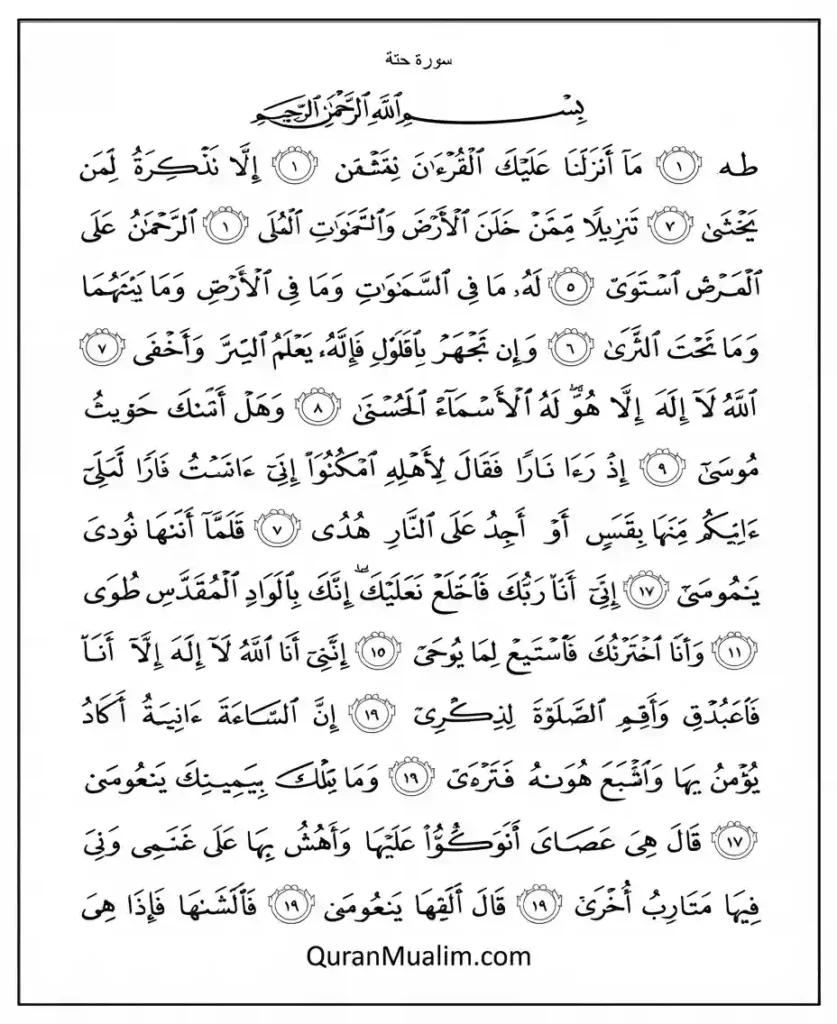
Surah Ta-Ha (سورة طه) –Chapter 20 | Meccan | 135 Verses
| # | Arabic | Transliteration | English Translation |
| 1 | طه | Taha | Ta, Ha |
| 2 | مَآ أَنزَلۡنَا عَلَيۡكَ ٱلۡقُرۡءَانَ لِتَشۡقَىٰٓ | Ma anzalna AAalayka alqurana litashqa | We have not sent down to you the Qur’an that you be distressed |
| 3 | إِلَّا تَذۡكِرَةٗ لِّمَن يَخۡشَىٰ | Illa tathkiratan liman yakhsha | But only as a reminder for those who fear [Allah] |
| 4 | تَنزِيلٗا مِّمَّنۡ خَلَقَ ٱلۡأَرۡضَ وَٱلسَّمَٰوَٰتِ ٱلۡعُلَى | Tanzeelan mimman khalaqa alarda waalssamawati alAAula | A revelation from He who created the earth and highest heavens |
| 5 | ٱلرَّحۡمَٰنُ عَلَى ٱلۡعَرۡشِ ٱسۡتَوَىٰ | Alrrahmanu AAala alAAarshi istawa | The Most Merciful [who is] above the Throne established |
| 6 | لَهُۥ مَا فِي ٱلسَّمَٰوَٰتِ وَمَا فِي ٱلۡأَرۡضِ وَمَا بَيۡنَهُمَا وَمَا تَحۡتَ ٱلثَّرَىٰ | Lahu ma fee alssamawati wama fee alardi wama baynahuma wama tahta alththara | To Him belongs what is in the heavens and what is on the earth and what is between them and what is under the soil |
| 7 | وَإِن تَجۡهَرۡ بِٱلۡقَوۡلِ فَإِنَّهُۥ يَعۡلَمُ ٱلسِّرَّ وَأَخۡفَى | Wain tajhar bialqawli fainnahu yaAAlamu alssirra waakhfa | And if you speak aloud – then indeed, He knows the secret and what is [even] more hidden |
| 8 | ٱللَّهُ لَآ إِلَٰهَ إِلَّا هُوَۖ لَهُ ٱلۡأَسۡمَآءُ ٱلۡحُسۡنَىٰ | Allahu la ilaha illa huwa lahu alasmao alhusna | Allah – there is no deity except Him. To Him belong the best names |
| 9 | وَهَلۡ أَتَىٰكَ حَدِيثُ مُوسَىٰٓ | Wahal ataka hadeethu moosa | And has the story of Moses reached you |
| 10 | إِذۡ رَءَا نَارٗا فَقَالَ لِأَهۡلِهِ ٱمۡكُثُوٓاْ إِنِّيٓ ءَانَسۡتُ نَارٗا لَّعَلِّيٓ ءَاتِيكُم مِّنۡهَا بِقَبَسٍ أَوۡ أَجِدُ عَلَى ٱلنَّارِ هُدٗى | Ith raa naran faqala liahlihi omkuthoo innee anastu naran laAAallee ateekum minha biqabasin aw ajidu AAala alnnari hudan | When he saw a fire and said to his family, “Stay here; indeed, I have perceived a fire; perhaps I can bring you a torch or find at the fire some guidance |
| 11 | فَلَمَّآ أَتَىٰهَا نُودِيَ يَٰمُوسَىٰٓ | Falamma ataha noodiya ya moosa | And when he came to it, he was called, “O Moses |
| 12 | إِنِّيٓ أَنَا۠ رَبُّكَ فَٱخۡلَعۡ نَعۡلَيۡكَ إِنَّكَ بِٱلۡوَادِ ٱلۡمُقَدَّسِ طُوٗى | Innee ana rabbuka faikhlaAA naAAlayka innaka bialwadi almuqaddasi tuwan | Indeed, I am your Lord, so remove your sandals. Indeed, you are in the sacred valley of Tuwa |
| 13 | وَأَنَا ٱخۡتَرۡتُكَ فَٱسۡتَمِعۡ لِمَا يُوحَىٰٓ | Waana ikhtartuka faistamiAA lima yooha | And I have chosen you, so listen to what is revealed [to you] |
| 14 | إِنَّنِيٓ أَنَا ٱللَّهُ لَآ إِلَٰهَ إِلَّآ أَنَا۠ فَٱعۡبُدۡنِي وَأَقِمِ ٱلصَّلَوٰةَ لِذِكۡرِيٓ | Innanee ana Allahu la ilaha illa ana faoAAbudnee waaqimi alssalata lithikree | Indeed, I am Allah. There is no deity except Me, so worship Me and establish prayer for My remembrance |
| 15 | إِنَّ ٱلسَّاعَةَ ءَاتِيَةٌ أَكَادُ أُخۡفِيهَا لِتُجۡزَىٰ كُلُّ نَفۡسِۭ بِمَا تَسۡعَىٰ | Inna alssaAAata atiyatun akadu okhfeeha litujza kullu nafsin bima tasAAa | Indeed, the Hour is coming – I almost conceal it – so that every soul may be recompensed according to that for which it strives |
| 16 | فَلَا يَصُدَّنَّكَ عَنۡهَا مَن لَّا يُؤۡمِنُ بِهَا وَٱتَّبَعَ هَوَىٰهُ فَتَرۡدَىٰ | Fala yasuddannaka AAanha man la yuminu biha waittabaAAa hawahu fatarda | So do not let one avert you from it who does not believe in it and follows his desire, for you [then] would perish |
| 17 | وَمَا تِلۡكَ بِيَمِينِكَ يَٰمُوسَىٰ | Wama tilka biyameenika ya moosa | And what is that in your right hand, O Moses |
| 18 | قَالَ هِيَ عَصَايَ أَتَوَكَّؤُاْ عَلَيۡهَا وَأَهُشُّ بِهَا عَلَىٰ غَنَمِي وَلِيَ فِيهَا مَـَٔارِبُ أُخۡرَىٰ | Qala hiya AAasaya atawakkao AAalayha waahushshu biha AAala ghanamee waliya feeha maaribu okhra | He said, “It is my staff; I lean upon it, and I bring down leaves for my sheep and I have therein other uses |
| 19 | قَالَ أَلۡقِهَا يَٰمُوسَىٰ | Qala alqiha ya moosa | [Allah] said, “Throw it down, O Moses |
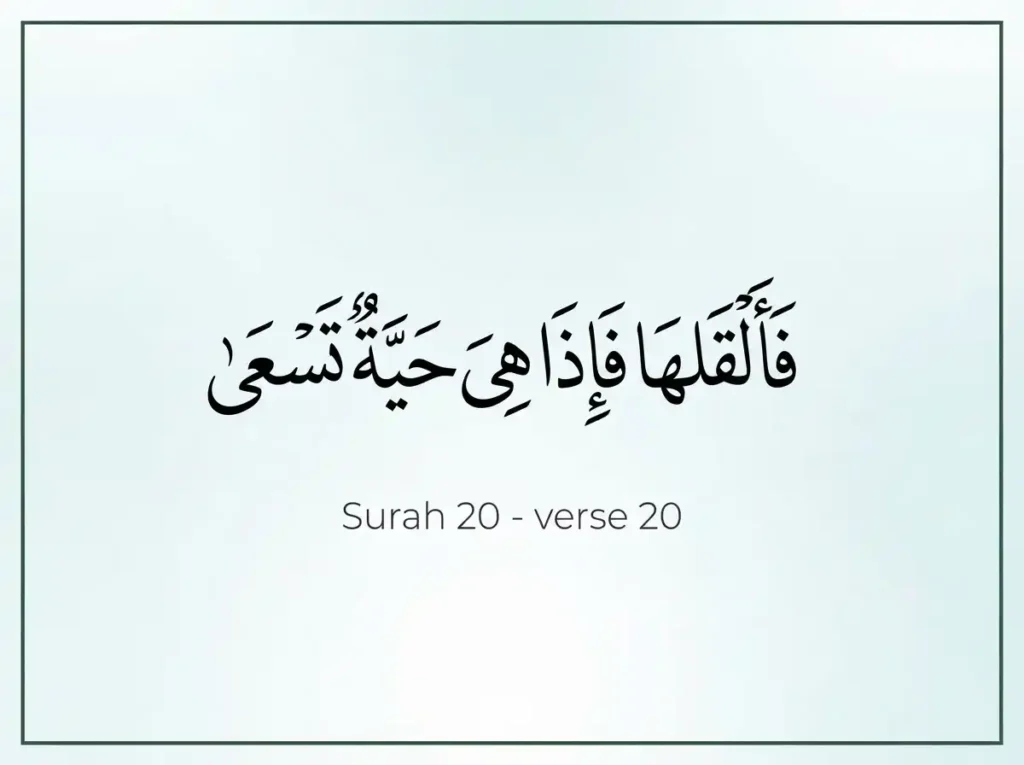
| 20 | فَأَلۡقَىٰهَا فَإِذَا هِيَ حَيَّةٞ تَسۡعَىٰ | Faalqaha faitha hiya hayyatun tasAAa | So he threw it down, and thereupon it was a snake, moving swiftly |
| 21 | قَالَ خُذۡهَا وَلَا تَخَفۡۖ سَنُعِيدُهَا سِيرَتَهَا ٱلۡأُولَىٰ | Qala khuthha wala takhaf sanuAAeeduha seerataha aloola | [Allah] said, “Seize it and fear not; We will return it to its former condition |
| 22 | وَٱضۡمُمۡ يَدَكَ إِلَىٰ جَنَاحِكَ تَخۡرُجۡ بَيۡضَآءَ مِنۡ غَيۡرِ سُوٓءٍ ءَايَةً أُخۡرَىٰ | Waodmum yadaka ila janahika takhruj baydaa min ghayri sooin ayatan okhra | And draw in your hand to your side; it will come out white without disease – another sign |
| 23 | لِنُرِيَكَ مِنۡ ءَايَٰتِنَا ٱلۡكُبۡرَى | Linuriyaka min ayatina alkubra | That We may show you [some] of Our greater signs |
| 24 | ٱذۡهَبۡ إِلَىٰ فِرۡعَوۡنَ إِنَّهُۥ طَغَىٰ | Ithhab ila firAAawna innahu tagha | Go to Pharaoh. Indeed, he has transgressed |
| 25 | قَالَ رَبِّ ٱشۡرَحۡ لِي صَدۡرِي | Qala rabbi ishrah lee sadree | [Moses] said, “My Lord, expand for me my breast [with assurance] |
| 26 | وَيَسِّرۡ لِيٓ أَمۡرِي | Wayassir lee amree | And ease for me my task |
| 27 | وَٱحۡلُلۡ عُقۡدَةٗ مِّن لِّسَانِي | Waohlul AAuqdatan min lisanee | And untie the knot from my tongue |
| 28 | يَفۡقَهُواْ قَوۡلِي | Yafqahoo qawlee | That they may understand my speech |
| 29 | وَٱجۡعَل لِّي وَزِيرٗا مِّنۡ أَهۡلِي | WaijAAal lee wazeeran min ahlee | And appoint for me a minister from my family |
| 30 | هَٰرُونَ أَخِي | Haroona akhee | Aaron, my brother |
| 31 | ٱشۡدُدۡ بِهِۦٓ أَزۡرِي | Oshdud bihi azree | Increase through him my strength |
| 32 | وَأَشۡرِكۡهُ فِيٓ أَمۡرِي | Waashrikhu fee amree | And let him share my task |
| 33 | كَيۡ نُسَبِّحَكَ كَثِيرٗا | Kay nusabbihaka katheeran | That we may exalt You much |
| 34 | وَنَذۡكُرَكَ كَثِيرًا | Wanathkuraka katheeran | And remember You much |
| 35 | إِنَّكَ كُنتَ بِنَا بَصِيرٗا | Innaka kunta bina baseeran | Indeed, You are of us ever Seeing |
| 36 | قَالَ قَدۡ أُوتِيتَ سُؤۡلَكَ يَٰمُوسَىٰ | Qala qad ooteeta sulaka ya moosa | [Allah] said, “You have been granted your request, O Moses |
| 37 | وَلَقَدۡ مَنَنَّا عَلَيۡكَ مَرَّةً أُخۡرَىٰٓ | Walaqad mananna AAalayka marratan okhra | And We had already conferred favor upon you another time |
| 38 | إِذۡ أَوۡحَيۡنَآ إِلَىٰٓ أُمِّكَ مَا يُوحَىٰٓ | Ith awhayna ila ommika ma yooha | When We inspired to your mother what We inspired |
| 39 | أَنِ ٱقۡذِفِيهِ فِي ٱلتَّابُوتِ فَٱقۡذِفِيهِ فِي ٱلۡيَمِّ فَلۡيُلۡقِهِ ٱلۡيَمُّ بِٱلسَّاحِلِ يَأۡخُذۡهُ عَدُوّٞ لِّي وَعَدُوّٞ لَّهُۥۚ وَأَلۡقَيۡتُ عَلَيۡكَ مَحَبَّةٗ مِّنِّي وَلِتُصۡنَعَ عَلَىٰ عَيۡنِيٓ | Ani iqthifeehi fee alttabooti faiqthifeehi fee alyammi falyulqihi alyammu bialssahili yakhuthhu AAaduwwun lee waAAaduwwun lahu waalqaytu AAalayka mahabbatan minnee walitusnaAAa AAala AAaynee | [Saying], ‘Cast him into the chest and cast it into the river, and the river will throw it onto the bank; there will take him an enemy to Me and an enemy to him.’ And I bestowed upon you love from Me that you would be brought up under My eye |
| 40 | إِذۡ تَمۡشِيٓ أُخۡتُكَ فَتَقُولُ هَلۡ أَدُلُّكُمۡ عَلَىٰ مَن يَكۡفُلُهُۥۖ فَرَجَعۡنَٰكَ إِلَىٰٓ أُمِّكَ كَيۡ تَقَرَّ عَيۡنُهَا وَلَا تَحۡزَنَۚ وَقَتَلۡتَ نَفۡسٗا فَنَجَّيۡنَٰكَ مِنَ ٱلۡغَمِّ وَفَتَنَّـٰكَ فُتُونٗاۚ فَلَبِثۡتَ سِنِينَ فِيٓ أَهۡلِ مَدۡيَنَ ثُمَّ جِئۡتَ عَلَىٰ قَدَرٖ يَٰمُوسَىٰ | Ith tamshee okhtuka fataqoolu hal adullukum AAala man yakfuluhu farajaAAnaka ila ommika kay taqarra AAaynuha wala tahzana waqatalta nafsan fanajjaynaka mina alghammi wafatannaka futoonan falabithta sineena fee ahli madyana thumma jita AAala qadarin ya moosa | [And We favored you] when your sister went and said, ‘Shall I direct you to someone who will be responsible for him?’ So We restored you to your mother that she might be content and not grieve. And you killed someone, but We saved you from retaliation and tried you with a [severe] trial. And you remained [some] years among the people of Madyan. Then you came [here] at the decreed time, O Moses |
| 41 | وَٱصۡطَنَعۡتُكَ لِنَفۡسِي | WaistanaAAtuka linafsee | And I produced you for Myself |
| 42 | ٱذۡهَبۡ أَنتَ وَأَخُوكَ بِـَٔايَٰتِي وَلَا تَنِيَا فِي ذِكۡرِي | Ithhab anta waakhooka biayatee wala taniya fee thikree | Go, you and your brother, with My signs and do not slacken in My remembrance |
| 43 | ٱذۡهَبَآ إِلَىٰ فِرۡعَوۡنَ إِنَّهُۥ طَغَىٰ | Ithhaba ila firAAawna innahu tagha | Go, both of you, to Pharaoh. Indeed, he has transgressed |
| 44 | فَقُولَا لَهُۥ قَوۡلٗا لَّيِّنٗا لَّعَلَّهُۥ يَتَذَكَّرُ أَوۡ يَخۡشَىٰ | Faqoola lahu qawlan layyinan laAAallahu yatathakkaru aw yakhsha | And speak to him with gentle speech that perhaps he may be reminded or fear [Allah] |
| 45 | قَالَا رَبَّنَآ إِنَّنَا نَخَافُ أَن يَفۡرُطَ عَلَيۡنَآ أَوۡ أَن يَطۡغَىٰ | Qala rabbana innana nakhafu an yafruta AAalayna aw an yatgha | They said, “Our Lord, indeed we are afraid that he will hasten [punishment] against us or that he will transgress |
| 46 | قَالَ لَا تَخَافَآۖ إِنَّنِي مَعَكُمَآ أَسۡمَعُ وَأَرَىٰ | Qala la takhafa innanee maAAakuma asmaAAu waara | [Allah] said, “Fear not. Indeed, I am with you both; I hear and I see |
| 47 | فَأۡتِيَاهُ فَقُولَآ إِنَّا رَسُولَا رَبِّكَ فَأَرۡسِلۡ مَعَنَا بَنِيٓ إِسۡرَـٰٓءِيلَ وَلَا تُعَذِّبۡهُمۡۖ قَدۡ جِئۡنَٰكَ بِـَٔايَةٖ مِّن رَّبِّكَۖ وَٱلسَّلَٰمُ عَلَىٰ مَنِ ٱتَّبَعَ ٱلۡهُدَىٰٓ | Fatiyahu faqoola inna rasoola rabbika faarsil maAAana banee israeela wala tuAAaththibhum qad jinaka biayatin min rabbika waalssalamu AAala mani ittabaAAa alhuda | So go to him and say, ‘Indeed, we are messengers of your Lord, so send with us the Children of Israel and do not torment them. We have come to you with a sign from your Lord. And peace will be upon he who follows the guidance |
| 48 | إِنَّا قَدۡ أُوحِيَ إِلَيۡنَآ أَنَّ ٱلۡعَذَابَ عَلَىٰ مَن كَذَّبَ وَتَوَلَّىٰ | Inna qad oohiya ilayna anna alAAathaba AAala man kaththaba watawalla | Indeed, it has been revealed to us that the punishment will be upon whoever denies and turns away |
| 49 | قَالَ فَمَن رَّبُّكُمَا يَٰمُوسَىٰ | Qala faman rabbukuma ya moosa | [Pharaoh] said, “So who is the Lord of you two, O Moses |
| 50 | قَالَ رَبُّنَا ٱلَّذِيٓ أَعۡطَىٰ كُلَّ شَيۡءٍ خَلۡقَهُۥ ثُمَّ هَدَىٰ | Qala rabbuna allathee aAAta kulla shayin khalqahu thumma hada | He said, “Our Lord is He who gave each thing its form and then guided [it] |
| 51 | قَالَ فَمَا بَالُ ٱلۡقُرُونِ ٱلۡأُولَىٰ | Qala fama balu alqurooni aloola | [Pharaoh] said, “Then what is the case of the former generations |
| 52 | قَالَ عِلۡمُهَا عِندَ رَبِّي فِي كِتَٰبٖۖ لَّا يَضِلُّ رَبِّي وَلَا يَنسَى | Qala AAilmuha AAinda rabbee fee kitabin la yadillu rabbee wala yansa | [Moses] said, “The knowledge thereof is with my Lord in a record. My Lord neither errs nor forgets |
| 53 | ٱلَّذِي جَعَلَ لَكُمُ ٱلۡأَرۡضَ مَهۡدٗا وَسَلَكَ لَكُمۡ فِيهَا سُبُلٗا وَأَنزَلَ مِنَ ٱلسَّمَآءِ مَآءٗ فَأَخۡرَجۡنَا بِهِۦٓ أَزۡوَٰجٗا مِّن نَّبَاتٖ شَتَّىٰ | Allathee jaAAala lakumu alarda mahdan wasalaka lakum feeha subulan waanzala mina alssamai maan faakhrajna bihi azwajan min nabatin shatta | [It is He] who has made for you the earth as a bed [spread out] and inserted therein for you roadways and sent down from the sky, rain and produced thereby categories of various plants |
| 54 | كُلُواْ وَٱرۡعَوۡاْ أَنۡعَٰمَكُمۡۚ إِنَّ فِي ذَٰلِكَ لَأٓيَٰتٖ لِّأُوْلِي ٱلنُّهَىٰ | Kuloo wairAAaw anAAamakum inna fee thalika laayatin liolee alnnuha | Eat [therefrom] and pasture your livestock. Indeed, in that are signs for those of intelligence |
| 55 | ۞مِنۡهَا خَلَقۡنَٰكُمۡ وَفِيهَا نُعِيدُكُمۡ وَمِنۡهَا نُخۡرِجُكُمۡ تَارَةً أُخۡرَىٰ | Minha khalaqnakum wafeeha nuAAeedukum waminha nukhrijukum taratan okhra | From the earth We created you, and into it We will return you, and from it We will extract you another time |
| 56 | وَلَقَدۡ أَرَيۡنَٰهُ ءَايَٰتِنَا كُلَّهَا فَكَذَّبَ وَأَبَىٰ | Walaqad araynahu ayatina kullaha fakaththaba waaba | And We certainly showed Pharaoh Our signs – all of them – but he denied and refused |
| 57 | قَالَ أَجِئۡتَنَا لِتُخۡرِجَنَا مِنۡ أَرۡضِنَا بِسِحۡرِكَ يَٰمُوسَىٰ | Qala ajitana litukhrijana min ardina bisihrika ya moosa | He said, “Have you come to us to drive us out of our land with your magic, O Moses |
| 58 | فَلَنَأۡتِيَنَّكَ بِسِحۡرٖ مِّثۡلِهِۦ فَٱجۡعَلۡ بَيۡنَنَا وَبَيۡنَكَ مَوۡعِدٗا لَّا نُخۡلِفُهُۥ نَحۡنُ وَلَآ أَنتَ مَكَانٗا سُوٗى | Falanatiyannaka bisihrin mithlihi faijAAal baynana wabaynaka mawAAidan la nukhlifuhu nahnu wala anta makanan suwan | Then we will surely bring you magic like it, so make between us and you an appointment, which we will not fail to keep and neither will you, in a place assigned |
| 59 | قَالَ مَوۡعِدُكُمۡ يَوۡمُ ٱلزِّينَةِ وَأَن يُحۡشَرَ ٱلنَّاسُ ضُحٗى | Qala mawAAidukum yawmu alzzeenati waan yuhshara alnnasu duhan | [Moses] said, “Your appointment is on the day of the festival when the people assemble at mid-morning |
| 60 | فَتَوَلَّىٰ فِرۡعَوۡنُ فَجَمَعَ كَيۡدَهُۥ ثُمَّ أَتَىٰ | Fatawalla firAAawnu fajamaAAa kaydahu thumma ata | So Pharaoh went away, put together his plan, and then came [to Moses] |
| 61 | قَالَ لَهُم مُّوسَىٰ وَيۡلَكُمۡ لَا تَفۡتَرُواْ عَلَى ٱللَّهِ كَذِبٗا فَيُسۡحِتَكُم بِعَذَابٖۖ وَقَدۡ خَابَ مَنِ ٱفۡتَرَىٰ | Qala lahum moosa waylakum la taftaroo AAala Allahi kathiban fayushitakum biAAathabin waqad khaba mani iftara | Moses said to the magicians summoned by Pharaoh, “Woe to you! Do not invent a lie against Allah or He will exterminate you with a punishment; and he has failed who invents [such falsehood] |
| 62 | فَتَنَٰزَعُوٓاْ أَمۡرَهُم بَيۡنَهُمۡ وَأَسَرُّواْ ٱلنَّجۡوَىٰ | FatanazaAAoo amrahum baynahum waasarroo alnnajwa | So they disputed over their affair among themselves and concealed their private conversation |
| 63 | قَالُوٓاْ إِنۡ هَٰذَٰنِ لَسَٰحِرَٰنِ يُرِيدَانِ أَن يُخۡرِجَاكُم مِّنۡ أَرۡضِكُم بِسِحۡرِهِمَا وَيَذۡهَبَا بِطَرِيقَتِكُمُ ٱلۡمُثۡلَىٰ | Qaloo in hathani lasahirani yureedani an yukhrijakum min ardikum bisihrihima wayathhaba bitareeqatikumu almuthla | They said, “Indeed, these are two magicians who want to drive you out of your land with their magic and do away with your most exemplary way |
| 64 | فَأَجۡمِعُواْ كَيۡدَكُمۡ ثُمَّ ٱئۡتُواْ صَفّٗاۚ وَقَدۡ أَفۡلَحَ ٱلۡيَوۡمَ مَنِ ٱسۡتَعۡلَىٰ | FaajmiAAoo kaydakum thumma itoo saffan waqad aflaha alyawma mani istaAAla | So resolve upon your plan and then come [forward] in line. And he has succeeded today who overcomes |
| 65 | قَالُواْ يَٰمُوسَىٰٓ إِمَّآ أَن تُلۡقِيَ وَإِمَّآ أَن نَّكُونَ أَوَّلَ مَنۡ أَلۡقَىٰ | Qaloo ya moosa imma an tulqiya waimma an nakoona awwala man alqa | They said, “O Moses, either you throw or we will be the first to throw |
| 66 | قَالَ بَلۡ أَلۡقُواْۖ فَإِذَا حِبَالُهُمۡ وَعِصِيُّهُمۡ يُخَيَّلُ إِلَيۡهِ مِن سِحۡرِهِمۡ أَنَّهَا تَسۡعَىٰ | Qala bal alqoo faitha hibaluhum waAAisiyyuhum yukhayyalu ilayhi min sihrihim annaha tasAAa | He said, “Rather, you throw.” And suddenly their ropes and staffs seemed to him from their magic that they were moving [like snakes] |
| 67 | فَأَوۡجَسَ فِي نَفۡسِهِۦ خِيفَةٗ مُّوسَىٰ | Faawjasa fee nafsihi kheefatan moosa | And he sensed within himself apprehension, did Moses |
| 68 | قُلۡنَا لَا تَخَفۡ إِنَّكَ أَنتَ ٱلۡأَعۡلَىٰ | Qulna la takhaf innaka anta alaAAla | Allah said, “Fear not. Indeed, it is you who are superior |
| 69 | وَأَلۡقِ مَا فِي يَمِينِكَ تَلۡقَفۡ مَا صَنَعُوٓاْۖ إِنَّمَا صَنَعُواْ كَيۡدُ سَٰحِرٖۖ وَلَا يُفۡلِحُ ٱلسَّاحِرُ حَيۡثُ أَتَىٰ | Waalqi ma fee yameenika talqaf ma sanaAAoo innama sanaAAoo kaydu sahirin wala yuflihu alssahiru haythu ata | And throw what is in your right hand; it will swallow up what they have crafted. What they have crafted is but the trick of a magician, and the magician will not succeed wherever he is |
| 70 | فَأُلۡقِيَ ٱلسَّحَرَةُ سُجَّدٗا قَالُوٓاْ ءَامَنَّا بِرَبِّ هَٰرُونَ وَمُوسَىٰ | Faolqiya alssaharatu sujjadan qaloo amanna birabbi haroona wamoosa | So the magicians fell down in prostration. They said, “We have believed in the Lord of Aaron and Moses |
| 71 | قَالَ ءَامَنتُمۡ لَهُۥ قَبۡلَ أَنۡ ءَاذَنَ لَكُمۡۖ إِنَّهُۥ لَكَبِيرُكُمُ ٱلَّذِي عَلَّمَكُمُ ٱلسِّحۡرَۖ فَلَأُقَطِّعَنَّ أَيۡدِيَكُمۡ وَأَرۡجُلَكُم مِّنۡ خِلَٰفٖ وَلَأُصَلِّبَنَّكُمۡ فِي جُذُوعِ ٱلنَّخۡلِ وَلَتَعۡلَمُنَّ أَيُّنَآ أَشَدُّ عَذَابٗا وَأَبۡقَىٰ | Qala amantum lahu qabla an athana lakum innahu lakabeerukumu allathee AAallamakumu alssihra falaoqattiAAanna aydiyakum waarjulakum min khilafin walaosallibannakum fee juthooAAi alnnakhli walataAAlamunna ayyuna ashaddu AAathaban waabqa | [Pharaoh] said, “You believed him before I gave you permission. Indeed, he is your leader who has taught you magic. So I will surely cut off your hands and your feet on opposite sides, and I will crucify you on the trunks of palm trees, and you will surely know which of us is more severe in [giving] punishment and more enduring |
| 72 | قَالُواْ لَن نُّؤۡثِرَكَ عَلَىٰ مَا جَآءَنَا مِنَ ٱلۡبَيِّنَٰتِ وَٱلَّذِي فَطَرَنَاۖ فَٱقۡضِ مَآ أَنتَ قَاضٍۖ إِنَّمَا تَقۡضِي هَٰذِهِ ٱلۡحَيَوٰةَ ٱلدُّنۡيَآ | Qaloo lan nuthiraka AAala ma jaana mina albayyinati waallathee fatarana faiqdi ma anta qadin innama taqdee hathihi alhayata alddunya | They said, “Never will we prefer you over what has come to us of clear proofs and [over] He who created us. So decree whatever you are to decree. You can only decree for this worldly life |
| 73 | إِنَّآ ءَامَنَّا بِرَبِّنَا لِيَغۡفِرَ لَنَا خَطَٰيَٰنَا وَمَآ أَكۡرَهۡتَنَا عَلَيۡهِ مِنَ ٱلسِّحۡرِۗ وَٱللَّهُ خَيۡرٞ وَأَبۡقَىٰٓ | Inna amanna birabbina liyaghfira lana khatayana wama akrahtana AAalayhi mina alssihri waAllahu khayrun waabqa | Indeed, we have believed in our Lord that He may forgive us our sins and what you compelled us [to do] of magic. And Allah is better and more enduring |
| 74 | إِنَّهُۥ مَن يَأۡتِ رَبَّهُۥ مُجۡرِمٗا فَإِنَّ لَهُۥ جَهَنَّمَ لَا يَمُوتُ فِيهَا وَلَا يَحۡيَىٰ | Innahu man yati rabbahu mujriman fainna lahu jahannama la yamootu feeha wala yahya | Indeed, whoever comes to his Lord as a criminal – indeed, for him is Hell; he will neither die therein nor live |
| 75 | وَمَن يَأۡتِهِۦ مُؤۡمِنٗا قَدۡ عَمِلَ ٱلصَّـٰلِحَٰتِ فَأُوْلَـٰٓئِكَ لَهُمُ ٱلدَّرَجَٰتُ ٱلۡعُلَىٰ | Waman yatihi muminan qad AAamila alssalihati faolaika lahumu alddarajatu alAAula | But whoever comes to Him as a believer having done righteous deeds – for those will be the highest degrees [in position] |
| 76 | جَنَّـٰتُ عَدۡنٖ تَجۡرِي مِن تَحۡتِهَا ٱلۡأَنۡهَٰرُ خَٰلِدِينَ فِيهَاۚ وَذَٰلِكَ جَزَآءُ مَن تَزَكَّىٰ | Jannatu AAadnin tajree min tahtiha alanharu khalideena feeha wathalika jazao man tazakka | Gardens of perpetual residence beneath which rivers flow, wherein they abide eternally. And that is the reward of one who purifies himself |
| 77 | وَلَقَدۡ أَوۡحَيۡنَآ إِلَىٰ مُوسَىٰٓ أَنۡ أَسۡرِ بِعِبَادِي فَٱضۡرِبۡ لَهُمۡ طَرِيقٗا فِي ٱلۡبَحۡرِ يَبَسٗا لَّا تَخَٰفُ دَرَكٗا وَلَا تَخۡشَىٰ | Walaqad awhayna ila moosa an asri biAAibadee faidrib lahum tareeqan fee albahri yabasan la takhafu darakan wala takhsha | And We had inspired to Moses, “Travel by night with My servants and strike for them a dry path through the sea; you will not fear being overtaken [by Pharaoh] nor be afraid [of drowning] |
| 78 | فَأَتۡبَعَهُمۡ فِرۡعَوۡنُ بِجُنُودِهِۦ فَغَشِيَهُم مِّنَ ٱلۡيَمِّ مَا غَشِيَهُمۡ | FaatbaAAahum firAAawnu bijunoodihi faghashiyahum mina alyammi ma ghashiyahum | So Pharaoh pursued them with his soldiers, and there covered them from the sea that which covered them |
| 79 | وَأَضَلَّ فِرۡعَوۡنُ قَوۡمَهُۥ وَمَا هَدَىٰ | Waadalla firAAawnu qawmahu wama hada | And Pharaoh led his people astray and did not guide [them] |
| 80 | يَٰبَنِيٓ إِسۡرَـٰٓءِيلَ قَدۡ أَنجَيۡنَٰكُم مِّنۡ عَدُوِّكُمۡ وَوَٰعَدۡنَٰكُمۡ جَانِبَ ٱلطُّورِ ٱلۡأَيۡمَنَ وَنَزَّلۡنَا عَلَيۡكُمُ ٱلۡمَنَّ وَٱلسَّلۡوَىٰ | Ya banee israeela qad anjaynakum min AAaduwwikum wawaAAadnakum janiba alttoori alaymana wanazzalna AAalaykumu almanna waalssalwa | O Children of Israel, We delivered you from your enemy, and We made an appointment with you at the right side of the mount, and We sent down to you manna and quails |
| 81 | كُلُواْ مِن طَيِّبَٰتِ مَا رَزَقۡنَٰكُمۡ وَلَا تَطۡغَوۡاْ فِيهِ فَيَحِلَّ عَلَيۡكُمۡ غَضَبِيۖ وَمَن يَحۡلِلۡ عَلَيۡهِ غَضَبِي فَقَدۡ هَوَىٰ | Kuloo min tayyibati ma razaqnakum wala tatghaw feehi fayahilla AAalaykum ghadabee waman yahlil AAalayhi ghadabee faqad hawa | [Saying], “Eat from the good things with which We have provided you and do not transgress [or oppress others] therein, lest My anger should descend upon you. And he upon whom My anger descends has certainly fallen |
| 82 | وَإِنِّي لَغَفَّارٞ لِّمَن تَابَ وَءَامَنَ وَعَمِلَ صَٰلِحٗا ثُمَّ ٱهۡتَدَىٰ | Wainnee laghaffarun liman taba waamana waAAamila salihan thumma ihtada | But indeed, I am the Perpetual Forgiver of whoever repents and believes and does righteousness and then continues in guidance |
| 83 | ۞وَمَآ أَعۡجَلَكَ عَن قَوۡمِكَ يَٰمُوسَىٰ | Wama aAAjalaka AAan qawmika ya moosa | [Allah] said, “And what made you hasten from your people, O Moses |
| 84 | قَالَ هُمۡ أُوْلَآءِ عَلَىٰٓ أَثَرِي وَعَجِلۡتُ إِلَيۡكَ رَبِّ لِتَرۡضَىٰ | Qala hum olai AAala atharee waAAajiltu ilayka rabbi litarda | He said, “They are close upon my tracks, and I hastened to You, my Lord, that You be pleased |
| 85 | قَالَ فَإِنَّا قَدۡ فَتَنَّا قَوۡمَكَ مِنۢ بَعۡدِكَ وَأَضَلَّهُمُ ٱلسَّامِرِيُّ | Qala fainna qad fatanna qawmaka min baAAdika waadallahumu alssamiriyyu | [Allah] said, “But indeed, We have tried your people after you [departed], and the Samiri has led them astray |
| 86 | فَرَجَعَ مُوسَىٰٓ إِلَىٰ قَوۡمِهِۦ غَضۡبَٰنَ أَسِفٗاۚ قَالَ يَٰقَوۡمِ أَلَمۡ يَعِدۡكُمۡ رَبُّكُمۡ وَعۡدًا حَسَنًاۚ أَفَطَالَ عَلَيۡكُمُ ٱلۡعَهۡدُ أَمۡ أَرَدتُّمۡ أَن يَحِلَّ عَلَيۡكُمۡ غَضَبٞ مِّن رَّبِّكُمۡ فَأَخۡلَفۡتُم مَّوۡعِدِي | FarajaAAa moosa ila qawmihi ghadbana asifan qala ya qawmi alam yaAAidkum rabbukum waAAdan hasanan afatala AAalaykumu alAAahdu am aradtum an yahilla AAalaykum ghadabun min rabbikum faakhlaftum mawAAidee | So Moses returned to his people, angry and grieved. He said, “O my people, did your Lord not make you a good promise? Then, was the time [of its fulfillment] too long for you, or did you wish that wrath from your Lord descend upon you, so you broke your promise [of obedience] to me |
| 87 | قَالُواْ مَآ أَخۡلَفۡنَا مَوۡعِدَكَ بِمَلۡكِنَا وَلَٰكِنَّا حُمِّلۡنَآ أَوۡزَارٗا مِّن زِينَةِ ٱلۡقَوۡمِ فَقَذَفۡنَٰهَا فَكَذَٰلِكَ أَلۡقَى ٱلسَّامِرِيُّ | Qaloo ma akhlafna mawAAidaka bimalkina walakinna hummilna awzaran min zeenati alqawmi faqathafnaha fakathalika alqa alssamiriyyu | They said, “We did not break our promise to you by our will, but we were made to carry burdens from the ornaments of the people [of Pharaoh], so we threw them [into the fire], and thus did the Samiri throw |
| 88 | فَأَخۡرَجَ لَهُمۡ عِجۡلٗا جَسَدٗا لَّهُۥ خُوَارٞ فَقَالُواْ هَٰذَآ إِلَٰهُكُمۡ وَإِلَٰهُ مُوسَىٰ فَنَسِيَ | Faakhraja lahum AAijlan jasadan lahu khuwarun faqaloo hatha ilahukum wailahu moosa fanasiya | And he extracted for them [the statue of] a calf which had a lowing sound, and they said, “This is your god and the god of Moses, but he forgot |
| 89 | أَفَلَا يَرَوۡنَ أَلَّا يَرۡجِعُ إِلَيۡهِمۡ قَوۡلٗا وَلَا يَمۡلِكُ لَهُمۡ ضَرّٗا وَلَا نَفۡعٗا | Afala yarawna alla yarjiAAu ilayhim qawlan wala yamliku lahum darran wala nafAAan | Did they not see that it could not return to them any speech and that it did not possess for them any harm or benefit |
| 90 | وَلَقَدۡ قَالَ لَهُمۡ هَٰرُونُ مِن قَبۡلُ يَٰقَوۡمِ إِنَّمَا فُتِنتُم بِهِۦۖ وَإِنَّ رَبَّكُمُ ٱلرَّحۡمَٰنُ فَٱتَّبِعُونِي وَأَطِيعُوٓاْ أَمۡرِي | Walaqad qala lahum haroonu min qablu ya qawmi innama futintum bihi wainna rabbakumu alrrahmanu faittabiAAoonee waateeAAoo amree | And Aaron had already told them before [the return of Moses], “O my people, you are only being tested by it, and indeed, your Lord is the Most Merciful, so follow me and obey my order |
| 91 | قَالُواْ لَن نَّبۡرَحَ عَلَيۡهِ عَٰكِفِينَ حَتَّىٰ يَرۡجِعَ إِلَيۡنَا مُوسَىٰ | Qaloo lan nabraha AAalayhi AAakifeena hatta yarjiAAa ilayna moosa | They said, “We will never cease being devoted to the calf until Moses returns to us |
| 92 | قَالَ يَٰهَٰرُونُ مَا مَنَعَكَ إِذۡ رَأَيۡتَهُمۡ ضَلُّوٓاْ | Qala ya haroonu ma manaAAaka ith raaytahum dalloo | [Moses] said, “O Aaron, what prevented you, when you saw them going astray |
| 93 | أَلَّا تَتَّبِعَنِۖ أَفَعَصَيۡتَ أَمۡرِي | Alla tattabiAAani afaAAasayta amree | From following me? Then have you disobeyed my order |
| 94 | قَالَ يَبۡنَؤُمَّ لَا تَأۡخُذۡ بِلِحۡيَتِي وَلَا بِرَأۡسِيٓۖ إِنِّي خَشِيتُ أَن تَقُولَ فَرَّقۡتَ بَيۡنَ بَنِيٓ إِسۡرَـٰٓءِيلَ وَلَمۡ تَرۡقُبۡ قَوۡلِي | Qala ya bna omma la takhuth bilihyatee wala birasee innee khasheetu an taqoola farraqta bayna banee israeela walam tarqub qawlee | [Aaron] said, “O son of my mother, do not seize [me] by my beard or by my head. Indeed, I feared that you would say, ‘You caused division among the Children of Israel, and you did not observe [or await] my word |
| 95 | قَالَ فَمَا خَطۡبُكَ يَٰسَٰمِرِيُّ | Qala fama khatbuka ya samiriyyu | [Moses] said, “And what is your case, O Samiri |
| 96 | قَالَ بَصُرۡتُ بِمَا لَمۡ يَبۡصُرُواْ بِهِۦ فَقَبَضۡتُ قَبۡضَةٗ مِّنۡ أَثَرِ ٱلرَّسُولِ فَنَبَذۡتُهَا وَكَذَٰلِكَ سَوَّلَتۡ لِي نَفۡسِي | Qala basurtu bima lam yabsuroo bihi faqabadtu qabdatan min athari alrrasooli fanabathtuha wakathalika sawwalat lee nafsee | He said, “I saw what they did not see, so I took a handful [of dust] from the track of the messenger and threw it, and thus did my soul entice me |
| 97 | قَالَ فَٱذۡهَبۡ فَإِنَّ لَكَ فِي ٱلۡحَيَوٰةِ أَن تَقُولَ لَا مِسَاسَۖ وَإِنَّ لَكَ مَوۡعِدٗا لَّن تُخۡلَفَهُۥۖ وَٱنظُرۡ إِلَىٰٓ إِلَٰهِكَ ٱلَّذِي ظَلۡتَ عَلَيۡهِ عَاكِفٗاۖ لَّنُحَرِّقَنَّهُۥ ثُمَّ لَنَنسِفَنَّهُۥ فِي ٱلۡيَمِّ نَسۡفًا | Qala faithhab fainna laka fee alhayati an taqoola la misasa wainna laka mawAAidan lan tukhlafahu waonthur ila ilahika allathee thalta AAalayhi AAakifan lanuharriqannahu thumma lanansifannahu fee alyammi nasfan | [Moses] said, “Then go. And indeed, it is [decreed] for you in [this] life to say, ‘No contact.’ And indeed, you have an appointment [in the Hereafter] you will not fail to keep. And look at your ‘god’ to which you remained devoted. We will surely burn it and blow it into the sea with a blast |
| 98 | إِنَّمَآ إِلَٰهُكُمُ ٱللَّهُ ٱلَّذِي لَآ إِلَٰهَ إِلَّا هُوَۚ وَسِعَ كُلَّ شَيۡءٍ عِلۡمٗا | Innama ilahukumu Allahu allathee la ilaha illa huwa wasiAAa kulla shayin AAilman | Your god is only Allah, except for whom there is no deity. He has encompassed all things in knowledge |
| 99 | كَذَٰلِكَ نَقُصُّ عَلَيۡكَ مِنۡ أَنۢبَآءِ مَا قَدۡ سَبَقَۚ وَقَدۡ ءَاتَيۡنَٰكَ مِن لَّدُنَّا ذِكۡرٗا | Kathalika naqussu AAalayka min anbai ma qad sabaqa waqad ataynaka min ladunna thikran | Thus, [O Muhammad], We relate to you from the news of what has preceded. And We have certainly given you from Us the Qur’an |
| 100 | مَّنۡ أَعۡرَضَ عَنۡهُ فَإِنَّهُۥ يَحۡمِلُ يَوۡمَ ٱلۡقِيَٰمَةِ وِزۡرًا | Man aAArada AAanhu fainnahu yahmilu yawma alqiyamati wizran | Whoever turns away from it – then indeed, he will bear on the Day of Resurrection a burden |
| 101 | خَٰلِدِينَ فِيهِۖ وَسَآءَ لَهُمۡ يَوۡمَ ٱلۡقِيَٰمَةِ حِمۡلٗا | Khalideena feehi wasaa lahum yawma alqiyamati himlan | [Abiding] eternally therein, and evil it is for them on the Day of Resurrection as a load |
| 102 | يَوۡمَ يُنفَخُ فِي ٱلصُّورِۚ وَنَحۡشُرُ ٱلۡمُجۡرِمِينَ يَوۡمَئِذٖ زُرۡقٗا | Yawma yunfakhu fee alssoori wanahshuru almujrimeena yawmaithin zurqan | The Day the Horn will be blown. And We will gather the criminals, that Day, blue-eyed |
| 103 | يَتَخَٰفَتُونَ بَيۡنَهُمۡ إِن لَّبِثۡتُمۡ إِلَّا عَشۡرٗا | Yatakhafatoona baynahum in labithtum illa AAashran | They will murmur among themselves, “You remained not but ten [days in the world] |
| 104 | نَّحۡنُ أَعۡلَمُ بِمَا يَقُولُونَ إِذۡ يَقُولُ أَمۡثَلُهُمۡ طَرِيقَةً إِن لَّبِثۡتُمۡ إِلَّا يَوۡمٗا | Nahnu aAAlamu bima yaqooloona ith yaqoolu amthaluhum tareeqatan in labithtum illa yawman | We are most knowing of what they say when the best of them in manner will say, “You remained not but one day |
| 105 | وَيَسۡـَٔلُونَكَ عَنِ ٱلۡجِبَالِ فَقُلۡ يَنسِفُهَا رَبِّي نَسۡفٗا | Wayasaloonaka AAani aljibali faqul yansifuha rabbee nasfan | And they ask you about the mountains, so say, “My Lord will blow them away with a blast |
| 106 | فَيَذَرُهَا قَاعٗا صَفۡصَفٗا | Fayatharuha qaAAan safsafan | And He will leave the earth a level plain |
| 107 | لَّا تَرَىٰ فِيهَا عِوَجٗا وَلَآ أَمۡتٗا | La tara feeha AAiwajan wala amtan | You will not see therein a depression or an elevation |
| 108 | يَوۡمَئِذٖ يَتَّبِعُونَ ٱلدَّاعِيَ لَا عِوَجَ لَهُۥۖ وَخَشَعَتِ ٱلۡأَصۡوَاتُ لِلرَّحۡمَٰنِ فَلَا تَسۡمَعُ إِلَّا هَمۡسٗا | Yawmaithin yattabiAAoona alddaAAiya la AAiwaja lahu wakhashaAAati alaswatu lilrrahmani fala tasmaAAu illa hamsan | That Day, everyone will follow [the call of] the Caller [with] no deviation therefrom, and [all] voices will be stilled before the Most Merciful, so you will not hear except a whisper [of footsteps] |
| 109 | يَوۡمَئِذٖ لَّا تَنفَعُ ٱلشَّفَٰعَةُ إِلَّا مَنۡ أَذِنَ لَهُ ٱلرَّحۡمَٰنُ وَرَضِيَ لَهُۥ قَوۡلٗا | Yawmaithin la tanfaAAu alshshafaAAatu illa man athina lahu alrrahmanu waradiya lahu qawlan | That Day, no intercession will benefit except [that of] one to whom the Most Merciful has given permission and has accepted his word |
| 110 | يَعۡلَمُ مَا بَيۡنَ أَيۡدِيهِمۡ وَمَا خَلۡفَهُمۡ وَلَا يُحِيطُونَ بِهِۦ عِلۡمٗا | YaAAlamu ma bayna aydeehim wama khalfahum wala yuheetoona bihi AAilman | Allah knows what is [presently] before them and what will be after them, but they do not encompass it in knowledge |
| 111 | ۞وَعَنَتِ ٱلۡوُجُوهُ لِلۡحَيِّ ٱلۡقَيُّومِۖ وَقَدۡ خَابَ مَنۡ حَمَلَ ظُلۡمٗا | WaAAanati alwujoohu lilhayyi alqayyoomi waqad khaba man hamala thulman | And [all] faces will be humbled before the Ever-Living, the Sustainer of existence. And he will have failed who carries injustice |
| 112 | وَمَن يَعۡمَلۡ مِنَ ٱلصَّـٰلِحَٰتِ وَهُوَ مُؤۡمِنٞ فَلَا يَخَافُ ظُلۡمٗا وَلَا هَضۡمٗا | Waman yaAAmal mina alssalihati wahuwa muminun fala yakhafu thulman wala hadman | But he who does of righteous deeds while he is a believer – he will neither fear injustice nor deprivation |
| 113 | وَكَذَٰلِكَ أَنزَلۡنَٰهُ قُرۡءَانًا عَرَبِيّٗا وَصَرَّفۡنَا فِيهِ مِنَ ٱلۡوَعِيدِ لَعَلَّهُمۡ يَتَّقُونَ أَوۡ يُحۡدِثُ لَهُمۡ ذِكۡرٗا | Wakathalika anzalnahu quranan AAarabiyyan wasarrafna feehi mina alwaAAeedi laAAallahum yattaqoona aw yuhdithu lahum thikran | And thus We have sent it down as an Arabic Qur’an and have diversified therein the warnings that perhaps they will avoid [sin] or it would cause them remembrance |
| 114 | فَتَعَٰلَى ٱللَّهُ ٱلۡمَلِكُ ٱلۡحَقُّۗ وَلَا تَعۡجَلۡ بِٱلۡقُرۡءَانِ مِن قَبۡلِ أَن يُقۡضَىٰٓ إِلَيۡكَ وَحۡيُهُۥۖ وَقُل رَّبِّ زِدۡنِي عِلۡمٗا | FataAAala Allahu almaliku alhaqqu wala taAAjal bialqurani min qabli an yuqda ilayka wahyuhu waqul rabbi zidnee AAilman | So high [above all] is Allah, the Sovereign, the Truth. And, [O Muhammad], do not hasten with [recitation of] the Qur’an before its revelation is completed to you, and say, “My Lord, increase me in knowledge |
| 115 | وَلَقَدۡ عَهِدۡنَآ إِلَىٰٓ ءَادَمَ مِن قَبۡلُ فَنَسِيَ وَلَمۡ نَجِدۡ لَهُۥ عَزۡمٗا | Walaqad AAahidna ila adama min qablu fanasiya walam najid lahu AAazman | And We had already taken a promise from Adam before, but he forgot; and We found not in him determination |
| 116 | وَإِذۡ قُلۡنَا لِلۡمَلَـٰٓئِكَةِ ٱسۡجُدُواْ لِأٓدَمَ فَسَجَدُوٓاْ إِلَّآ إِبۡلِيسَ أَبَىٰ | Waith qulna lilmalaikati osjudoo liadama fasajadoo illa ibleesa aba | And [mention] when We said to the angels, “Prostrate to Adam,” and they prostrated, except Iblees; he refused |
| 117 | فَقُلۡنَا يَـٰٓـَٔادَمُ إِنَّ هَٰذَا عَدُوّٞ لَّكَ وَلِزَوۡجِكَ فَلَا يُخۡرِجَنَّكُمَا مِنَ ٱلۡجَنَّةِ فَتَشۡقَىٰٓ | Faqulna ya adamu inna hatha AAaduwwun laka walizawjika fala yukhrijannakuma mina aljannati fatashqa | So We said, “O Adam, indeed this is an enemy to you and to your wife. Then let him not remove you from Paradise so you would suffer |
| 118 | إِنَّ لَكَ أَلَّا تَجُوعَ فِيهَا وَلَا تَعۡرَىٰ | Inna laka alla tajooAAa feeha wala taAAra | Indeed, it is [promised] for you not to be hungry therein or be unclothed |
| 119 | وَأَنَّكَ لَا تَظۡمَؤُاْ فِيهَا وَلَا تَضۡحَىٰ | Waannaka la tathmao feeha wala tadha | And indeed, you will not be thirsty therein or be hot from the sun |
| 120 | فَوَسۡوَسَ إِلَيۡهِ ٱلشَّيۡطَٰنُ قَالَ يَـٰٓـَٔادَمُ هَلۡ أَدُلُّكَ عَلَىٰ شَجَرَةِ ٱلۡخُلۡدِ وَمُلۡكٖ لَّا يَبۡلَىٰ | Fawaswasa ilayhi alshshaytanu qala ya adamu hal adulluka AAala shajarati alkhuldi wamulkin la yabla | Then Satan whispered to him; he said, “O Adam, shall I direct you to the tree of eternity and possession that will not deteriorate |
| 121 | فَأَكَلَا مِنۡهَا فَبَدَتۡ لَهُمَا سَوۡءَٰتُهُمَا وَطَفِقَا يَخۡصِفَانِ عَلَيۡهِمَا مِن وَرَقِ ٱلۡجَنَّةِۚ وَعَصَىٰٓ ءَادَمُ رَبَّهُۥ فَغَوَىٰ | Faakala minha fabadat lahuma sawatuhuma watafiqa yakhsifani AAalayhima min waraqi aljannati waAAasa adamu rabbahu faghawa | And Adam and his wife ate of it, and their private parts became apparent to them, and they began to fasten over themselves from the leaves of Paradise. And Adam disobeyed his Lord and erred |
| 122 | ثُمَّ ٱجۡتَبَٰهُ رَبُّهُۥ فَتَابَ عَلَيۡهِ وَهَدَىٰ | Thumma ijtabahu rabbuhu fataba AAalayhi wahada | Then his Lord chose him and turned to him in forgiveness and guided [him] |
| 123 | قَالَ ٱهۡبِطَا مِنۡهَا جَمِيعَۢاۖ بَعۡضُكُمۡ لِبَعۡضٍ عَدُوّٞۖ فَإِمَّا يَأۡتِيَنَّكُم مِّنِّي هُدٗى فَمَنِ ٱتَّبَعَ هُدَايَ فَلَا يَضِلُّ وَلَا يَشۡقَىٰ | Qala ihbita minha jameeAAan baAAdukum libaAAdin AAaduwwun faimma yatiyannakum minnee hudan famani ittabaAAa hudaya fala yadillu wala yashqa | [Allah] said, “Descend from Paradise – all, [your descendants] being enemies to one another. And if there should come to you guidance from Me – then whoever follows My guidance will neither go astray [in the world] nor suffer [in the Hereafter] |
| 124 | وَمَنۡ أَعۡرَضَ عَن ذِكۡرِي فَإِنَّ لَهُۥ مَعِيشَةٗ ضَنكٗا وَنَحۡشُرُهُۥ يَوۡمَ ٱلۡقِيَٰمَةِ أَعۡمَىٰ | Waman aAArada AAan thikree fainna lahu maAAeeshatan dankan wanahshuruhu yawma alqiyamati aAAman | And whoever turns away from My remembrance – indeed, he will have a depressed life, and We will gather him on the Day of Resurrection blind |
| 125 | قَالَ رَبِّ لِمَ حَشَرۡتَنِيٓ أَعۡمَىٰ وَقَدۡ كُنتُ بَصِيرٗا | Qala rabbi lima hashartanee aAAma waqad kuntu baseeran | He will say, “My Lord, why have you raised me blind while I was [once] seeing |
| 126 | قَالَ كَذَٰلِكَ أَتَتۡكَ ءَايَٰتُنَا فَنَسِيتَهَاۖ وَكَذَٰلِكَ ٱلۡيَوۡمَ تُنسَىٰ | Qala kathalika atatka ayatuna fanaseetaha wakathalika alyawma tunsa | [Allah] will say, “Thus did Our signs come to you, and you forgot them; and thus will you this Day be forgotten |
| 127 | وَكَذَٰلِكَ نَجۡزِي مَنۡ أَسۡرَفَ وَلَمۡ يُؤۡمِنۢ بِـَٔايَٰتِ رَبِّهِۦۚ وَلَعَذَابُ ٱلۡأٓخِرَةِ أَشَدُّ وَأَبۡقَىٰٓ | Wakathalika najzee man asrafa walam yumin biayati rabbihi walaAAathabu alakhirati ashaddu waabqa | And thus do We recompense he who transgressed and did not believe in the signs of his Lord. And the punishment of the Hereafter is more severe and more enduring |
| 128 | أَفَلَمۡ يَهۡدِ لَهُمۡ كَمۡ أَهۡلَكۡنَا قَبۡلَهُم مِّنَ ٱلۡقُرُونِ يَمۡشُونَ فِي مَسَٰكِنِهِمۡۚ إِنَّ فِي ذَٰلِكَ لَأٓيَٰتٖ لِّأُوْلِي ٱلنُّهَىٰ | Afalam yahdi lahum kam ahlakna qablahum mina alqurooni yamshoona fee masakinihim inna fee thalika laayatin liolee alnnuha | Then, has it not become clear to them how many generations We destroyed before them as they walk among their dwellings? Indeed in that are signs for those of intelligence |
| 129 | وَلَوۡلَا كَلِمَةٞ سَبَقَتۡ مِن رَّبِّكَ لَكَانَ لِزَامٗا وَأَجَلٞ مُّسَمّٗى | Walawla kalimatun sabaqat min rabbika lakana lizaman waajalun musamman | And if not for a word that preceded from your Lord, punishment would have been an obligation [due immediately], and [if not for] a specified term [decreed] |
| 130 | فَٱصۡبِرۡ عَلَىٰ مَا يَقُولُونَ وَسَبِّحۡ بِحَمۡدِ رَبِّكَ قَبۡلَ طُلُوعِ ٱلشَّمۡسِ وَقَبۡلَ غُرُوبِهَاۖ وَمِنۡ ءَانَآيِٕ ٱلَّيۡلِ فَسَبِّحۡ وَأَطۡرَافَ ٱلنَّهَارِ لَعَلَّكَ تَرۡضَىٰ | Faisbir AAala ma yaqooloona wasabbih bihamdi rabbika qabla tulooAAi alshshamsi waqabla ghuroobiha wamin anai allayli fasabbih waatrafa alnnahari laAAallaka tarda | So be patient over what they say and exalt [Allah] with praise of your Lord before the rising of the sun and before its setting; and during periods of the night [exalt Him] and at the ends of the day, that you may be satisfied |
| 131 | وَلَا تَمُدَّنَّ عَيۡنَيۡكَ إِلَىٰ مَا مَتَّعۡنَا بِهِۦٓ أَزۡوَٰجٗا مِّنۡهُمۡ زَهۡرَةَ ٱلۡحَيَوٰةِ ٱلدُّنۡيَا لِنَفۡتِنَهُمۡ فِيهِۚ وَرِزۡقُ رَبِّكَ خَيۡرٞ وَأَبۡقَىٰ | Wala tamuddanna AAaynayka ila ma mattaAAna bihi azwajan minhum zahrata alhayati alddunya linaftinahum feehi warizqu rabbika khayrun waabqa | And do not extend your eyes toward that by which We have given enjoyment to [some] categories of them, [its being but] the splendor of worldly life by which We test them. And the provision of your Lord is better and more enduring |
| 132 | وَأۡمُرۡ أَهۡلَكَ بِٱلصَّلَوٰةِ وَٱصۡطَبِرۡ عَلَيۡهَاۖ لَا نَسۡـَٔلُكَ رِزۡقٗاۖ نَّحۡنُ نَرۡزُقُكَۗ وَٱلۡعَٰقِبَةُ لِلتَّقۡوَىٰ | Wamur ahlaka bialssalati waistabir AAalayha la nasaluka rizqan nahnu narzuquka waalAAaqibatu lilttaqwa | And enjoin prayer upon your family [and people] and be steadfast therein. We ask you not for provision; We provide for you, and the [best] outcome is for [those of] righteousness |
| 133 | وَقَالُواْ لَوۡلَا يَأۡتِينَا بِـَٔايَةٖ مِّن رَّبِّهِۦٓۚ أَوَلَمۡ تَأۡتِهِم بَيِّنَةُ مَا فِي ٱلصُّحُفِ ٱلۡأُولَىٰ | Waqaloo lawla yateena biayatin min rabbihi awalam tatihim bayyinatu ma fee alssuhufi aloola | And they say, “Why does he not bring us a sign from his Lord?” Has there not come to them evidence of what was in the former scriptures |
| 134 | وَلَوۡ أَنَّآ أَهۡلَكۡنَٰهُم بِعَذَابٖ مِّن قَبۡلِهِۦ لَقَالُواْ رَبَّنَا لَوۡلَآ أَرۡسَلۡتَ إِلَيۡنَا رَسُولٗا فَنَتَّبِعَ ءَايَٰتِكَ مِن قَبۡلِ أَن نَّذِلَّ وَنَخۡزَىٰ | Walaw anna ahlaknahum biAAathabin min qablihi laqaloo rabbana lawla arsalta ilayna rasoolan fanattabiAAa ayatika min qabli an nathilla wanakhza | And if We had destroyed them with a punishment before him, they would have said, “Our Lord, why did You not send to us a messenger so we could have followed Your verses before we were humiliated and disgraced |
| 135 | قُلۡ كُلّٞ مُّتَرَبِّصٞ فَتَرَبَّصُواْۖ فَسَتَعۡلَمُونَ مَنۡ أَصۡحَٰبُ ٱلصِّرَٰطِ ٱلسَّوِيِّ وَمَنِ ٱهۡتَدَىٰ | Qul kullun mutarabbisun fatarabbasoo fasataAAlamoona man ashabu alssirati alssawiyyi wamani ihtada | Say, “Each [of us] is waiting; so wait. For you will know who are the companions of the sound path and who is guided |
Also Read: Words by words Quran PDF Download
What Is Surah Ta-Ha?
The word “Ta-Ha” appears only in this surah’s opening and scholars debate its exact meaning—some say it means “O mankind” while others link it to the surah’s theme of divine guidance. This Meccan chapter contains 135 verses and centers on Prophet Musa’s transformation from a humble shepherd to Allah’s messenger.
The surah doesn’t just tell a story. It reveals the psychological and spiritual journey of responding to Allah’s call. Musa felt inadequate, afraid, and uncertain. Yet Allah provided reassurance, miraculous signs, and divine support. This pattern mirrors every believer’s spiritual journey.
Recommended Background: Learn about Quranic context with Islamic Prophet Moses and His Mission, which explores the historical backdrop of this powerful narrative.
Why Surah Ta-Ha Matters in Modern Life
Today’s world constantly tells us we’re not enough. Not smart enough. Not confident enough. Not worthy enough. This surah directly counters those lies by showing that Allah’s standards differ completely from worldly measures.
Musa represented everything people thought disqualified someone for leadership. He had a speech impediment. He was a fugitive from Egypt. He felt terrified and insecure. Yet Allah chose him precisely because his weakness made space for divine strength to shine through.
Furthermore, this surah addresses a practical problem: How do you know when Allah is calling you to something? Whether to teach Islam, change careers, serve community, or pursue spiritual growth, believers constantly question whether they’re following divine guidance or just their desires. Surah Ta-Ha provides the framework—signs confirm the call, and Allah provides what you need.
The chapter also tackles internal struggle. After receiving the call, Musa still doubted. That’s human. The surah validates our doubts while showing that perseverance anyway leads to extraordinary outcomes.
Key Benefits of Understanding Surah Ta-Ha
Spiritual Confidence: You learn that Allah chooses imperfect people for perfect purposes.
Recognizing Divine Guidance: The surah clarifies how divine signs actually work versus wishful thinking.
Overcoming Fear: Musa’s transformation from fearful to fearless mirrors personal breakthroughs you can experience.
Understanding Prophethood: You grasp what being chosen by Allah truly means and the responsibility it carries.
Personal Empowerment: Every reader finds their own “calling” reflected somewhere in this narrative.
For detailed Islamic jurisprudence on prophethood and divine calling, explore Islamic legal perspectives on religious authority, which explains how classical Islamic law understood prophetic leadership.
Recommended Reading: Explore the transformative narrative with The Life of Musa: Lessons from Quran and Hadith, which provides deeper historical and spiritual context for this prophetic mission.
Also Read: Quran With Urdu Translation PDF Download
Qur’an Verses
Verse 1: The Divine Call and Reassurance
Surah Ta-Ha, Ayah 11-14: “Go to Pharaoh, indeed, he has transgressed. But speak to him with gentle speech that perhaps he may be reminded or fear Allah.”
Here Allah directs Musa to confront the most powerful ruler of his time—Pharaoh. Yet the command includes “speak gently.” This teaches that standing for truth doesn’t mean anger or aggression. Effective change happens through wisdom and compassion.
Verse 2: Musa’s Fear and Allah’s Response
Surah Ta-Ha, Ayah 33-34: “He said, ‘My Lord, I fear that they will deny me. And my breast becomes tight, and my tongue does not become fluent, so send Aaron with me. And they have a charge of crime against me, and I fear they will kill me.'”
Musa’s honesty here is striking. He doesn’t pretend confidence. He lists his real fears: rejection, inadequacy, past crimes, and danger. Yet Allah doesn’t dismiss these concerns. Instead, Allah provides practical solutions—sending Aaron to help and promising protection.
Hadith References:
Hadith 1: Responding to Divine Guidance
Sunan an-Nasa’i, Hadith 5087: The Prophet Muhammad (peace be upon him) emphasized that when Allah guides your heart toward something good, follow it with trust and don’t doubt the divine wisdom. Just as Allah provided Musa with signs and support, believers today receive guidance through revelation, wisdom, and circumstances.
This hadith teaches that recognizing Allah’s guidance involves both internal conviction and external confirmation.
Hadith 2: Weakness as a Gateway to Divine Strength
Sunan Ibn Majah, Hadith 3972: The Prophet taught that Allah’s strength is most visible in those who acknowledge their weakness and depend entirely on divine help. The companions often felt inadequate for their missions, yet Allah completed their work. This pattern shows that personal weakness never prevents Allah’s purpose.
This hadith directly mirrors Musa’s experience and validates every believer who feels unequal to their calling.
Musa’s Transformation: A Spiritual Framework
| Stage | Musa’s State | Allah’s Response | Spiritual Lesson |
| Initial Call | Fear, inadequacy, doubt | Direct communication and reassurance | Allah meets us where we are |
| Objections | Lists reasons he’s unfit | Provides concrete solutions | Obstacles become opportunities |
| Divine Signs | Given miraculous signs (staff, hand) | Proof of authentic calling | Verification requires both faith and evidence |
| Preparation | Begins the journey with Aaron | Allah sends support | No one faces their calling alone |
| Mission | Confronts Pharaoh with wisdom | Allah strengthens and protects | Purpose fulfilled through divine partnership |
Also Read: Al Quran PDF in Arabic & English
Hanafi Jurisprudence
Understanding how Islamic law addresses prophethood deepens your Quranic comprehension. Two authoritative Hanafi resources available in libraries and academic archives:
- “Usul al-Fiqh al-Islami” (Principles of Islamic Jurisprudence) – Explains how Islamic legal schools recognize divine guidance and prophetic authority.
- “Kitab al-Luma’ fi Usul al-Fiqh” – A foundational text on recognizing authentic Islamic evidence and divine guidance in law and spirituality.
These are academic references for serious students; consult qualified scholars for personal spiritual guidance.
Practical Steps for Recognizing Your Personal Calling
Step 1: Examine your heart. Is this desire aligned with Islamic values and benefit others? Selfish desires differ from divine callings.
Step 2: Seek confirmation through multiple signs. Musa received repeated miraculous signs. Look for doors opening, wise people affirming the path, and internal peace.
Step 3: Take concrete action. Don’t wait for perfect certainty. Begin the journey, and Allah provides the rest—like Musa moved toward Pharaoh despite his fears.
Step 4: Prepare practically. Musa didn’t rely solely on miracles; he learned strategy and rhetoric. Develop skills your calling requires.
Step 5: Remember you’re not alone. Allah sent Aaron to support Musa. Find mentors, communities, and helpers aligned with your purpose.
Common Questions About Surah Ta-Ha
What does “Ta-Ha” mean exactly?
Scholars offer various interpretations. Some translate it as “O mankind” or as divine letters whose meaning is known only to Allah. The surah’s focus on Musa’s calling and guidance clarifies the chapter’s spiritual significance regardless of this word’s etymology.
Why does Musa feel so afraid even after meeting Allah?
Fear doesn’t disappear from faith—it transforms. Musa moved from paralyzing terror to purposeful concern. He feared failure because the mission mattered deeply. This shows mature faith involves appropriate caution, not emotional numbness.
Can ordinary Muslims experience calling like Musa did?
While prophethood ended with Muhammad, every Muslim has a personal purpose. Some are called to teach, others to heal, build community, or raise righteous children. Surah Ta-Ha’s framework applies universally.
How do I know if my calling is genuine and not just my ego?
Genuine callings generally require sacrifice, benefit others more than yourself, align with Islamic values, and bring peace despite difficulty. Ego-driven desires usually promise comfort and personal advantage.
What can I do today to start following my calling?
Begin small. Take one concrete step toward your sense of purpose. Make one meaningful connection. Learn one skill you need. Like Musa’s first step toward Egypt, progress starts with single actions.
Your Calling Awaits
Surah Ta-Ha’s core message resonates across centuries: Allah doesn’t need perfect people. He needs people willing to grow, serve, and trust divine wisdom over personal fear. Your inadequacies aren’t disqualifications—they’re preparation grounds for divine strength to work through you.
Musa changed the course of history starting with “But I’m afraid” and “My tongue doesn’t speak well.” Your breakthrough begins with honest acknowledgment of weakness and willingness to move forward anyway.
Commit today to studying this surah deeply. Reflect on how Musa’s journey mirrors your own spiritual path. Let his transformation inspire yours. Learn Quran for Free with structured guidance. WhatsApp: +923017363500 | Email: [email protected]
Categories: PRAYER ,ALMS , SAWN & The Holy Quran, Quran Jaz 1- 114
Recommended for You
- Surah Nuh Transliteration and Benefits
- Surah Al Ala Transliteration and Benefits
- Surah al Tariq Transliteration & Benefits
- Surah Al-Buruj Transliteration & Benefits
- Surah Insan Transliteration and Benefits
- Surah Tur Transliteration and Translation
- Surah Abasa Transliteration and Benefits
- Surah Qaf Transliteration and Translation
- Surah Fatir Transliteration and Translation
- Surah Saba Transliteration and Translation
- Surah Ya-Sin Transliteration and Translation
- Surah Saffat Transliteration and Translation
- Surah Najm Transliteration and Translation
- Surah Shura Transliteration and Translation
- Surah Ghafir Transliteration and Translation
- Surah Sajdah Transliteration and Translation
- Surah Jathiya Transliteration and Translation
- Surah Al Fath Transliteration and Translation
- Surah Hujurat Transliteration and Translation
- Surah Al Haqqah Transliteration and Benefits
- Surah Fussilat Transliteration and Translation
- Surah Luqman Transliteration and Translation
- Surah Qamar Transliteration and Translation
- Surah Ankabut Transliteration and Translation
- Surah An-Nur Transliteration and Translation
- Surah Al-Anbiya Transliteration and Translation
- Surah An-Naml Transliteration and Translation
- Surah Al-Ahzab Transliteration and Translation
- Surah Al-Ahqaf Transliteration and Translation
- Surah Al-Hadid Transliteration and Translation
- Surah Al-Qasas Transliteration and Translation
- Surah Az-Zumar Transliteration and Translation
- Surah Az-Zumar Transliteration and Translation
- Surah Al-Mu’minun Transliteration and Translation
- Surah Al-Waqi’ah Transliteration and Translation
- Surah Ar-Rahman Transliteration and Translation
- Surah Az Zukhruf Transliteration and Translation
- Surah Ad-Dukhan Transliteration and Translation
- Surah Saff Transliteration, Meaning and Benefits
- Surah Jum’ah Transliteration, Meaning & Benefits
- Surah Hashr Transliteration meaning And Benefits
- Surah Al-Mujadilah Transliteration and Translation
- Surah Al-Mumtahanah Transliteration and Benefits
- Surah Adh-Dhariyat Transliteration and Translation
- Surah Muhammad Transliteration and Translation
- Surah Ash-Shu’ara Transliteration and Translation
- Surah Al-Furqan Transliteration and Translation
- Surah Munafiqoon Transliteration, Meaning and Benefits
- Surah Taghabun Transliteration, Meaning and Benefits