
Surah Maryam (Chapter 19 of the Quran) tells the remarkable story of Mary, mother of Jesus, and her unwavering faith during an impossible situation. If you’re struggling with judgment from others or feel ashamed about your circumstances, this surah offers profound comfort.
Many people face situations that seem impossible to explain—unexpected pregnancy, family rejection, social shame. Surah Maryam shows how trust in Allah transforms shame into honor and fear into peace. This chapter teaches that your worst moment might become your greatest blessing.
Learn Quran for Free with personalized Quranic guidance. WhatsApp: +923017363500 | Email: [email protected]
Looking for deeper Islamic knowledge? Explore authentic Islamic teachings through community forums where scholars and believers discuss Quranic wisdom and life applications.
Also Read; Root Words of Quran
Surah Maryam (Mary) — سُورَة مريم – Chapter 19 · 98 verses · Meccan
| # | Arabic | Transliteration | Translation |
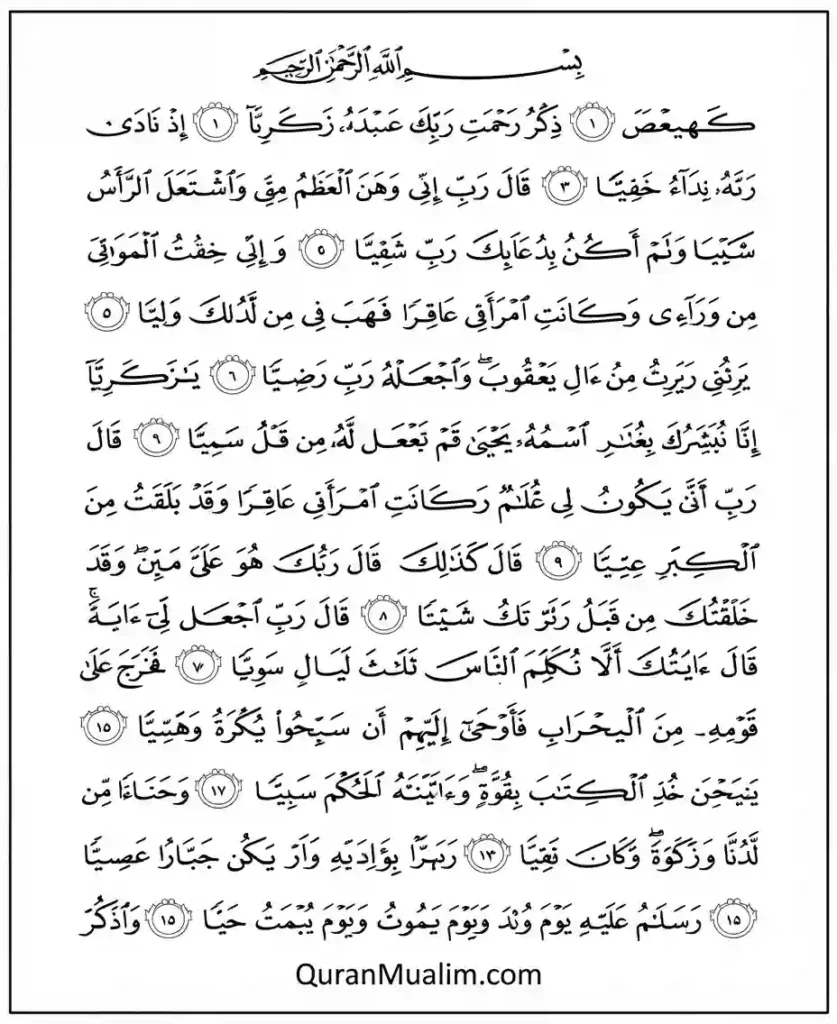
| Bismillah | بِسْمِ اللَّهِ الرَّحْمَٰنِ الرَّحِيمِ | Bismillahi r-rahmani r-raheem | In the name of Allah, the Entirely Merciful, the Especially Merciful. |
| 1 | كهيعص | Kaf-ha-ya-‘ayn-sad | Kaf, Ha, Ya, ‘Ayn, Sad. |
| 2 | ذِكْرُ رَحْمَتِ رَبِّكَ عَبْدَهُ زَكَرِيَّا | Dhikru rahmati rabbika ‘abdahu Zakariyya | [This is] a mention of the mercy of your Lord to His servant Zechariah |
| 3 | إِذْ نَادَىٰ رَبَّهُ نِدَاءً خَفِيًّا | Idh nada rabbahu nida’an khafiyya | When he called to his Lord a private supplication. |
| 4 | قَالَ رَبِّ إِنِّي وَهَنَ الْعَظْمُ مِنِّي وَاشْتَعَلَ الرَّأْسُ شَيْبًا وَلَمْ أَكُنْ بِدُعَائِكَ رَبِّ شَقِيًّا | Qala rabbi innee wahana al-‘azmu minnee washta’ala ar-ra’su shayban wa lam akun bidu’a’ika rabbi shaqiyya | He said, “My Lord, indeed my bones have weakened, and my head has filled with white, and never have I been in my supplication to You, my Lord, unhappy. |
| 5 | وَإِنِّي خِفْتُ الْمَوَالِيَ مِنْ وَرَائِي وَكَانَتِ امْرَأَتِي عَاقِرًا فَهَبْ لِي مِنْ لَدُنْكَ وَلِيًّا | Wa innee khiftu al-mawaliya min wara’ee wa kanati imra’atee ‘aqiran fahab lee min ladunka waliyya | And indeed, I fear the successors after me, and my wife has been barren, so give me from Yourself an heir |
| 6 | يَرِثُنِي وَيَرِثُ مِنْ آلِ يَعْقُوبَ ۖ وَاجْعَلْهُ رَبِّ رَضِيًّا | Yarithunee wa yarithu min ali Ya’qooba wa ij’alhu rabbi radiyya | Who will inherit me and inherit from the family of Jacob. And make him, my Lord, pleasing [to You].” |
| 7 | يَا زَكَرِيَّا إِنَّا نُبَشِّرُكَ بِغُلَامٍ اسْمُهُ يَحْيَىٰ لَمْ نَجْعَلْ لَهُ مِنْ قَبْلُ سَمِيًّا | Ya Zakariyya inna nubashshiruka bighulamin ismuhu Yahya lam naj’al lahu min qablu samiyya | [He was told], “O Zechariah, indeed We give you good tidings of a boy whose name will be John. We have not assigned to any before [this] name.” |
| 8 | قَالَ رَبِّ أَنَّىٰ يَكُونُ لِي غُلَامٌ وَكَانَتِ امْرَأَتِي عَاقِرًا وَقَدْ بَلَغْتُ مِنَ الْكِبَرِ عِتِيًّا | Qala rabbi anna yakoonu lee ghulamun wa kanati imra’atee ‘aqiran wa qad balaghtu mina al-kibari ‘itiyya | He said, “My Lord, how will I have a boy when my wife has been barren and I have reached extreme old age?” |
| 9 | قَالَ كَذَٰلِكَ قَالَ رَبُّكَ هُوَ عَلَيَّ هَيِّنٌ وَقَدْ خَلَقْتُكَ مِنْ قَبْلُ وَلَمْ تَكُ شَيْئًا | Qala kadhalika qala rabbuka huwa ‘alayya hayyinun wa qad khalaqtuka min qablu wa lam taku shay’an | [An angel] said, “Thus [it will be]; your Lord says, ‘It is easy for Me, for I created you before, while you were nothing.’ “ |
| 10 | قَالَ رَبِّ اجْعَلْ لِي آيَةً ۚ قَالَ آيَتُكَ أَلَّا تُكَلِّمَ النَّاسَ ثَلَاثَ لَيَالٍ سَوِيًّا | Qala rabbi ij’al lee ayatan qala ayatuka alla tukallima an-nasa thalatha layalin sawiyya | [Zechariah] said, “My Lord, make for me a sign.” He said, “Your sign is that you will not speak to the people for three nights, [being] sound.” |
| 11 | فَخَرَجَ عَلَىٰ قَوْمِهِ مِنَ الْمِحْرَابِ فَأَوْحَىٰ إِلَيْهِمْ أَنْ سَبِّحُوا بُكْرَةً وَعَشِيًّا | Fakharaja ‘ala qawmihi mina al-mihrabi fa-awha ilayhim an sabbihoo bukratan wa ‘ashiyya | So he came out to his people from the prayer chamber and signaled to them to exalt [Allah] in the morning and afternoon. |
| 12 | يَا يَحْيَىٰ خُذِ الْكِتَابَ بِقُوَّةٍ ۖ وَآتَيْنَاهُ الْحُكْمَ صَبِيًّا | Ya Yahya khudhi al-kitaba biquwwatin wa ataynahu al-hukma sabiyya | [Allah] said, “O John, take the Scripture with determination.” And We gave him judgement [while yet] a boy |
| 13 | وَحَنَانًا مِنْ لَدُنَّا وَزَكَاةً ۖ وَكَانَ تَقِيًّا | Wa hananan min ladunna wa zakatan wa kana taqiyya | And affection from Us and purity, and he was fearing of Allah |
| 14 | وَبَرًّا بِوَالِدَيْهِ وَلَمْ يَكُنْ جَبَّارًا عَصِيًّا | Wa barran biwalidayhi wa lam yakun jabbaran ‘asiyya | And dutiful to his parents, and he was not a disobedient tyrant. |
| 15 | وَسَلَامٌ عَلَيْهِ يَوْمَ وُلِدَ وَيَوْمَ يَمُوتُ وَيَوْمَ يُبْعَثُ حَيًّا | Wa salamun ‘alayhi yawma wulida wa yawma yamootu wa yawma yub’athu hayya | And peace be upon him the day he was born and the day he dies and the day he is raised alive. |
| 16 | وَاذْكُرْ فِي الْكِتَابِ مَرْيَمَ إِذِ انْتَبَذَتْ مِنْ أَهْلِهَا مَكَانًا شَرْقِيًّا | Wadhkur fee al-kitabi Maryama idhi intabadhat min ahliha makanan sharqiyya | And mention, [O Muhammad], in the Book [the story of] Mary, when she withdrew from her family to a place toward the east. |
| 17 | فَاتَّخَذَتْ مِنْ دُونِهِمْ حِجَابًا فَأَرْسَلْنَا إِلَيْهَا رُوحَنَا فَتَمَثَّلَ لَهَا بَشَرًا سَوِيًّا | Fattakhadhat min doonihim hijaban fa-arsalna ilayha roohana fatamaththala laha basharan sawiyya | And she took, in seclusion from them, a screen. Then We sent to her Our Angel, and he represented himself to her as a well-proportioned man. |
| 18 | قَالَتْ إِنِّي أَعُوذُ بِالرَّحْمَٰنِ مِنْكَ إِنْ كُنْتَ تَقِيًّا | Qalat innee a’oodhu bir-rahmani minka in kunta taqiyya | She said, “Indeed, I seek refuge in the Most Merciful from you, [so leave me], if you should be fearing of Allah.” |
| 19 | قَالَ إِنَّمَا أَنَا رَسُولُ رَبِّكِ لِأَهَبَ لَكِ غُلَامًا زَكِيًّا | Qala innama ana rasoolu rabbiki li-ahaba laki ghulaman zakiyya | He said, “I am only the messenger of your Lord to give you [news of] a pure boy.” |
| 20 | قَالَتْ أَنَّىٰ يَكُونُ لِي غُلَامٌ وَلَمْ يَمْسَسْنِي بَشَرٌ وَلَمْ أَكُ بَغِيًّا | Qalat anna yakoonu lee ghulamun wa lam yamsasnee basharun wa lam aku baghiyya | She said, “How can I have a boy while no man has touched me and I have not been unchaste?” |
| 21 | قَالَ كَذَٰلِكِ قَالَ رَبُّكِ هُوَ عَلَيَّ هَيِّنٌ ۖ وَلِنَجْعَلَهُ آيَةً لِلنَّاسِ وَرَحْمَةً مِنَّا ۚ وَكَانَ أَمْرًا مَقْضِيًّا | Qala kadhaliki qala rabbuki huwa ‘alayya hayyinun wa linaj’alahu ayatan lin-nasi wa rahmatan minna wa kana amran maqdiyya | He said, “Thus [it will be]; your Lord says, ‘It is easy for Me, and We will make him a sign to the people and a mercy from Us. And it is a matter [already] decreed.’ “ |
| 22 | فَحَمَلَتْهُ فَانْتَبَذَتْ بِهِ مَكَانًا قَصِيًّا | Fahamalat-hu fantabadhat bihi makanan qasiyya | So she conceived him, and she withdrew with him to a remote place. |
| 23 | فَأَجَاءَهَا الْمَخَاضُ إِلَىٰ جِذْعِ النَّخْلَةِ قَالَتْ يَا لَيْتَنِي مِتُّ قَبْلَ هَٰذَا وَكُنْتُ نَسْيًا مَنْسِيًّا | Fa-aja’aha al-makhadu ila jidh’i an-nakhlati qalat ya laytanee mittu qabla hadha wa kuntu nasyan mansiyya | And the pains of childbirth drove her to the trunk of a palm tree. She said, “Oh, I wish I had died before this and was in oblivion, forgotten.” |
| 24 | فَنَادَاهَا مِنْ تَحْتِهَا أَلَّا تَحْزَنِي قَدْ جَعَلَ رَبُّكِ تَحْتَكِ سَرِيًّا | Fanadaha min tahtiha alla tahzanee qad ja’ala rabbuki tahtaki sariyya | But he called her from below her, “Do not grieve; your Lord has provided beneath you a stream. |
| 25 | وَهُزِّي إِلَيْكِ بِجِذْعِ النَّخْلَةِ تُسَاقِطْ عَلَيْكِ رُطَبًا جَنِيًّا | Wa huzzee ilayki bijidh’i an-nakhlati tusaqit ‘alayki rutaban janiyya | And shake toward you the trunk of the palm tree; it will drop upon you ripe, fresh dates. |
| 26 | فَكُلِي وَاشْرَبِي وَقَرِّي عَيْنًا ۖ فَإِمَّا تَرَيِنَّ مِنَ الْبَشَرِ أَحَدًا فَقُولِي إِنِّي نَذَرْتُ لِلرَّحْمَٰنِ صَوْمًا فَلَنْ أُكَلِّمَ الْيَوْمَ إِنْسِيًّا | Fakulee washrabee wa qarree ‘aynan fa-imma tarayinna mina al-bashari ahadan faqoolee innee nadhartu lir-rahmani sawman falan ukallima al-yawma insiyya | So eat and drink and be contented. And if you see from among humanity anyone, say, ‘Indeed, I have vowed to the Most Merciful abstention, so I will not speak today to [any] man.’ “ |
| 27 | فَأَتَتْ بِهِ قَوْمَهَا تَحْمِلُهُ ۖ قَالُوا يَا مَرْيَمُ لَقَدْ جِئْتِ شَيْئًا فَرِيًّا | Fa-atat bihi qawmaha tahmiluhu qaloo ya Maryamu laqad ji’ti shay’an fariyya | Then she brought him to her people, carrying him. They said, “O Mary, you have certainly done a thing unprecedented. |
| 28 | يَا أُخْتَ هَارُونَ مَا كَانَ أَبُوكِ امْرَأَ سَوْءٍ وَمَا كَانَتْ أُمُّكِ بَغِيًّا | Ya ukhta Haroona ma kana abooki imra’a saw’in wa ma kanat ummuki baghiyya | O sister of Aaron, your father was not a man of evil, nor was your mother unchaste.” |
| 29 | فَأَشَارَتْ إِلَيْهِ ۖ قَالُوا كَيْفَ نُكَلِّمُ مَنْ كَانَ فِي الْمَهْدِ صَبِيًّا | Fa-asharat ilayhi qaloo kayfa nukallimu man kana fee al-mahdi sabiyya | So she pointed to him. They said, “How can we speak to one who is in the cradle a child?” |
| 30 | قَالَ إِنِّي عَبْدُ اللَّهِ آتَانِيَ الْكِتَابَ وَجَعَلَنِي نَبِيًّا | Qala innee ‘abdu Allahi ataniya al-kitaba wa ja’alanee nabiyya | [Jesus] said, “Indeed, I am the servant of Allah. He has given me the Scripture and made me a prophet. |
| 31 | وَجَعَلَنِي مُبَارَكًا أَيْنَ مَا كُنْتُ وَأَوْصَانِي بِالصَّلَاةِ وَالزَّكَاةِ مَا دُمْتُ حَيًّا | Wa ja’alanee mubarakan ayna ma kuntu wa awsanee bis-salati waz-zakati ma dumtu hayya | And He has made me blessed wherever I am and has enjoined upon me prayer and zakah as long as I remain alive |
| 32 | وَبَرًّا بِوَالِدَتِي وَلَمْ يَجْعَلْنِي جَبَّارًا شَقِيًّا | Wa barran biwalidatee wa lam yaj’alnee jabbaran shaqiyya | And [made me] dutiful to my mother, and He has not made me a wretched tyrant. |
| 33 | وَالسَّلَامُ عَلَيَّ يَوْمَ وُلِدْتُ وَيَوْمَ أَمُوتُ وَيَوْمَ أُبْعَثُ حَيًّا | Was-salamu ‘alayya yawma wulidtu wa yawma amootu wa yawma ub’athu hayya | And peace is on me the day I was born and the day I will die and the day I am raised alive.” |
| 34 | ذَٰلِكَ عِيسَى ابْنُ مَرْيَمَ ۚ قَوْلَ الْحَقِّ الَّذِي فِيهِ يَمْتَرُونَ | Dhalika ‘Eesa ibnu Maryama qawla al-haqqi alladhee feehi yamtaroon | That is Jesus, the son of Mary – the word of truth about which they are in dispute. |
| 35 | مَا كَانَ لِلَّهِ أَنْ يَتَّخِذَ مِنْ وَلَدٍ ۖ سُبْحَانَهُ ۚ إِذَا قَضَىٰ أَمْرًا فَإِنَّمَا يَقُولُ لَهُ كُنْ فَيَكُونُ | Ma kana lillahi an yattakhidha min waladin subhanahu idha qada amran fa-innama yaqoolu lahu kun fayakoon | It is not [befitting] for Allah to take a son; exalted is He! When He decrees an affair, He only says to it, “Be,” and it is. |
| 36 | وَإِنَّ اللَّهَ رَبِّي وَرَبُّكُمْ فَاعْبُدُوهُ ۚ هَٰذَا صِرَاطٌ مُسْتَقِيمٌ | Wa inna Allaha rabbee wa rabbukum fa’budoohu hadha siratun mustaqeem | [Jesus said], “And indeed, Allah is my Lord and your Lord, so worship Him. That is a straight path.” |
| 37 | فَاخْتَلَفَ الْأَحْزَابُ مِنْ بَيْنِهِمْ ۖ فَوَيْلٌ لِلَّذِينَ كَفَرُوا مِنْ مَشْهَدِ يَوْمٍ عَظِيمٍ | Fakhtalafa al-ahzabu min baynihim fawaylun lilladheena kafaroo min mashhadi yawmin ‘azeem | Then the factions differed [concerning Jesus] from among them, so woe to those who disbelieved – from the scene of a tremendous Day. |
| 38 | أَسْمِعْ بِهِمْ وَأَبْصِرْ يَوْمَ يَأْتُونَنَا ۖ لَٰكِنِ الظَّالِمُونَ الْيَوْمَ فِي ضَلَالٍ مُبِينٍ | Asmi’ bihim wa absir yawma ya’toonana lakini az-zalimoona al-yawma fee dalalin mubeen | How [clearly] they will hear and see the Day they come to Us, but the wrongdoers today are in clear error. |
| 39 | وَأَنْذِرْهُمْ يَوْمَ الْحَسْرَةِ إِذْ قُضِيَ الْأَمْرُ وَهُمْ فِي غَفْلَةٍ وَهُمْ لَا يُؤْمِنُونَ | Wa andhirhum yawma al-hasrati idh qudiya al-amru wa hum fee ghaflatin wa hum la yu’minoon | And warn them, [O Muhammad], of the Day of Regret, when the matter will be concluded; and [yet], they are in [a state of] heedlessness, and they do not believe. |
| 40 | إِنَّا نَحْنُ نَرِثُ الْأَرْضَ وَمَنْ عَلَيْهَا وَإِلَيْنَا يُرْجَعُونَ | Inna nahnu narithu al-arda wa man ‘alayha wa ilayna yurja’oon | Indeed, it is We who will inherit the earth and whoever is on it, and to Us they will be returned. |
| 41 | وَاذْكُرْ فِي الْكِتَابِ إِبْرَاهِيمَ ۚ إِنَّهُ كَانَ صِدِّيقًا نَبِيًّا | Wadhkur fee al-kitabi Ibraheema innahu kana siddeeqan nabiyya | And mention in the Book [the story of] Abraham. Indeed, he was a man of truth and a prophet. |
| 42 | إِذْ قَالَ لِأَبِيهِ يَا أَبَتِ لِمَ تَعْبُدُ مَا لَا يَسْمَعُ وَلَا يُبْصِرُ وَلَا يُغْنِي عَنْكَ شَيْئًا | Idh qala li-abeehi ya abati lima ta’budu ma la yasma’u wa la yubsiru wa la yughnee ‘anka shay’an | [Mention] when he said to his father, “O my father, why do you worship that which does not hear and does not see and will not benefit you at all? |
| 43 | يَا أَبَتِ إِنِّي قَدْ جَاءَنِي مِنَ الْعِلْمِ مَا لَمْ يَأْتِكَ فَاتَّبِعْنِي أَهْدِكَ صِرَاطًا سَوِيًّا | Ya abati innee qad ja’anee mina al-‘ilmi ma lam ya’tika fattabi’nee ahdika siratan sawiyya | O my father, indeed there has come to me of knowledge that which has not come to you, so follow me; I will guide you to an even path. |
| 44 | يَا أَبَتِ لَا تَعْبُدِ الشَّيْطَانَ ۖ إِنَّ الشَّيْطَانَ كَانَ لِلرَّحْمَٰنِ عَصِيًّا | Ya abati la ta’budi ash-shaytana inna ash-shaytana kana lir-rahmani ‘asiyya | O my father, do not worship Satan. Indeed Satan has ever been, to the Most Merciful, disobedient. |
| 45 | يَا أَبَتِ إِنِّي أَخَافُ أَنْ يَمَسَّكَ عَذَابٌ مِنَ الرَّحْمَٰنِ فَتَكُونَ لِلشَّيْطَانِ وَلِيًّا | Ya abati innee akhafu an yamassaka ‘adhabun mina ar-rahmani fatakoona lish-shaytani waliyya | O my father, indeed I fear that there will touch you a punishment from the Most Merciful so you would be to Satan a companion [in Hellfire].” |
| 46 | قَالَ أَرَاغِبٌ أَنْتَ عَنْ آلِهَتِي يَا إِبْرَاهِيمُ ۖ لَئِنْ لَمْ تَنْتَهِ لَأَرْجُمَنَّكَ ۖ وَاهْجُرْنِي مَلِيًّا | Qala araghibun anta ‘an alihatee ya Ibraheemu la’in lam tantahi la-arjumannaka wahjurnee maliyya | [His father] said, “Have you no desire for my gods, O Abraham? If you do not desist, I will surely stone you, so avoid me a prolonged time.” |
| 47 | قَالَ سَلَامٌ عَلَيْكَ ۖ سَأَسْتَغْفِرُ لَكَ رَبِّي ۖ إِنَّهُ كَانَ بِي حَفِيًّا | Qala salamun ‘alayka sa-astaghfiru laka rabbee innahu kana bee hafiyya | [Abraham] said, “Peace will be upon you. I will ask forgiveness for you of my Lord. Indeed, He is ever gracious to me. |
| 48 | وَأَعْتَزِلُكُمْ وَمَا تَدْعُونَ مِنْ دُونِ اللَّهِ وَأَدْعُو رَبِّي عَسَىٰ أَلَّا أَكُونَ بِدُعَاءِ رَبِّي شَقِيًّا | Wa a’tazilukum wa ma tad’oona min dooni Allahi wa ad’oo rabbee ‘asa alla akoona bidu’a’i rabbee shaqiyya | And I will leave you and those you invoke other than Allah and will invoke my Lord. I expect that I will not be in invocation to my Lord unhappy.” |
| 49 | فَلَمَّا اعْتَزَلَهُمْ وَمَا يَعْبُدُونَ مِنْ دُونِ اللَّهِ وَهَبْنَا لَهُ إِسْحَاقَ وَيَعْقُوبَ ۖ وَكُلًّا جَعَلْنَا نَبِيًّا | Falamma i’tazalahum wa ma ya’budoona min dooni Allahi wahabna lahu Ishaqa wa Ya’qooba wa kullan ja’alna nabiyya | So when he had left them and those they worshipped other than Allah, We gave him Isaac and Jacob, and each [of them] We made a prophet. |
| 50 | وَوَهَبْنَا لَهُمْ مِنْ رَحْمَتِنَا وَجَعَلْنَا لَهُمْ لِسَانَ صِدْقٍ عَلِيًّا | Wa wahabna lahum min rahmatina wa ja’alna lahum lisana sidqin ‘aliyya | And We gave them of Our mercy, and we made for them a reputation of high honor. |
| 51 | وَاذْكُرْ فِي الْكِتَابِ مُوسَىٰ ۚ إِنَّهُ كَانَ مُخْلَصًا وَكَانَ رَسُولًا نَبِيًّا | Wadhkur fee al-kitabi Moosa innahu kana mukhlasan wa kana rasoolan nabiyya | And mention in the Book, Moses. Indeed, he was chosen, and he was a messenger and a prophet. |
| 52 | وَنَادَيْنَاهُ مِنْ جَانِبِ الطُّورِ الْأَيْمَنِ وَقَرَّبْنَاهُ نَجِيًّا | Wa nadaynahu min janibi at-toori al-aymani wa qarrabnahu najiyya | And We called him from the side of the mount at [his] right and brought him near, confiding [to him]. |
| 53 | وَوَهَبْنَا لَهُ مِنْ رَحْمَتِنَا أَخَاهُ هَارُونَ نَبِيًّا | Wa wahabna lahu min rahmatina akhahu Haroona nabiyya | And We gave him out of Our mercy his brother Aaron as a prophet. |
| 54 | وَاذْكُرْ فِي الْكِتَابِ إِسْمَاعِيلَ ۚ إِنَّهُ كَانَ صَادِقَ الْوَعْدِ وَكَانَ رَسُولًا نَبِيًّا | Wadhkur fee al-kitabi Isma’eela innahu kana sadiqa al-wa’di wa kana rasoolan nabiyya | And mention in the Book, Ishmael. Indeed, he was true to his promise, and he was a messenger and a prophet. |
| 55 | وَكَانَ يَأْمُرُ أَهْلَهُ بِالصَّلَاةِ وَالزَّكَاةِ وَكَانَ عِنْدَ رَبِّهِ مَرْضِيًّا | Wa kana ya’muru ahlahu bis-salati waz-zakati wa kana ‘inda rabbihi mardiyya | And he used to enjoin on his people prayer and zakah and was to his Lord pleasing. |
| 56 | وَاذْكُرْ فِي الْكِتَابِ إِدْرِيسَ ۚ إِنَّهُ كَانَ صِدِّيقًا نَبِيًّا | Wadhkur fee al-kitabi Idreesa innahu kana siddeeqan nabiyya | And mention in the Book, Idrees. Indeed, he was a man of truth and a prophet. |
| 57 | وَرَفَعْنَاهُ مَكَانًا عَلِيًّا | Wa rafa’nahu makanan ‘aliyya | And We raised him to a high station. |
| 58 | أُولَٰئِكَ الَّذِينَ أَنْعَمَ اللَّهُ عَلَيْهِمْ مِنَ النَّبِيِّينَ مِنْ ذُرِّيَّةِ آدَمَ وَمِمَّنْ حَمَلْنَا مَعَ نُوحٍ وَمِنْ ذُرِّيَّةِ إِبْرَاهِيمَ وَإِسْرَائِيلَ وَمِمَّنْ هَدَيْنَا وَاجْتَبَيْنَا ۚ إِذَا تُتْلَىٰ عَلَيْهِمْ آيَاتُ الرَّحْمَٰنِ خَرُّوا سُجَّدًا وَبُكِيًّا ۩ | Ola’ika alladheena an’ama Allahu ‘alayhim mina an-nabiyyeena min dhurriyyati Adama wa mimman hamalna ma’a Noohin wa min dhurriyyati Ibraheema wa Isra’eela wa mimman hadayna wajtabayna idha tutla ‘alayhim ayatu ar-rahmani kharroo sujjadan wa bukiyya | Those were the ones upon whom Allah bestowed favor from among the prophets of the descendants of Adam and of those We carried [in the ship] with Noah, and of the descendants of Abraham and Israel, and of those whom We guided and chose. When the verses of the Most Merciful were recited to them, they fell in prostration and weeping. (verse of prostration) |
| 59 | فَخَلَفَ مِنْ بَعْدِهِمْ خَلْفٌ أَضَاعُوا الصَّلَاةَ وَاتَّبَعُوا الشَّهَوَاتِ ۖ فَسَوْفَ يَلْقَوْنَ غَيًّا | Fakhalafa min ba’dihim khalfun ada’oo as-salata wattaba’oo ash-shahawati fasawfa yalqawna ghayya | But there came after them successors who neglected prayer and pursued desires; so they are going to meet evil – |
| 60 | إِلَّا مَنْ تَابَ وَآمَنَ وَعَمِلَ صَالِحًا فَأُولَٰئِكَ يَدْخُلُونَ الْجَنَّةَ وَلَا يُظْلَمُونَ شَيْئًا | Illa man taba wa amana wa ‘amila salihan fa-ola’ika yadkhuloona al-jannata wa la yuzlamoona shay’an | Except those who repent, believe and do righteousness; for those will enter Paradise and will not be wronged at all. |
| 61 | جَنَّاتِ عَدْنٍ الَّتِي وَعَدَ الرَّحْمَٰنُ عِبَادَهُ بِالْغَيْبِ ۚ إِنَّهُ كَانَ وَعْدُهُ مَأْتِيًّا | Jannati ‘adnin allatee wa’ada ar-rahmanu ‘ibadahu bil-ghaybi innahu kana wa’duhu ma’tiyya | [Therein are] gardens of perpetual residence which the Most Merciful has promised His servants in the unseen. Indeed, His promise has ever been coming. |
| 62 | لَا يَسْمَعُونَ فِيهَا لَغْوًا إِلَّا سَلَامًا ۖ وَلَهُمْ رِزْقُهُمْ فِيهَا بُكْرَةً وَعَشِيًّا | La yasma’oona feeha laghwan illa salaman wa lahum rizquhum feeha bukratan wa ‘ashiyya | They will not hear therein any ill speech – only [greetings of] peace – and they will have their provision therein, morning and afternoon. |
| 63 | تِلْكَ الْجَنَّةُ الَّتِي نُورِثُ مِنْ عِبَادِنَا مَنْ كَانَ تَقِيًّا | Tilka al-jannatu allatee noorithu min ‘ibadina man kana taqiyya | That is Paradise, which We give as inheritance to those of Our servants who were fearing of Allah. |
| 64 | وَمَا نَتَنَزَّلُ إِلَّا بِأَمْرِ رَبِّكَ ۖ لَهُ مَا بَيْنَ أَيْدِينَا وَمَا خَلْفَنَا وَمَا بَيْنَ ذَٰلِكَ ۚ وَمَا كَانَ رَبُّكَ نَسِيًّا | Wa ma natanazzalu illa bi-amri rabbika lahu ma bayna aydeena wa ma khalfana wa ma bayna dhalika wa ma kana rabbuka nasiyya | [Gabriel said], “And we [angels] descend not except by the order of your Lord. To Him belongs that before us and that behind us and what is in between. And never is your Lord forgetful – |
| 65 | رَبُّ السَّمَاوَاتِ وَالْأَرْضِ وَمَا بَيْنَهُمَا فَاعْبُدْهُ وَاصْطَبِرْ لِعِبَادَتِهِ ۚ هَلْ تَعْلَمُ لَهُ سَمِيًّا | Rabbu as-samawati wal-ardi wa ma baynahuma fa’budhu wastabir li’ibadatihi hal ta’lamu lahu samiyya | Lord of the heavens and the earth and whatever is between them – so worship Him and have patience for His worship. Do you know of any similarity to Him?” |
| 66 | وَيَقُولُ الْإِنْسَانُ أَإِذَا مَا مِتُّ لَسَوْفَ أُخْرَجُ حَيًّا | Wa yaqoolu al-insanu a-idha ma mittu lasawfa ukhraju hayya | And the disbeliever says, “When I have died, am I going to be brought forth alive?” |
| 67 | أَوَلَا يَذْكُرُ الْإِنْسَانُ أَنَّا خَلَقْنَاهُ مِنْ قَبْلُ وَلَمْ يَكُ شَيْئًا | Awala yadhkuru al-insanu anna khalaqnahu min qablu wa lam yaku shay’an | Does man not remember that We created him before, while he was nothing? |
| 68 | فَوَرَبِّكَ لَنَحْشُرَنَّهُمْ وَالشَّيَاطِينَ ثُمَّ لَنُحْضِرَنَّهُمْ حَوْلَ جَهَنَّمَ جِثِيًّا | Fawarabbika lanahshurannahum wash-shayateena thumma lanuhdirannahum hawla jahannama jithiyya | So by your Lord, We will surely gather them and the devils; then We will bring them to be present around Hell upon their knees. |
| 69 | ثُمَّ لَنَنْزِعَنَّ مِنْ كُلِّ شِيعَةٍ أَيُّهُمْ أَشَدُّ عَلَى الرَّحْمَٰنِ عِتِيًّا | Thumma lananzi’anna min kulli shee’atin ayyuhum ashaddu ‘ala ar-rahmani ‘itiyya | Then We will surely extract from every sect those of them who were worst against the Most Merciful in insolence. |
| 70 | ثُمَّ لَنَحْنُ أَعْلَمُ بِالَّذِينَ هُمْ أَوْلَىٰ بِهَا صِلِيًّا | Thumma lanahnu a’lamu billadheena hum awla biha siliyya | Then, surely it is We who are most knowing of those most worthy of burning therein. |
| 71 | وَإِنْ مِنْكُمْ إِلَّا وَارِدُهَا ۚ كَانَ عَلَىٰ رَبِّكَ حَتْمًا مَقْضِيًّا | Wa in minkum illa wariduha kana ‘ala rabbika hatman maqdiyya | And there is none of you except he will come to it. This is upon your Lord an inevitability decreed. |
| 72 | ثُمَّ نُنَجِّي الَّذِينَ اتَّقَوْا وَنَذَرُ الظَّالِمِينَ فِيهَا جِثِيًّا | Thumma nunajjee alladheena ittaqaw wa nadharu az-zalimeena feeha jithiyya | Then We will save those who feared Allah and leave the wrongdoers within it, on their knees. |
| 73 | وَإِذَا تُتْلَىٰ عَلَيْهِمْ آيَاتُنَا بَيِّنَاتٍ قَالَ الَّذِينَ كَفَرُوا لِلَّذِينَ آمَنُوا أَيُّ الْفَرِيقَيْنِ خَيْرٌ مَقَامًا وَأَحْسَنُ نَدِيًّا | Wa idha tutla ‘alayhim ayatuna bayyinatin qala alladheena kafaroo lilladheena amanoo ayyu al-fareeqayni khayrun maqaman wa ahsanu nadiyya | And when Our verses are recited to them as clear evidences, those who disbelieve say to those who believe, “Which of [our] two parties is best in position and best in association?” |
| 74 | وَكَمْ أَهْلَكْنَا قَبْلَهُمْ مِنْ قَرْنٍ هُمْ أَحْسَنُ أَثَاثًا وَرِئْيًا | Wa kam ahlakna qablahum min qarnin hum ahsanu athathan wa ri’ya | And how many a generation have We destroyed before them who were better in possessions and [outward] appearance? |
| 75 | قُلْ مَنْ كَانَ فِي الضَّلَالَةِ فَلْيَمْدُدْ لَهُ الرَّحْمَٰنُ مَدًّا ۚ حَتَّىٰ إِذَا رَأَوْا مَا يُوعَدُونَ إِمَّا الْعَذَابَ وَإِمَّا السَّاعَةَ فَسَيَعْلَمُونَ مَنْ هُوَ شَرٌّ مَكَانًا وَأَضْعَفُ جُنْدًا | Qul man kana fee ad-dalalati falyamdud lahu ar-rahmanu maddan hatta idha ra’aw ma yoo’adoona imma al-‘adhaba wa imma as-sa’ata fasaya’lamoona man huwa sharrun makanan wa ad’afu jundan | Say, “Whoever is in error – let the Most Merciful extend for him an extension [in wealth and time] until, when they see that which they were promised – either punishment [in this world] or the Hour [of resurrection] – they will come to know who is worst in position and weaker in soldiers.” |
| 76 | وَيَزِيدُ اللَّهُ الَّذِينَ اهْتَدَوْا هُدًى ۗ وَالْبَاقِيَاتُ الصَّالِحَاتُ خَيْرٌ عِنْدَ رَبِّكَ ثَوَابًا وَخَيْرٌ مَرَدًّا | Wa yazeedu Allahu alladheena ihtadaw hudan wal-baqiyatu as-salihatu khayrun ‘inda rabbika thawaban wa khayrun maraddan | And Allah increases those who were guided, in guidance, and the enduring good deeds are better to your Lord for reward and better for recourse. |
| 77 | أَفَرَأَيْتَ الَّذِي كَفَرَ بِآيَاتِنَا وَقَالَ لَأُوتَيَنَّ مَالًا وَوَلَدًا | Afara’ayta alladhee kafara bi-ayatina wa qala la-ootayanna malan wa waladan | Then, have you seen he who disbelieved in Our verses and said, “I will surely be given wealth and children [in the next life]?” |
| 78 | أَطَّلَعَ الْغَيْبَ أَمِ اتَّخَذَ عِنْدَ الرَّحْمَٰنِ عَهْدًا | Attala’a al-ghayba ami ittakhadha ‘inda ar-rahmani ‘ahdan | Has he looked into the unseen, or has he taken from the Most Merciful a promise? |
| 79 | كَلَّا ۚ سَنَكْتُبُ مَا يَقُولُ وَنَمُدُّ لَهُ مِنَ الْعَذَابِ مَدًّا | Kalla sanaktubu ma yaqoolu wa namuddu lahu mina al-‘adhabi maddan | No! We will record what he says and extend for him from the punishment extensively. |
| 80 | وَنَرِثُهُ مَا يَقُولُ وَيَأْتِينَا فَرْدًا | Wa narithuhu ma yaqoolu wa ya’teena fardan | And We will inherit him [in] what he mentions, and he will come to Us alone. |
| 81 | وَاتَّخَذُوا مِنْ دُونِ اللَّهِ آلِهَةً لِيَكُونُوا لَهُمْ عِزًّا | Wattakhadhoo min dooni Allahi alihatan liyakoonoo lahum ‘izzan | And they have taken besides Allah [false] deities that they would be for them [a source of] honor. |
| 82 | كَلَّا ۚ سَيَكْفُرُونَ بِعِبَادَتِهِمْ وَيَكُونُونَ عَلَيْهِمْ ضِدًّا | Kalla sayakfuroona bi’ibadatihim wa yakoonoona ‘alayhim diddan | No! Those “gods” will deny their worship of them and will be against them opponents [on the Day of Judgement]. |
| 83 | أَلَمْ تَرَ أَنَّا أَرْسَلْنَا الشَّيَاطِينَ عَلَى الْكَافِرِينَ تَؤُزُّهُمْ أَزًّا | Alam tara anna arsalna ash-shayateena ‘ala al-kafireena ta’uzzuhum azzan | Do you not see that We have sent the devils upon the disbelievers, inciting them to [evil] with [constant] incitement? |
| 84 | فَلَا تَعْجَلْ عَلَيْهِمْ ۖ إِنَّمَا نَعُدُّ لَهُمْ عَدًّا | Fala ta’jal ‘alayhim innama na’uddu lahum ‘addan | So be not impatient over them. We only count out to them a [limited] number. |
| 85 | يَوْمَ نَحْشُرُ الْمُتَّقِينَ إِلَى الرَّحْمَٰنِ وَفْدًا | Yawma nahshuru al-muttaqeena ila ar-rahmani wafdan | On the Day We will gather the righteous to the Most Merciful as a delegation |
| 86 | وَنَسُوقُ الْمُجْرِمِينَ إِلَىٰ جَهَنَّمَ وِرْدًا | Wa nasooqu al-mujrimeena ila jahannama wirdan | And will drive the criminals to Hell in thirst |
| 87 | لَا يَمْلِكُونَ الشَّفَاعَةَ إِلَّا مَنِ اتَّخَذَ عِنْدَ الرَّحْمَٰنِ عَهْدًا | La yamlikoona ash-shafa’ata illa mani ittakhadha ‘inda ar-rahmani ‘ahdan | None will have [power of] intercession except he who had taken from the Most Merciful a covenant. |
| 88 | وَقَالُوا اتَّخَذَ الرَّحْمَٰنُ وَلَدًا | Wa qaloo ittakhadha ar-rahmanu waladan | And they say, “The Most Merciful has taken [for Himself] a son.” |
| 89 | لَقَدْ جِئْتُمْ شَيْئًا إِدًّا | Laqad ji’tum shay’an iddan | You have done an atrocious thing. |
| 90 | تَكَادُ السَّمَاوَاتُ يَتَفَطَّرْنَ مِنْهُ وَتَنْشَقُّ الْأَرْضُ وَتَخِرُّ الْجِبَالُ هَدًّا | Takadu as-samawatu yatafattarna minhu wa tanshaqqu al-ardu wa takhirru al-jibalu haddan | The heavens almost rupture therefrom and the earth splits open and the mountains collapse in devastation |
| 91 | أَنْ دَعَوْا لِلرَّحْمَٰنِ وَلَدًا | An da’aw lir-rahmani waladan | That they attribute to the Most Merciful a son. |
| 92 | وَمَا يَنْبَغِي لِلرَّحْمَٰنِ أَنْ يَتَّخِذَ وَلَدًا | Wa ma yanbaghee lir-rahmani an yattakhidha waladan | And it is not appropriate for the Most Merciful that He should take a son. |
| 93 | إِنْ كُلُّ مَنْ فِي السَّمَاوَاتِ وَالْأَرْضِ إِلَّا آتِي الرَّحْمَٰنِ عَبْدًا | In kullu man fee as-samawati wal-ardi illa atee ar-rahmani ‘abdan | There is no one in the heavens and earth but that he comes to the Most Merciful as a servant. |
| 94 | لَقَدْ أَحْصَاهُمْ وَعَدَّهُمْ عَدًّا | Laqad ahsahum wa ‘addahum ‘addan | He has enumerated them and counted them a [full] counting. |
| 95 | وَكُلُّهُمْ آتِيهِ يَوْمَ الْقِيَامَةِ فَرْدًا | Wa kulluhum ateehi yawma al-qiyamati fardan | And all of them are coming to Him on the Day of Resurrection alone. |
| 96 | إِنَّ الَّذِينَ آمَنُوا وَعَمِلُوا الصَّالِحَاتِ سَيَجْعَلُ لَهُمُ الرَّحْمَٰنُ وُدًّا | Inna alladheena amanoo wa ‘amiloo as-salihati sayaj’alu lahumu ar-rahmanu wuddan | Indeed, those who have believed and done righteous deeds – the Most Merciful will appoint for them affection. |
| 97 | فَإِنَّمَا يَسَّرْنَاهُ بِلِسَانِكَ لِتُبَشِّرَ بِهِ الْمُتَّقِينَ وَتُنْذِرَ بِهِ قَوْمًا لُدًّا | Fa-innama yassarnahu bilisanika litubashshira bihi al-muttaqeena wa tundhira bihi qawman luddan | So, [O Muhammad], We have only made Qur’an easy in the Arabic language that you may give good tidings thereby to the righteous and warn thereby a hostile people. |
| 98 | وَكَمْ أَهْلَكْنَا قَبْلَهُمْ مِنْ قَرْنٍ هَلْ تُحِسُّ مِنْهُمْ مِنْ أَحَدٍ أَوْ تَسْمَعُ لَهُمْ رِكْزًا | Wa kam ahlakna qablahum min qarnin hal tuhissu minhum min ahadin aw tasma’u lahum rikzan | And how many have We destroyed before them of generations? Do you perceive of them anyone or hear from them a sound? |
Also Read: Words by words Quran PDF Download
What Is Surah Maryam?
Surah Maryam contains 98 verses and is a Meccan chapter focusing primarily on Mary’s life, her miraculous conception of Jesus, and the birth of John the Baptist. The name comes from Maryam, the Arabic word for Mary. This surah uniquely emphasizes Mary’s righteous character, her devotion to Allah, and her trust during the most challenging moment of her life.
What makes this surah remarkable is its tender, respectful treatment of a woman facing circumstances beyond her control. The Quran honors Mary with an entire chapter, showing her courage and faith. Many scholars consider her one of the greatest women in human history based on this surah’s teachings.
Why Surah Maryam Matters for Modern Believers
Today’s society judges women harshly. Gossip spreads. Reputation shatters. Women face pressure to appear perfect—perfect careers, perfect families, perfect lives. Any deviation brings shame and whispered comments. Surah Maryam directly confronts this injustice.
Mary became pregnant outside marriage—a situation that would destroy a woman’s honor in any society. Yet instead of hiding or despairing, she trusted Allah completely. She gave birth beneath a palm tree in isolation, with no one to support her. Angels comforted her. A baby spoke to defend her honor. Allah transformed her shame into an opportunity to demonstrate extraordinary faith.
This surah also addresses spiritual loneliness. Everyone around Mary judged and questioned. Only she knew the truth. Yet her connection with Allah was unshakable. This teaches modern believers that external validation matters less than internal certainty of divine guidance.
Furthermore, the surah emphasizes divine mercy. Allah doesn’t abandon Mary. Instead, the story overflows with compassion—angels announcing joyful news, provision appearing exactly when needed, miracles confirming truth. This reveals a fundamental Islamic belief: Allah cares personally about each believer’s struggles.
Also Read: A List of 114 Quran Surahs in The Holy Quran
Key Benefits of Understanding Surah Maryam
Spiritual Strength During Trials: Mary’s example shows how faith grows strongest when external support disappears.
Dealing with Judgment: You learn how to maintain dignity when others question your character or circumstances.
Understanding Jesus in Islam: This surah clarifies Islamic beliefs about Jesus as a righteous messenger, not God’s son.
Women’s Spiritual Authority: Mary’s direct relationship with Allah demonstrates that women have full spiritual agency and worth.
Finding Compassion: Every verse radiates divine tenderness, reminding you that Allah’s mercy exceeds human judgment.
For comprehensive Islamic teachings on women’s spirituality and honor, visit Islamic perspectives on women and faith, which addresses modern challenges women face in maintaining Islamic practice.
Recommended Reading: Deepen your understanding with Mary in the Quran and Islamic Tradition, which provides historical context and spiritual insights into this remarkable figure.
Also Read: Quran With Urdu Translation PDF Download
Most Relevant Qur’an Verses in Surah Maryam
Verse 1: The Angel’s Joyful News
Surah Maryam, Ayah 16-17: “And mention, [O Muhammad], in the Book [the story of] Mary, when she withdrew from her family to a place toward the east. And she took, in seclusion from them, a screen. Then We sent to her Our Spirit, and he represented himself to her as a well-proportioned man.”
This moment captures Mary’s spiritual purity and readiness to receive divine guidance. Her withdrawal for prayer shows intentional spiritual devotion, and Allah’s immediate response demonstrates that sincere faith attracts divine support.
Verse 2: Mary’s Response to Impossible News
Surah Maryam, Ayah 20-21: “She said, ‘How can I have a boy while no man has touched me and I have not been unchaste?’ He said, ‘Thus [it will be]; your Lord says, It is easy for Me, and We will make him a sign to the people and a mercy from Us. And it is a matter [already] decreed.'”
Mary questions not out of disbelief but from practical confusion. Allah’s response emphasizes divine ability—what seems impossible for humans is easy for Allah. This teaches that accepting divine will doesn’t mean suspending reason; rather, it means trusting beyond human limitations.
Hadith References: The Prophet’s Honor for Mary
Hadith 1: Mary’s Extraordinary Status
Sahih al-Bukhari, Hadith 3441: The Prophet Muhammad (peace be upon him) said that Mary is the greatest woman in paradise and Jesus is among the greatest of all messengers. This hadith elevates Mary’s status beyond any other woman, honoring her faith and righteousness.
This teaching shows that despite the challenges Mary faced, her trust in Allah secured eternal honor and spiritual greatness.
Hadith 2: The Virtue of Pure Intention
Sahih Muslim, Hadith 2330: The Prophet emphasized that actions are judged by intentions, and each person receives what they intended for. Mary’s intention was pure worship and obedience to Allah, regardless of how the world would judge her circumstances.
This hadith explains why Mary remains honored despite her unconventional path. Her heart was focused on pleasing Allah, not earning human approval.
The Story of Mary: Key Moments Framework
| Life Event | Mary’s Challenge | Divine Response | Spiritual Truth |
| Devotion | Seeks privacy for worship | Angels visit with joyful news | Pure intention attracts divine grace |
| Shock | Receives news of pregnancy | Divine reassurance through angel | Allah communicates with receptive hearts |
| Fear | Dreads social shame and gossip | “Do not grieve; Allah will provide” | Trusting Allah eliminates fear |
| Birth | Alone, suffering pain | Provision appears (palm tree, water) | Divine care manifests in practical ways |
| Defense | Baby accused of illegitimacy | Jesus speaks miraculously | Truth confirms itself through signs |
| Victory | Vindicated and honored | Becomes revered across faiths | Patience and faith transform shame into honor |
Also Read: Al Quran PDF in Arabic & English
Hanafi Jurisprudence on Women’s Spiritual Rights
Understanding Islamic law’s perspective on women’s religious status enriches your Quranic study. Two authoritative Hanafi resources available in libraries and archives:
- “Badai’ al-Sana’i fi Tartib al-Shara’i” – A comprehensive Hanafi legal text addressing women’s rights in worship, inheritance, and spiritual authority.
- “Radd al-Muhtar ‘ala al-Durr al-Mukhtar” – Detailed Hanafi jurisprudence including women’s legal and spiritual standing in Islamic society.
These texts provide academic understanding; consult qualified Islamic scholars for personal matters.
Common Questions About Surah Maryam
Why does the Quran have a whole chapter about Mary?
Mary’s exceptional faith, purity, and spiritual rank deserve celebration. Islam honors righteous women equally with righteous men. Mary’s story teaches universal lessons about trust, courage, and divine mercy applicable to every believer.
How does Islam view Jesus differently than Christianity?
Islam honors Jesus as a righteous messenger and prophet but rejects the concept of trinity or divine incarnation. Surah Maryam clarifies that Jesus had a supernatural birth but was born to a human mother through divine will, not biological divinity.
Is Surah Maryam only for women to study?
No. Every Muslim benefits from Surah Maryam’s lessons. Men learn respect for women’s spiritual authority, commitment to truthfulness, and trust during hardship. Women find validation and encouragement. The surah speaks to universal human experiences.
What’s the connection between Surah Maryam and other surahs about Jesus?
Other surahs mention Jesus but Surah Maryam provides the most detailed narrative of his birth and Mary’s role. Together with Surah ‘Ali ‘Imran and others, these chapters present Islam’s complete perspective on Jesus and his mother.
How can I apply Mary’s faith to my own challenges?
Identify where you lack trust. Do you fear judgment? Worry about providing? Feel abandoned? Study Mary’s response to each challenge—she prayed, remained patient, and trusted Allah’s timing. Replicate her inner certainty regardless of external circumstances.
Categories: PRAYER ,ALMS , SAWN & The Holy Quran, Quran Jaz 1- 114
Living Mary’s Legacy
Mary’s story isn’t ancient history—it’s a blueprint for modern faith. Every believer faces moments when circumstances seem impossible and judgment feels overwhelming. Mary’s response teaches us that our worst shame can become our greatest testimony.
She didn’t hide. She didn’t despair. She didn’t seek human approval. Instead, she connected with Allah, trusted divine wisdom, and let her character speak louder than gossip. Years later, the world honors her as one of history’s greatest women.
Your difficult moment isn’t your final chapter. Trust Allah. Maintain your integrity. Do the right thing regardless of judgment. Your patience and faith will eventually transform your situation into a source of strength and inspiration.
Start studying Surah Maryam today. Reflect on how Mary’s journey mirrors your own spiritual path. Let her faith inspire yours. Learn Quran for Free with expert guidance. WhatsApp: +923017363500 | Email: [email protected]
For complete Islamic knowledge and community support, visit Quranmualim.com, your trusted platform for free Quranic learning and spiritual growth.
Recommended for You
- Surah Nuh Transliteration and Benefits
- Surah Al Ala Transliteration and Benefits
- Surah al Tariq Transliteration & Benefits
- Surah Al-Buruj Transliteration & Benefits
- Surah Insan Transliteration and Benefits
- Surah Tur Transliteration and Translation
- Surah Abasa Transliteration and Benefits
- Surah Qaf Transliteration and Translation
- Surah Fatir Transliteration and Translation
- Surah Saba Transliteration and Translation
- Surah Ya-Sin Transliteration and Translation
- Surah Saffat Transliteration and Translation
- Surah Najm Transliteration and Translation
- Surah Shura Transliteration and Translation
- Surah Ghafir Transliteration and Translation
- Surah Sajdah Transliteration and Translation
- Surah Jathiya Transliteration and Translation
- Surah Al Fath Transliteration and Translation
- Surah Hujurat Transliteration and Translation
- Surah Al Haqqah Transliteration and Benefits
- Surah Fussilat Transliteration and Translation
- Surah Luqman Transliteration and Translation
- Surah Qamar Transliteration and Translation
- Surah Ankabut Transliteration and Translation
- Surah An-Nur Transliteration and Translation
- Surah Ta-Ha Transliteration and Translations
- Surah Al-Anbiya Transliteration and Translation
- Surah An-Naml Transliteration and Translation
- Surah Al-Ahzab Transliteration and Translation
- Surah Al-Ahqaf Transliteration and Translation
- Surah Al-Hadid Transliteration and Translation
- Surah Al-Qasas Transliteration and Translation
- Surah Az-Zumar Transliteration and Translation
- Surah Az-Zumar Transliteration and Translation
- Surah Al-Mu’minun Transliteration and Translation
- Surah Al-Waqi’ah Transliteration and Translation
- Surah Ar-Rahman Transliteration and Translation
- Surah Az Zukhruf Transliteration and Translation
- Surah Ad-Dukhan Transliteration and Translation
- Surah Saff Transliteration, Meaning and Benefits
- Surah Jum’ah Transliteration, Meaning & Benefits
- Surah Hashr Transliteration meaning And Benefits
- Surah Al-Mujadilah Transliteration and Translation
- Surah Al-Mumtahanah Transliteration and Benefits
- Surah Adh-Dhariyat Transliteration and Translation
- Surah Muhammad Transliteration and Translation
- Surah Ash-Shu’ara Transliteration and Translation
- Surah Al-Furqan Transliteration and Translation
- Surah Munafiqoon Transliteration, Meaning and Benefits
- Surah Taghabun Transliteration, Meaning and Benefits